10 Purple Farmhouse Decor Ideas to Inspire Your Next Makeover
Farmhouse style usually gets built around white, cream, and weathered wood, so adding purple can feel like it might tip the whole room too formal or too bold. That worry is exactly what these purple farmhouse decor ideas are meant to address. Done with the right undertone and paired with enough rustic texture, purple actually complements farmhouse style rather than fighting it. The richness of the color balances out the roughness of reclaimed wood and metal, instead of clashing with it.
The key is treating purple as one warm accent layered into a room that’s still mostly built around natural materials, texture, and a slightly worn in feel. Below are ten specific ways to bring purple into a farmhouse style space without losing that grounded, lived in quality that makes farmhouse decor work in the first place.
1. Understand Why Purple and Farmhouse Style Actually Work Together
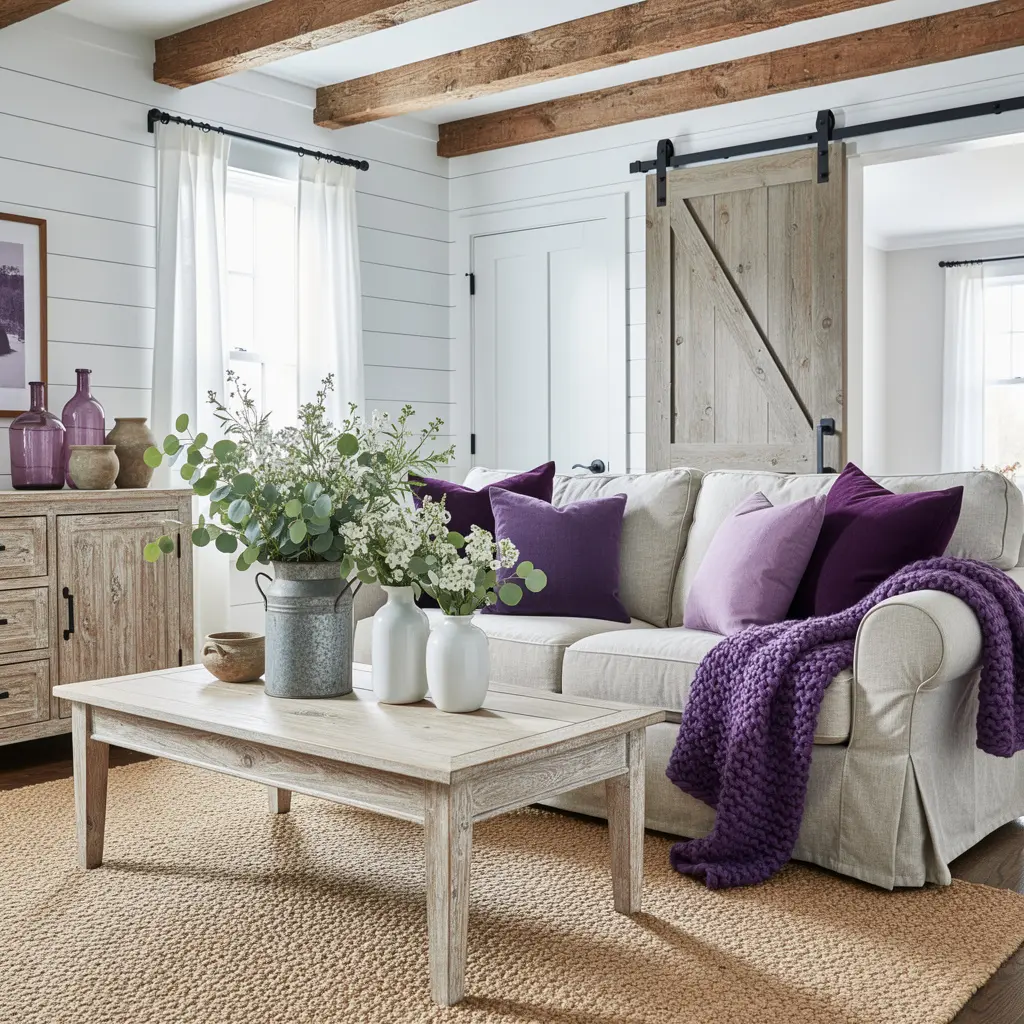
Farmhouse style leans on texture and imperfection, things like raw wood grain, visible metal hardware, and slightly uneven ceramic glazes. Purple, especially in a muted or dusty shade, has a similarly complex, slightly imperfect quality that fits naturally into that palette rather than looking like an outside addition.
The mistake most people make is choosing a bright, saturated purple and expecting it to blend into a farmhouse room. A dustier, more muted purple, closer to a faded plum or mauve tone, reads as rustic rather than formal, and that’s the version that actually pairs well with reclaimed wood and worn metal.
2. Choose Reclaimed and Distressed Wood Furniture as Your Base
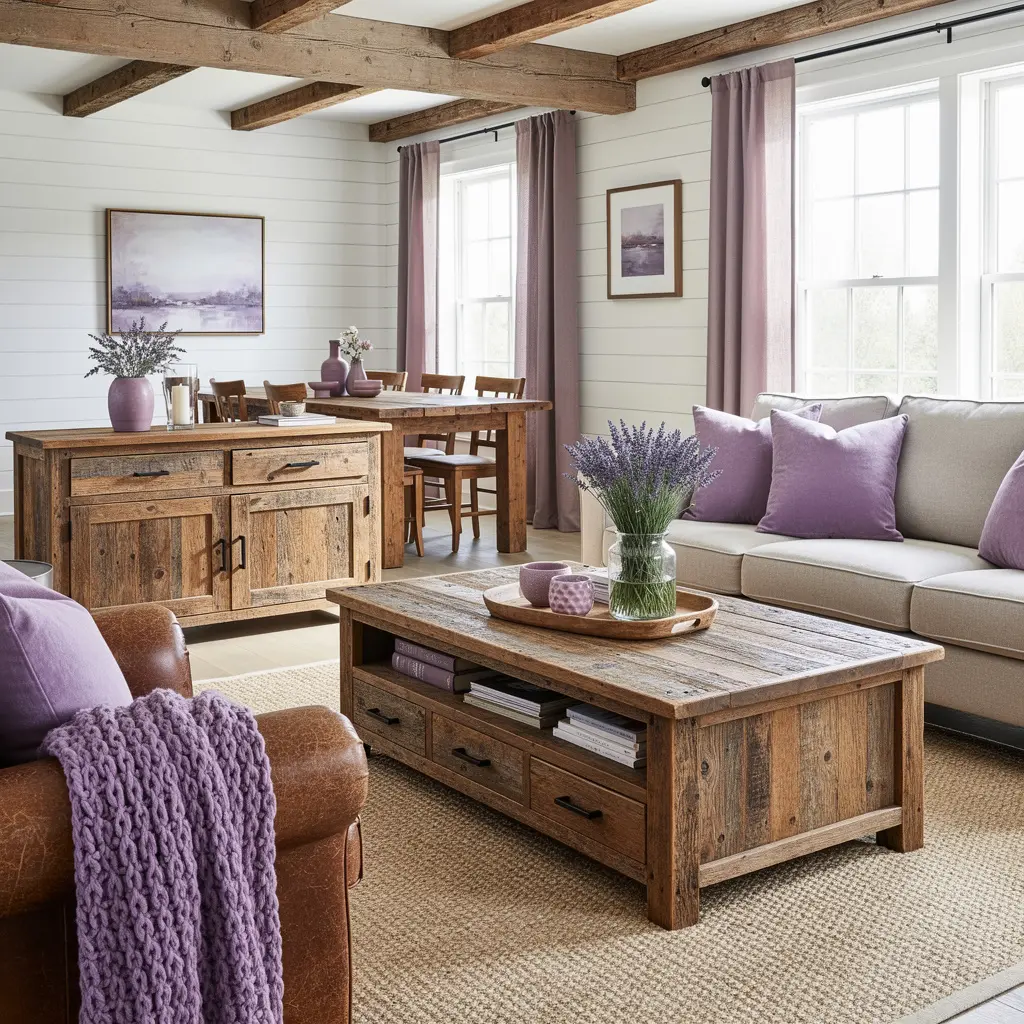
Reclaimed or distressed wood furniture, whether that’s a dining table, a console, or a bed frame, gives purple accents something substantial to sit against. The rough, uneven texture of reclaimed wood keeps a purple accessory from feeling too polished or precious.
A reclaimed wood dining table generally runs anywhere from 400 dollars for a smaller, simpler piece up to well over 1500 dollars for a larger, more detailed build, depending on size and craftsmanship. Pairing that table with mismatched wood chairs, rather than a matching set, adds to the collected over time feel that farmhouse style is built around.
Why Mismatched Furniture Works Here
A perfectly matched dining set can look more formal or transitional than farmhouse. Mixing two or three chair styles, as long as they share a similar wood tone, gives the room a sense of history, even if every piece was bought new.
3. Add Purple Through Linen and Cotton Textiles
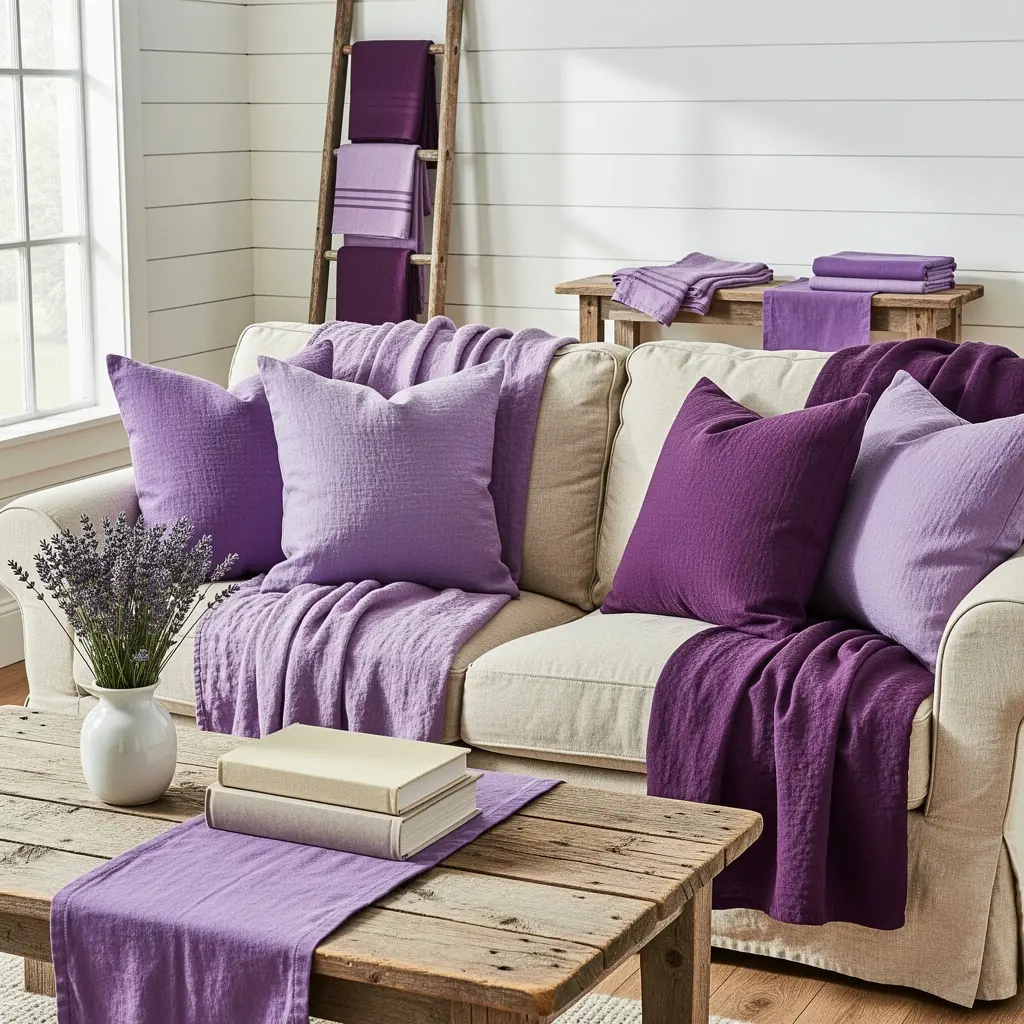
Linen is one of the defining textiles of farmhouse style, and a purple linen table runner, curtain panel, or set of napkins introduces color without disrupting the natural, slightly wrinkled texture that linen is known for. Standard linen table runners generally run between 20 and 45 dollars.
Cotton throws and pillow covers in a muted purple work the same way, especially when the fabric has a slightly nubby or woven texture rather than a smooth, polished finish. That texture is what keeps the purple from reading as too refined for a farmhouse space.
4. Mix in Galvanized Metal and Wrought Iron for Contrast
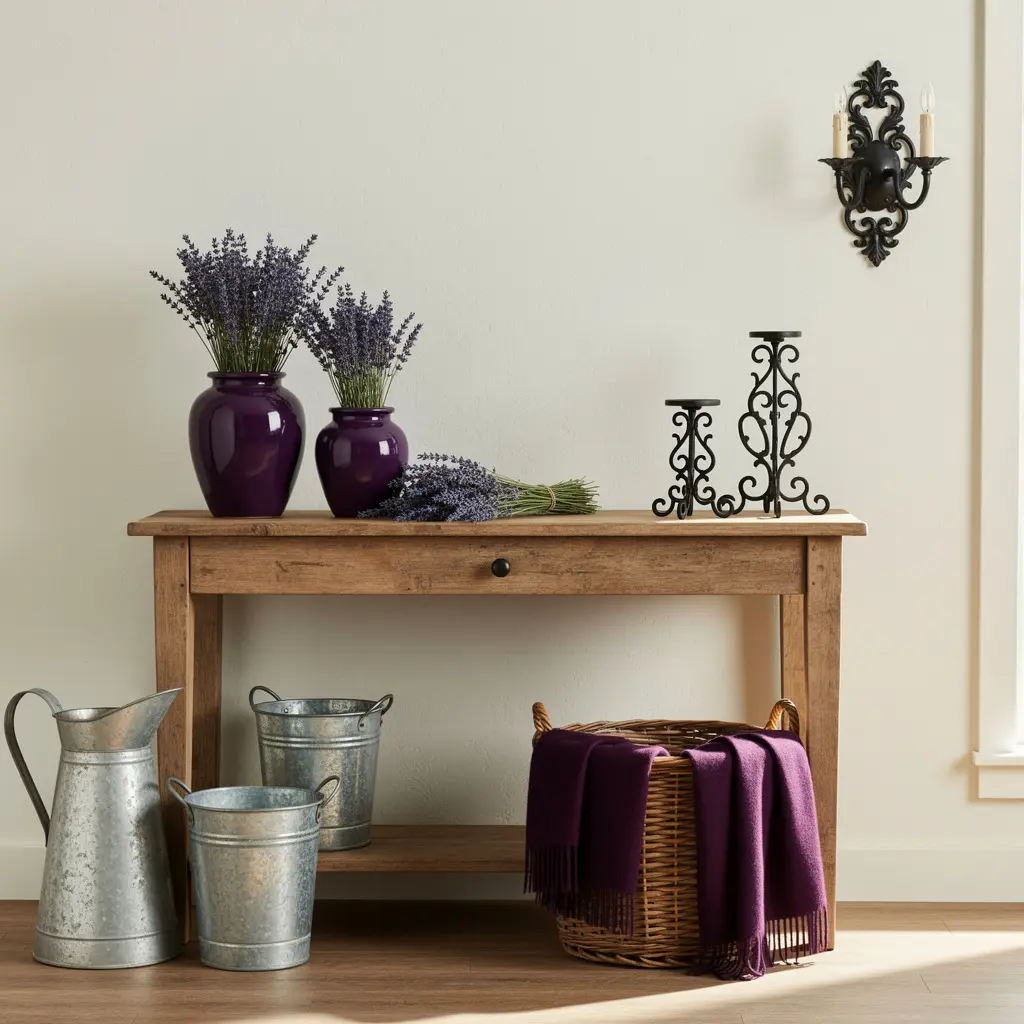
Galvanized metal buckets, trays, and light fixtures are a farmhouse staple, and their cool, slightly industrial finish creates useful contrast against a rich purple accent. A galvanized metal pitcher filled with dried florals, generally priced in the 15 to 35 dollar range, is a simple way to combine both elements in one piece.
Wrought iron hardware, like drawer pulls or a chandelier frame, adds a similar contrast. The dark, matte finish keeps a purple room from feeling too heavy across every surface.
5. Use Vintage and Vintage Inspired Pieces to Ground the Color
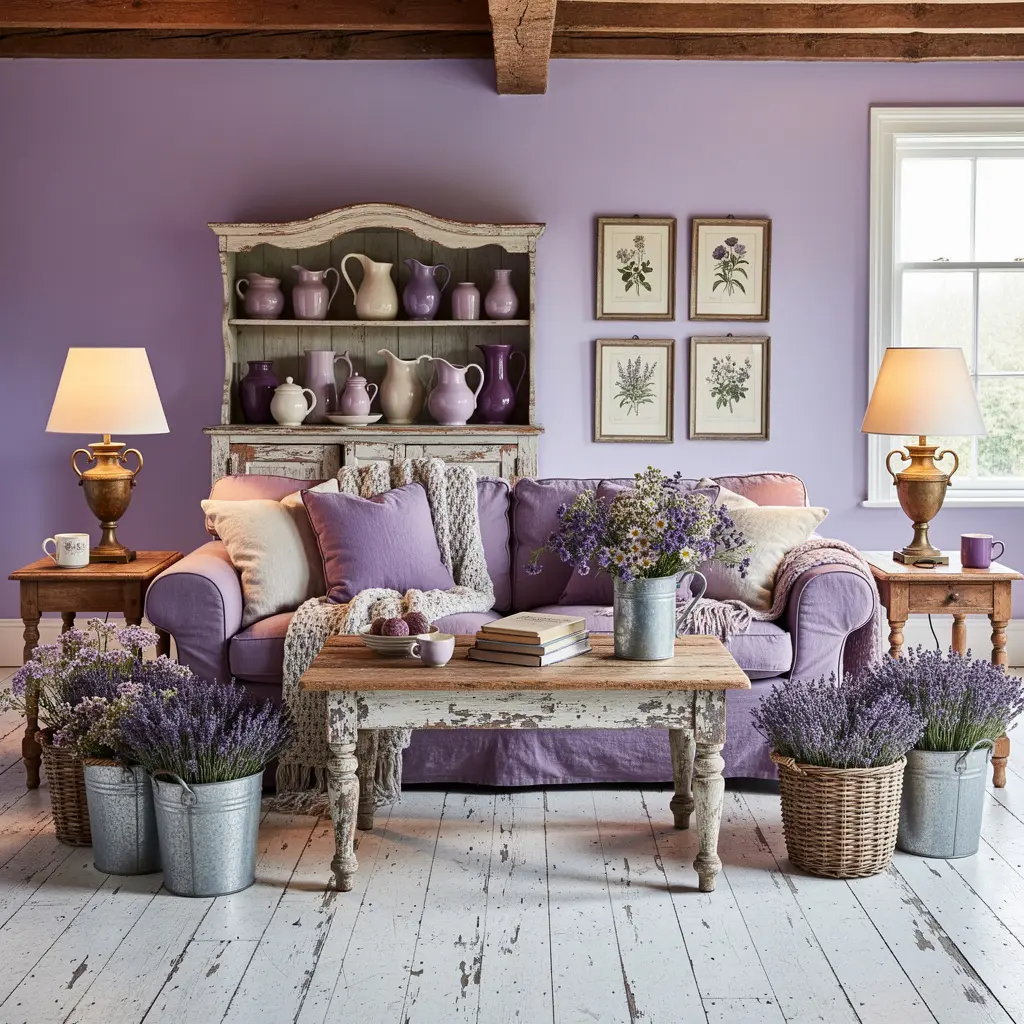
A vintage or vintage inspired ceramic pitcher, an old wood crate used as a shelf, or a weathered mirror frame all add the sense of history that farmhouse style depends on. Pairing one of these older, weathered pieces with a newer purple item, like a fresh set of linens, keeps the room from feeling either too new or too costume like.
Estate sales, flea markets, and secondhand shops are often the best source for these pieces, and prices vary widely depending on condition and rarity, but many small decorative items can be found in the 5 to 30 dollar range.
6. Bring Purple Into the Kitchen With Ceramic and Ironstone Accents
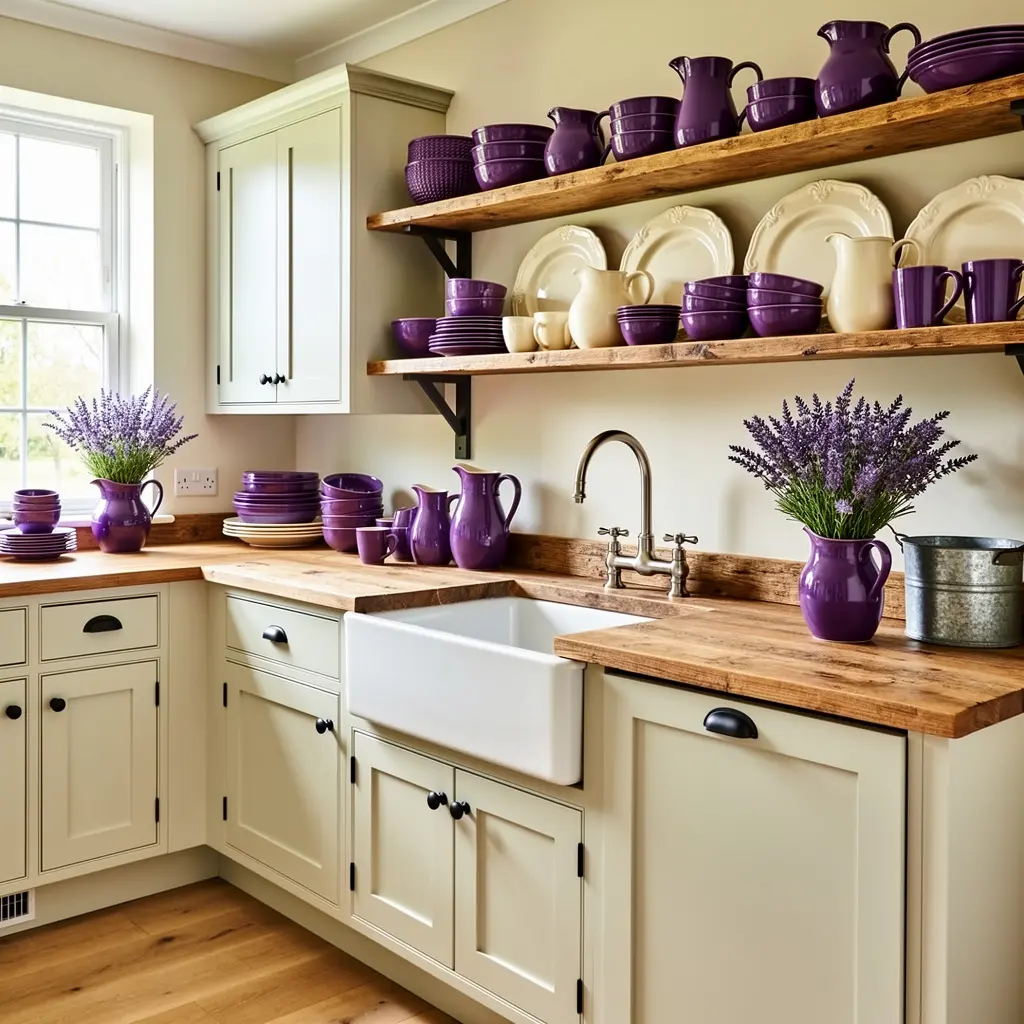
Farmhouse kitchens often lean on ironstone and simple ceramic pieces in white or cream. Introducing a few purple ceramic canisters, mixing bowls, or a pitcher alongside those white pieces adds color without disrupting the overall farmhouse feel.
Look for pieces with a slightly matte or crackled glaze rather than a glossy, modern finish. That texture detail is often what separates a farmhouse appropriate piece from one that reads as more contemporary.
7. Layer Woven Baskets for Storage That Fits the Farmhouse Look
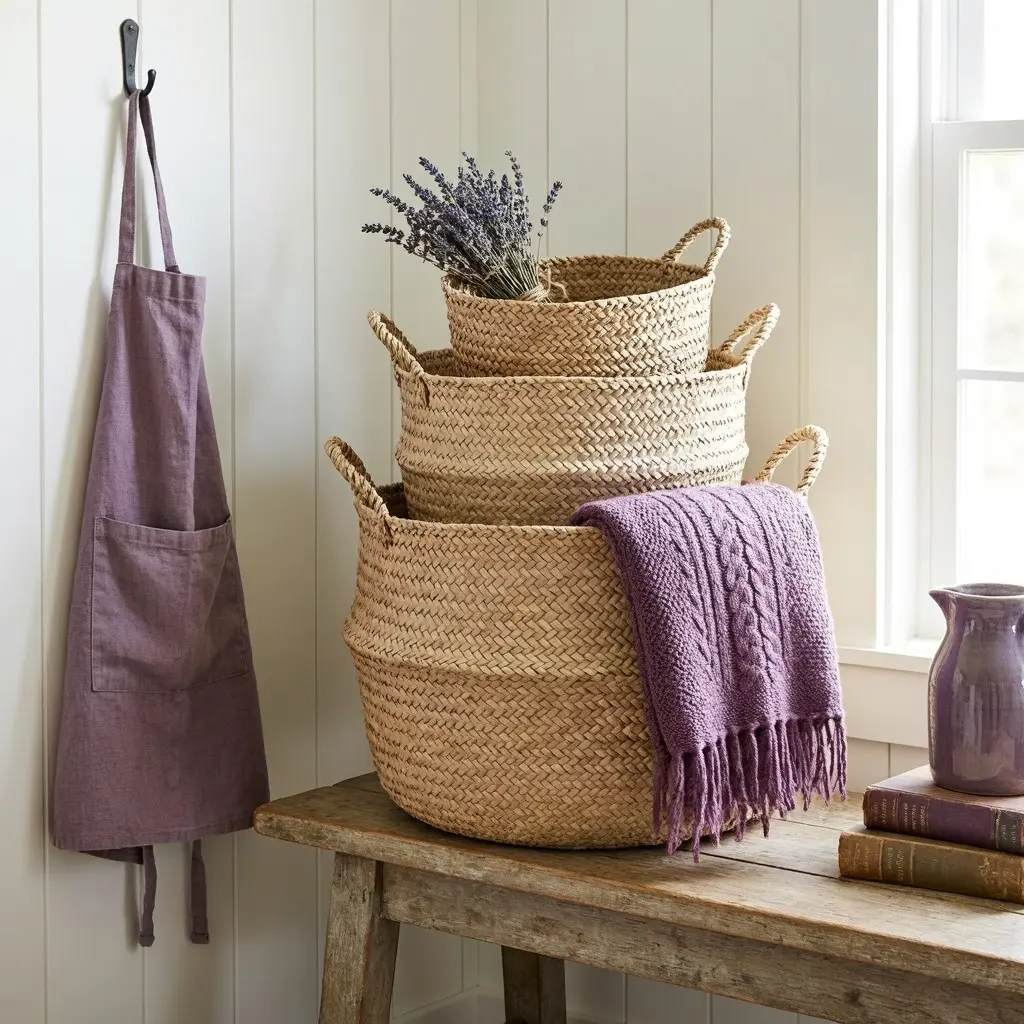
Woven baskets in natural rattan or seagrass are a practical farmhouse storage solution, and a few with a subtle purple liner or trim tie the storage into the rest of the room’s color scheme. These typically run between 20 and 50 dollars depending on size.
Using baskets to store blankets, firewood, or kitchen linens keeps the space functional while still contributing to the overall look, which matters in farmhouse style since the aesthetic is meant to feel lived in and useful, not purely decorative.
8. Add Dried Florals and Lavender Stems Instead of Bright Blooms
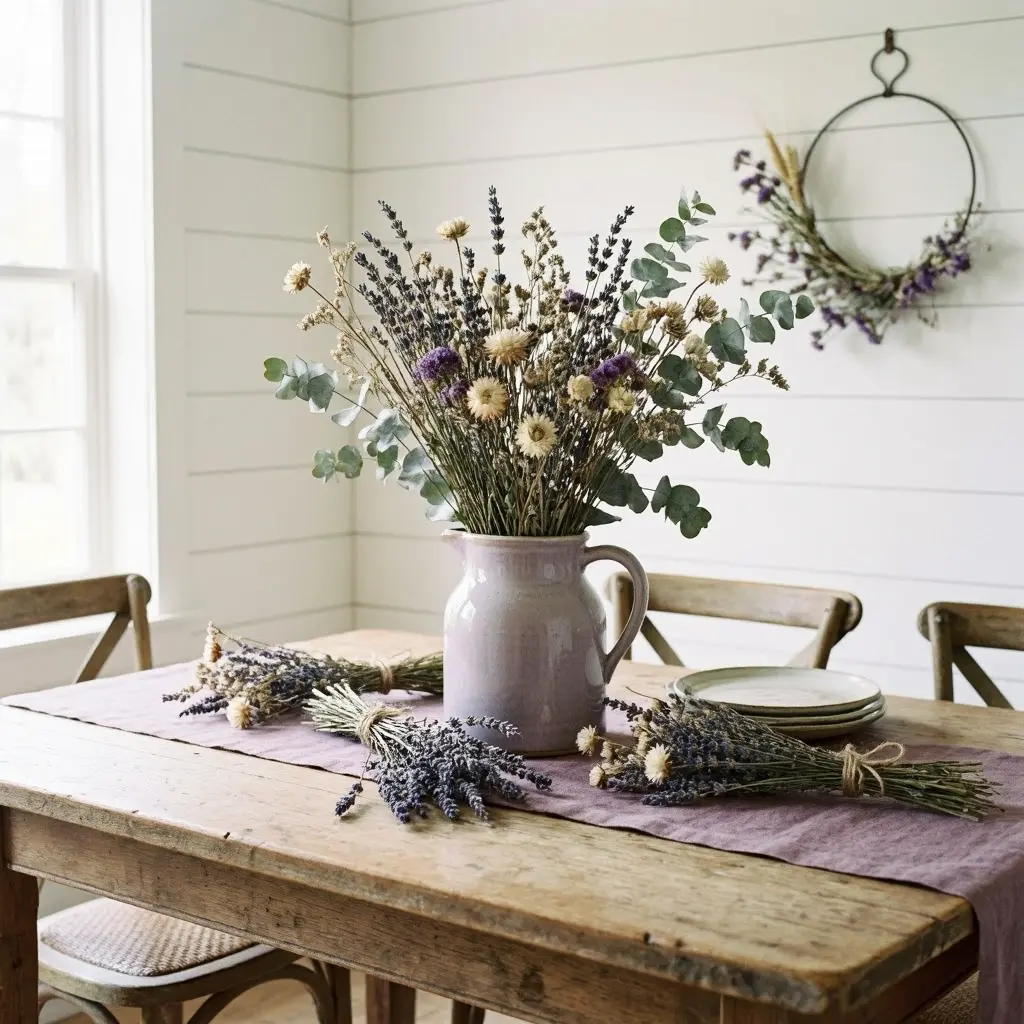
Farmhouse style tends to favor dried, muted florals over bright, saturated fresh flowers, and dried lavender stems, cotton stems, or pampas grass fit that palette naturally. Lavender in particular ties directly into a purple color scheme while still keeping the dried, understated quality farmhouse decor depends on.
A dried arrangement in a galvanized metal pitcher or a simple ceramic vase, generally priced in the 15 to 40 dollar range depending on size, pairs the softness of dried botanicals with the rustic texture of the container.
9. Choose the Right Purple Shade for a Rustic Palette
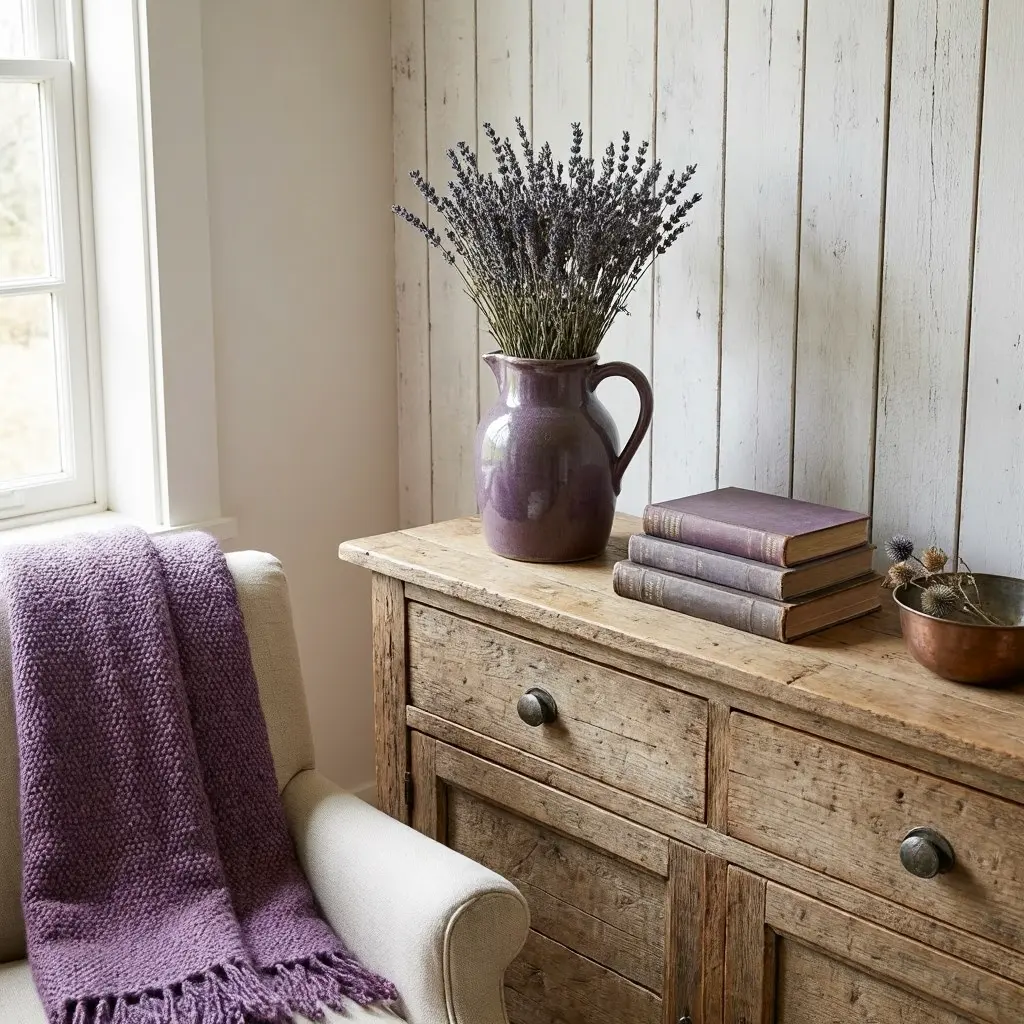
A bright, cool toned purple can look out of place next to weathered wood and matte metal finishes. A warmer, dustier purple, closer to a faded plum or mauve tone, blends more naturally into a farmhouse palette that’s already built around muted, earthy colors.
Testing Purple Against Your Existing Wood Tones
Hold a fabric or paint sample directly against your existing wood furniture before committing to a larger purchase. If the purple looks too bright or too cool next to the wood, it will likely feel out of place once it’s part of the full room.
10. Balance Purple With Shiplap, Beadboard, or Painted Wood Walls
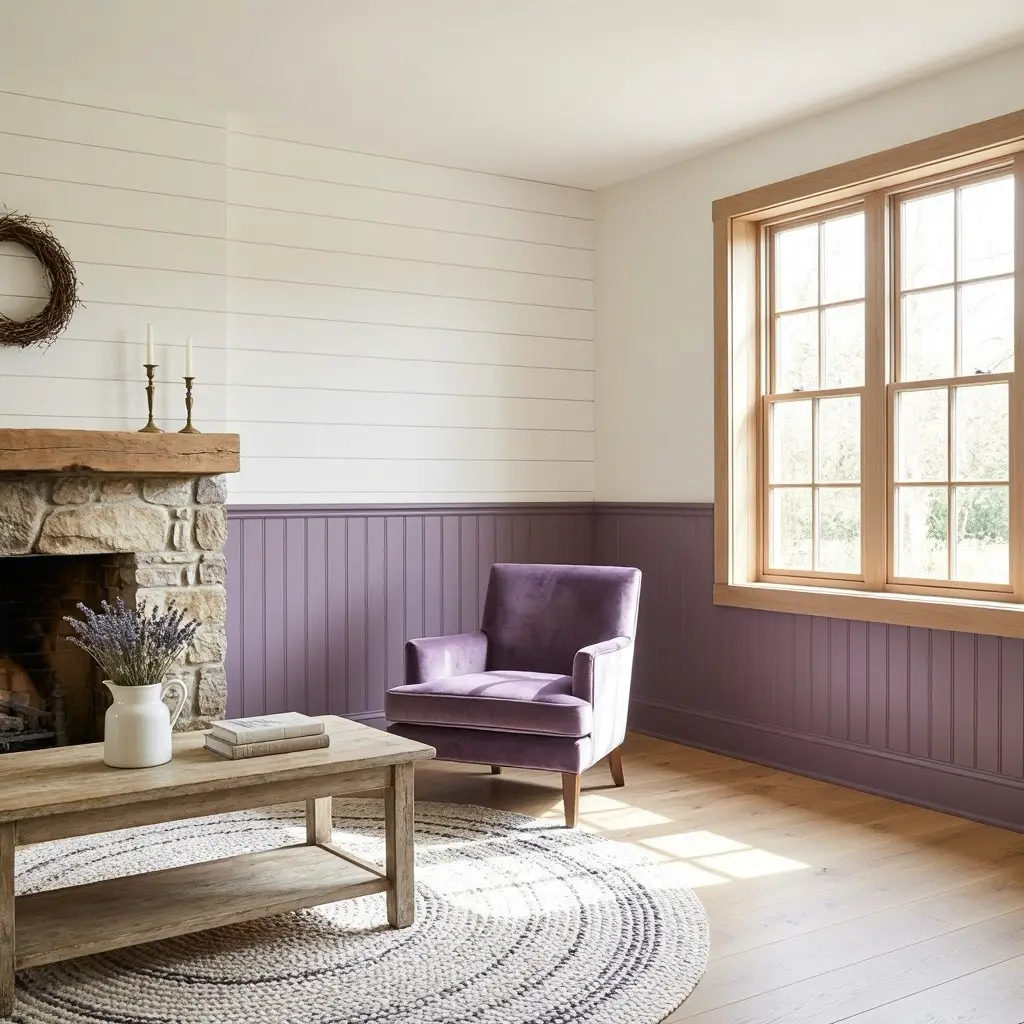
Shiplap and beadboard, usually painted white or a soft cream, are common farmhouse wall treatments, and they provide a clean, textured backdrop that lets a few purple accents stand out without competing with a busy wall. Rather than painting an entire wall purple in a farmhouse room, most spaces read better with white or cream walls and purple introduced through furniture and textiles instead.
This keeps the architectural texture of the walls as the main visual interest, while purple plays a supporting role through smaller, more flexible pieces that are easier to change over time.
Mistakes to Avoid
- Choosing a bright, cool toned purple instead of a muted, warm shade
- Painting an entire farmhouse room purple instead of using it as an accent
- Pairing purple only with smooth, modern finishes instead of textured, rustic materials
- Buying a matching furniture set instead of mixing pieces for a collected over time look
- Using fresh, bright florals instead of dried arrangements that fit the farmhouse palette
- Skipping metal accents entirely, which removes an important source of contrast
Frequently Asked Questions
Does purple fit modern farmhouse style specifically? Yes, modern farmhouse style tends to be a bit more polished and simplified than traditional farmhouse, and a muted purple works well as an accent color against the white, black, and wood palette that defines that look.
What wood tone pairs best with purple in a farmhouse room? Warmer, medium toned woods, like oak or reclaimed pine with a honey or amber finish, tend to pair more naturally with purple than very dark, cool toned woods like ebony or dark walnut.
Can I use purple in a farmhouse kitchen without it looking out of place? Yes, particularly through smaller accents like ceramic canisters, dish towels, or a pitcher, rather than cabinetry or large appliances. Keeping the color to accessories lets you test it without a major renovation.
Is purple too formal for a rustic farmhouse look? A bright, glossy purple can feel formal against rustic textures, but a muted, matte purple with a slightly dusty undertone tends to hold its own next to reclaimed wood and metal rather than looking out of place.
How do I keep a purple farmhouse room from feeling too heavy? Balancing purple with plenty of white or cream wall space, keeping the shade muted rather than deeply saturated, and layering in warm lighting all help prevent a purple farmhouse room from feeling closed in or dark.
Conclusion
Purple and farmhouse style aren’t opposites, they just need the right undertone and enough rustic texture to balance them out. Start with a muted, warm purple rather than a bright, saturated shade, ground it with reclaimed wood and metal accents, and keep the color mostly in flexible pieces like textiles and ceramics rather than paint or cabinetry. That approach lets the room feel warm and a little worn in, which is the whole point of farmhouse style in the first place.