10 Cozy Kitchen Flooring Ideas That Feel Warm & Inviting
Nobody thinks about their kitchen floor until their feet start hurting halfway through making dinner. Kitchens rack up more standing time than any other room in the house, and a cold, hard floor turns even a quick cooking session into something you feel by the time you’re done, whether that’s a nagging ache in your lower back or just a general sense that you can’t wait to sit down. These cozy kitchen flooring ideas are about picking materials that handle the daily chaos of a kitchen, spills, dropped pans, heavy foot traffic, while still being genuinely comfortable to stand on.
The catch is that kitchens can’t compromise on practicality. Moisture, dropped items, endless cleaning, the occasional dropped knife nobody wants to think about. That rules out the softest flooring options right away. But warmth and durability aren’t actually opposites once you know which materials pull double duty, and that’s really what this whole list is about.
1. Choose Warm Wood or Wood Look Flooring Over Cold Stone
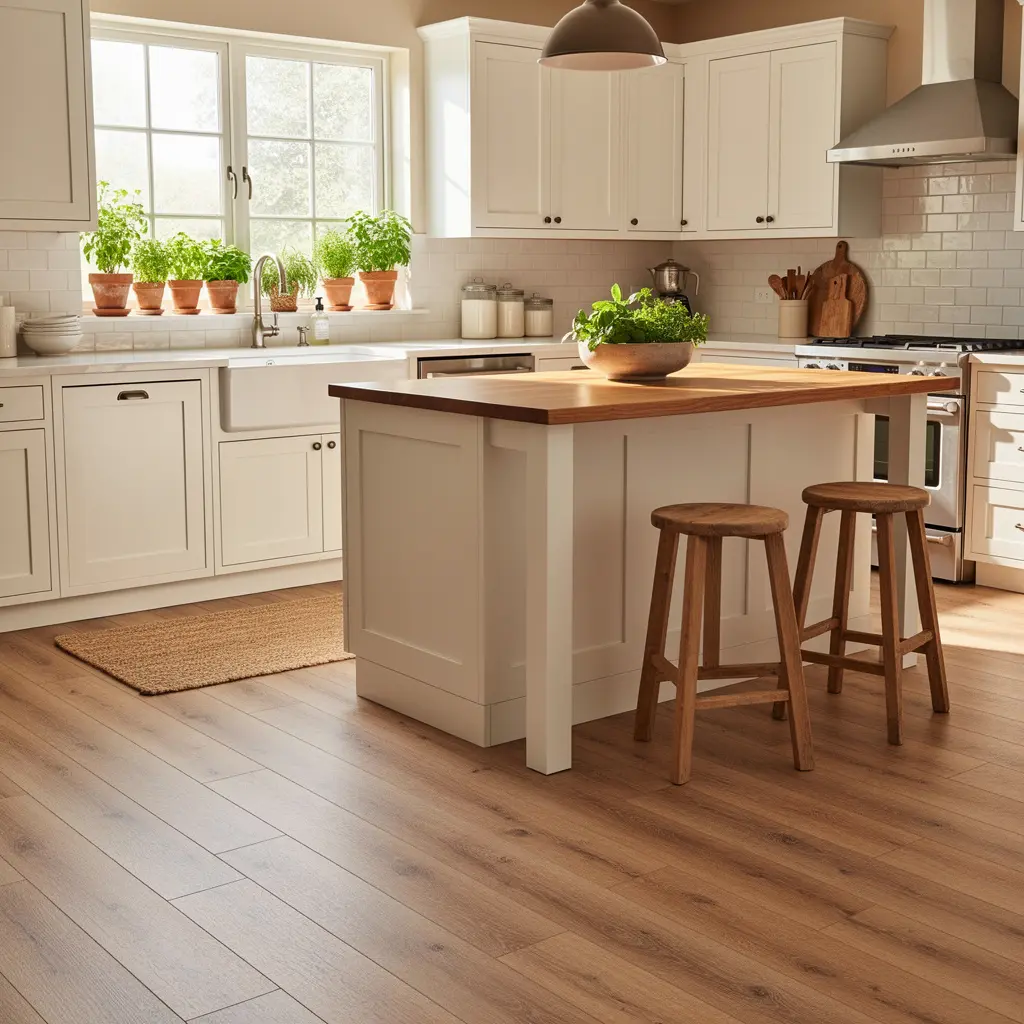
Stone and polished concrete are having a moment in kitchen design, and they look great in photos. In real life, they feel cold and hard underfoot in a way that gets old fast. Wood, or a wood look alternative, in warm tones like honey oak or golden walnut, changes that instantly.
Wood look vinyl plank splits the difference nicely, usually 2 to 6 dollars a square foot, giving you the warm look of wood with better moisture resistance than the real thing, which matters a lot in a room where spills are basically guaranteed.
Why Real Hardwood Needs Extra Consideration in Kitchens
Real hardwood can absolutely work in a kitchen. It just asks more of you. Spills need cleaning up fast, or you risk warping and staining down the line. A lot of people who love the look but not the upkeep end up going with engineered hardwood or a quality wood look vinyl instead. It’s a fair trade, honestly, and most people don’t miss the difference once it’s installed.
2. Add an Anti Fatigue or Cushioned Rug Near Work Areas
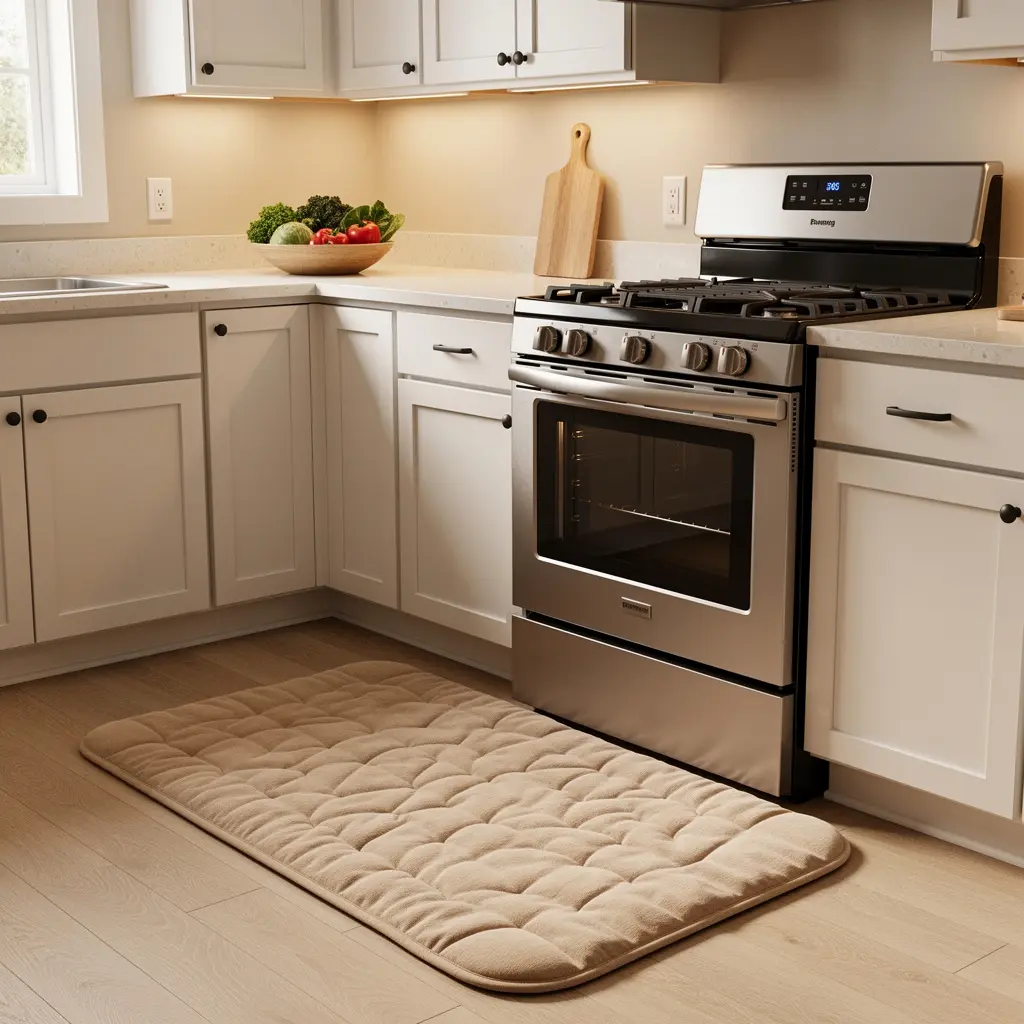
Standing in one spot, at the sink, at the stove, is exactly where a cushioned mat earns its keep. Anti fatigue mats run 30 to 80 dollars and they’re built specifically to reduce the strain of standing on a hard floor for long stretches.
Put one where the actual work happens, not across the whole kitchen. That targets the comfort exactly where you need it, without turning your entire floor into something harder to keep clean.
3. Consider Cork Flooring for Natural Warmth and Cushion
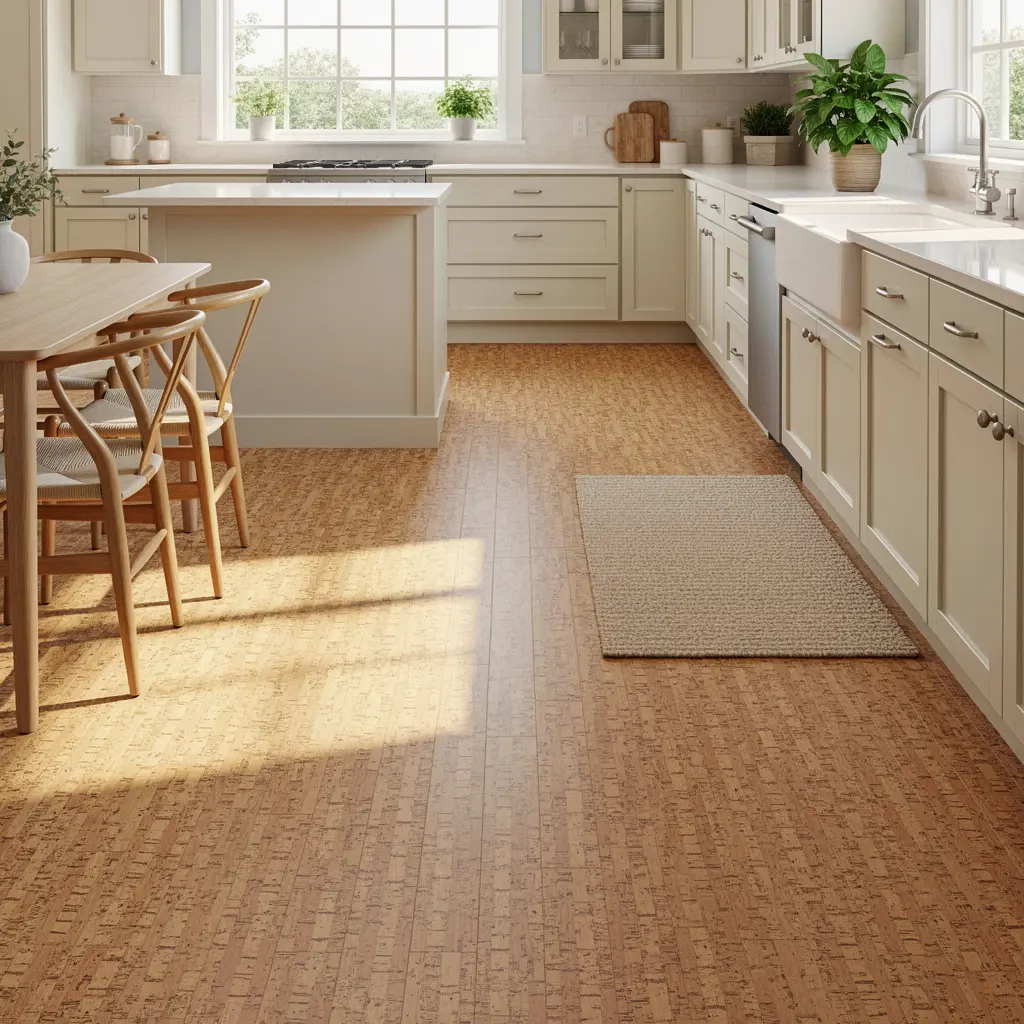
Cork just feels different. It has a natural give that tile, stone, and even hardwood don’t, and it dampens sound too, which makes a kitchen feel calmer while you’re cooking. It’s a genuinely different experience underfoot, not just a warmer color painted onto the same old material.
It runs 3 to 8 dollars a square foot and needs sealing, since cork is more porous than harder materials. Seal it properly, maintain it, and it holds up fine in a kitchen while giving you something most other flooring simply can’t.
4. Use Radiant Heating Under Tile or Stone for Comfort
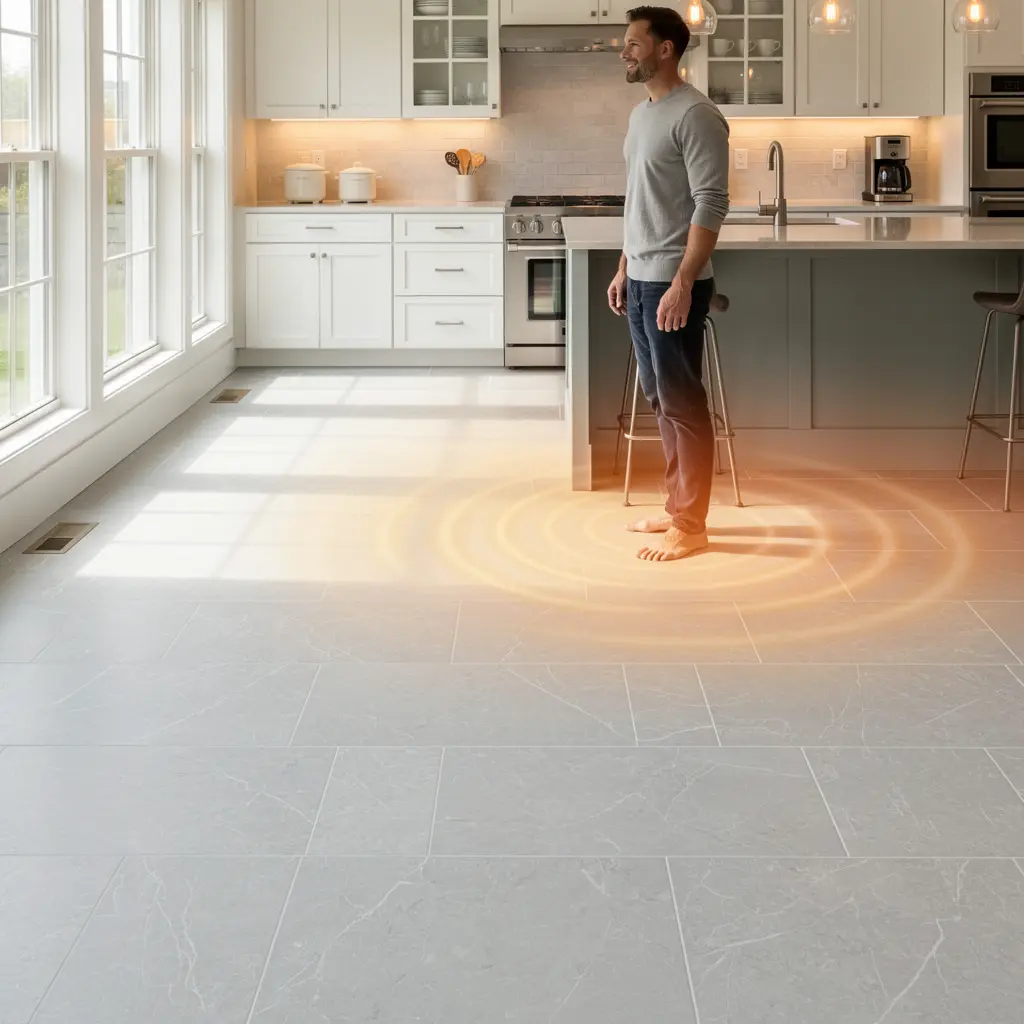
If you’re set on tile or stone for the durability and easy cleaning, radiant heat underneath solves the one real problem with those materials: how cold they are without it. Worth it especially in colder climates, or in kitchens with a lot of tile where you’d otherwise notice the cold floor every single day of the year.
Costs vary with kitchen size and whether it’s new construction or a retrofit. But plenty of homeowners say it completely changes how comfortable a tile kitchen floor feels day to day, to the point they wonder why they waited so long to add it.
5. Choose a Warm Toned Tile If You Prefer a Tile Floor
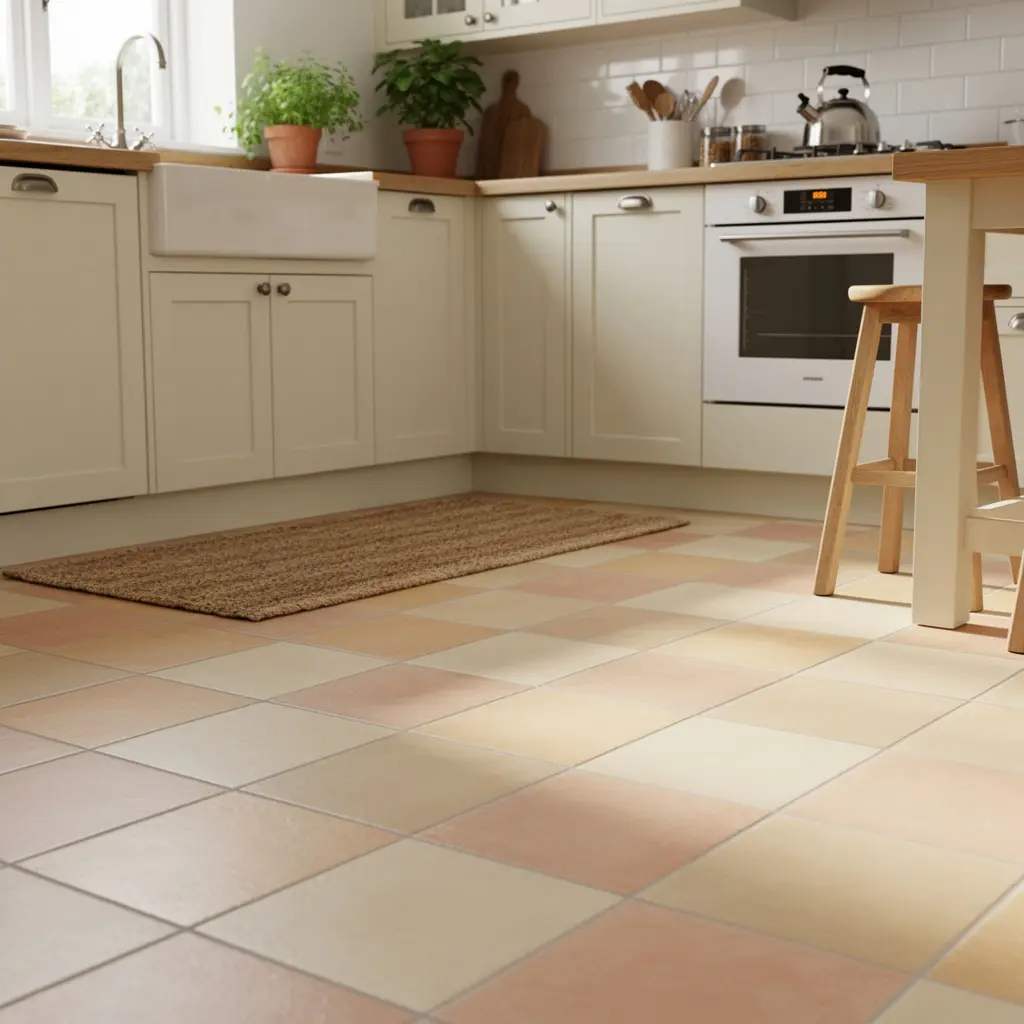
Some people just want tile, and that’s fine. Choose beige, taupe, or soft terracotta over cool gray or stark white, and the whole kitchen reads warmer without changing anything else about the room. Warm toned tile runs 3 to 15 dollars a square foot depending on material and finish.
Pair it with matching warm grout too, not a stark white line. That detail reinforces the whole effect across the entire floor, and it costs almost nothing extra to get right during installation.
6. Layer a Runner Rug for a Softer, Cozier Feel
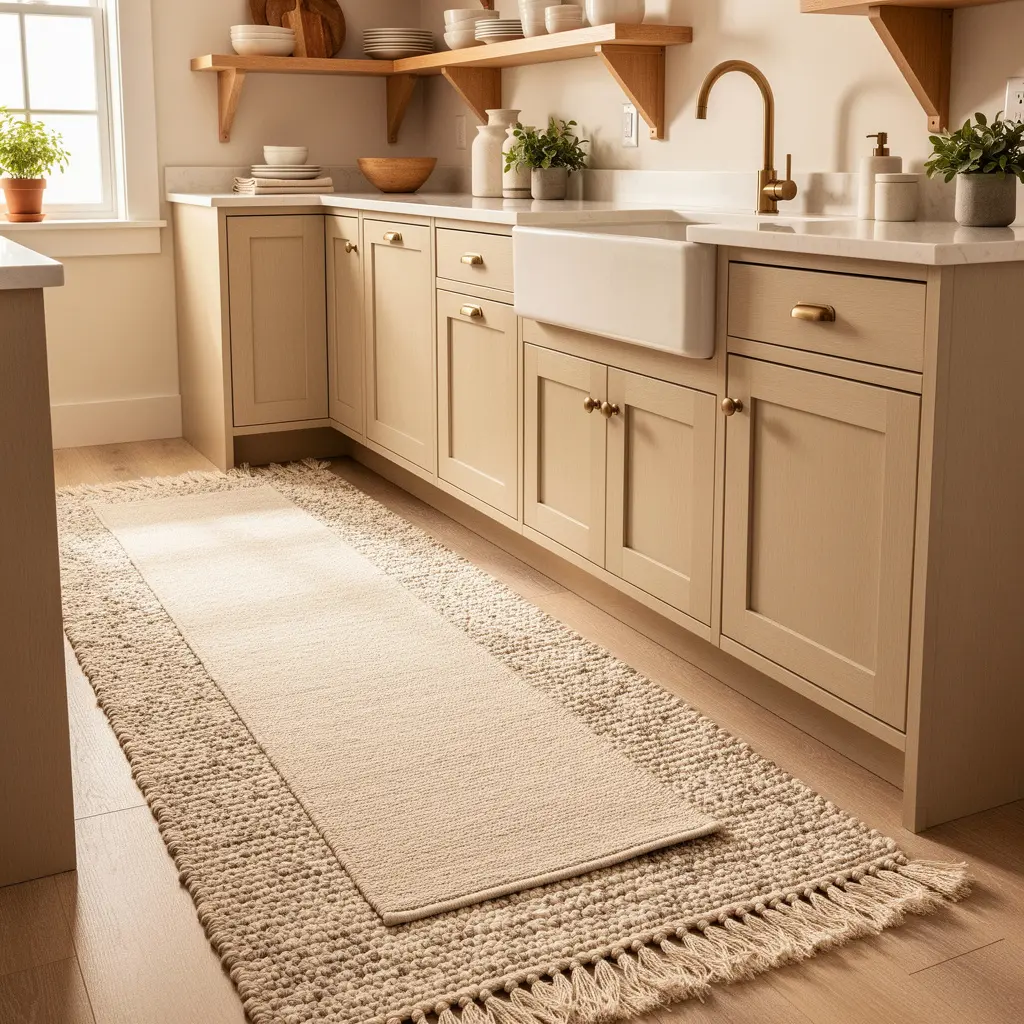
A runner along the main walkway, in front of the sink or stove, adds softness and visual warmth to what’s otherwise a hard surface. Kitchen appropriate runners, ones made from washable materials, run 40 to 120 dollars depending on length and quality.
Choosing a Washable Runner for Practical Daily Use
Get one labeled machine washable. That’s not optional in a kitchen. Spills and dropped food are inevitable, and a rug that needs professional cleaning every time something spills becomes useless fast.
7. Pick Matte Over Glossy Finishes for a Warmer Look
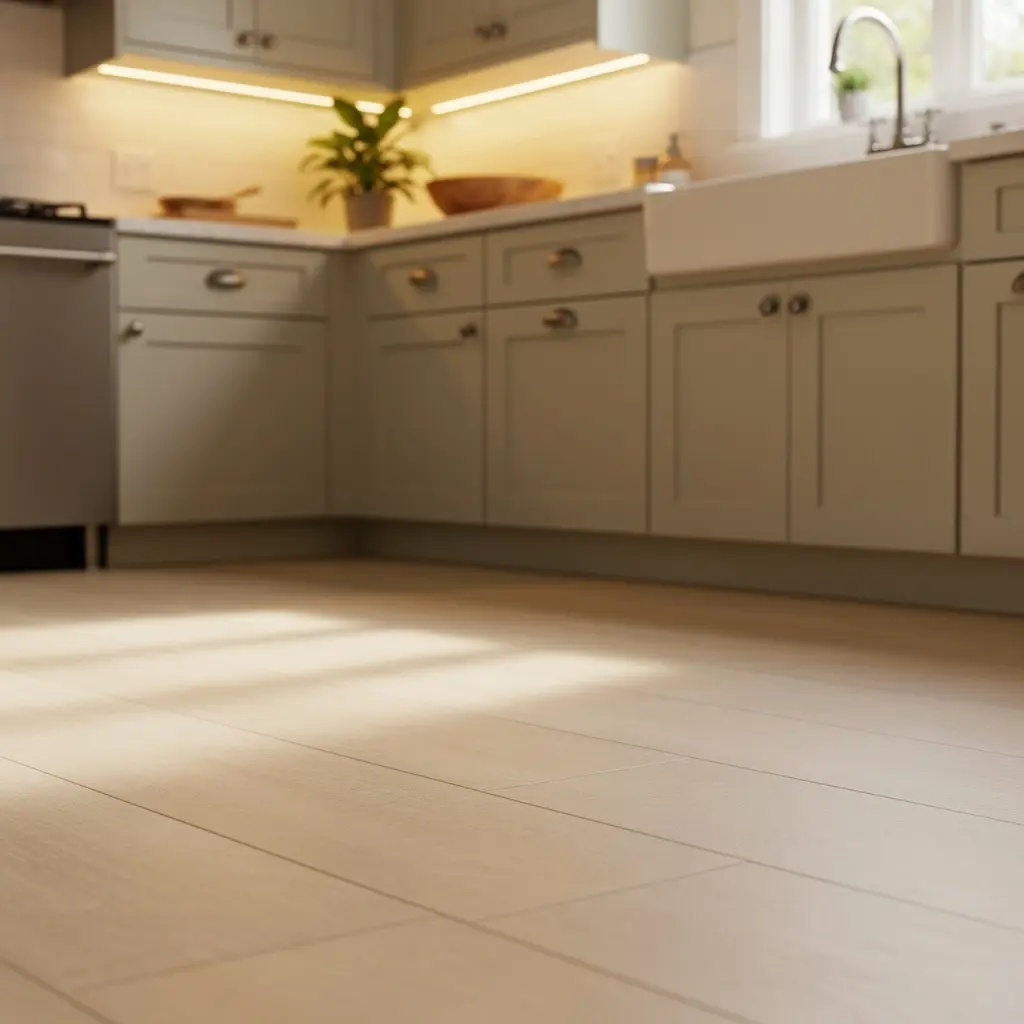
Glossy floors reflect more light, look sleek, feel colder. Matte and satin finishes absorb rather than reflect, which just reads as warmer and softer, regardless of the material or color underneath.
This holds true across wood, tile, and vinyl alike. It’s one of the simpler levers you can pull to shift a floor’s whole feeling without touching the material or color at all, and it costs nothing extra to choose one finish over another.
8. Balance Durability and Comfort for a High Traffic Room
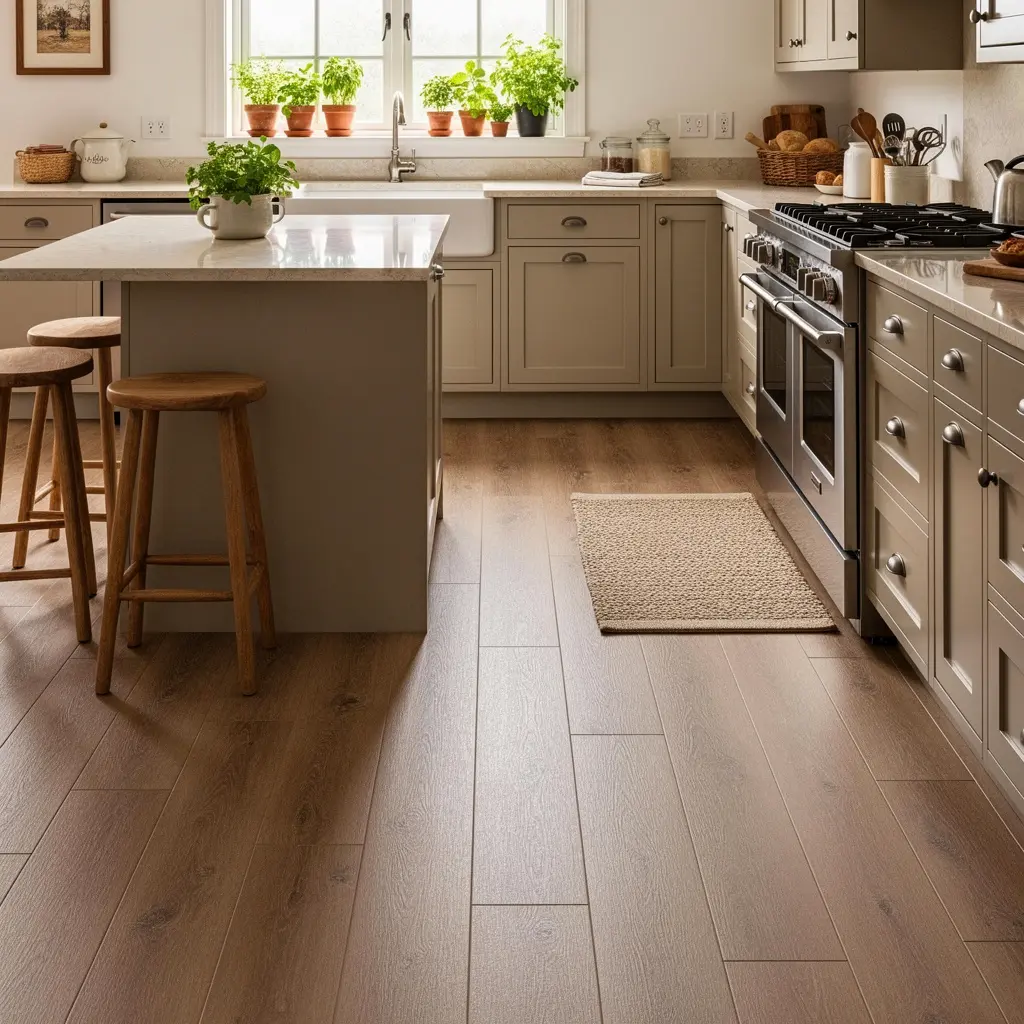
Kitchens take more daily abuse than nearly any other room. Dropped pots, pet claws, constant foot traffic, the occasional dragged chair. Engineered hardwood, wood look vinyl, and properly sealed cork all hold up reasonably well while staying warmer than pure stone or ceramic, which makes them a smarter default for most households than people initially assume.
Think about your own household honestly. Pets running through constantly, or young kids underfoot, changes how much you should prioritize durability over the softer, cozier options available to you. There’s no universal right answer here, just the one that fits how your kitchen actually gets used.
9. Add Warm Baseboards and Trim to Complete the Look
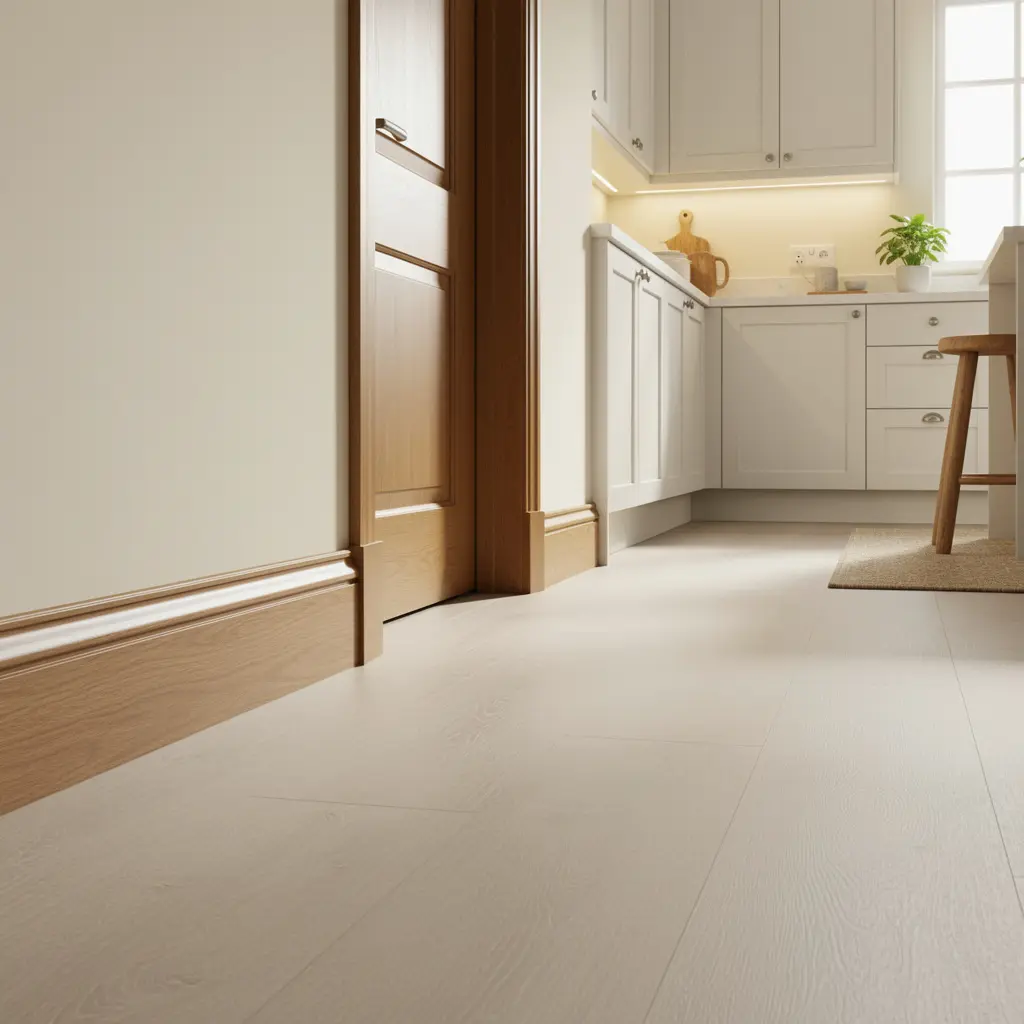
Trim in a warm wood tone or soft cream, instead of the standard stark white, ties the floor into the rest of the room. It’s a detail people skip during renovations, but it makes the whole space feel more finished and intentional, less like an afterthought.
Match the trim to the floor’s undertone rather than defaulting to white everywhere. That small choice reinforces the warmth the flooring already established throughout the room.
10. Maintain Kitchen Flooring So It Stays Warm and Functional
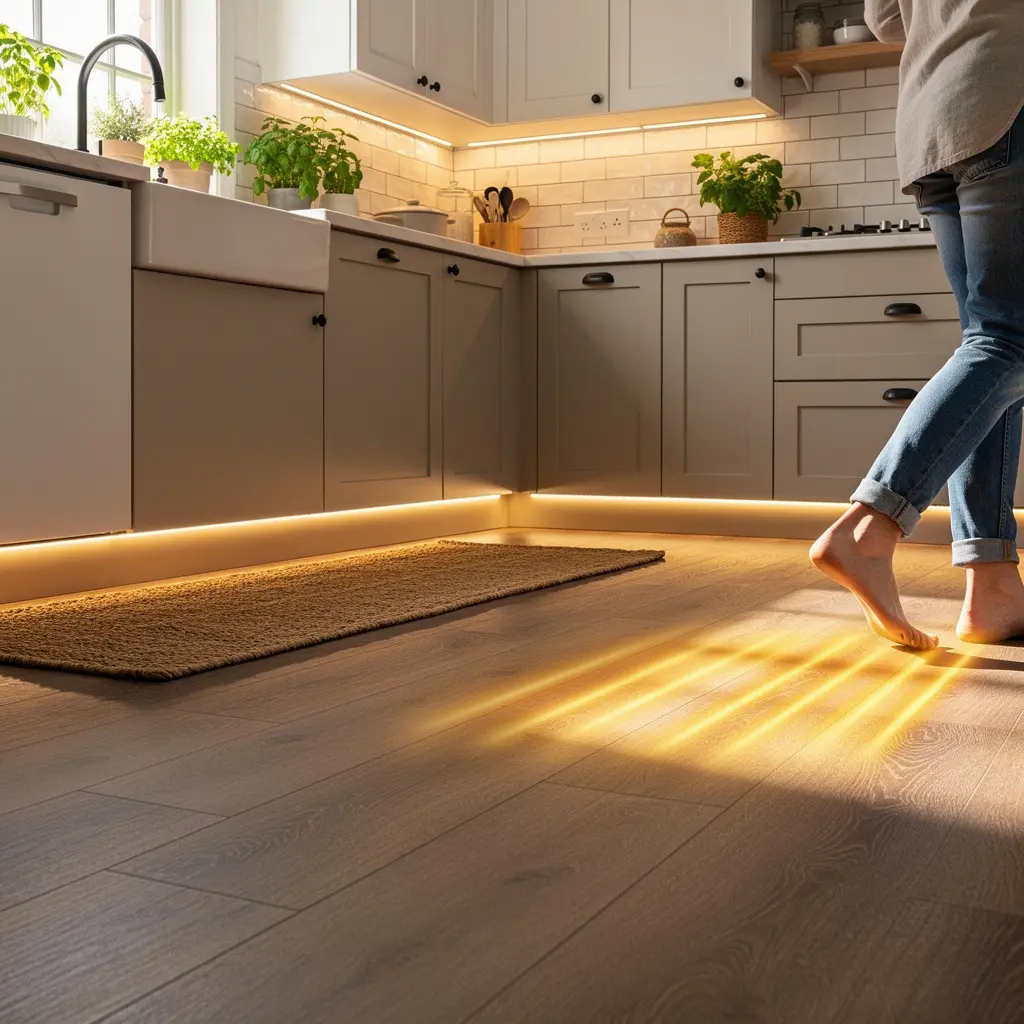
Sweep regularly, clean up spills fast, especially with wood, wood look, or cork, all of which are more sensitive to standing water than tile or stone. Furniture pads under stools and chairs stop the scuffing that dulls a warm finish over time.
Check your rugs and anti fatigue mats now and then too. They flatten out and lose their cushioning eventually, and replacing them keeps the comfort they’re supposed to provide actually working the way it should.
Mistakes to Avoid
- Choosing cold, hard stone or polished concrete without considering daily standing comfort
- Skipping an anti fatigue mat at primary work zones like the sink and stove
- Selecting a high gloss finish when the goal is a warmer, cozier overall look
- Installing real hardwood in a kitchen without committing to the required maintenance routine
- Using a non washable rug or runner in a room prone to spills and dropped food
- Pairing warm flooring with stark white trim and baseboards that undercut the cozy effect
Frequently Asked Questions
Is cork flooring a good option for a kitchen? Yes, with proper sealing. It offers real warmth and cushion, plus sound dampening, but it needs that seal to handle moisture and the occasional spill without trouble.
What’s the most durable warm toned flooring for a busy kitchen? Wood look vinyl and engineered hardwood both strike a good balance, holding up to daily traffic and spills as long as you clean them up promptly.
Should I put a rug in front of my kitchen sink? Yes. That’s the spot where prolonged standing does the most damage to your feet and back, and a cushioned mat there addresses that fatigue directly.
Does real hardwood work in a kitchen? It can, but it asks more of you than other options. Spills need cleaning up quickly to avoid warping or water damage over time.
How do I make an existing cold kitchen floor feel warmer without replacing it? A cushioned runner or anti fatigue mat, warmer trim, and better lighting throughout the space. None of it requires touching the floor itself.
Conclusion
A cozy kitchen floor balances the practical demands of a room that gets hammered daily with genuine comfort underfoot. Warm materials, cushioned support where you actually stand, matte finishes, and warm trim. All of it adds up without asking you to sacrifice the durability a kitchen floor genuinely needs, and none of it happens overnight either, so start with the piece that bothers you most and build from there.