10 Purple Bathroom Ideas That Feel Calm, Luxe, and Beautiful
Most bathrooms default to white or a very pale neutral, which is safe but rarely memorable. A purple bathroom, chosen carefully, can feel genuinely rich and a little indulgent, the kind of space that makes an ordinary morning routine feel slightly more special. The risk with purple in a bathroom is the same as almost anywhere else in the home. Pick a shade that’s too bright or too cool, and the whole room can start to feel more jarring than luxurious. These purple bathroom ideas focus on getting the undertone right, then building around it with texture, warm metal, and lighting that flatters the color instead of fighting it.
None of this requires a full gut renovation. A single accent wall, a few textile swaps, and the right lighting can shift a bathroom’s entire feeling without touching the plumbing or the layout.
1. Choose the Right Shade of Purple Tile or Paint
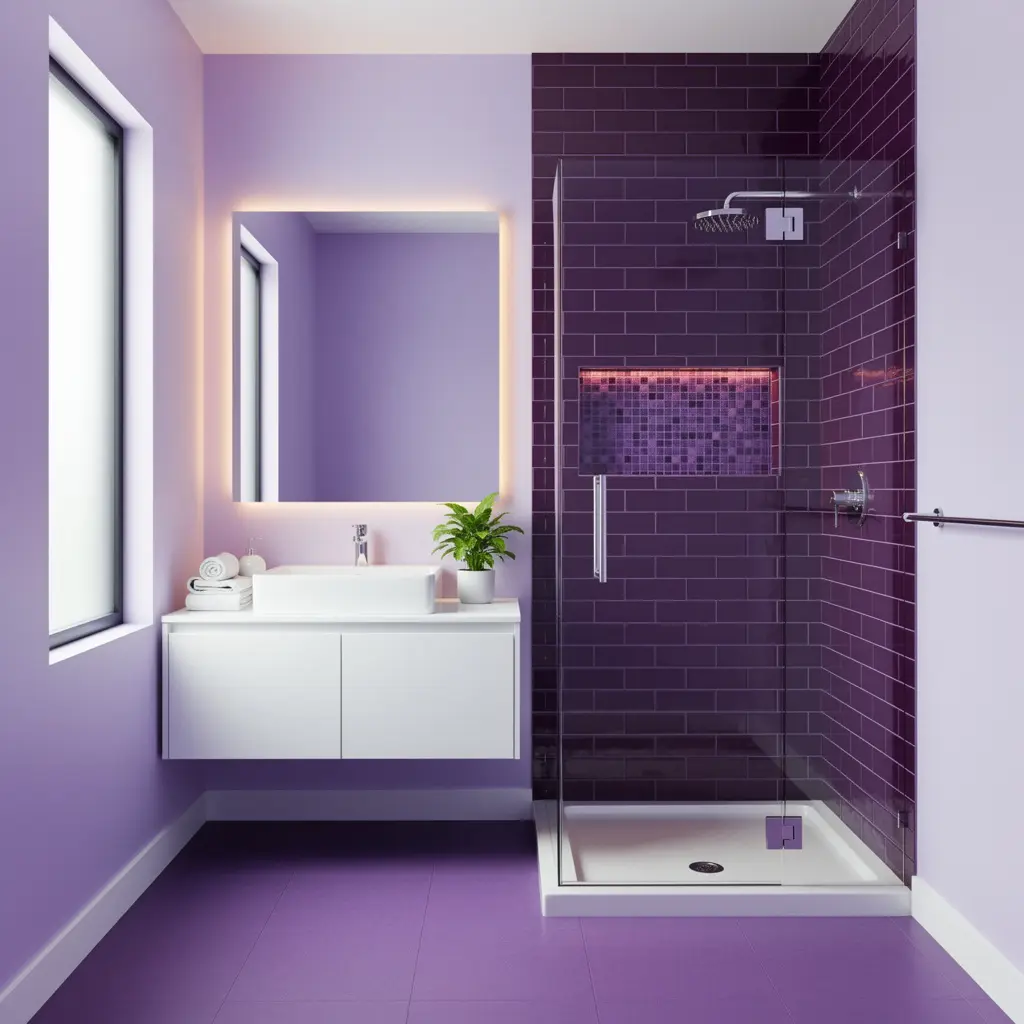
Bathroom tile is a bigger commitment than paint, so getting the shade right matters even more here. A muted, dustier purple, closer to plum or eggplant than bright violet, tends to age better and feel more sophisticated than a saturated, trend driven shade. Subway or hexagon tile in a muted purple, generally priced between 5 and 12 dollars per square foot, gives you the color without it dominating every surface in the room.
If tile feels like too much of a commitment, bathroom specific paint is a lower cost way to test the same shade first. Paint formulated to handle humidity generally runs between 40 and 65 dollars per gallon, and a satin or semi gloss finish holds up better against moisture than a flat finish would.
Testing the Shade Under Bathroom Lighting
Bathroom lighting is often harsher and cooler than lighting elsewhere in a home, which can shift how purple actually reads once it’s on the wall. Testing a paint sample or a single tile against your existing bathroom lighting, both during the day and at night, helps avoid a costly surprise before committing to a full wall or floor.
2. Balance Purple With White Fixtures and Fittings
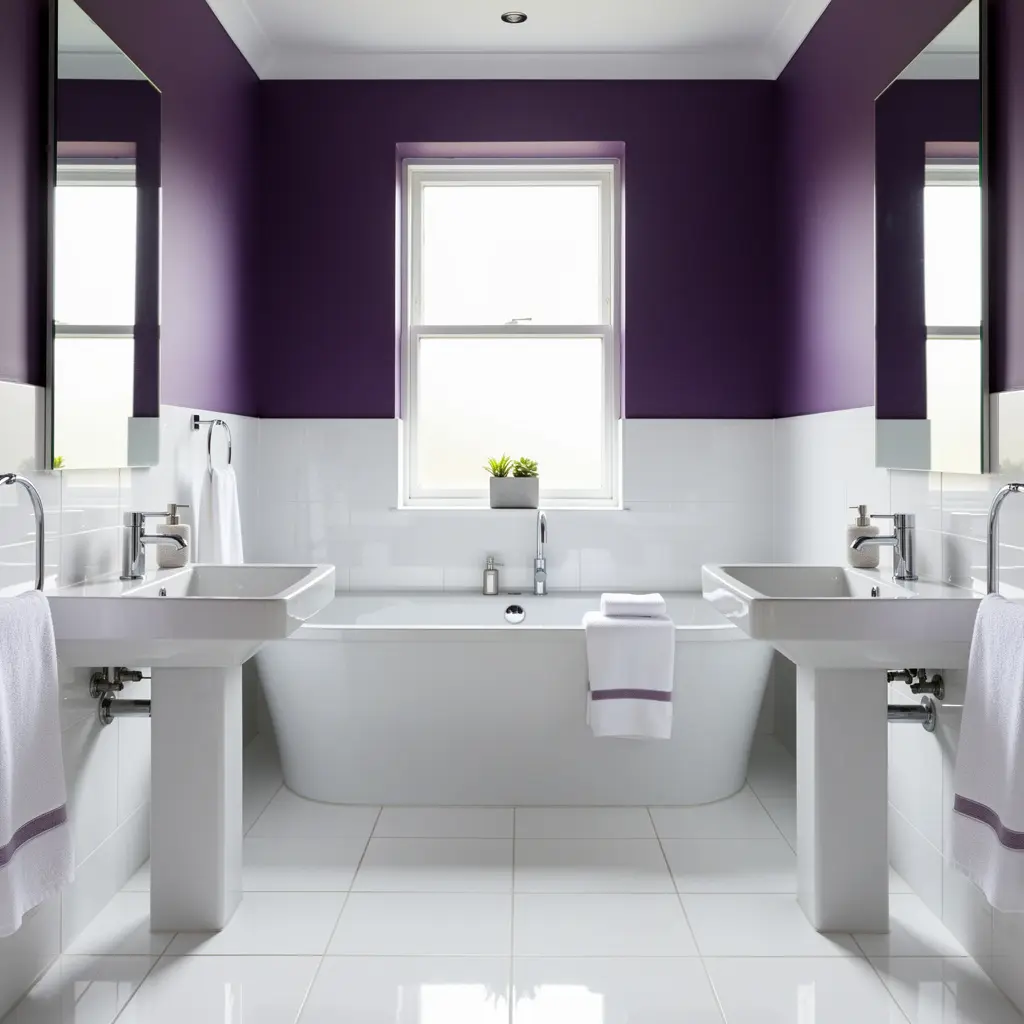
A purple bathroom with a white tub, sink, and toilet tends to feel more balanced and spa like than one where every surface leans dark. White fixtures give the eye a place to rest and keep the room from feeling like one heavy block of color. This also has a practical benefit, since white fixtures are easier to match if you ever need to replace one down the line.
Keeping the ratio roughly two thirds white to one third purple, whether through tile placement or wall coverage, tends to feel more balanced than a fully saturated purple room.
3. Add Purple Through Towels and Bath Textiles
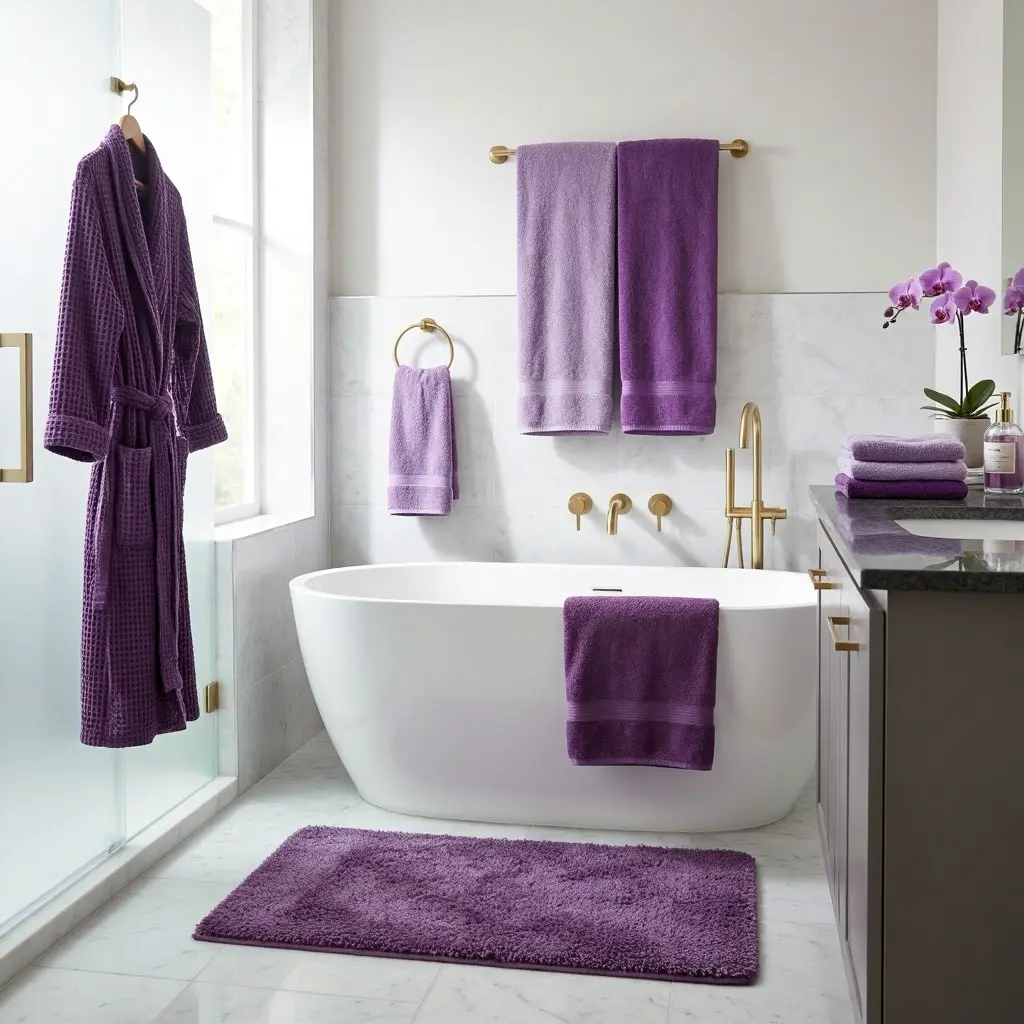
Towels are one of the easiest, lowest cost ways to bring purple into a bathroom that isn’t ready for tile or paint changes. A set of purple bath towels, generally priced between 25 and 60 dollars for a full set, adds color and softness without any permanent changes to the room.
Rolling towels rather than folding them, and stacking them in a basket or on an open shelf, adds visual texture that flat, folded towels don’t provide. A bath mat in a slightly different, complementary shade of purple or cream keeps the textiles from feeling too matched or flat.
4. Pick Metal Fixtures That Complement a Purple Bathroom
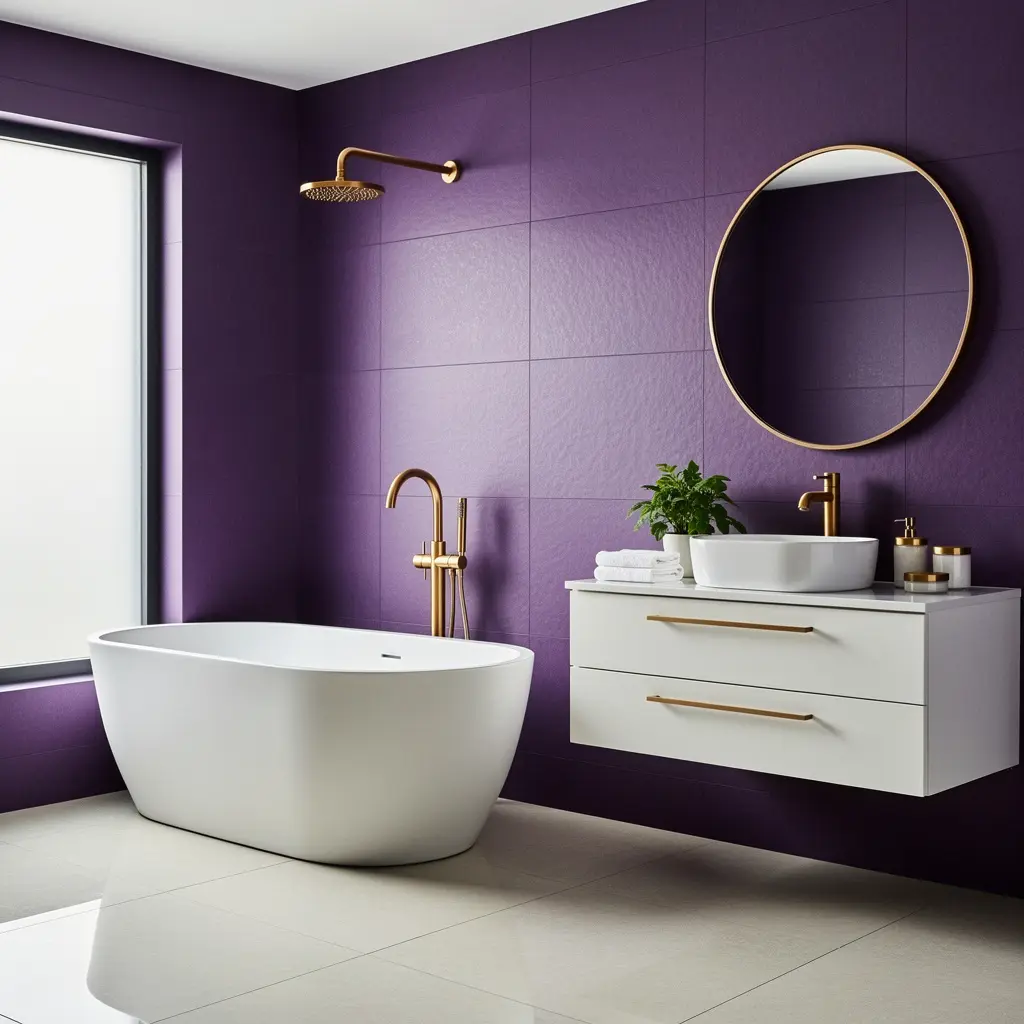
Warm brass and gold fixtures tend to soften a deep purple, making the room feel richer rather than heavier, while matte black adds a bolder, more dramatic contrast. Chrome and cool silver can sometimes clash with warmer purple undertones, making both the metal and the surrounding color look a little dull.
Faucets, showerheads, and cabinet hardware in one consistent finish throughout the room help tie a purple bathroom together instead of letting it feel like mismatched pieces gathered from different eras.
5. Use Marble or Faux Marble Accents for Contrast
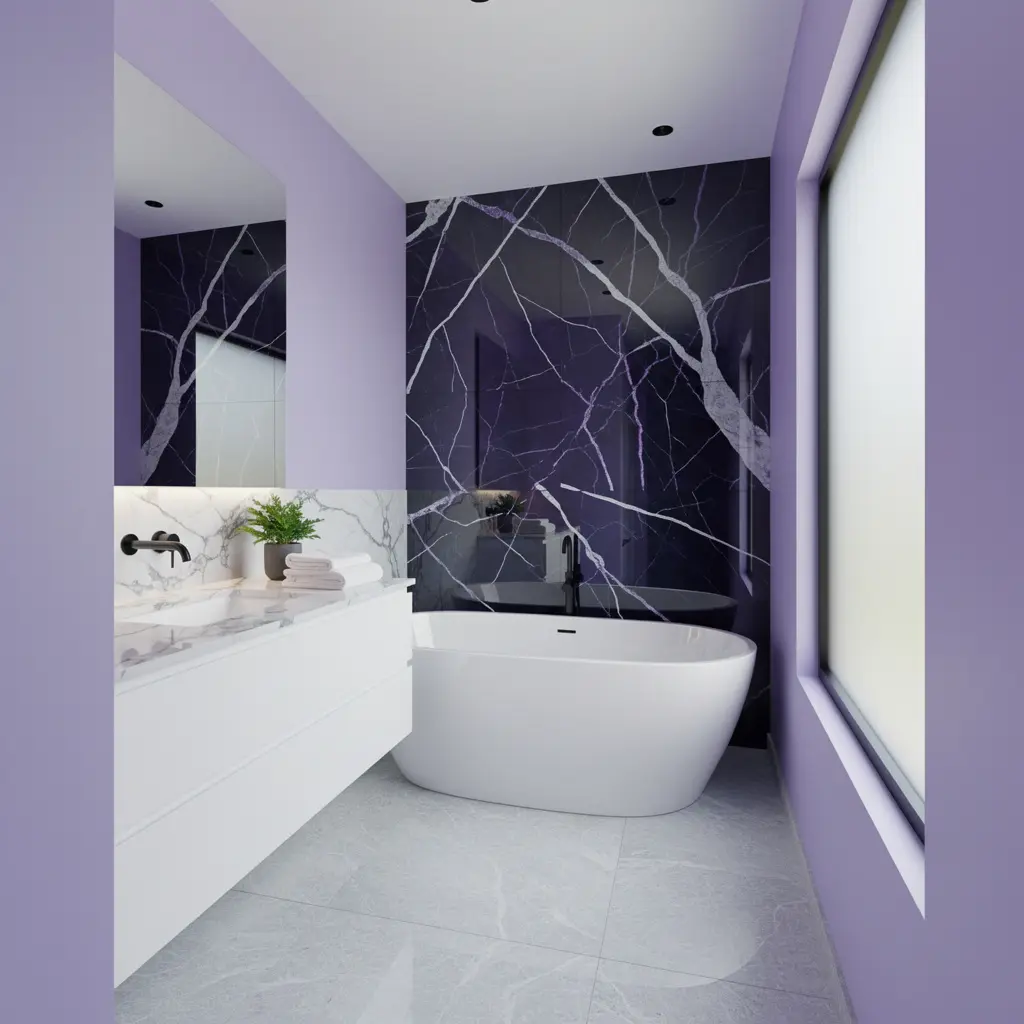
Marble, or a budget friendly faux marble laminate, adds soft veining and subtle texture that makes a bathroom feel a little more upscale without needing a full stone slab. A marble or faux marble countertop, tray, or soap dish introduces a cool, neutral element that balances the richness of purple.
Full marble countertops can run well over a thousand dollars depending on size and stone type. A smaller marble tray or a few marble coasters, generally priced between 15 and 40 dollars, gives a similar visual effect on a much smaller budget.
6. Layer in Greenery to Soften a Purple Bathroom
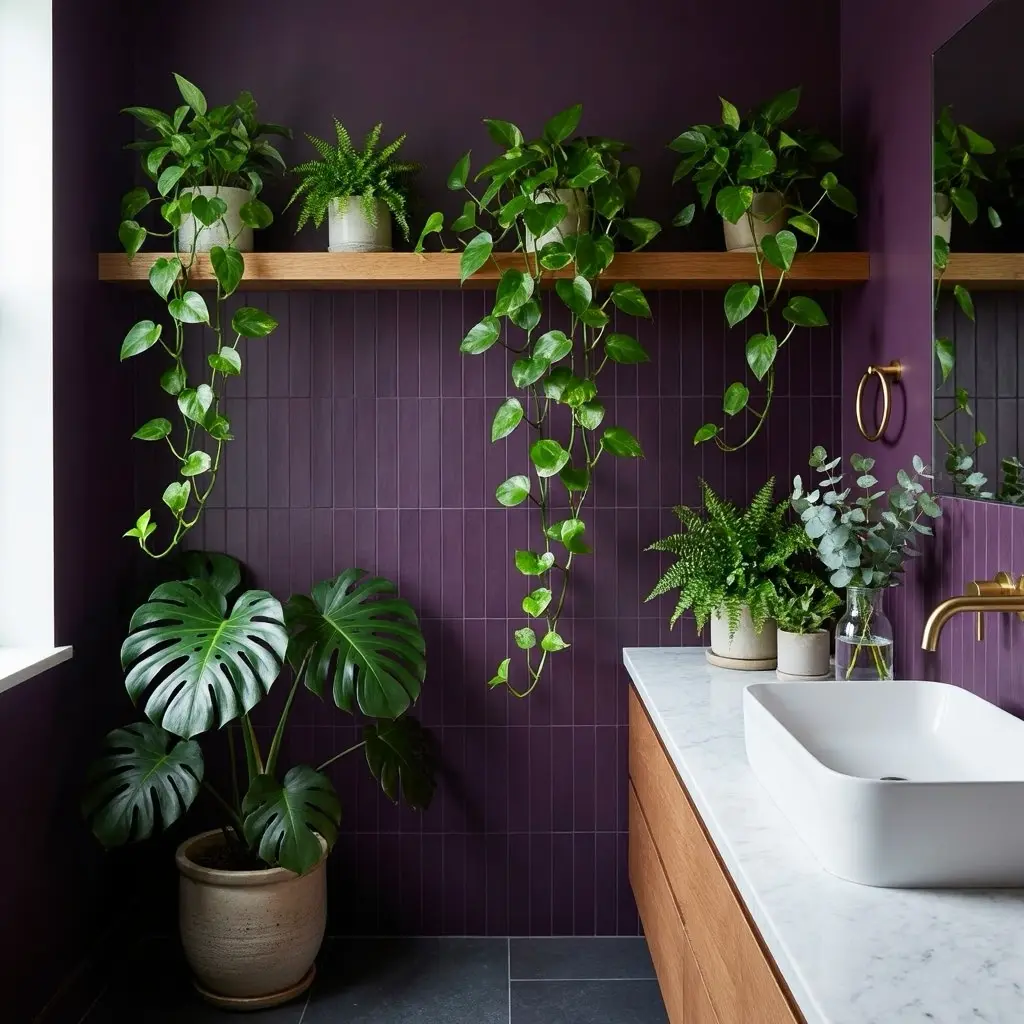
A small trailing plant, like a pothos or a spider plant, both of which tolerate bathroom humidity reasonably well, adds a natural, organic contrast to a purple color scheme. Live plants also keep a richly colored bathroom feeling fresh rather than overly styled or heavy.
If your bathroom doesn’t get much natural light, a quality faux plant works as a low maintenance substitute and still adds the same softening effect without the risk of it dying from lack of sunlight.
7. Add Statement Lighting for a Softer Glow
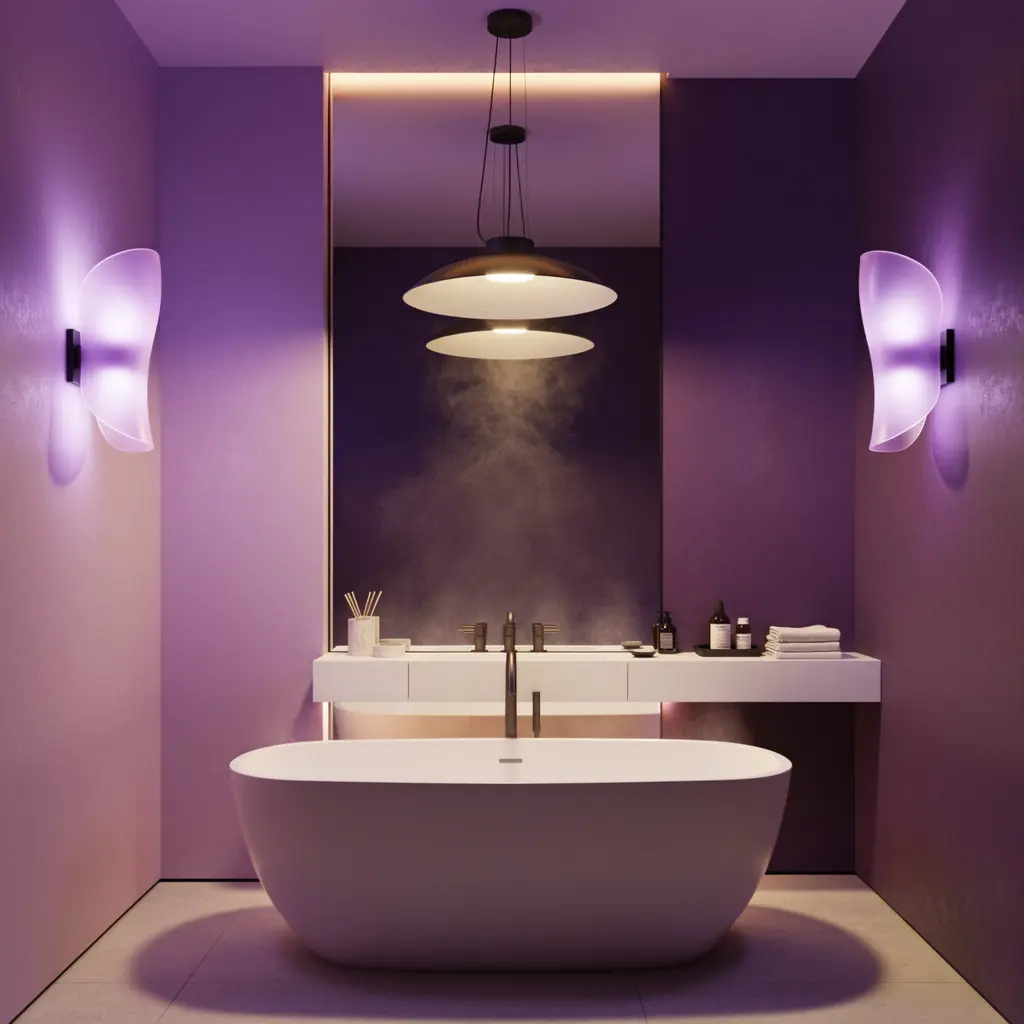
Overhead bathroom lighting is often harsh and overly bright, which can make purple tones look muddy or flat, especially at night. Adding a pendant light or wall sconces on either side of the mirror, in a warm white bulb temperature around 2700K to 3000K, gives the room a softer, more flattering glow.
Choosing Between Sconces and a Pendant
Sconces flanking the mirror provide more even, shadow free lighting for grooming tasks, while a single pendant fixture tends to work better as a decorative focal point in a larger bathroom. Many purple bathrooms benefit from combining both, using sconces for function and a pendant for style.
8. Choose Purple Storage and Vanity Accessories
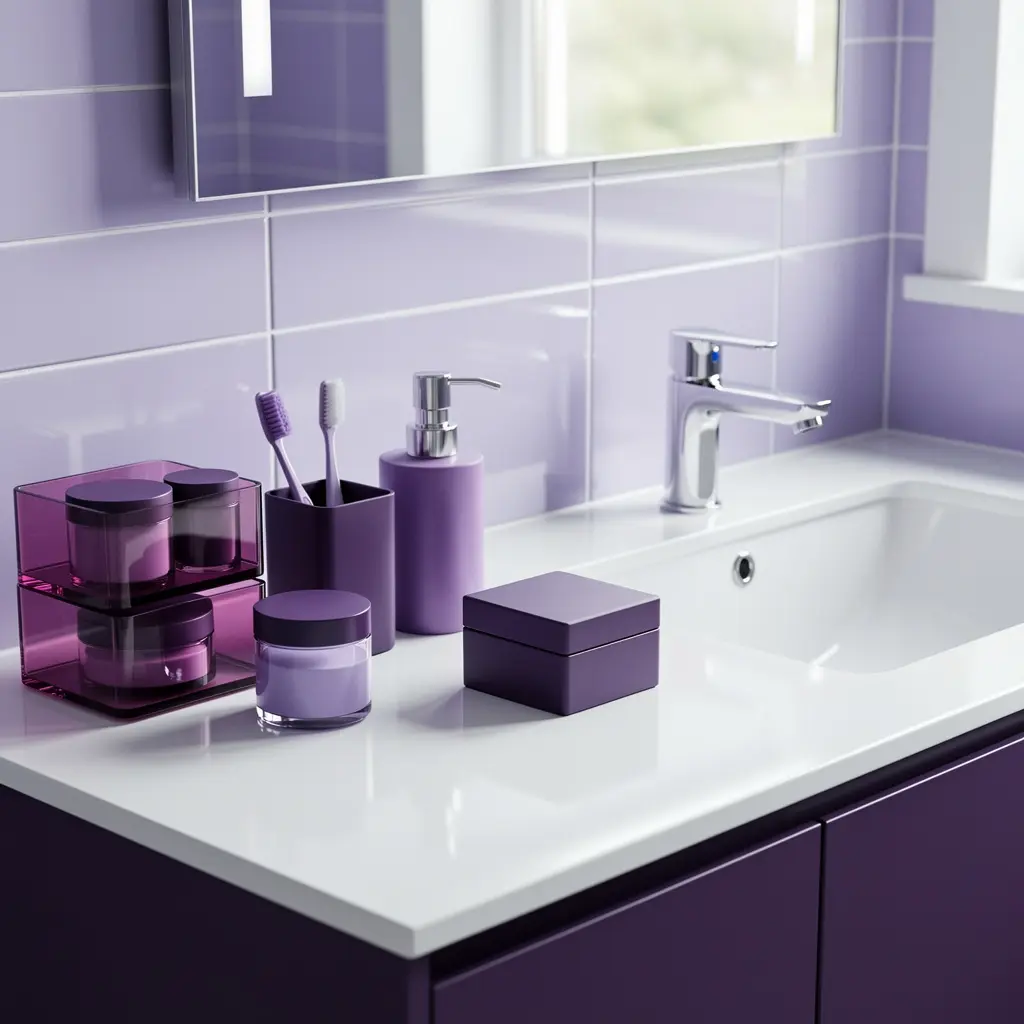
A purple soap dispenser, tissue box cover, or small storage jar adds color to a vanity without requiring any structural changes. These accessories generally run between 10 and 30 dollars each and are easy to swap out if your taste shifts later.
Grouping vanity items on a small tray, rather than spreading them across the whole counter, keeps a purple bathroom looking curated instead of cluttered, even with several small pieces in play.
9. Try a Purple Accent Wall Behind the Vanity or Tub
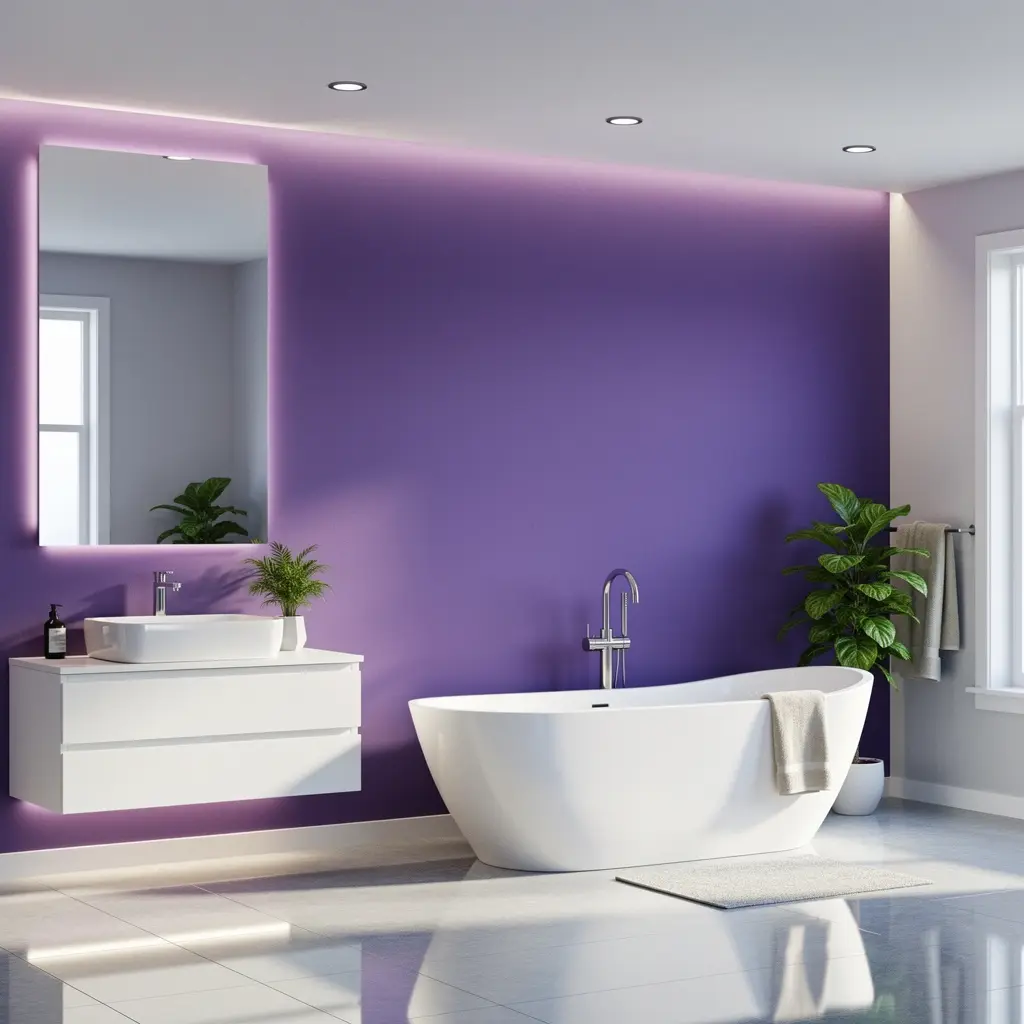
Rather than tiling or painting the entire bathroom, one accent wall behind the vanity or bathtub gives you the color impact without covering every surface. This approach tends to work especially well in smaller bathrooms, where a full room of deep purple could start to feel closed in.
Stopping the color at a clear architectural line, like where the tile meets the tub surround or a defined wall edge, keeps the accent looking intentional rather than unfinished.
10. Add Final Touches With Candles, Trays, and Small Details
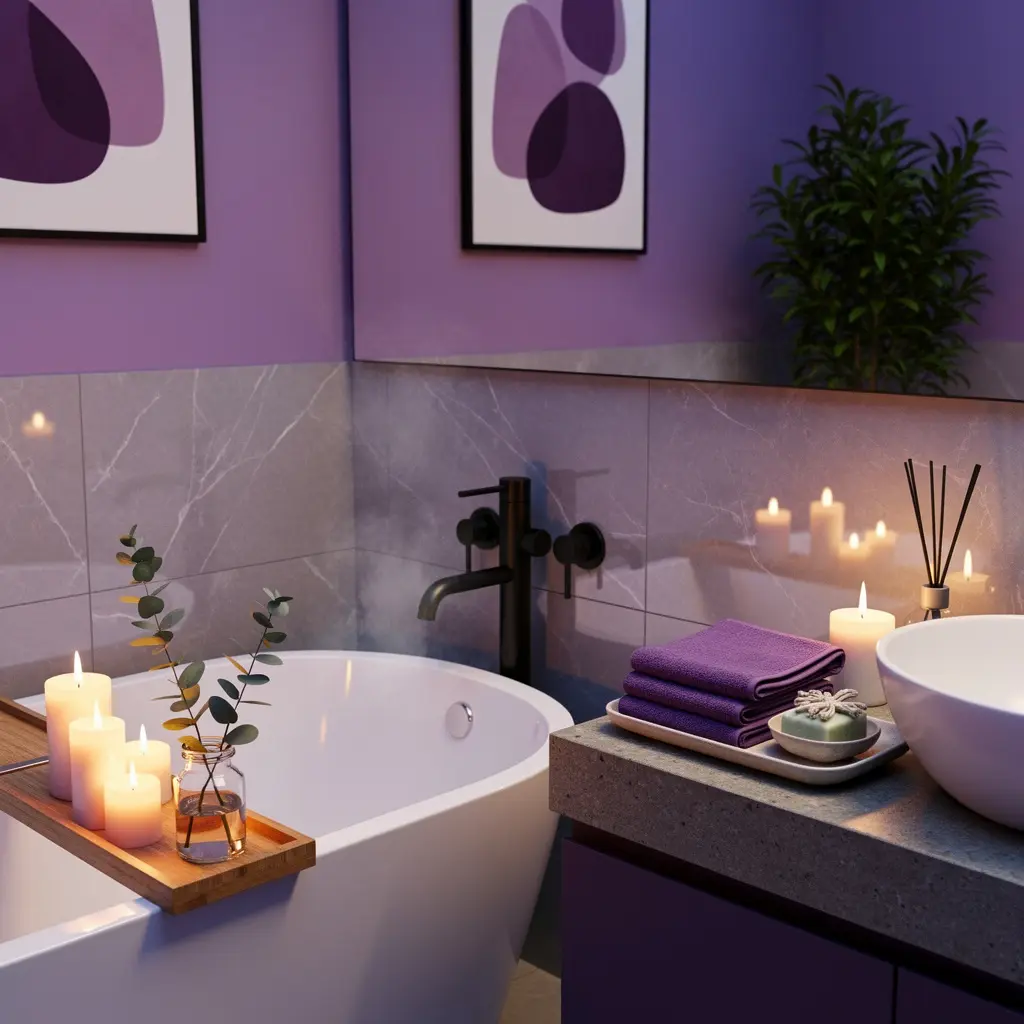
A few candles in a warm, muted scent, paired with a small ceramic or marble tray to hold rings or small jewelry near the sink, complete the rich, spa like feel a purple bathroom is going for. These small details, generally priced under 20 dollars each, are what make a bathroom feel finished rather than just painted a certain color.
Rotating a few seasonal touches, like a small vase of dried florals, keeps the space feeling current without requiring any major changes throughout the year.
Mistakes to Avoid
- Choosing a bright, saturated purple tile without testing it under your actual bathroom lighting
- Covering every surface in purple with no white or neutral space to balance it
- Mixing chrome and brass fixtures in the same small bathroom
- Relying only on harsh overhead lighting, which can wash out or dull purple tones
- Cluttering the vanity with too many small accessories instead of grouping them on a tray
- Skipping texture entirely and using only flat, matte finishes throughout the room
Frequently Asked Questions
Does purple work in a small bathroom? Yes, especially as an accent rather than covering every surface. A muted, lighter purple paired with plenty of white and good lighting tends to keep a small bathroom feeling open rather than closed in.
What tile pairs well with purple in a bathroom? White subway tile, light gray marble look tile, and cream toned tile all pair naturally with purple, since they share a similar softness without competing with the color for attention.
Is purple too bold for a bathroom renovation? A muted, dustier purple tends to age more gracefully than a bright, saturated shade, and pairing it with classic white fixtures and warm metal hardware helps the overall look stay timeless even as specific trends shift.
How do I keep a purple bathroom from feeling too dark? Balancing purple with plenty of white fixtures and countertops, layering in warm lighting, and keeping greenery and accessories light in tone all help prevent a purple bathroom from feeling heavy or closed in.
Can I add purple to a rental bathroom? Yes, through removable elements like towels, a shower curtain, a bath mat, and small vanity accessories. These add color without requiring any permanent changes to tile, paint, or fixtures.
Conclusion
A purple bathroom comes down to undertone, balance, and a few well chosen textures rather than covering every surface in deep color. Start with a warm, muted shade, pair it with white fixtures and warm metal hardware, then layer in soft lighting and a bit of greenery to finish the look. Small changes, tested one at a time, tend to add up to a more genuinely rich and relaxing space than trying to overhaul the whole bathroom at once.