10 Purple Bedroom Ideas That Make Your Space Feel Like a Dream
Purple has a reputation problem in bedroom design. Go too bright and it reads like a teenager’s room from twenty years ago. Go too dark without balancing it and the whole space can start to feel heavy instead of restful. That gap between purple done well and purple done badly comes down almost entirely to shade choice and what you pair it with, and it’s exactly what these purple bedroom ideas are built to solve.
The goal isn’t avoiding purple, since a muted plum, a soft lavender, or a deep aubergine can all make a bedroom feel genuinely calm and a little luxurious. The goal is choosing the right version of the color and layering it with texture, warm light, and enough neutral space that the room reads as intentional rather than a single overpowering color choice.
1. Choose the Right Shade of Purple for Your Bedroom Walls
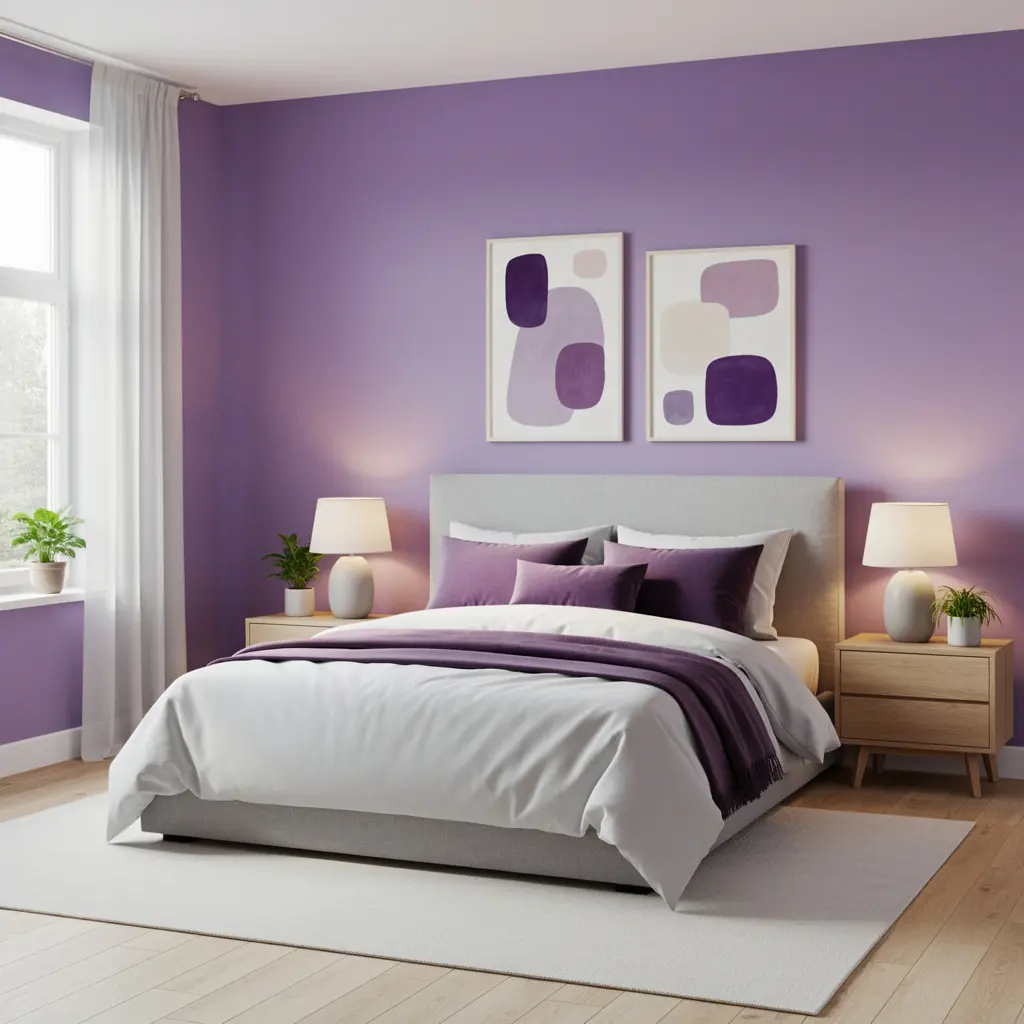
Purple covers an enormous range, from a nearly gray toned lavender to a deep, almost black plum, and each version creates a completely different feeling in a bedroom. Muted, dustier purples with gray or brown undertones tend to read as calm and sophisticated, while bright, saturated purples can feel more energetic or, depending on the shade, closer to childish than most adults want in a bedroom.
Testing a sample patch directly on your wall, in both natural and artificial light, matters more with purple than almost any other color, since it can shift dramatically depending on the light source and time of day.
Why Undertone Changes the Whole Room
A purple with a blue undertone can feel cool and a little somber, while one with a red or brown undertone leans warmer and cozier. Holding your paint sample next to your existing furniture and bedding helps you catch a clash before committing to a full gallon.
2. Balance Purple With Warm or Cool Neutrals Depending on the Mood
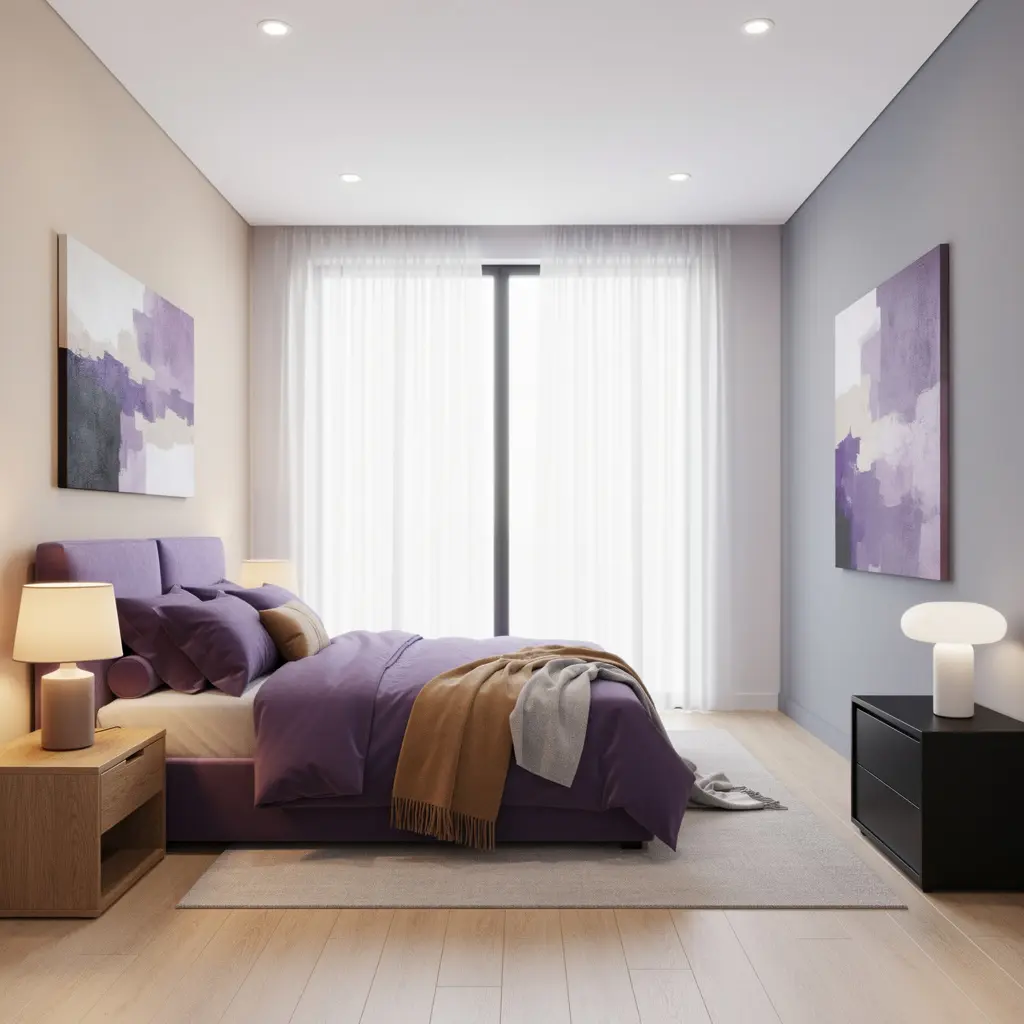
The neutrals you pair with purple largely determine whether the room feels cozy or crisp. Warm neutrals, like cream, taupe, and soft camel, pull a purple bedroom toward feeling cozy and grounded. Cooler neutrals, like light gray and white, push the same purple toward a more modern, slightly crisp feeling.
Neither approach is wrong, but mixing warm and cool neutrals inconsistently in the same room tends to make the space feel unresolved. Picking one direction and staying consistent across bedding, furniture, and accessories keeps the room feeling cohesive.
3. Add Purple Through Bedding and Textiles Without Repainting
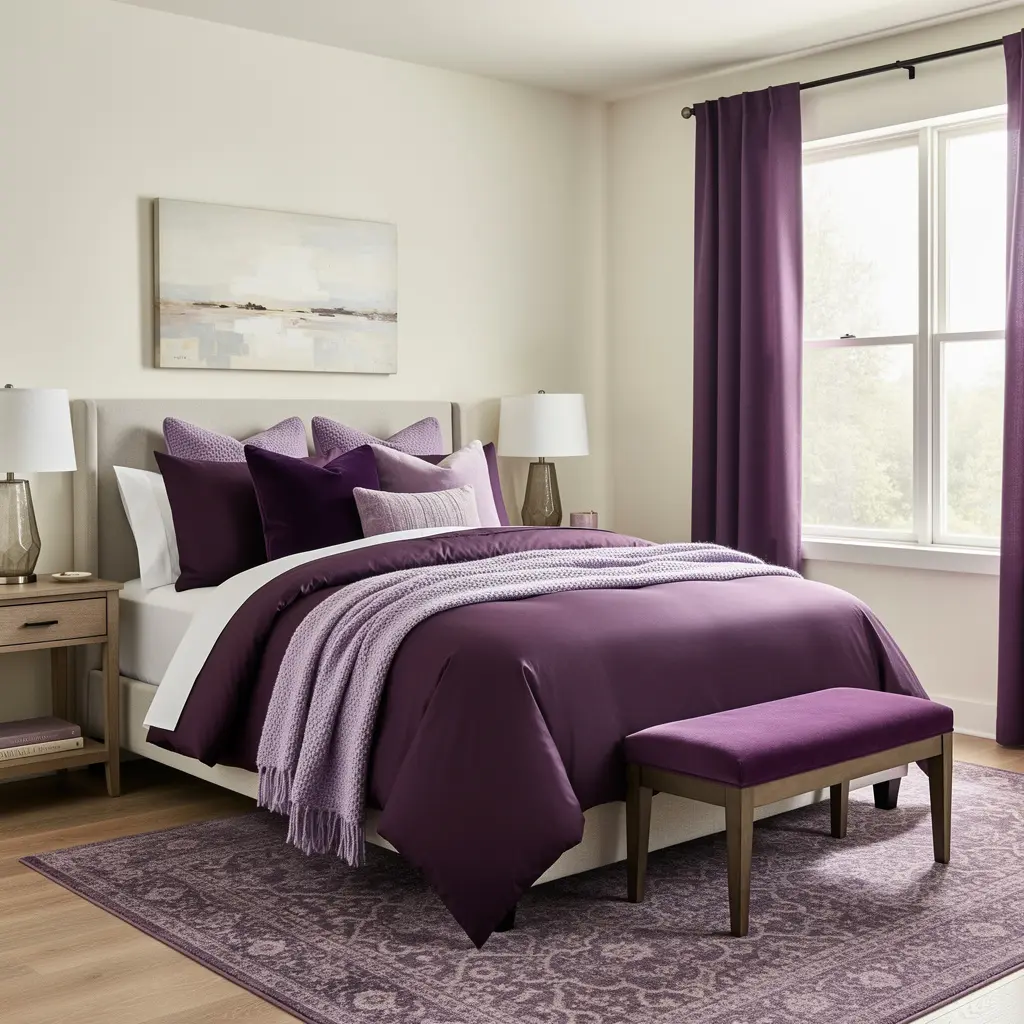
If painting feels like too big a commitment, bedding is one of the easiest ways to test purple in a bedroom. A duvet cover or quilt in a muted plum or dusty lavender, generally priced between 60 and 150 dollars, brings in the color without touching the walls at all.
Layering a few different shades and textures, like a solid purple duvet with a patterned throw pillow in a lighter lilac, adds depth that a single matching set doesn’t provide on its own.
4. Pick Metal Accents That Complement Purple Tones
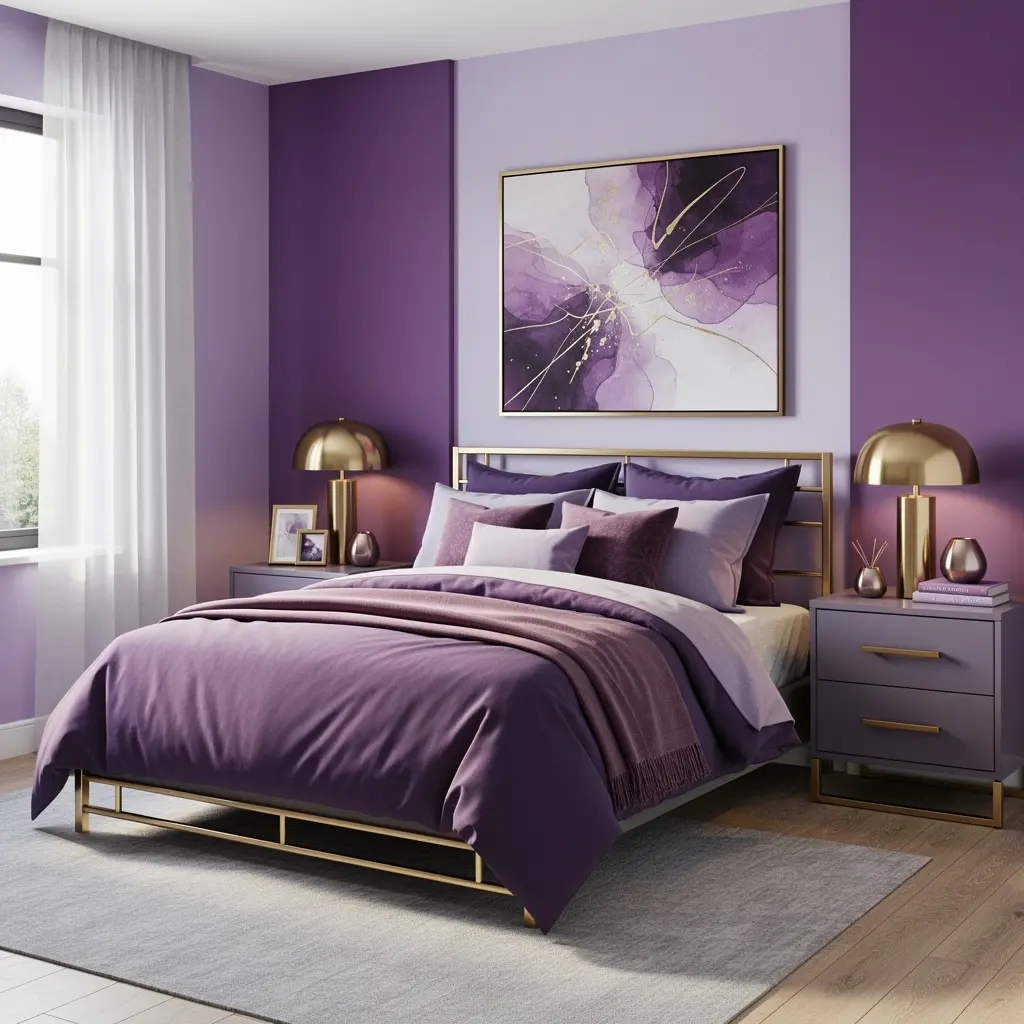
Warm brass and gold tend to soften a deep purple, making the room feel richer rather than heavier, while matte black adds contrast and a slightly more dramatic, modern edge. Chrome and cool silver can sometimes clash with warmer purple undertones, making both the metal and the wall color look a little dull by comparison.
Keeping one metal finish consistent across lamps, frame hardware, and any drawer pulls in the room helps a purple bedroom feel curated instead of like a random mix of separate purchases.
5. Use Lighting to Keep a Purple Bedroom From Feeling Too Dark
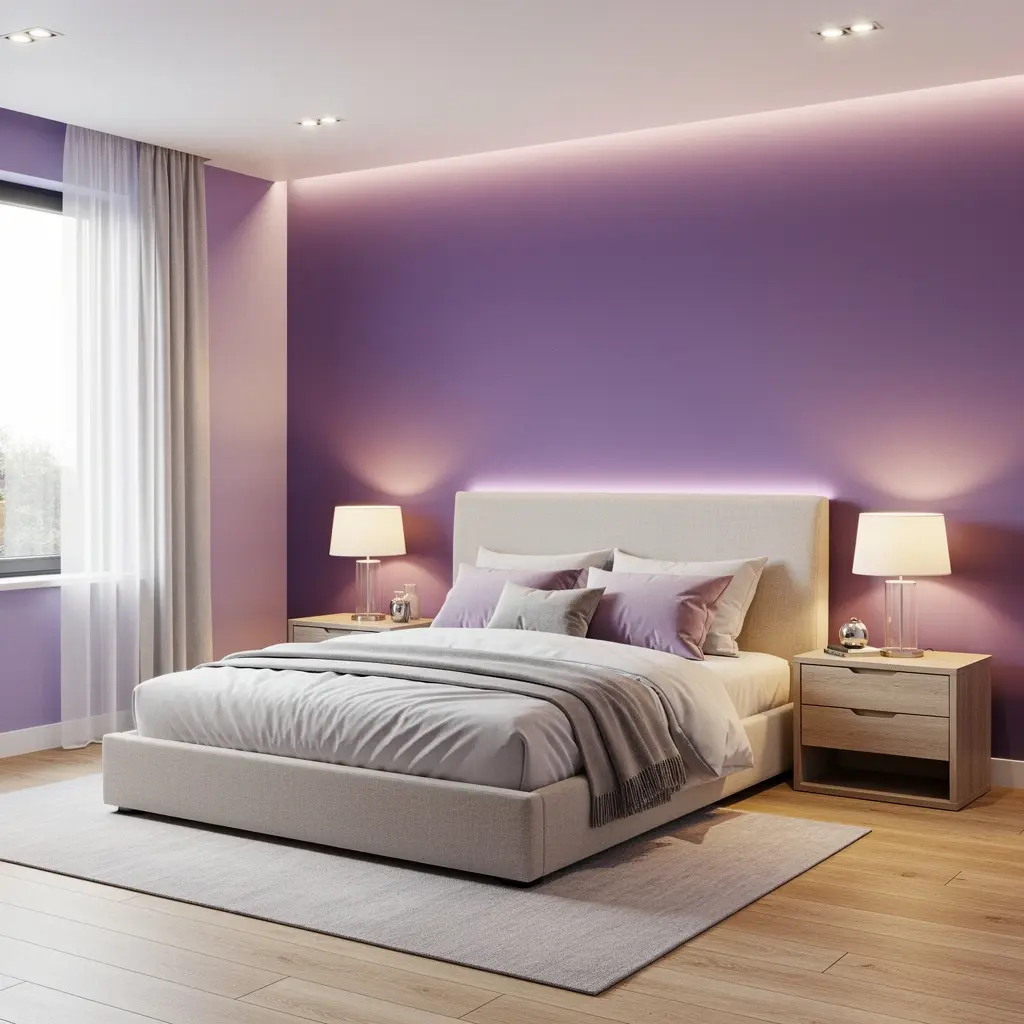
Darker purple shades absorb more light than pale neutrals, which means a purple bedroom often needs more intentional lighting than a lighter colored room to avoid feeling dim or closed in. Layering a few light sources, like a bedside lamp, a floor lamp, and warm overhead lighting, rather than relying on one single fixture, keeps the room feeling balanced.
Bulbs in the 2700K to 3000K range, labeled warm white, help purple tones read as rich rather than flat or muddy, which matters especially in the evening when natural light disappears entirely.
6. Layer in Velvet and Textured Fabrics for a Luxe Feel
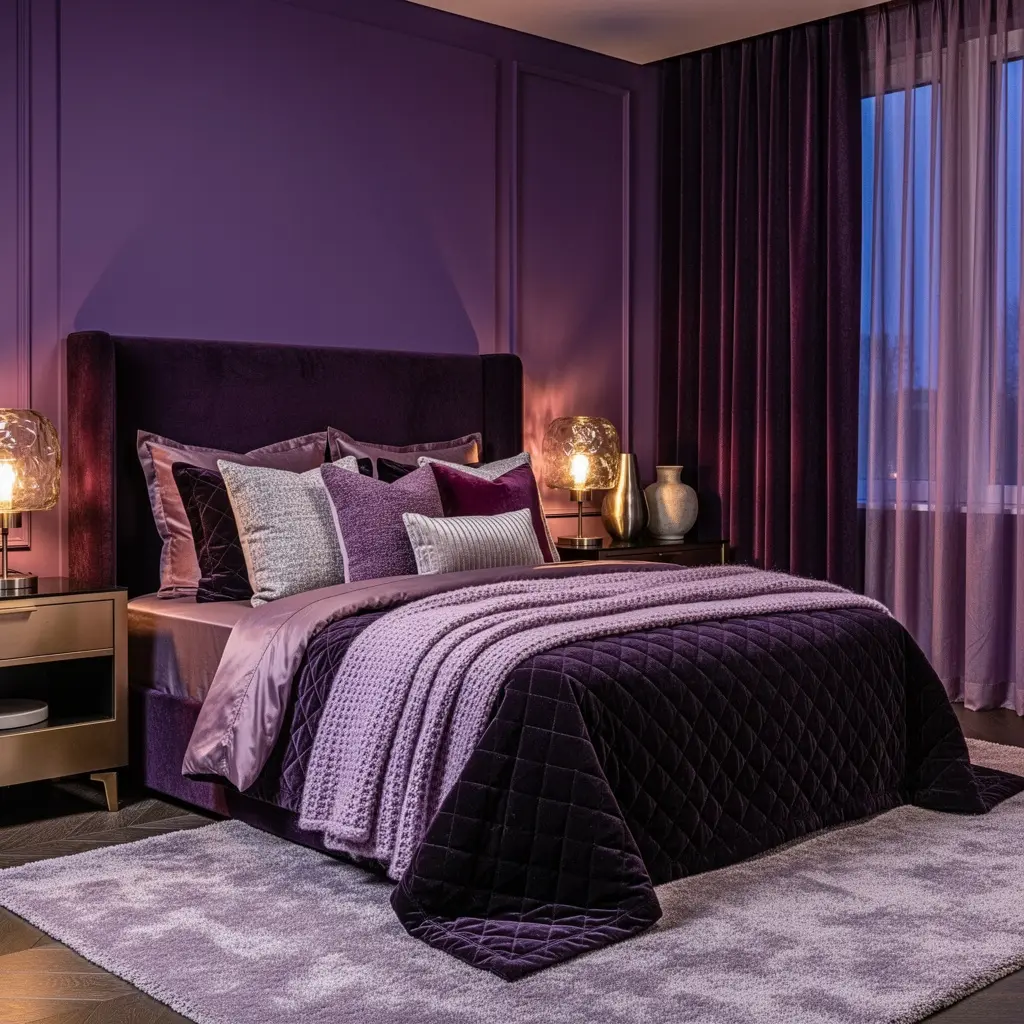
Purple and velvet have a natural pairing, since the deep pile of velvet catches light in a way that flat cotton doesn’t, adding richness to the color. A velvet headboard, a set of velvet throw pillows, or a velvet bench at the foot of the bed, generally priced between 40 and 200 dollars depending on the piece, introduces that texture without requiring a full furniture overhaul.
Mixing Textures Without Overdoing It
One or two velvet pieces, paired with linen or cotton elsewhere in the room, tends to look more intentional than an entire room covered in the same heavy fabric. That contrast between smooth velvet and more textured, woven materials is part of what gives the room depth.
7. Try a Purple Accent Wall Instead of Painting the Whole Room
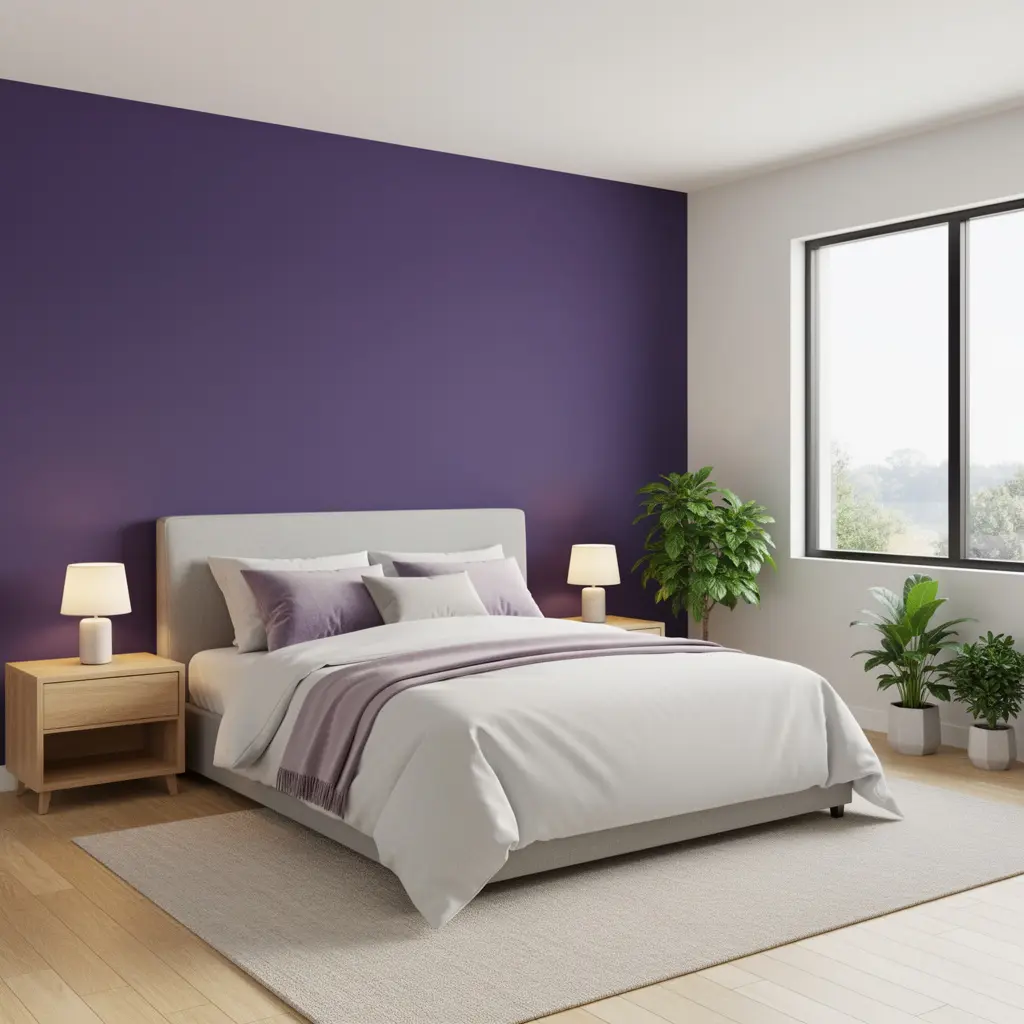
If a full purple bedroom feels like too much commitment, painting just the wall behind the headboard gives you the color impact without covering every surface. This approach also tends to feel less overwhelming day to day, since the other three walls stay neutral and give the eye somewhere to rest.
Stopping the paint at a clear architectural line, like a corner or a defined trim edge, keeps an accent wall looking finished and intentional rather than like an unfinished painting project.
8. Add Botanical Prints or Art That Complements Purple
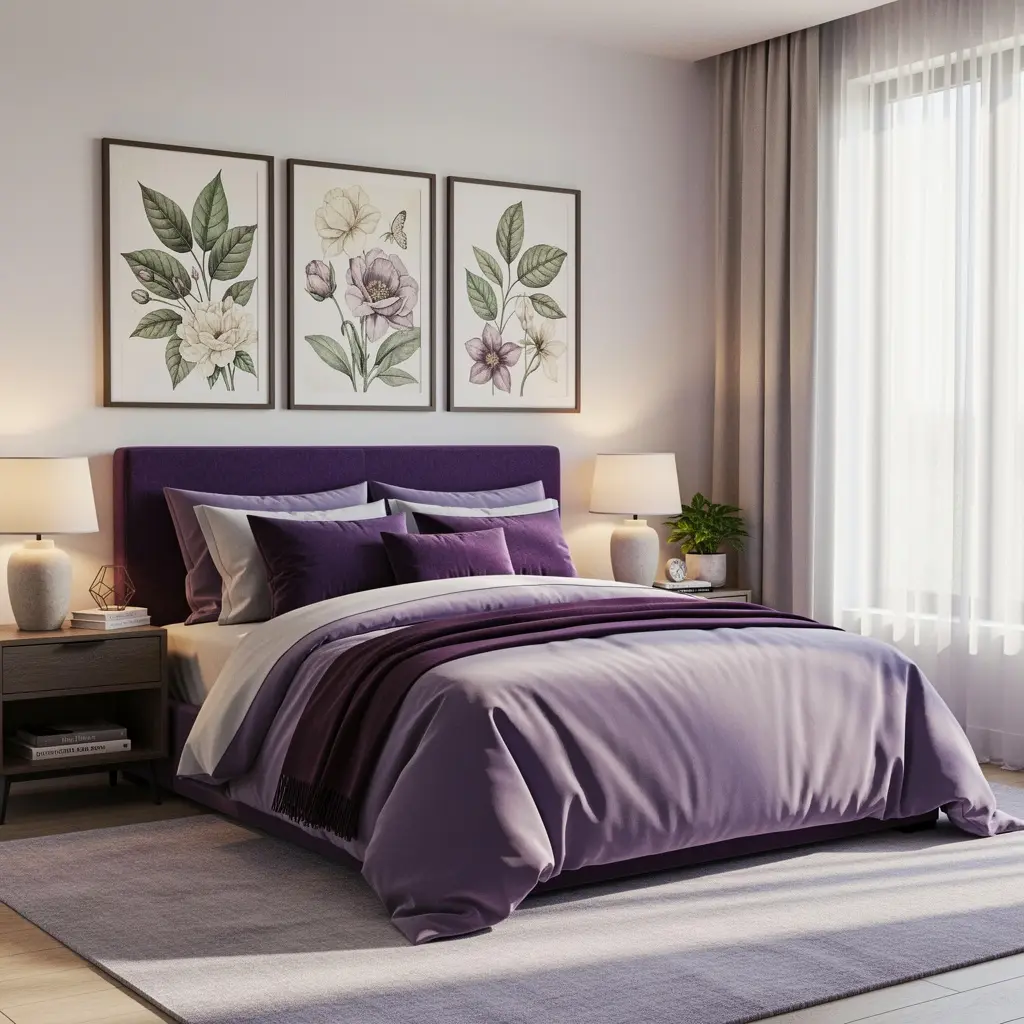
Framed botanical prints, particularly ones featuring lavender, wisteria, or other purple toned flowers, tie a room’s art directly into its color scheme without requiring an exact color match on every piece. Mixing a few different frame sizes and finishes, rather than an identical matched set, keeps a gallery arrangement from looking flat.
Art with muted, earthy tones alongside the purple, rather than bright or neon colors, tends to support the calm, grown up feeling most purple bedrooms are aiming for.
9. Choose a Rug That Grounds a Purple Color Scheme
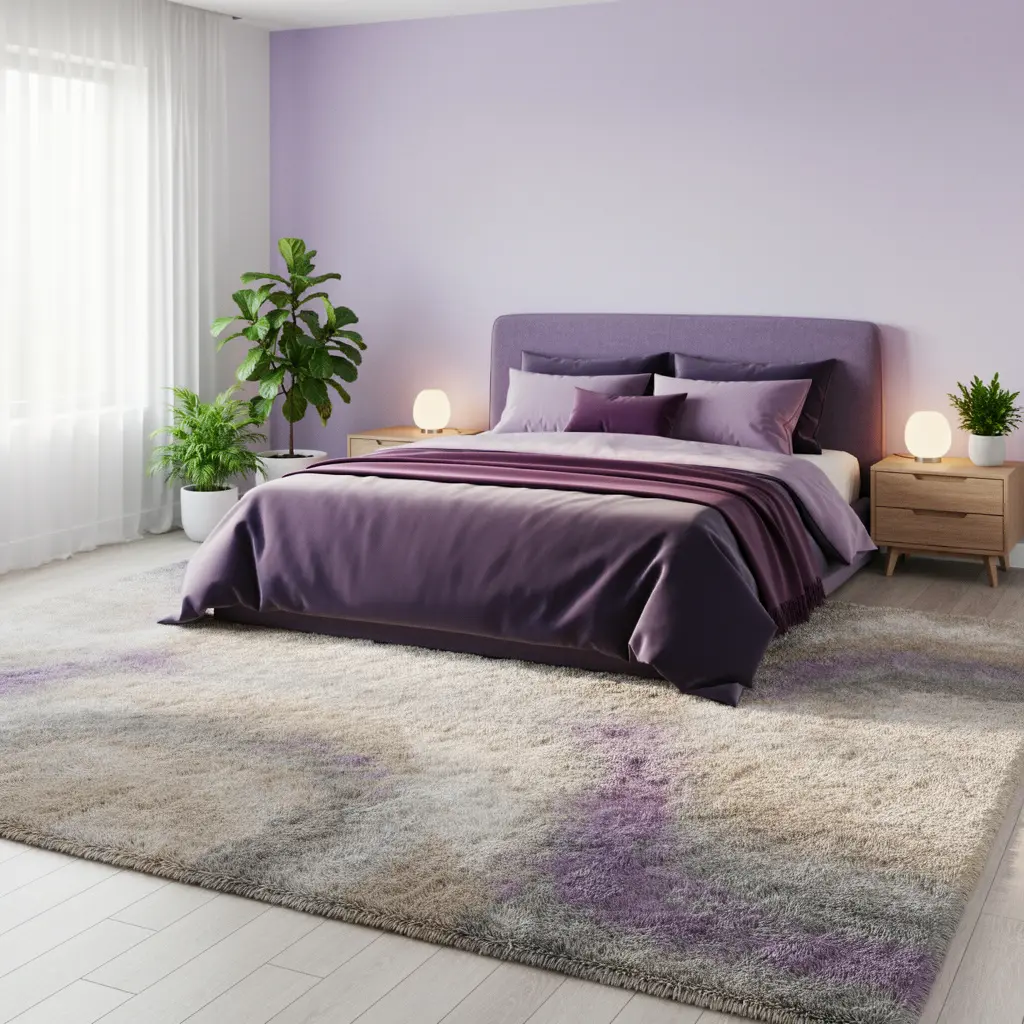
A rug that incorporates purple into a pattern, rather than a solid purple rug, tends to be easier to build a room around and ages better as your taste shifts over time. Rugs blending purple with cream, gray, or taupe in a muted pattern generally run between 100 and 400 dollars depending on size and material.
A rug placed so that at least the front legs of the bed and any nearby seating rest on it helps anchor the furniture arrangement and keeps the room from feeling like separate, disconnected pieces floating on bare floor.
10. Get the Look Without Painting, for Renters
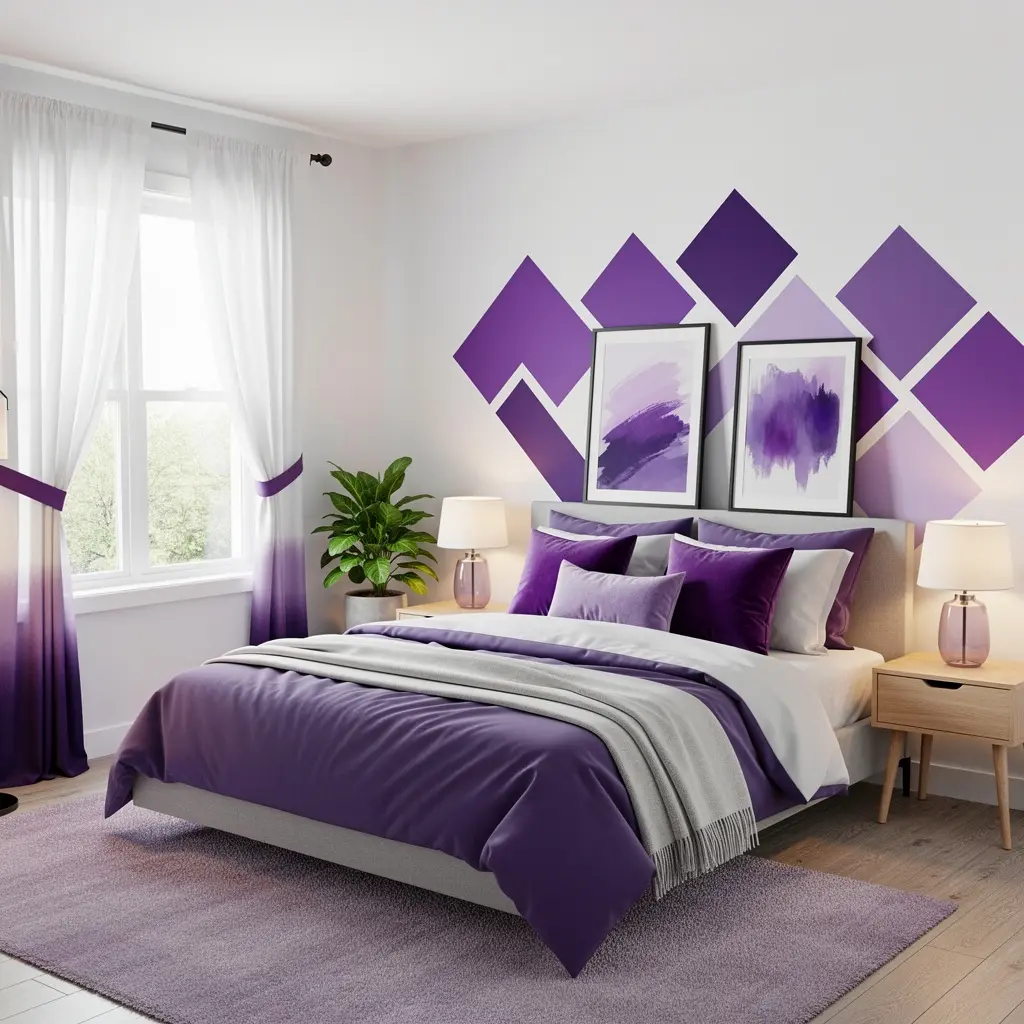
Removable, peel and stick wallpaper in a purple tone, generally priced between 25 and 60 dollars per roll, gives renters a way to add a statement wall without any paint or adhesive damage. Applied correctly, it comes off cleanly at move out, which matters in most lease agreements.
A large tapestry or fabric wall hanging in purple tones is another no damage option, and it doubles as texture and a bit of sound dampening in a bedroom with hard flooring.
Mistakes to Avoid
- Choosing a bright, saturated purple without testing it against your room’s actual lighting
- Relying only on cool overhead light, which can make purple tones look flat or muddy
- Covering every surface in the same shade of purple with no neutral space to balance it
- Mixing warm and cool metal finishes inconsistently throughout the room
- Skipping texture entirely and using only flat, matte fabrics
- Painting a full accent wall without a clean stopping edge, which looks unfinished
Frequently Asked Questions
Does purple make a bedroom feel smaller? A lighter, muted purple paired with good lighting tends to open a room up rather than closing it in. Darker, more saturated purples used on every wall without contrast are more likely to make a small room feel tighter and heavier.
What colors pair best with a purple bedroom? Warm neutrals like cream, taupe, and soft camel tend to feel cozy against purple, while cool grays and white create a more modern, crisp contrast. Both work, but consistency within one direction matters more than which one you choose.
Is purple too bold for a bedroom meant for sleeping? A muted, dustier purple, especially one closer to plum or lavender than bright violet, tends to read as calming rather than stimulating. Very bright, saturated purples can feel more energetic, which some people prefer to avoid in a space meant for rest.
How do I keep a purple bedroom from feeling dated? Leaning toward a muted, complex shade rather than a bright, trend specific purple, and pairing it with classic finishes like brass or matte black rather than trend driven accessories, helps the room age well over time.
Can I use purple in a small bedroom without it feeling overwhelming? Yes, especially as a single accent wall rather than covering the whole room. Keeping the remaining walls light and neutral, and adding a mirror to bounce light around, helps a purple accent wall feel intentional instead of closing the room in.
Conclusion
A purple bedroom doesn’t need to feel dramatic or overwhelming to work. It needs the right shade, warm layered lighting, and a few textured pieces that keep the color from feeling flat. Start with a sample patch tested in your actual room, then build outward with bedding, one accent wall, and a rug that ties the whole space together. That slower, layered approach almost always reads as more intentional than trying to style the entire room around purple in a single weekend.