
You climb into bed at the end of a long day, and the room around you does nothing to help you actually unwind. White walls, mismatched furniture, harsh overhead lighting still buzzing from earlier. A bedroom that isn’t built for rest ends up working against you every single night, whether you notice it consciously or not. Dreamy blue bedroom aesthetic ideas solve this in a fairly direct way, since blue is one of the few colors with real research behind its calming effect, and the right shade paired with warm textures turns a plain room into somewhere you actually want to be. This article walks through exactly how to build that look, from picking the right blue to the small details that keep it from feeling cold.
1. Why Blue Keeps Winning as a Bedroom Color
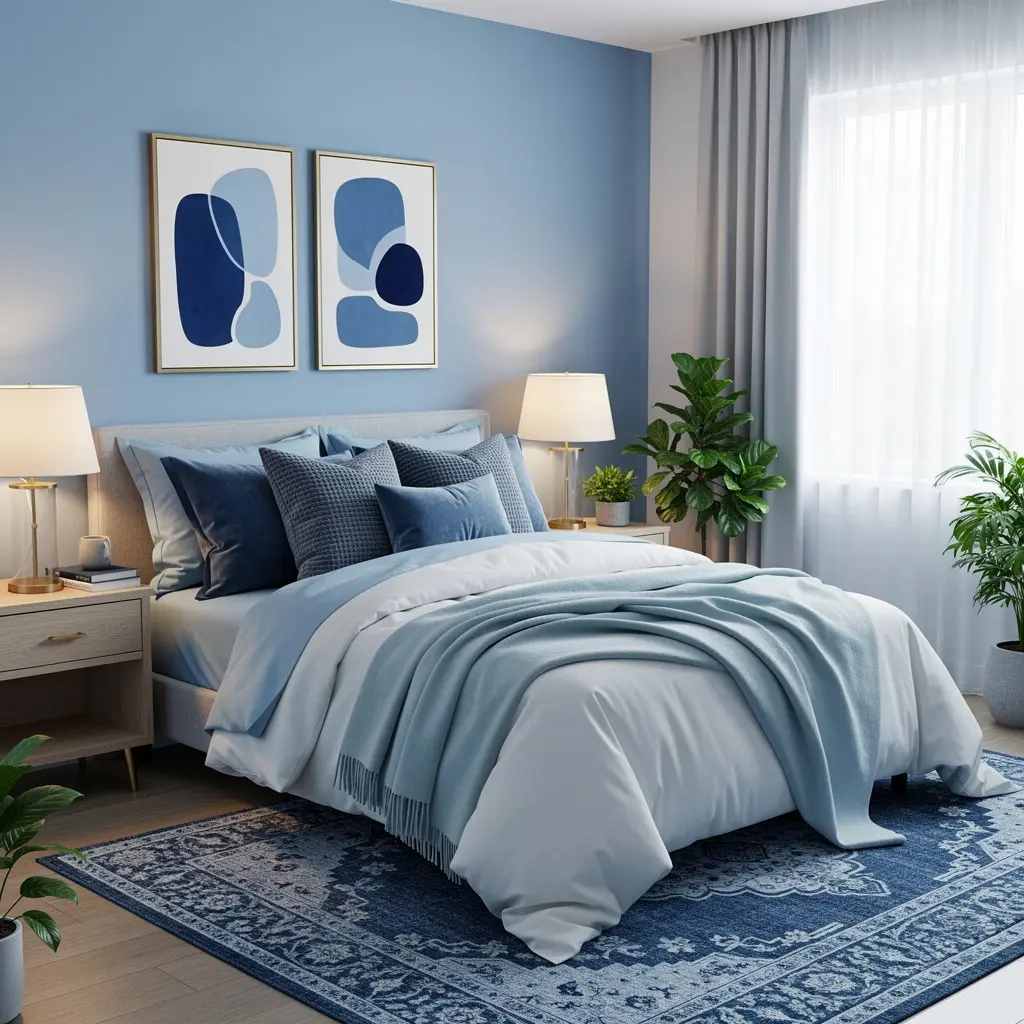
Blue shows up again and again in bedroom design, and it’s not just a trend. Studies on color and sleep consistently link blue tones to lower heart rate and reduced anxiety, which matters more in a bedroom than almost any other room in the house. It’s also just versatile. A pale, dusty blue reads as soft and airy. A deep navy reads as moody and cocooning. Same color family, completely different mood, depending on how saturated you go.
The One Thing That Trips People Up
Blue can tip cold fast if you’re not careful. A blue toned white trim, cool metal fixtures, and stark white bedding together will make even a beautiful navy wall feel more clinical than cozy. The fix is almost always warmth somewhere else in the room, which we’ll get into.
2. Picking a Shade That Won’t Feel Cold in a Year
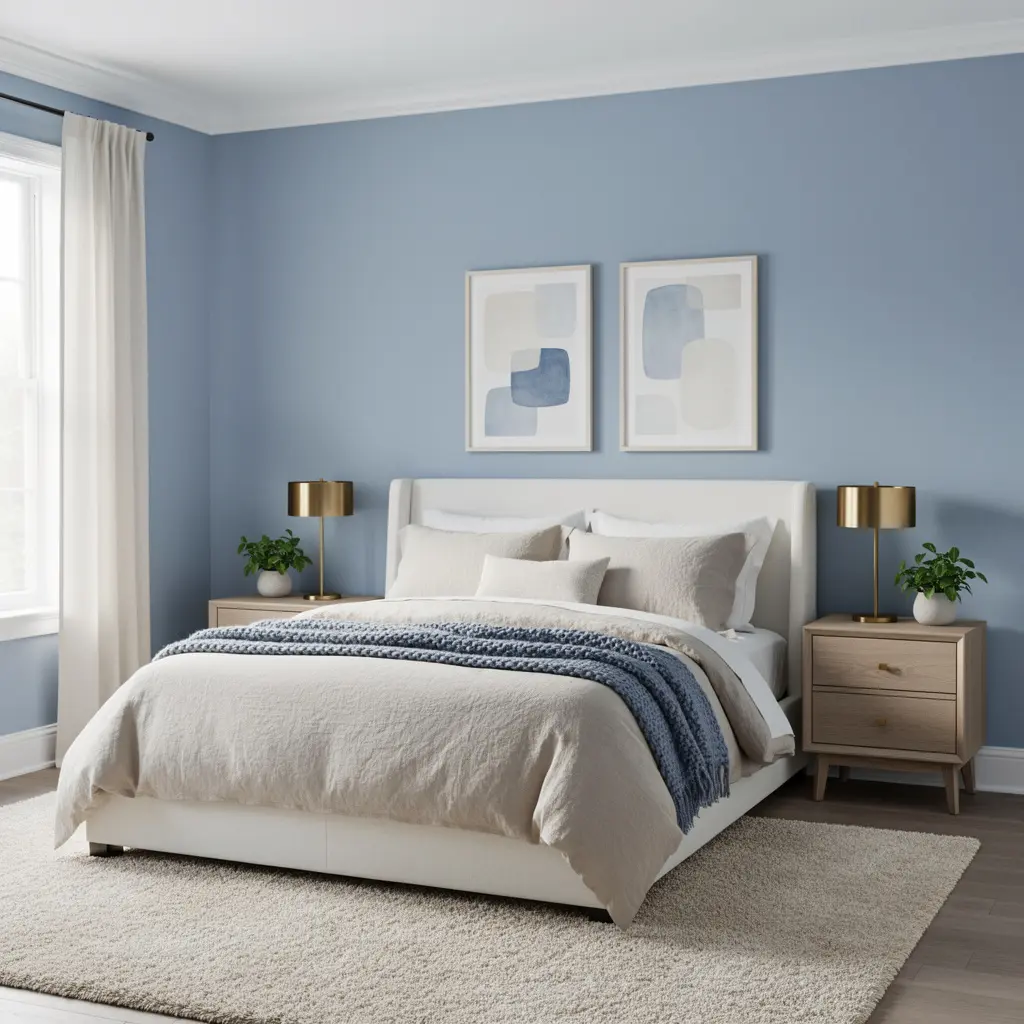
Dusty blue, with a slight gray undertone, reads as more timeless than a bright, saturated blue that can start to feel dated within a few years. Navy works well as a deeper option, especially on an accent wall, since it reads more like a neutral than people expect once it’s paired with warm wood and brass. Test any shade on the actual wall before committing. Paint looks completely different under your bedroom’s lighting than it does on a small swatch card at the store, and this is genuinely the step most people skip and regret.

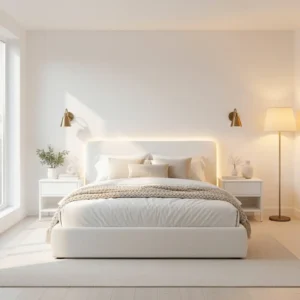
3. The Accent Wall Debate, and When to Skip It
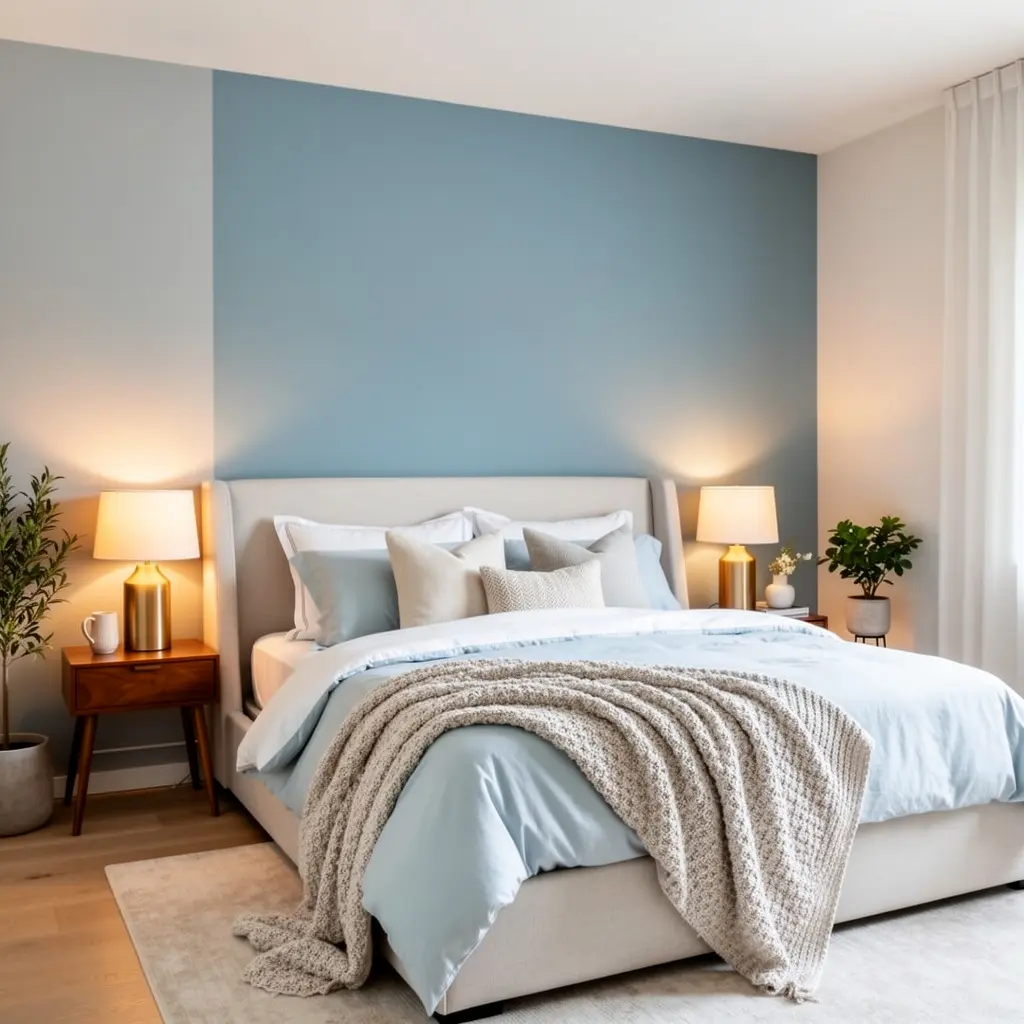
A single accent wall, usually behind the headboard, gives you the full impact of a deep blue without committing the whole room to it. This works especially well in smaller bedrooms, where four blue walls can start to feel closed in rather than cozy. If you’d rather commit fully, a full room in a lighter, dustier blue avoids that closed in feeling while still giving you the color throughout. There’s no wrong answer here. It really comes down to how bold you want the room to read and how much natural light you’re working with.
4. Bedding Is Where the Aesthetic Actually Lives
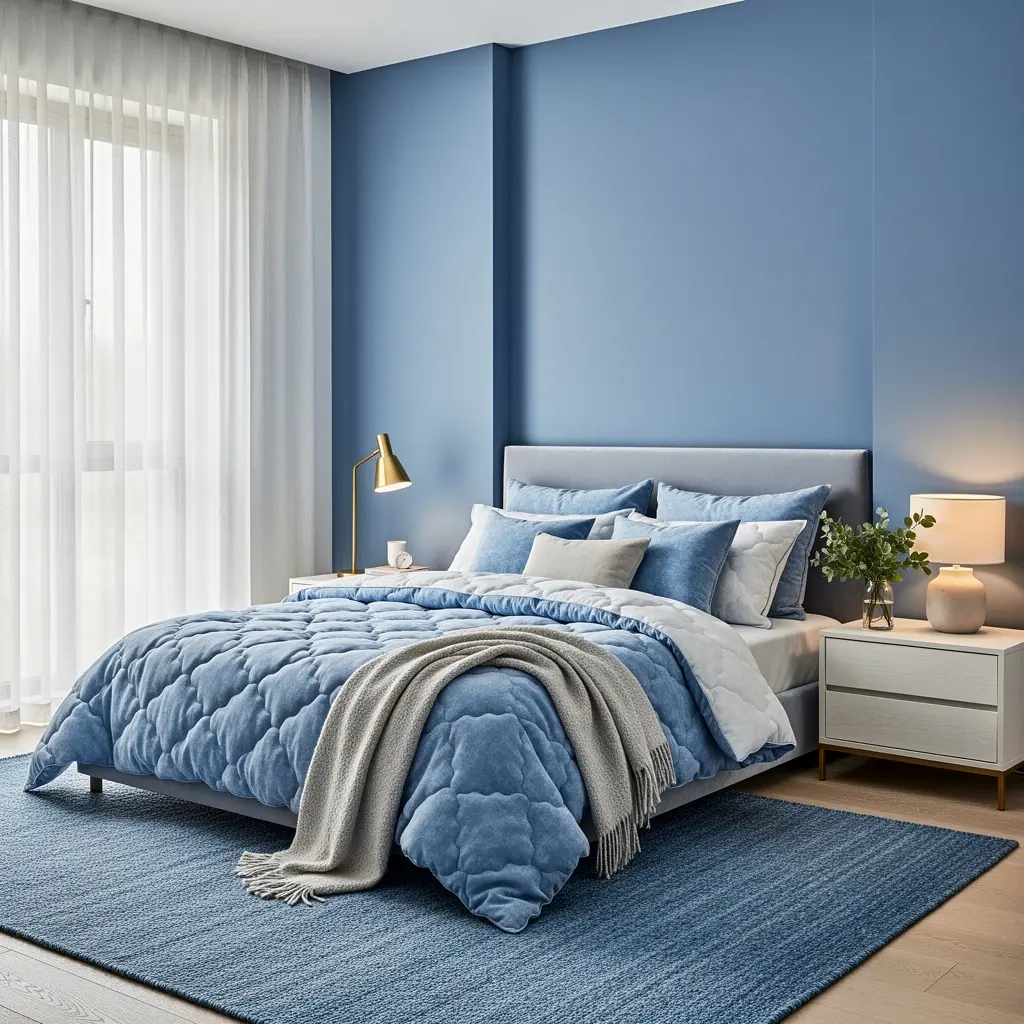
Here’s something most guides don’t mention enough. Paint sets the tone, but bedding is what you actually touch and see every single day, so it’s worth the bigger investment. Layer a white or cream base sheet set with a chunky knit throw and a few textured pillows in complementary tones, maybe a soft rust or a warm oatmeal, to keep the whole look from reading as flat blue and white. A quality quilt or duvet in a linen or cotton blend, somewhere in the 100 to 250 dollar range depending on size and material, holds up better over time than a cheaper polyester alternative and looks noticeably better too.
Bedding layered in at least three different textures consistently reads as more intentional and dreamy than a single flat comforter, even when the color palette is identical.
5. Warm Lighting Fixes Everything Blue Can Get Wrong
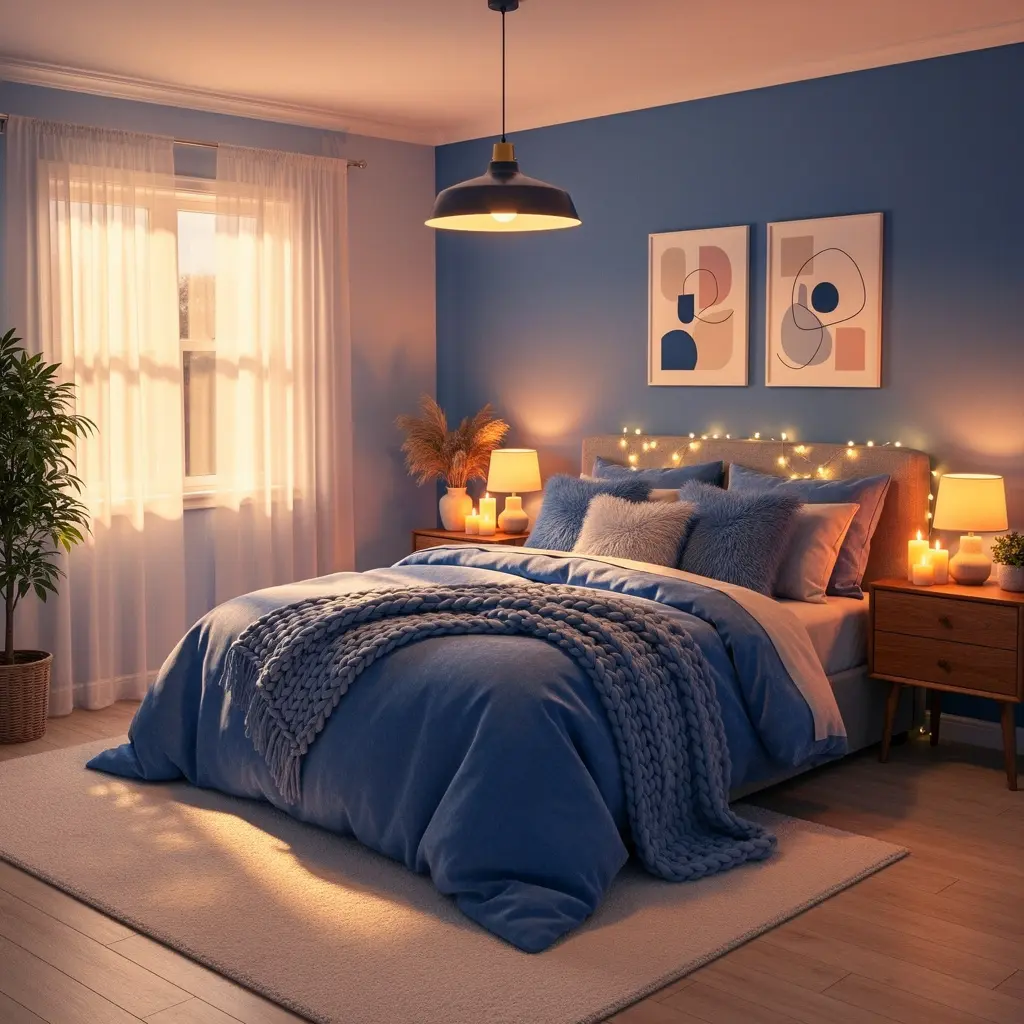
This is the single biggest lever for keeping a blue bedroom from feeling cold. Warm white bulbs, in the 2700 kelvin range, counteract the cooler tones of blue paint in a way that’s almost immediately noticeable once you switch from a bright, blue toned bulb. A dimmable bedside lamp, ideally with a brass or warm metal finish, adds a soft glow for reading or winding down before sleep. Skip the overhead light most evenings if you can. Lamps alone do more for the mood of a blue bedroom than any other single change.
6. Wood Tones That Actually Pair With Blue
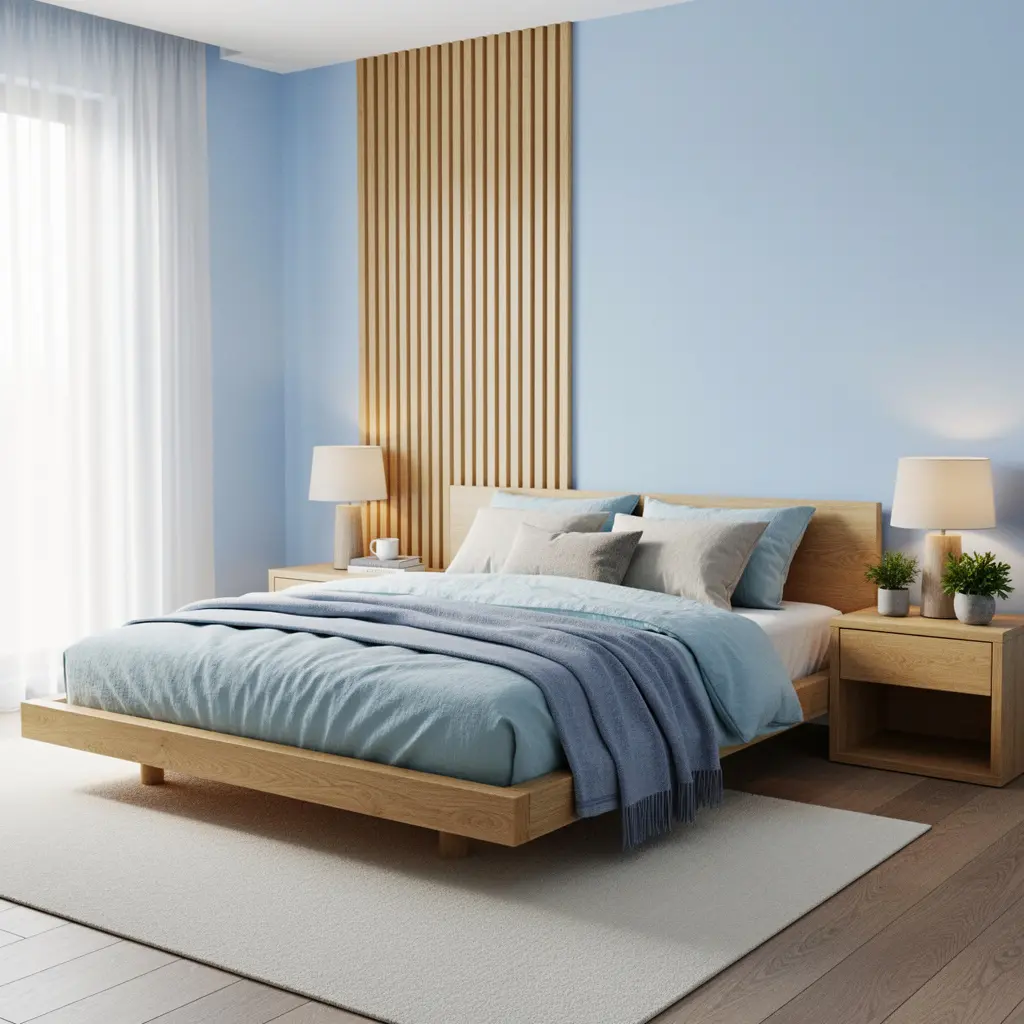
Warm, medium toned wood, think honey oak or walnut, balances the cool undertone of blue better than a pale, blond wood or a cool gray finish. A wood headboard or nightstand set in this tone anchors the room and keeps it from feeling like it’s all one temperature. If your existing furniture runs cooler in tone, a coat of stain or even swapping out just the nightstands can shift the whole room’s balance without a full furniture overhaul.
7. Texture Layers That Stop the Room Looking Flat
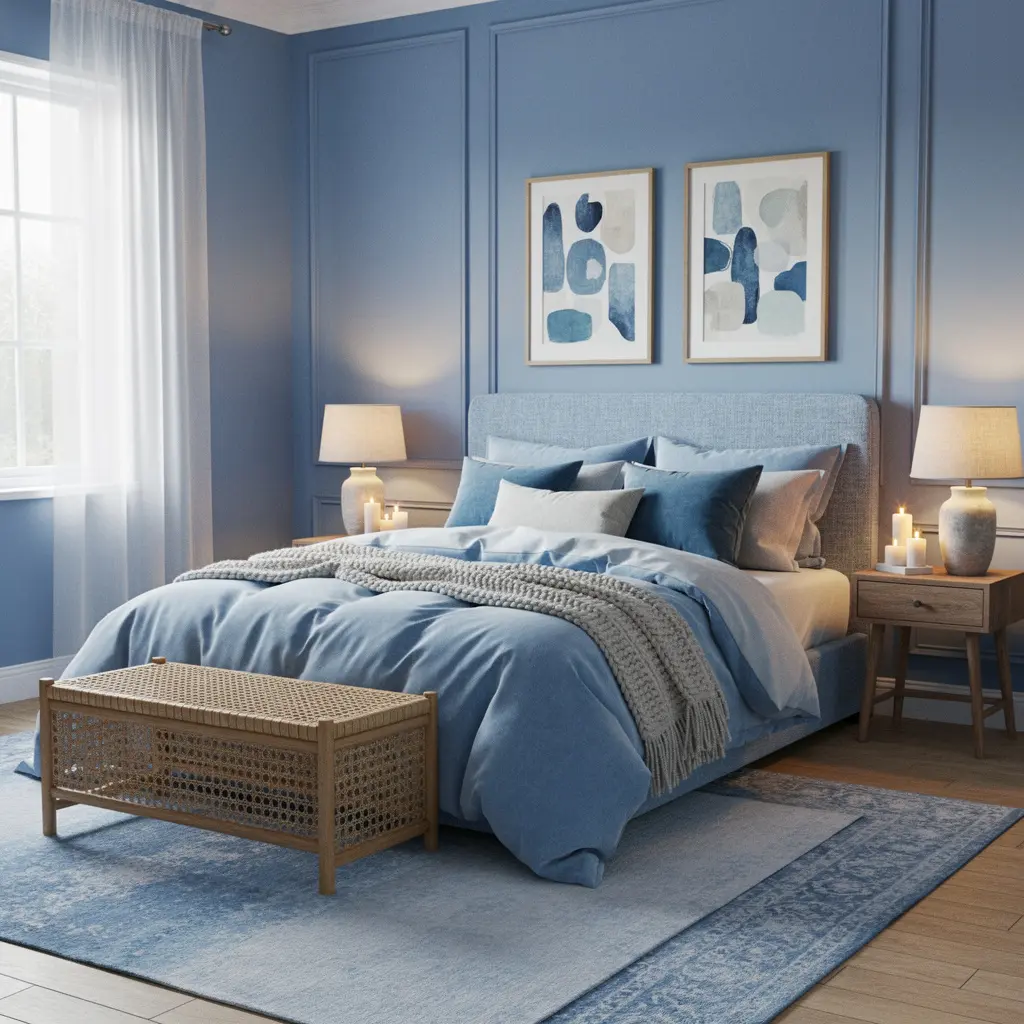
A wool or jute rug underfoot adds texture at floor level, which matters more than people expect in a room that’s otherwise dominated by smooth painted walls and bedding. Linen curtains, slightly rumpled rather than pressed flat, bring in another layer without adding a new color to track. A woven wall hanging or a textured throw pillow does the same job on a smaller scale if a full rug isn’t in the budget right now.
Mixing Matte and Slight Sheen
Pairing a matte painted wall with a slightly glossy ceramic lamp base or ambient mirror frame keeps the eye interested without introducing anything that competes with the main blue and wood palette.
8. Curtains and Window Treatments Worth the Cost
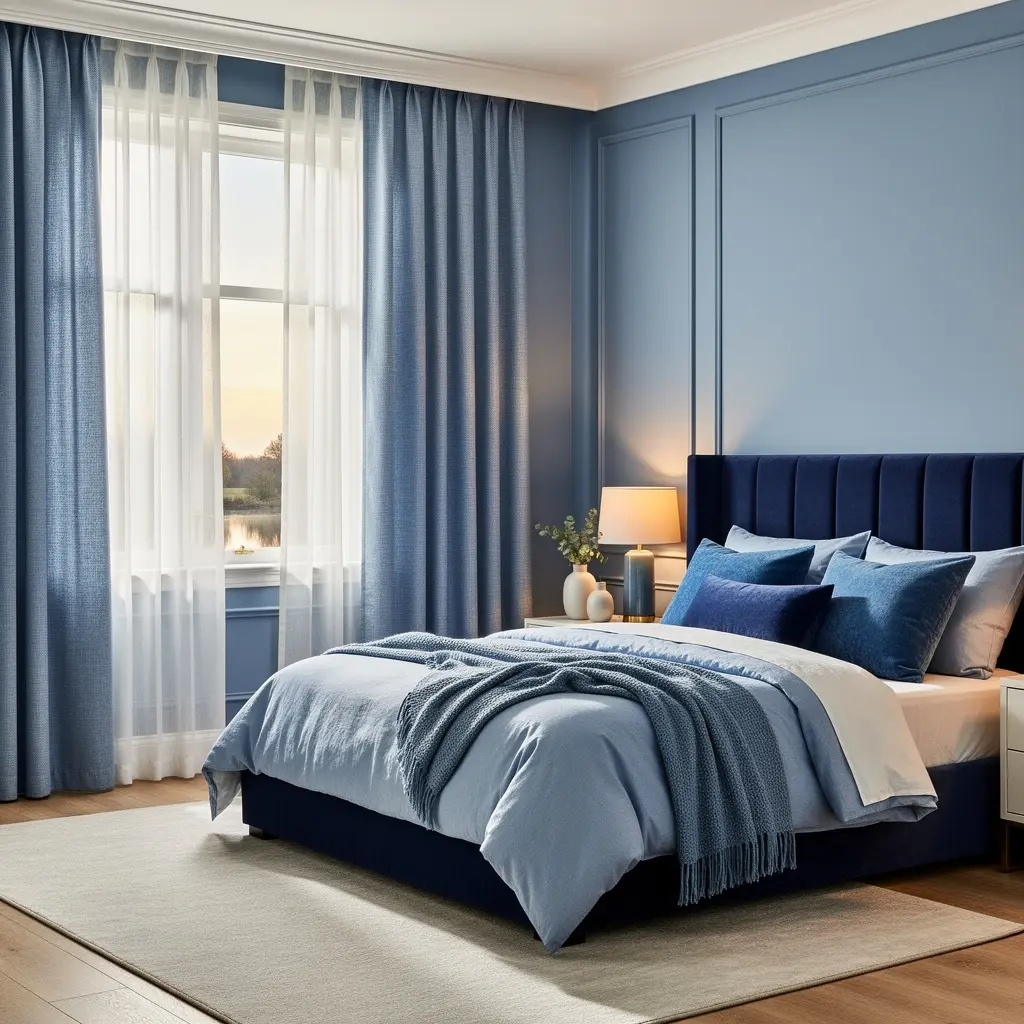
Floor length linen curtains in white or a soft cream soften the hard lines of a window while letting in filtered daylight during the day. If you need blackout capability for better sleep, a blackout lining behind a lighter linen panel gives you both function and the soft look without needing to choose one over the other. Mount curtain rods higher than the window frame itself, generally 4 to 6 inches above it, which makes the ceiling feel taller and the whole room read as more considered.
9. Small Bedroom Tricks for a Big Blue Look
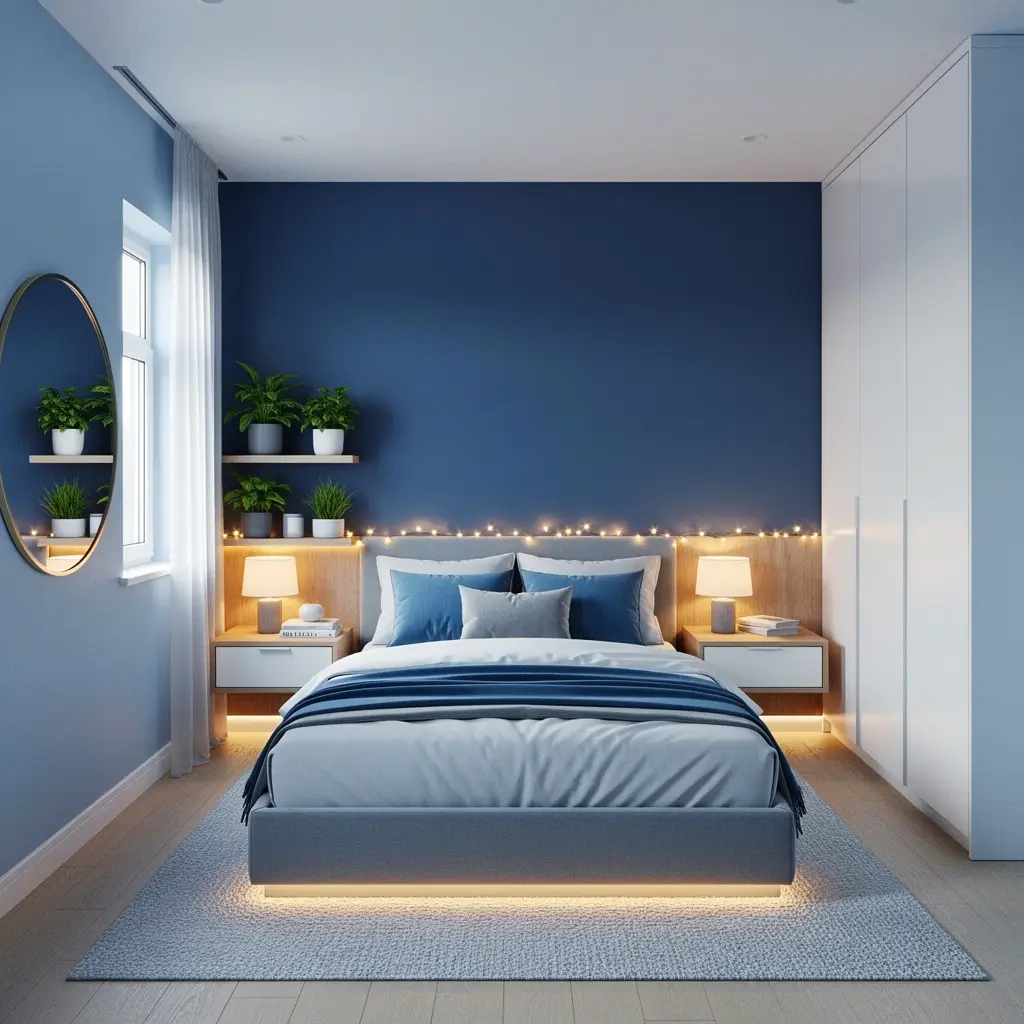
In a smaller room, keep the blue concentrated on one wall or on textiles rather than covering every surface, since too much saturated color in a tight space can start to feel heavy rather than cozy. Mirrors placed opposite a window bounce natural light around the room, which helps offset the darker feeling a deep blue can bring to a small space. Floating nightstands or wall mounted sconces instead of table lamps free up floor space without sacrificing the warm lighting the room needs.
10. The Finishing Details People Skip
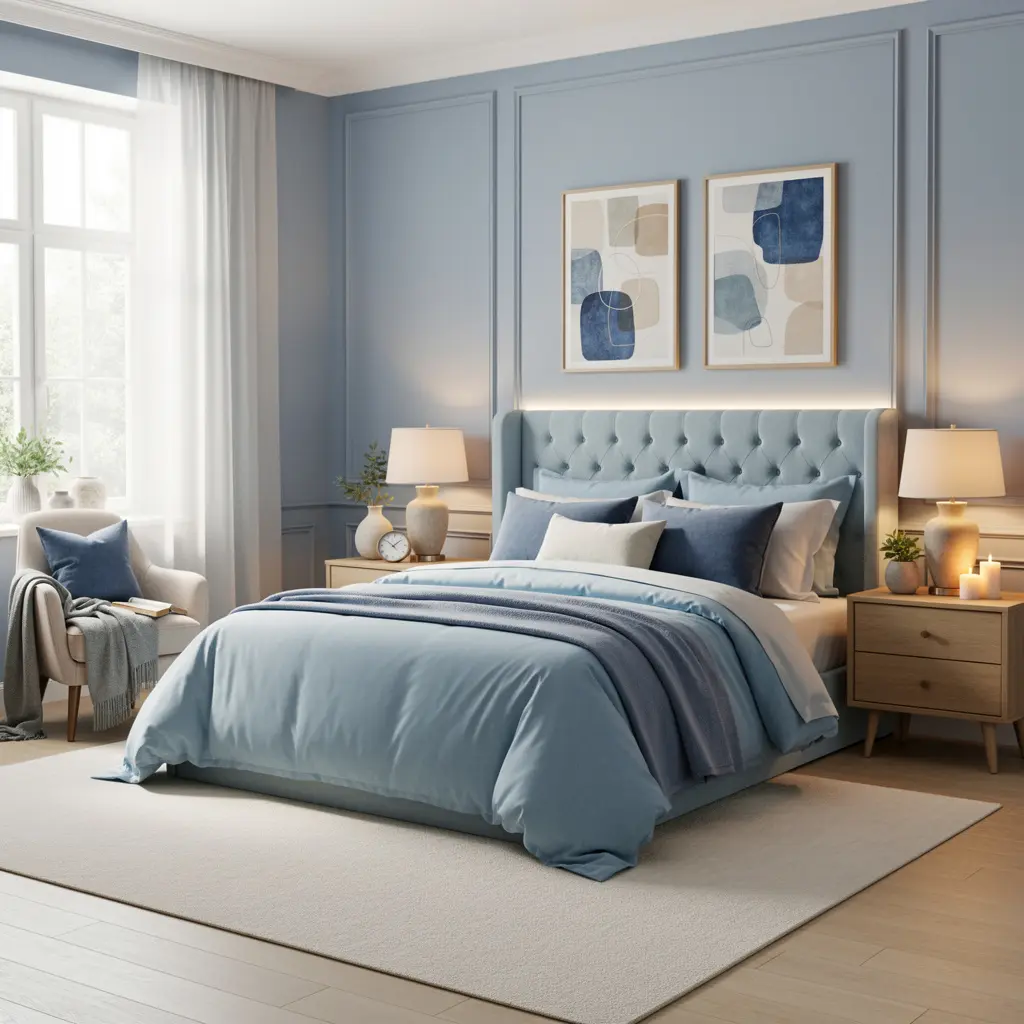
A few personal objects, books with blue or cream spines, a ceramic vase, a framed print in a complementary tone, keep the room from feeling like a showroom rather than somewhere lived in. Scent matters too. A candle or diffuser in a warm, woodsy fragrance reinforces the cozy side of the palette in a way that’s easy to forget about until it’s there. And honestly, don’t rush the styling. A blue bedroom built up gradually, one good piece at a time, tends to feel more collected than one bought all at once from a single catalog.
Mistakes to Avoid
- Choosing a blue toned white for trim and ceiling, which pushes the whole room colder
- Skipping warm lighting and relying only on cool toned overhead bulbs
- Using only cool gray or blond wood tones, which leaves the room feeling flat
- Covering every wall in a small room with a deep, saturated blue
- Sticking to a single bedding texture instead of layering two or three
- Buying all the decor at once instead of letting the room develop over time
Frequently Asked Questions
What’s the best blue shade for a small bedroom? A softer, dustier blue with a slight gray undertone tends to work best in small rooms, since it reads as calming without making the space feel closed in the way a deep, saturated navy might.
Do I need an accent wall, or should I paint the whole room? Neither is required. An accent wall gives you impact without full commitment, while a full room in a lighter shade avoids feeling closed in. It really depends on your natural light and how bold you want the room to feel.
How do I keep a navy bedroom from feeling too dark? Balance it with warm wood tones, brass or gold fixtures, and layered warm white lighting, all of which counteract the darkness without requiring a lighter paint color.
What bedding works best with a blue color scheme? A white or cream base layered with textured throws and pillows in warm complementary tones, like rust or oatmeal, keeps the palette from feeling flat or overly matched.
Is this style hard to maintain, or does it show wear easily? Darker blue tones actually hide wear and dust better than very pale colors, and quality bedding fabrics like linen and cotton blends hold up well with regular washing.
A Bedroom Built for Actually Resting
A dreamy blue bedroom aesthetic comes down to picking a shade you won’t tire of, then layering in warmth through wood, lighting, and bedding texture so the room never tips cold. Start with the paint and the bedding, since those two choices carry most of the visual weight, then build outward with lighting and small personal touches once the base feels right.

Leave a Reply