
You want the mudroom to feel like a soft landing between the backyard and the house, not a concrete box with metal shelving bolted to the wall. Most mudrooms skip straight to purely functional, plastic bins, laminate flooring, nothing that hints at the actual garden sitting right outside the door. A garden-inspired mudroom closes that gap. Natural materials, real greenery, an earthy palette, all of it layered on top of a space that still needs to survive mud, water, and kids tracking in wet shoes every single day. Here’s how to actually build it without sacrificing the function the room depends on.
1. What “Garden-Inspired” Actually Means Here
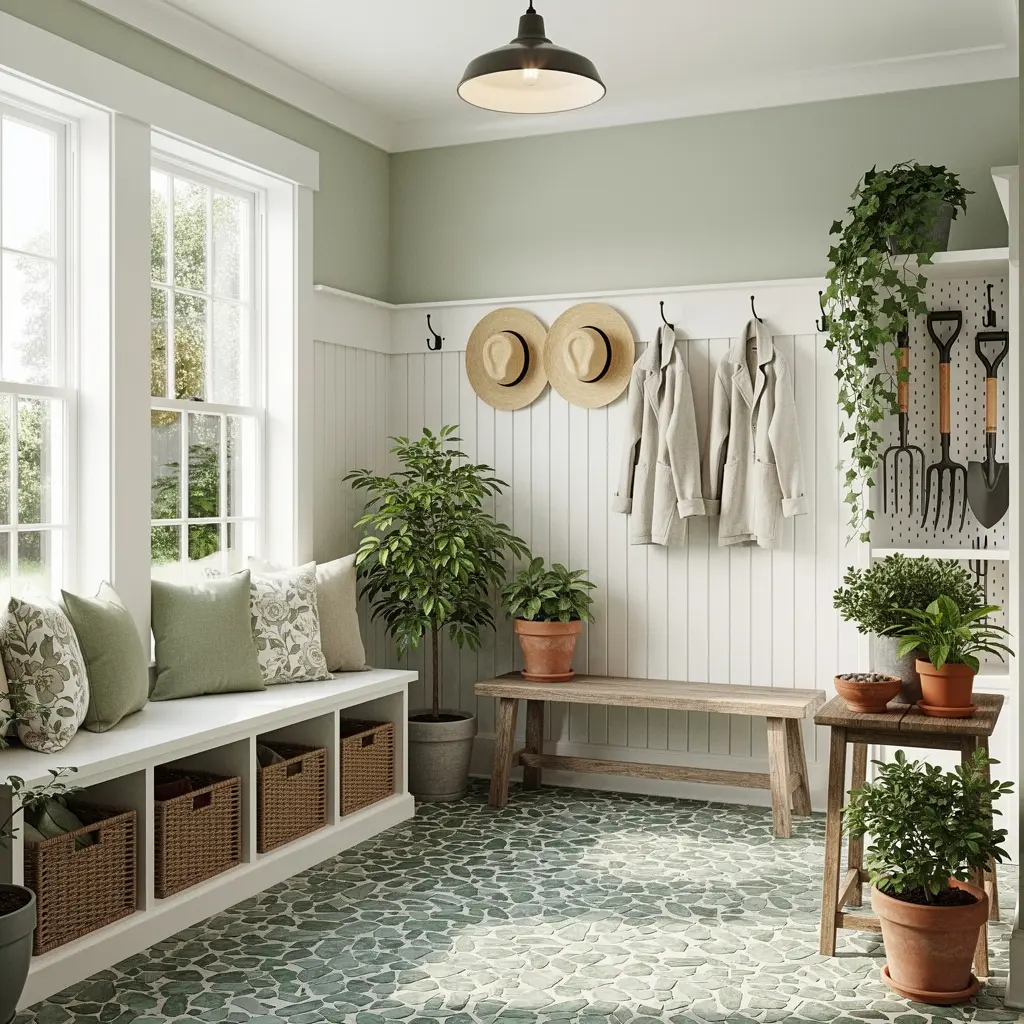
It’s mostly about material, not decor. Wood, stone, woven fiber, actual living plants, these all read as connected to the outdoors in a way plastic and laminate just don’t, no matter how you style them. Texture variety matters too. A garden has bark, leaves, stone, soil, all sitting close together. Pull a few of those textures indoors, a wood bench here, a stone floor there, a woven basket on a shelf, and you get that same layered feeling in a much smaller footprint.
The Catch: This Room Takes a Beating
A mudroom absorbs more daily abuse than almost any other room in the house. So every natural material you choose here needs to actually survive that. This isn’t the room for delicate unsealed wood or a plant that needs babying every day. Save that for somewhere calmer.
2. Flooring Has to Handle Mud First, Look Good Second
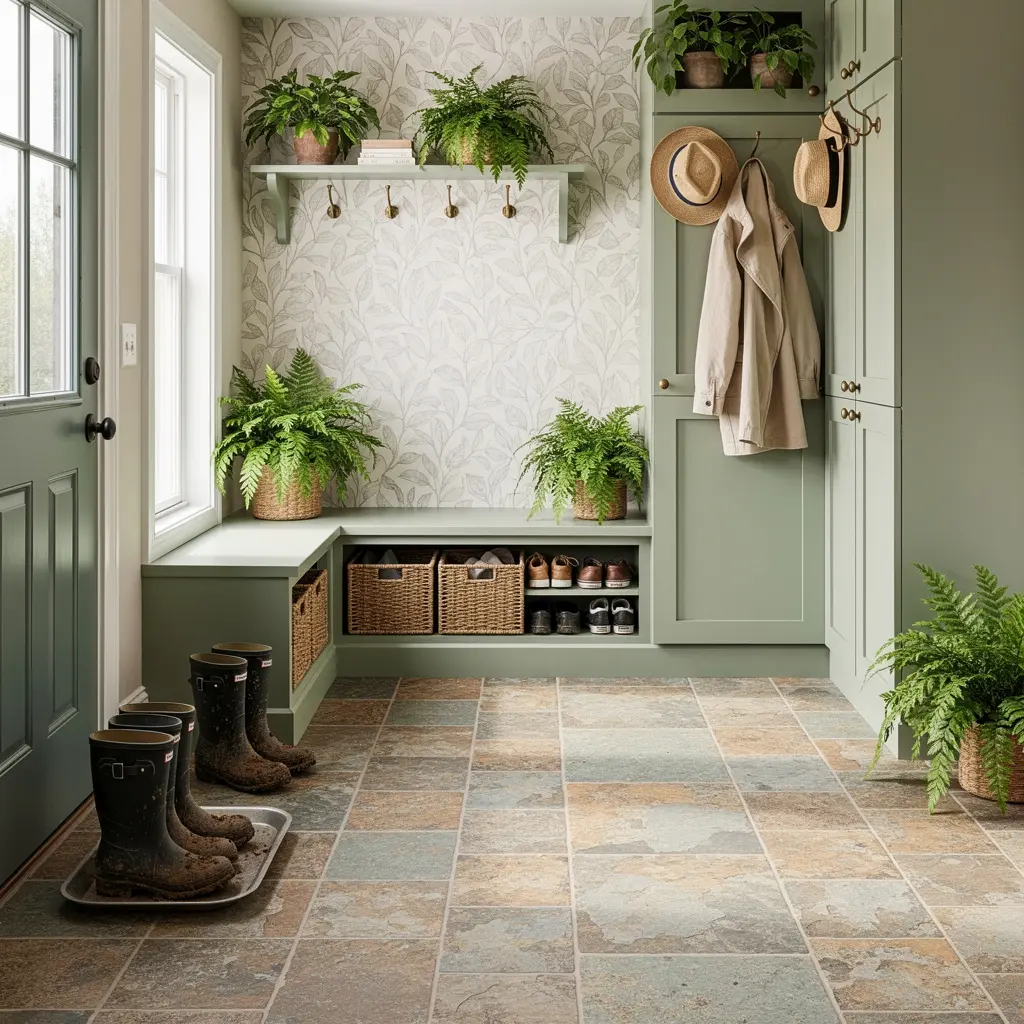
Slate or stone tile brings real outdoor texture into the room, and it shrugs off water and dirt in a way carpet and hardwood never will. Porcelain tile made to mimic stone gets you a similar look for less money and less maintenance, usually 3 to 8 dollars a square foot, versus natural stone’s wider and often higher range. Want warmth underfoot? A sisal or jute runner works, just keep it in the drier zones of the room rather than right at the door where boots come off.
3. Getting Greenery In Without Losing Storage
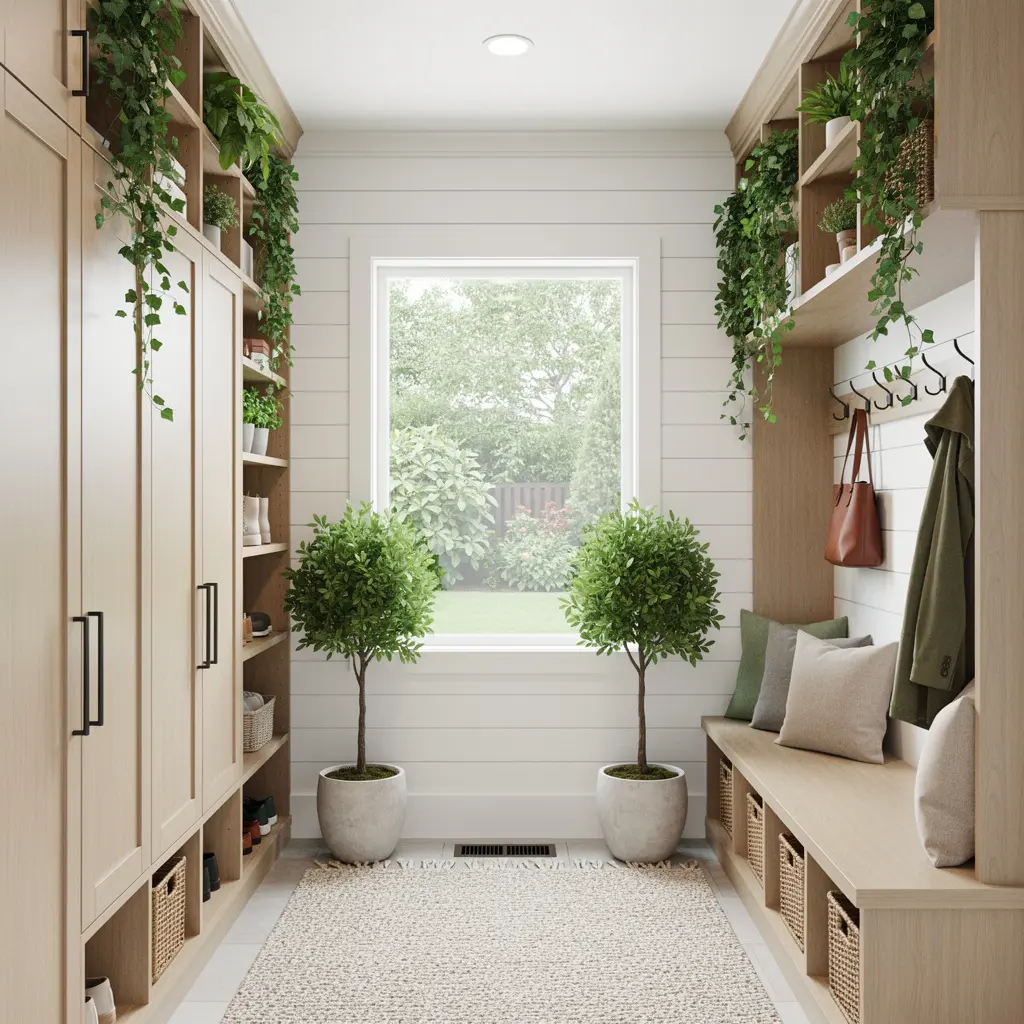
Wall mounted or hanging planters keep plants in the room without eating into the floor or counter space you actually need for storage. Pothos, snake plants, ZZ plants, anything that tolerates temperature swings and lower light holds up far better here than something that needs bright, consistent sun and steady humidity. And here’s the thing: one good sized plant near a window does more visual work than five small pots scattered around the room. It’s easier to keep alive too.
Even a single well placed plant near natural light makes the whole room feel more connected to the garden outside than a handful of small pots scattered thin.
4. Wood and Wicker, and Where They Actually Hold Up
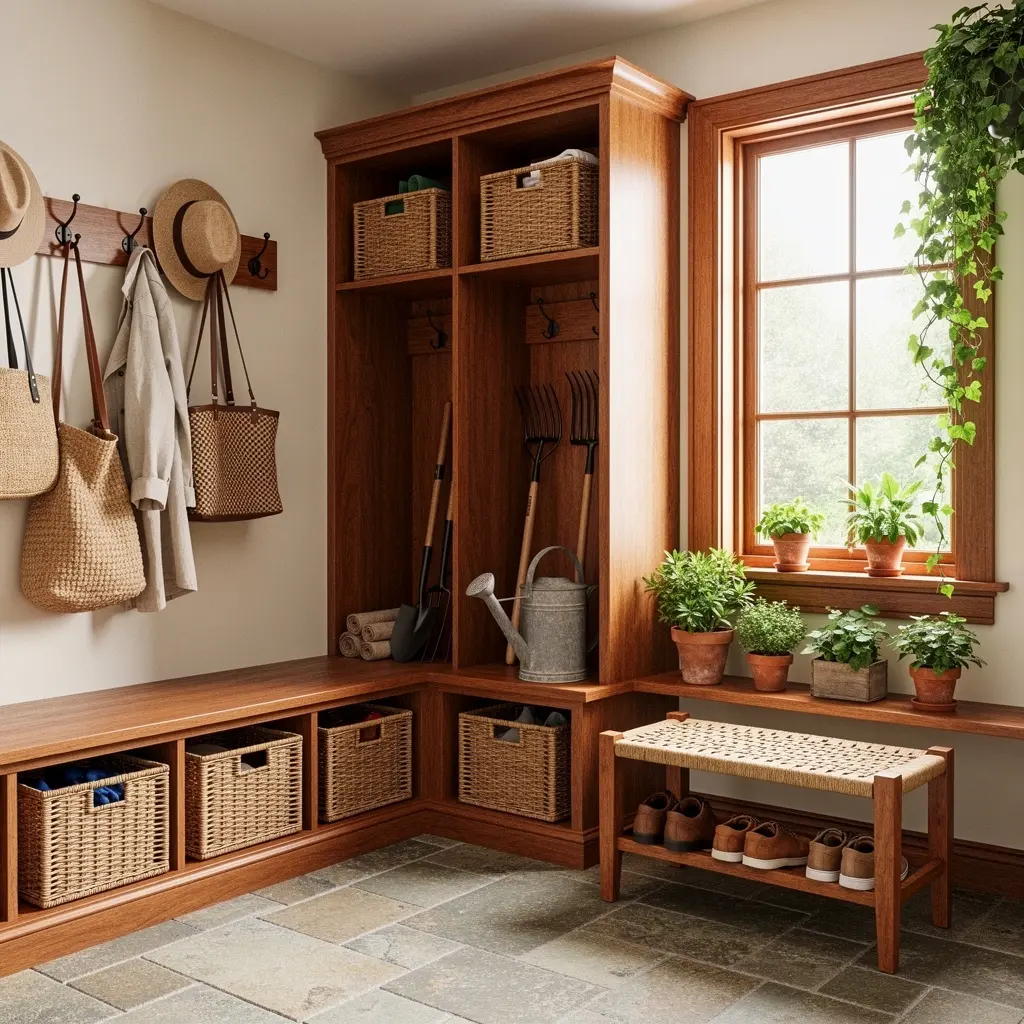
A reclaimed or solid wood bench, sealed with a durable outdoor rated finish, brings warmth in while standing up to wet boots better than anything left unsealed ever could. Wicker or rattan baskets work well for shoe storage or loose items too, as long as you keep them out of direct water exposure. Iron or blackened metal hardware pairs naturally with the wood, giving the room a bit of an outdoor tool shed feel without tipping into looking unfinished.
Seal the Wood. Don’t Skip This.
Any wood in a mudroom, bench, shelving, trim, needs a water resistant sealant. Between wet shoes, snow melt, and general humidity, this room is harder on unsealed wood than nearly anywhere else in the house.
5. The Color Palette Basically Writes Itself
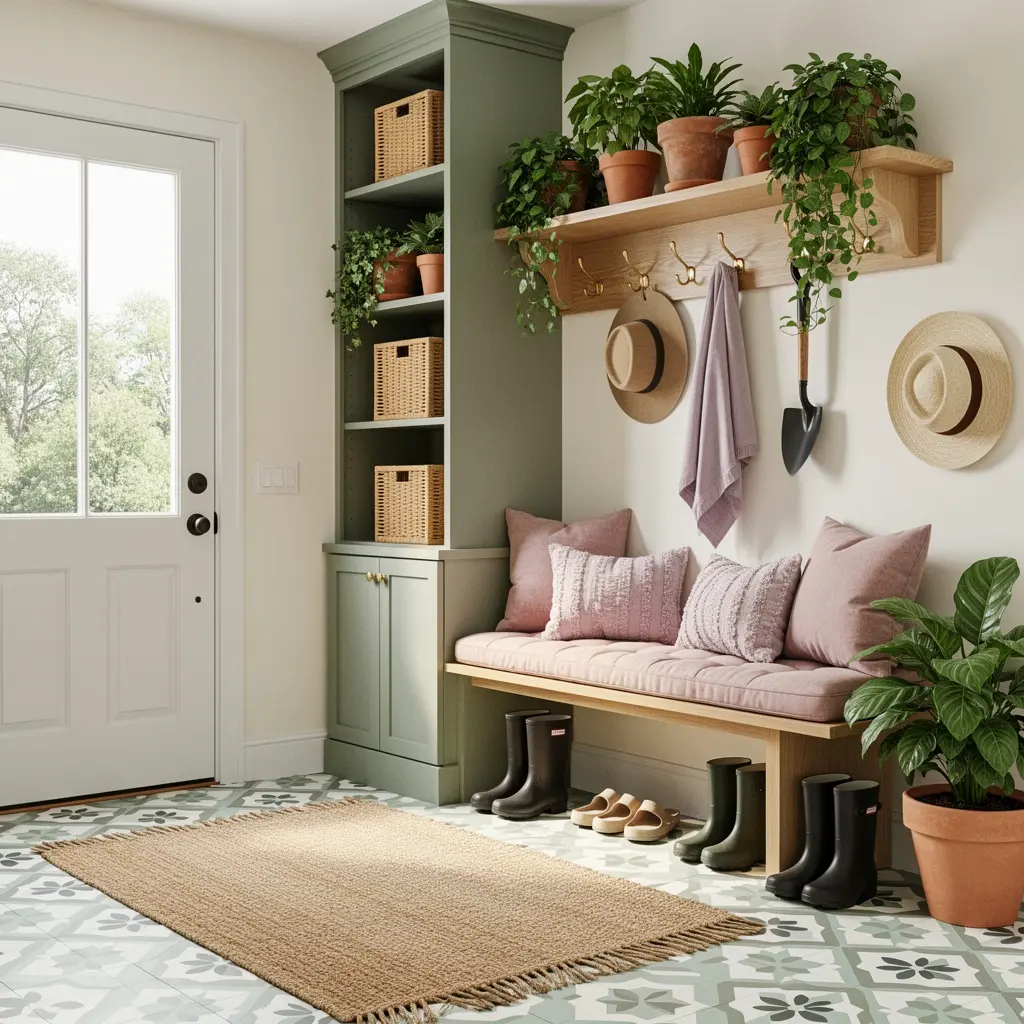
Sage green, warm terracotta, soft moss, natural wood tones. That’s the palette, and it echoes an actual garden without needing literal florals or botanical prints plastered everywhere. Keep the walls in a muted, earthy neutral rather than stark white. It grounds the space and lets the greenery and natural materials do the visual work instead of fighting a bright white backdrop. One deeper accent, a forest green door, a terracotta tile backsplash, gives the room a focal point without tipping the whole thing into busy.
6. Don’t Fight the Natural Light You’ve Got
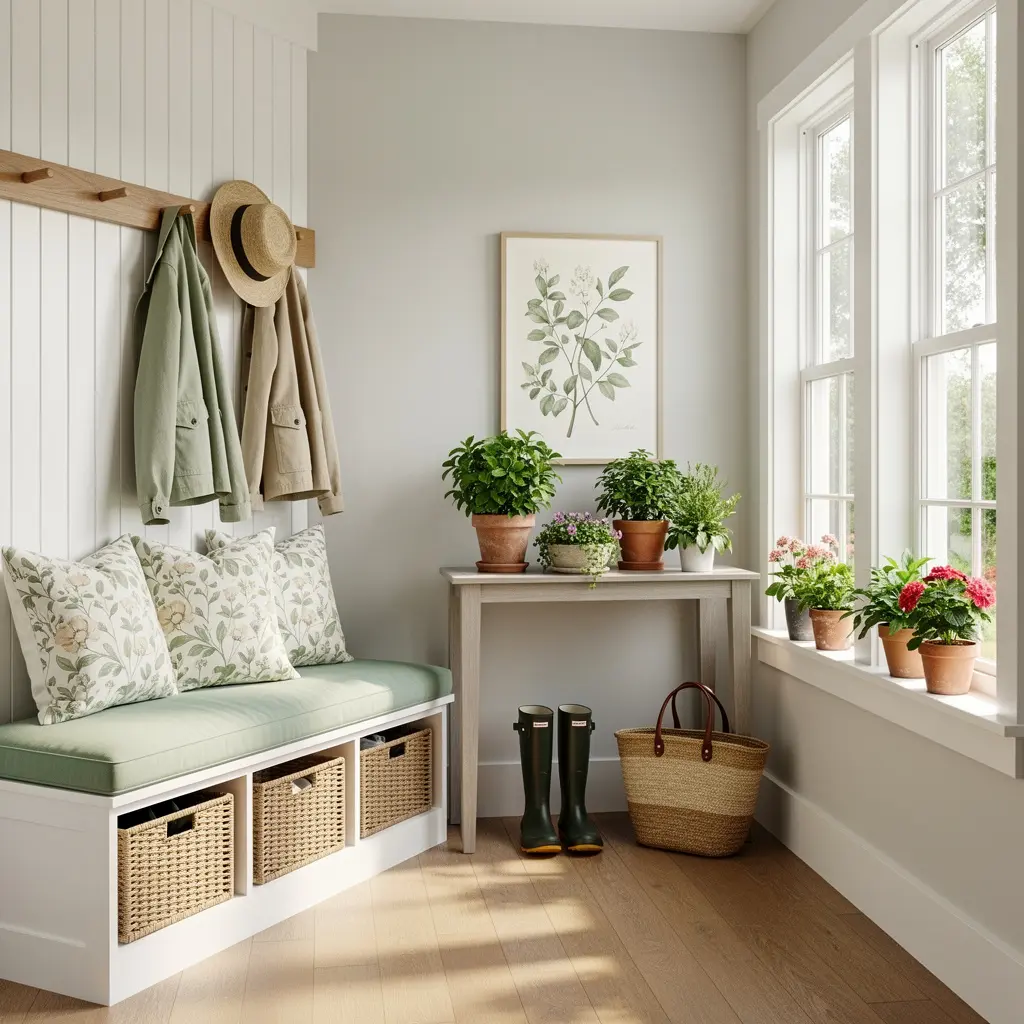
Got a window? Leave it uncovered, or dress it with just a sheer, light filtering curtain. That’s what actually reinforces the garden connection. Limited natural light instead? Warm bulbs in the 2700 to 3000 kelvin range come a lot closer to daylight than the cooler, bluer bulbs most utility spaces default to. Even the light fixture itself can carry the theme. A pendant with a woven rattan shade or a matte ceramic finish keeps the material story going all the way up to the ceiling.
7. Baskets Over Bins, Most of the Time
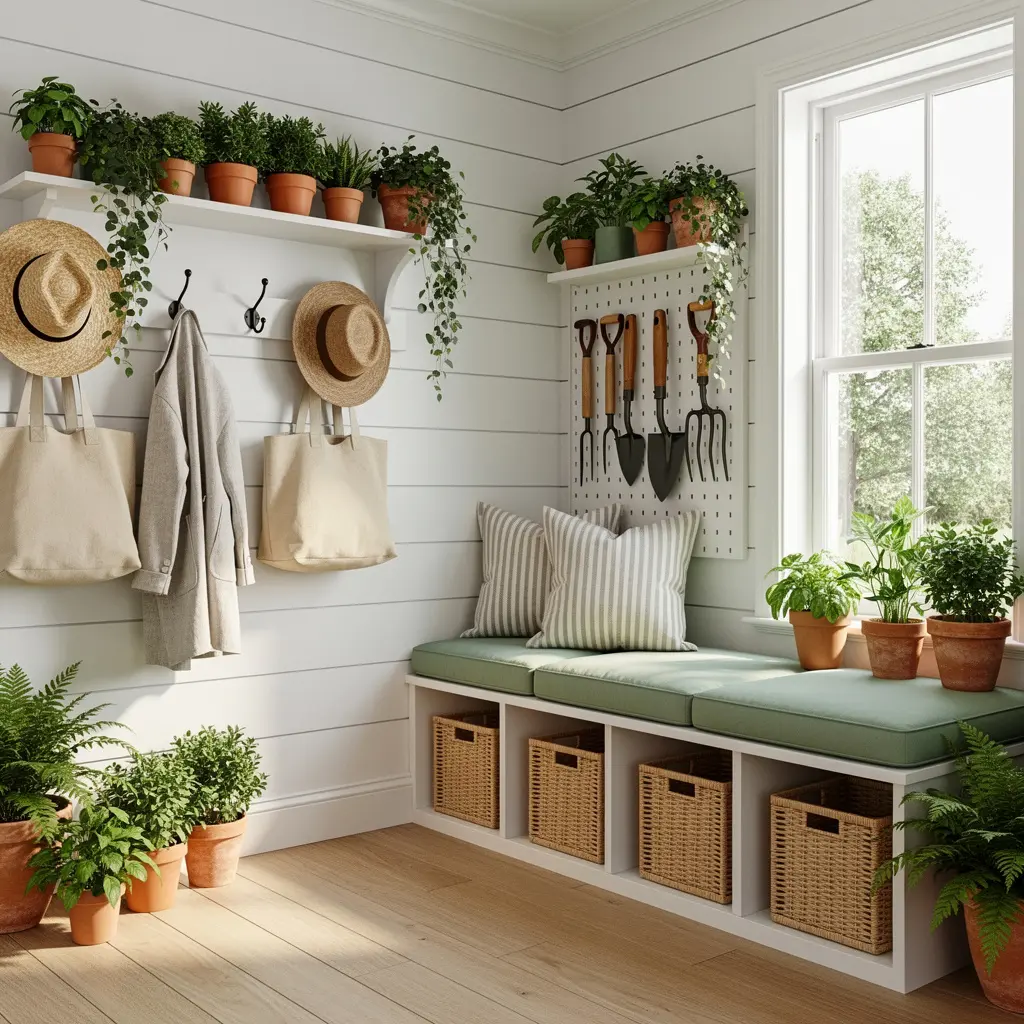
Swap plastic bins for woven baskets in seagrass, rattan, or water hyacinth, and you keep the storage function while reinforcing the whole natural material theme. These hold up fine for dry items, scarves, hats, gardening gloves, but they’re not the right call for boots that come in soaked and muddy every day. For that, a galvanized metal bin gives you a similar outdoor, utilitarian look while actually standing up to water.
8. A Tiny Potting Station Changes the Whole Room
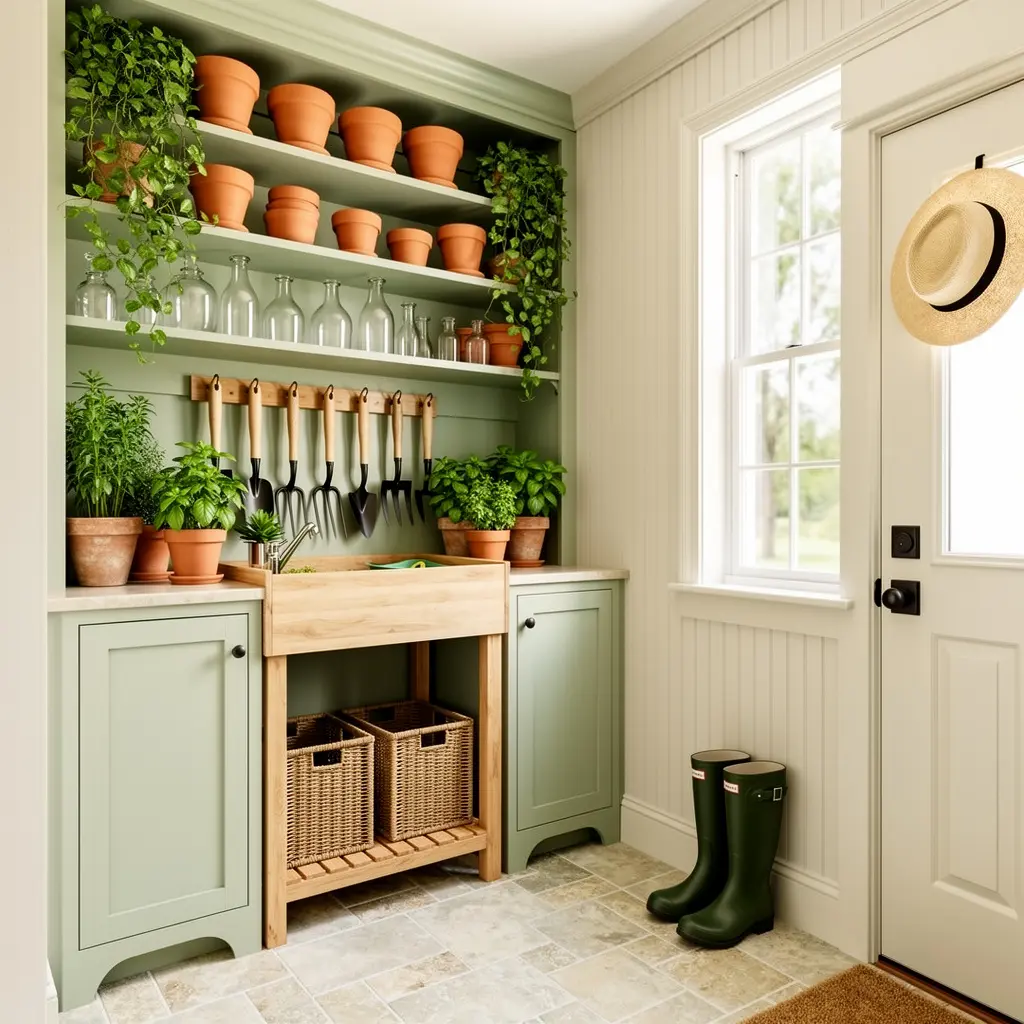
If you’ve got the space, even a narrow counter or shelf dedicated to pots, soil, and gloves turns the garden theme into something actually functional instead of just decorative. A hook rail nearby for hanging tools keeps them out of the way of the shoe and coat storage. You don’t need much. A 12 to 18 inch section near the door is enough, especially if the mudroom opens straight onto a backyard or garden.
9. If There’s a Window, Use It
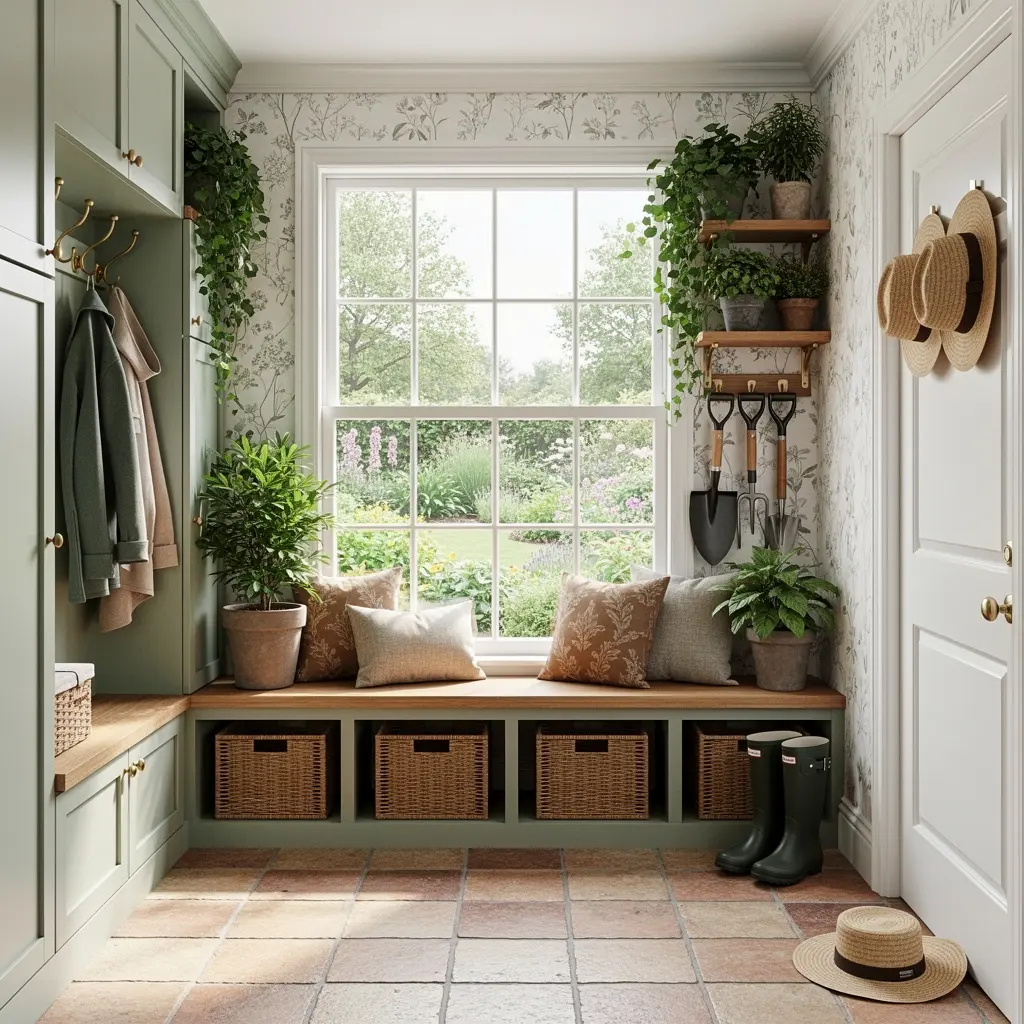
A window facing the actual garden does more for this theme than any decor choice you could make indoors, so if the layout gives you a choice, prioritize that sightline. A window box outside, planted with something hardy and low maintenance, stretches the garden feeling right up to the glass. No garden view available? A botanical print, or a small framed collection of pressed leaves, brings in a similar visual cue without needing the real thing outside.
10. Pretty Doesn’t Matter If It Falls Apart in a Month
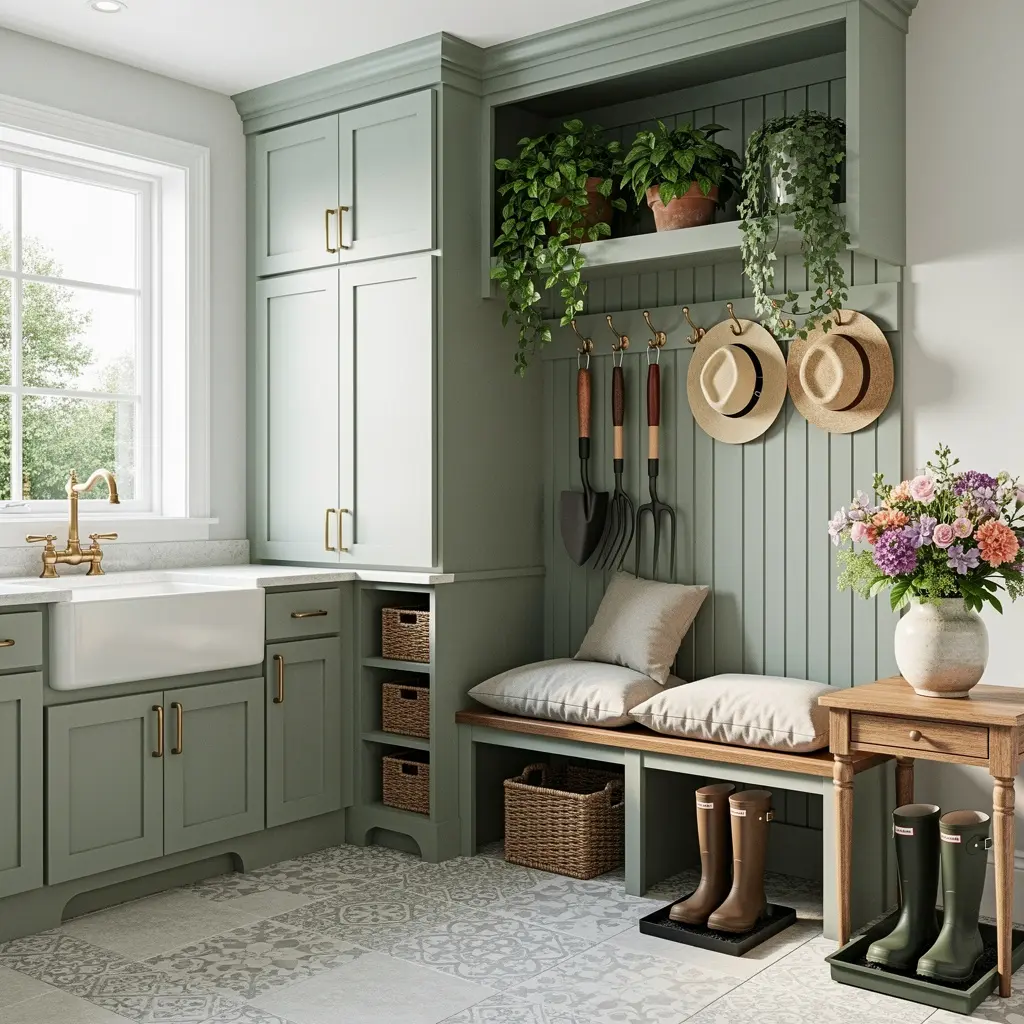
Every natural material choice here still has one job first: handling mud, water, and daily traffic without falling apart. Sealed wood, tile or stone flooring, moisture resistant storage, these come before anything purely decorative that can’t take regular wear. Check in every few months on how the plants, wood finishes, and baskets are actually holding up. That’s what keeps the room looking intentional instead of just worn down by everything it deals with daily.
Mistakes to Avoid
- Choosing unsealed or delicate wood that can’t handle consistent moisture
- Picking high maintenance plants that need more light or care than a mudroom offers
- Putting woven baskets in direct contact with consistently wet shoes or boots
- Covering windows completely, which cuts off the light that reinforces the whole theme
- Prioritizing decorative greenery over the actual storage capacity you need
- Skipping a water resistant sealant on wood benches or shelving
Frequently Asked Questions
What flooring holds up best in a garden-inspired mudroom? Slate, stone, or porcelain tile made to mimic stone. All three handle water and dirt well while keeping the natural look intact.
Can I keep real plants in a mudroom with limited light? Yes. Pothos, snake plants, and ZZ plants tolerate lower light and inconsistent care far better than most other houseplants.
Is wicker or rattan storage tough enough for daily use? For dry items, yes. For consistently wet shoes and boots, go with metal or a sealed container instead.
How do I stop a wood bench from getting wrecked by wet boots? A durable, water resistant sealant on every exposed surface makes a real difference in how the bench holds up over time.
Do I need an actual garden view for this to work? No, though it helps. A window box, some botanical art, or just a well placed plant near whatever light you’ve got can get you most of the way there.
A Mudroom That Feels Like Part of the Garden
It comes down to picking natural materials that can actually survive what this room deals with daily, then layering greenery and an earthy palette on top of that functional base. Start with the flooring and any wood surfaces, since those take the most abuse. Build outward from there with plants, baskets, and lighting once the durable foundation is already in place.

Leave a Reply