
You organize the mudroom on a Saturday afternoon, everything labeled and in its place, and by Wednesday it’s back to shoes kicked off in a pile and coats draped over the bench instead of hung up. That gap between a Pinterest worthy setup and what actually survives daily life is the real problem most mudroom organization ideas don’t address. This article focuses on systems that hold up under actual use, not just the first week, covering storage, layout, and the small habits that make organization stick. The goal isn’t a perfect looking room. It’s a room that stays functional even on the days nobody has time to put things away carefully.
1. Why Most Mudrooms Fall Apart Within a Month
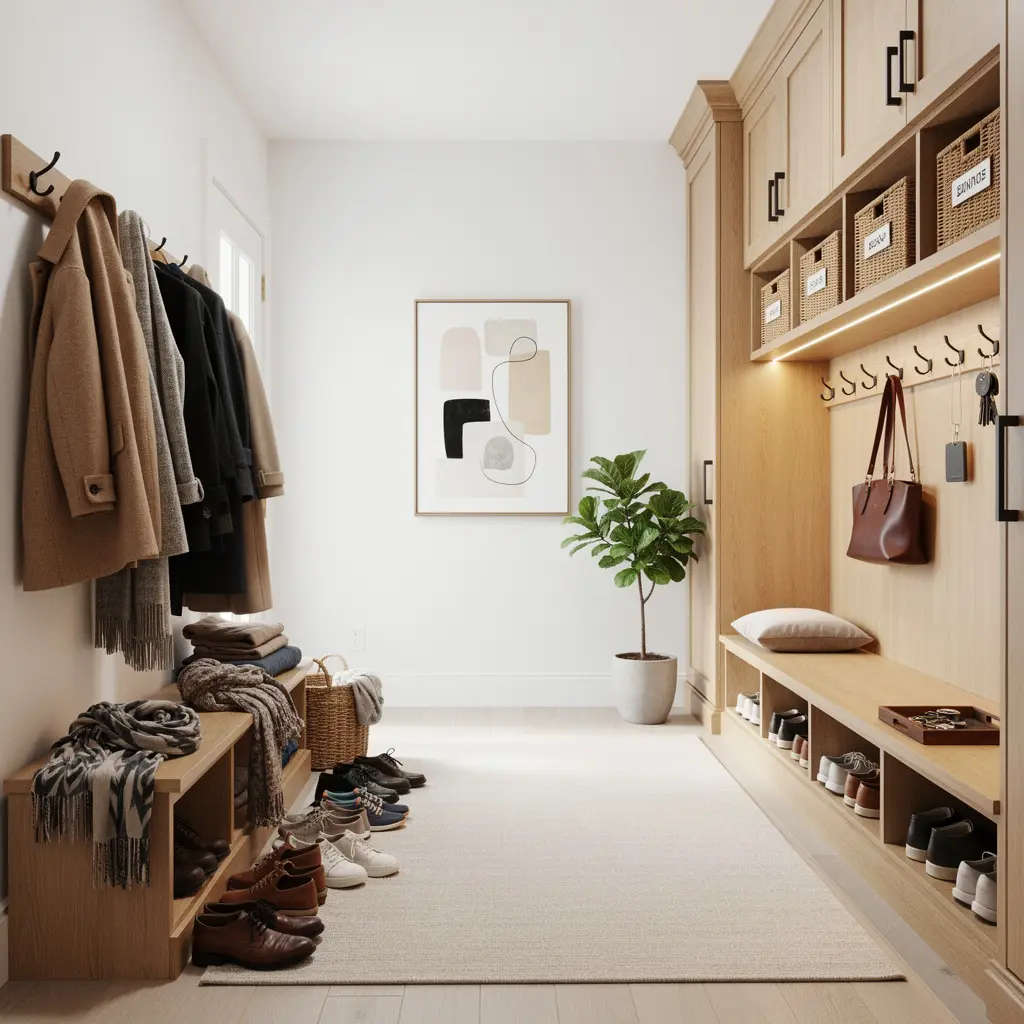
Most mudroom systems fail because they require more steps than people are willing to do consistently. A closed cabinet that needs to be opened, a bin that needs a lid removed, a hook that’s mounted too high for a kid to reach, all of these add friction to a process that needs to be nearly automatic to actually work. The mudrooms that stay organized long term are almost always the ones built around the path of least resistance, where putting something away is easier than leaving it out.
The Real Test for Any Mudroom System
Before committing to a storage solution, picture using it while holding a bag of groceries, wrangling a toddler, or rushing out the door late. If the system only works when you have both hands free and five minutes to spare, it’s not going to survive daily life.
2. Start With a Zone Map, Not a Shopping List
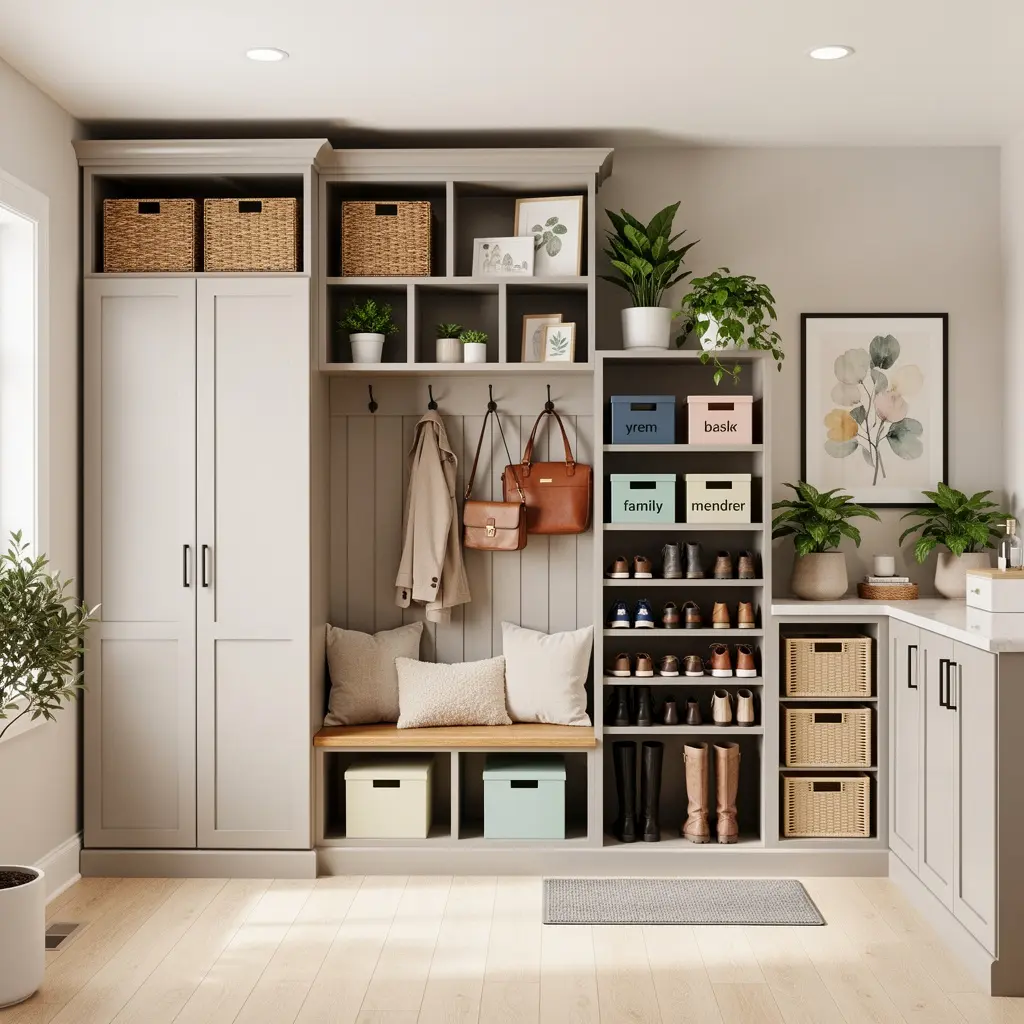
Before buying any bins or shelving, walk through what actually happens in the space. Shoes come off here. Coats get hung there. Bags get set down somewhere, usually wherever is closest to the door. Mapping these zones first means the storage you eventually buy matches real behavior instead of an idealized version of how the room should be used. A rough sketch, even just labeled boxes on paper, takes ten minutes and saves you from buying furniture that doesn’t actually fit how your household moves through the space.
3. Cubbies Beat Open Shelves for Daily Use
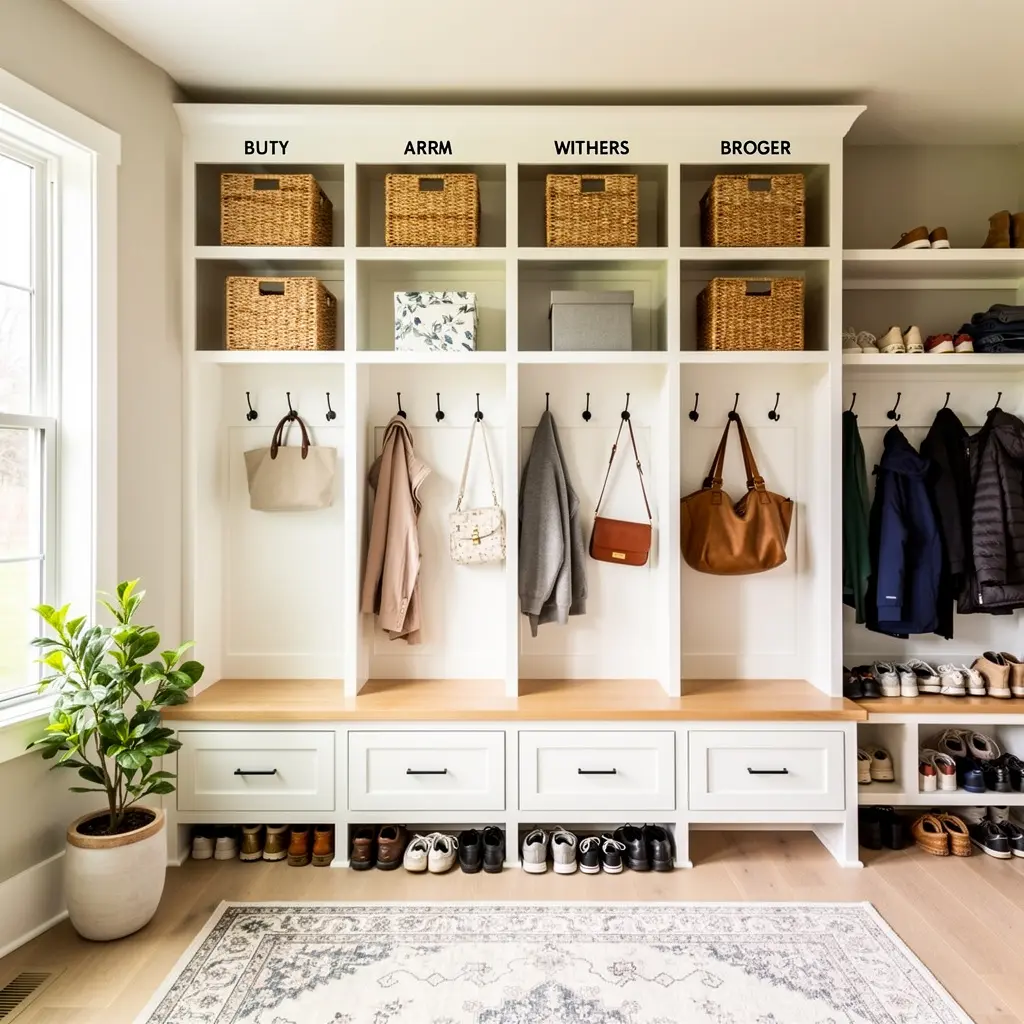
Open shelving looks tidy in photos but tends to collapse into a pile the moment more than one item gets stacked on it. Individual cubbies, sized around 12 by 12 inches per person, give each family member a defined spot that’s harder to overfill without it becoming visually obvious. A cubby system with 4 to 6 sections typically runs 150 to 400 dollars for a basic unit, more for built in custom carpentry.
A cubby that’s assigned to a specific person consistently stays more organized than a shared shelf, since there’s a clear owner responsible for what’s inside it.
4. Hooks Are Doing More Work Than a Coat Closet Ever Will
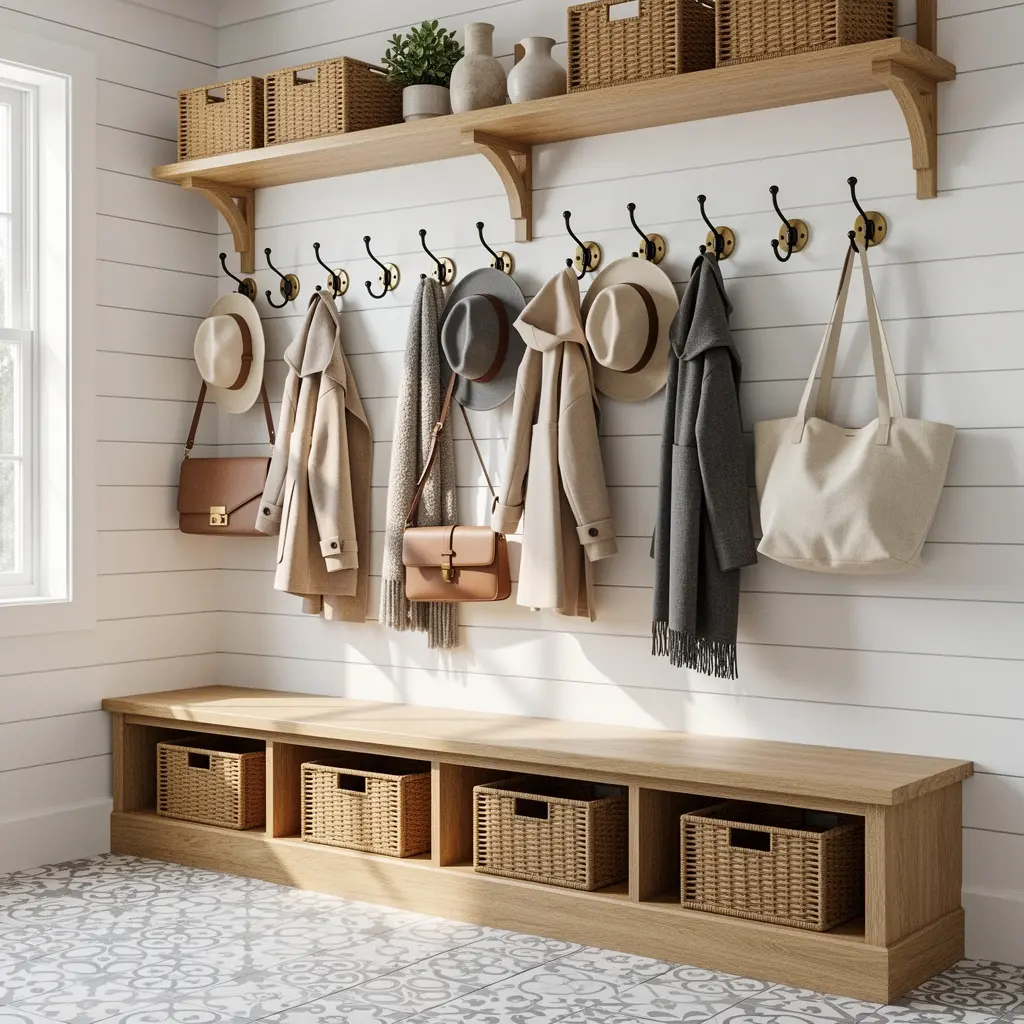
A row of hooks at a reachable height gets used far more consistently than a closet with a door, mainly because there’s no extra step involved. Mount hooks at two heights if kids are part of the household, roughly 30 to 36 inches for younger children and 48 to 60 inches for adults, so nobody’s tempted to just drape a coat over the nearest surface instead. Double hooks, which hold both a coat and a bag on the same mount, save wall space in a narrow mudroom without sacrificing function.
5. Shoe Storage That People Actually Use
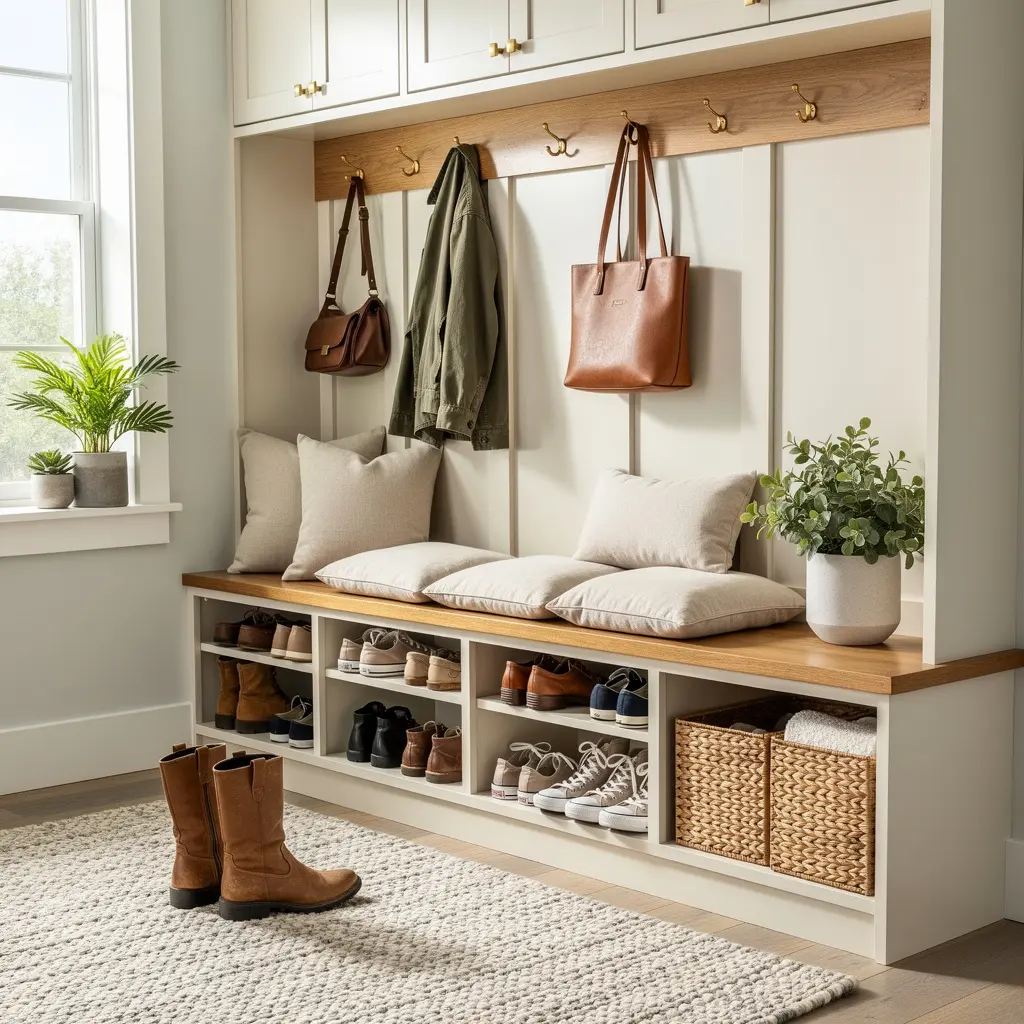
A shoe rack that requires shoes to be lined up perfectly rarely gets used consistently, especially by kids. An angled shoe rack or a simple tray system, where shoes just get tossed in without precise placement, holds up much better over time. For households with a lot of daily shoe traffic, a boot tray near the door catches mud and water before it spreads further into the house, which matters as much for cleanliness as it does for organization.
Sizing the Shoe Zone Correctly
Plan for roughly 8 to 10 inches of width per pair of shoes if you’re using a rack, and add extra capacity beyond what you think you need. Shoe collections tend to grow faster than most other categories in a mudroom.
6. Bins and Baskets, and Why Labeling Matters More Than the Container
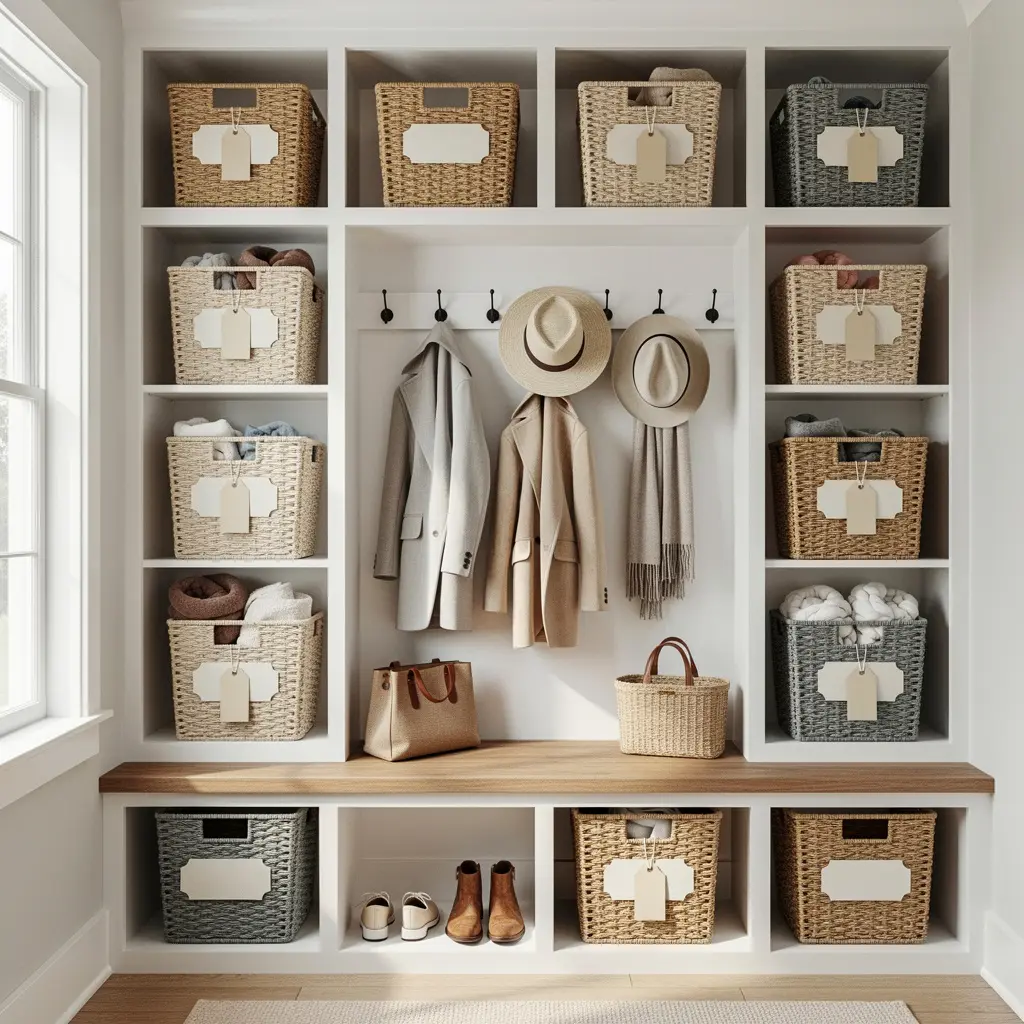
The actual bin or basket matters less than most people assume. What matters is whether it’s labeled clearly enough that everyone in the household, including kids, knows exactly what goes where without having to ask. Picture labels work well for younger children who can’t read yet, while simple text labels work for the rest of the household. Woven baskets add warmth to the space, while clear plastic bins make contents visible at a glance, and either works as long as the labeling system stays consistent.
7. A Bench Isn’t Optional If You Have Kids
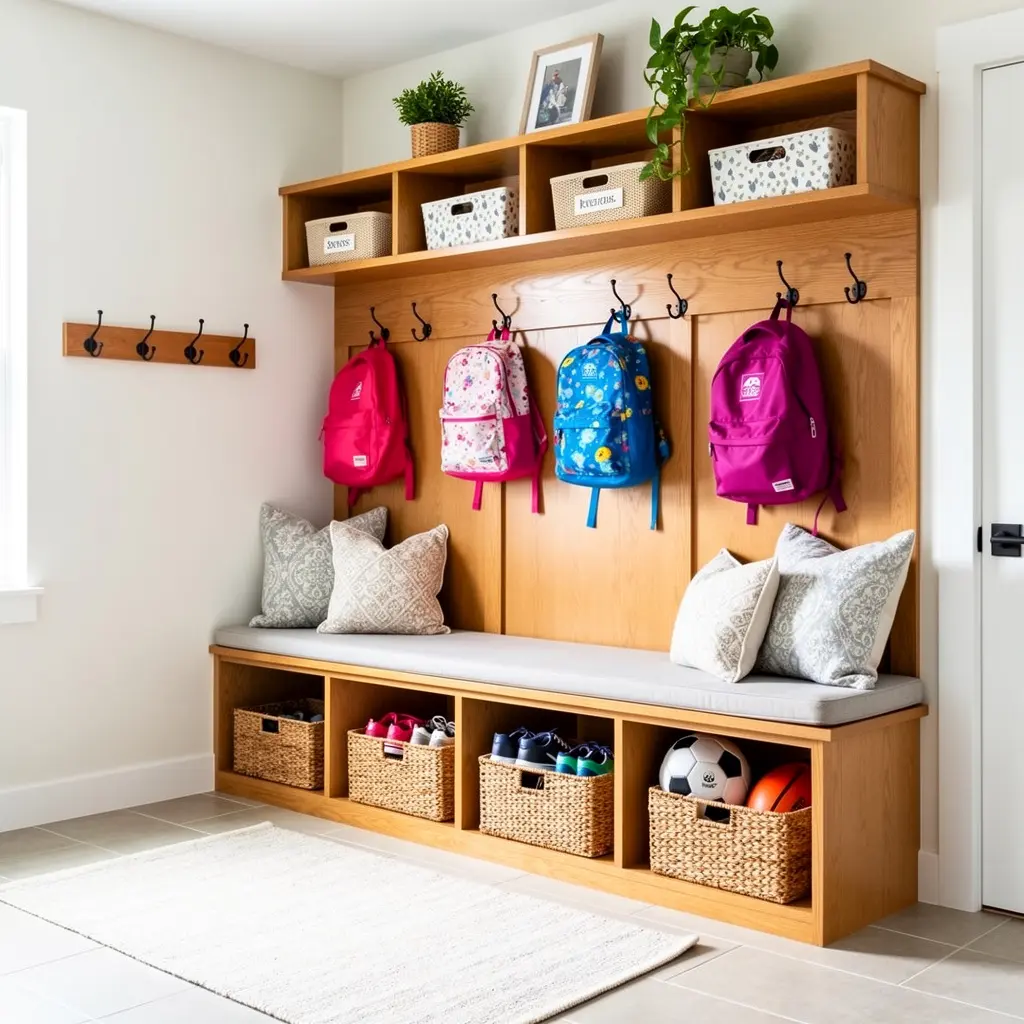
A bench solves the practical problem of putting on and taking off shoes without needing to balance on one foot, which matters more than it sounds like for younger kids and older adults alike. A bench with built in storage underneath, either open cubbies or lift top compartments, doubles the function of the same footprint. Seat height around 17 to 19 inches works for most adults, while a lower bench or step stool nearby helps younger children reach hooks and shelves independently.
8. Dealing With Bags, Mail, and the Stuff With No Home
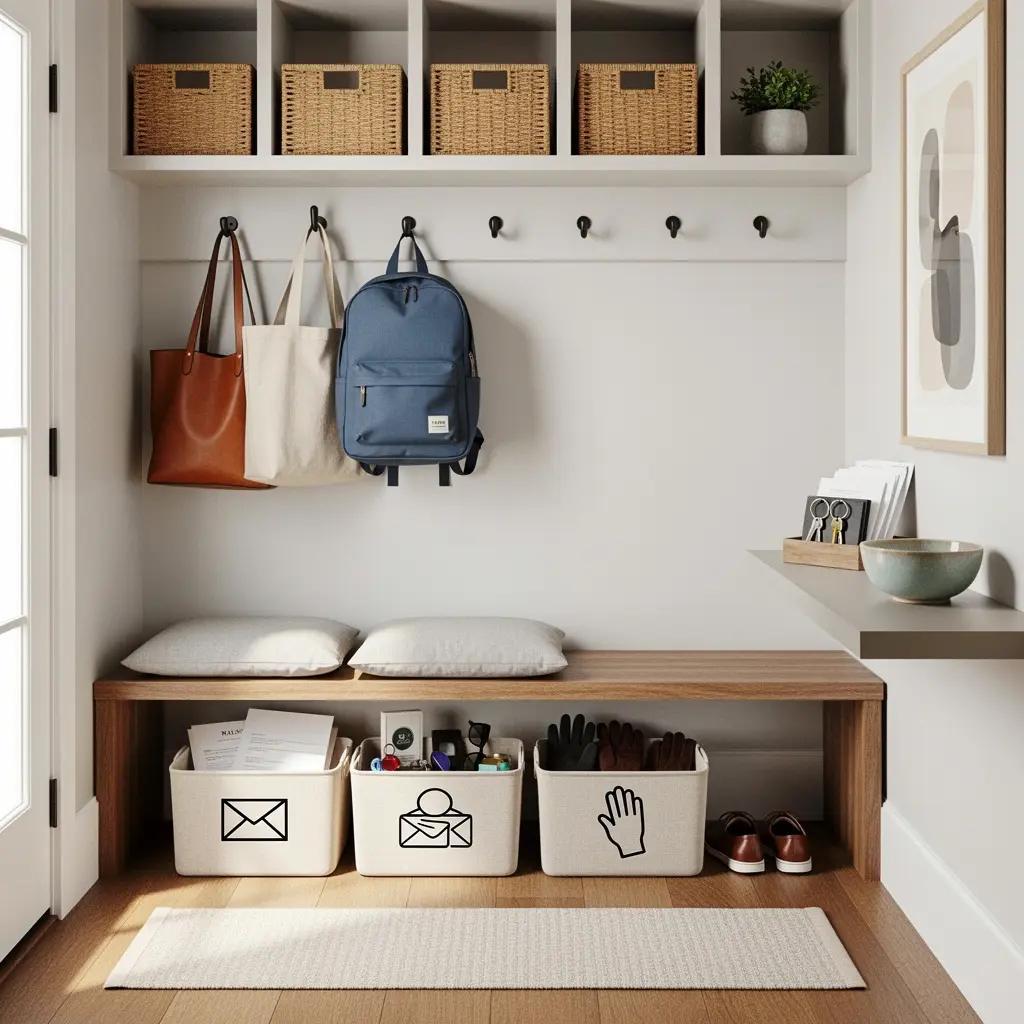
Mail, keys, sunglasses, and school papers are the categories that consistently end up as loose clutter on any available surface, mostly because they don’t have an obvious assigned spot. A small wall mounted organizer with individual slots per family member solves this directly, giving mail and papers somewhere to go before they accumulate into an unmanageable stack. A designated key hook, positioned right at the door rather than somewhere further into the house, eliminates one of the most common daily frustrations in any household.
9. Seasonal Rotation So You’re Not Storing Everything at Once
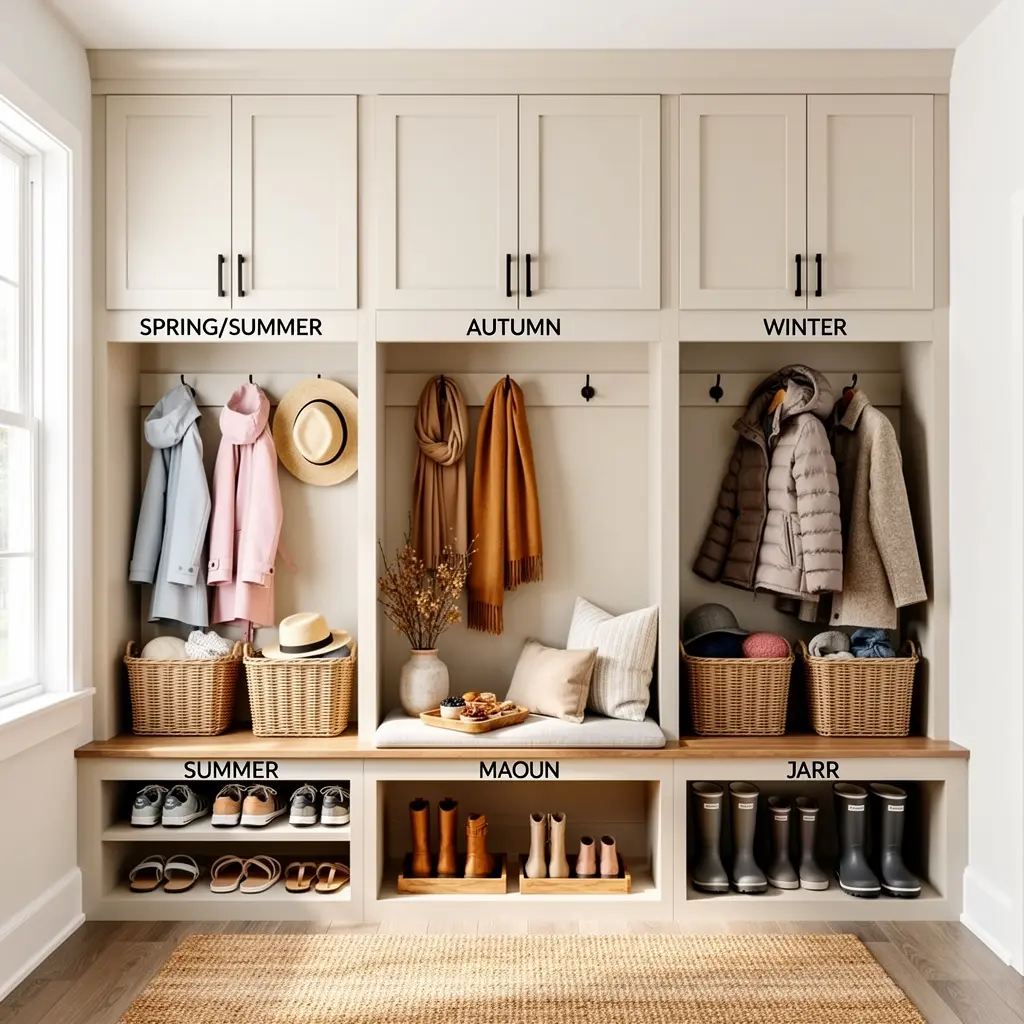
Trying to store every coat, boot, and pair of gloves the household owns, year round, in the same limited space is one of the fastest ways to overwhelm a mudroom system. Rotating out of season items to a closet or storage bin elsewhere in the house frees up the mudroom for only what’s actually in use right now. A simple twice a year swap, once in fall and once in spring, keeps the active storage manageable without requiring constant maintenance throughout the year.
10. Keeping It Organized Once the Initial Setup Is Done
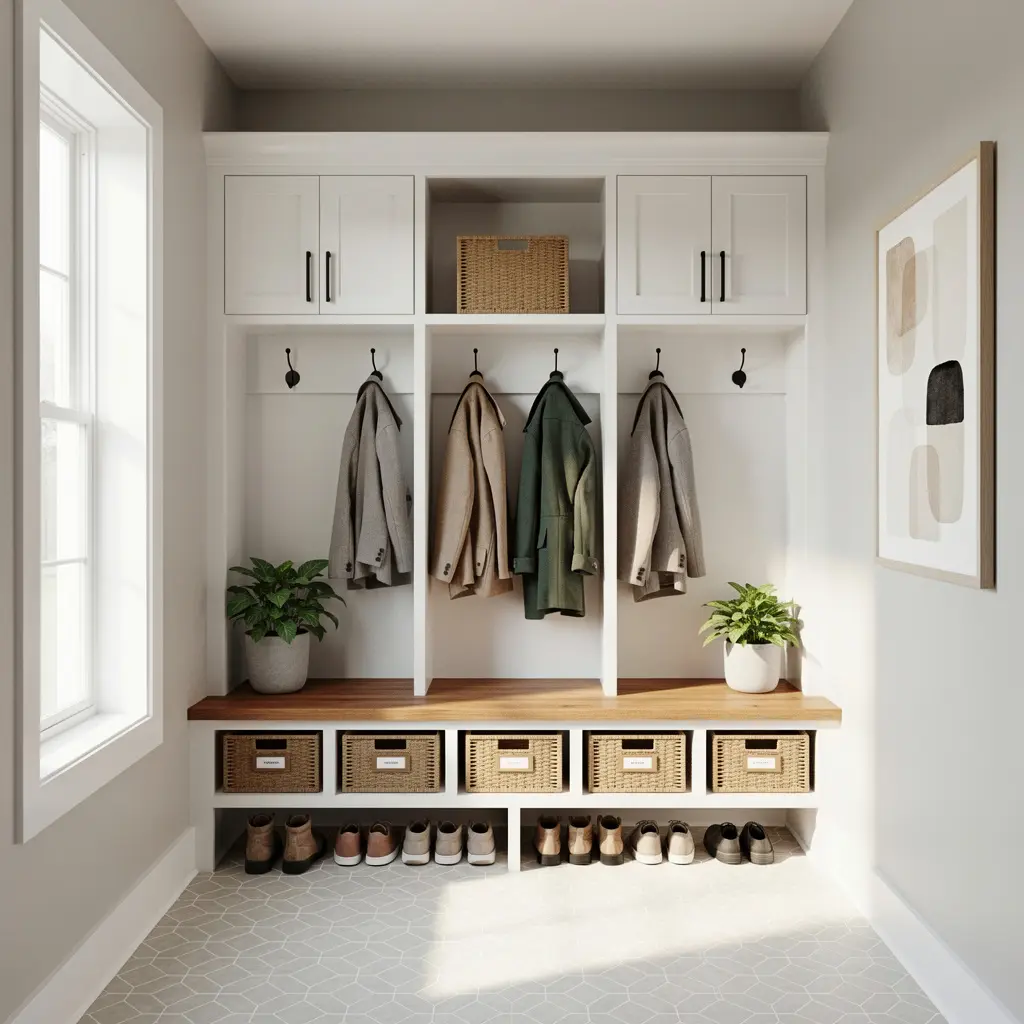
A quick reset at the end of each day, even just two or three minutes putting shoes back in their zone and coats back on hooks, prevents the slow buildup that eventually makes a system feel like it’s failed. Involving kids in maintaining their own cubby or hook, rather than doing it all for them, builds the habit faster than a parent handling everything alone. Revisiting the system every few months and adjusting for what’s actually working, rather than assuming the original setup is permanent, keeps the mudroom functional as the household’s needs change.
Mistakes to Avoid
- Choosing closed storage that requires extra steps kids are unlikely to consistently use
- Skipping labels, which leads to items ending up in random, inconsistent spots
- Mounting hooks at a single height that doesn’t work for both kids and adults
- Trying to store every season’s gear in the mudroom at once instead of rotating
- Underestimating shoe storage capacity, which is usually the first system to overflow
- Setting up the space once and never adjusting it as household needs change
Frequently Asked Questions
What’s the most important piece of furniture for a functional mudroom? A bench with storage underneath tends to have the biggest impact, since it solves both the seating problem and adds a dedicated storage zone in one footprint.
How do I organize a mudroom with kids who won’t put things away? Lower the height of hooks and bins to a reachable level, use picture labels instead of text, and keep the system as low effort as possible, since complexity is usually what breaks down first with kids.
Is a mudroom bench necessary if space is limited? A small stool or even a single foldable seat can serve the same function in a tighter space, so it’s worth including in some form even if a full bench doesn’t fit.
How often should I rotate seasonal items out of the mudroom? Twice a year, generally in early fall and early spring, keeps the active storage matched to what’s actually needed for the current season.
What’s a budget friendly way to add cubby storage? A freestanding cubby unit from a general furniture retailer typically costs less than built in custom carpentry and can be moved if you rearrange the space later.
A System Built to Survive Real Life
Mudroom organization ideas only work if the system matches how your household actually behaves, not an idealized version of tidiness. Start with a zone map, prioritize hooks and cubbies over closed storage, and label everything clearly enough that kids can use the system independently. A mudroom built this way stays organized months later, not just on the day you first set it up.

Leave a Reply