
You finally have the loft bedroom you wanted, high ceilings, exposed brick, maybe a wall of windows, and somehow it still doesn’t feel like a place you actually want to sleep. Big open spaces have a way of feeling cold and impersonal instead of dreamy, no matter how architecturally interesting they are on paper. Dreamy blue loft bedroom aesthetic ideas solve a slightly different problem than a standard bedroom does, because the real issue usually isn’t color choice at all. It’s scale. This article covers how to use blue specifically to bring warmth and intimacy into a space that was built to feel open, without fighting the architecture that made you want a loft in the first place.
1. The Real Challenge With Loft Bedrooms Isn’t Style, It’s Scale
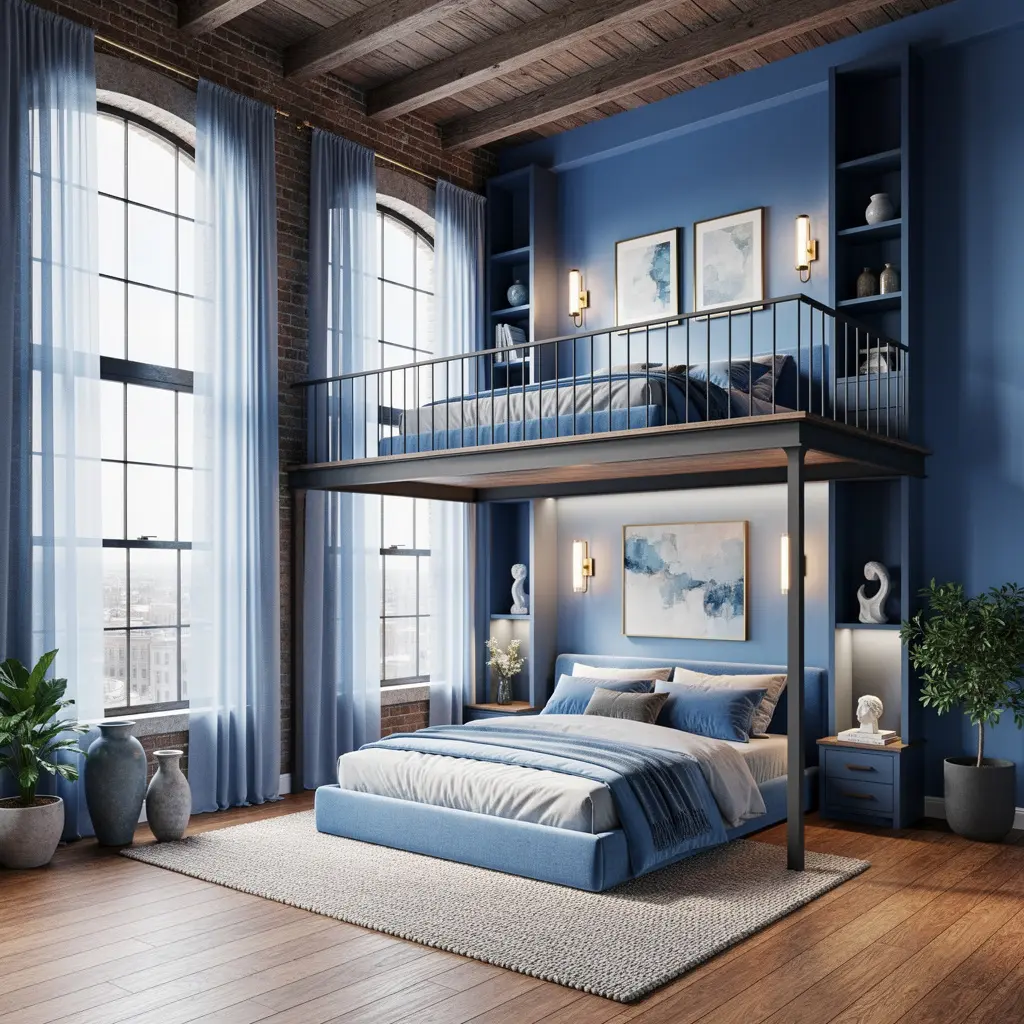
Most bedroom advice assumes four walls and a normal ceiling height. A loft breaks that assumption completely. You might have a 12 or 14 foot ceiling, no wall separating the bed from a living area, or a single massive window wall with nothing to soften it. Color alone can’t fix that. What actually works is using color, texture, and zoning together to create the sense of enclosure a loft naturally lacks, since your brain reads a defined, cozy space very differently than an open, echoing one, even if the room is objectively beautiful either way.
Why This Matters More Than People Think
A loft that photographs incredibly well can still feel oddly hard to relax in, and it usually comes down to this exact issue. Height and openness read as impressive, not restful, unless something in the room actively creates a sense of boundary.
2. Blue Works Harder in a Loft Than in a Regular Bedroom
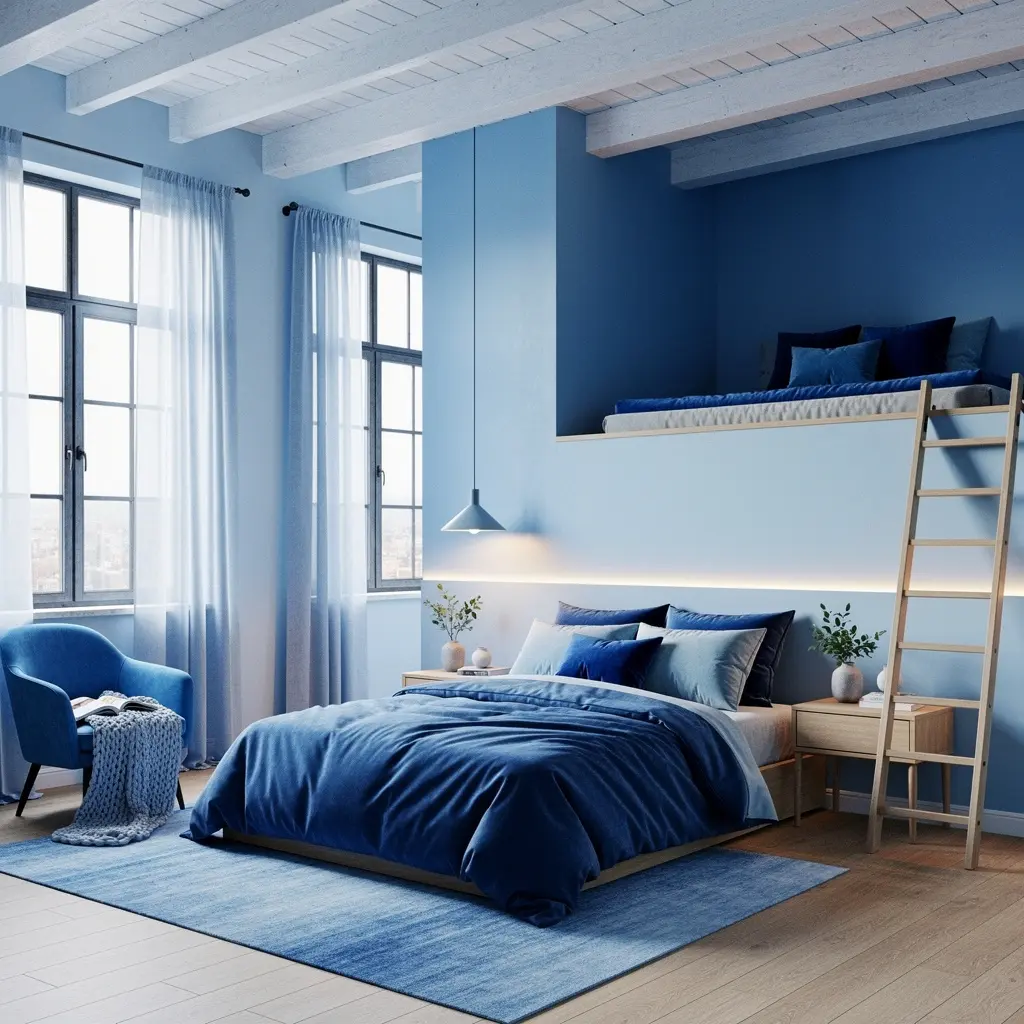
In a standard bedroom, blue mostly sets a mood. In a loft, it does that plus something else: it helps visually lower a ceiling and pull a huge room inward. A deep navy or indigo, applied to the wall behind the bed and possibly bleeding onto the ceiling directly above it, creates a kind of enclosed nook within the larger open space. This trick, carrying a dark color from wall to ceiling, is one of the most effective ways to make a tall room feel intimate instead of just tall.

3. Use a Rug to Draw a Boundary the Walls Won’t Give You
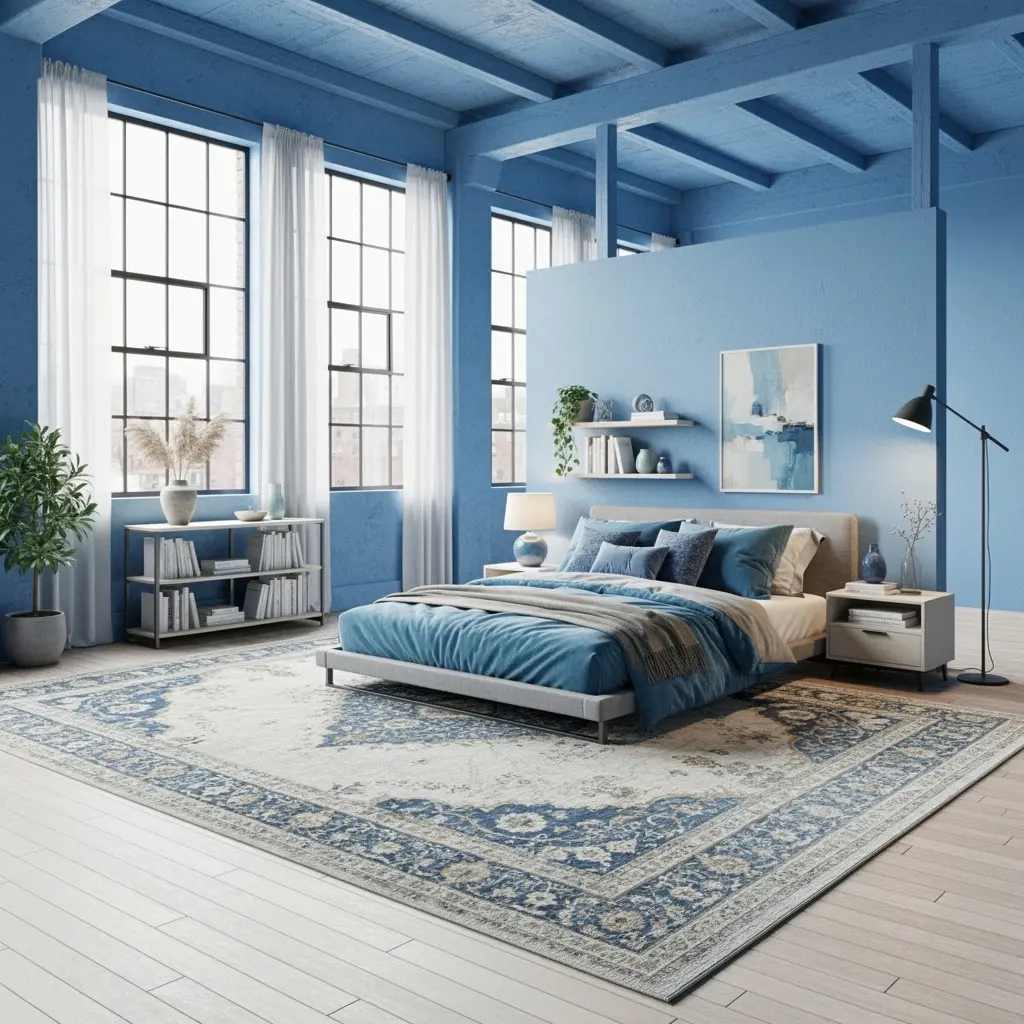
Without walls to define the bedroom zone, a large area rug becomes one of your most important tools. Size it generously, ideally extending at least 24 to 30 inches beyond the sides of the bed, so it reads as a clear floor boundary rather than a small mat floating under the furniture. A rug in a deep blue or a pattern that echoes your wall color ties the zone together visually, even from across a large open room. This single piece of furniture does more to signal “bedroom starts here” than almost anything else you could add.
4. Ceiling Height Changes How You Should Use Color
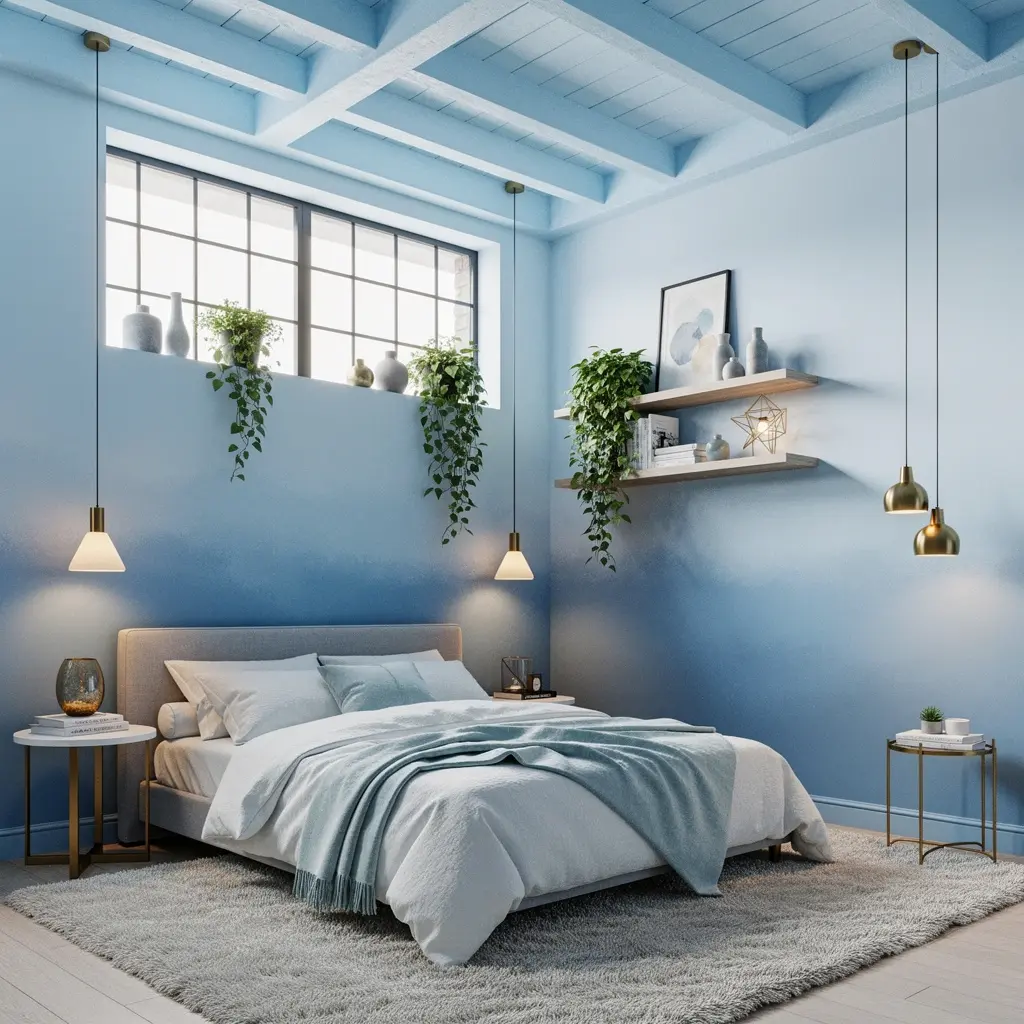
A tall ceiling painted the same white as the walls just disappears upward, taking any sense of coziness with it. Painting the ceiling, or at least the portion directly above the bed, in the same deep blue as your accent wall pulls it visually downward and wraps the sleeping area in color from three sides instead of one. If a full ceiling commitment feels like too much, a canopy structure, even a simple frame draped with fabric or strung with lights, achieves a similar lowering effect without touching the actual ceiling.
Painting the ceiling to match a wall consistently makes a tall room feel more intimate than painting the walls alone, since it removes the sense of the space extending endlessly upward.
5. Lighting Has to Do More Work Up There
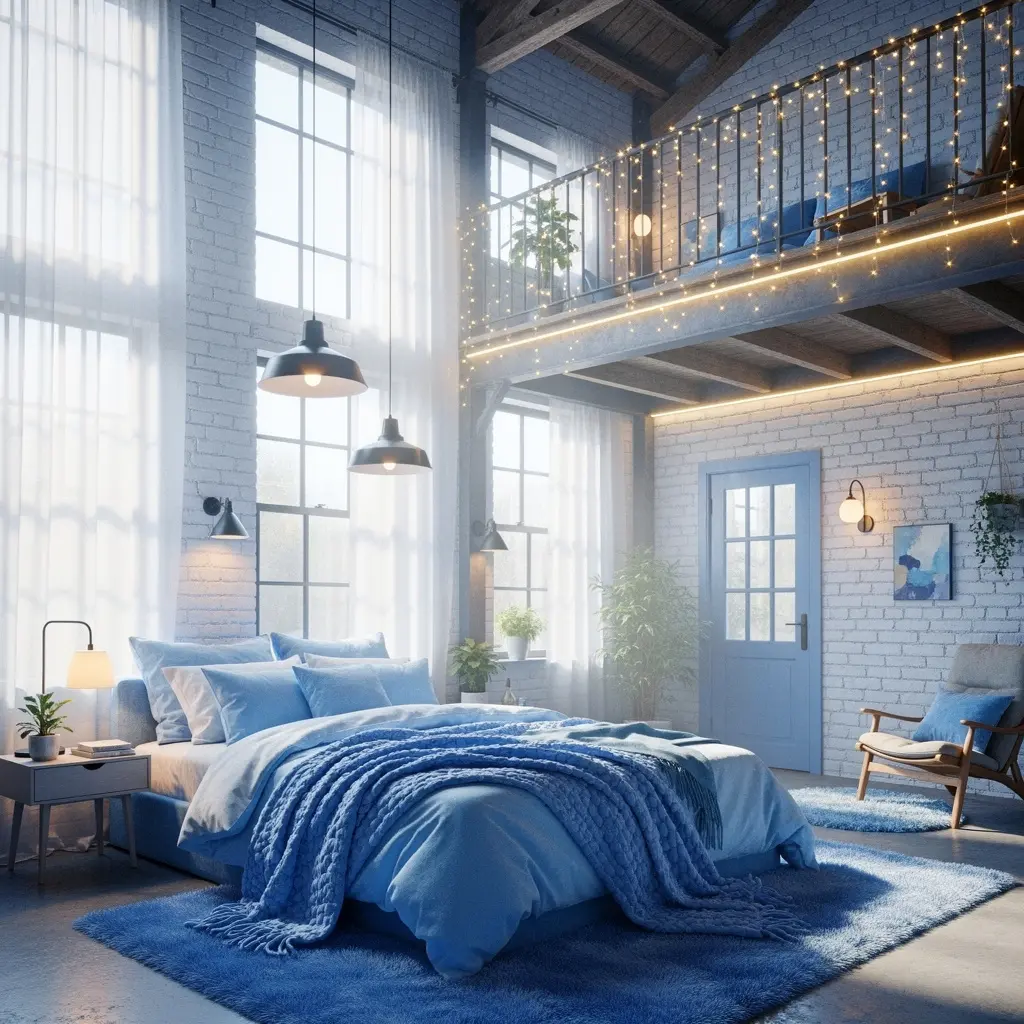
A single overhead fixture, even a nice one, rarely does enough in a room with this much vertical space and openness. Layer in lighting at multiple heights. String lights along an exposed beam, wall sconces at a normal eye level height, a floor lamp near a reading chair, all working together to bring light down into the human scale part of the room instead of leaving it stuck up near the ceiling. Warm white bulbs matter even more here than in a regular bedroom, since a loft’s exposed materials, brick, concrete, metal ductwork, already read as cool and industrial without any help from cold lighting on top of it.
6. Furniture That Doesn’t Get Swallowed by the Space
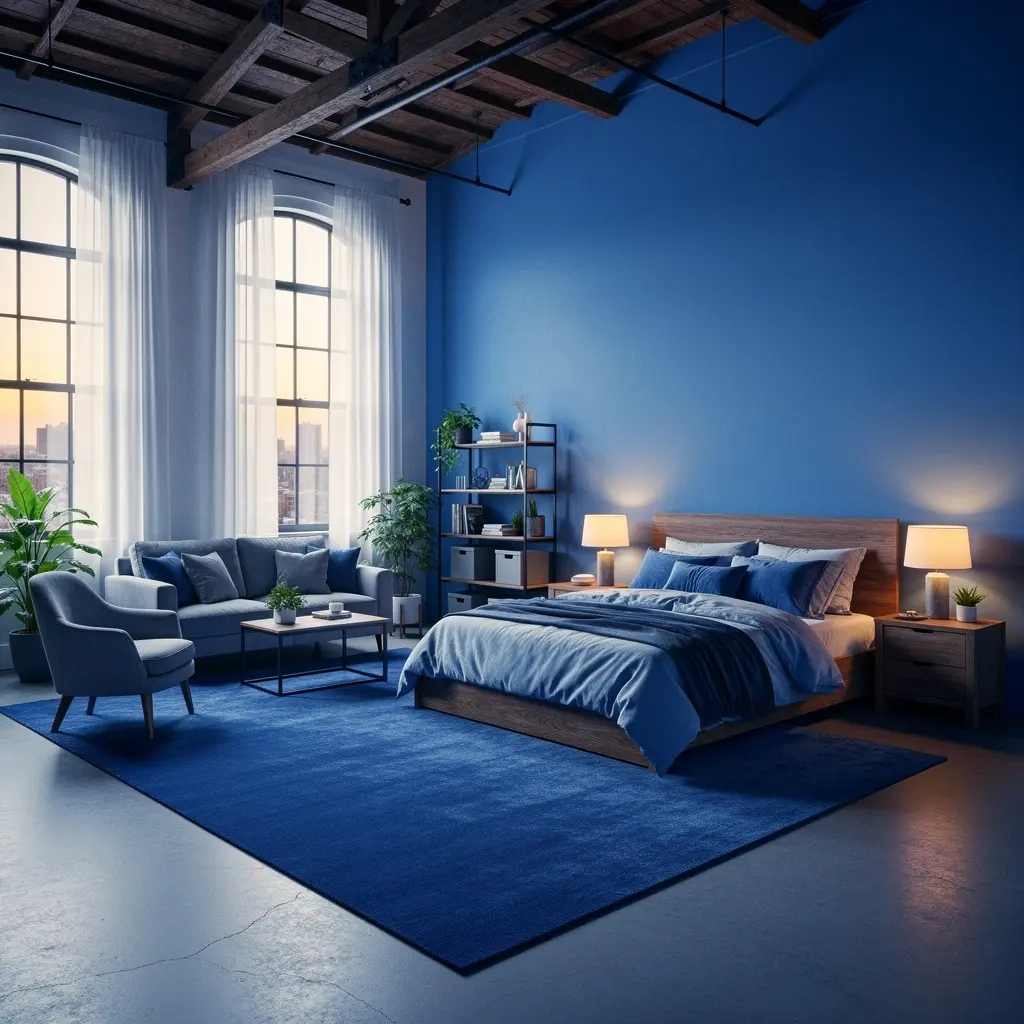
Small, delicate furniture disappears in a loft. A low platform bed with a substantial headboard, or a taller four poster style frame, holds its own against high ceilings in a way a standard bed frame often can’t. Oversized nightstands and a larger scale dresser also help, since undersized furniture in an open room tends to look like it wandered in from a smaller apartment rather than being chosen for the space. If you’re working with existing furniture that feels too small, raising it visually with a canopy frame or a tall headboard addition can solve the scale problem without buying everything new.
Scaling Art the Same Way
Small framed prints get lost on a tall wall. One large scale piece, or a gallery wall built with a clear, intentional grid rather than a scattered arrangement, holds up much better against loft proportions.
7. Curtains, Screens, and Other Ways to Fake a Wall
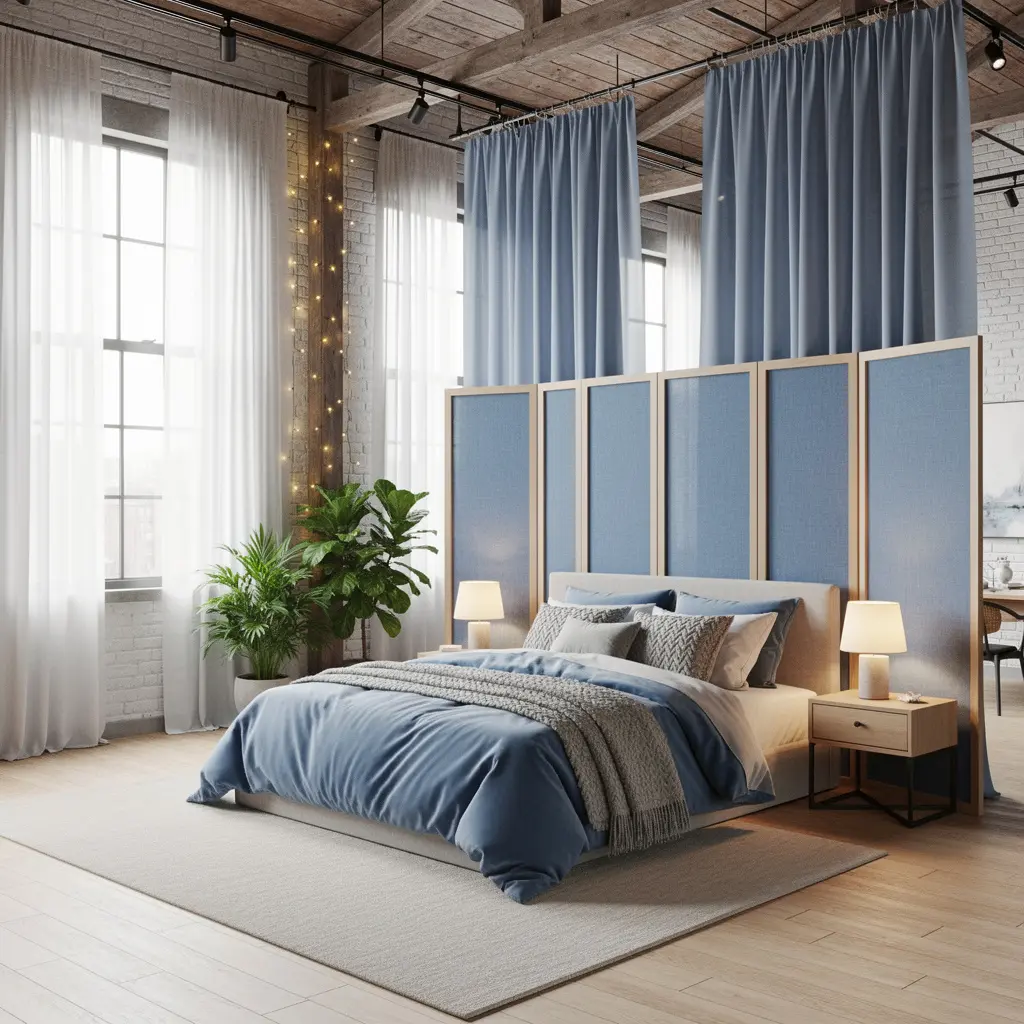
If your loft bedroom is fully open to another living area, a curtain track mounted to the ceiling, running floor length linen or blackout curtains, can section off the sleeping area at night without a permanent construction project. A folding screen or a slatted wood room divider does something similar on a smaller scale, useful if you just want to visually break up the sightline rather than fully enclose the space. Even a tall bookshelf, positioned as a room divider rather than against a wall, adds both storage and a sense of boundary in one piece of furniture.
8. Exposed Brick and Beams Actually Help the Blue Palette
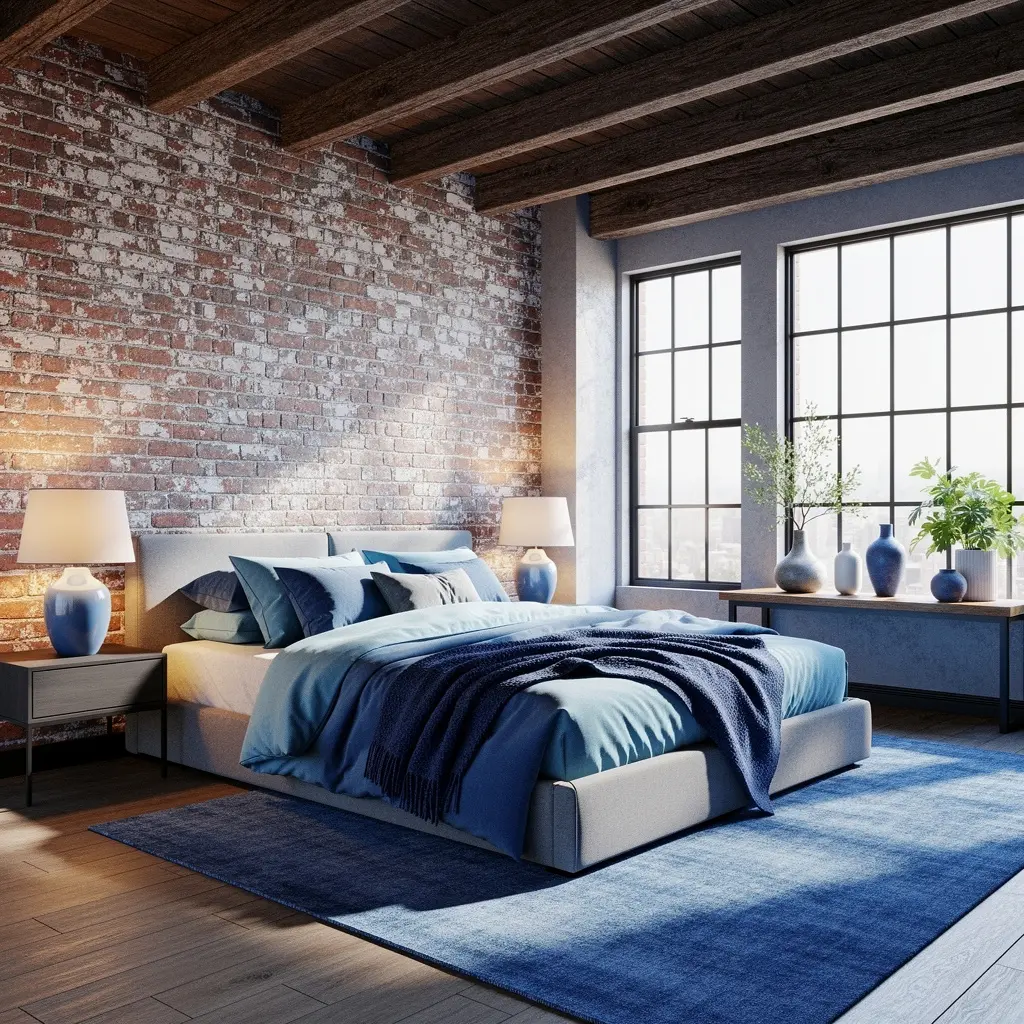
Here’s some good news if your loft has exposed brick or timber beams. These materials already carry warmth and texture that pairs naturally with blue, since the combination echoes the same balance of cool and warm that works so well in a standard bedroom. Leave brick unpainted where possible and let it sit alongside your blue walls rather than painting over it, since that contrast is doing a lot of the aesthetic work for you already. Wood beams, especially darker or richly stained ones, ground a blue palette the same way a wood headboard would in a smaller room.
9. Sound and Temperature Are Real Problems in Lofts
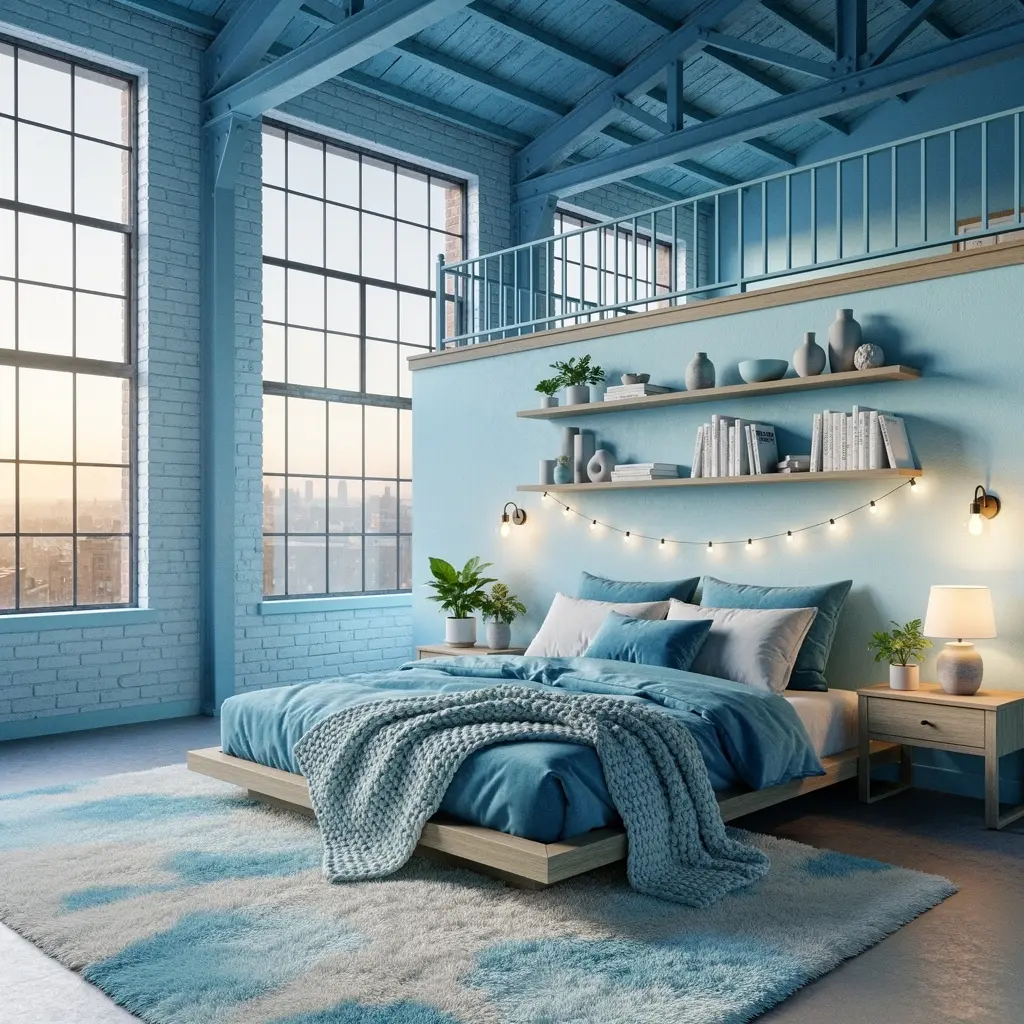
Open spaces with hard surfaces, brick, concrete, exposed ductwork, tend to be louder and less temperature stable than a standard enclosed bedroom, and that affects how “dreamy” the space actually feels to sleep in, not just how it looks. Heavy curtains, a large rug, and upholstered furniture all help absorb sound in a room that would otherwise echo. If temperature swings are an issue, layered bedding you can add or remove easily matters more in a loft than in a room with more consistent climate control.
10. Small Loft, Same Principles, Smaller Budget
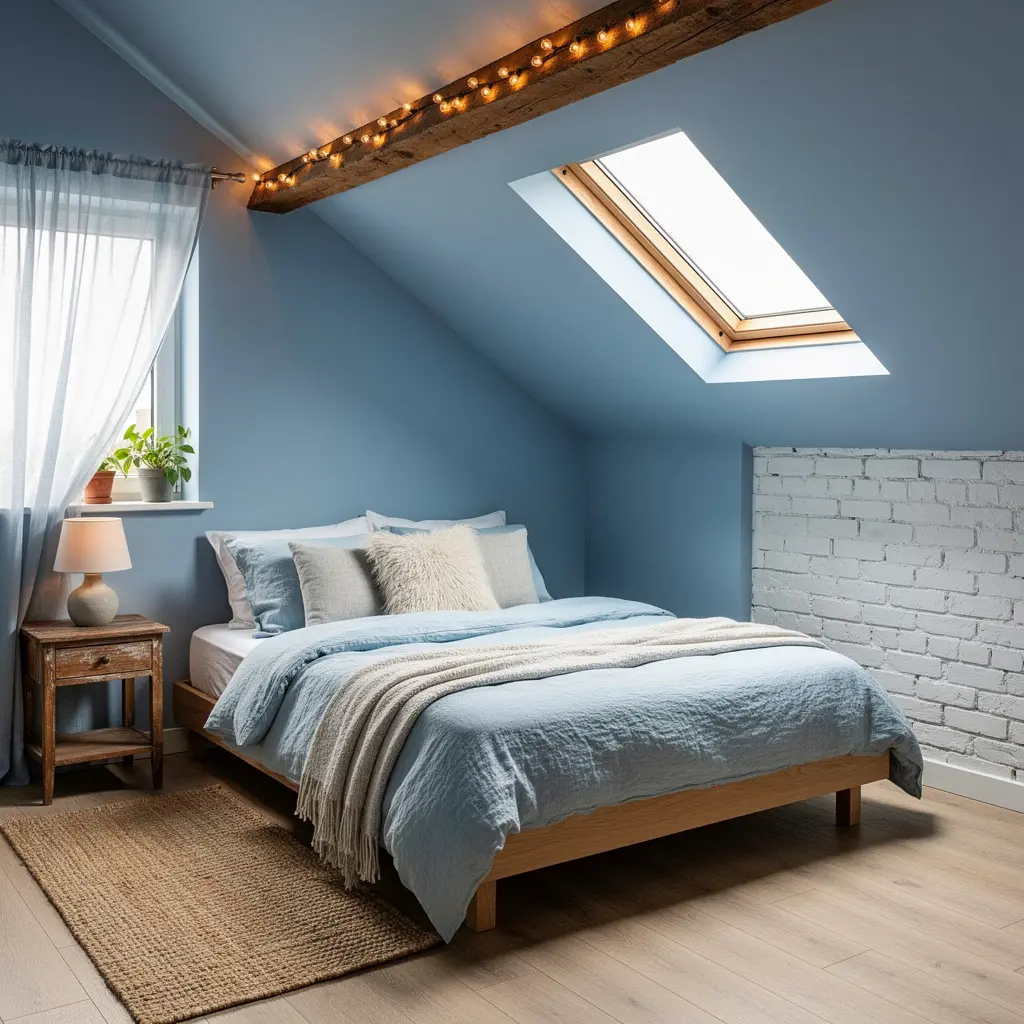
Not every loft is enormous. A smaller loft space still benefits from the same core ideas: color pulled onto the ceiling above the bed, a rug to define the zone, and layered lighting at human height rather than relying on one central fixture. Scale everything down proportionally. A smaller accent area, a modest canopy frame instead of a full curtain track, and a couple of well placed lamps can achieve the same cozy, dreamy effect in 200 square feet that a full curtain wall achieves in 800.
Mistakes to Avoid
- Painting only the walls and leaving a tall ceiling stark white, which keeps the room feeling cavernous
- Relying on a single overhead fixture as the only light source in a large open space
- Choosing undersized furniture that gets visually lost against high ceilings
- Skipping a rug, which leaves the sleeping area without any clear boundary
- Ignoring sound and temperature issues that come with hard, open surfaces
- Painting over exposed brick or wood beams instead of letting them add warmth to the palette
Frequently Asked Questions
Do I have to paint the ceiling for this to work? No, though it’s one of the most effective tricks for lowering a tall ceiling visually. A canopy frame or draped fabric achieves a similar effect without a full paint commitment.
What size rug do I need for an open loft bedroom? Size it to extend at least 24 to 30 inches beyond the sides of the bed on all open sides, which gives the sleeping zone a clear, readable boundary from across the room.
Is blue too dark for a loft with limited natural light? A lighter, dustier blue works better than a deep navy if natural light is limited, paired with strong layered lighting to keep the space from feeling dim.
How do I section off a loft bedroom without construction? A ceiling mounted curtain track, a folding screen, or a tall bookshelf used as a room divider all create a sense of separation without any permanent changes.
Does this approach work in a smaller loft, not just a huge one? Yes. The same core techniques, color on the ceiling, a defining rug, layered lighting, scale down proportionally and work just as well in a smaller loft footprint.
A Loft Bedroom That Finally Feels Like a Bedroom
Dreamy blue loft bedroom aesthetic ideas come down to solving a scale problem with color, not just picking a pretty shade. Carry blue from the wall onto the ceiling above the bed, define the floor with a generously sized rug, and layer in lighting at a human height instead of leaving the room lit from one point far overhead. Once those three things are in place, the height and openness that made the loft appealing in the first place stop working against you.

Leave a Reply