
You go down to the basement to grab something and end up standing there for a second, thinking about how much square footage is just sitting unused because the idea of finishing it feels like a project you can’t afford right now. Full basement renovations run into the tens of thousands of dollars, and that price tag stops a lot of people before they even start. Unfinished basement ideas on a budget take a different approach entirely, working with the raw concrete, exposed framing, and existing conditions rather than trying to hide them completely. This article covers exactly how to make an unfinished basement genuinely usable, sometimes even cozy, without the renovation budget a fully finished space would require.
1. You Don’t Need to Finish the Basement to Use It
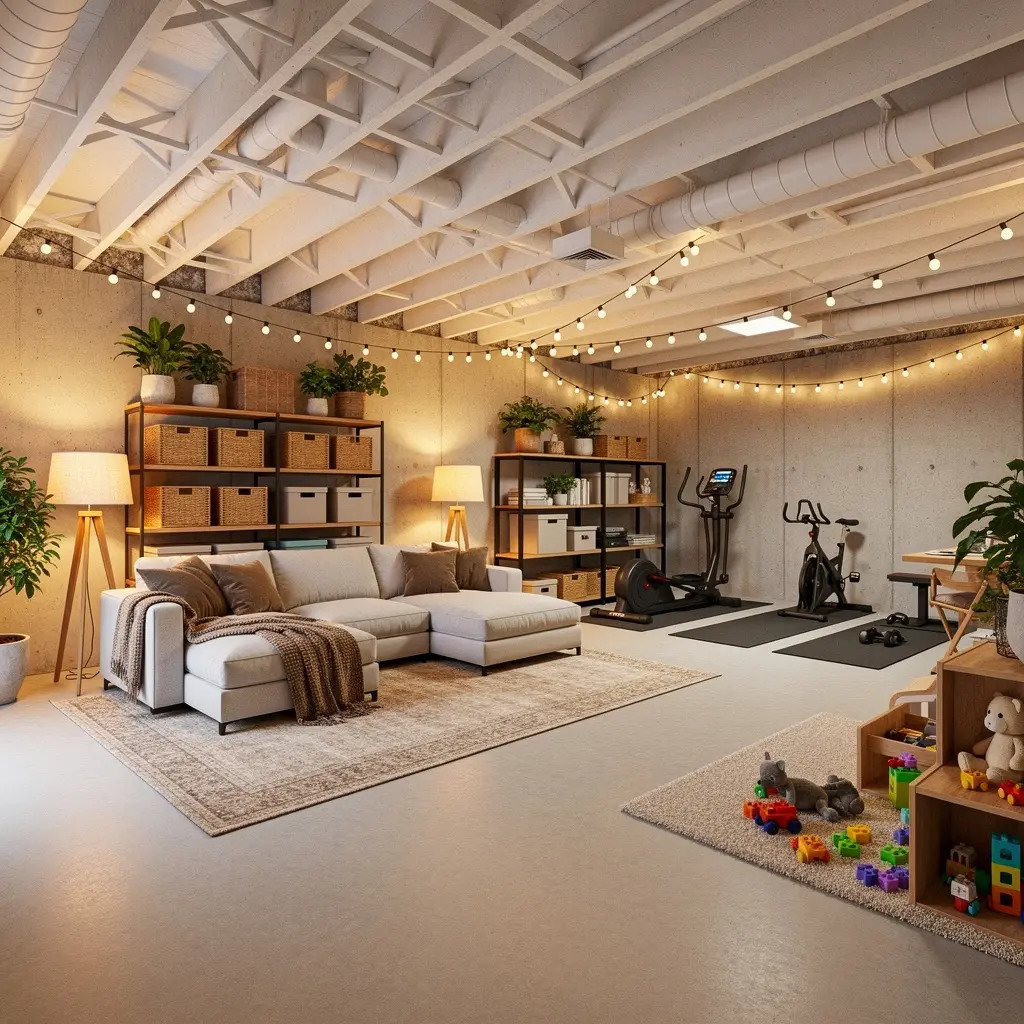
Here’s the mental shift that makes this whole approach work. A finished basement means drywall, carpet, a dropped ceiling, real construction. A usable unfinished basement means the space functions well and looks intentional, even with concrete floors and exposed joists still visible. These are genuinely different goals, and the second one is achievable in a weekend or two with a fraction of the budget the first one requires. Once you stop trying to disguise the space as something it’s not, a lot of decisions get much simpler.
What “Usable” Actually Looks Like Here
A usable unfinished basement has defined zones, decent lighting, comfortable furniture, and floors you can walk on without wanting to keep your shoes on. It doesn’t need drywall or a finished ceiling to check all of those boxes.
2. Painted Concrete Floors Solve More Than You’d Expect
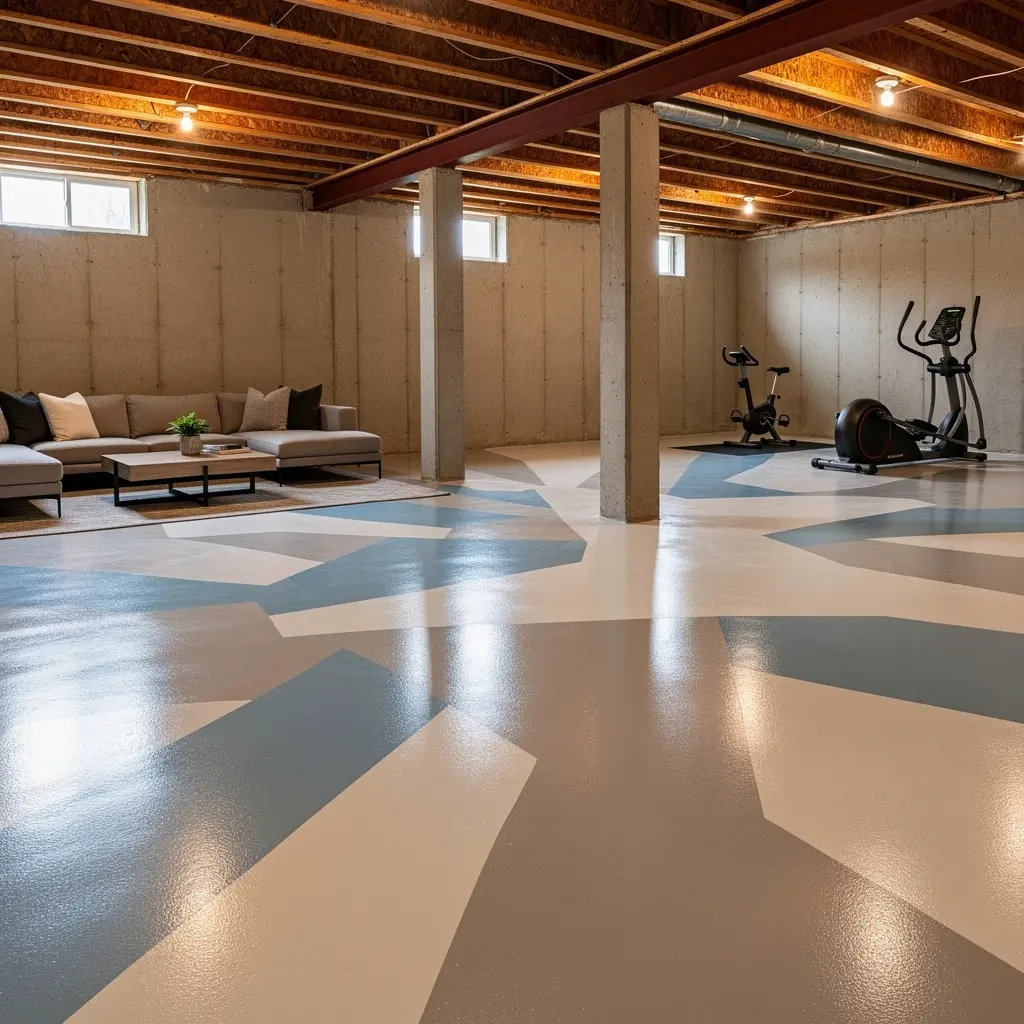
Bare gray concrete reads as unfinished and cold, but a coat of concrete floor paint, in a warm neutral or even a bold color, changes the entire feel of the room for a relatively small cost. Epoxy or concrete specific paint typically runs 30 to 60 dollars per gallon and covers a meaningful amount of floor space, especially compared to the cost of actual flooring installation. If painting feels like too much of a commitment, interlocking foam or rubber floor tiles lay directly over concrete without adhesive, adding warmth and cushion underfoot for a similar budget range.
3. Lighting Is Where Most of Your Budget Should Go
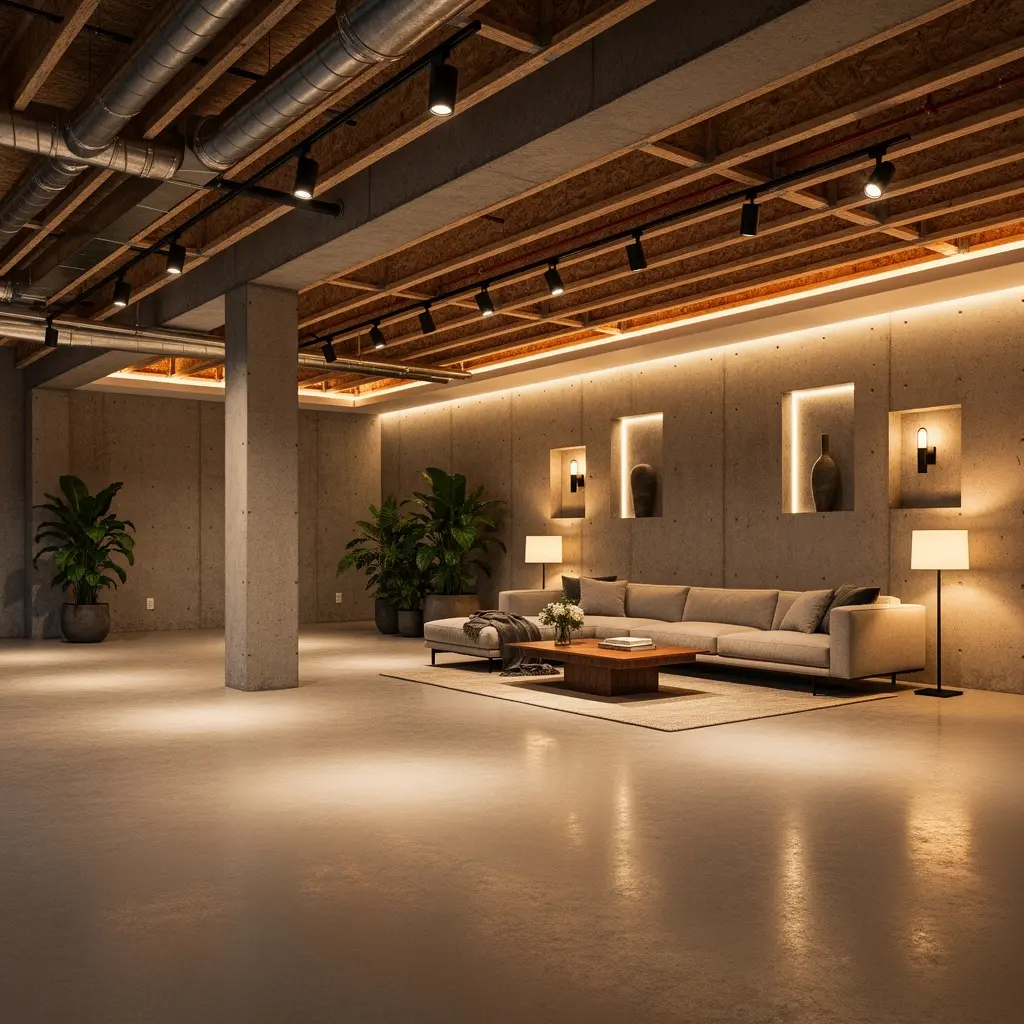
Basements are almost always underlit, since they typically lack windows and rely entirely on artificial light. Prioritize lighting over almost anything else on this list, since a well lit unfinished basement reads as intentional, while a dim one reads as neglected no matter what else you’ve done. Track lighting or surface mounted fixtures work in a basement without a finished ceiling, since they don’t require the recessed cavity a finished ceiling would provide. String lights, strung across exposed joists, add a warm, ambient layer that’s inexpensive and genuinely effective for softening an otherwise stark space.
A basement with strong, layered lighting reads as far more intentional than one with beautiful furniture sitting under a single bare bulb, since lighting affects how every other design choice in the room actually reads.
4. Zoning the Space Without Building a Single Wall
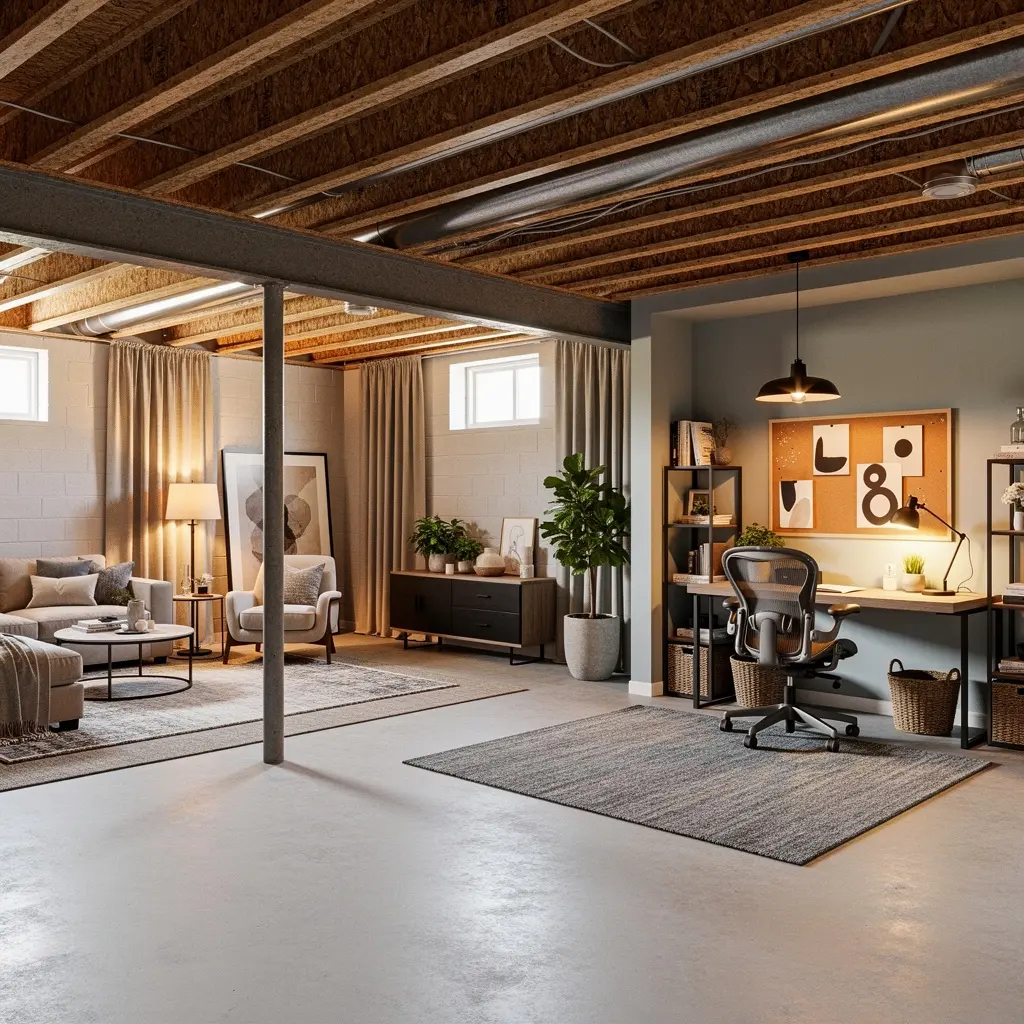
An open basement without any walls can still feel like distinct rooms if you zone it correctly. Large area rugs, one per zone, define a seating area, a workout corner, or a play space without needing any construction at all. Furniture arrangement does the rest. A couch angled to face a defined seating area, rather than pushed against a wall, creates a sense of enclosure even in a fully open room. Curtains hung from the ceiling on a simple track can section off a zone even more clearly, useful for separating a storage area from the part of the basement you actually spend time in.
5. Dealing With Exposed Ceilings and Ductwork
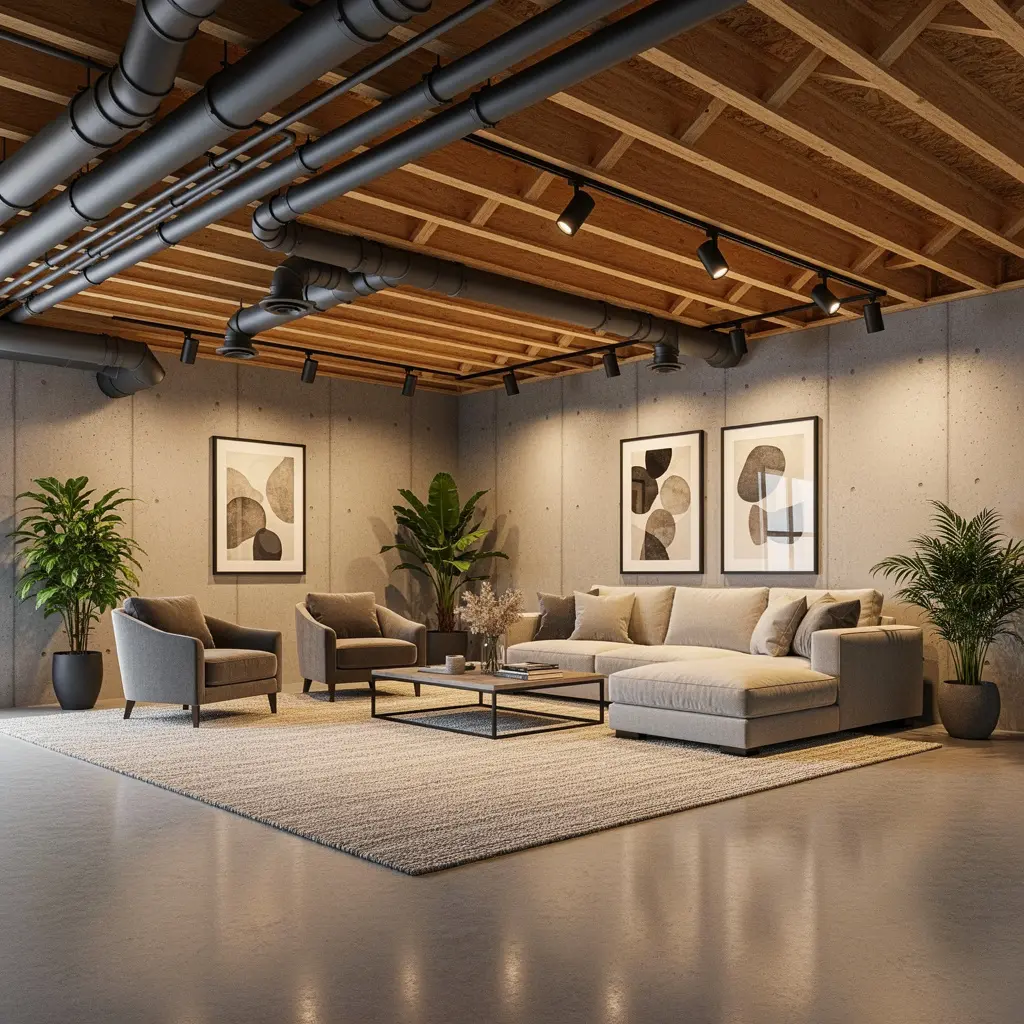
Painting exposed joists, pipes, and ductwork a single dark, matte color, usually black or a deep charcoal, is one of the most effective and least expensive tricks for making an unfinished ceiling look intentional rather than incomplete. This works because the dark color recedes visually, making the ceiling height feel less like an obvious construction gap and more like an industrial design choice. A gallon of matte black spray paint or ceiling paint typically costs under 40 dollars and covers a surprising amount of exposed framing and mechanicals.
Why This Trick Works So Well
An unpainted, mismatched ceiling with visible pipes and wood draws the eye upward and highlights the “unfinished” quality of the room. A single unified dark color does the opposite, letting the ceiling recede so your eye focuses on the furnished, styled parts of the room instead.
6. Furniture That Can Handle a Raw Basement Environment
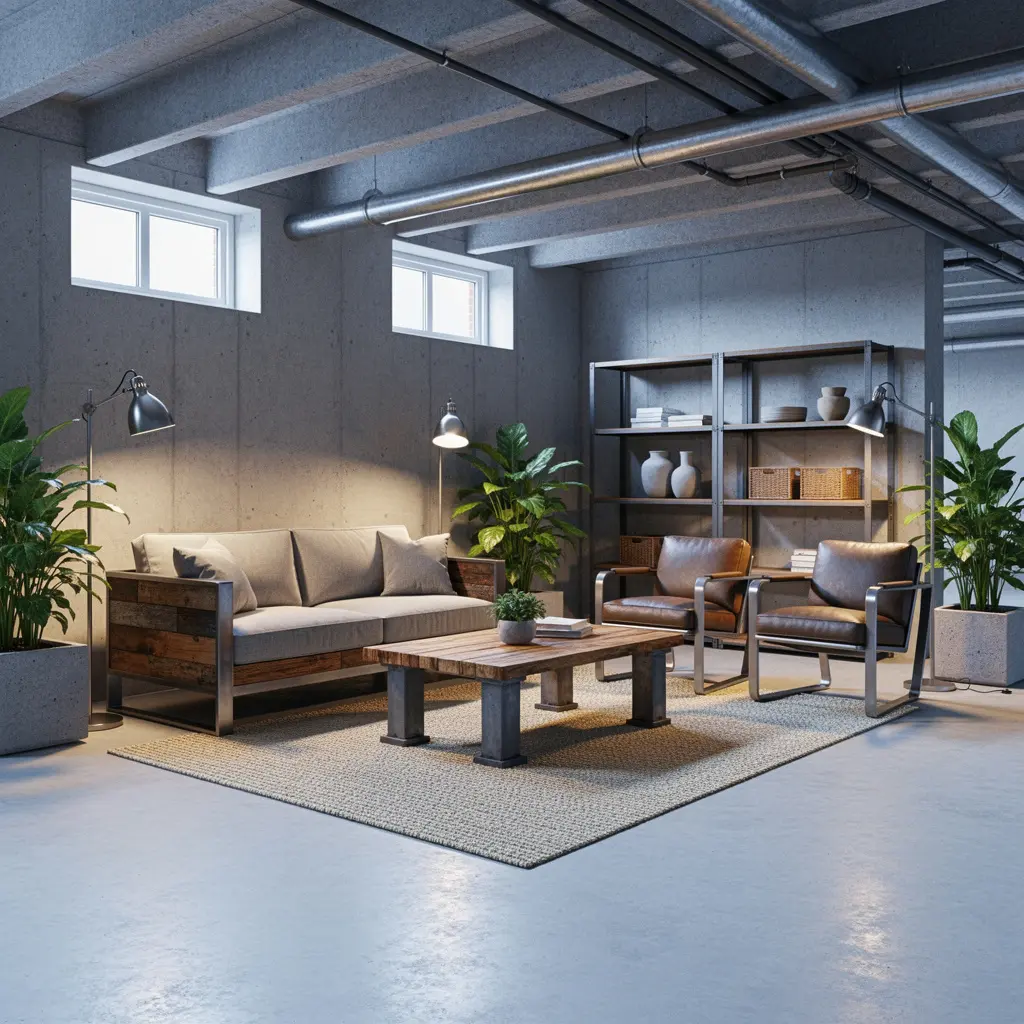
Basements run cooler and often more humid than the rest of the house, so furniture choices matter more here than in a typical living room. Look for pieces with synthetic or performance fabric rather than natural fibers that can absorb moisture and develop mildew over time. Furniture with metal or plastic legs, rather than exposed wood sitting directly on concrete, holds up better to potential dampness and is easier to wipe down if the floor ever gets wet. Secondhand or budget furniture is a reasonable choice for a basement specifically, since it’s a lower stakes environment than a formal living space upstairs.
7. Hiding Storage and Mechanicals Without Full Walls
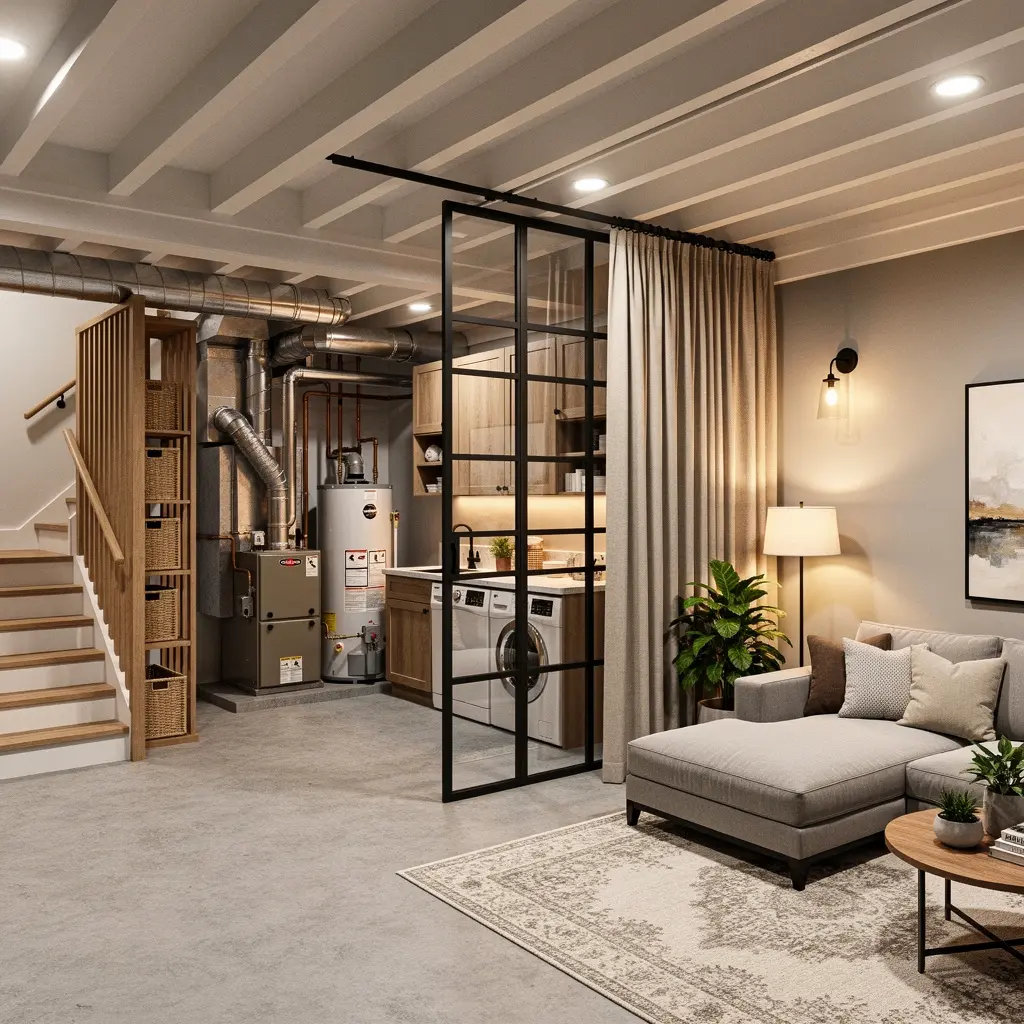
Every basement has the stuff nobody wants to look at, the water heater, electrical panel, random storage bins, and dealing with that visually matters as much as decorating the parts you do want to show off. A tension rod and curtain panel, hung floor to ceiling in front of a mechanical area, hides it completely for the cost of a curtain and a rod. Freestanding shelving units, organized with matching bins, keep storage functional while looking considerably more intentional than a pile of random boxes. A folding screen works the same way for a smaller area that doesn’t need a full curtain setup.
8. Moisture and Temperature Issues You Can’t Skip
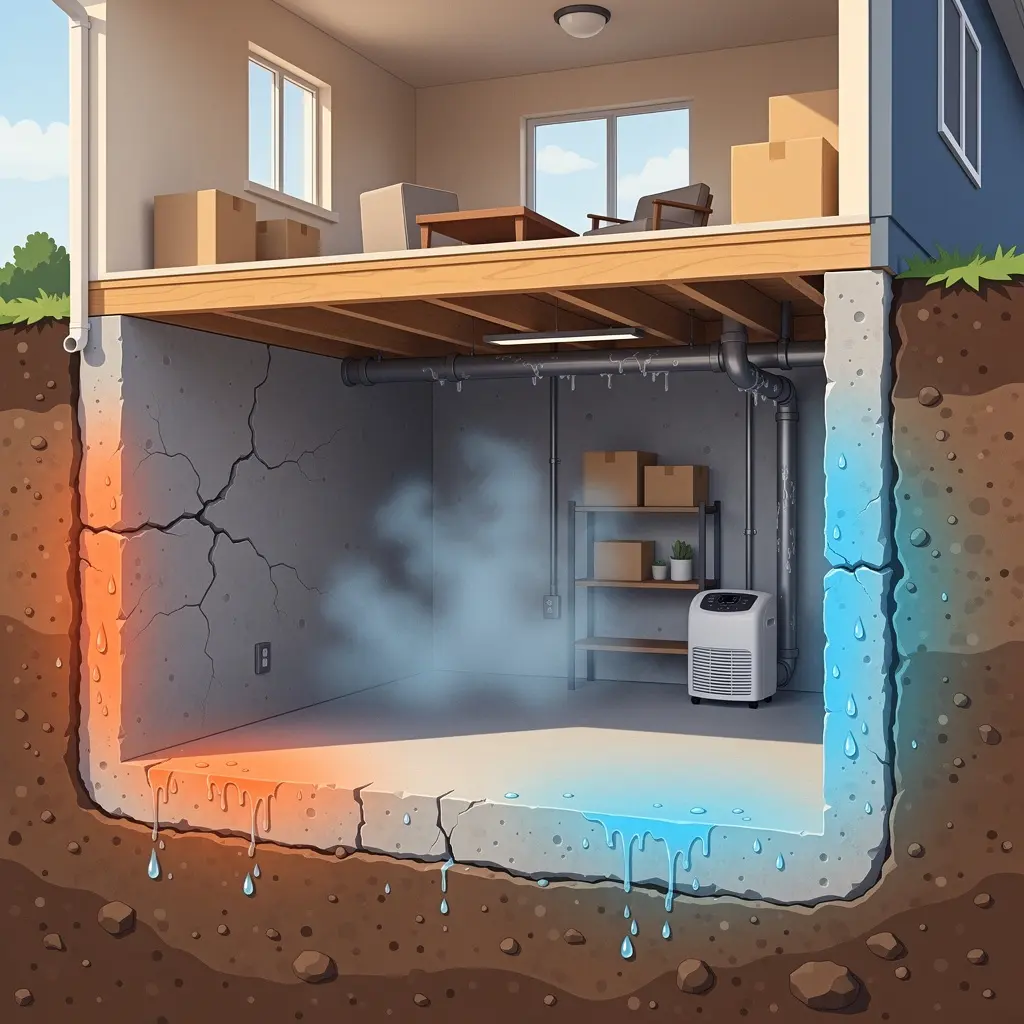
Before investing much in decor, address any moisture issues the basement already has, since paint and rugs won’t fix an actual water problem and can even make it worse by trapping moisture against the concrete. A dehumidifier, running consistently in a basement prone to dampness, protects both your health and anything you bring into the space. A space heater or supplemental heating solves the temperature side of things if the basement runs noticeably colder than the rest of the house, which is common even in basements with working central heat.
9. Cheap Wall Treatments for Exposed Concrete or Studs
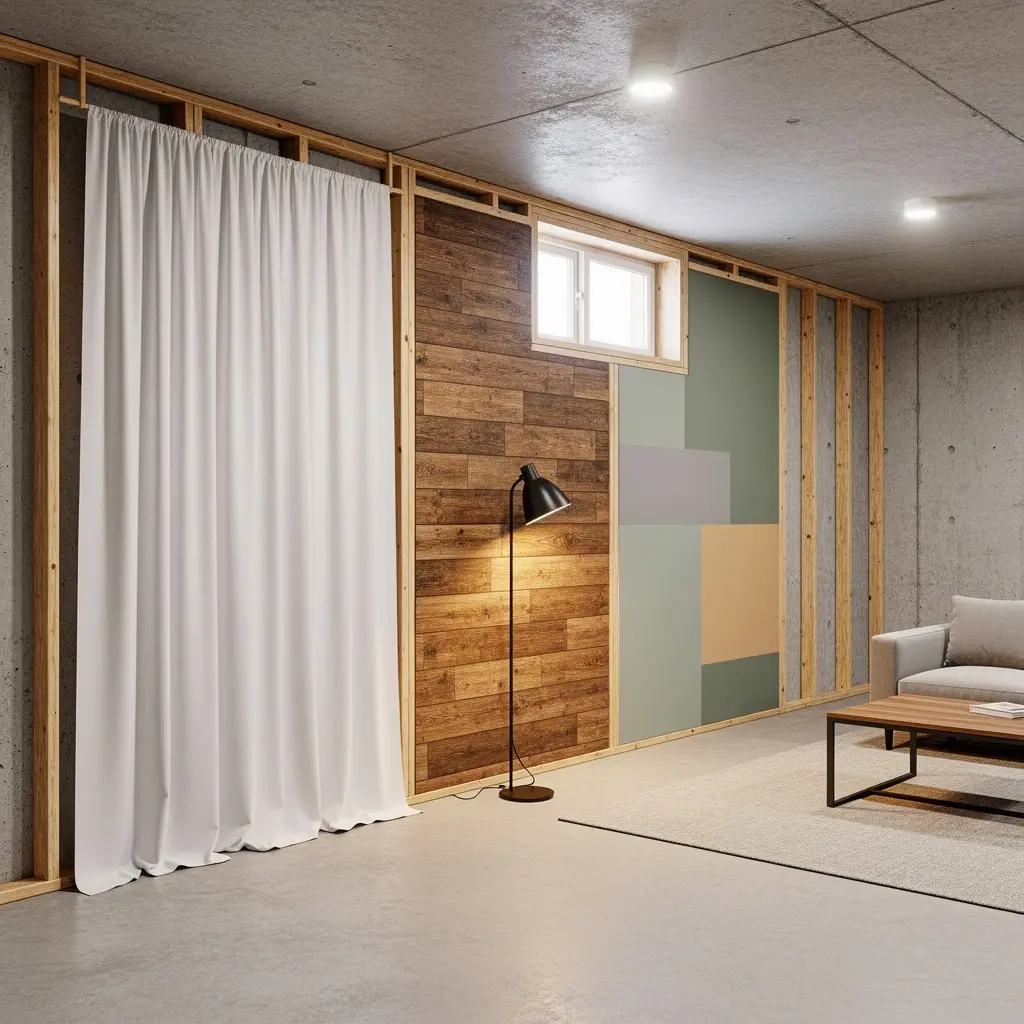
Exposed concrete block walls can be painted the same way as the floor, and a single consistent color across floor and walls creates a cohesive, intentional look rather than a patchwork of different raw materials. If the walls are exposed studs rather than block, hanging large fabric panels or tapestries between them adds softness and color without needing actual drywall installation. Peel and stick wood look panels, applied to just one accent wall, add warmth for a fraction of the cost of full wood paneling or drywall finishing.
10. Building the Space in Phases Instead of All at Once
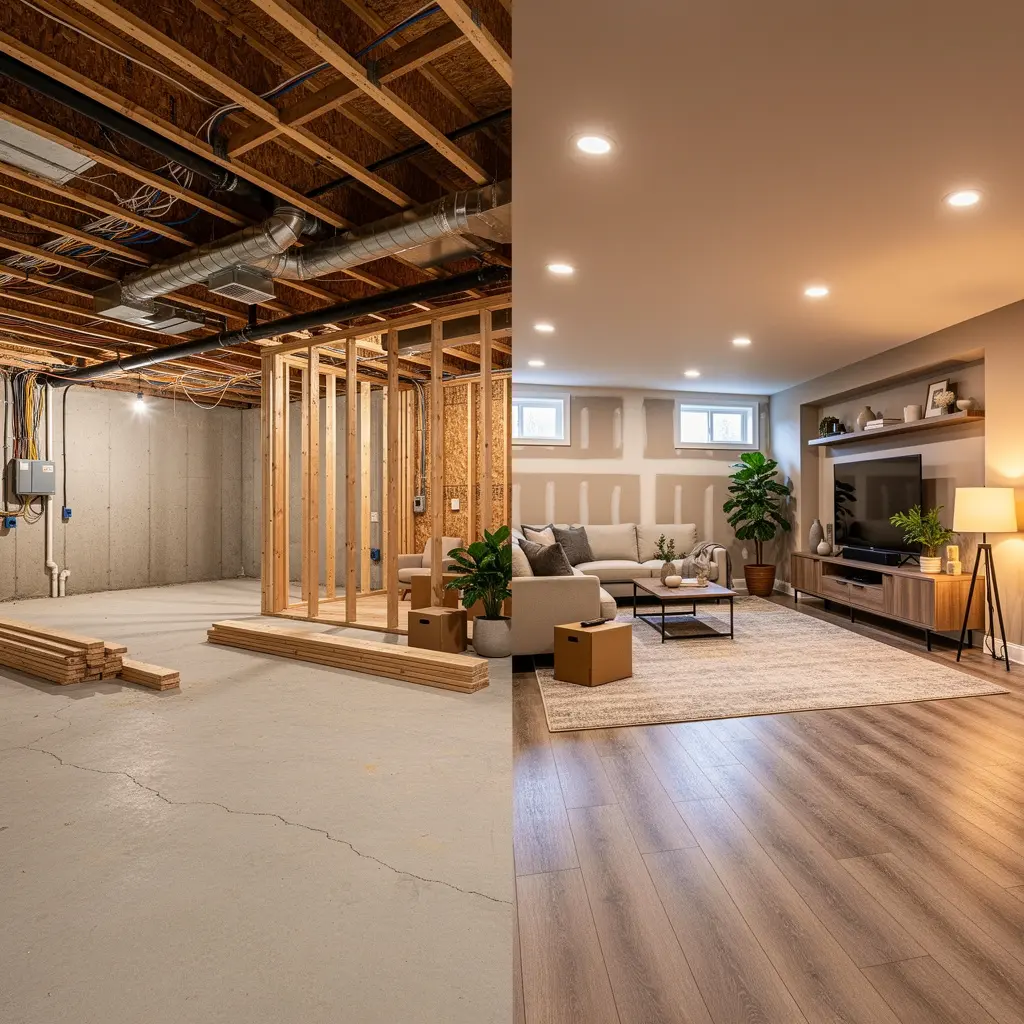
You don’t need to tackle the whole basement in one weekend or one budget cycle. Start with lighting and flooring, since those two changes affect how every other decision in the room reads. Add zoning through rugs and furniture arrangement next, then layer in the ceiling and wall treatments once the core functional pieces are in place. Spreading the project across a few months, rather than trying to do everything at once, makes the whole thing more affordable and considerably less overwhelming to actually start.
Mistakes to Avoid
- Skipping lighting upgrades and trying to decorate around a single dim overhead bulb
- Ignoring an existing moisture problem instead of addressing it before adding furniture or rugs
- Choosing natural fiber furniture and rugs that can absorb basement dampness
- Leaving mechanicals and storage fully exposed instead of screening them with a curtain or shelving
- Painting the ceiling and walls in mismatched colors instead of one unified tone
- Trying to do the entire space at once instead of building it out in manageable phases
Frequently Asked Questions
Do I need to seal the concrete floor before painting it? Yes, most concrete floor paint requires a compatible primer or sealer first, which helps the paint adhere properly and last longer under regular foot traffic.
How do I keep an unfinished basement from feeling cold, temperature wise? A space heater or supplemental heating source, along with area rugs and heavier textiles, both help offset a basement’s naturally cooler temperature compared to the rest of the house.
What’s the cheapest way to hide a water heater or electrical panel? A tension rod and curtain panel, hung floor to ceiling, is typically the least expensive option and can be installed in under an hour without any permanent changes.
Should I paint exposed ductwork and pipes, or leave them as is? Painting them a single dark, matte color usually makes the ceiling look far more intentional than leaving mismatched materials exposed in their original finish.
Is it worth addressing moisture before decorating, even on a tight budget? Yes, this should come before any decorating investment, since unresolved moisture issues can damage furniture, rugs, and paint, ultimately costing more than addressing it upfront.
A Basement That Finally Earns Its Square Footage
Unfinished basement ideas on a budget work by embracing the raw materials already there instead of trying to hide them entirely. Prioritize lighting and flooring first, since those two changes affect how the whole room reads, then zone the space with rugs and furniture before tackling the ceiling and walls. Built out this way, in phases and on a real budget, an unfinished basement can go from ignored storage space to one of the more genuinely useful rooms in the house.

Leave a Reply