
Blue and white sounds simple enough on paper. Then it goes on the wall and suddenly the room feels more like a doctor’s office than somewhere you actually want to sleep. That’s the risk with this palette, and it’s exactly why these sky blue and white bedroom ideas focus so much on warmth. Get the shade right, balance it properly against white, and layer in a bit of texture, and the whole thing reads as calm and airy instead of clinical, the way it looked in whatever photo made you want to try it in the first place.
The mistake most people make is treating blue and white as the entire plan. Paint the walls, buy white bedding, call it done. But a bedroom built only from those two colors, with nothing warm mixed in, tends to feel a little flat by the second week, sometimes sooner. These ten ideas are about avoiding that exact outcome.
1. Choose the Right Shade of Sky Blue for Your Walls
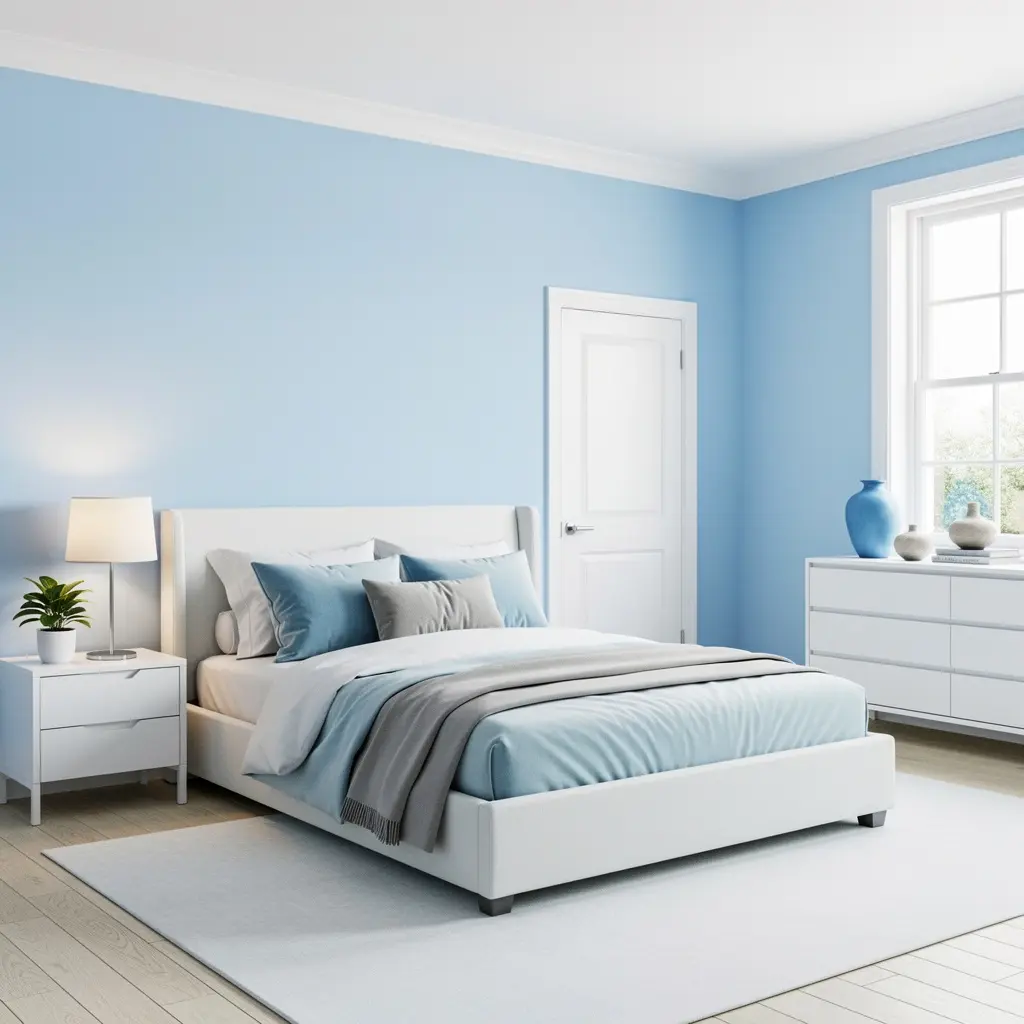
Not every blue reads the same. A sky blue with a slight gray undertone feels soft and calming. One that leans too bright or too saturated can start to feel more like a nursery than a grown up bedroom. Test a sample patch directly on your wall, morning and evening both, since blue shifts more than most colors depending on the light hitting it.
North facing rooms make blue look cooler and grayer than it actually is, more often than people expect. If your bedroom doesn’t get much warm afternoon light, lean toward a slightly warmer, softer blue rather than anything crisp or icy.
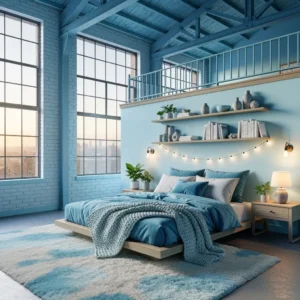
2. Balance Blue and White in a Roughly Two to One Ratio
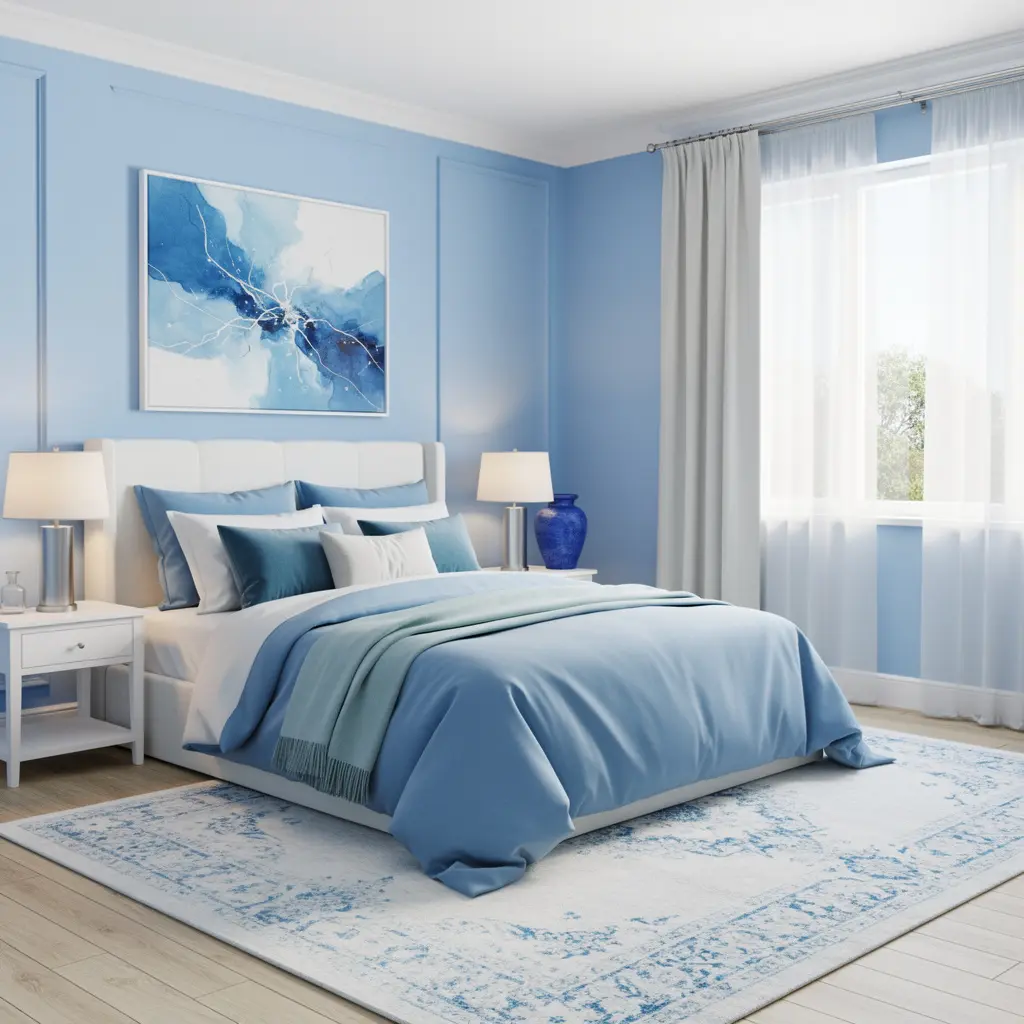
A room that’s half blue and half white can start to feel a bit busy, almost like a flag. Letting white dominate slightly, roughly two thirds white to one third blue, usually reads as more calming. White ceilings, white trim, and mostly white bedding, with blue coming in through one wall or a handful of accessories, tends to work better than an even split.
This isn’t a strict rule. It’s more of a starting point. Adjust based on how much natural light the room actually gets, since a darker room can usually handle a bit more white before it starts to feel washed out.
3. Add Crisp White Bedding as Your Base Layer
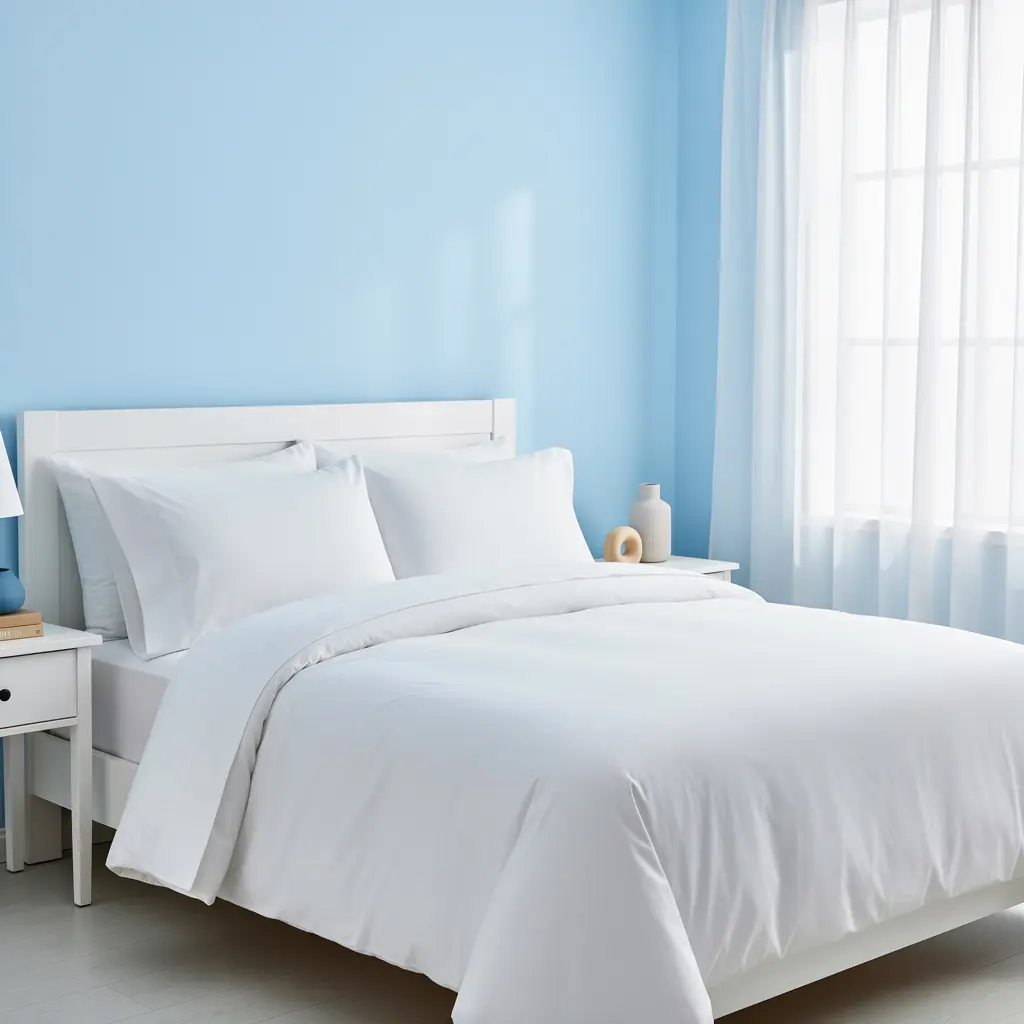
White bedding gives a blue room somewhere to breathe. A good quality white duvet or quilt, generally 60 to 150 dollars depending on material, reads as clean and fresh without competing against the wall color. Cotton percale has a crisp, hotel like feel that suits this palette especially well.
Don’t go stark white if the room already leans cool. A soft ivory or warm white keeps the bedding from making the whole room feel even chillier than the blue already does on its own.
4. Layer in Textured Throws and Pillows for Warmth
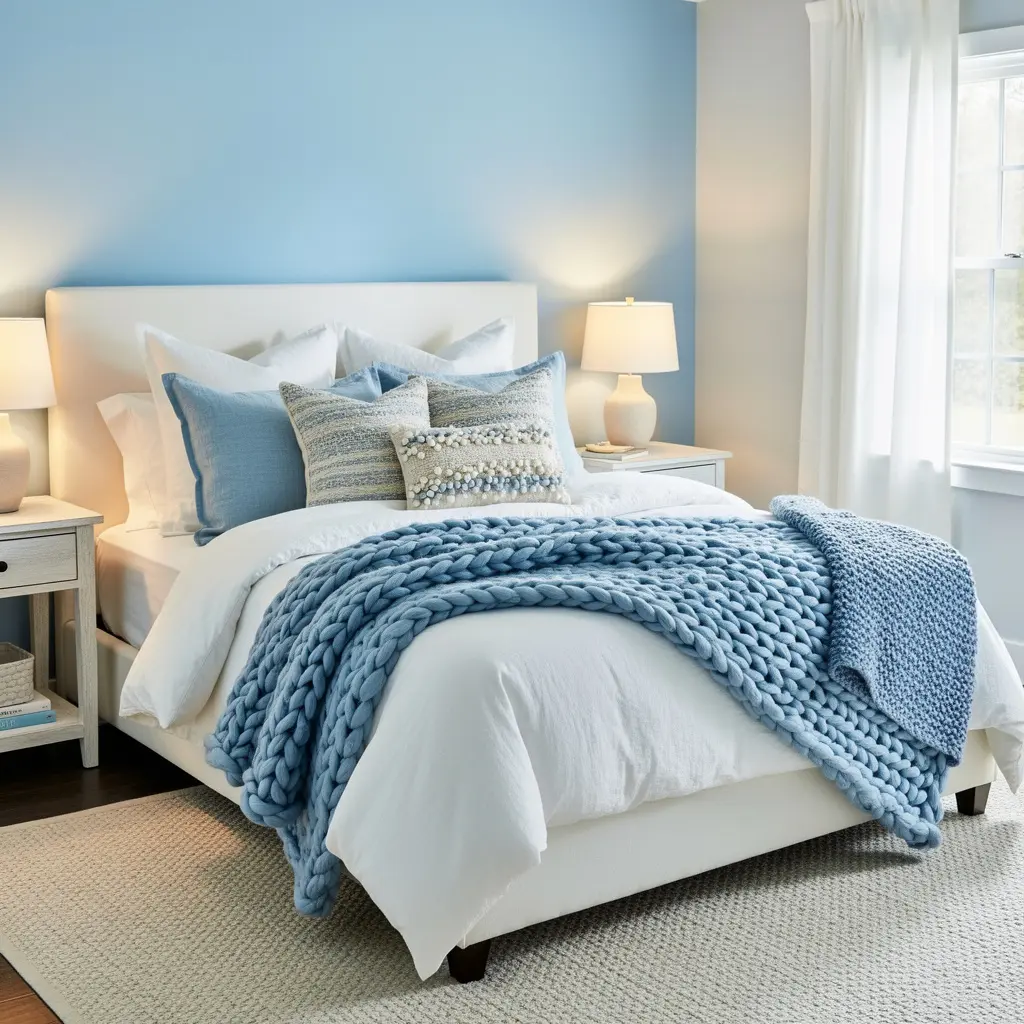
This is where a lot of blue and white bedrooms go wrong. Flat white sheets under a flat blue wall, nothing else going on, reads as sterile fast. A chunky knit throw at the foot of the bed, a couple of linen pillows in a warm cream, maybe one in a deeper navy for contrast. That’s what turns flat into cozy, and it’s a much smaller investment than repainting.
Mix textures more than colors here. Velvet, linen, knit, all in a similar tonal range, does more for the room than adding another shade of blue would.
5. Choose Wood Tones That Complement Both Colors
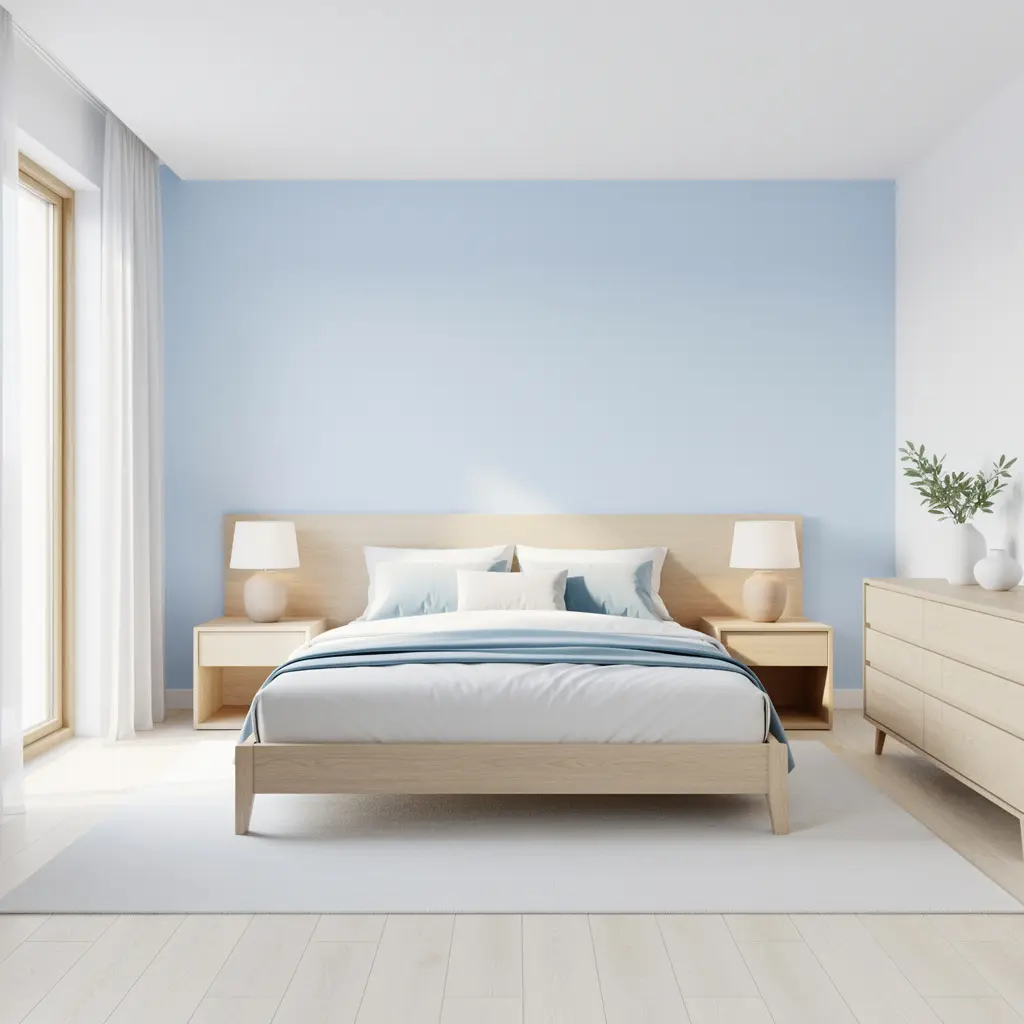
Cool gray furniture next to a blue wall can tip a room fully into cold territory. Warm wood, oak, walnut, a honey toned pine, gives the palette something to lean against. A wood bed frame or nightstand does more grounding work here than almost any other single piece in the room.
If your existing furniture already leans cool or gray, adding one warm wood piece, even something small like a bench or a side table, helps rebalance the whole room without replacing everything you already own.
6. Add a Sky Blue Accent Wall Instead of Painting Every Wall
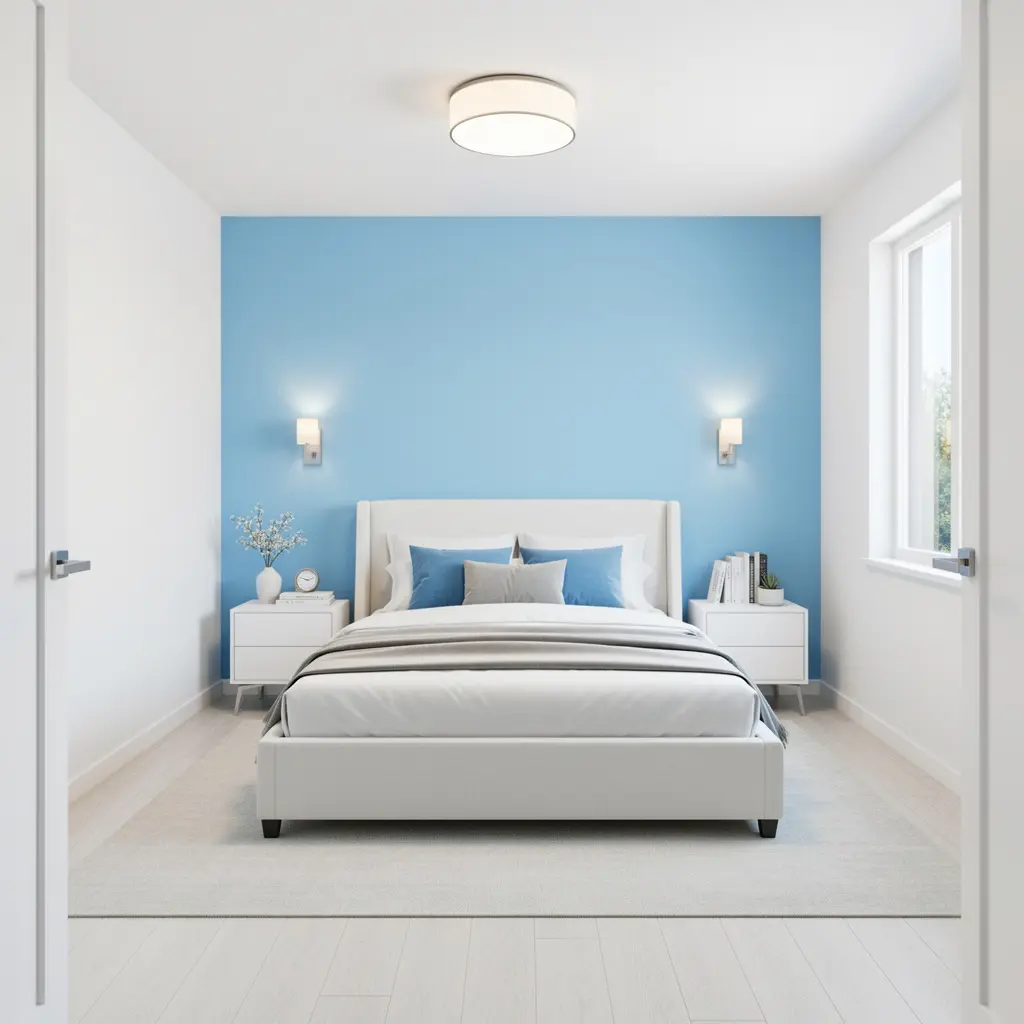
Committing to blue on all four walls is a bigger risk than most people realize, especially in a smaller bedroom. One accent wall, usually behind the headboard, gives you the color without it taking over the whole room. The other three walls stay white or a soft off white, which keeps things feeling open.
Stop the paint at a clean line, a corner or a trim edge. An accent wall that fades out awkwardly in the middle of a flat surface usually looks unfinished rather than intentional.
7. Use White Trim and Molding to Sharpen the Look
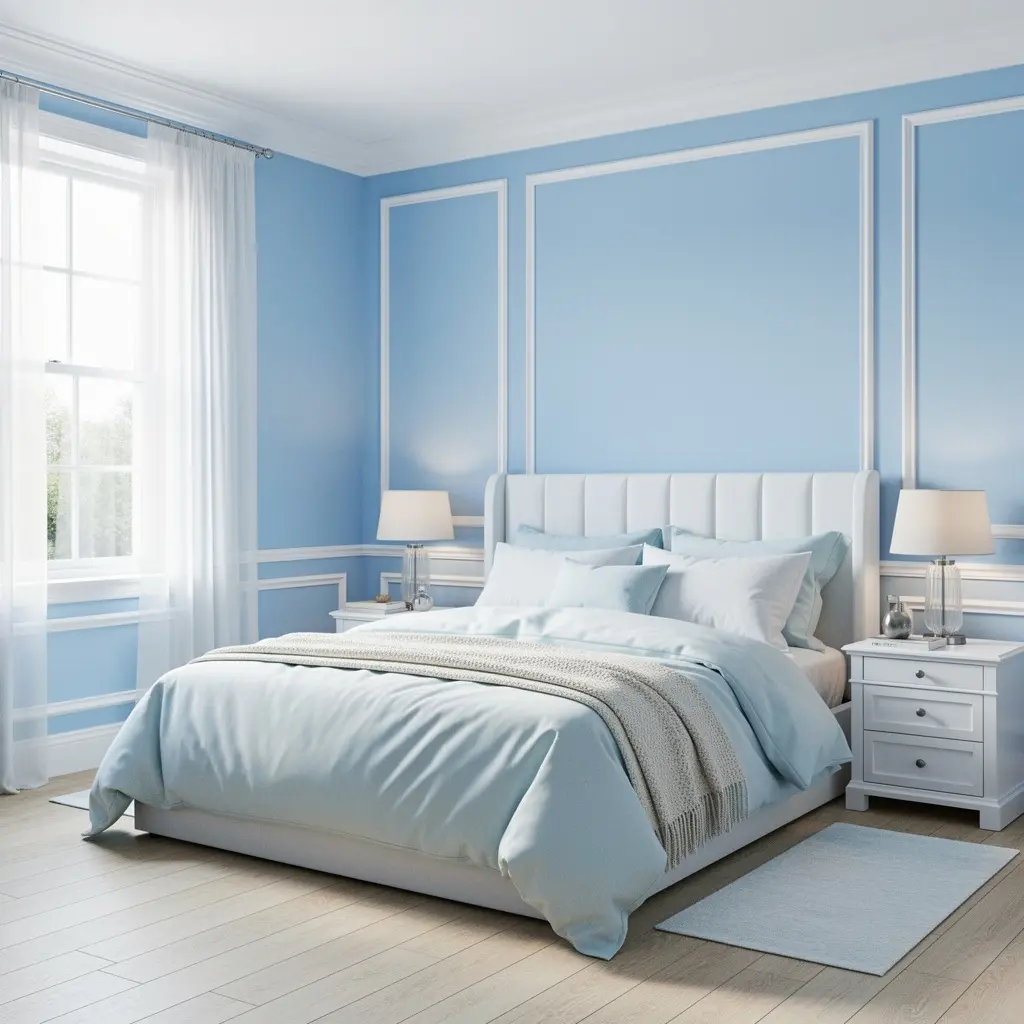
Crisp white trim against a blue wall creates a clean, almost coastal contrast that a room without any trim detail just can’t match. If your bedroom already has baseboards and door casings, a fresh coat of bright white paint on just those elements makes a bigger difference than people expect.
Adding trim where there isn’t any, like a simple picture rail or wainscoting on one wall, is a bigger project, but it reinforces the crisp, classic feel this palette is going for.
8. Add Brass or Gold Hardware for Warmth Against the Blue
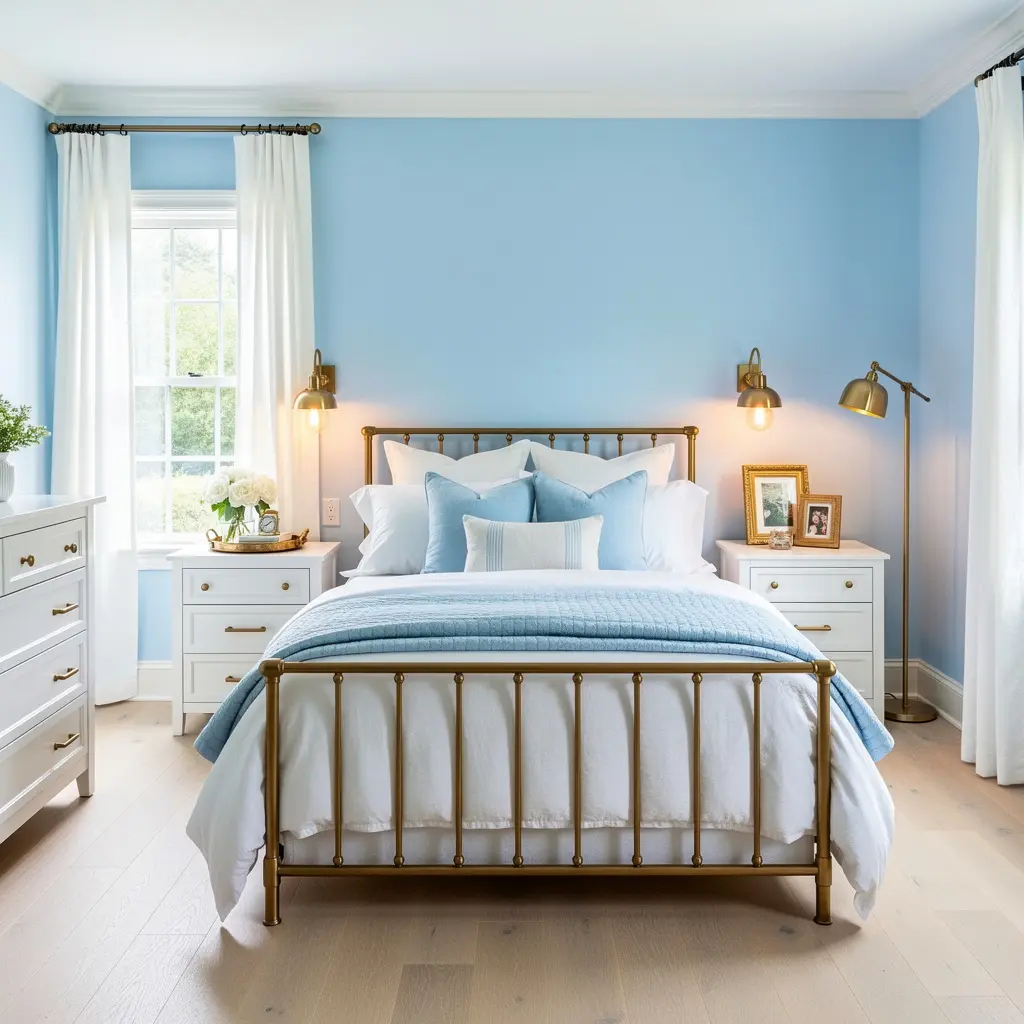
Chrome and silver hardware can push a blue and white room further into cold territory. Brass, warm gold, even an aged brass finish, adds a bit of warmth that balances the coolness of the blue. This applies to drawer pulls, lamp bases, and any light fixtures in the room.
Keep the metal finish consistent throughout. Mixing three or four different metals in one bedroom, even in a small room, ends up looking scattered rather than intentional.
9. Bring in Natural Light With Sheer White Curtains
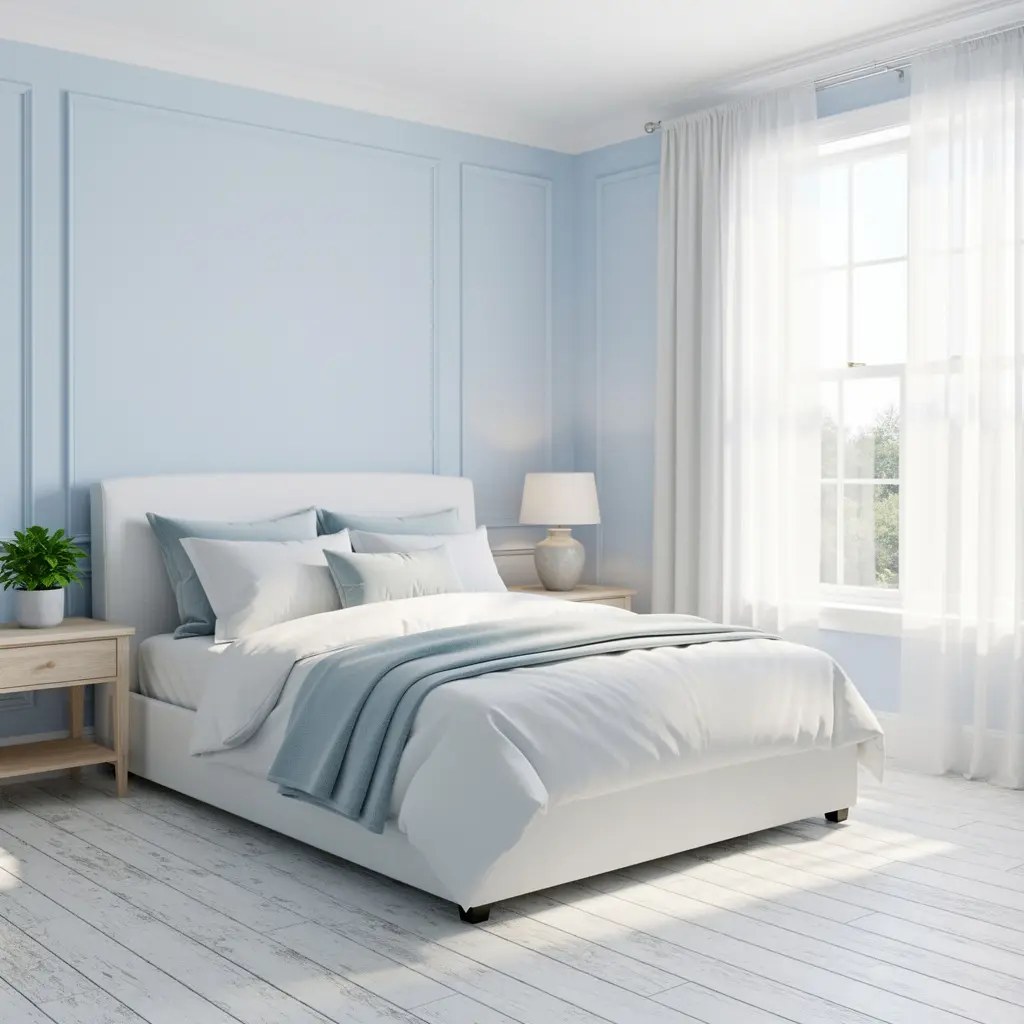
Heavy blackout curtains in a dark color can make a blue and white bedroom feel closed in fast. Sheer white curtains let light filter through softly during the day, which keeps the whole palette feeling bright rather than shadowy.
If you need blackout for sleep, layer a blackout panel behind a sheer white curtain rather than replacing it entirely. That way you get function at night and light during the day without sacrificing either one.
10. Add Greenery to Soften the Cool Color Palette
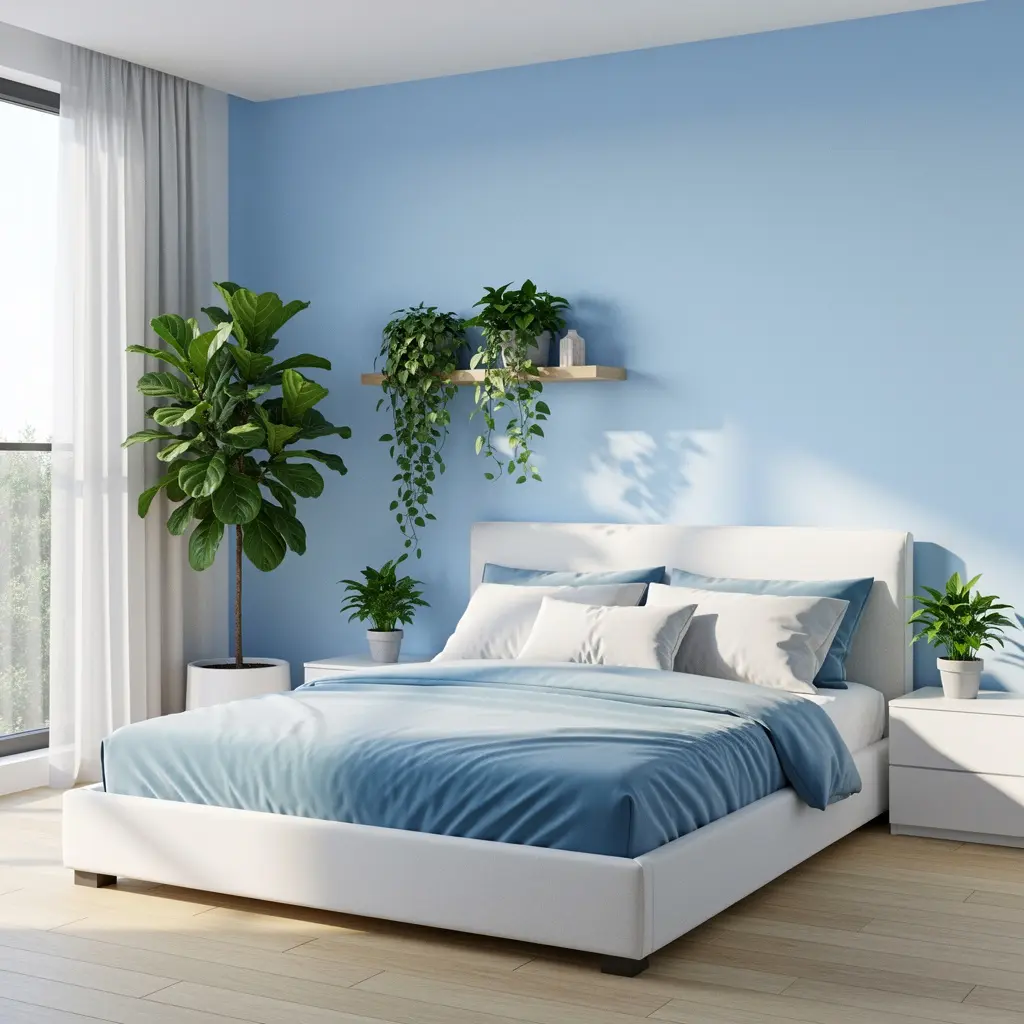
A plant is one of the simplest, cheapest ways to keep a blue and white room from feeling too cold or too polished. Something with soft, rounded leaves, a pothos, a peace lily, works especially well against the sharper lines of blue and white.
If natural light is limited, a good faux plant does nearly the same visual job. The point is the organic shape and green color breaking up all that blue and white, not whether it’s technically alive.
Mistakes to Avoid
- Choosing a bright, saturated blue instead of a softer, slightly gray toned shade
- Splitting the room evenly between blue and white instead of letting one lead
- Using only flat, smooth textiles with no texture layered in
- Pairing cool gray furniture with an already cool color palette
- Mixing several different metal finishes throughout the room
- Skipping warmth entirely and letting the room read as sterile rather than calm
Frequently Asked Questions
Does sky blue make a bedroom feel cold? It can, especially without any warm elements to balance it. Wood tones, brass hardware, and textured textiles all help keep a sky blue room feeling calm rather than cold.
What white works best with sky blue? A soft, warm white or ivory tends to pair better than a stark, cool white, especially in rooms that don’t get much warm afternoon light.
Is sky blue too juvenile for an adult bedroom? A muted, slightly gray toned sky blue reads as calm and sophisticated rather than childish. Bright, saturated blues are more likely to feel like a kid’s room.
How much blue is too much in a bedroom? Covering all four walls in blue with no white or neutral space to balance it can start to feel heavy. A single accent wall or blue through textiles usually works better in most rooms.
Can I make a rental bedroom feel sky blue and white without painting? Yes, through bedding, curtains, and accessories. Removable wallpaper is another option if your lease allows it, and it comes off cleanly at move out.
Conclusion
A sky blue and white bedroom works best when it’s not actually just blue and white. Add warm wood, brass hardware, and some texture, and the palette stops feeling clinical and starts feeling calm. Start with a sample patch on your actual wall, layer in warmth gradually, and let the room build over time rather than trying to nail the whole look in one shopping trip. The rooms that feel most finished are usually the ones that took a few months to come together, not a single weekend.

Leave a Reply