10 Elegant Traditional Home Decor Ideas for a Classic Look
Say “traditional decor” out loud and a lot of people picture something stiff. Overly formal. Maybe your grandmother’s living room, plastic still on the couch, nobody allowed to actually sit down. That’s not what this style is about, or at least it doesn’t have to be. Done right, it’s warm. Layered. The kind of home that looks put together without feeling untouchable, somewhere you’d genuinely want to sink into a chair rather than perch on the edge of one, coffee in hand, actually comfortable.
Here’s the thing about traditional style: it hasn’t changed much in decades, and that’s actually the whole point. Rich wood, classic pattern, a bit of symmetry, pieces that feel chosen with care instead of ordered from a single catalog in one sitting. None of it needs a huge budget. It needs patience, mostly, and a willingness to let a room come together slowly, piece by piece, over time rather than all at once.
1. Choose Rich, Warm Wood Tones as Your Foundation
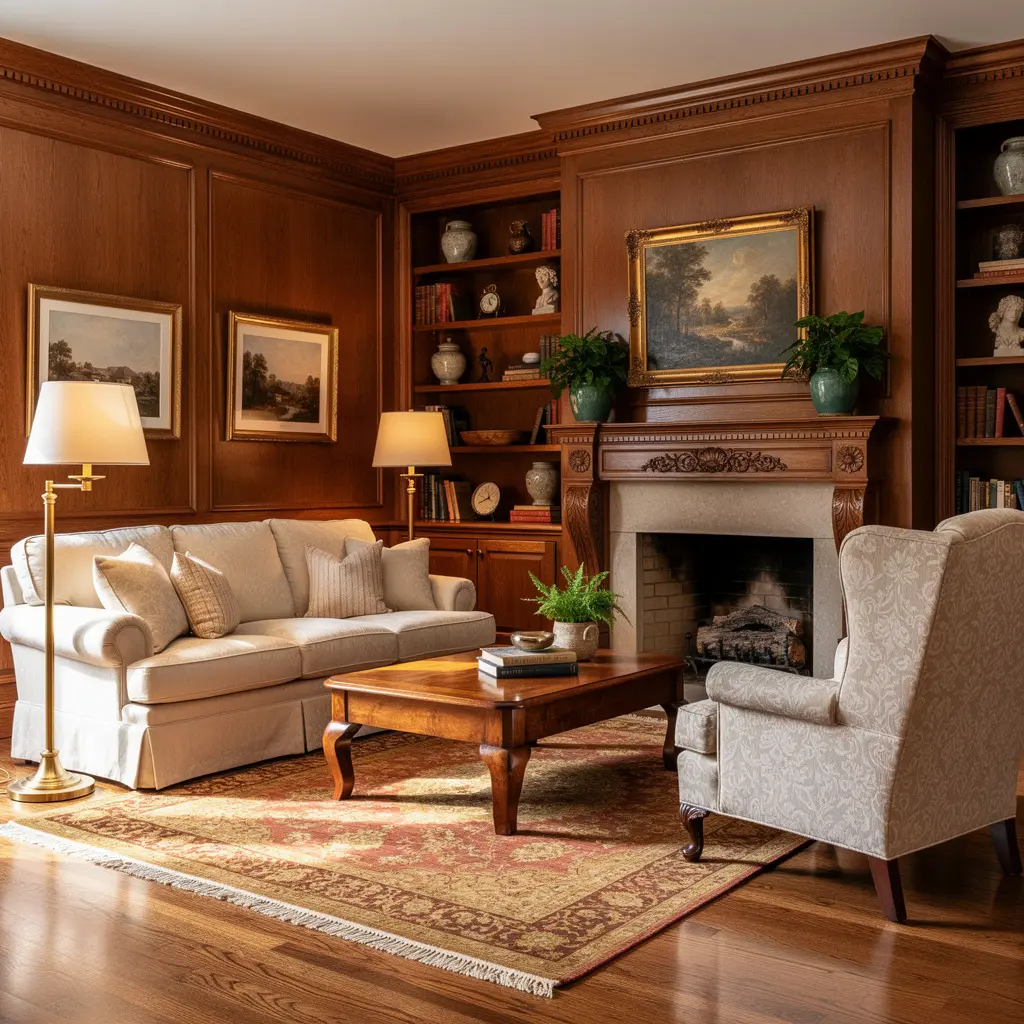
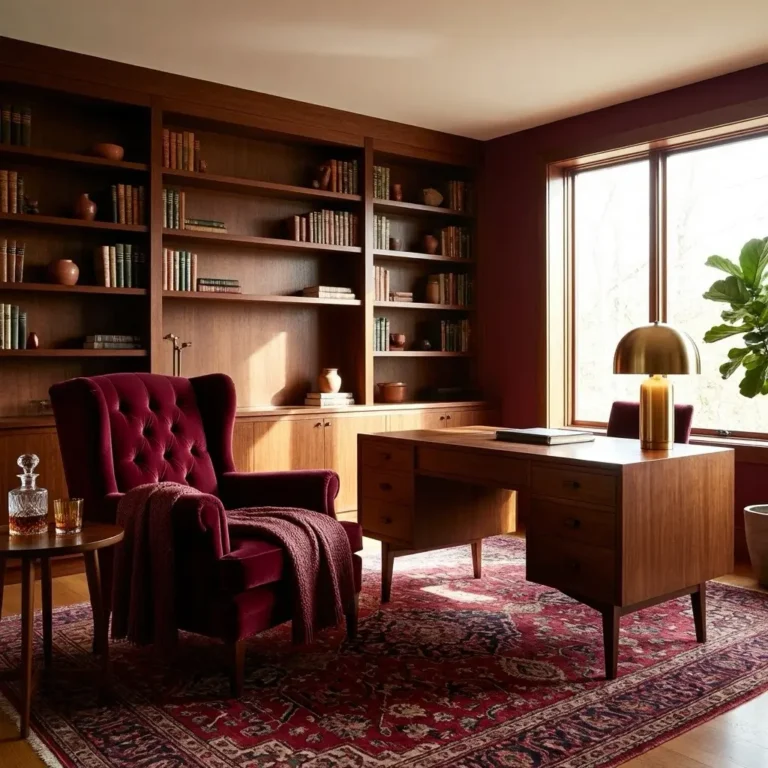
Forget the pale, blonde wood that’s everywhere right now. Traditional style wants mahogany, cherry, deep walnut. Wood that actually has some weight to it, visually and otherwise. One solid piece, a dining table, a sideboard, does more for the room than a dozen smaller accessories combined.
Yes, real wood in these tones costs more upfront, usually starting somewhere around 500 to 800 dollars for something decent. But it lasts decades. Cheaper furniture just doesn’t hold up the same way, and you’ll likely be replacing it long before that mahogany table shows its age.
2. Add Classic Patterns Like Damask, Toile, or Plaid
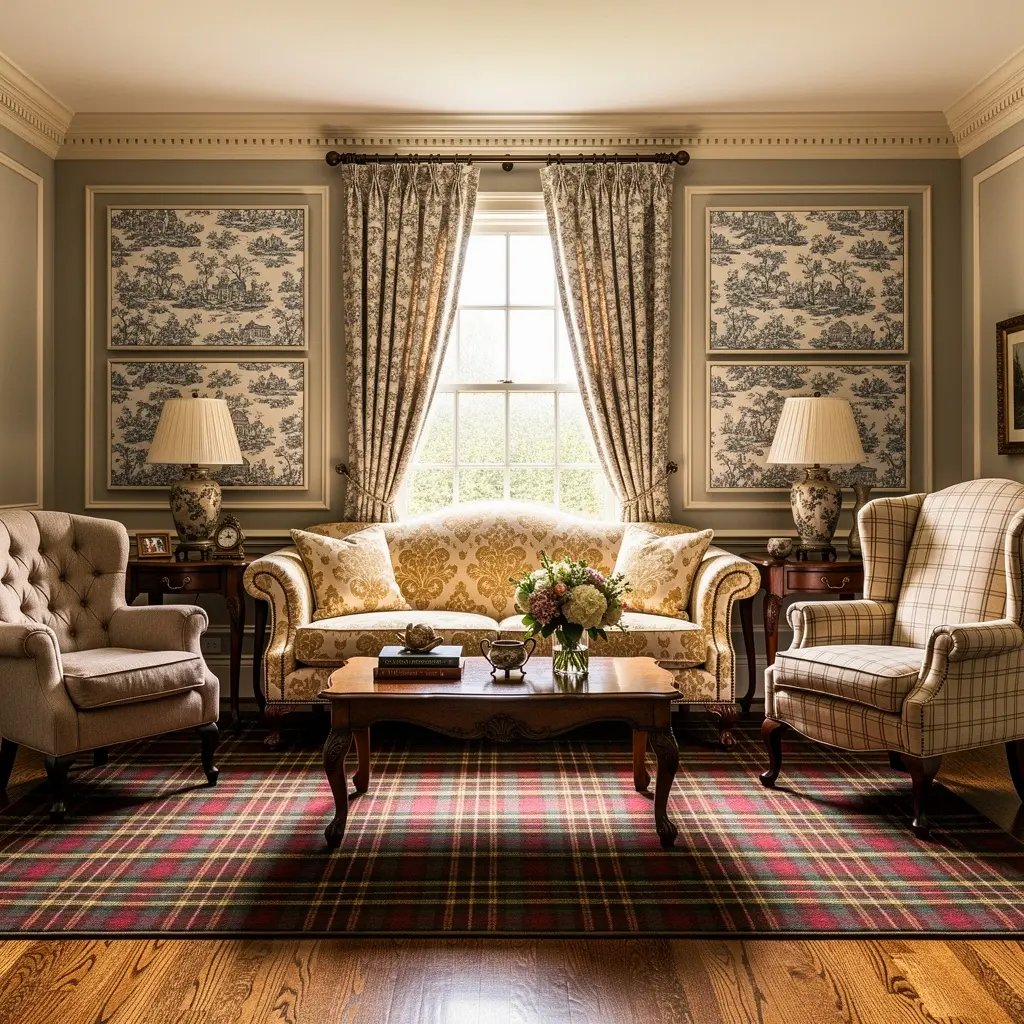
Pattern is where this style really shows its hand. Damask, with those raised symmetrical florals. Toile, with its detailed little pastoral scenes. Plaid too. All three have deep roots in traditional design, and they signal the style instantly, even from across a room.
Use them on upholstery, throw pillows, drapery. Not every single surface. One statement piece, a damask armchair, say, reads as far more intentional than pattern stacked on pattern with no breathing room in between.
3. Use Symmetry to Create a Formal, Balanced Look
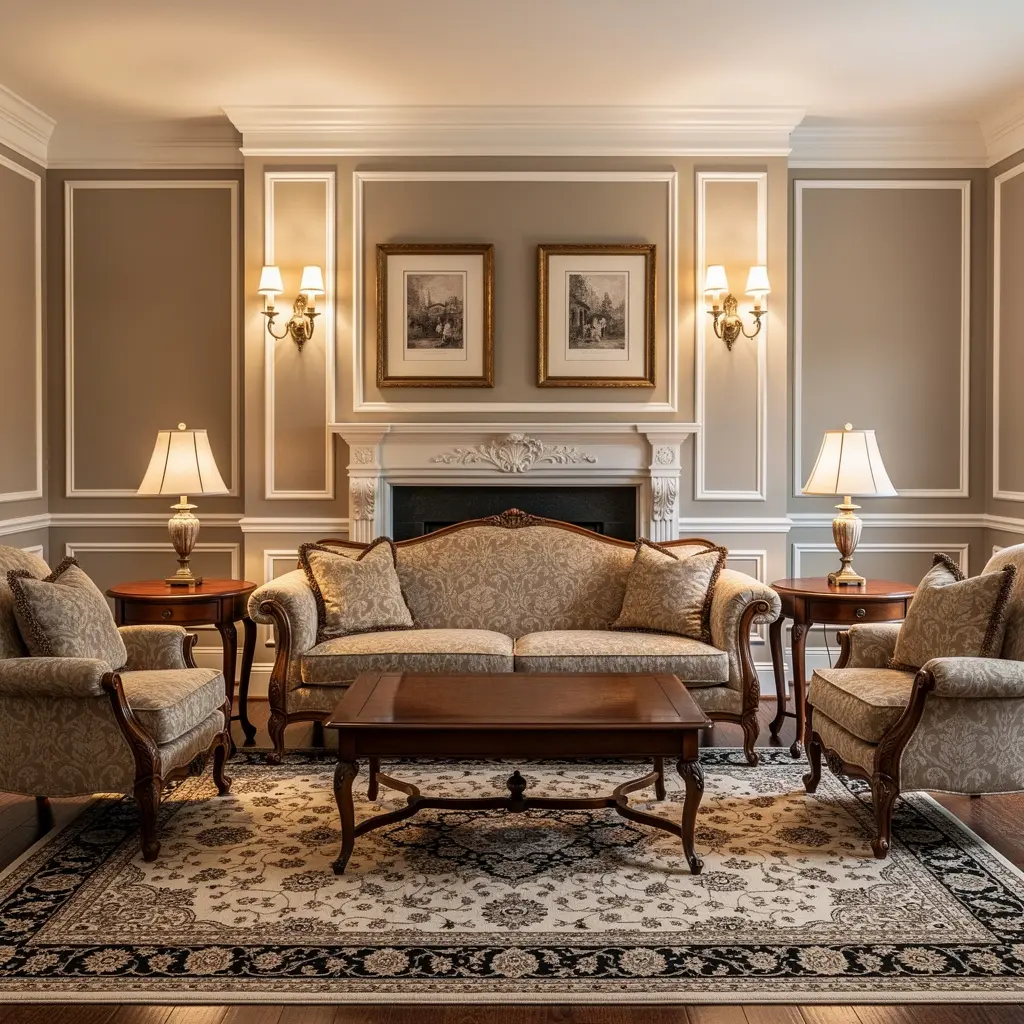
Symmetry is probably the clearest tell of traditional style, and honestly, it’s one of the easier things to actually pull off. Matching lamps flanking a sofa. Identical chairs on either side of a fireplace. A pair of matching side tables. This kind of balance reads as formal and considered in a way an asymmetrical layout just can’t fake.
You don’t need the whole room perfectly symmetrical, though. Apply it around one or two key spots, the fireplace, the bed, and that’s usually enough to get the point across without the room feeling rigid or overplanned.
4. Layer in Antique or Vintage Furniture Pieces
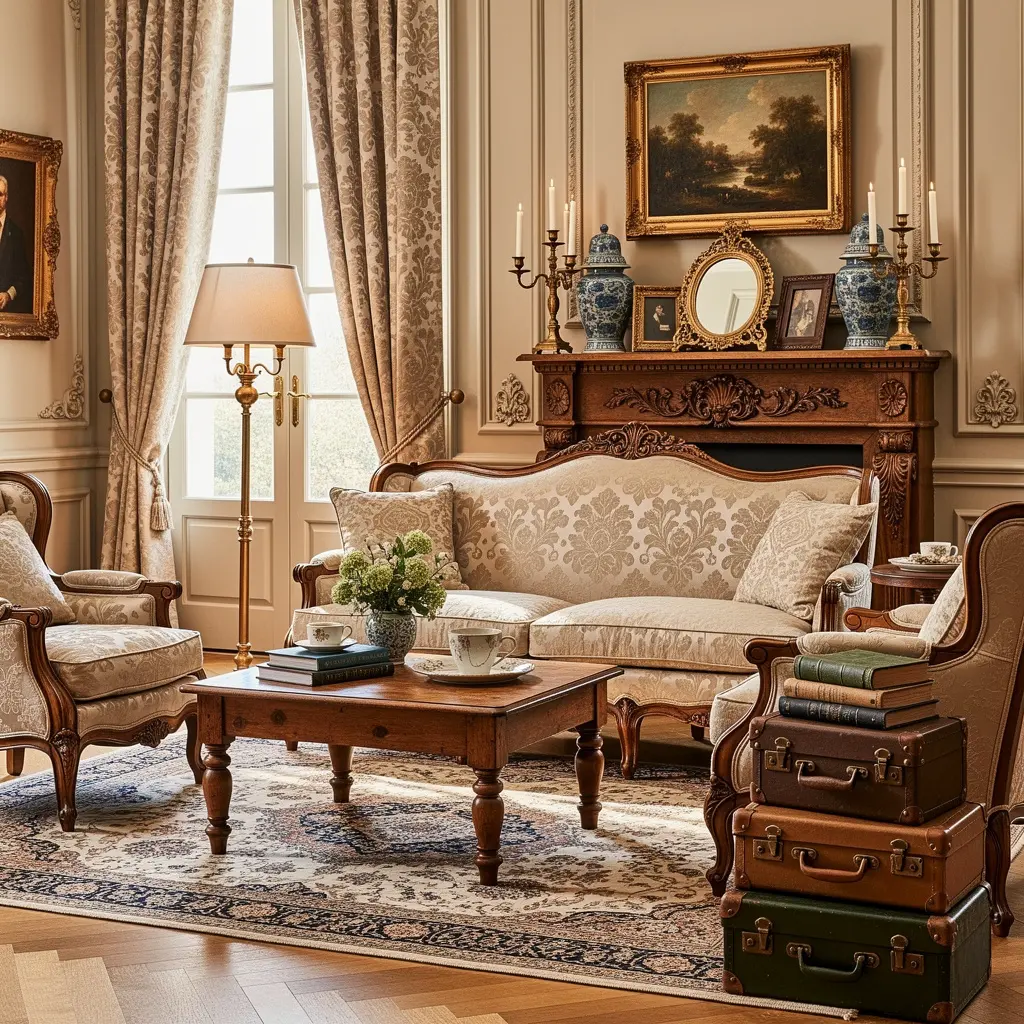
A real antique, or even a solid vintage reproduction, brings a sense of history new furniture just can’t fake. Estate sales. Antique shops. Some of the higher end consignment stores too. These are good places to find pieces with actual character, often cheaper than new furniture of comparable quality, and with a backstory a factory made piece will never have.
Mix a few antiques into a room built mostly from newer pieces. Furnishing an entire room from one era can start to feel like a museum exhibit instead of a place people actually live and put their feet up on the coffee table without a second thought.
5. Choose Traditional Window Treatments Like Drapes
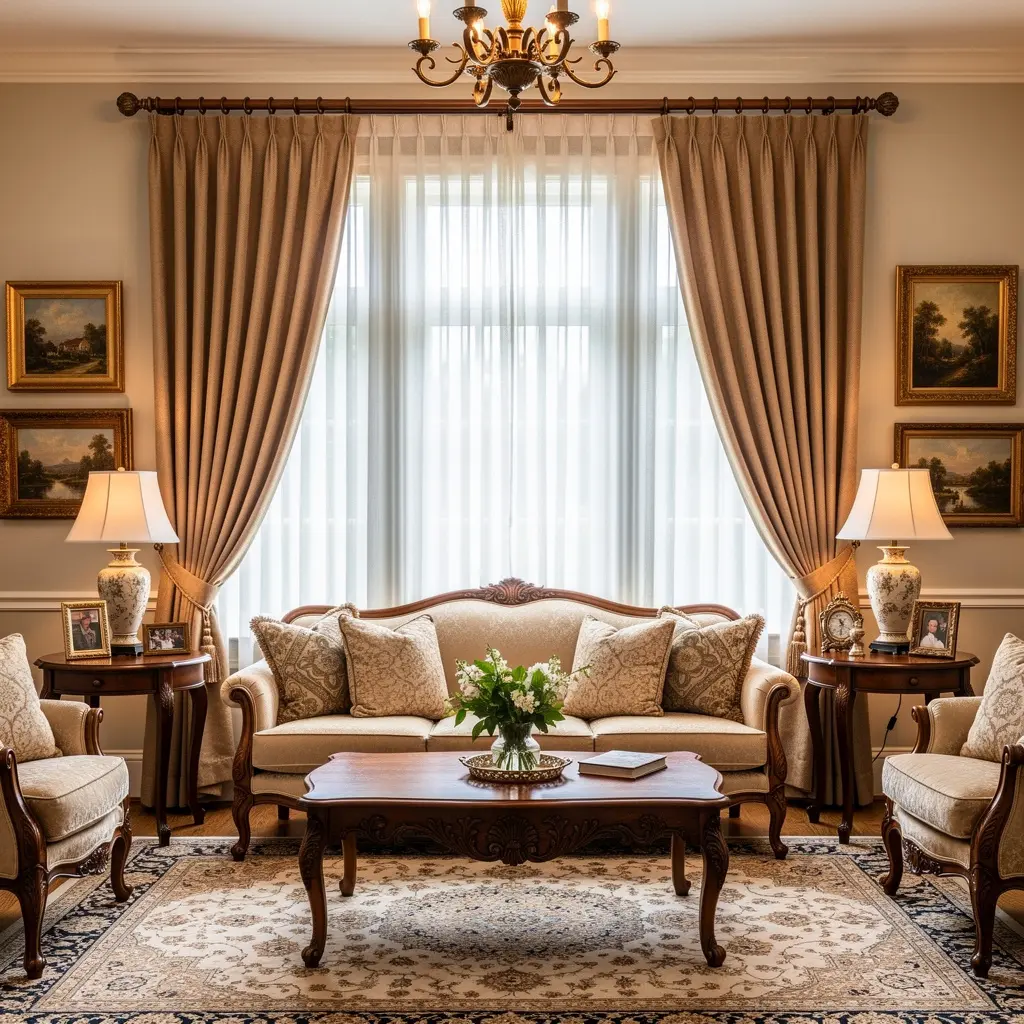
Floor length drapes, especially in velvet or a heavier linen, are pretty much a signature of traditional decor. They add height to a room, soften hard window frames, and give the whole window a finished, formal look that blinds alone just don’t manage.
Pair them with a decorative rod, brass or bronze rather than plain black or white. Small detail, but it adds up.
6. Add Brass or Bronze Fixtures for a Classic Finish
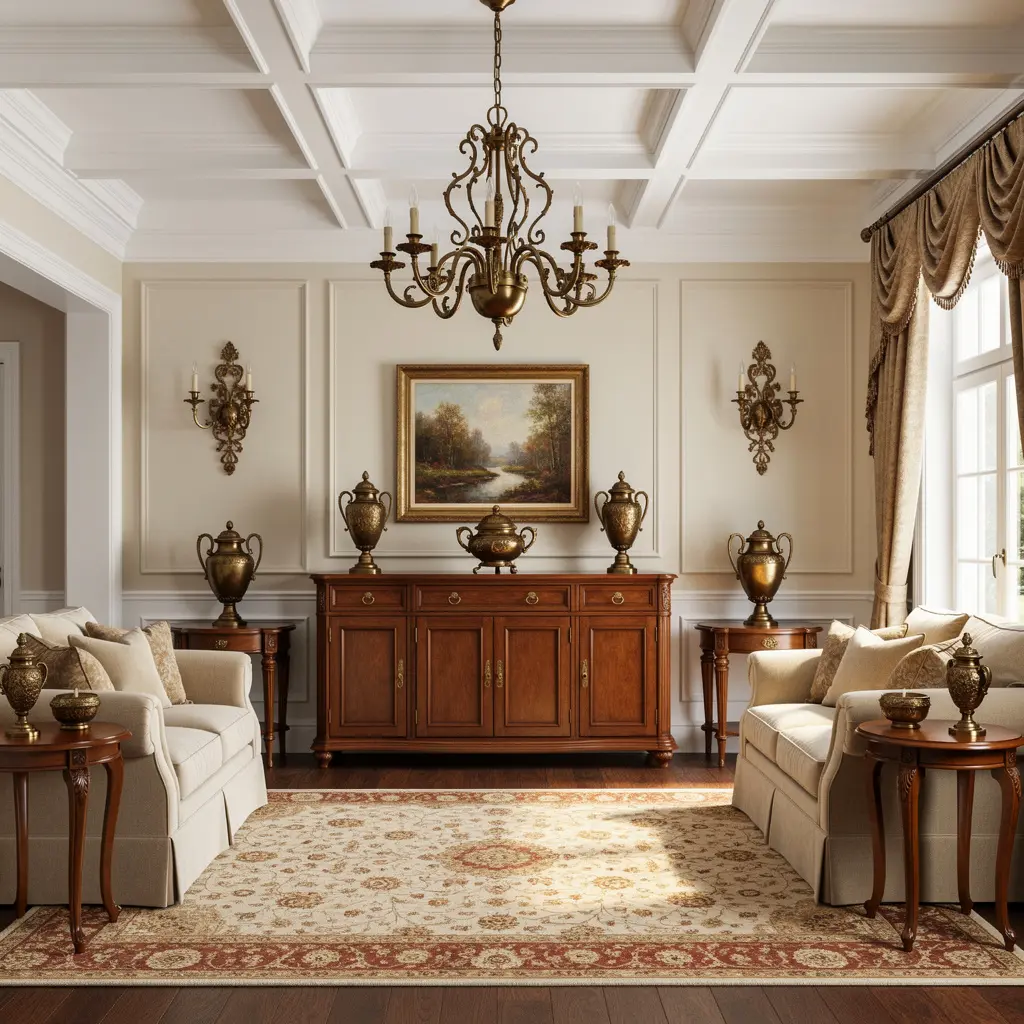
Chrome and brushed nickel skew modern. Brass and bronze have a warmer, more classic feel that suits this style a lot better, and that applies to door hardware, light fixtures, cabinet pulls, all of it.
Stay consistent here more than you might in other styles. Traditional decor tends to look most pulled together when the same metal finish repeats through a room, instead of mixing three or four different tones on the same wall.
7. Use a Formal Area Rug to Anchor the Room
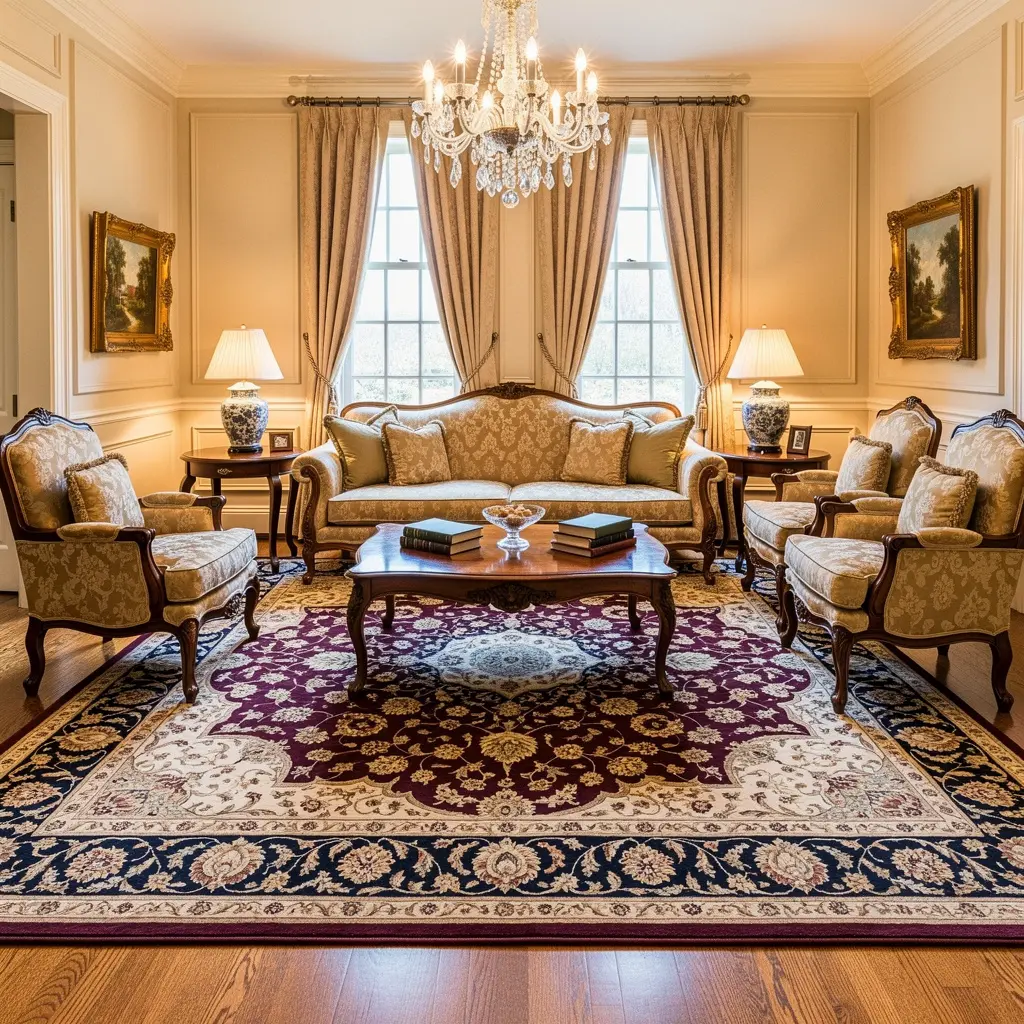
A patterned rug, Oriental or Persian style, does a lot of heavy lifting in a traditional room. It grounds the furniture, brings in color and pattern without touching the walls at all, and honestly signals the style before you’ve even looked at anything else in the room.
Quality wool rugs in this style start around 300 to 600 dollars for a mid size room. They hold their color and shape a lot better over the years than the cheaper synthetic versions, which tend to flatten and fade fast.
8. Incorporate Family Heirlooms and Collected Pieces
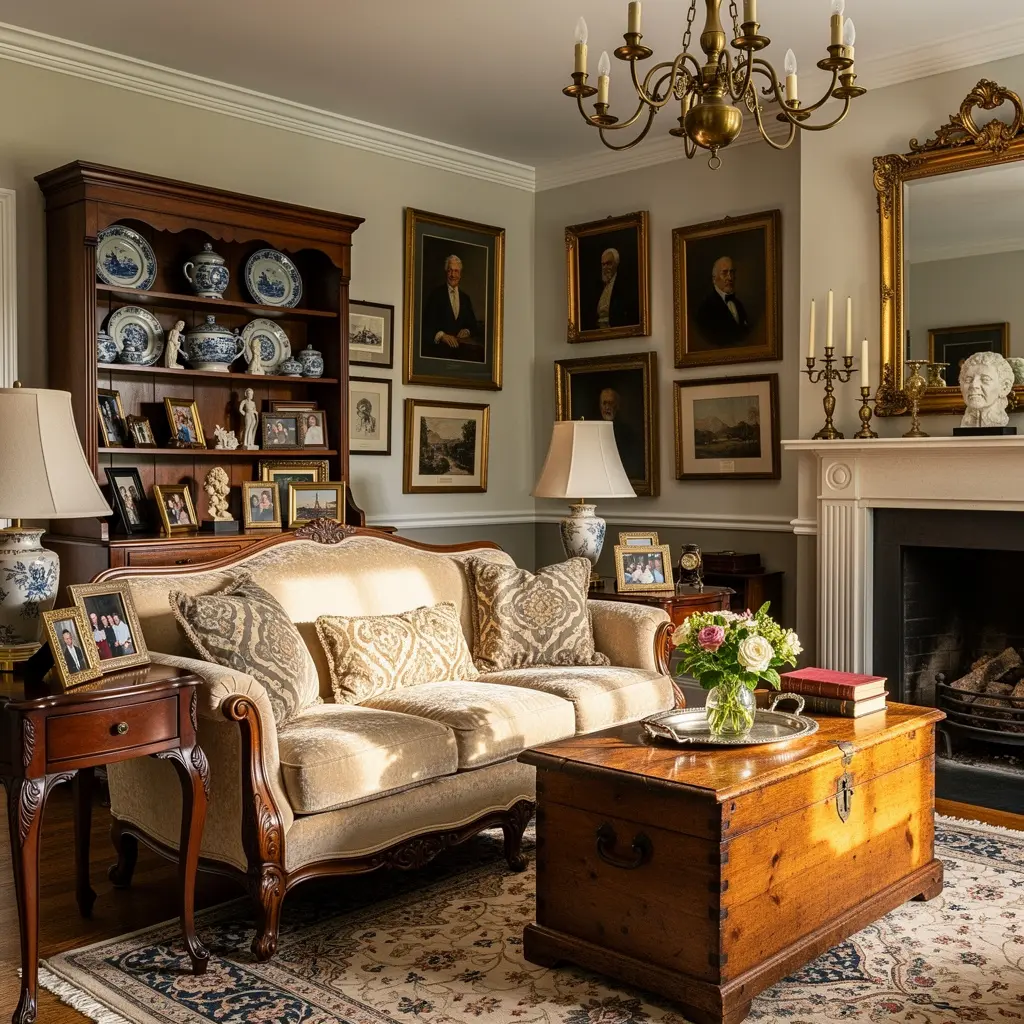
More than most styles, traditional decor benefits from things with an actual story attached. A grandmother’s china cabinet. A collection of old silver. A family portrait nobody remembers taking. These pieces bring authenticity no amount of shopping can replicate, and they’re usually what people remember most walking through a traditionally decorated home.
No heirlooms of your own? Collected pieces from antique markets or estate sales do a similar job, adding depth and a bit of borrowed history to the room.
9. Choose Rich, Saturated Wall Colors Over Trendy Neutrals
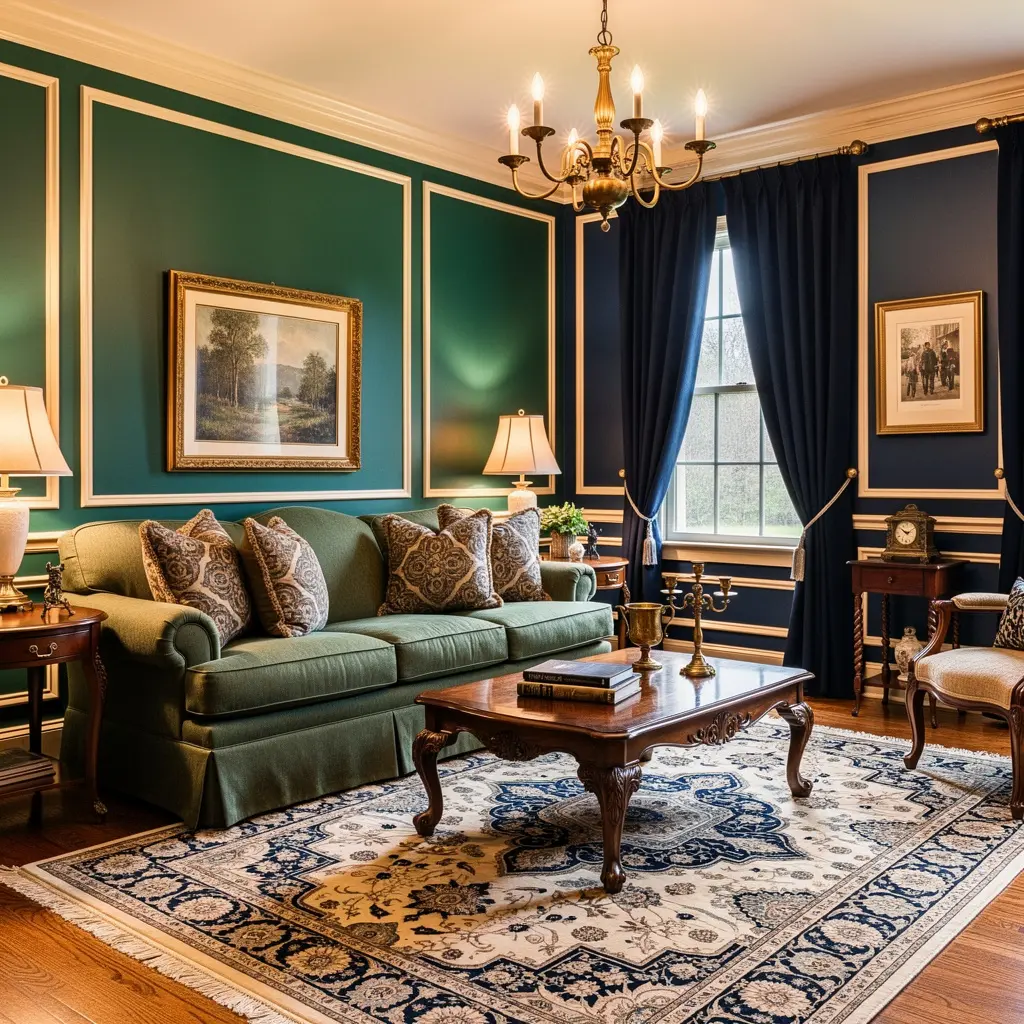
Most current trends push toward light, neutral walls. Traditional style pulls the other direction. Hunter green, navy, burgundy, warm terracotta, all of these have a long history in traditional interiors and pair naturally with the wood tones and metal finishes the style leans on.
These deeper colors work especially well in smaller, more formal rooms, a dining room, a study, where a cozier, more enclosed feeling actually suits how the room gets used.
10. Add Traditional Art in Ornate Frames
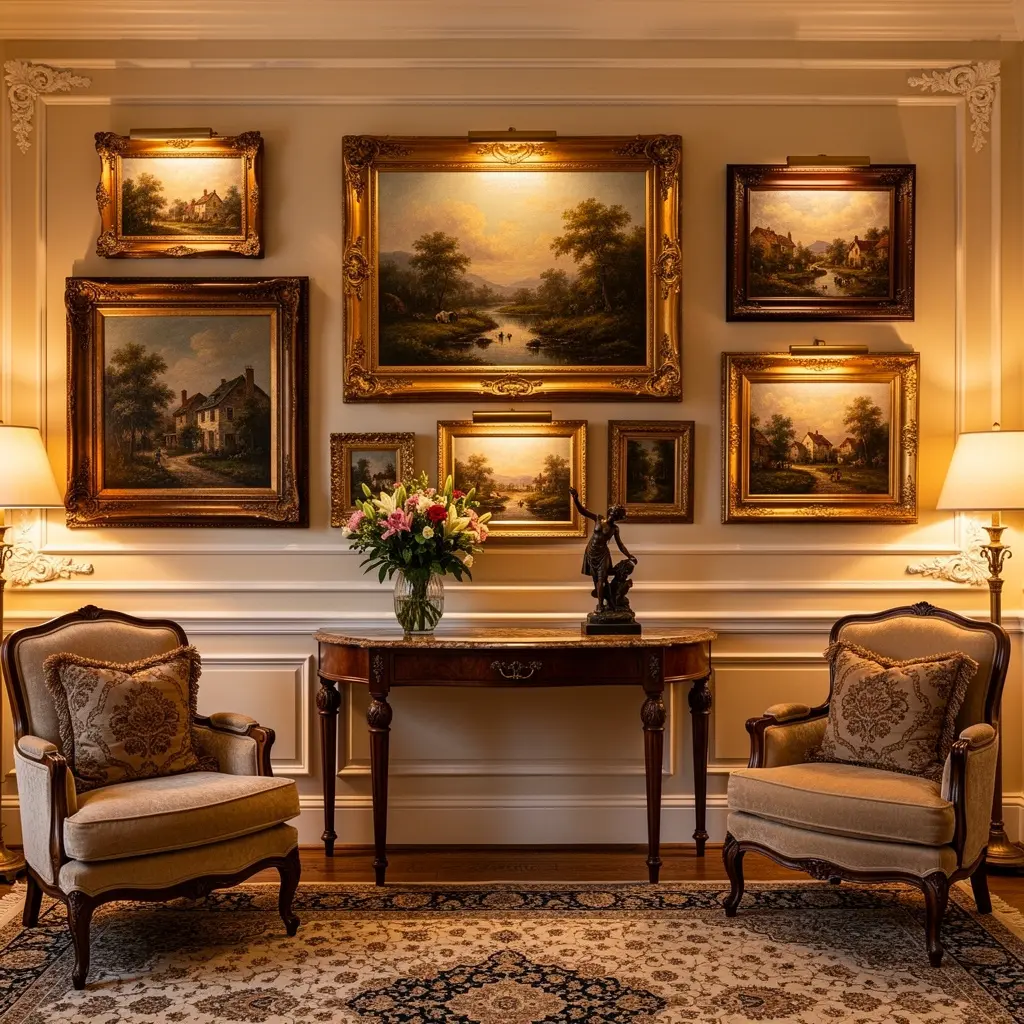
An ornate frame, gilt, carved wood, some kind of decorative molding, reinforces the traditional look in a way a simple, minimal frame just doesn’t. Landscape paintings, portraits, still life pieces, all of it has strong roots in this style.
One large statement piece above a mantel or a sofa, in a real, substantial frame, usually has more impact than several smaller pieces scattered across the same wall trying to do the same job.
Mistakes to Avoid
- Choosing furniture that’s too new and uniform, without any age or character to it
- Mixing too many metal finishes throughout the same room instead of staying consistent
- Overusing pattern on every surface without any solid, neutral space to balance it
- Skipping symmetry entirely, which is one of the clearest signals of traditional style
- Choosing trendy, ultra minimal art that clashes with an otherwise traditional room
- Furnishing an entire room from a single era, which can feel more like a museum than a home
Frequently Asked Questions
Is traditional decor the same as farmhouse style? No. Farmhouse leans rustic, distressed, more casual. Traditional decor is more formal and polished, rooted in classic European and colonial design influences instead.
Can traditional decor work in a modern house? It can, and mixing a few traditional pieces into a more modern shell often looks more interesting than committing fully to either style. The contrast makes both sides more noticeable, in a good way.
Is traditional decor expensive to achieve? It can be, especially with real antiques and solid wood furniture. But it doesn’t have to be. Thrifted and secondhand pieces, plus a few well chosen new items, get you close for a lot less.
How do I keep traditional decor from looking outdated? Mix in a few current pieces. Don’t let pattern and color get too heavy handed. Choose quality over quantity. All of that keeps the style feeling timeless instead of stuck in a specific decade.
What colors work best for traditional home decor? Rich, saturated tones like hunter green, navy, and burgundy pair well with traditional furniture and finishes. Warm neutrals like cream and taupe work too, as a lighter alternative.
Conclusion
Traditional home decor isn’t about recreating some stuffy, untouchable showroom. It’s rich materials, some symmetry, and pieces that carry actual history, whether that’s a real family heirloom or a good antique find. Start with one or two foundational pieces, a quality wood table, a formal rug, and build from there instead of trying to nail the whole look in a single trip to the store. The best traditional rooms usually took years to come together, not a weekend, and that slow build is part of what makes them feel genuine.