10 Floating Shelf Styling Ideas That Look Expensive
A floating shelf sounds simple enough. Hang it, put some things on it, done. Then you actually try it and the shelf ends up either completely bare and awkward or crammed with random objects that don’t have anything to do with each other. That gap between a styled shelf and a cluttered one comes down to a handful of specific principles, and these floating shelf styling ideas walk through exactly what those are.
Good shelf styling isn’t about owning a lot of decorative objects. It’s about how you group what you already have, how much empty space you leave, and whether the items on the shelf actually relate to each other in height, material, or color. Below are ten specific techniques that separate a shelf that looks curated from one that looks like a junk drawer moved to the wall.
1. Choose the Right Shelf Size and Spacing Before You Style Anything
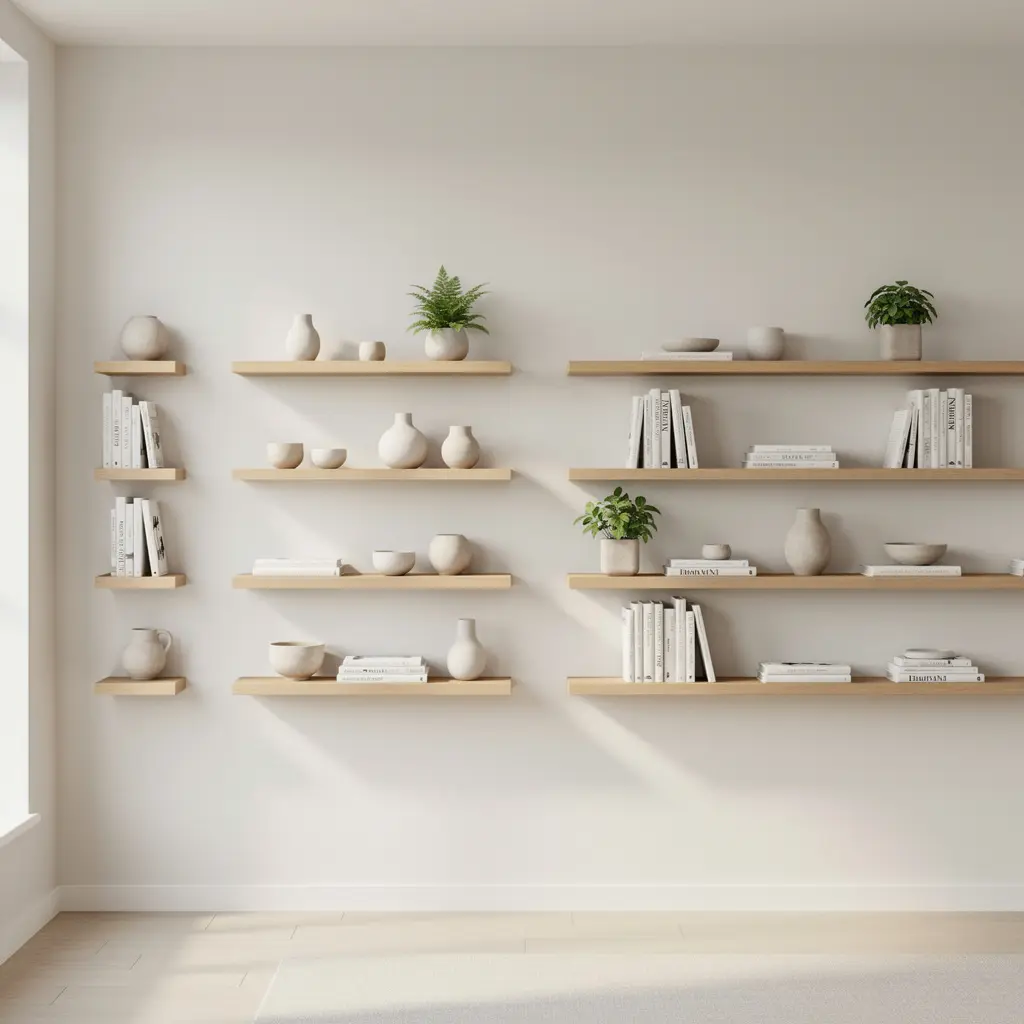
Before any styling decision matters, the shelf itself needs to be the right size for the wall and the items you plan to display. A shelf that’s too small will feel cramped no matter how carefully you arrange things, while one that’s too large can leave awkward empty space at the ends. Standard floating shelves generally range from 12 to 36 inches in length and run between 15 and 60 dollars depending on material and size.
If you’re installing multiple shelves, spacing them 8 to 12 inches apart vertically generally gives enough room for taller objects like vases or framed art without the shelves feeling stacked too tightly.
2. Group Items in Odd Numbers for a More Natural Look
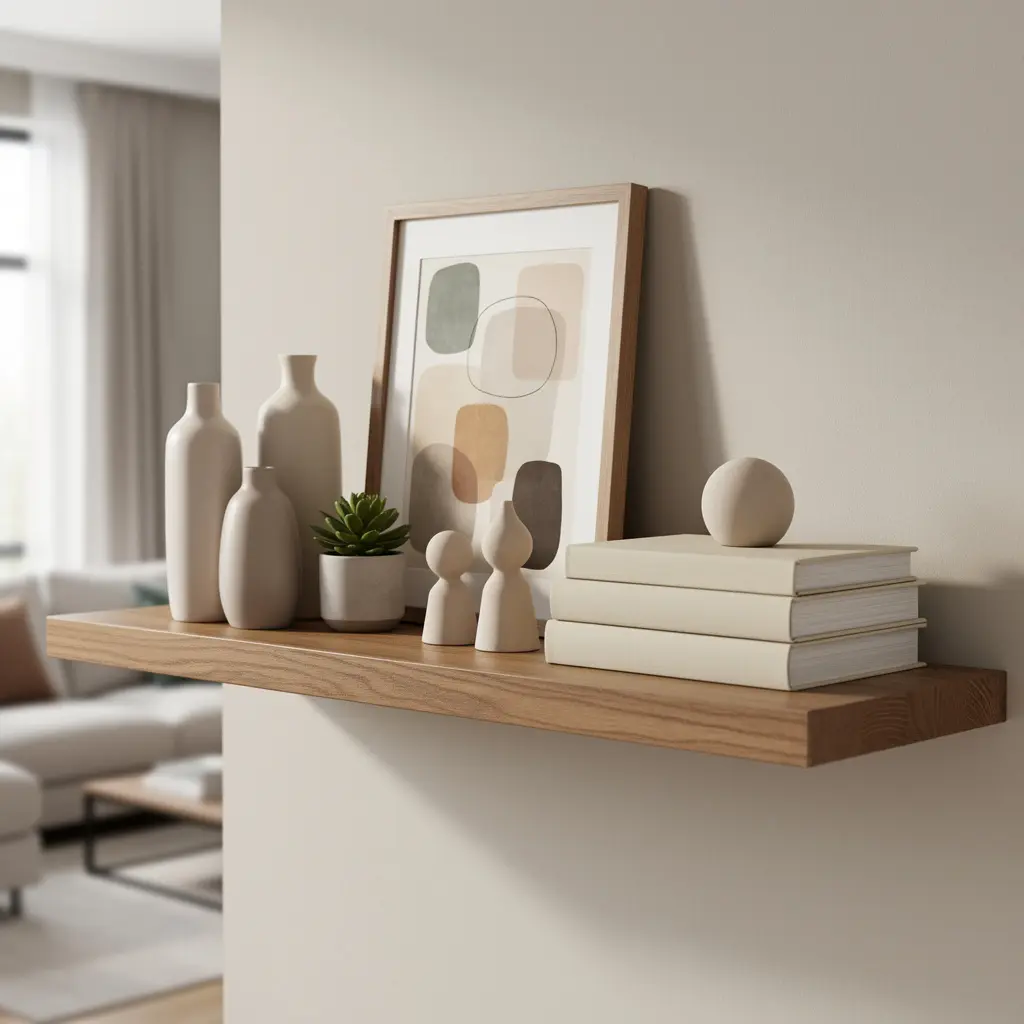
Groupings of three, or occasionally five, tend to look more visually balanced than even numbered groupings, which can read as overly symmetrical or a bit stiff. This is a principle borrowed from traditional design theory, and it holds up consistently across shelf styling specifically.
A group of three might include a taller object like a vase, a medium height item like a small stack of books, and a smaller decorative piece like a candle or a small dish. Varying the height within the group of three, rather than choosing three similarly sized objects, adds visual interest that a flat, uniform grouping doesn’t provide.
3. Vary Height With Books, Objects, and Small Plants
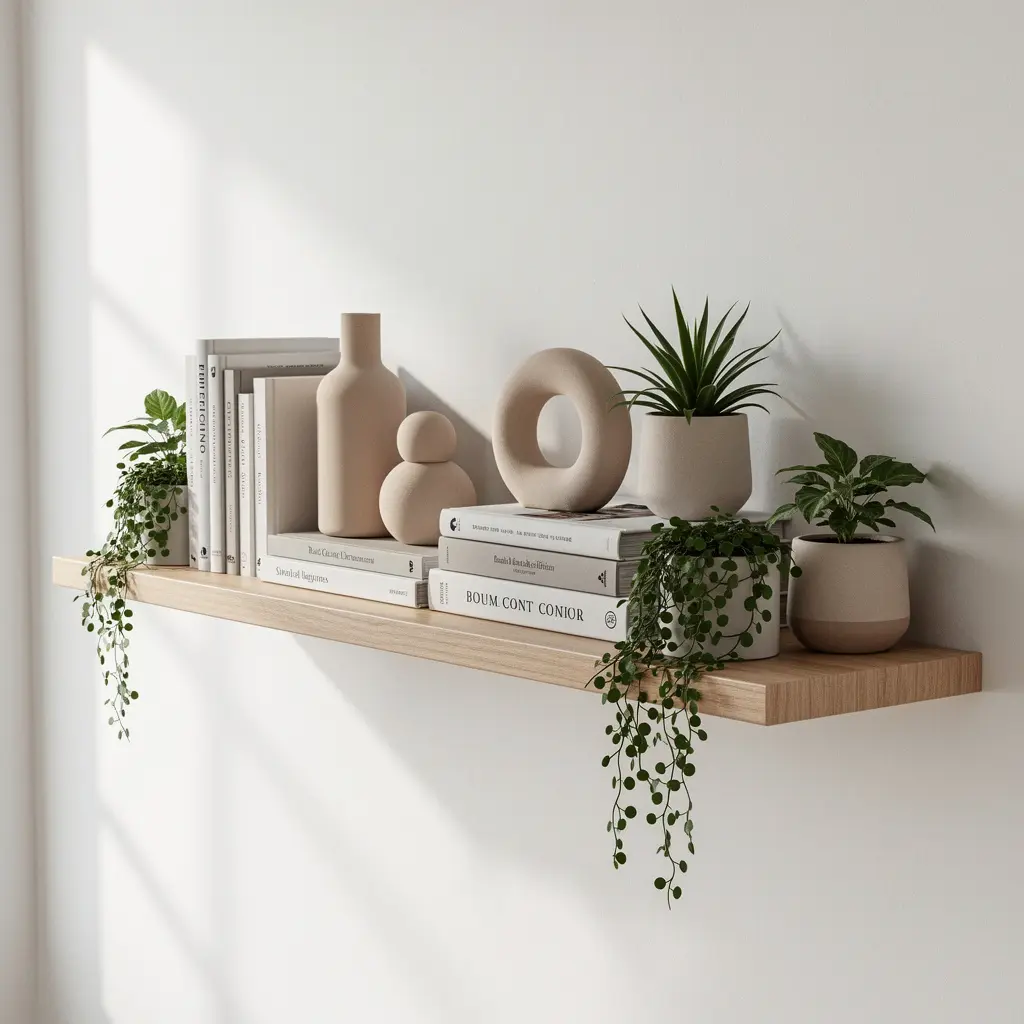
A shelf where everything sits at the exact same height reads as flat, even if the individual objects are attractive on their own. Stacking a few books flat, then placing a taller object like a vase or a small sculpture beside them, creates a visual rhythm that draws the eye across the shelf naturally.
Using Books as Both Storage and a Styling Tool
Books stacked flat can also serve as a riser for smaller objects, like a small plant or a photo frame placed on top of the stack. This adds height variation without requiring you to buy additional decorative pieces specifically for that purpose.
4. Use the Rule of Thirds to Balance Multiple Shelves
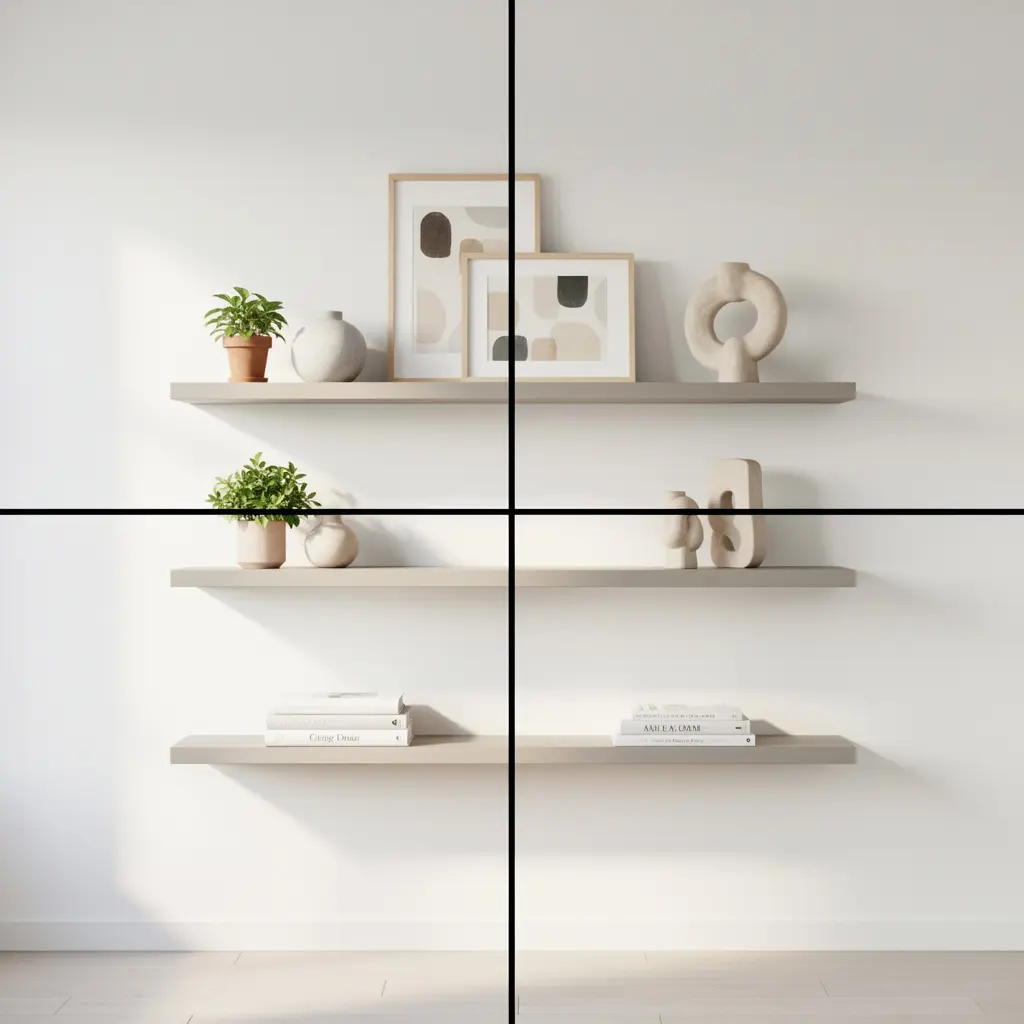
When styling two or more shelves stacked on the same wall, imagining the shelf divided into three roughly equal sections, left, center, and right, helps distribute visual weight evenly. Placing your tallest or most prominent item off center, roughly a third of the way across, tends to look more dynamic than centering everything.
This principle also applies across multiple shelves. Staggering where the visual weight sits on each shelf, rather than placing an identical arrangement on every level, keeps a set of stacked shelves from looking repetitive.
5. Mix Materials for Texture Instead of Matching Everything
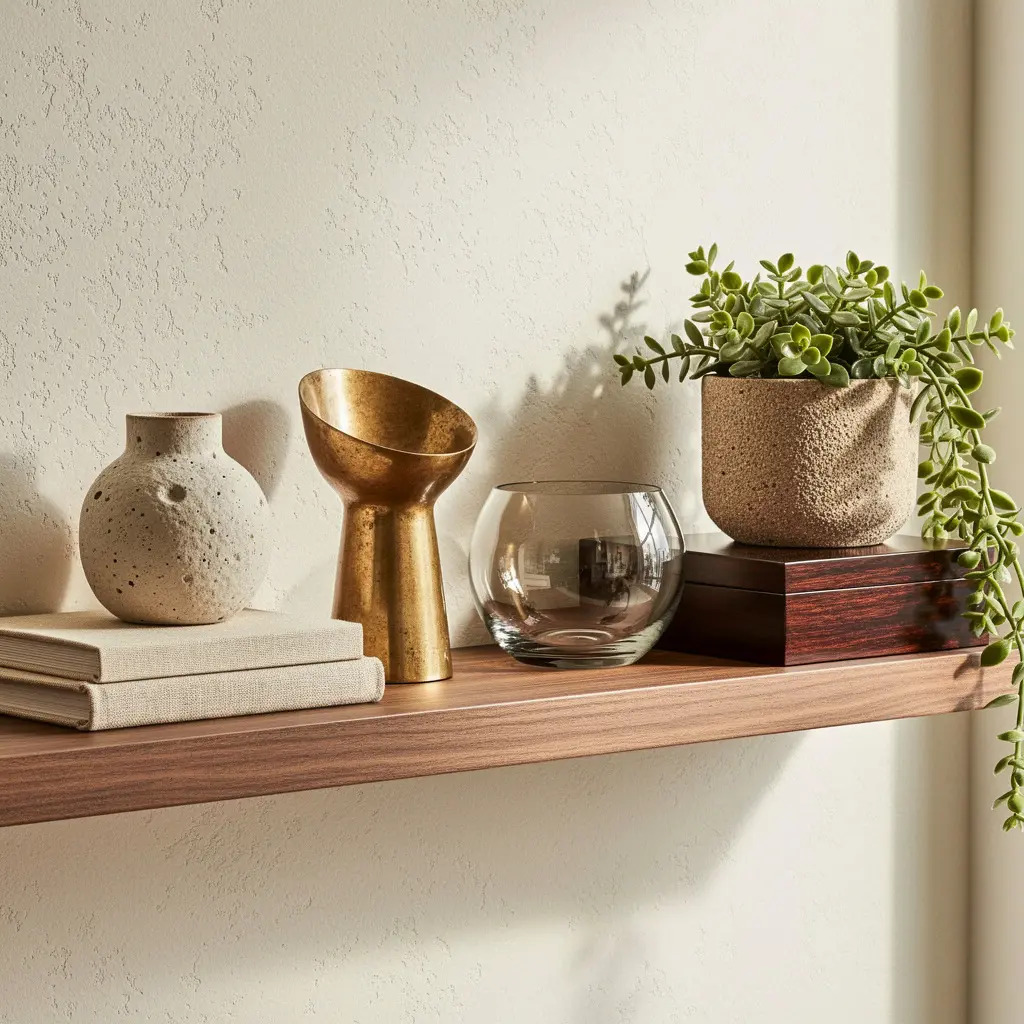
A shelf styled entirely with the same material, like all ceramic or all glass, can look flat compared to one that combines a few different textures. Pairing a ceramic vase with a woven basket, a wood bowl, and a framed print in a metal frame adds visual variety that keeps the eye engaged.
Standard decorative objects in this mixed material style generally run between 15 and 50 dollars each, making it fairly affordable to build a varied collection over time rather than buying a matching set all at once.
6. Add a Plant or Greenery to Soften a Row of Objects
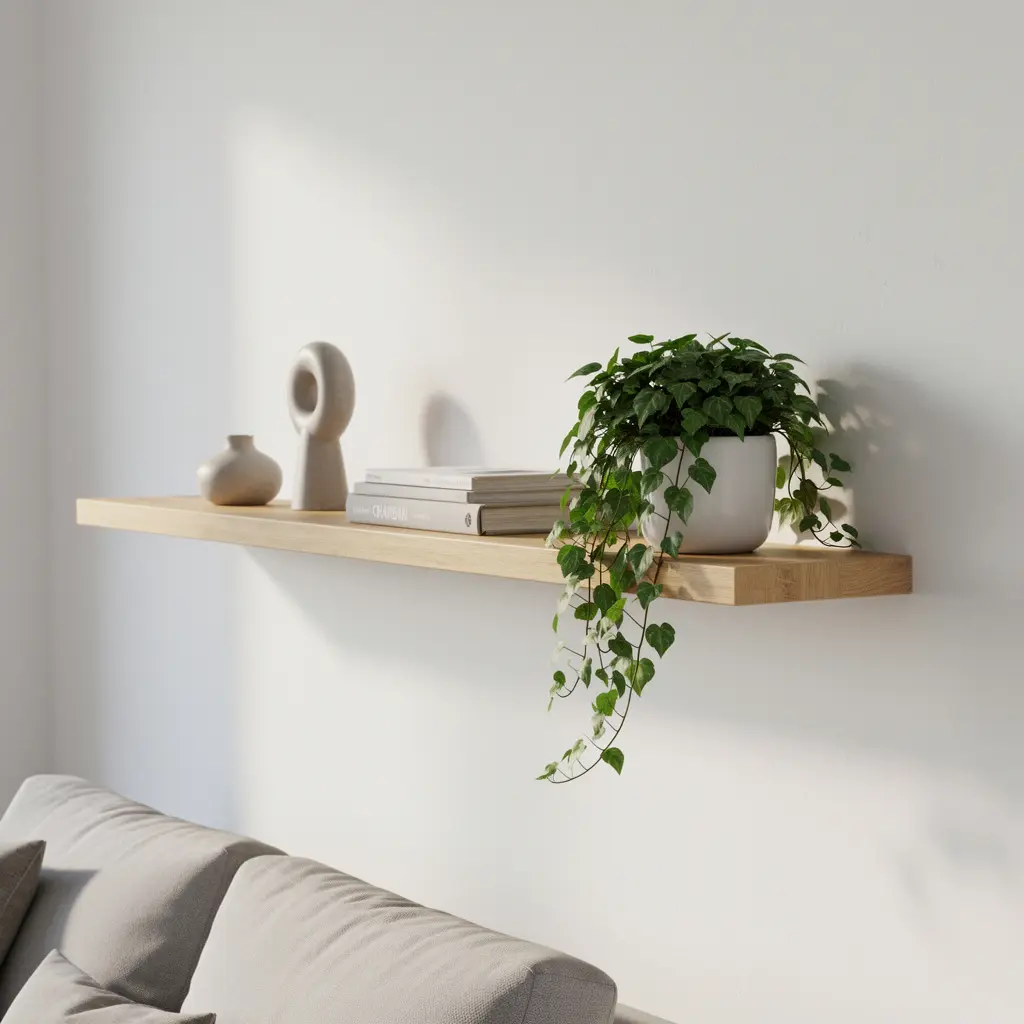
A small potted plant or a trailing vine adds an organic, slightly imperfect element that balances out the harder edges of books, frames, and ceramic objects. Low maintenance options like a pothos cutting in a small jar or a small succulent work well on shelves that don’t get consistent direct sunlight.
If natural light near the shelf is limited, a quality faux plant provides a similar softening effect without the risk of it dying, which matters especially on a higher shelf that’s harder to water regularly.
7. Layer Frames and Art Against the Wall Instead of Hanging Everything
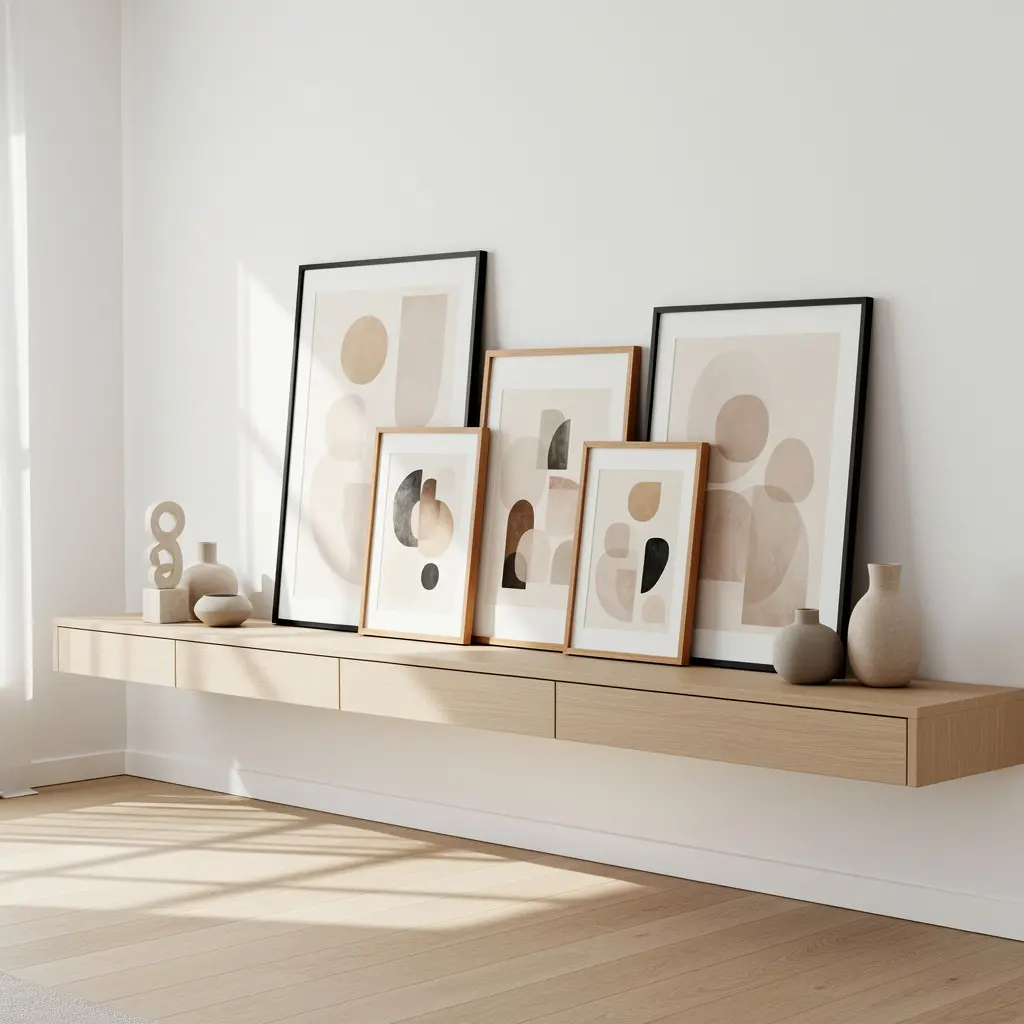
Leaning a small framed print against the wall behind other shelf objects, rather than hanging every piece of art, adds depth and a slightly more relaxed, collected over time feel. This layering technique also makes it easier to update the shelf’s look periodically without dealing with new nail holes each time.
Choosing Frame Sizes That Work Together
A small frame, roughly 5 by 7 inches, layered behind a slightly taller object like a vase or a stack of books, tends to look more intentional than a large frame that overwhelms the rest of the shelf’s items.
8. Leave Negative Space So the Shelf Doesn’t Feel Crowded
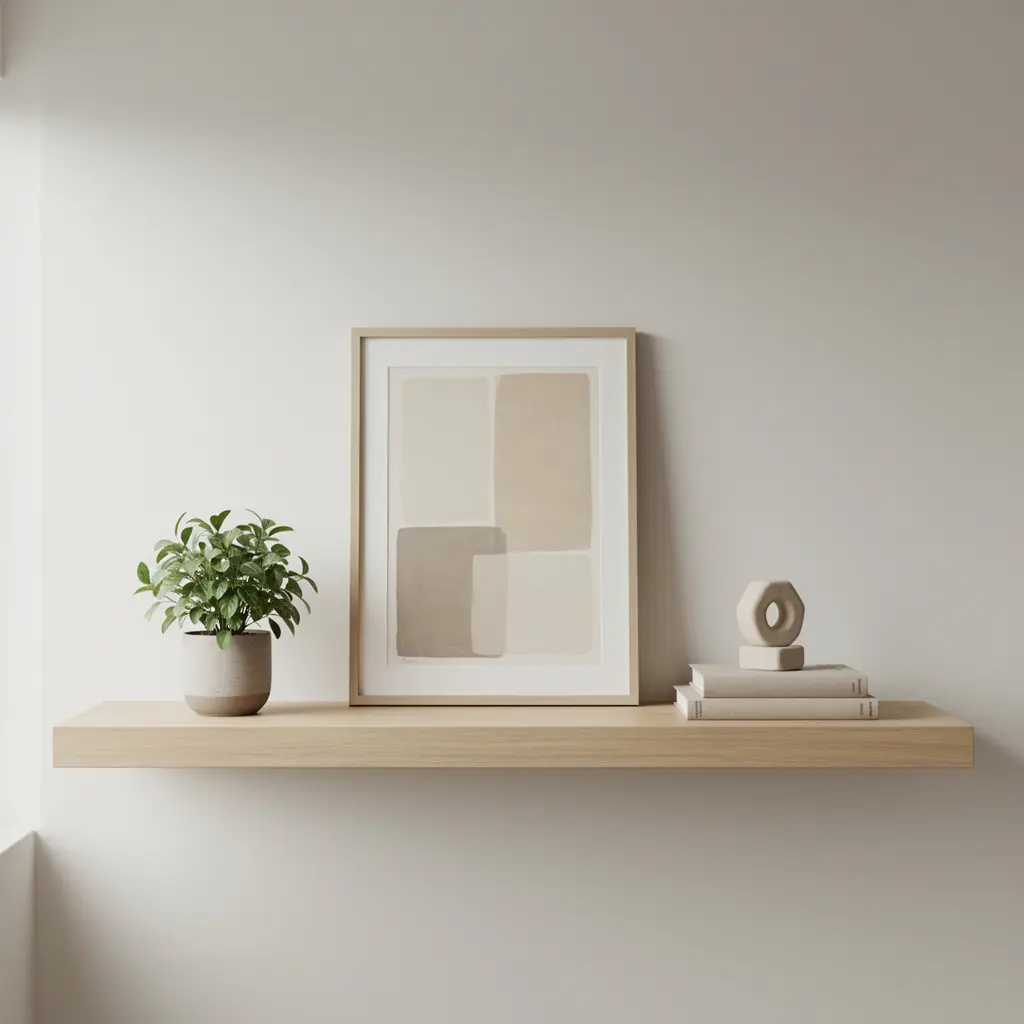
One of the most common styling mistakes is filling every available inch of shelf space. Leaving roughly a third of the shelf empty, distributed as breathing room between groupings rather than clustered entirely on one end, keeps the overall look calm rather than chaotic.
This negative space also gives each individual object room to be noticed, rather than competing for attention in a tightly packed row.
9. Style Shelves Differently by Room and Function
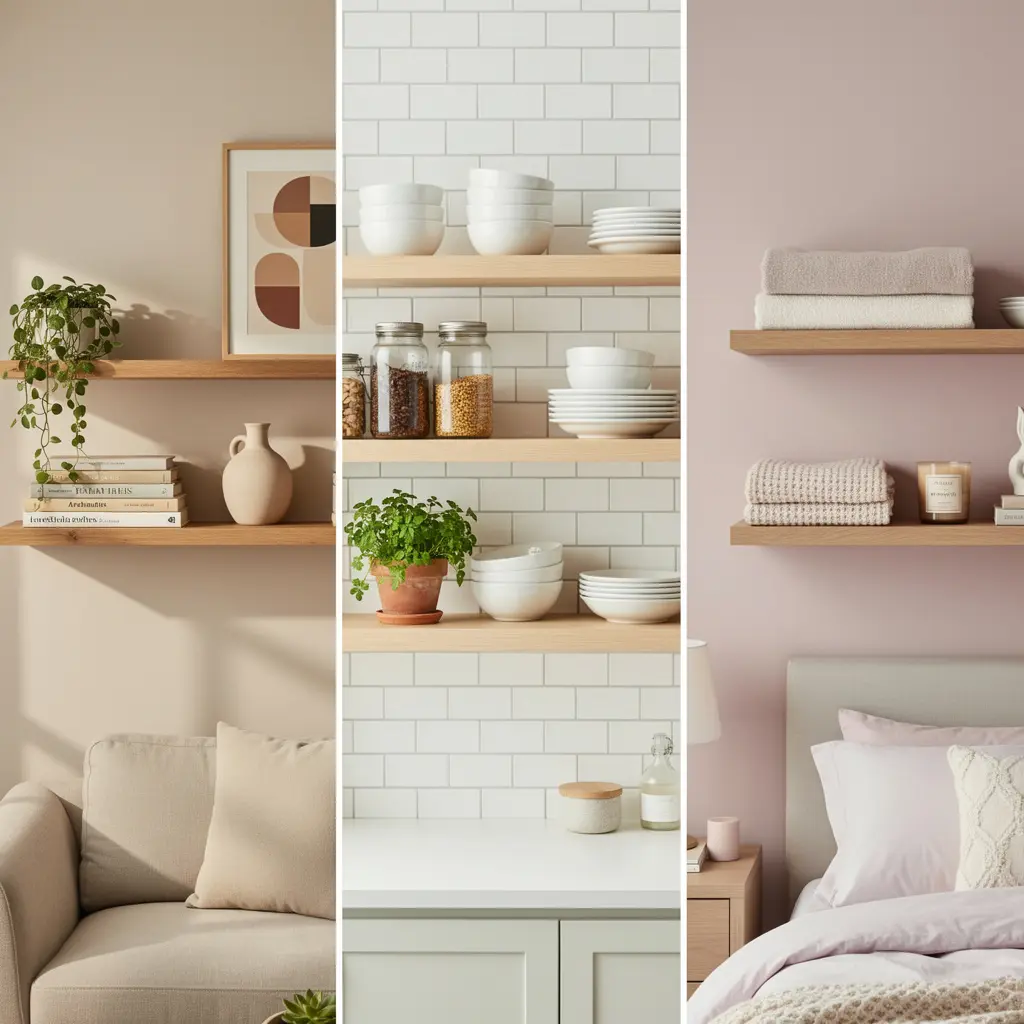
A kitchen floating shelf styled with cookbooks, a few jars, and a small plant serves a different function than a living room shelf styled purely for display. Matching the styling approach to how the room is actually used, rather than applying the same decorative formula everywhere, results in a shelf that feels appropriate to its context.
In a bathroom, for example, rolled towels and a small plant might replace books and frames entirely, since the practical use of the space calls for a different set of objects.
10. Rotate Your Styling Seasonally to Keep It Feeling Fresh
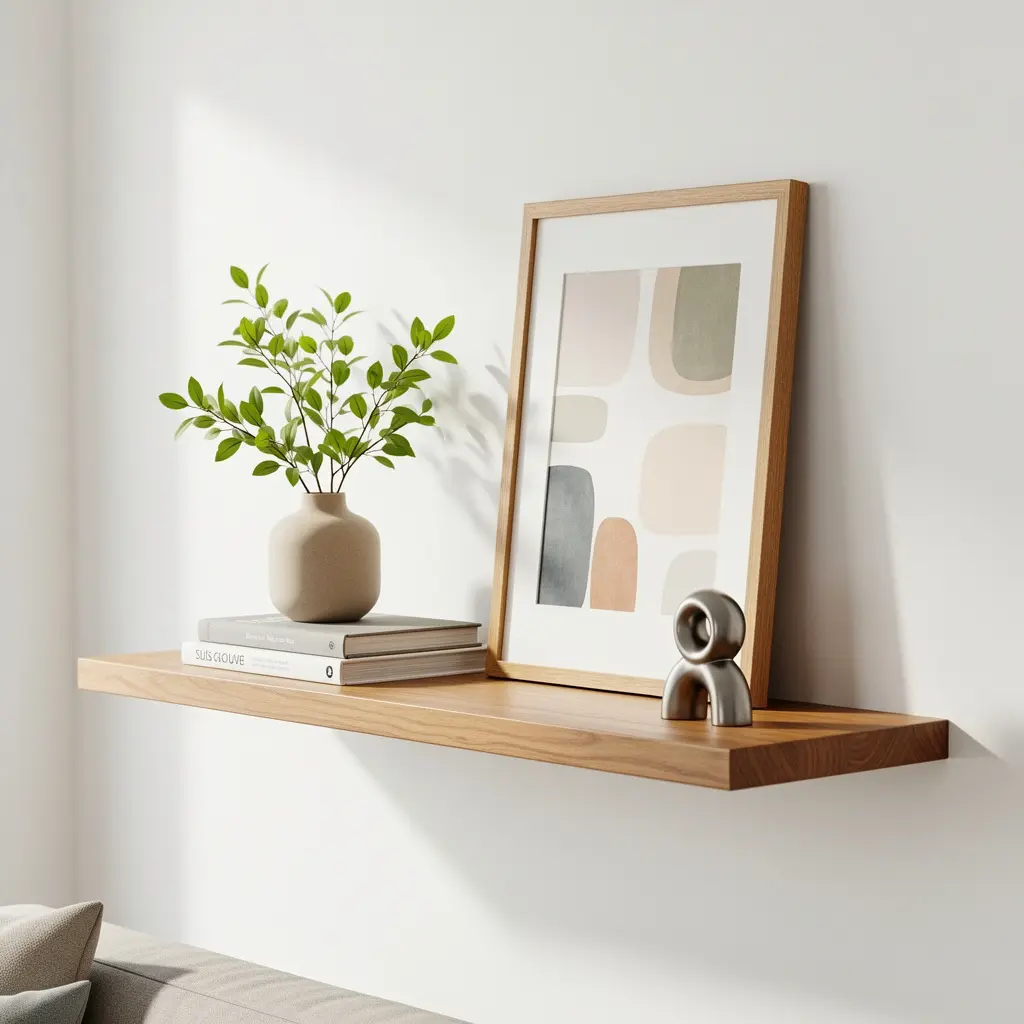
Swapping out a few smaller items, like a candle, a small vase, or a seasonal decorative object, every few months keeps a floating shelf from feeling static without requiring a full restyle. This also gives you a low cost way to incorporate seasonal colors or themes without committing to permanent decor changes.
Keeping the larger anchor pieces, like a favorite vase or a stack of books, consistent while rotating smaller accents around them maintains the overall balance of the shelf even as small details shift throughout the year.
Mistakes to Avoid
- Filling every inch of the shelf with no negative space left between objects
- Using even numbered groupings that read as overly symmetrical
- Styling every object at the same height, which flattens the visual interest
- Matching every material exactly instead of mixing texture and finish
- Hanging every piece of art instead of layering a few pieces against the wall
- Ignoring the shelf’s actual function and styling purely for how it looks in photos
Frequently Asked Questions
How many items should go on a single floating shelf? A general guideline is three to five items per grouping, depending on the shelf’s length, with roughly a third of the shelf left as open space. More than that tends to feel crowded, while fewer can look sparse.
What’s the best height for floating shelves above a piece of furniture? A common rule is placing the lowest shelf 6 to 8 inches above the furniture below it, whether that’s a sofa, a console table, or a desk. This spacing allows enough visual separation between the furniture and the shelf styling above it.
Should floating shelves match in color and material? Not necessarily. Shelves in a matching material tend to look cohesive, but the objects styled on top can and often should vary in material and texture for visual interest. Matching every single element can end up looking flat.
How do I style a floating shelf in a small space? Sticking to a smaller number of objects, generally two to three per shelf, and choosing pieces with a similar color palette helps a small space feel curated rather than cluttered. Negative space matters even more in a small room, since it prevents the shelf from visually overwhelming the space.
Can floating shelves hold heavy items like books? Most floating shelves are rated for a specific weight limit, generally listed by the manufacturer, and it’s worth checking that rating before loading up a shelf with a large stack of books. Choosing shelves with hidden metal brackets rather than purely decorative supports typically provides more weight capacity.
Conclusion
Styling a floating shelf well comes down to a handful of repeatable principles rather than owning a specific set of decorative objects. Group items in odd numbers, vary the height across the shelf, mix materials for texture, and leave enough negative space that the arrangement can breathe. Applying these ideas consistently, whether you’re working with one small shelf or several stacked together, turns an easily overlooked piece of furniture into a genuine focal point in the room.