10 Cozy Vinyl Flooring Ideas for a Warm & Inviting Space
Vinyl has a reputation problem. People hear “vinyl flooring” and picture something practical but a little cold, the kind of floor you put in a laundry room because it can handle water, not because you want to walk on it barefoot. That reputation is old news at this point. Vinyl has gotten a lot better over the past several years, both in how it looks and how it feels, and with the right choices it can hold its own against hardwood in the coziness department. These cozy vinyl flooring ideas are about exactly that shift.
Here’s the thing though. Most of the coziness doesn’t come from the vinyl itself. It comes from color, texture, and what you put on top of it. A glossy gray vinyl plank will always feel colder than a matte, warm toned one, even though they’re technically the same material, made the same way, sold at similar prices. The difference is entirely in the details most people skip past.
1. Choose a Warm Wood Look Vinyl Instead of Cool Gray Tones
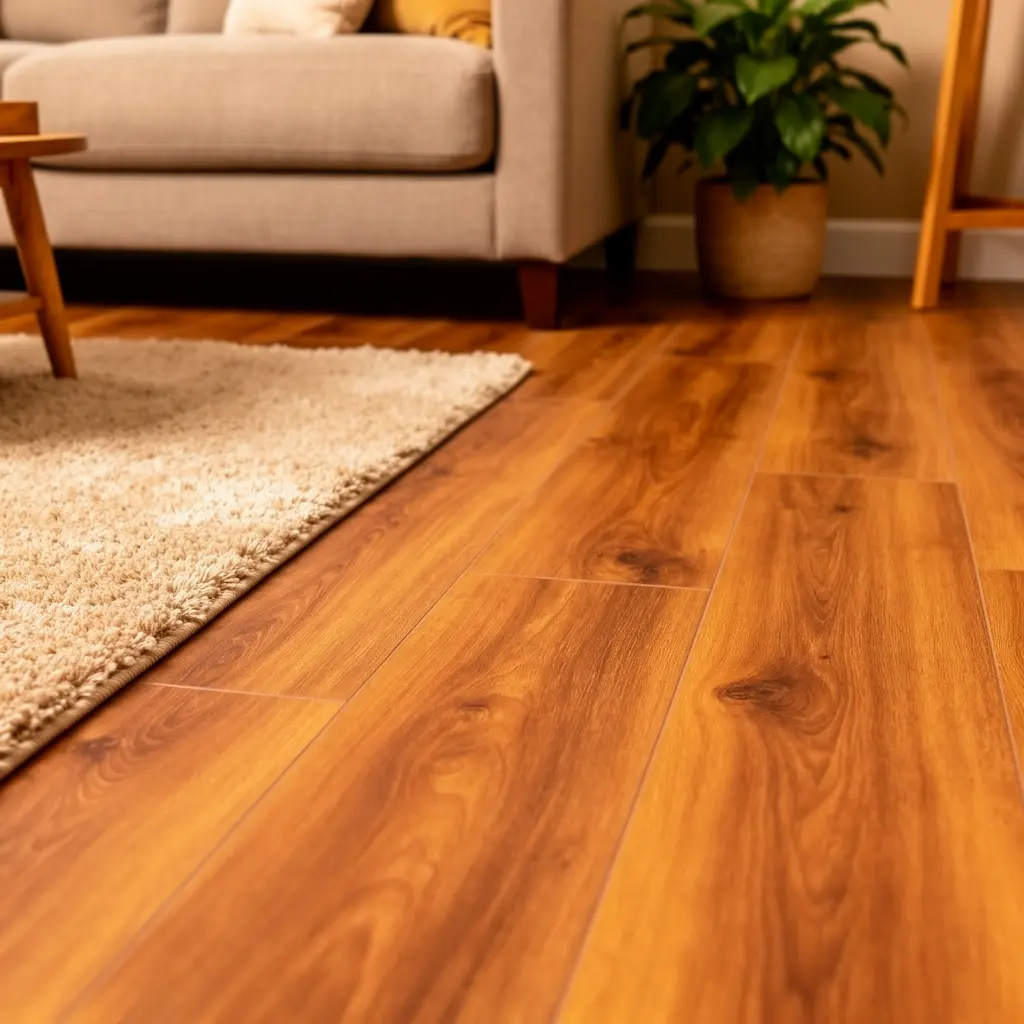
Gray vinyl has had a long run. It still looks fine, but let’s be honest, it reads as modern and a little sterile more than it reads as cozy. Swap it for a warm wood tone instead, something in honey oak or walnut or a weathered barnwood finish, and the whole room shifts.
Vinyl plank in these warmer tones usually runs 2 to 6 dollars a square foot for materials, so it’s not exactly a splurge to change the entire mood of a room.
Testing Vinyl Samples in Your Actual Room
Store lighting lies. A sample that looks warm and rich under fluorescent showroom lights can turn gray and flat the second it’s on your own floor. Grab a sample piece, bring it home, and look at it in the morning and at night before you commit to anything.
2. Understand the Difference Between LVP, LVT, and Sheet Vinyl
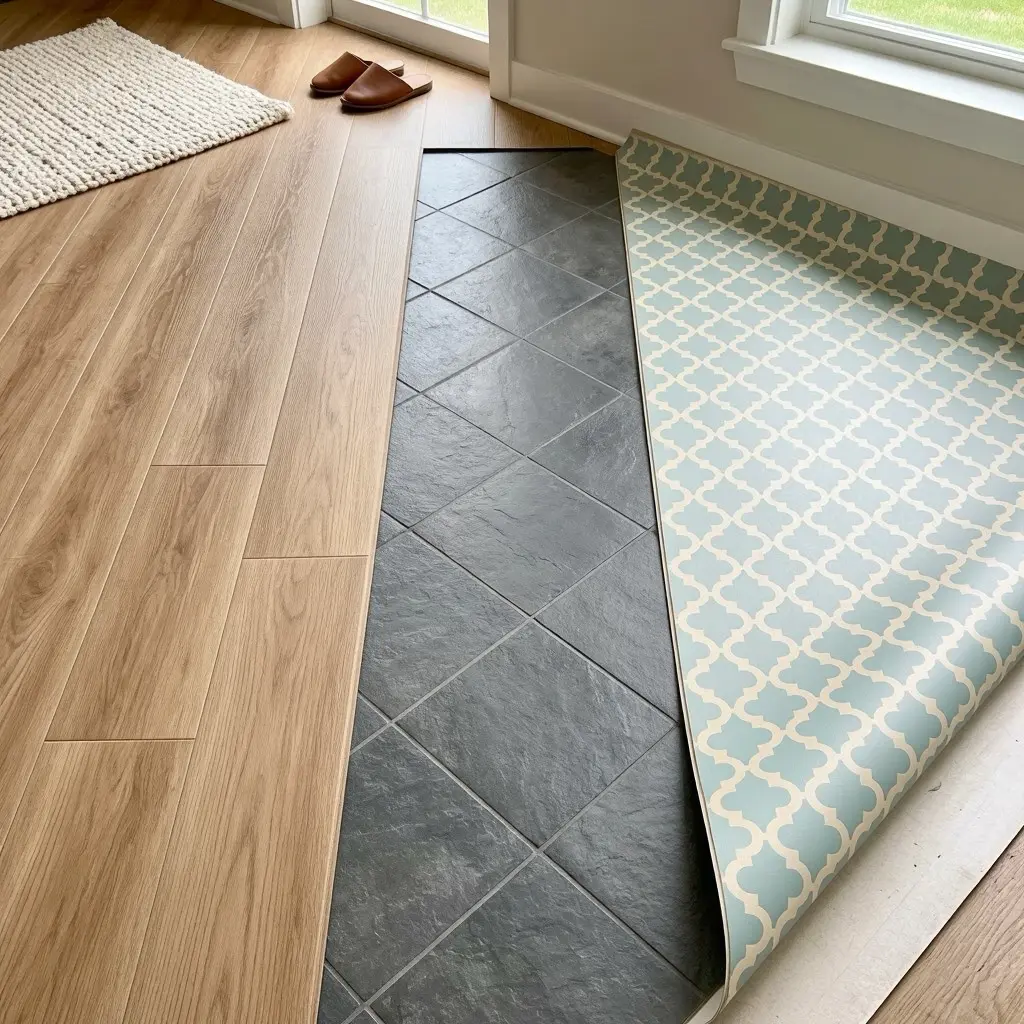
There are three main players here, and they’re not interchangeable. LVP, or luxury vinyl plank, mimics individual hardwood boards and tends to feel the most residential and homey of the bunch. LVT, luxury vinyl tile, mimics stone or ceramic and makes sense for bathrooms or kitchens. Sheet vinyl comes in big rolls, costs less, but has less texture and dimension than the other two.
If cozy is the goal, LVP with a real wood grain texture wins. The plank format and the embossing just do a better job selling the illusion of real hardwood.
3. Add a Textured or Embossed Finish for a More Natural Feel
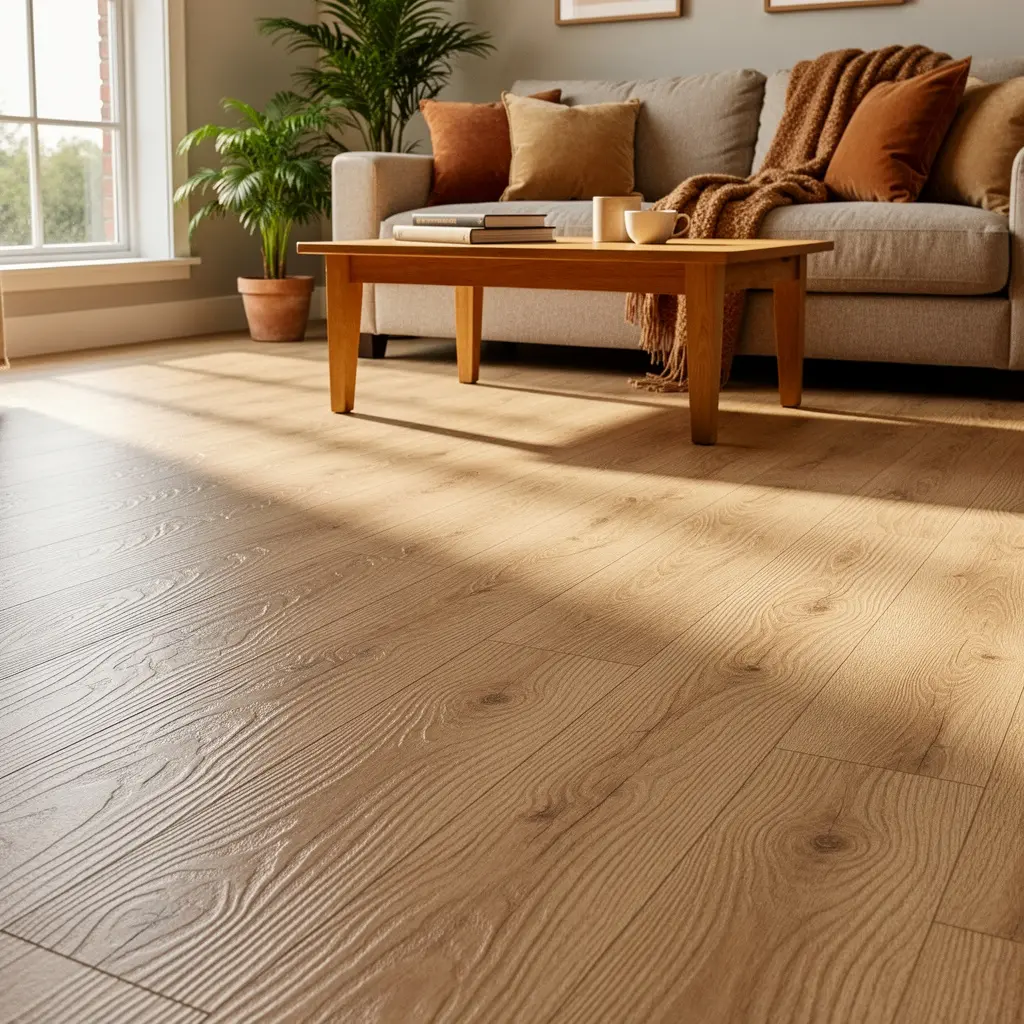
A perfectly smooth, glossy vinyl surface looks fake. It just does, no matter how good the printed color is. Embossed vinyl, which has actual texture built into the surface mimicking wood grain or stone, feels more real both to the eye and underfoot.
Look for the phrase “embossed in register.” That means the texture lines up exactly with the printed pattern instead of a generic texture slapped over any old design. It’s a small detail on a spec sheet, but it makes a real difference once the floor’s down.
4. Layer Rugs to Add Softness Underfoot
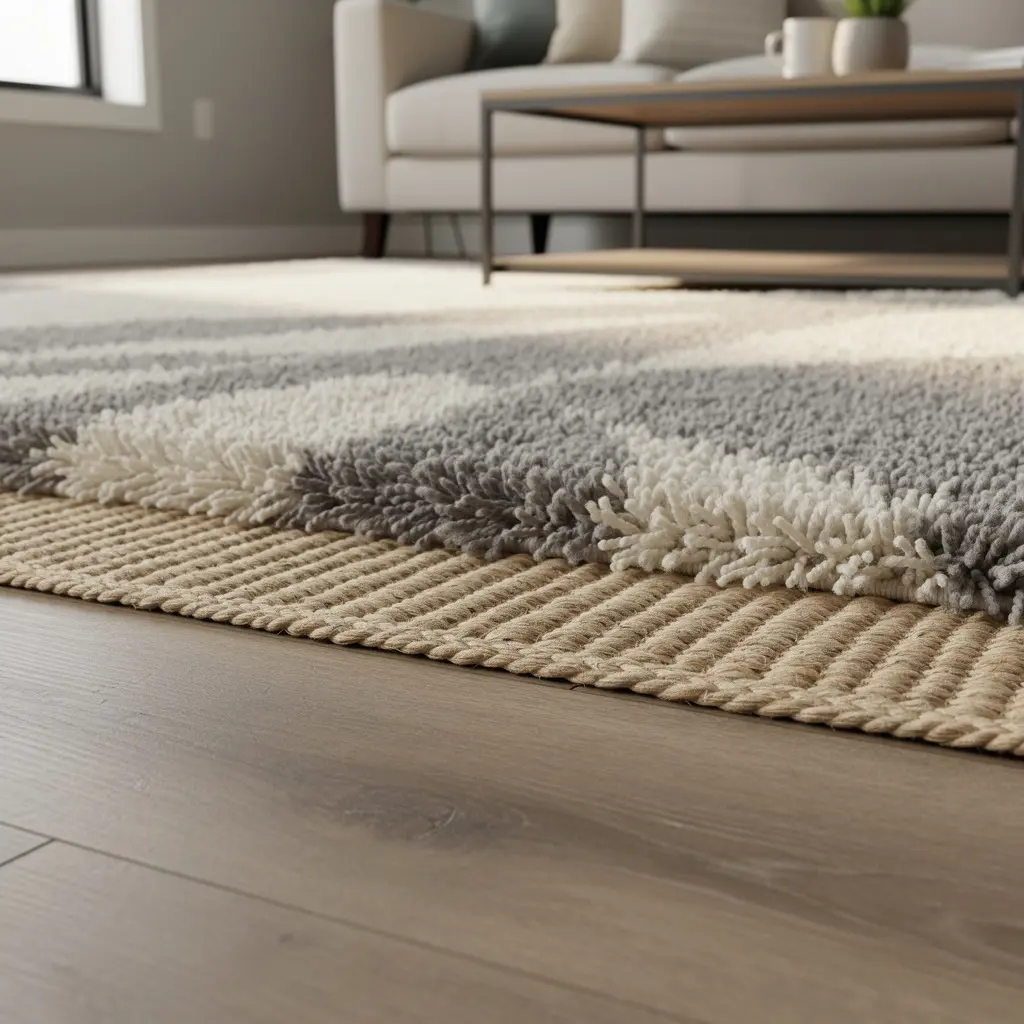
No matter how warm your vinyl looks, it’s still a hard floor. A rug beside the bed, under the coffee table, in a reading corner, that’s where the actual physical softness comes from. A wool or wool blend area rug, generally 150 to 500 dollars depending on size, pairs especially well with wood look vinyl.
Don’t skip the rug pad. It’s 20 to 50 dollars and it protects the vinyl from scuffing while adding another layer of cushion you’ll actually feel.
5. Pick a Wide Plank Style for a More Grounded Look
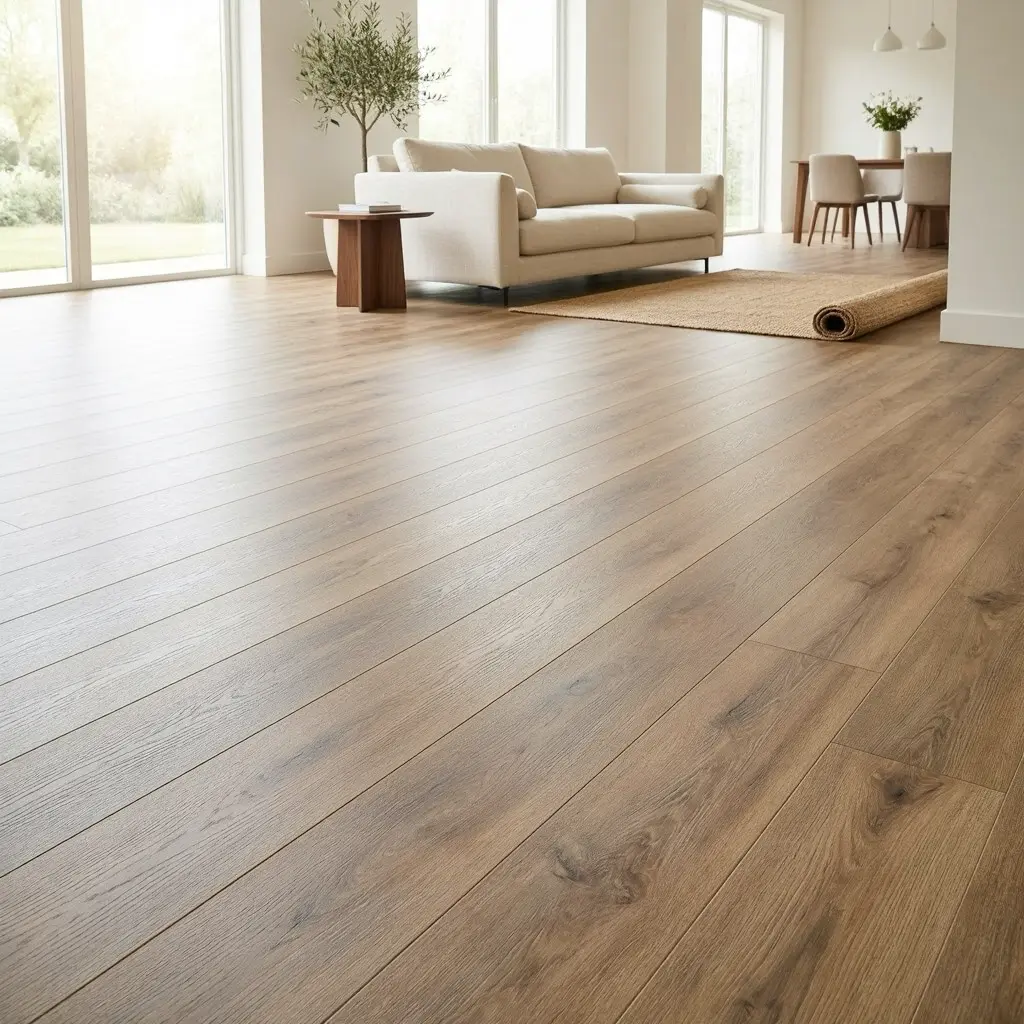
Narrow planks, under 5 inches, look a bit busier and more traditional. Wide planks, 7 inches or more, feel calmer and more modern, mostly because there are fewer seams breaking up the floor as you look across the room.
Why Plank Width Affects Perceived Warmth
Fewer seams means fewer visual interruptions. And a room with fewer interruptions just feels calmer to sit in, even though nothing about the actual material has changed.
6. Choose Warm Grout Look Lines for Tile Style Vinyl
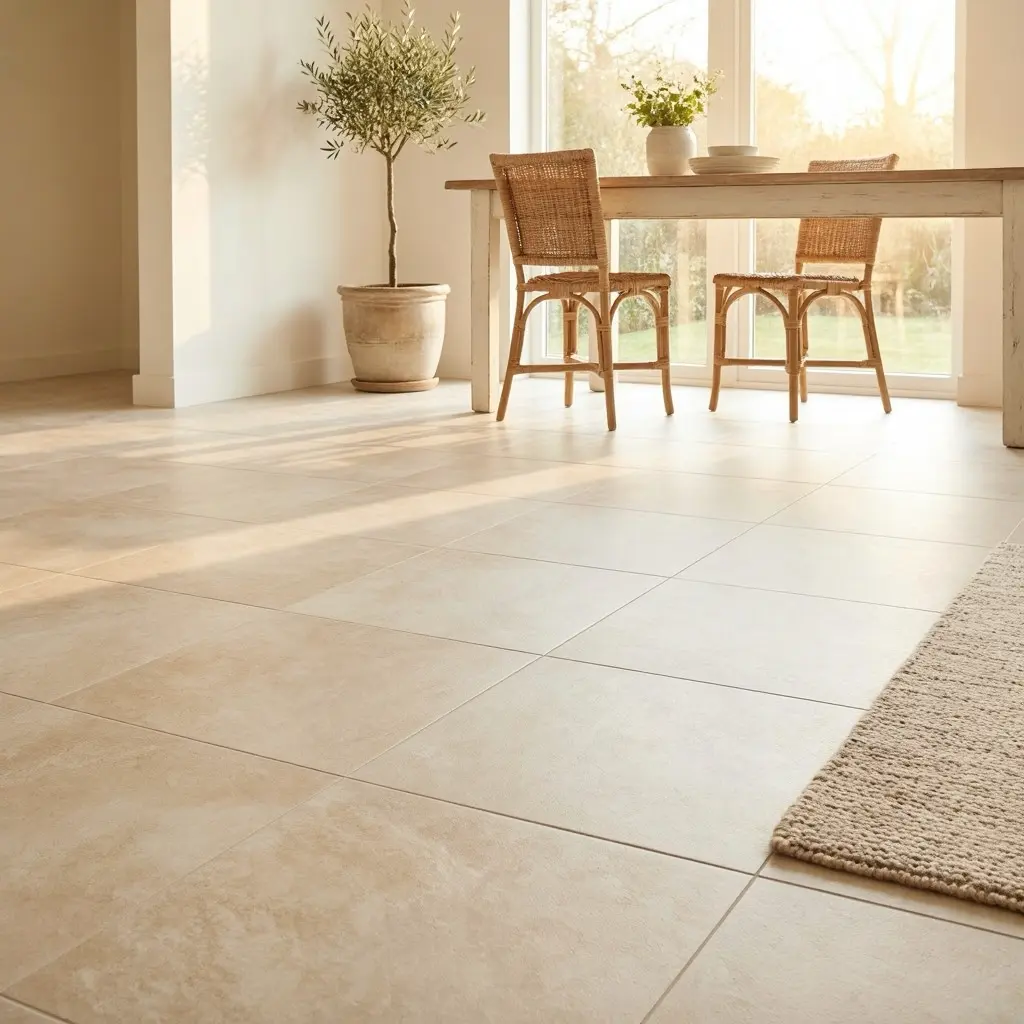
If you’re going with vinyl tile instead of plank, pay attention to the grout line color, not just the tile pattern. A warm beige or taupe grout line feels a lot cozier than stark white or cool gray, even on the exact same tile design.
It’s easy to overlook this detail when you’re focused on the pattern itself. But it changes the whole feel of the floor once it’s installed.
7. Add Radiant Floor Heating Under Vinyl for Extra Comfort
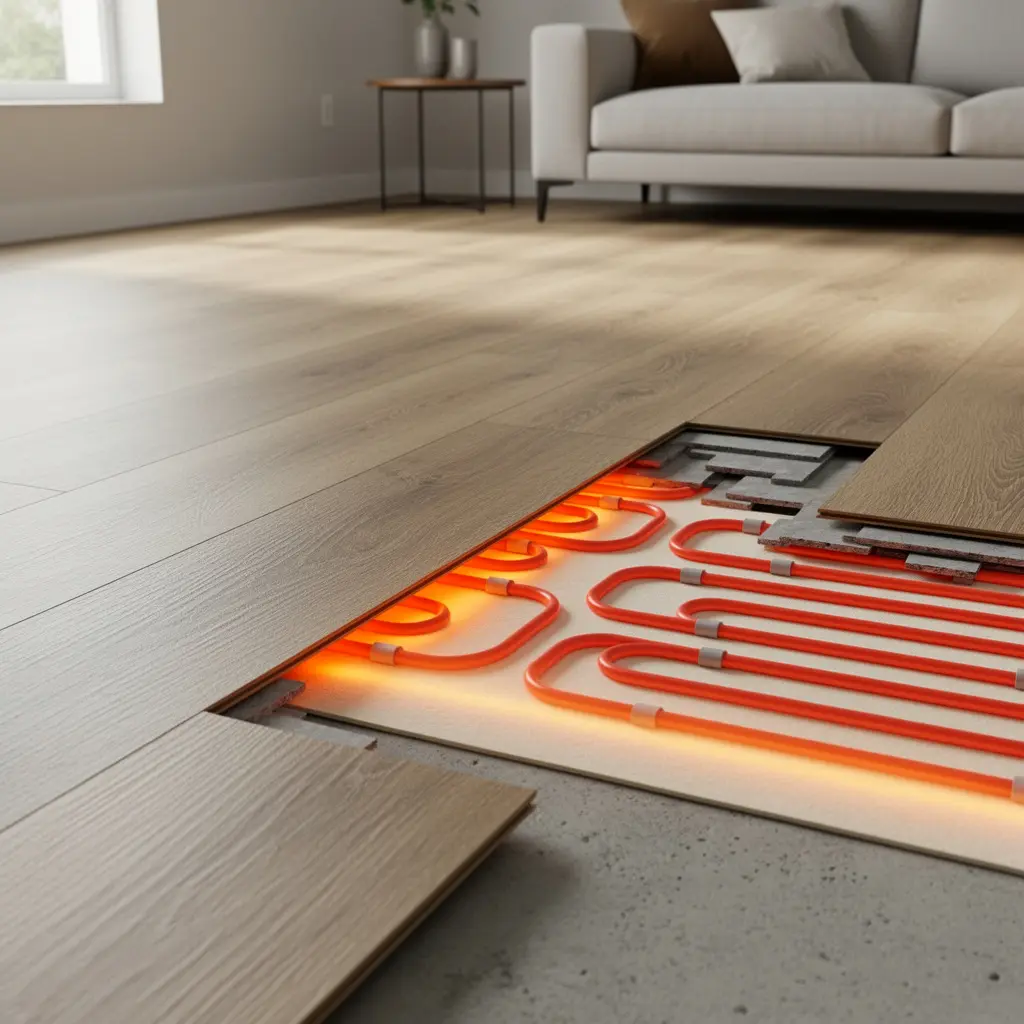
Some vinyl products are rated for radiant floor heating, which actually warms the floor rather than just looking warm. Costs vary a lot depending on room size and whether it’s new construction or a retrofit, but in colder climates this is genuinely one of the best upgrades you can make.
Just check compatibility first. Not every vinyl product handles the heat exposure safely, and this is one detail worth confirming before installation, not after.
8. Use Vinyl in High Traffic Rooms Without Sacrificing Warmth
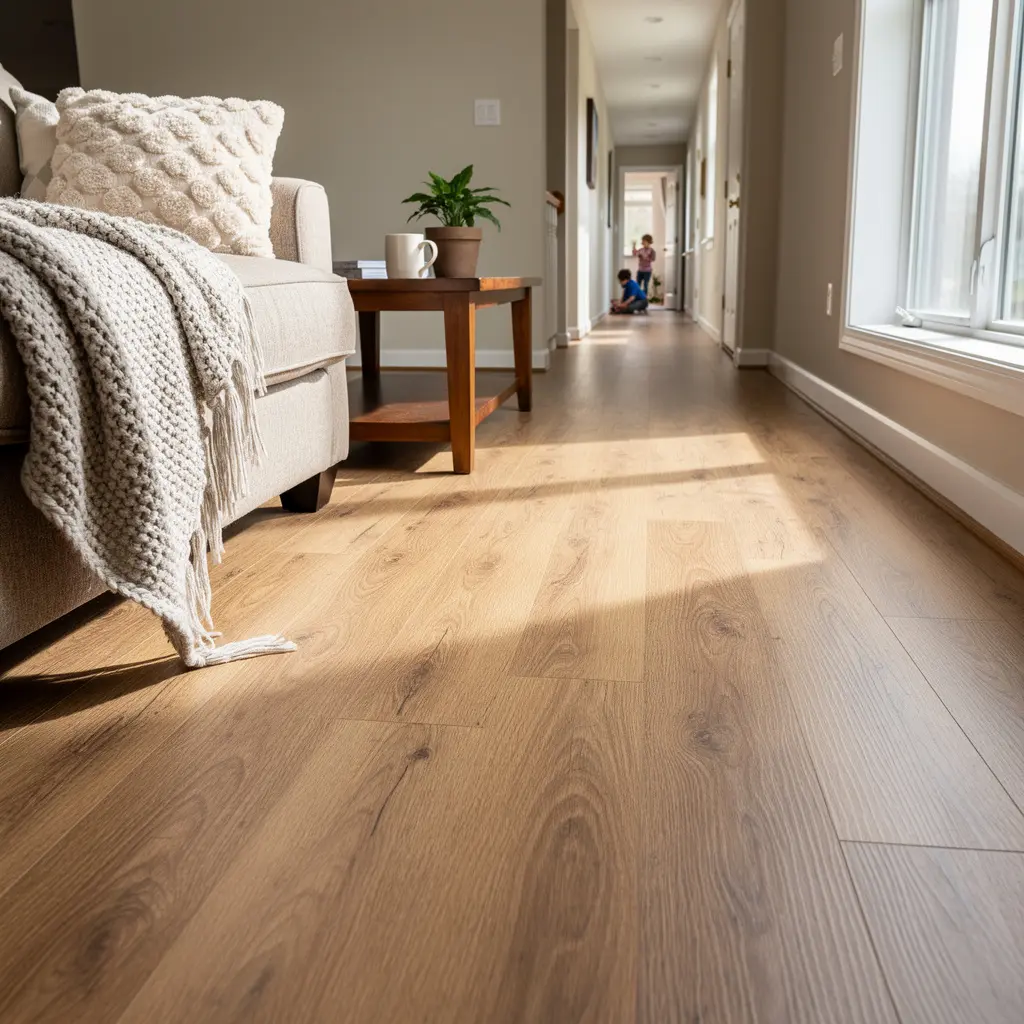
Vinyl’s durability and water resistance make it the obvious pick for kitchens, entryways, and bathrooms. Rooms that take a beating every day, spills and mud and everything else that comes with actually living in a house. But there’s no rule saying those rooms have to feel cold. Choose a warm wood look or a softly patterned tile look instead of defaulting to gray or white, and even the most functional spaces in the house end up feeling cohesive with everything else.
This matters even more in open concept homes, where a cold kitchen floor can visually clash against warmer flooring in the room right next to it. Walk from a warm toned living room into a stark gray kitchen and the transition feels jarring, even if you can’t quite say why at first. Keeping the tone consistent, even across different flooring materials, smooths that transition out.
9. Consider Vinyl Underlayment for Sound and Cushion
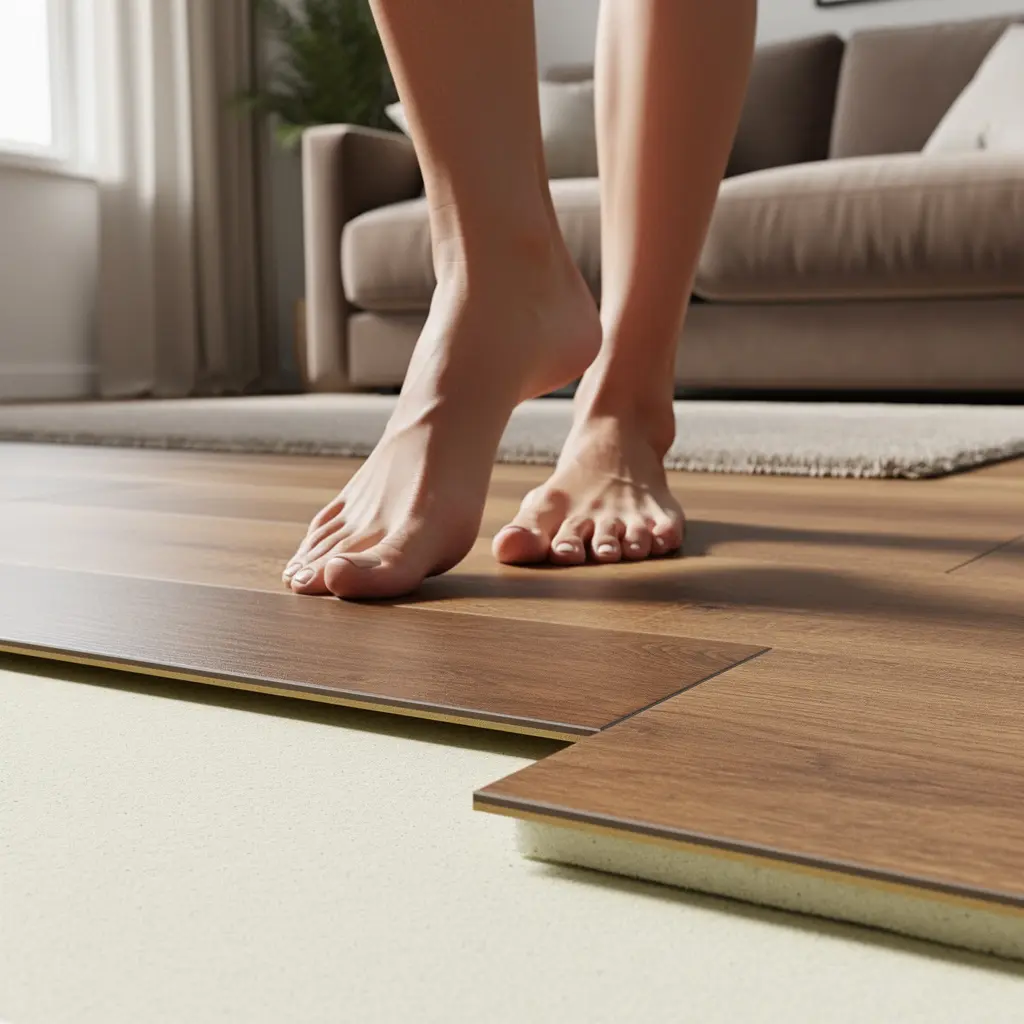
Underlayment goes under the vinyl, so you’ll never see it, but you’ll feel it. It reduces that hollow, slightly cheap sound vinyl can have, and adds a bit of cushion underfoot. It’s cheap too, usually 20 to 50 cents a square foot.
This one’s especially worth doing in an upstairs room or an apartment, where sound traveling to the floor below is its own separate headache.
10. Maintain Vinyl Flooring So It Stays Looking Warm and New
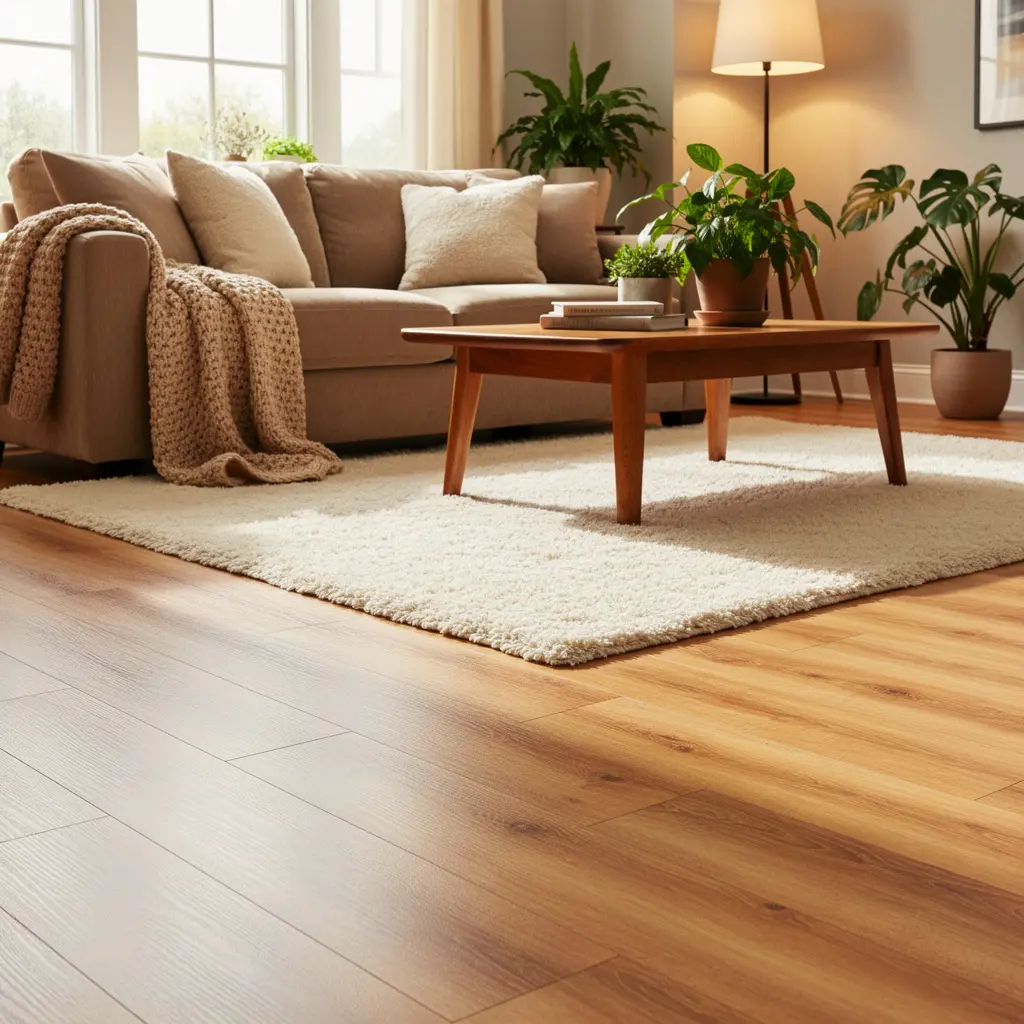
Sweep it, mop it with whatever the manufacturer recommends, and skip the harsh abrasive cleaners. That’s really most of it. Standing water and rough chemicals wear down the seams and the finish over years of use, and that’s what dulls the texture that made the floor feel warm in the first place.
Felt pads under furniture legs help too. They stop the scuffing that shows up fast in high traffic spots and slowly dulls the finish over time.
Mistakes to Avoid
- Choosing a cool gray vinyl tone when the goal is a genuinely cozy, warm room
- Selecting a completely smooth, glossy finish instead of a textured, embossed one
- Skipping rugs entirely and leaving the entire floor as a hard, bare surface
- Ignoring grout line color when choosing tile style vinyl for a kitchen or bathroom
- Installing vinyl without checking radiant heat compatibility if that’s part of the plan
- Using harsh cleaning products that dull the texture and finish over time
Frequently Asked Questions
Does vinyl flooring feel cold underfoot? On its own, yes, a bit cooler than carpet, though it’s still warmer to the touch than tile or stone. Add underlayment, layer in some rugs, or install radiant heating, and that changes fast.
What’s the warmest looking vinyl flooring color? Warm wood tones like honey oak, golden walnut, and weathered barnwood read as the coziest, especially paired with a matte, textured surface instead of anything glossy.
Is vinyl plank or vinyl tile better for a cozy look? Plank, generally. It mimics hardwood and just reads as more residential. Tile makes more sense where you actually want a stone or ceramic look, like a bathroom or entryway.
Can I add radiant heating under any vinyl flooring? No, not every product is rated for it. Check the manufacturer’s guidelines before you install anything, or you risk damaging both the flooring and the heating system underneath.
How do I make vinyl flooring feel cozier without replacing it? Rugs with a good pad underneath, warmer lighting in the room, and soft textiles like curtains nearby. None of it requires touching the floor itself.
Conclusion
Cozy vinyl flooring really comes down to three choices: the right tone, the right texture, and what you layer on top. Warm wood look planks with an embossed finish, a rug in the spots that matter, and a little attention to grout color if you’re going the tile route. None of that means giving up the durability and moisture resistance that made vinyl worth considering in the first place. You can have both, and honestly, that’s the whole appeal of vinyl in the first place.