10 Sage Green Kitchen Cabinet Ideas for a Calm, Timeless Look
You’ve painted the kitchen white, then gray, then back to white again, and none of it ever felt like more than a safe, forgettable choice. Sage green kitchen cabinets solve that problem by bringing real color and personality into the room while still functioning like a neutral, pairing easily with wood, brass, marble, and stone rather than fighting against them. This isn’t a passing trend either. A recent Houzz renovation study found green has actually overtaken gray as a cabinet color choice, and in a separate 2026 survey of 634 design professionals, green ranked first among preferred kitchen colors at 86 percent. Here are ten ways to bring that calm, grounded look into your own kitchen.
1. Get the Undertone Right Before Anything Else
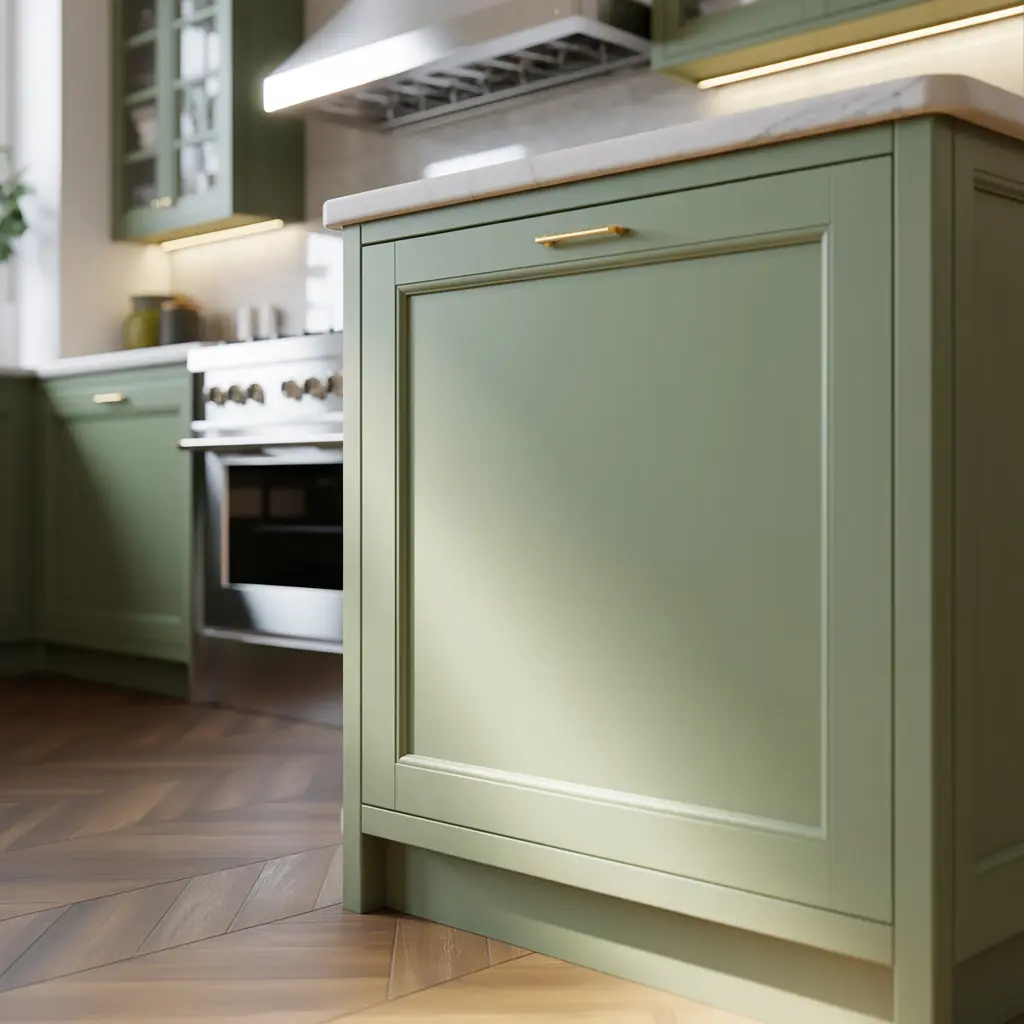
The single most common mistake with sage green kitchen cabinets is picking a shade without paying attention to its undertone, which can make an otherwise beautiful color look murky or off in your actual kitchen light.
Warm vs Cool Sage
Sage ranges from a cooler, gray-leaning green to a warmer, olive or gold-leaning green, and the right choice depends heavily on your kitchen’s natural light. A north facing kitchen or one with limited natural light generally looks better with a warmer, gold-leaning sage, since cooler tones can read as flat or gray in dim conditions. Always test a sample directly on your cabinets or a poster board in the actual room, viewed at different times of day, before committing to a full repaint or cabinet order.
2. Try the Two-Tone Layout: Sage Below, Light Above
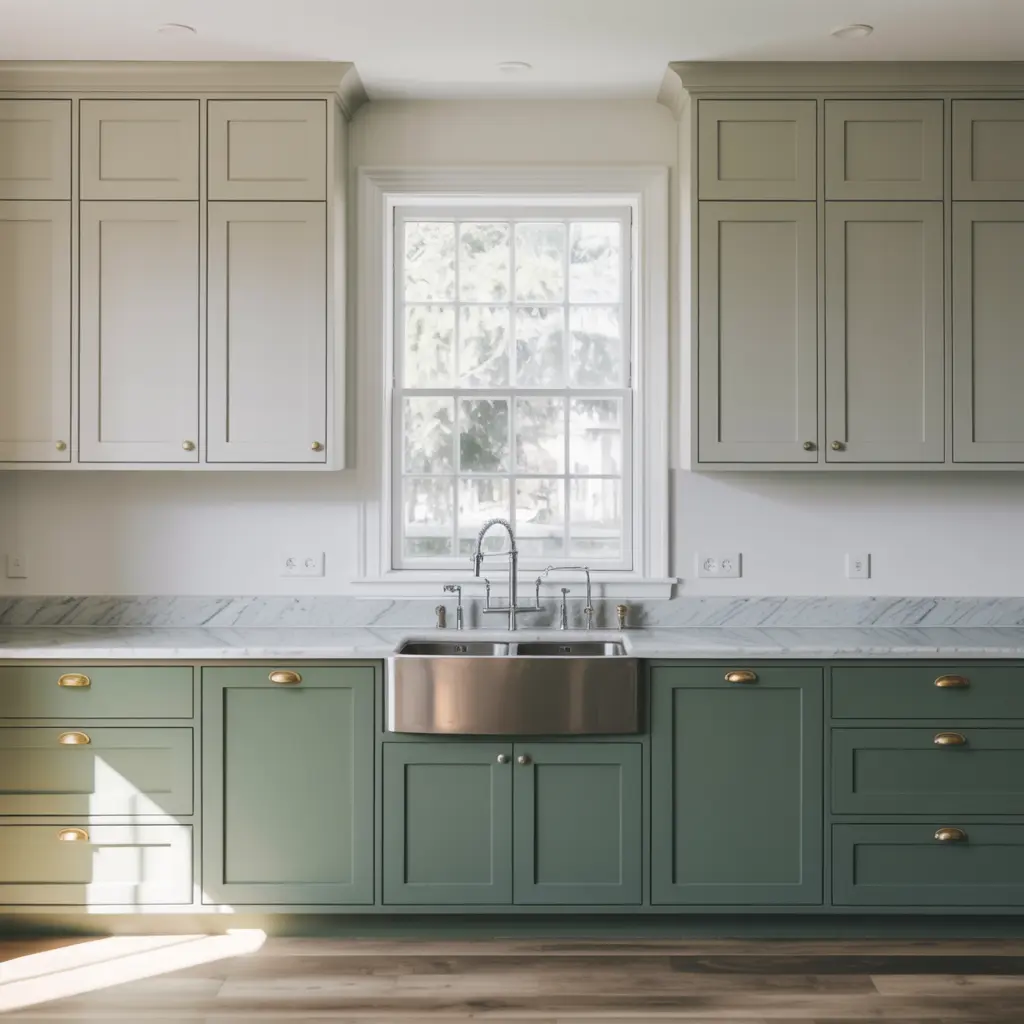
The most photographed sage green kitchen layout in 2026 pairs sage lower cabinets and island with lighter upper cabinets or open shelving in white, off-white, or natural wood.
This approach grounds the room with color at eye level and below, while keeping the upper portion of the kitchen bright and airy. It’s also one of the lowest risk ways to try sage green if you’re not ready to commit to a full cabinet repaint, since you can start with just the island and expand later if you like the result.
3. Pair Sage With Warm Wood for an Earthy, Grounded Feel
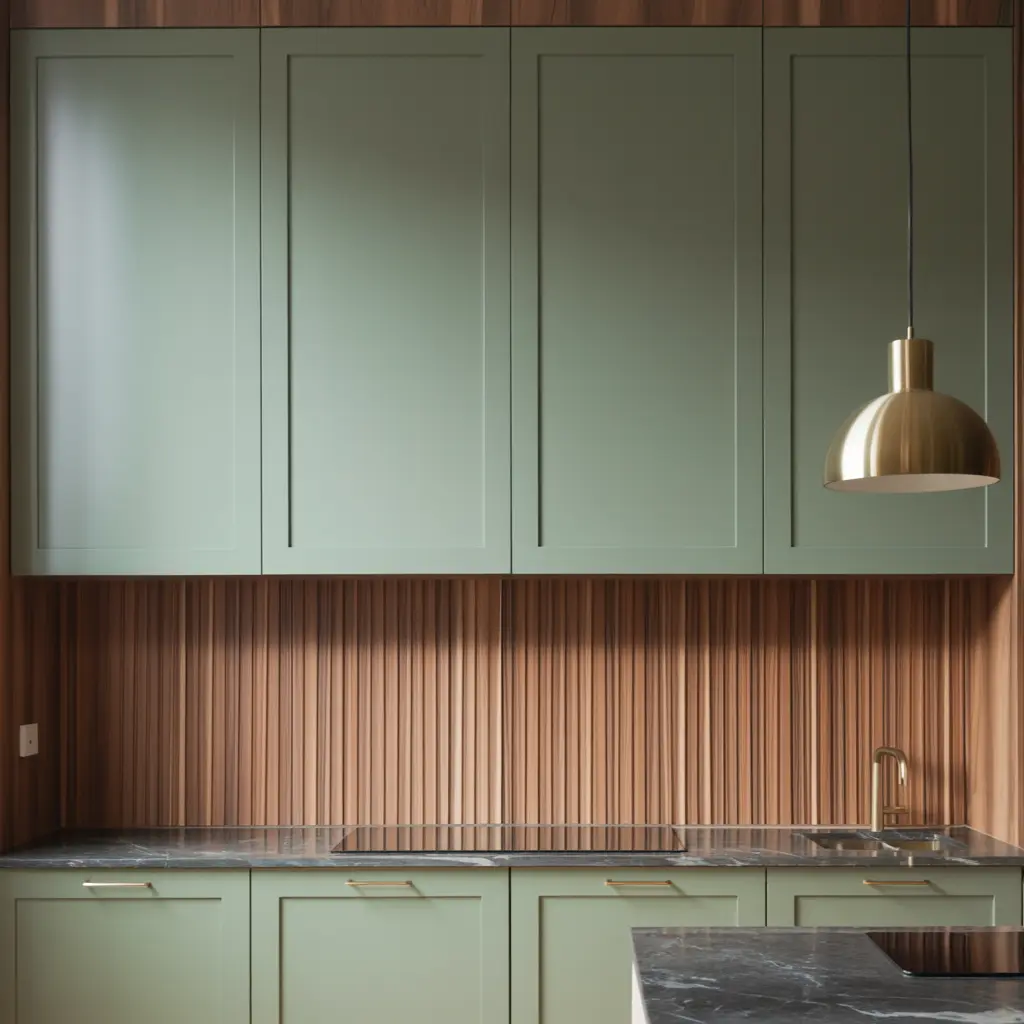
Sage green kitchen cabinets and natural wood tones consistently show up together in current kitchen design, and for good reason, since the warmth of the wood keeps the green from reading as cold or overly pastel.
Wood Pairings That Work Well
Unstained or lightly stained oak tends to pair especially well with a muted, gray-leaning sage, since the contrast between warm wood grain and cooler green creates visual interest without clashing. A darker walnut or richer wood tone works better with a warmer, olive-leaning sage, since both lean warm and read as a cohesive, earthy pairing rather than competing tones.
4. Add Brass or Warm Gold Hardware
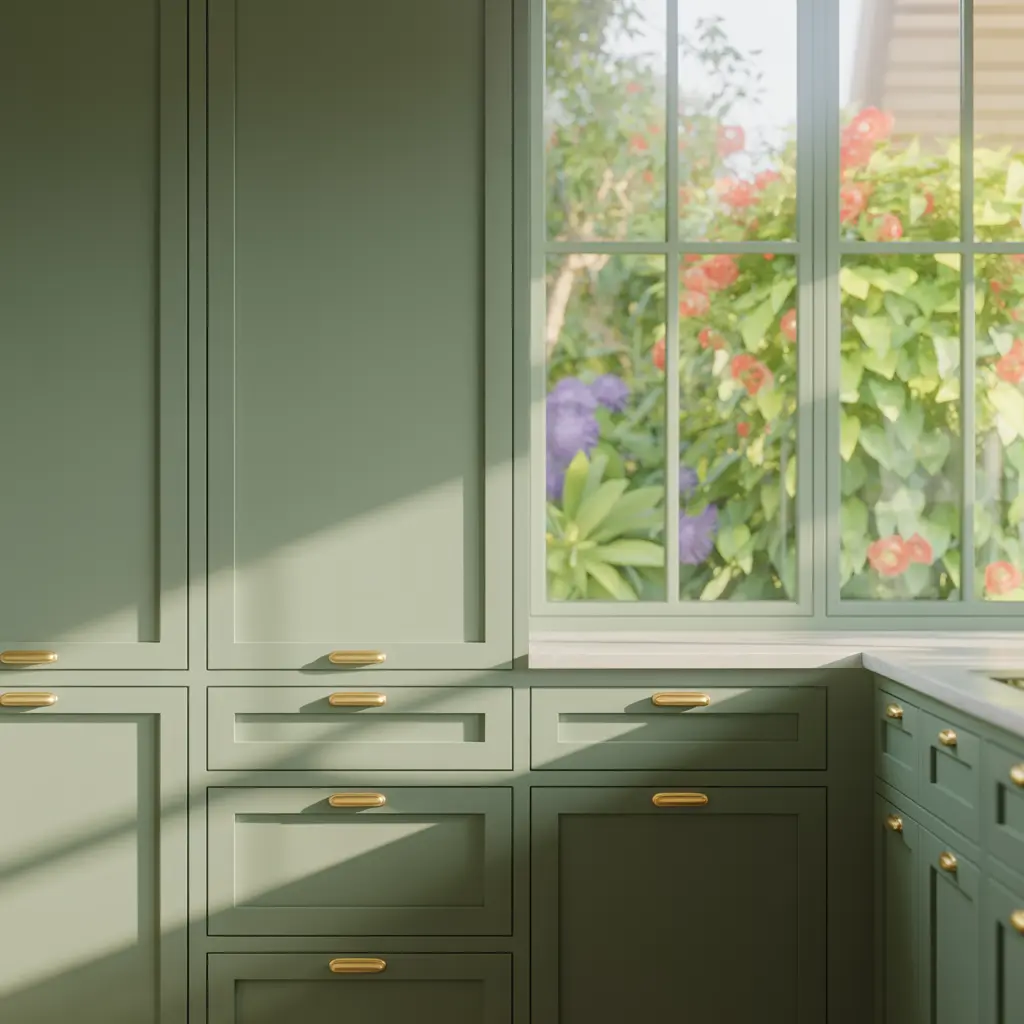
Cabinet hardware finish matters more than people often expect, and brass or warm gold hardware has become one of the most consistent pairings with sage green cabinetry across current kitchen design coverage.
Brushed brass hardware catches the light in a way that plays especially well against a muted green, adding a subtle glow without looking overly shiny or formal. If a full hardware swap isn’t in the budget right now, updating just the cabinet pulls and knobs is a relatively small investment that changes the character of the whole kitchen.
5. Use Sage Green as a Full Commitment for a Bolder Statement
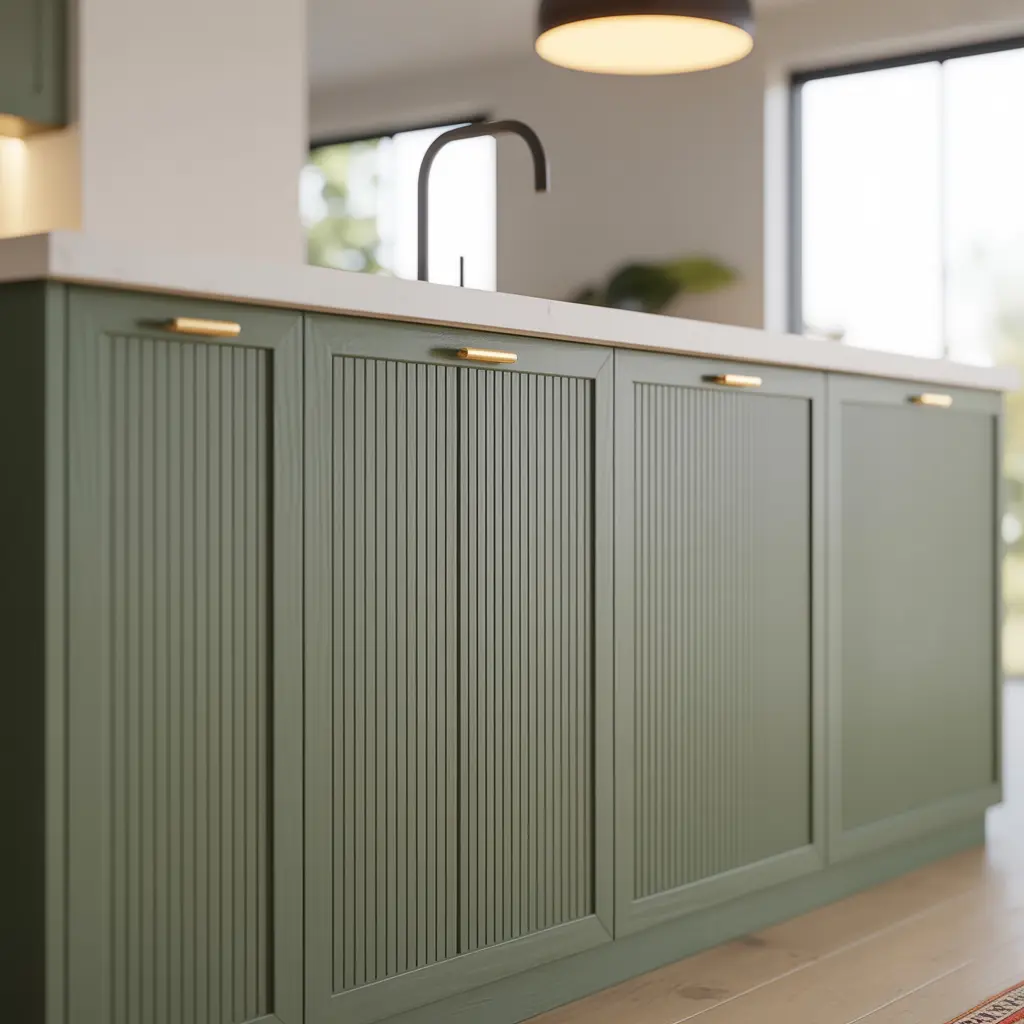
While the two-tone layout is the safer entry point, fully committing to sage green cabinetry on both upper and lower cabinets creates a more dramatic, cohesive look for kitchens where you want color to feel architectural rather than accent-level.
A continuous sage surface from floor to ceiling, paired with a contrasting countertop in white or cream, keeps the room from feeling flat despite the full color commitment. This bolder approach tends to work particularly well in kitchens with an oversized island, since the extra surface area gives the green room to feel intentional rather than overwhelming.
6. Pair Sage With Warm Beige or Cream Walls
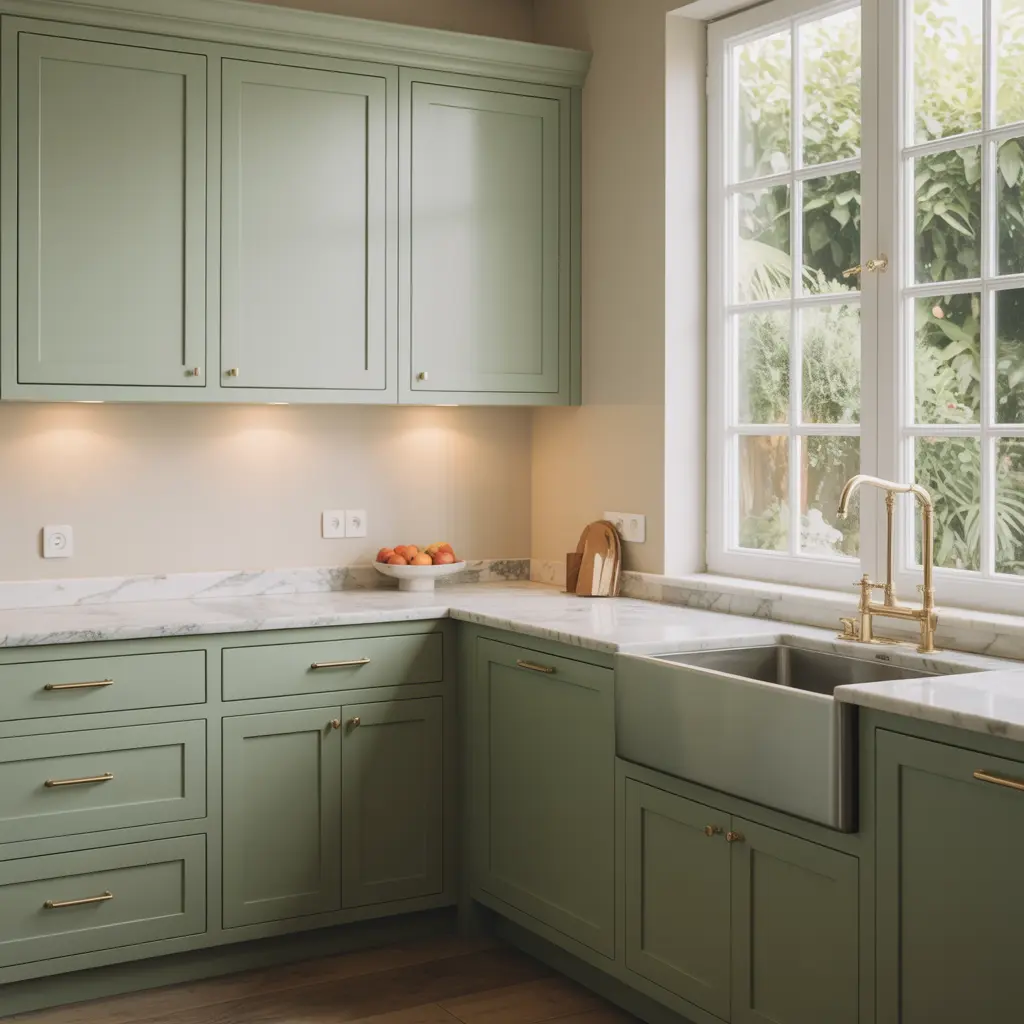
Sage green cabinets need the right wall color around them to really land, and a warm beige or cream wall tends to outperform a stark white wall, since the added warmth keeps the whole room feeling cohesive rather than clinical.
This pairing also allows more natural light to bounce softly around the space, since warm neutrals reflect light differently than a cool, bright white does. If you’re not ready to commit to painting cabinets, painting the walls in a warm beige first is a lower commitment way to prepare the room for a future sage green update.
7. Choose the Right Countertop to Complement, Not Compete
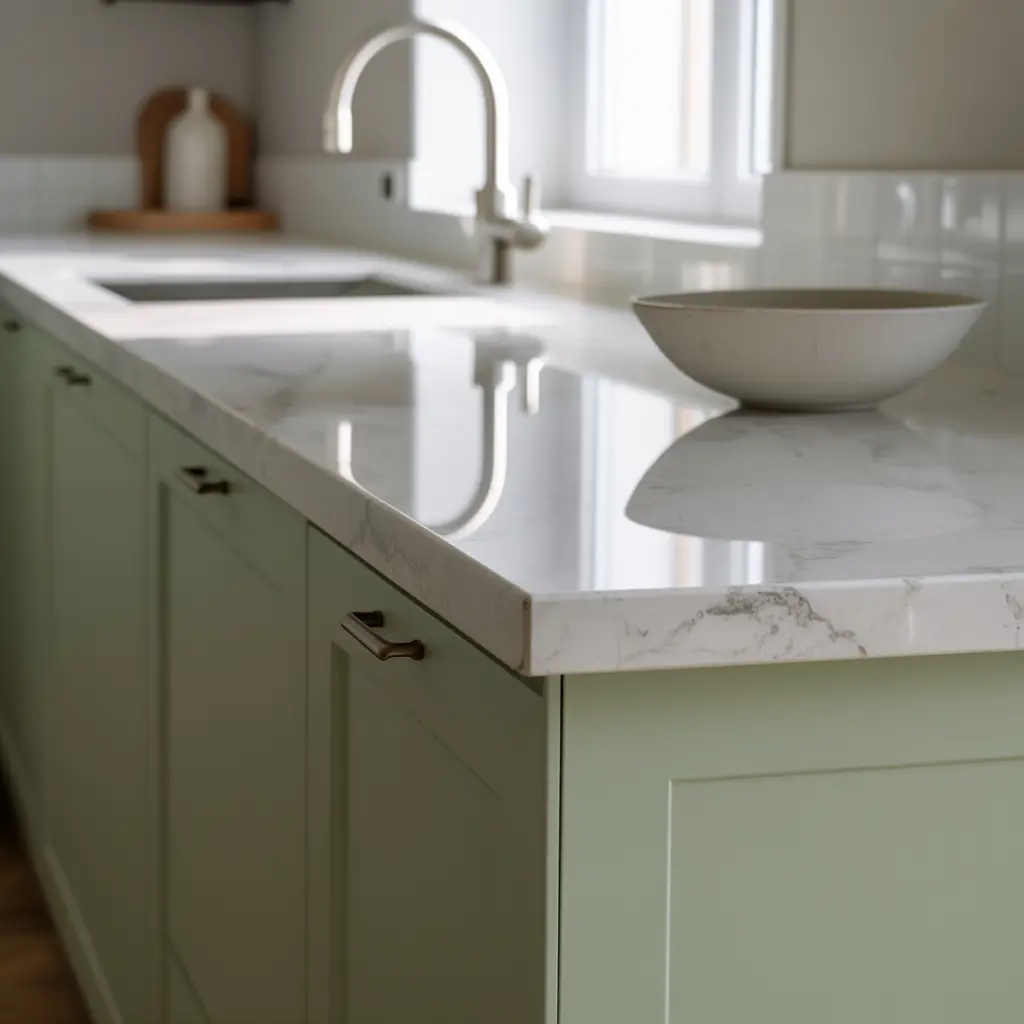
Sage green kitchen cabinets pair well with a fairly wide range of countertop materials, but a few choices consistently show up as particularly strong pairings in current design coverage.
Strong Countertop Options
White or cream marble and quartz keep the kitchen feeling bright and classic against sage lower cabinets. Concrete countertops lean more modern and industrial, working especially well with a cooler, gray-leaning sage. Terrazzo introduces subtle pattern and texture while still staying in a neutral enough color range to let the green lead.
8. Add a Subway Tile or Textured Backsplash
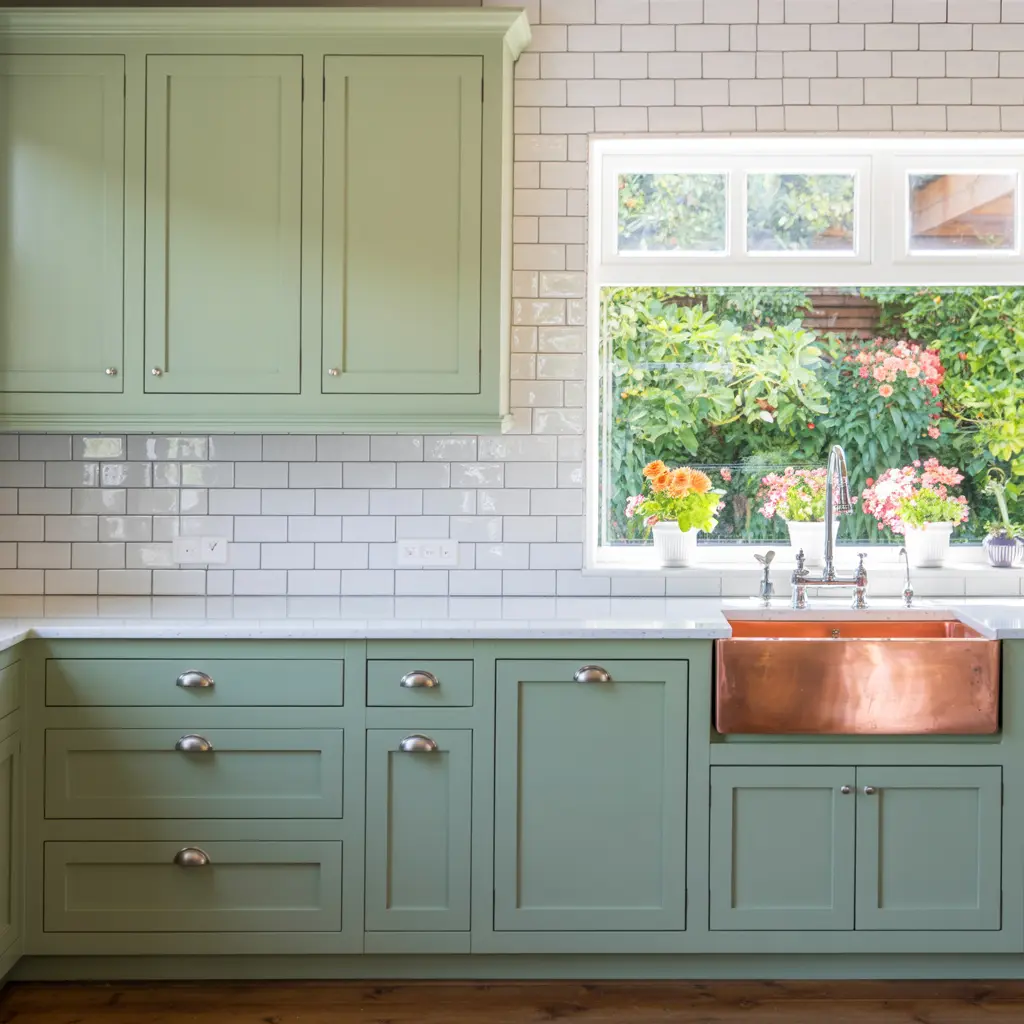
A backsplash gives sage green kitchen cabinets a chance to breathe visually, adding texture between the cabinetry and the wall rather than letting the whole kitchen read as one flat block of color.
A classic white subway tile keeps the look timeless and lets the green cabinetry stay the focal point. A slightly textured or handmade tile finish adds another layer of depth for anyone wanting a bit more visual interest than a perfectly flat, glossy tile provides.
9. Consider Sage Green for Small Kitchens and Rentals
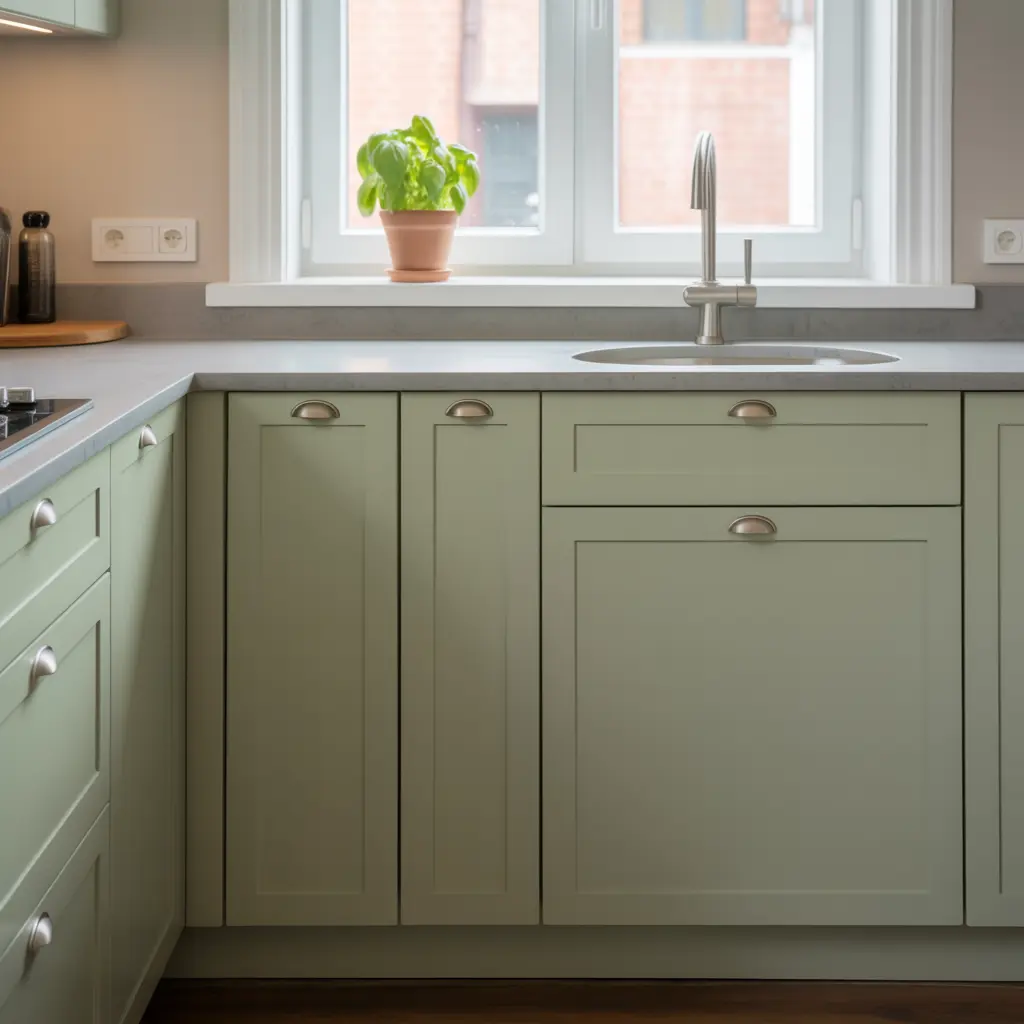
Sage green cabinets work surprisingly well in smaller kitchens, since the color carries enough depth to feel intentional without adding the visual heaviness that a darker color might in a tight space.
A Renter-Friendly Option
For kitchens with limited space, keeping upper cabinets light or swapping them for open shelving helps maintain an airy feeling while sage handles the lower half of the room. Sage green is also a reasonable option for renters who are allowed to paint cabinets but not replace them, since a semi-gloss or satin cabinet paint can handle daily kitchen wear and be repainted again before move-out if needed.
10. Keep Styling Simple and Let the Color Lead
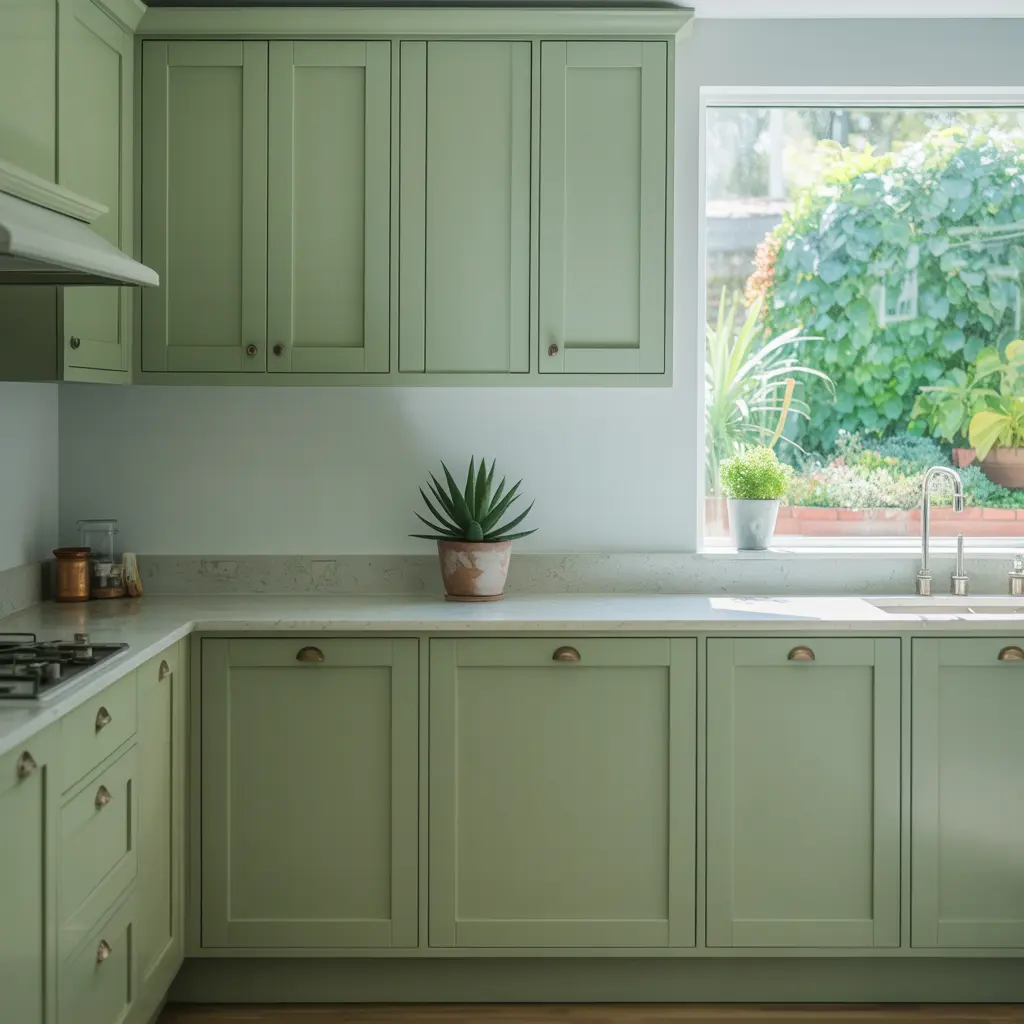
A sage green kitchen doesn’t need heavy styling to feel finished, and in fact, current design coverage points toward restraint, letting the cabinetry and materials do most of the visual work rather than layering on excessive decor.
A few pieces of pottery, some glassware, and a small stem of greenery on open shelving is usually enough. Overloading a sage green kitchen with competing colors and patterns on top of an already intentional color choice tends to make the space feel busier rather than more finished.
Mistakes to Avoid
- Ignoring undertone. A cool, gray-leaning sage can look murky in a low light kitchen, while a warm, gold-leaning sage may look too yellow in a very bright one.
- Pairing sage with cool metal finishes. Brass and warm gold generally complement the color better than chrome or cool silver tones.
- Going fully sage without a plan for contrast. A continuous sage kitchen needs a contrasting countertop or backsplash to avoid feeling flat.
- Choosing a stark white wall color. Warm beige or cream walls tend to complement sage cabinetry better than a cool, bright white.
- Skipping a sample test. Always view a paint or cabinet sample in your actual kitchen lighting before committing to a full order.
- Overstyling the space. A few simple, natural accents usually look more finished than heavily layered decor competing with the cabinet color.
Frequently Asked Questions
What countertop color goes best with sage green cabinets? White or cream marble and quartz are among the most popular and versatile pairings, though concrete and terrazzo also work well depending on whether you want a more modern or more textured look.
Is sage green a passing trend or a long-term choice? Current renovation data suggests it’s being treated as a long-term neutral rather than a short-lived trend, with Houzz reporting green has overtaken gray as a cabinet color choice in real 2026 renovations.
Should I paint all my cabinets sage green, or just some? Both work well. A two-tone layout, sage on the lower cabinets and island with lighter upper cabinets, is currently the most common and lowest risk approach, while a full sage kitchen creates a bolder, more architectural statement.
What wall color pairs best with sage green cabinets? Warm beige or cream generally outperforms stark white, since the added warmth keeps the whole kitchen feeling cohesive rather than cold.
Does sage green work in a small kitchen? Yes. The color carries enough depth to feel intentional without adding visual heaviness, and pairing it with light or open upper cabinets helps a small sage green kitchen stay feeling airy rather than closed in.
Bringing It All Together
Sage green kitchen cabinets don’t require a full renovation to make a real difference in how a kitchen feels. Starting with the island or lower cabinets, choosing a warm wood pairing, and getting the undertone right for your kitchen’s light usually gets a space most of the way there. From there, brass hardware, a simple backsplash, and a bit of restraint in styling are what turn a good color choice into a kitchen that feels calm, grounded, and genuinely timeless.