
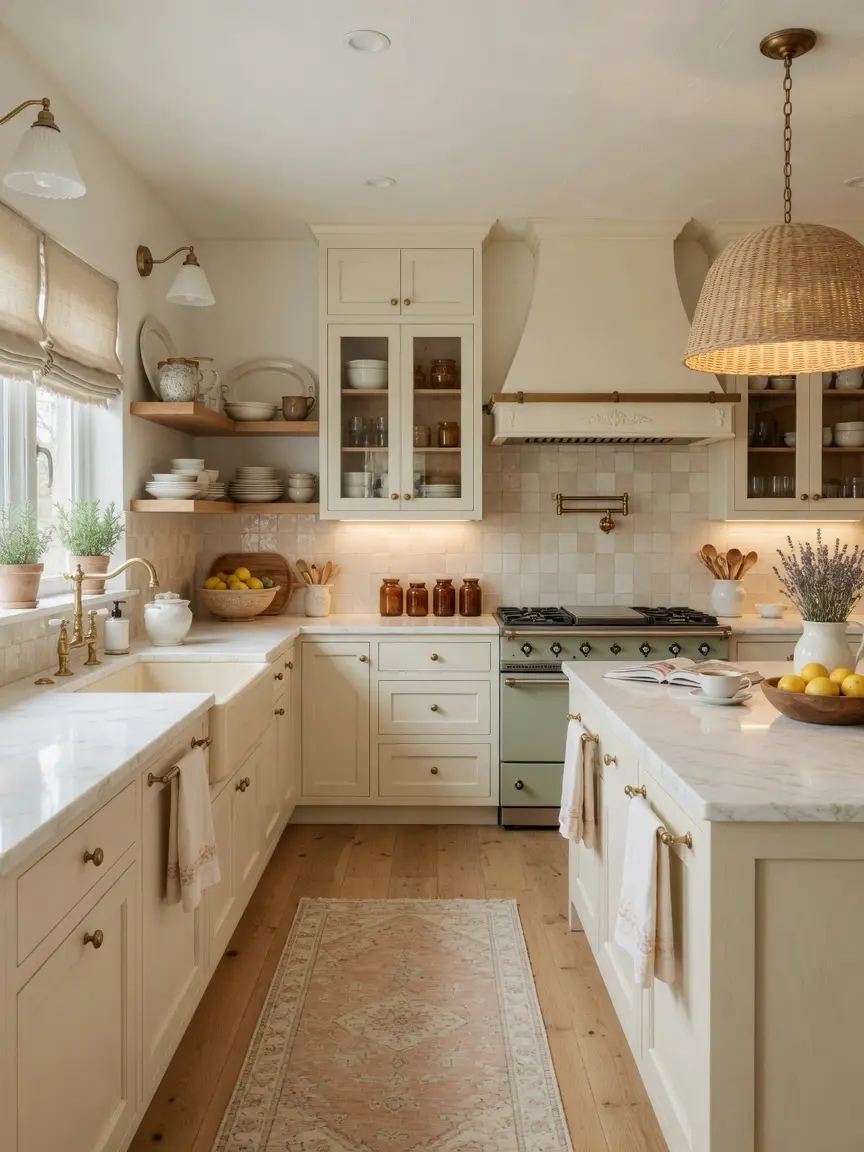
You picked white cabinets because they felt safe and timeless, but somewhere along the way the kitchen started reading as cold instead of clean, more clinical than inviting. Warm white kitchen design solves that exact problem by swapping stark, cool tones for creamy off-whites and pairing them with natural wood, which keeps the brightness you wanted without the sterile feel that pure white can bring. This shift shows up clearly in industry data too, with warm neutrals and wood tones now outranking cool bright white in several 2026 kitchen surveys. Here are ten ways to bring that warmth into your own kitchen, whether you’re planning a full remodel or a smaller refresh.
1. Choose a Cream or Off-White Over Bright White
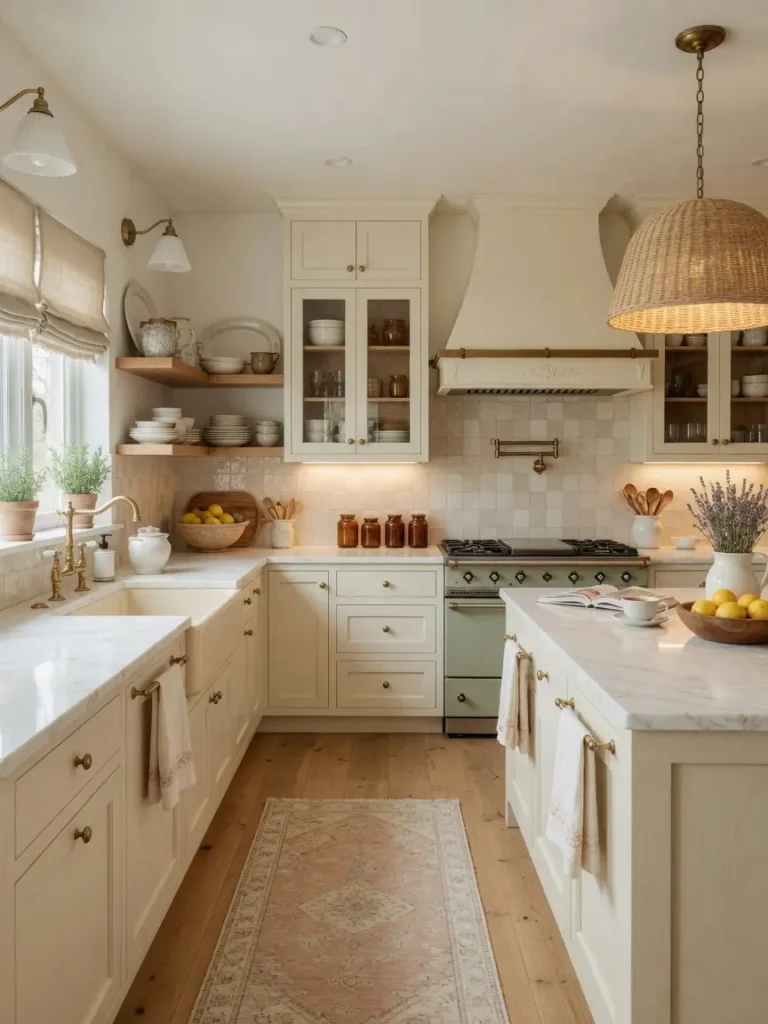
The exact shade of white you pick matters more than most people expect, and it’s often the single biggest factor in whether a kitchen feels warm or clinical.
What to Look For
Cream, linen, bone, and oatmeal toned whites read as noticeably cozier than a stark, blue-based white, even though they’re still technically neutral. Warm white kitchen design relies on this undertone difference, since a white with a hint of yellow or beige in it reflects light more softly than a cool white does. Ordering a cabinet door sample in your shortlisted color and viewing it in your actual kitchen lighting, both daytime and evening, is worth doing before committing to a full cabinet order, since undertones can shift noticeably under different bulbs.
2. Ground the Room With a Wood Kitchen Island
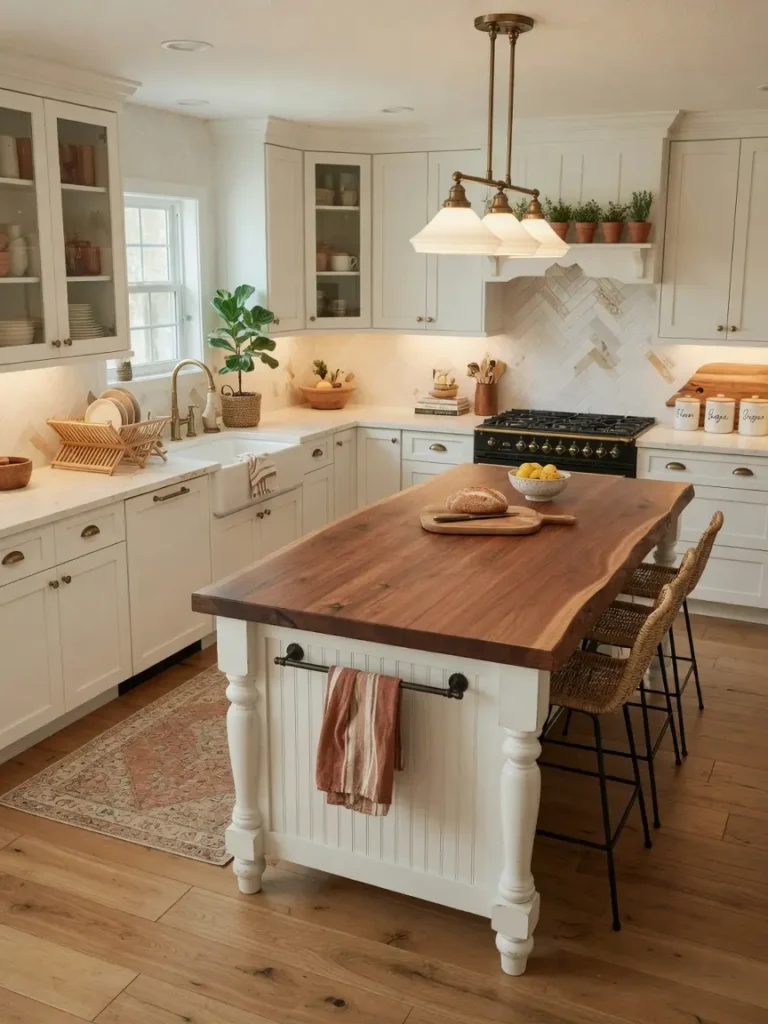
An all white perimeter can start to feel a little flat or box-like without a warmer anchor point somewhere in the room, and the island is usually the most effective place to introduce that warmth.
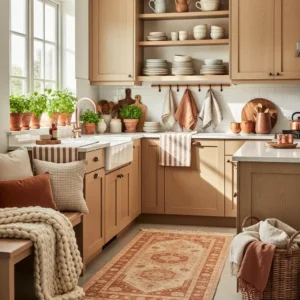
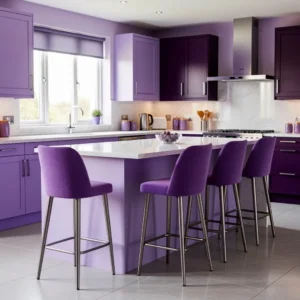
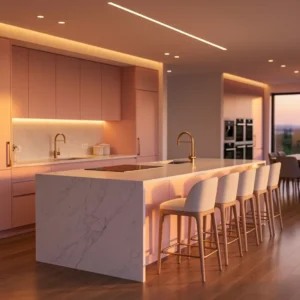
A large island finished in natural, matte white oak or walnut acts as the visual heart of a warm white kitchen, grounding the space while the surrounding cabinetry stays light and airy. This approach lets you keep a clean white perimeter for resale appeal while still getting the cozy, layered look that pure white cabinetry alone can’t achieve on its own.
3. Mix Warm Wood Tones Rather Than Matching Everything
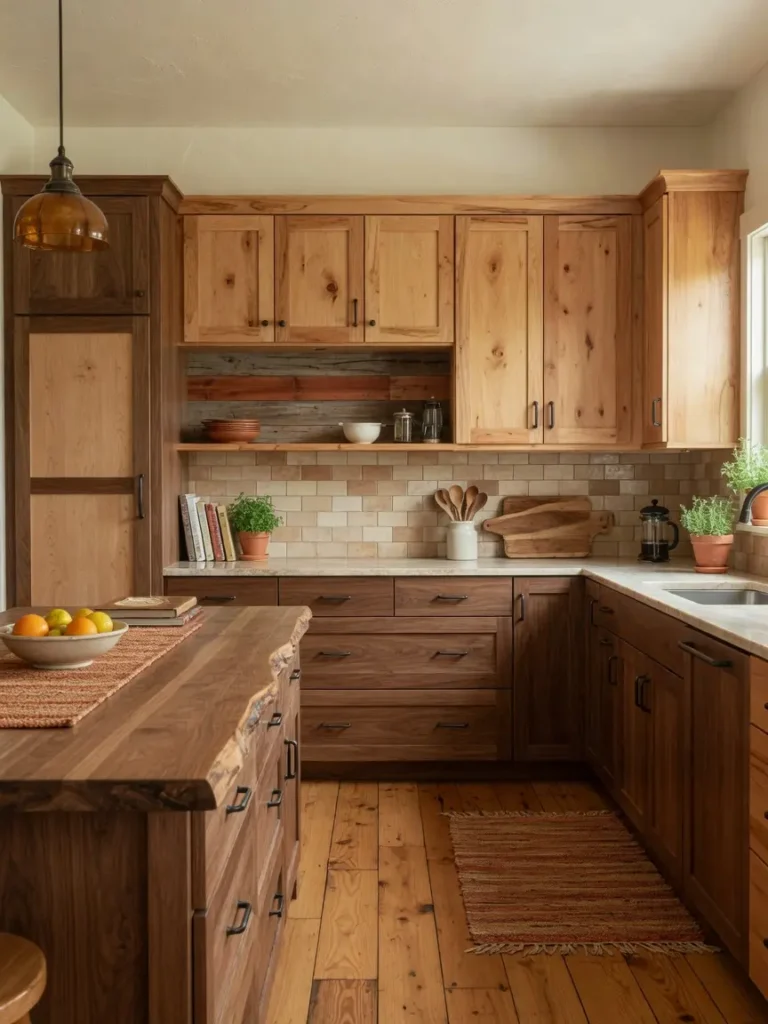
Using one single wood finish throughout a kitchen, the island, the open shelving, the flooring, all in the exact same tone, can look intentional, but it’s not the only option, and mixing tones slightly often reads as more collected.
A Simple Way to Mix Safely
Pair a lighter wood, like white oak, on the island with a slightly darker tone, like walnut, on open shelving or a range hood. Keeping one other element consistent, such as the hardware finish, helps the mixed wood tones feel cohesive rather than accidental. If your floors are already a specific wood tone, repeating that same tone somewhere else in the kitchen, even in a small dose, helps the whole room feel more intentional instead of pieced together.
4. Swap Some Upper Cabinets for Open Wood Shelving
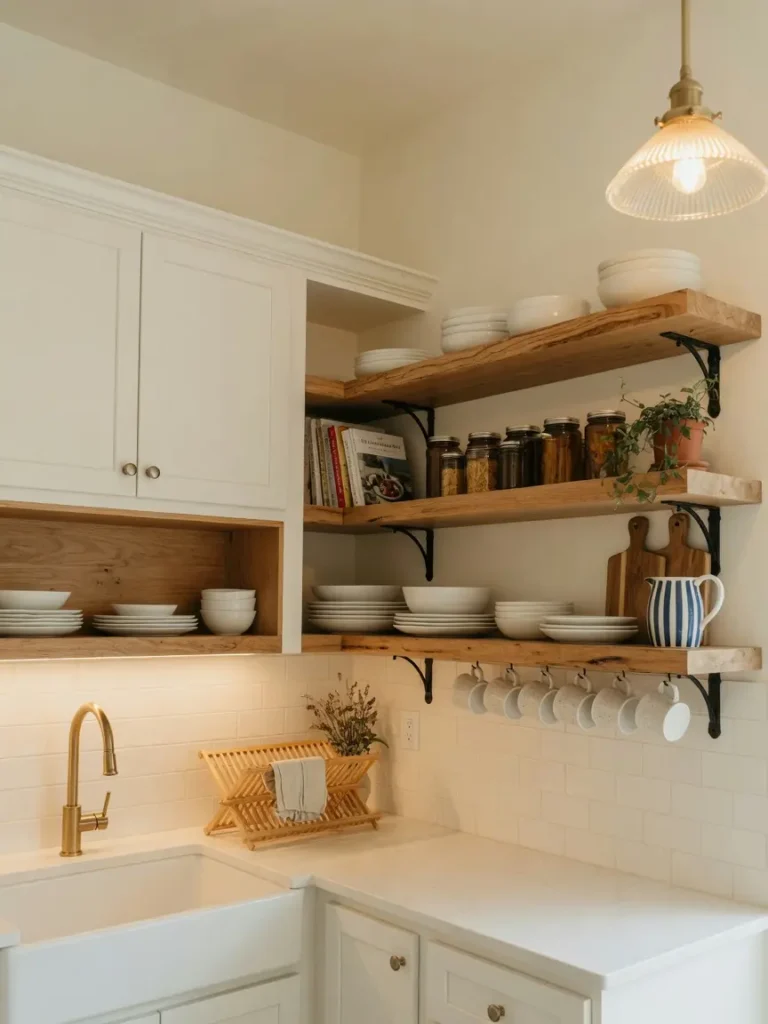
A full wall of white cabinet doors can look a little heavy or repetitive, especially in a smaller kitchen where there isn’t much else to break up the white.
Replacing one section of upper cabinets with open wood shelving introduces texture and a place to display everyday items without adding visual weight. Keep the styling restrained here. A tight palette, white ceramics, clear glass, and a few wood cutting boards, grouped in odd numbers of three or five, tends to look more curated than shelves packed with a mix of colors and materials.
5. Use Warm Metal Hardware Instead of Cool Tones
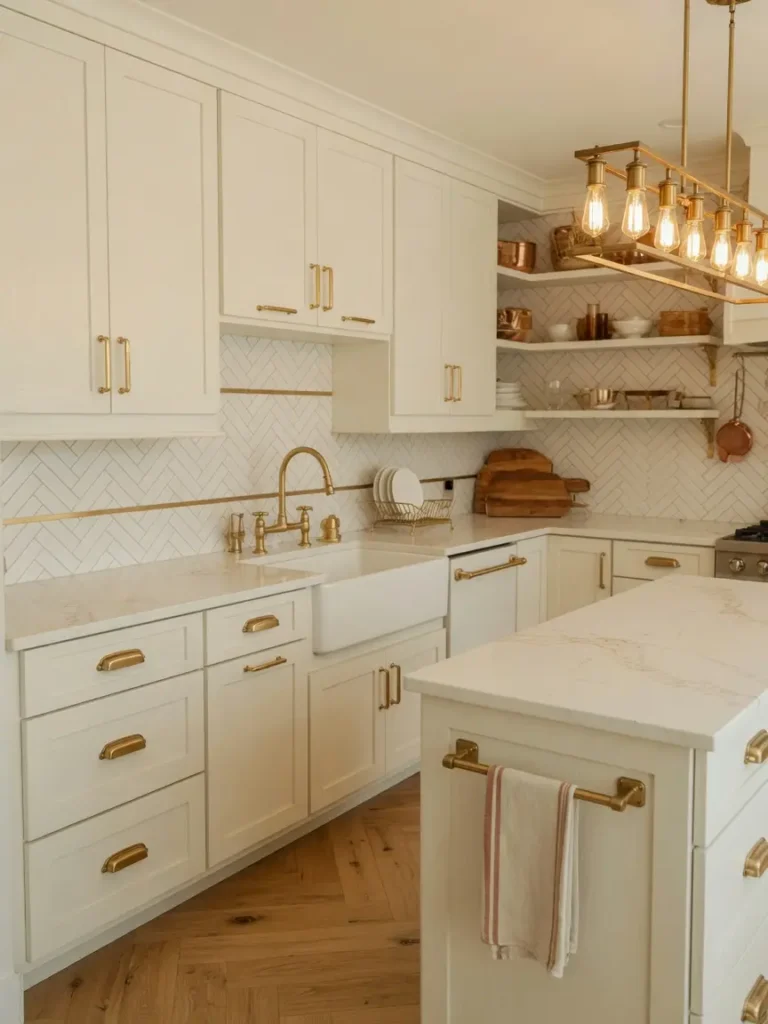
Hardware finish is easy to overlook, but it has a real effect on whether a warm white kitchen design reads as cohesive or slightly off in a way that’s hard to pinpoint.
Warm vs Cool Metals
Brushed brass, warm matte black, and aged bronze all carry a slightly warm undertone that pairs naturally with cream cabinetry and wood accents. Cool matte black or chrome, by contrast, tends to suit a more contemporary, high contrast kitchen better than a warm, cozy one. If you’re unsure which category a hardware sample falls into, look at it next to a piece of warm wood. Hardware that looks slightly blue or silver next to the wood is probably a cool tone, even if it’s labeled matte black.
6. Add a Single Bold Color Through the Island or Backsplash
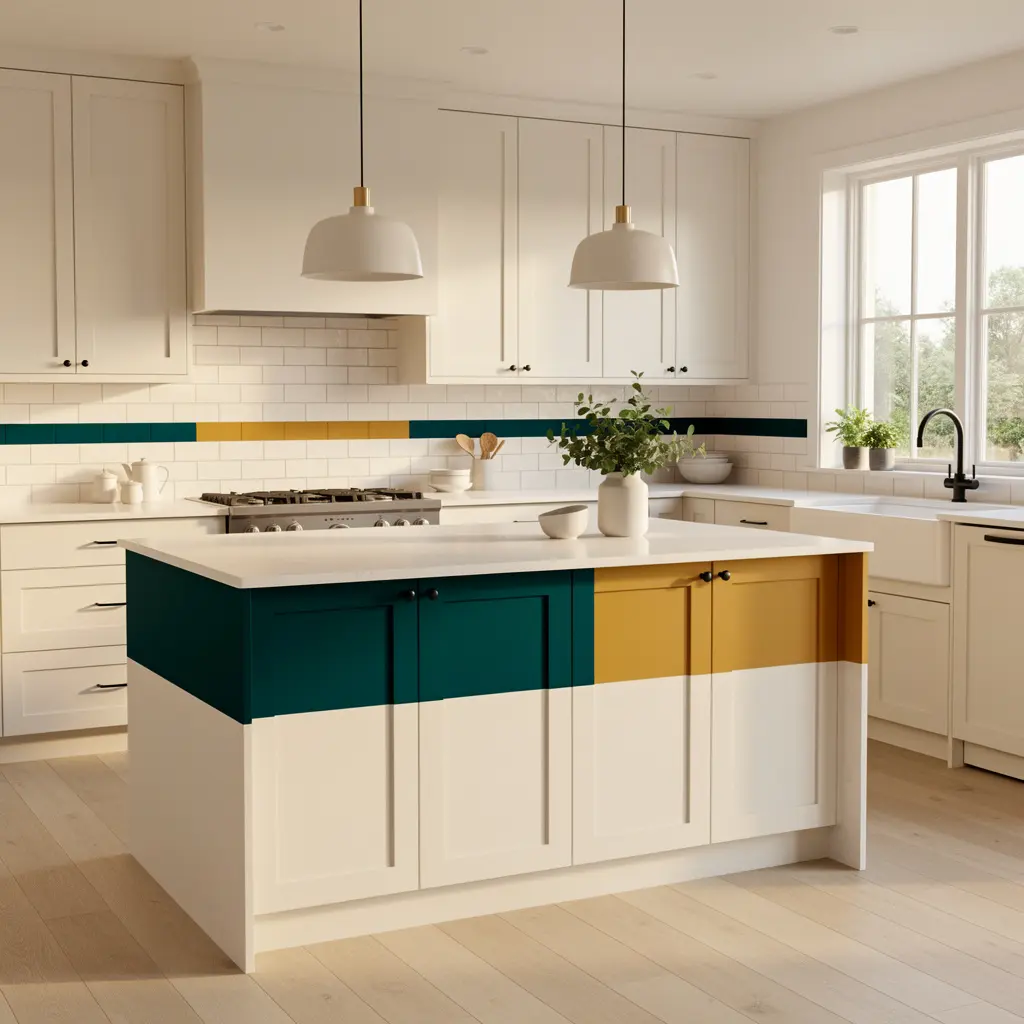
A fully neutral, all white and wood kitchen can look beautiful, but a small dose of color, rather than none at all, is one of the defining moves in current kitchen design.
Sage green, olive, or terracotta lower cabinets paired with warm white uppers is a common combination for 2026, since the color adds interest without overwhelming the room. Choosing one focal area for the color, usually the island or the lower cabinets, and keeping the rest of the kitchen lighter, creates a look that feels balanced rather than busy.
7. Layer in Natural Materials Through Small Accents
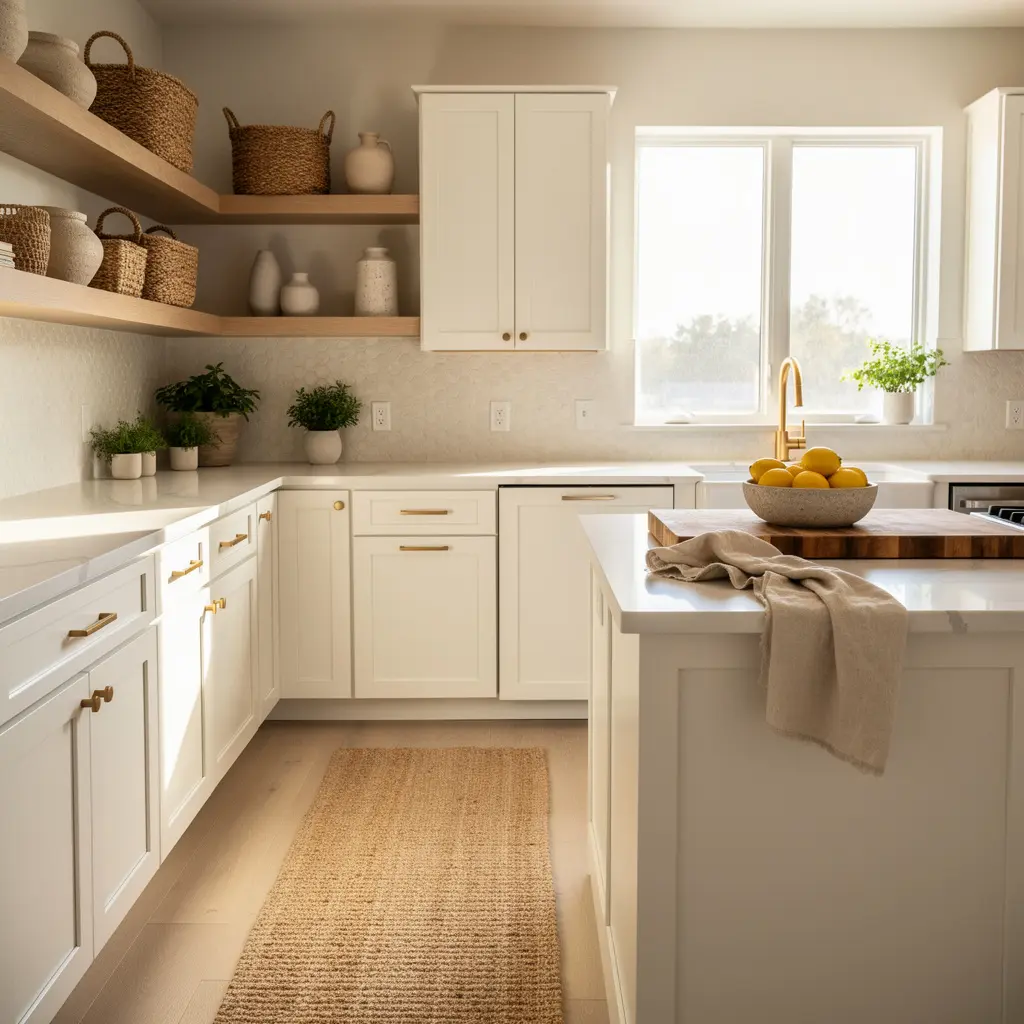
Cabinets and countertops set the foundation, but small natural material accents are what actually make a warm white kitchen feel finished rather than just painted.
Easy Additions
Woven pendant lights, a jute or wool runner rug in front of the sink, wooden bowls, and ceramic planters all add warmth through texture rather than color. These pieces tend to be relatively inexpensive compared to a cabinet or countertop change, which makes this one of the easier updates to test before committing to anything larger.
8. Choose Warm, Dimmable Lighting Over Harsh Overhead Fixtures
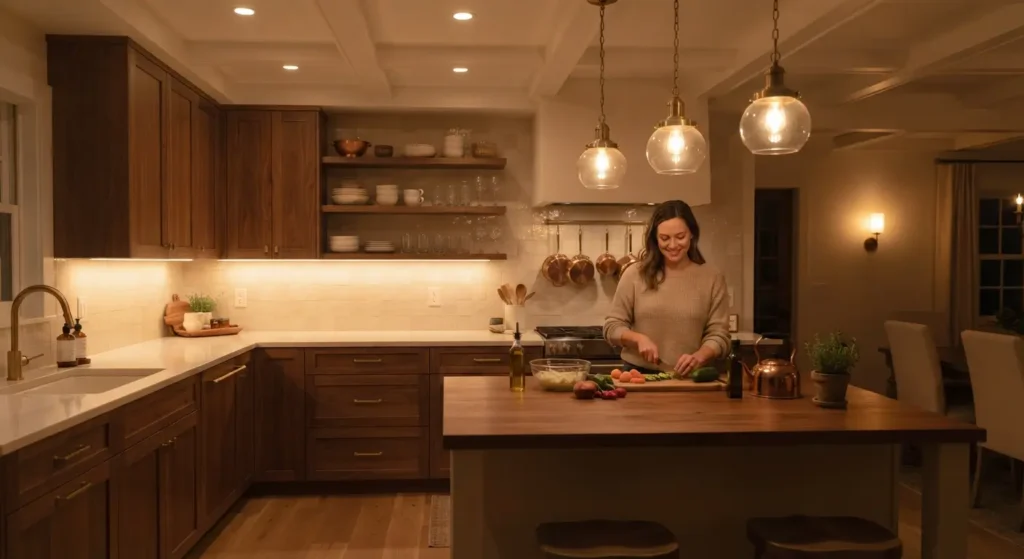
Lighting can undo a warm white kitchen design faster than almost any other single factor, since bright, cool toned overhead lighting flattens warm cabinetry and makes it read as sterile again, even with the right paint color.
Swapping harsh fluorescent or cool white bulbs for warm bulbs, generally 2700K or lower, restores the soft, golden quality that makes a warm white kitchen feel inviting after dark. Under cabinet LED strips in a warm tone add a similar effect at the counter level, and dimmable recessed lighting lets you adjust the mood between daytime cooking and evening entertaining.
9. Add Depth With a Warm Countertop or Backsplash Texture
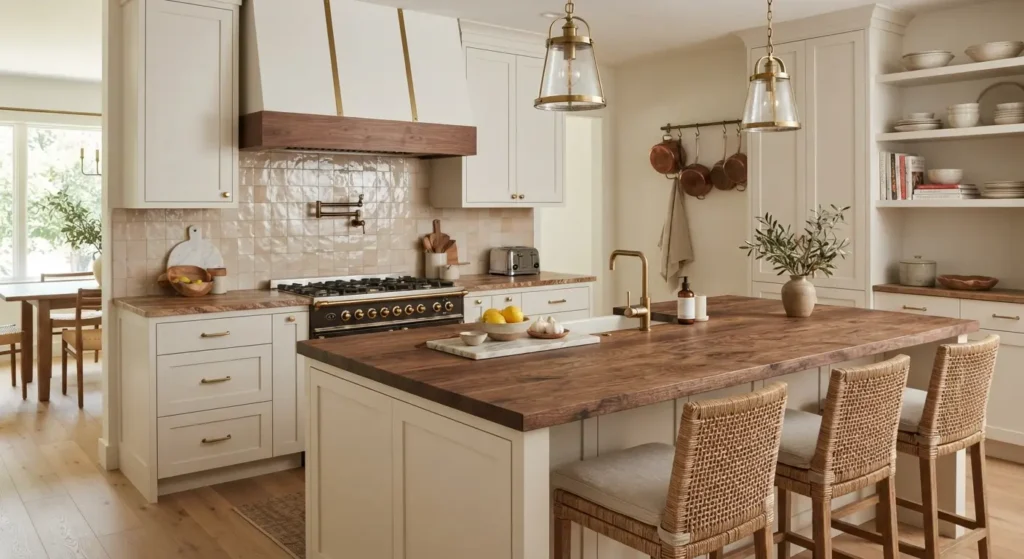
An all-smooth, all-white kitchen, from the cabinets down to the countertop and backsplash, can start to feel one dimensional even with wood accents elsewhere in the room.
A textured backsplash, whether that’s handmade zellige tile, a subtle stone pattern, or a warm toned natural stone countertop, keeps the white from feeling flat. This is a case where a slightly warmer, textured material does more visual work than a perfectly smooth, uniform surface, even if both are technically neutral in color.
10. Repeat One Warm Neutral Accent Color Throughout
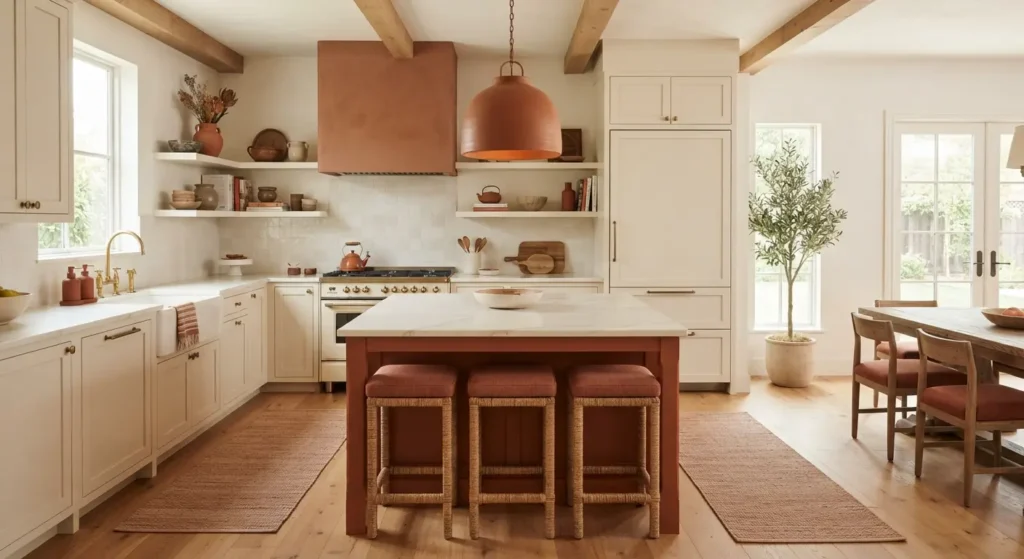
Warm white kitchen design holds together best when there’s a secondary warm neutral, beyond just the white and wood, that shows up in more than one place around the room.
A warm khaki, mushroom, or greige tone, used on an accent wall, a pantry door, or even just in the paint behind open shelving, gives the eye a consistent thread to follow. This kind of small repetition is often what separates a kitchen that feels genuinely designed from one that feels like a collection of separately chosen good ideas.
Mistakes to Avoid
- Choosing a cool, blue-based white by accident. Always view cabinet samples in your actual kitchen lighting before committing to a full order.
- Using a single wood tone with no variation. Slightly mixed wood tones, tied together by a consistent hardware finish, usually look more intentional than one exact match everywhere.
- Relying only on overhead lighting. Cool, harsh overhead light flattens warm cabinetry and undoes the cozy effect you’re going for.
- Overloading open shelving. A cluttered mix of colors and materials on open shelves reads as messy rather than curated.
- Skipping texture entirely. An all smooth, all white kitchen can feel flat even with the right wood accents elsewhere.
- Adding too much bold color at once. One focal area, usually the island, tends to look more balanced than color spread across multiple surfaces.
Frequently Asked Questions
What is the difference between a warm white and a cool white kitchen? A warm white has undertones of cream, beige, or yellow, while a cool white leans slightly blue or gray. Warm whites tend to feel cozier and more livable, while cool whites can look more clinical, especially under harsh lighting.
Do wood accents work with every style of warm white kitchen? Yes, in varying amounts. A modern minimal kitchen might use a single wood island as the only accent, while a farmhouse or cottage style kitchen might incorporate wood through shelving, beams, and flooring as well.
What hardware finish pairs best with a warm white kitchen? Brushed brass, warm matte black, and aged bronze generally pair better than cool chrome or blue-toned black, since their undertones match the warmth of cream cabinetry and natural wood.
Is warm white kitchen design more expensive than an all white kitchen? Not necessarily. Many of the changes that make the biggest difference, warmer lightbulbs, a wood accent shelf, updated hardware, cost relatively little compared to a full cabinet replacement.
How do I keep a warm white kitchen from looking boring? Layer in texture through a wood island, open shelving, a textured backsplash, and one small dose of bold color, usually on the island or lower cabinets, rather than relying on white and wood alone with no variation.
Bringing It All Together
A warm white kitchen doesn’t need every single idea on this list to feel cozy and finished. A cream toned cabinet color, one solid wood accent like an island or open shelving, and warmer lighting usually get a kitchen most of the way there. From there, small layers, textured tile, warm hardware, a touch of bold color, are what turn a good foundation into a kitchen that actually feels like the heart of the home.

Leave a Reply