
You moved into your apartment with big plans for how it would look, and then reality set in. Furniture is expensive, you’re renting so you can’t paint or make permanent changes, and every home account you follow seems to have an unlimited budget you definitely don’t have. Apartment decorating on a budget is absolutely possible, genuinely and consistently, without the finished space looking like a dorm room you never fully unpacked, and the difference usually comes down to where you actually spend your limited money rather than simply how much of it you have available to spend in the first place. A handful of the right purchases will always outperform a cart full of cheap, forgettable ones.
1. Spend Your Budget on Lighting Before Almost Anything Else
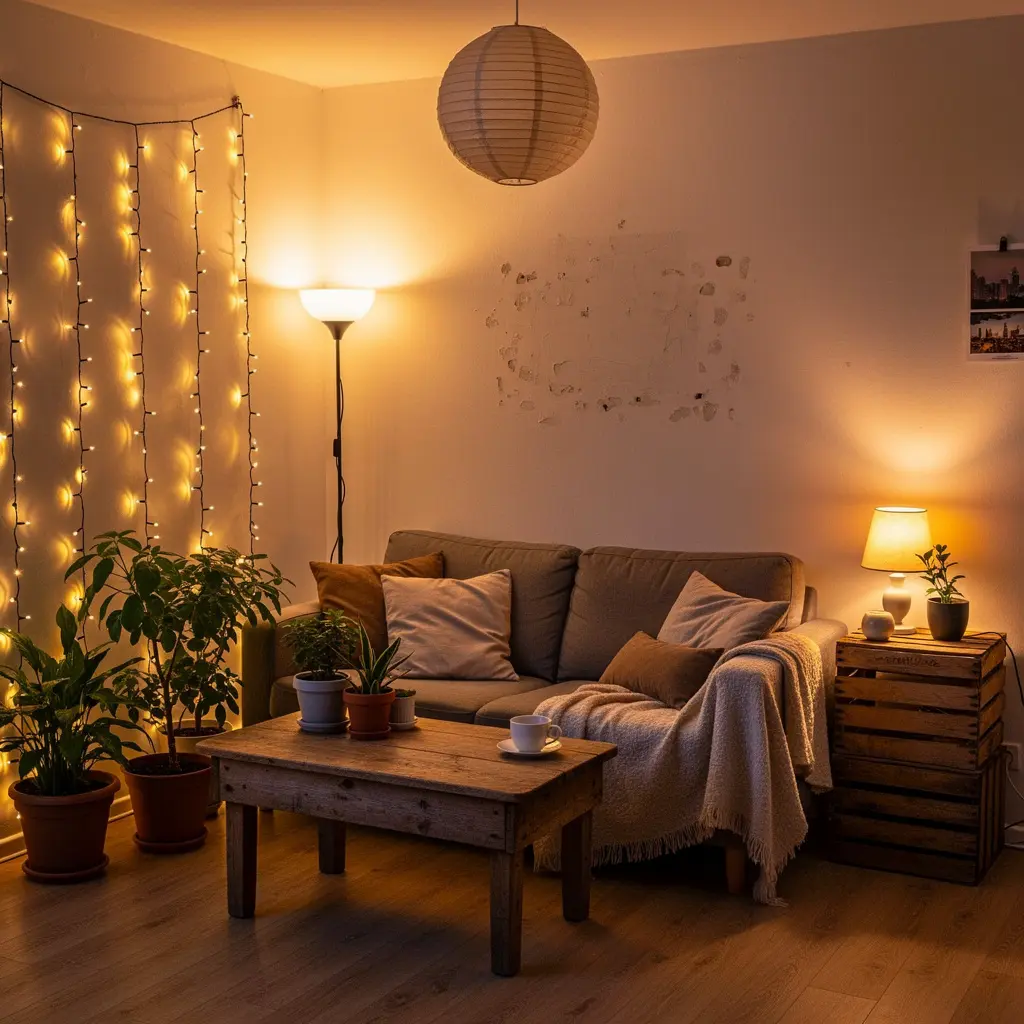
Most apartments come with a single harsh overhead fixture that makes even well chosen furniture look flat and uninviting. A couple of floor lamps and table lamps with warm white bulbs do more to transform how an apartment feels than nearly any other purchase, and they’re fully portable if you move, which makes them one of the better long term investments on this list.
Why Lighting Outperforms Almost Any Other Budget Purchase
A beautifully decorated room under harsh, cold overhead light still looks a little sterile, while even a sparsely furnished room under warm, layered lighting reads as cozy and intentional, which is a genuinely useful thing to know if your furniture budget is still limited. Dollar for dollar, lighting changes the mood of a space more dramatically than almost anything else you could buy, which is exactly why it deserves first priority even on a genuinely tight budget.
2. Use Removable Wallpaper or Decals Instead of Skipping Walls Entirely
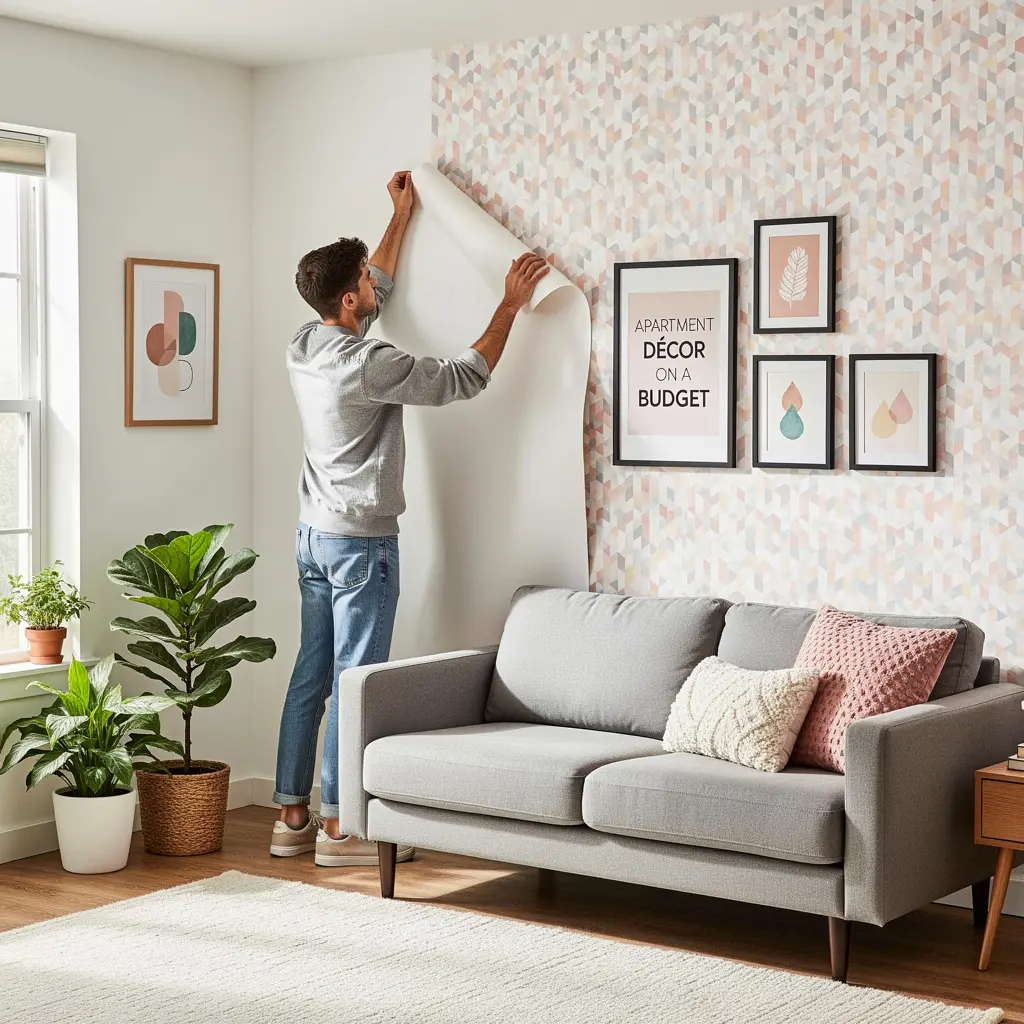
Renters often assume bare walls are just part of the deal, but peel and stick wallpaper, removable decals, and command strip friendly art all add color and personality without violating a lease. A single accent wall in a small pattern or solid color can transform a room for a relatively modest cost, and it typically removes cleanly when you move out, which matters a lot if your lease includes a security deposit tied to the condition of the walls.
3. Buy a Few Real Plants Instead of Many Small Decorative Items
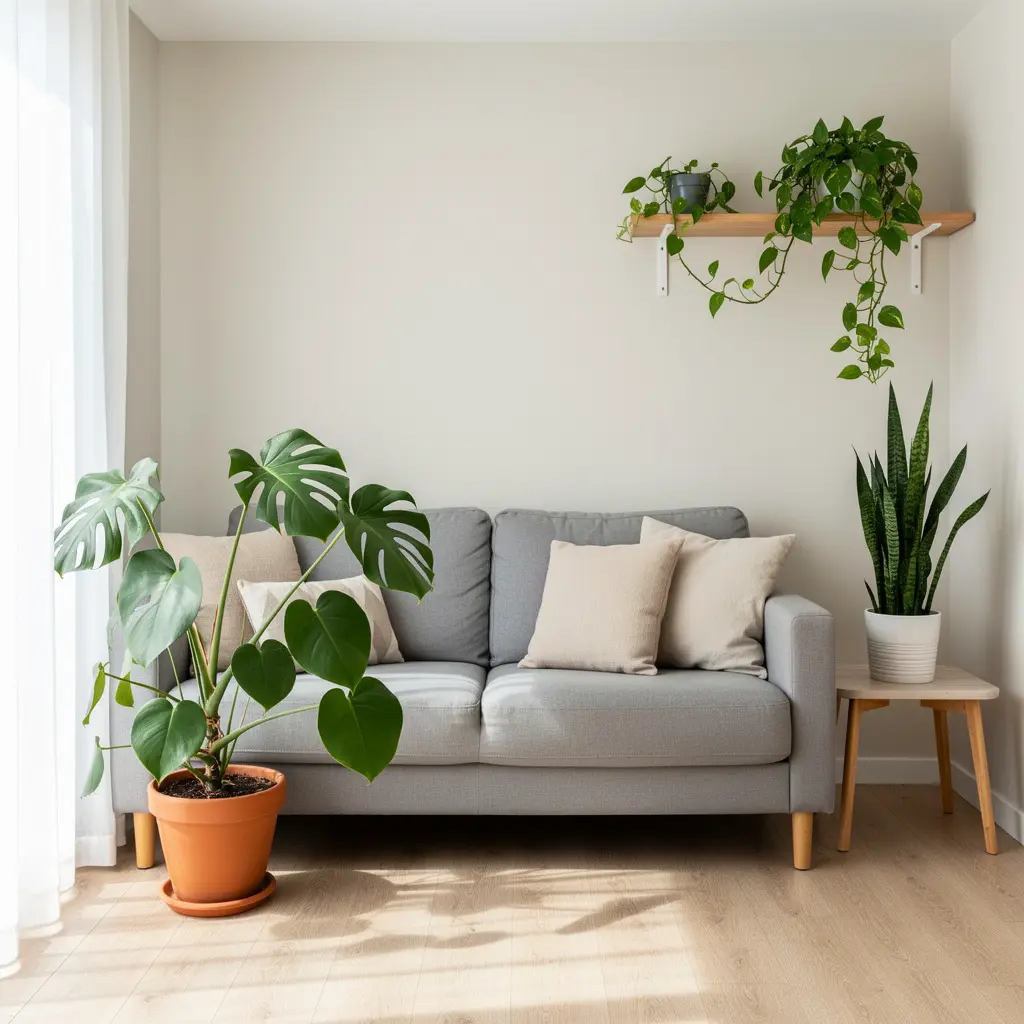
A collection of tiny trinkets scattered around a room rarely adds up to much visual impact, while even one or two larger plants genuinely change how a space feels. Plants are also one of the more affordable ways to add color and texture to a room, and many varieties are forgiving enough for a beginner without a lot of natural light to work with.
Choosing Plants That Actually Survive an Apartment
Look for low light tolerant varieties if your apartment doesn’t get much sun, since a struggling or dying plant undercuts the styled look you’re going for faster than no plant at all. A few consistently thriving plants will always look better than several expensive ones that are visibly unhappy, so it’s worth being honest with yourself about how much natural light and attention you can actually offer.
4. Prioritize a Great Rug Over Buying New Furniture
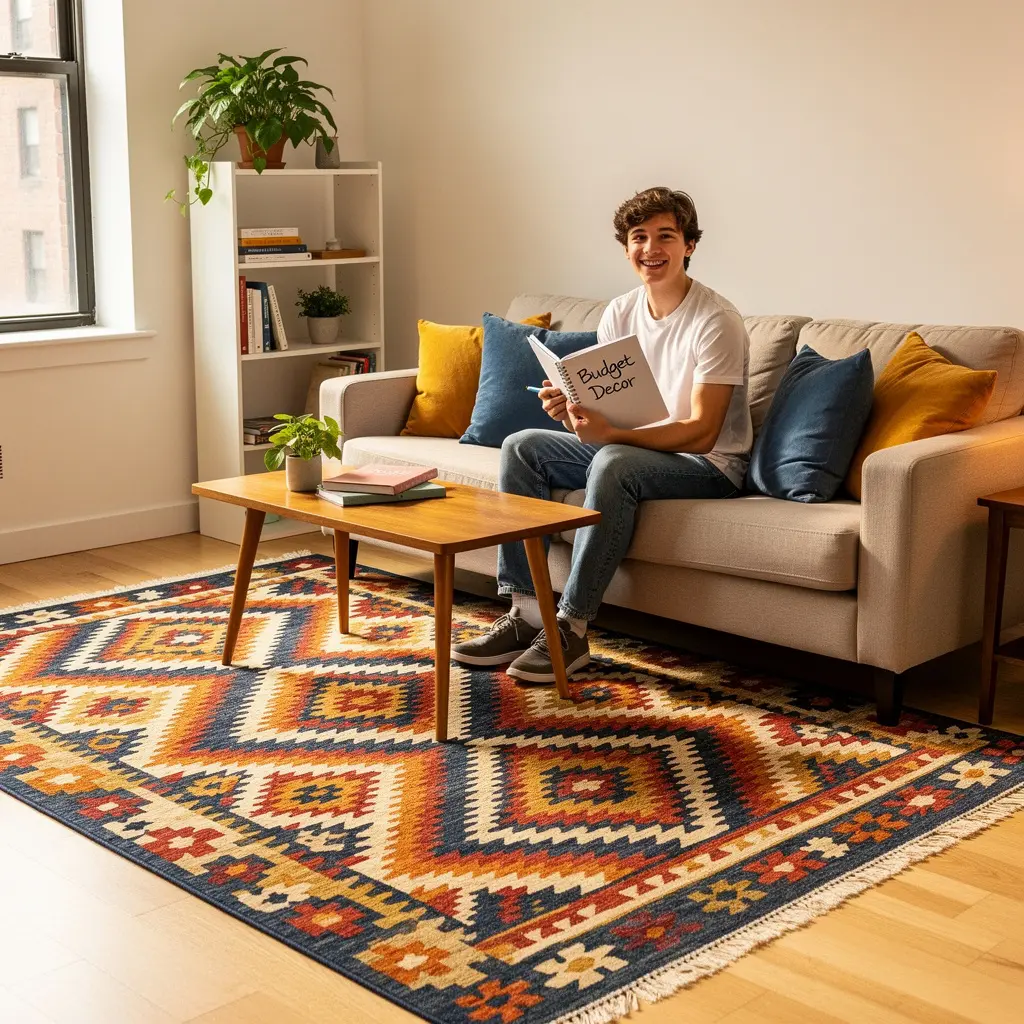
An area rug does an enormous amount of visual work in a rented apartment, especially if you’re stuck with builder grade carpet or plain vinyl flooring you can’t change. A rug in a color and texture you actually love, placed under your main seating area, can make existing, otherwise unremarkable furniture look considerably more intentional without spending money replacing it, which makes a rug one of the better dollar for dollar investments on this entire list, and unlike paint or wallpaper, it travels with you to the next place without any extra effort or additional cost.
5. Use Command Strips and Hooks Instead of Nails
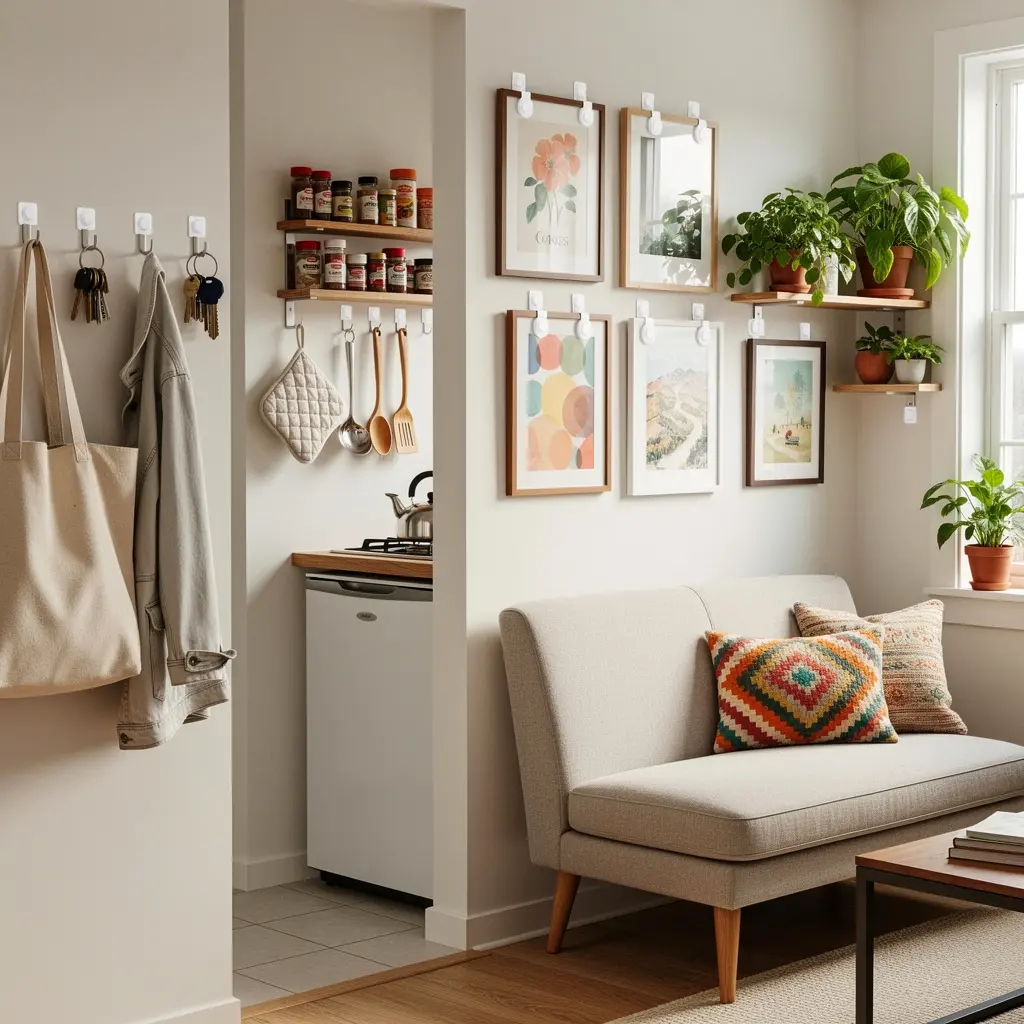
Since most leases prohibit drilling into walls, command strips and adhesive hooks let you hang art, mirrors, and even some lightweight shelving without any permanent damage, which keeps your full security deposit intact when it’s time to move out. Take the time to check the actual weight rating printed on the packaging and buy the versions that actually match what you’re hanging, since undersized strips are the most common reason this kind of decor ends up on the floor instead of the wall, and replacing a broken frame usually costs more than just buying the right strip in the first place.
6. Shop Secondhand for Furniture With Real Character
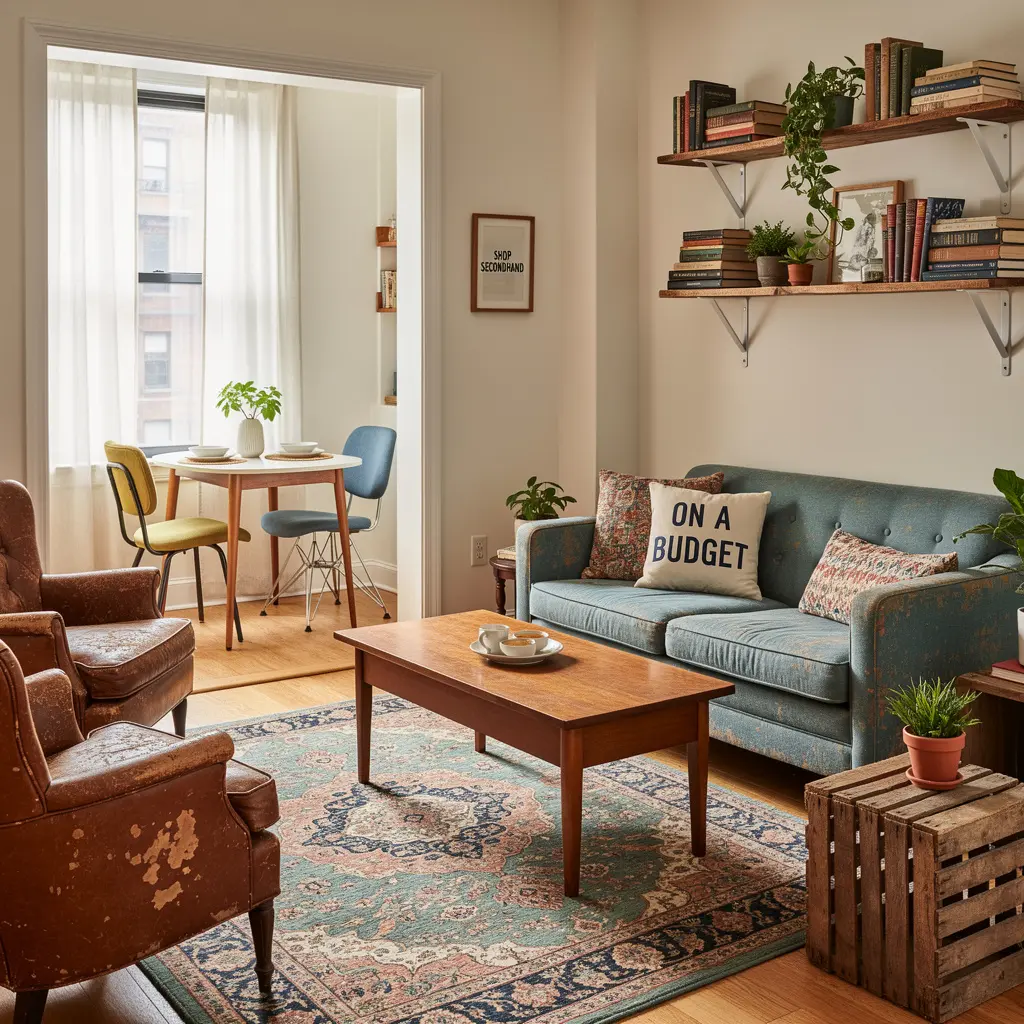
Thrifted and secondhand furniture is almost always cheaper than anything new, and it often comes with more visual character than mass produced pieces at a similar price point, since older pieces were frequently built with materials and construction methods that simply aren’t common at that price today. A single well chosen secondhand find, a wood side table, a vintage mirror, can anchor a room in a way that several new but generic pieces never quite manage.
7. Layer Textiles to Upgrade Furniture You Already Own
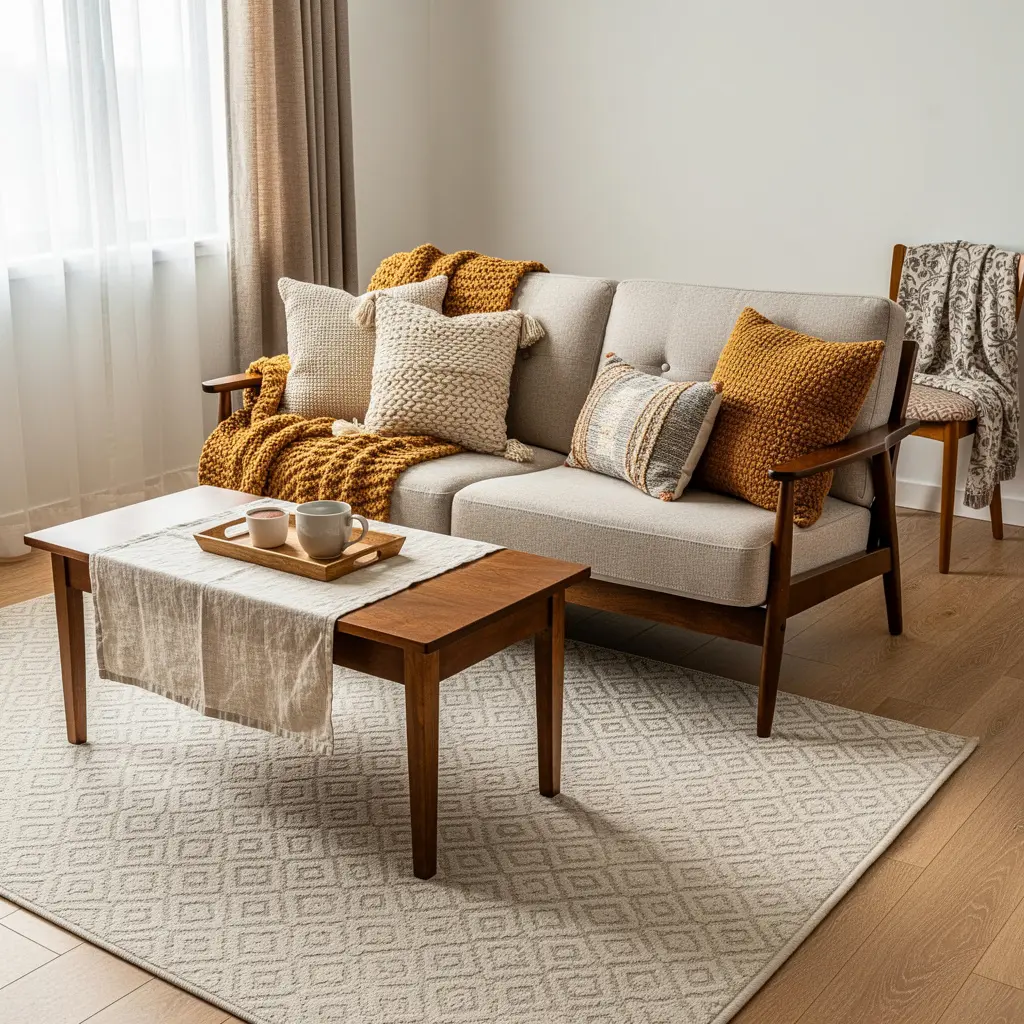
Throw pillows, a new duvet cover, or a simple slipcover can transform furniture you already have without replacing it entirely. This is one of the most cost effective ways to shift a room’s whole color palette, since textiles are considerably cheaper than furniture and take up almost no storage space if your taste changes later, which matters a lot if you know your style is still evolving.
8. Choose One Statement Piece Instead of Many Small Purchases
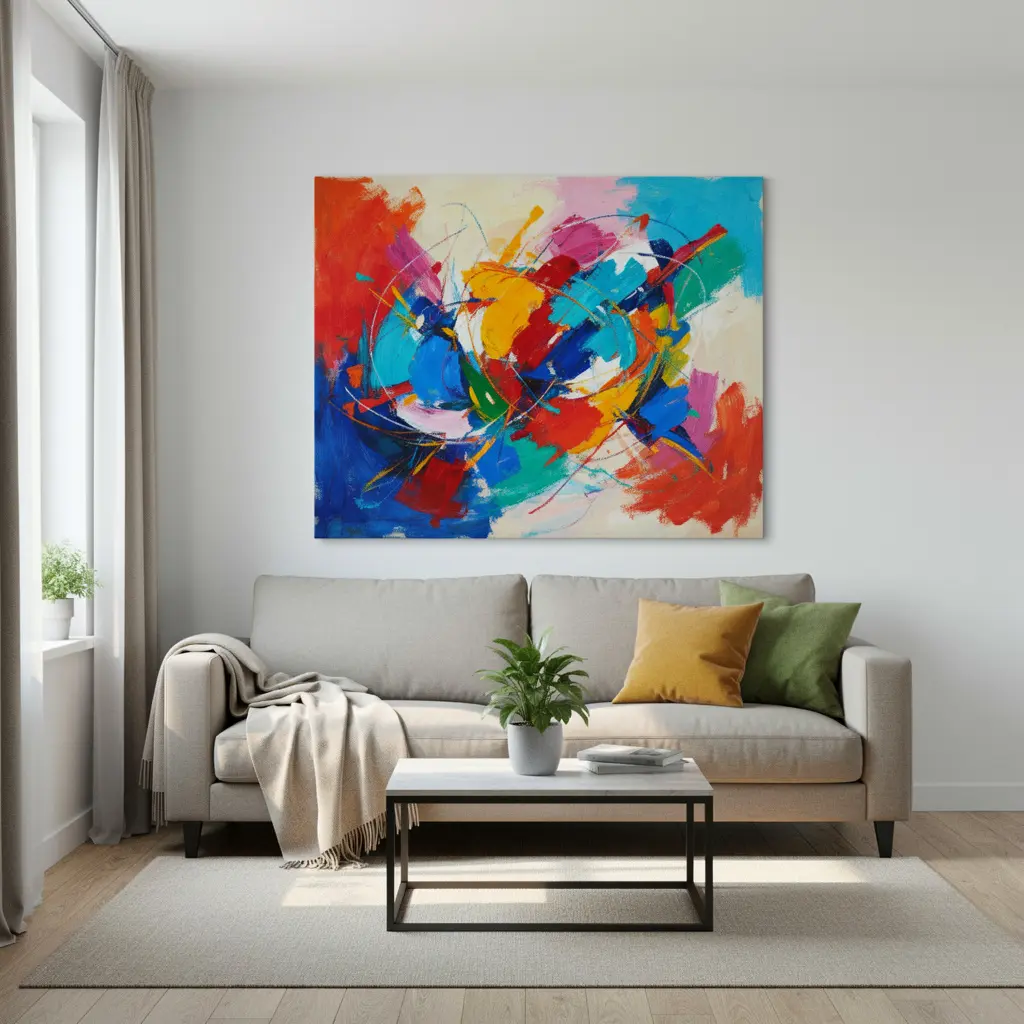
Spending your entire decorating budget on a dozen small items usually results in a room that still feels unfinished, while putting that same money toward one genuinely nice piece, a chair, a piece of art, a good lamp, gives the room a real anchor to build around. Quality over quantity matters more in a small apartment than almost anywhere else, since there’s simply less room for filler, and one genuinely great piece will always do more visual work than three mediocre ones competing for the same small footprint.
9. Use Curtains to Soften Standard Apartment Windows
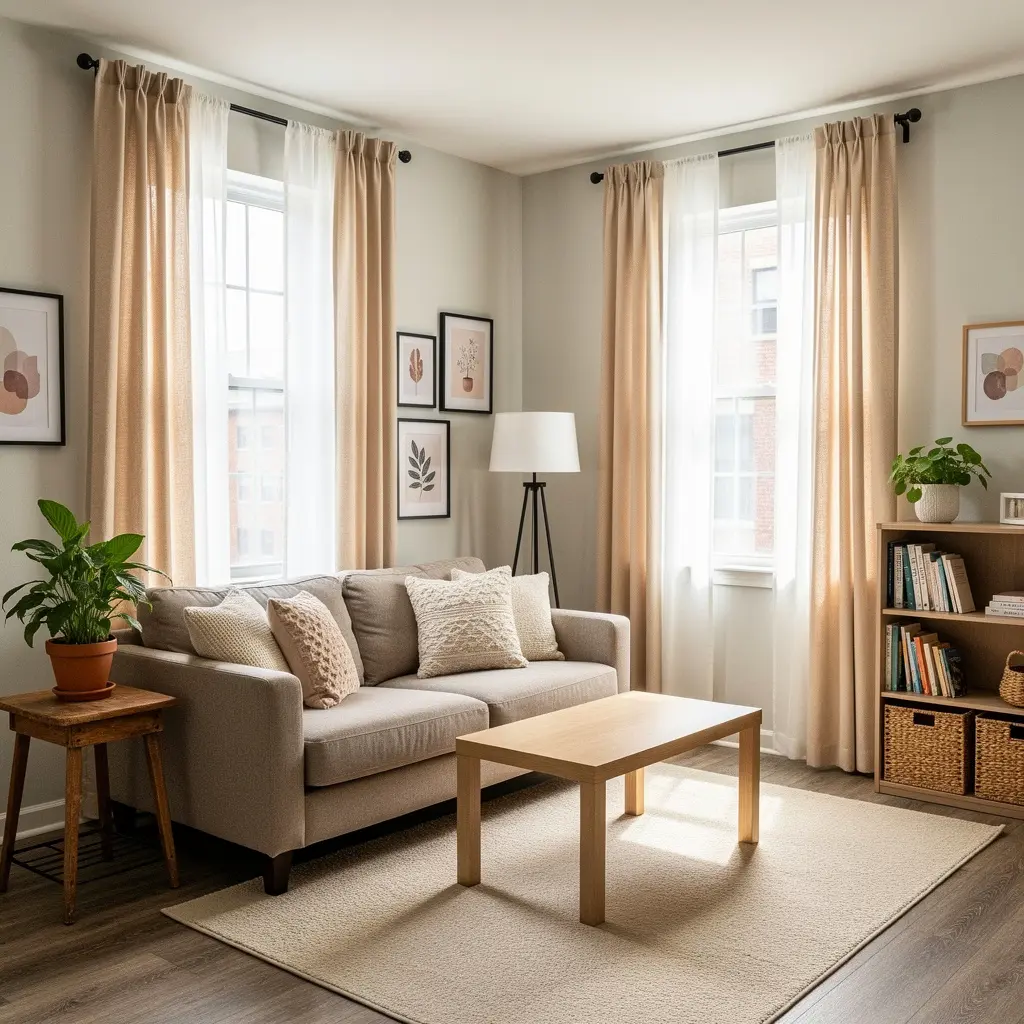
Builder grade blinds are functional but rarely add much warmth to a room. A simple curtain panel in a fabric you like softens the window and adds a layer of texture to the room for a relatively modest cost, and unlike blinds, curtains are entirely yours to take with you when you move.
10. Reuse and Repurpose What You Already Own Before Buying New
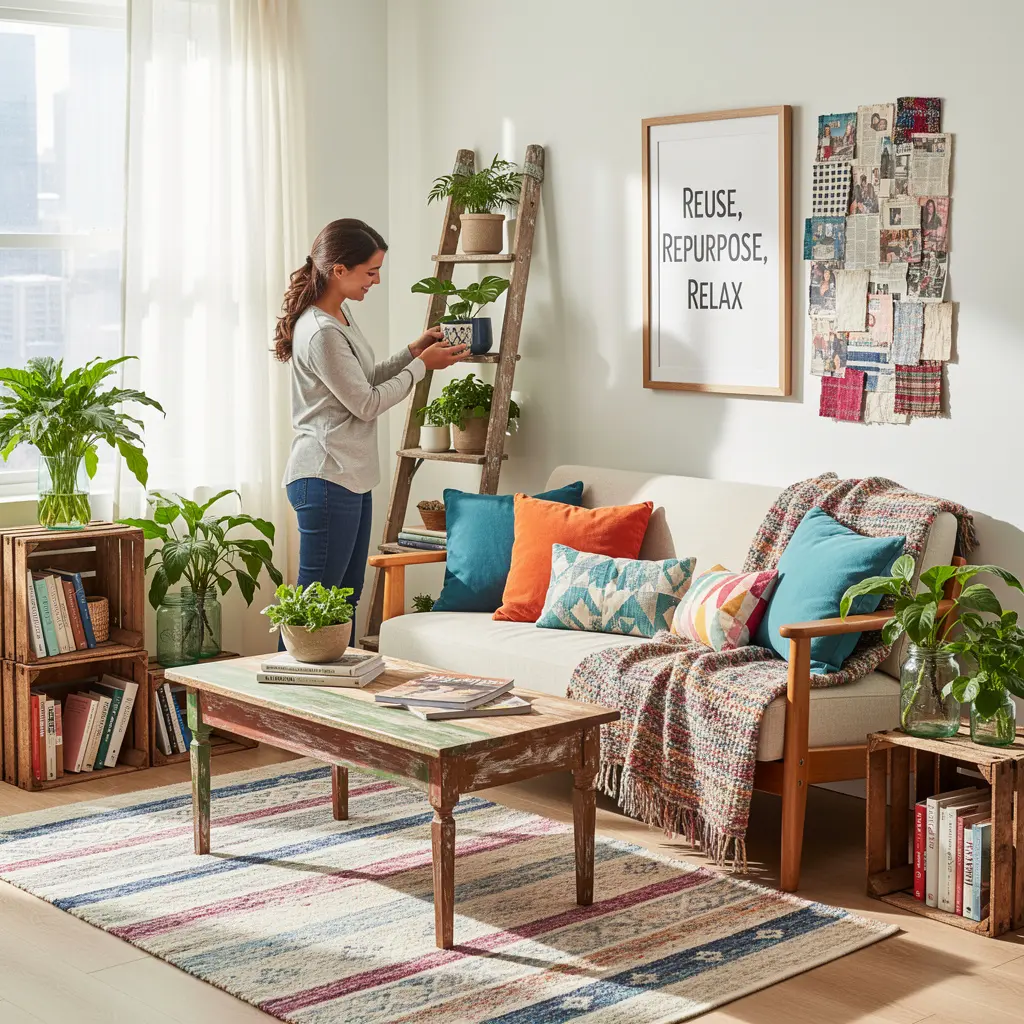
A box you already own can become storage with a coat of paint. An old jar can become a vase. Looking at what you already have with fresh eyes, rather than assuming everything needs to be replaced, stretches a limited decorating budget considerably further than starting from scratch on every single item, and it often turns up a genuinely usable piece you’d forgotten was even in a closet.
Mistakes to Avoid
- Spending your entire budget on furniture and skipping lighting entirely, which leaves even nice pieces looking flat
- Assuming bare walls are unavoidable in a rental instead of using removable wallpaper or command strip friendly art
- Buying many small decorative trinkets instead of one or two larger, higher impact pieces
- Using undersized adhesive strips or hooks that can’t actually support the weight of what you’re hanging
- Replacing furniture you already own instead of upgrading it with new textiles or a slipcover
- Choosing plants that need more light or care than your actual apartment can provide
Frequently Asked Questions
What should I prioritize first when decorating an apartment on a budget? Lighting, since it affects the mood of every room more dramatically than almost any other single purchase, and it’s fully portable if you move to a new place later.
Can I decorate a rental without permanently damaging the walls? Yes. Removable wallpaper, command strips, and adhesive hooks rated for the actual weight of what you’re hanging all work without drilling or leaving lasting marks.
Is secondhand furniture a good option for apartment decorating? Often, yes. Thrifted pieces are typically cheaper than new furniture and frequently have more visual character, especially at a similar price point.
How can I make my apartment feel less generic without spending a lot? Focus on one or two statement pieces instead of many small purchases, and personalize the space with plants, textiles, and secondhand finds rather than mass produced decor.
What’s the most cost effective way to change a room’s whole look? Swapping textiles, new throw pillows, a duvet cover, or a curtain panel, changes a room’s color palette considerably for far less money than replacing furniture.
Conclusion
Apartment decorating on a budget works best when you spend deliberately rather than spreading a small amount of money across a lot of small purchases. Lighting, one or two statement pieces, a good rug, and secondhand finds with real character will always outperform a room full of cheap, generic decor, even at the same total cost. Start with lighting and one anchor piece, then build outward slowly as your budget allows.

Leave a Reply