
You chose beige for your living room because it seemed like the safe, versatile choice, and now the room feels a little flat and forgettable instead of the warm, calming space you pictured. Cozy beige living room ideas that genuinely work depend on tonal layering and texture more than the color itself, and the gap between a flat beige room and a genuinely inviting one comes down to a handful of specific decisions.
1. Layer Several Beige Tones Instead of One Flat Shade
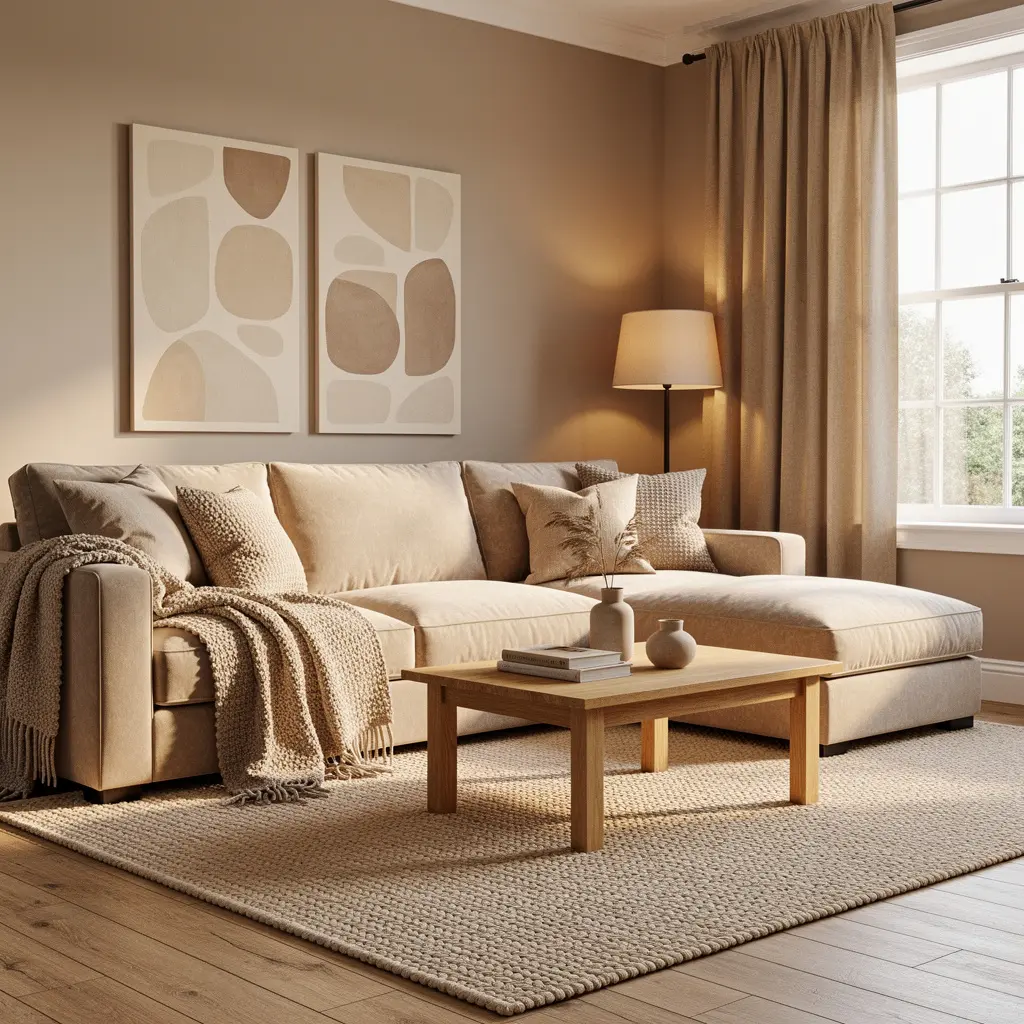
A living room built around a single flat shade of beige, walls, sofa, rug, all the same tone, tends to feel monotone regardless of how nice that shade is on its own. Layering several related tones, a warm oat sofa, a deeper taupe accent chair, cream throw pillows, creates depth a single flat color simply can’t achieve. Even three tones from the same warm family transform a flat room into one that reads as genuinely layered.
Why Tonal Variation Matters More With a Muted Palette
Beige carries less inherent contrast than a bolder color, which means it needs more tonal variation to avoid reading as flat. A room with three or four related beige tones working together looks considerably richer than the same room in one uniform shade, no matter how nice that single shade looked on the paint chip.
2. Add Texture Through Throws, Pillows, and Rugs
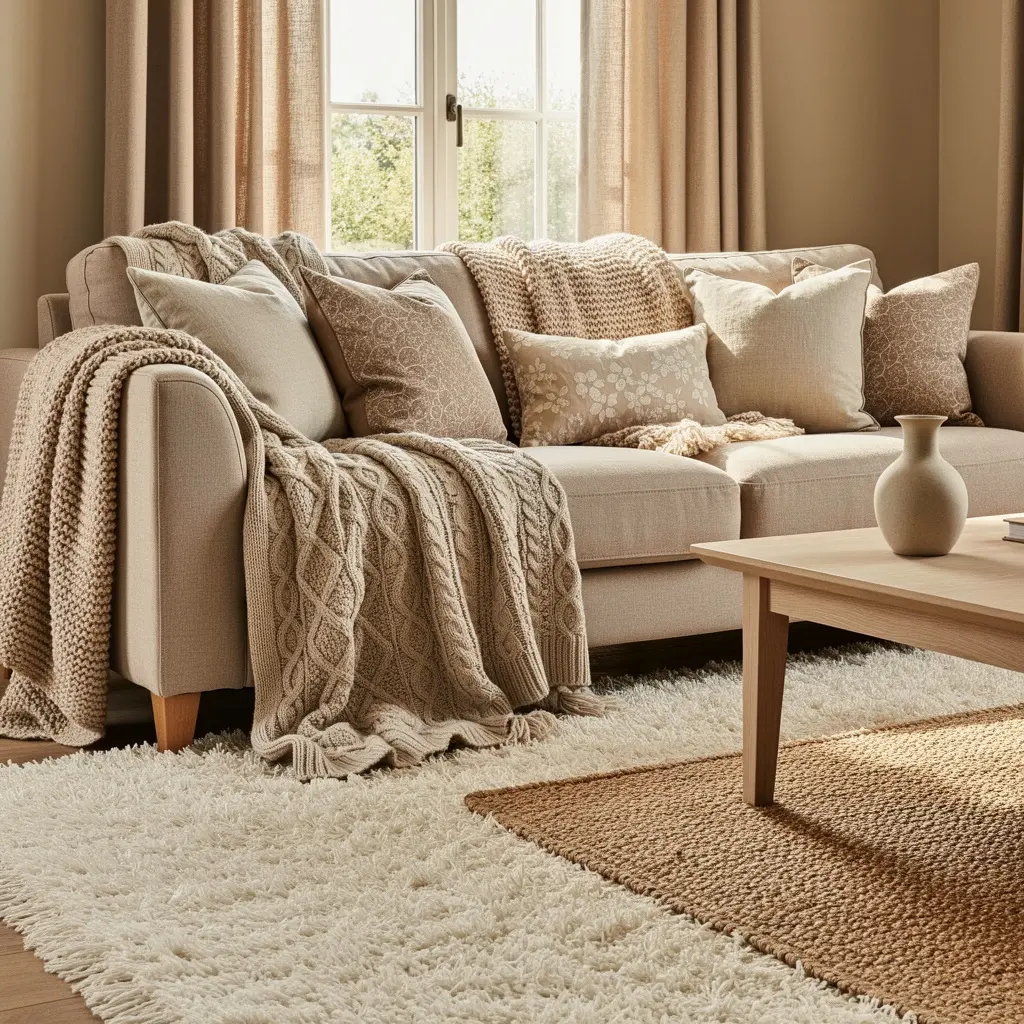
A chunky knit throw, a boucle accent pillow, or a textured woven rug all add tactile richness that a flat beige palette genuinely needs. Since the color itself carries limited visual weight, texture does more of the heavy lifting here than it would in a room with bolder colors. A flat linen pillow in beige reads as considerably less interesting than the same tone in a chunky bouclé weave.
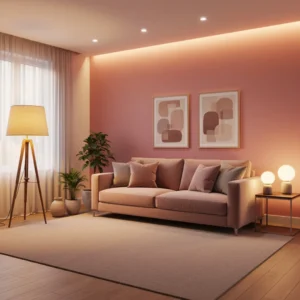
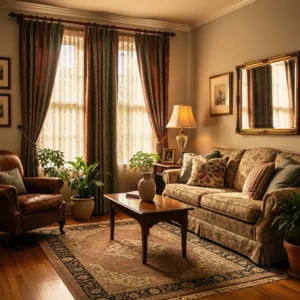
3. Bring in Warm Wood Furniture to Ground the Palette
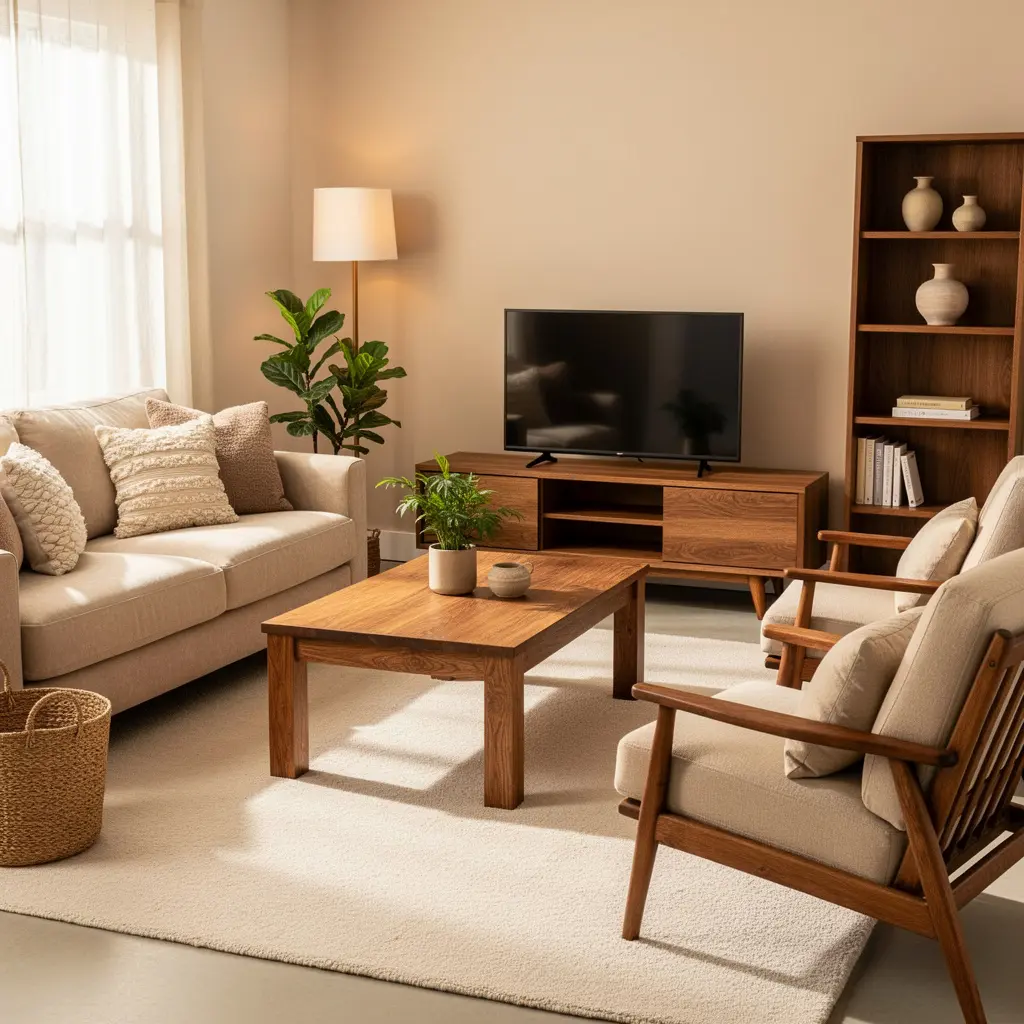
Wood furniture with visible grain, a wood coffee table, open shelving, simple side tables, grounds a beige living room and keeps it from feeling unfinished. This pairing of warm wood and beige shows up constantly in rooms that manage to feel cozy rather than sparse, and a mid tone oak coffee table in particular photographs well against nearly any beige sofa shade.
4. Choose a Large, Plush Rug as the Room’s Foundation
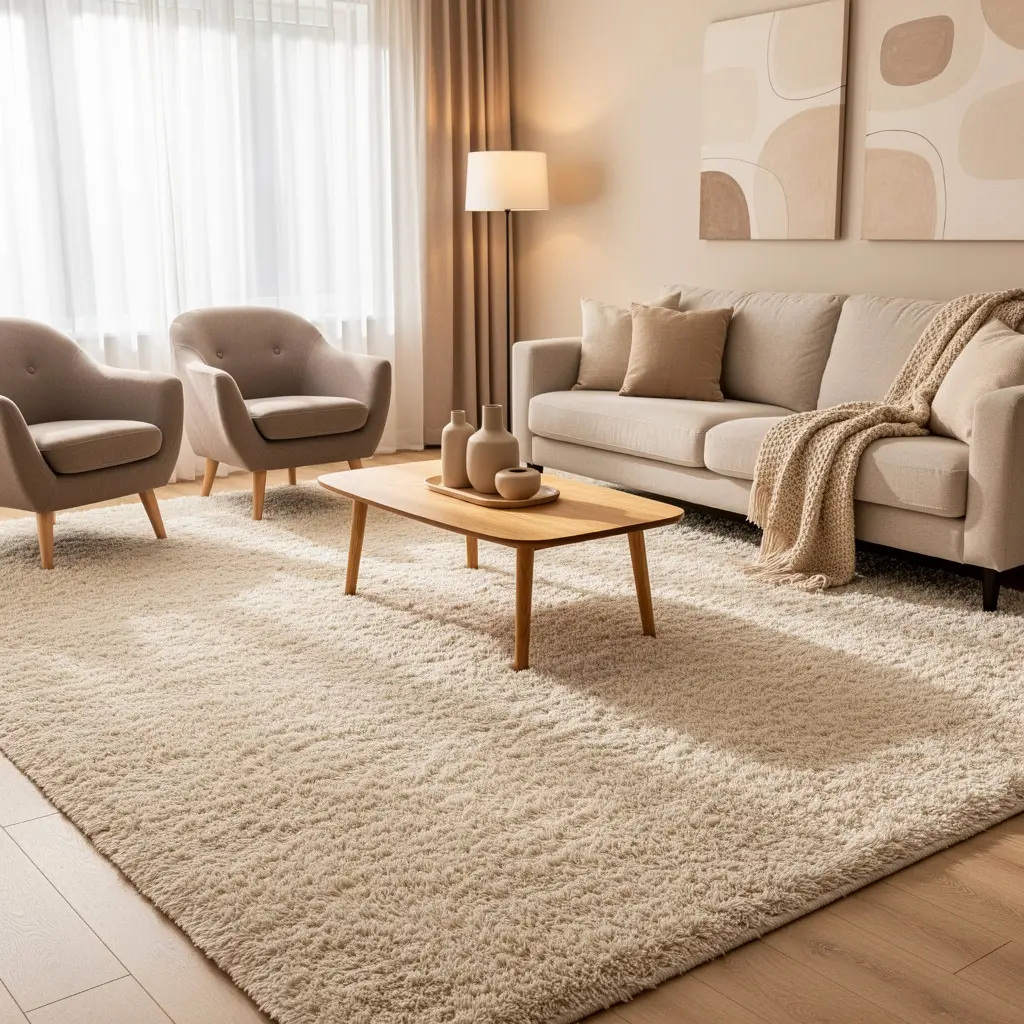
A generously sized rug, ideally large enough for the front legs of your main seating to sit on it, adds both warmth and a sense of scale to a beige living room. This is one of the highest impact purchases available in a neutral space, since it works visually and physically at once, and a rug even slightly under sized tends to leave the whole seating area feeling disconnected.
5. Layer Lighting Instead of Relying on Overhead Fixtures
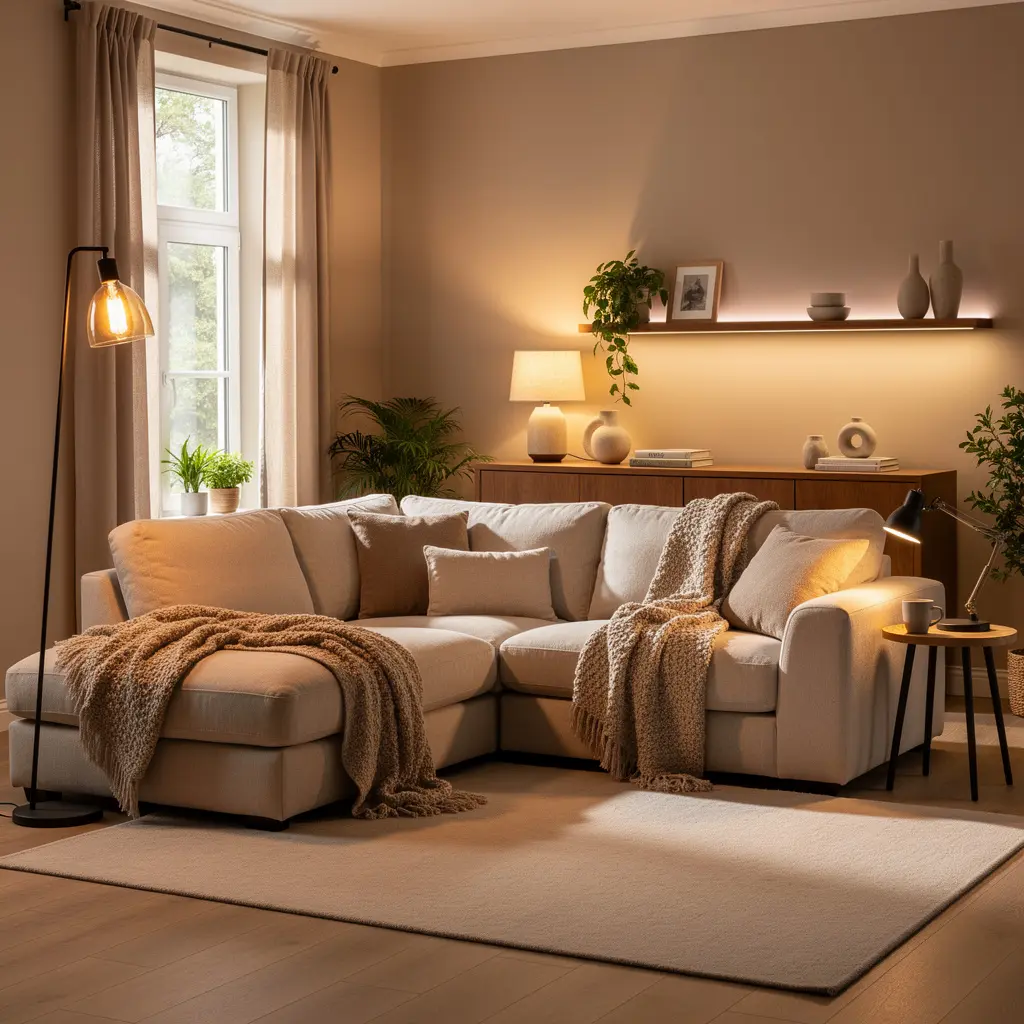
A single overhead bulb flattens a beige room more than it would a bolder colored one, since there’s less contrast to soften harsh lighting. A floor lamp and a table lamp, both with warm white bulbs, create the layered glow this kind of palette needs to feel genuinely cozy. Warm white in the 2700K to 3000K range works best for this kind of soft, evening ambiance.
6. Add One Deeper Accent Color for Contrast
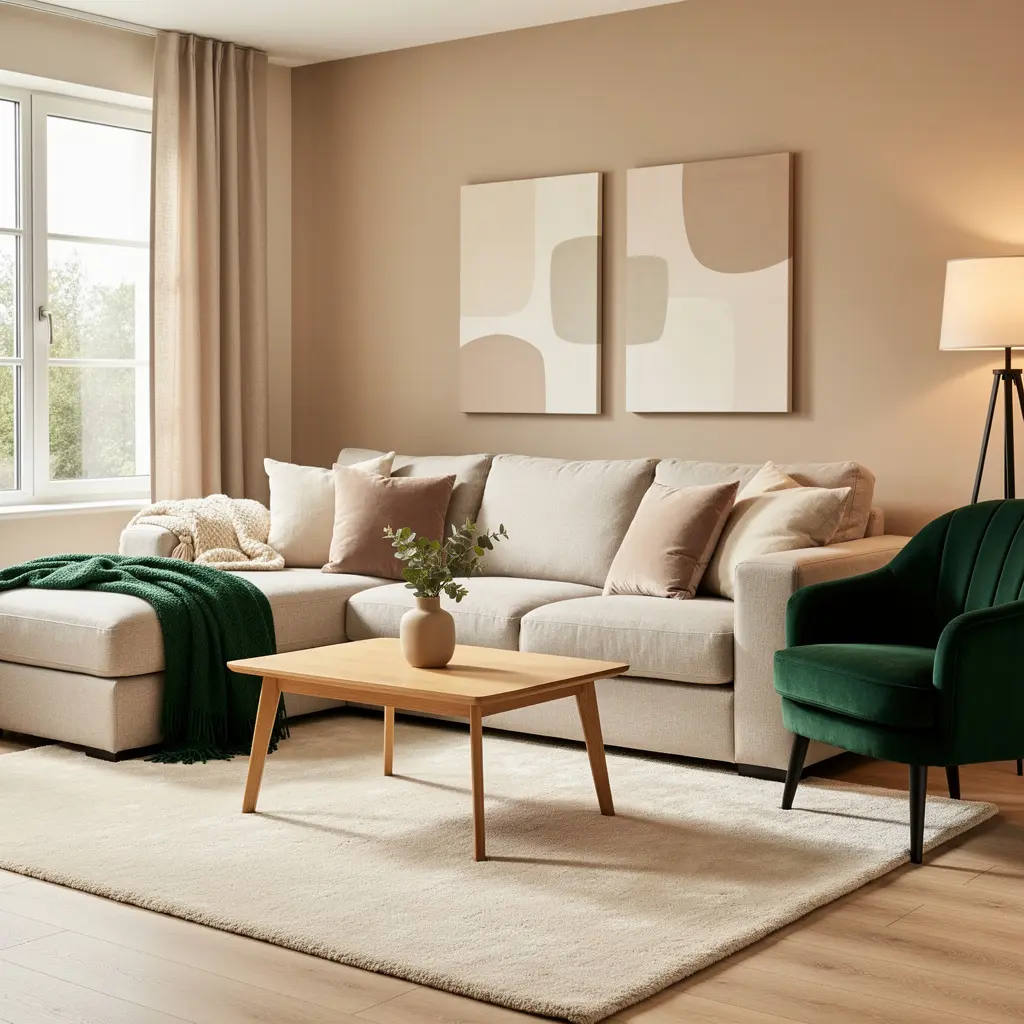
A room built entirely from beige tones can start to feel a little flat without at least one deeper accent, a chocolate brown throw, a deep olive vase, something to give the eye a point of focus within the otherwise soft palette.
7. Bring in Brass or Warm Gold Metal Accents
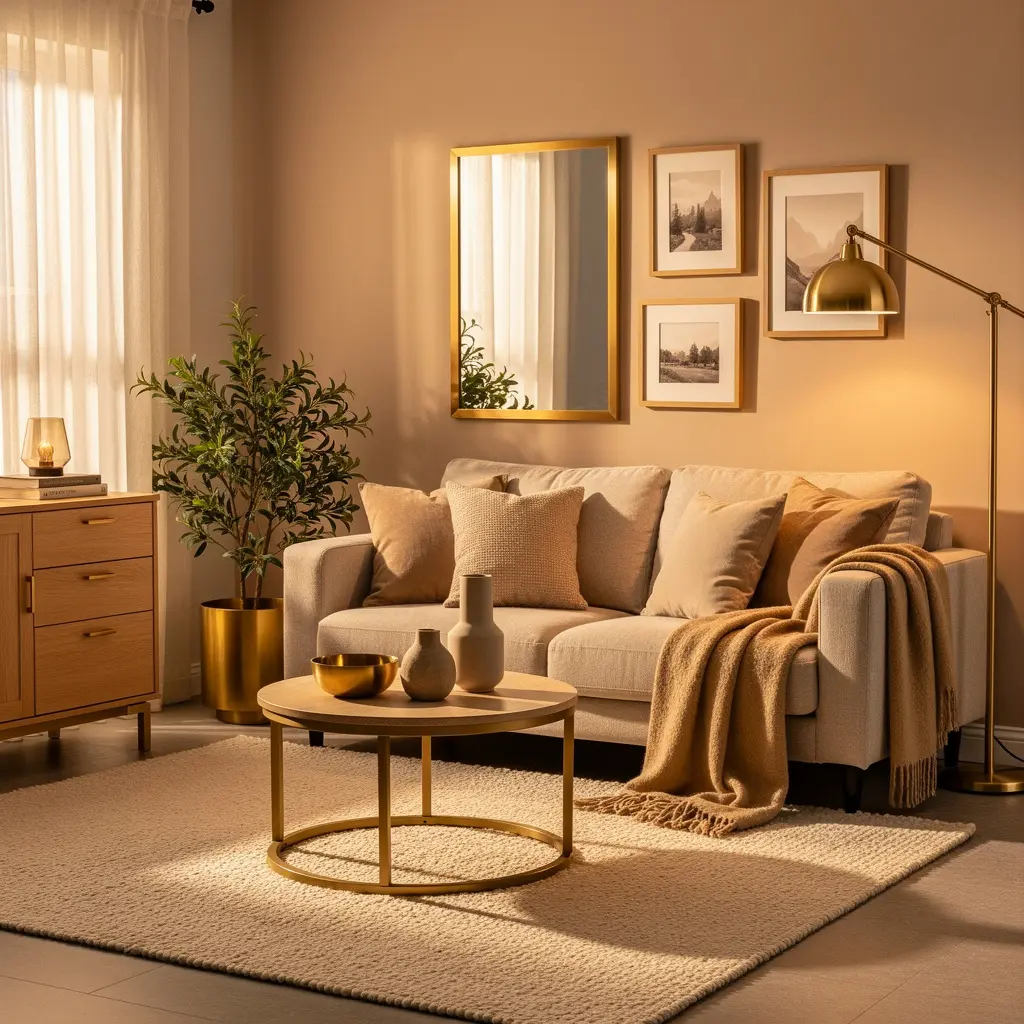
Warm metallics, a brass floor lamp, gold picture frames, brass drawer pulls, complement beige far better than cool silver or chrome, which can push the room toward feeling sterile rather than warm and inviting.
8. Layer in Natural Materials Like Rattan and Stone
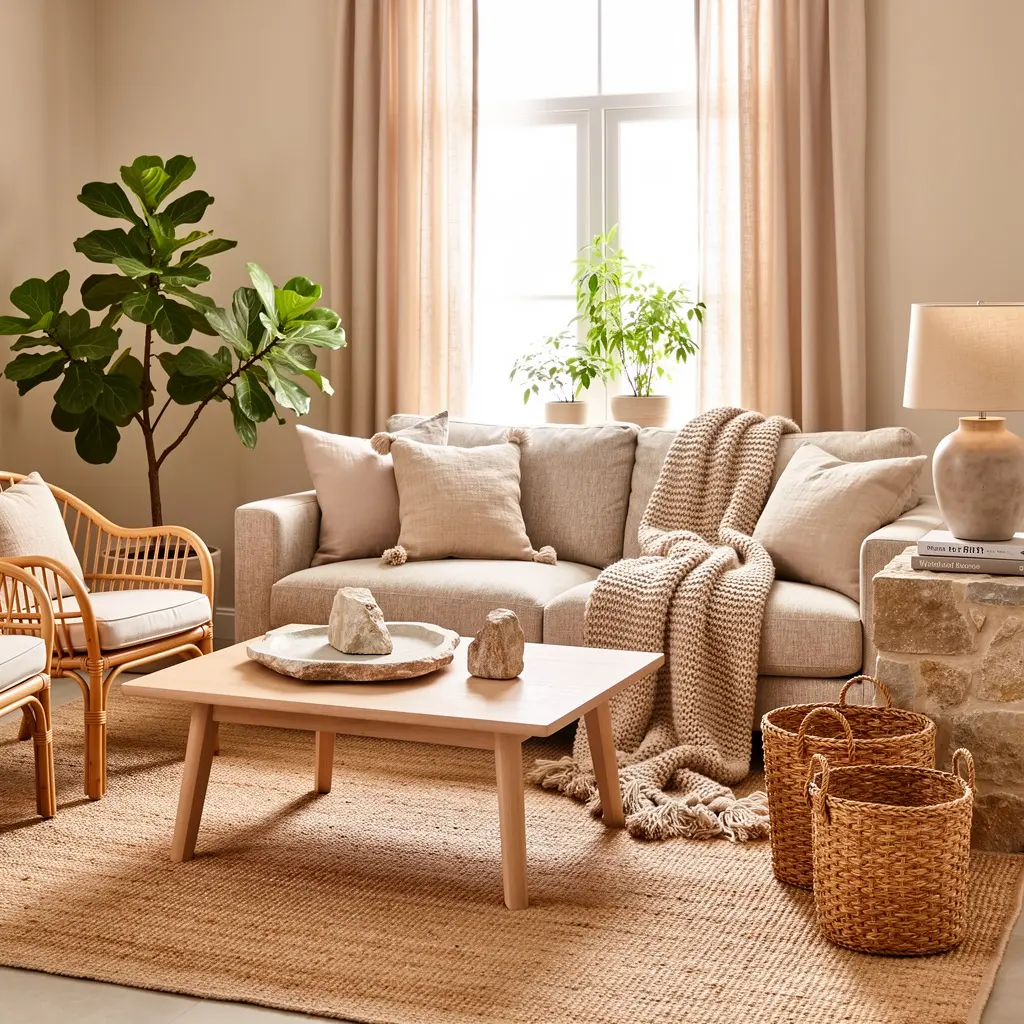
A rattan chair, a stone side table, or a woven basket for storage adds organic texture that suits beige’s naturally earthy, muted quality. These materials reinforce the room’s warmth without introducing a competing color.
9. Add Greenery to Soften the Neutral Palette
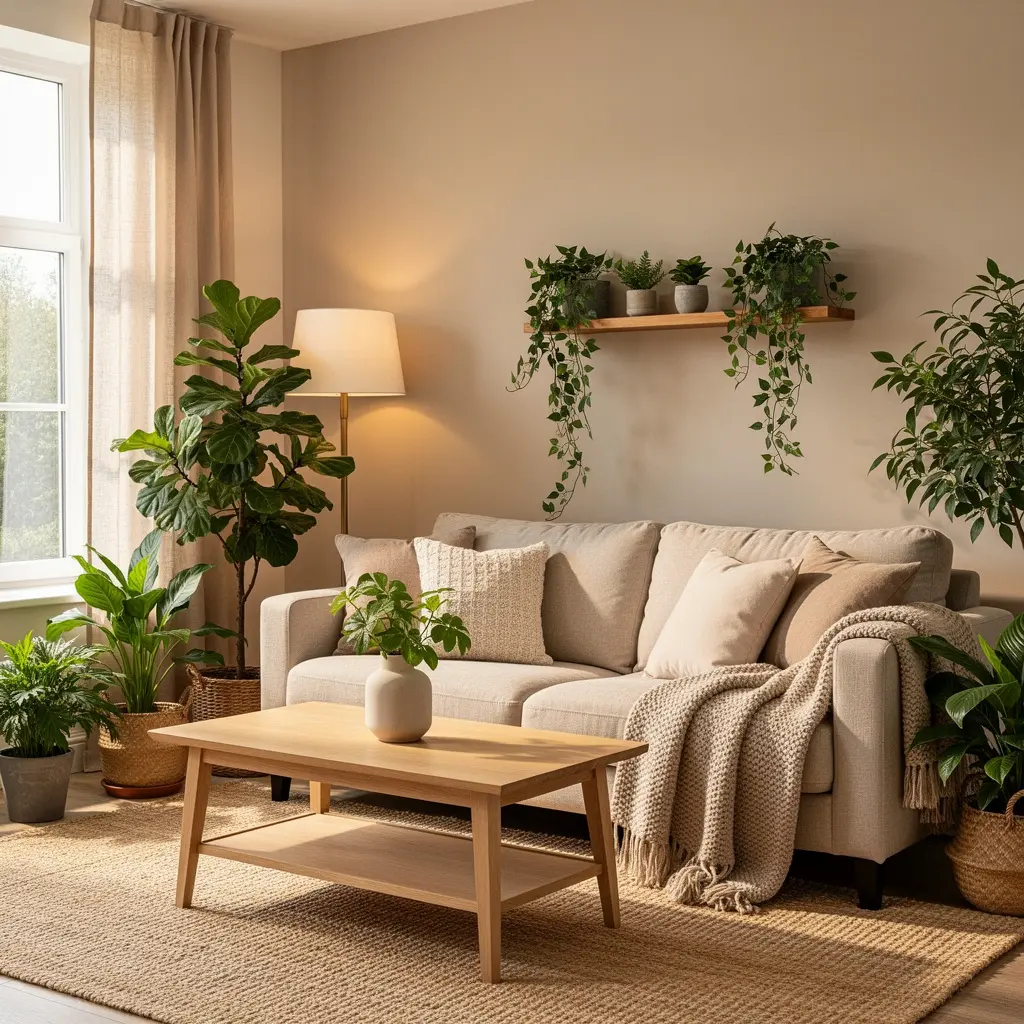
A large leafy plant in the corner, or several smaller ones grouped together, brings a genuine living element into a room that might otherwise feel entirely made of soft, muted tones. Even one plant does real work breaking up an all beige palette.
10. Keep Furniture Shapes Soft and Inviting
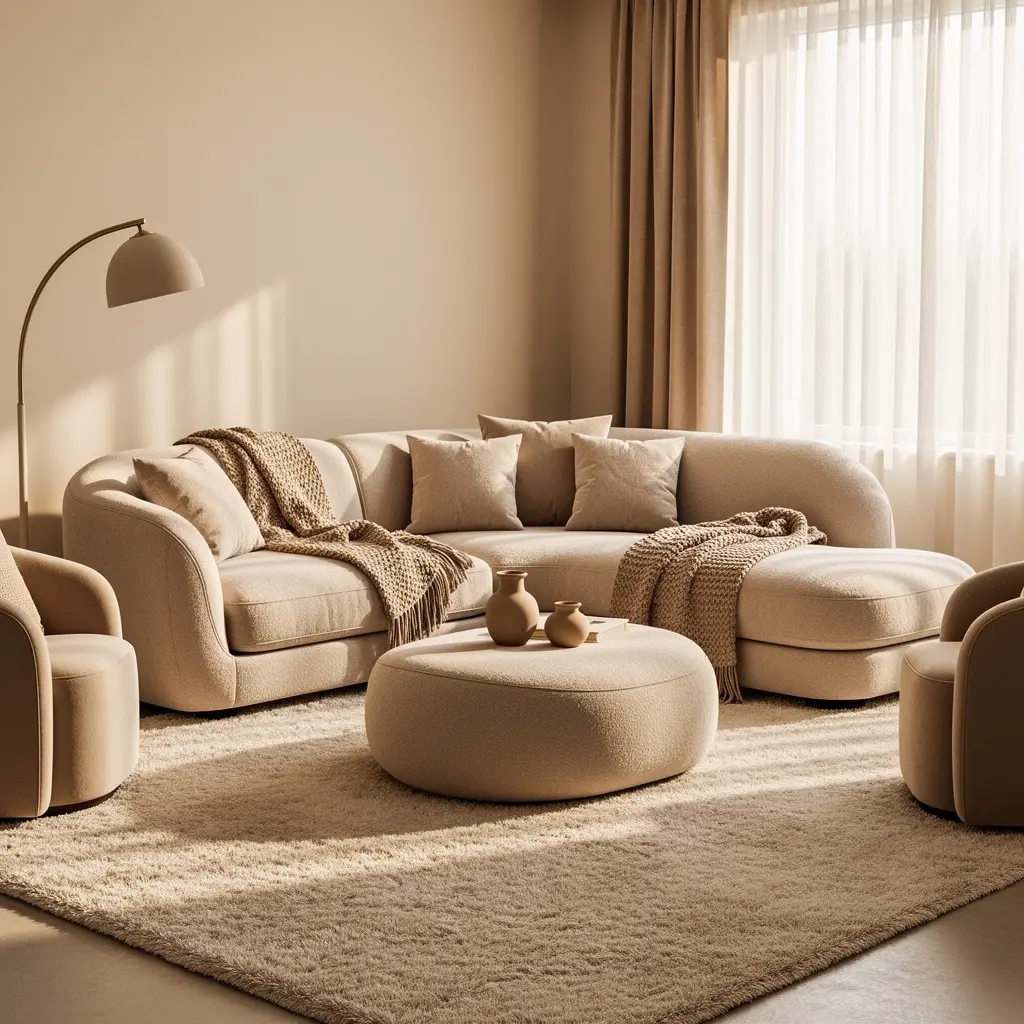
Rounded, curved furniture, a soft armchair, a curved coffee table, suits a beige room’s overall calm, inviting feeling far better than sharp, angular pieces. This detail is small but genuinely affects how welcoming the room feels the moment you walk in.
Mistakes to Avoid
- Using one flat, uniform shade of beige across every surface instead of layering several related tones
- Skipping texture entirely, which leaves the palette feeling flat rather than genuinely cozy
- Relying on a single overhead light instead of layering in warm floor and table lamps
- Leaving the room without any deeper accent color, which can make the space feel a little sleepy
- Choosing cool silver or chrome accents instead of warmer brass or gold
- Filling the room with sharp, angular furniture instead of softer, more rounded shapes
Frequently Asked Questions
How do I keep a beige living room from looking boring? Layer several related beige tones instead of one flat shade, add texture through rugs and throws, and include at least one deeper accent color for contrast.
What colors pair well with beige in a living room? Warm wood brown, chocolate, olive, and brass or gold metallics all pair naturally with beige, adding depth without disrupting the calm, neutral base.
Do I need a big budget to make a beige living room feel cozy? No. A textured rug, a couple of throw pillows, and warm lamp lighting can meaningfully change how the room feels, often for a modest cost.
Should a beige living room include any darker colors? It helps to add at least one deeper accent, since a room built entirely from light, muted beige tones can start to feel flat without a point of contrast.
What furniture shapes work best in a beige living room? Softer, more rounded shapes tend to suit the room’s calm, inviting mood better than sharp, angular furniture, which can feel at odds with the overall warmth.
Conclusion
Cozy beige living room ideas work best when the palette gets layered rather than left flat: several related tones, genuine texture, warm wood, and at least one deeper accent color. Start with your base tones and one textured layer, a rug or a throw, then add warm lighting and brass accents so the room reads as rich and inviting rather than plain.

Leave a Reply