
I have a particular soft spot for boho kitchens. There is something about the combination of warm wood, woven textures, trailing plants, and mismatched vintage finds that makes a kitchen feel genuinely alive in a way that sleek, minimalist spaces rarely do.
The first boho kitchen I ever styled was in a rental apartment in Austin, Texas. The cabinets were builder-grade oak, the countertops were a forgettable beige laminate, and the overhead lighting was the kind of harsh fluorescent fixture that makes everything look slightly depressing. The tenant had a tight budget and zero ability to make structural changes.
We worked entirely with what was there. We swapped the hardware for hand-hammered brass pulls. We layered a vintage Turkish rug runner on the floor. We hung open shelving on one wall using reclaimed wood and simple black pipe brackets. We brought in terracotta pots overflowing with herbs, a woven pendant light shade over the eating area, and a collection of mismatched ceramic mugs displayed on the open shelves.
The transformation was genuinely remarkable. Same cabinets, same countertops, same square footage. But the room went from feeling like a forgotten rental to feeling like someone’s actual home.
That experience taught me something I have carried into every boho kitchen project since. This aesthetic is uniquely forgiving. It thrives on imperfection, welcomes mixing old with new, and rewards creativity over budget. You do not need new cabinets or expensive appliances to create a cozy boho kitchen. You need the right layers, the right textures, and a willingness to let the space feel a little collected and personal.
This guide covers the ideas that consistently deliver the most impact, with honest notes on what to buy, what to skip, and what mistakes quietly undermine an otherwise beautiful boho kitchen.
1. Open Wooden Shelving With Curated Display
Open wooden shelving is the single most impactful change you can make in a boho kitchen. Visually it replaces the flat, closed-off look of upper cabinets with something layered, personal, and genuinely beautiful to look at throughout the day.
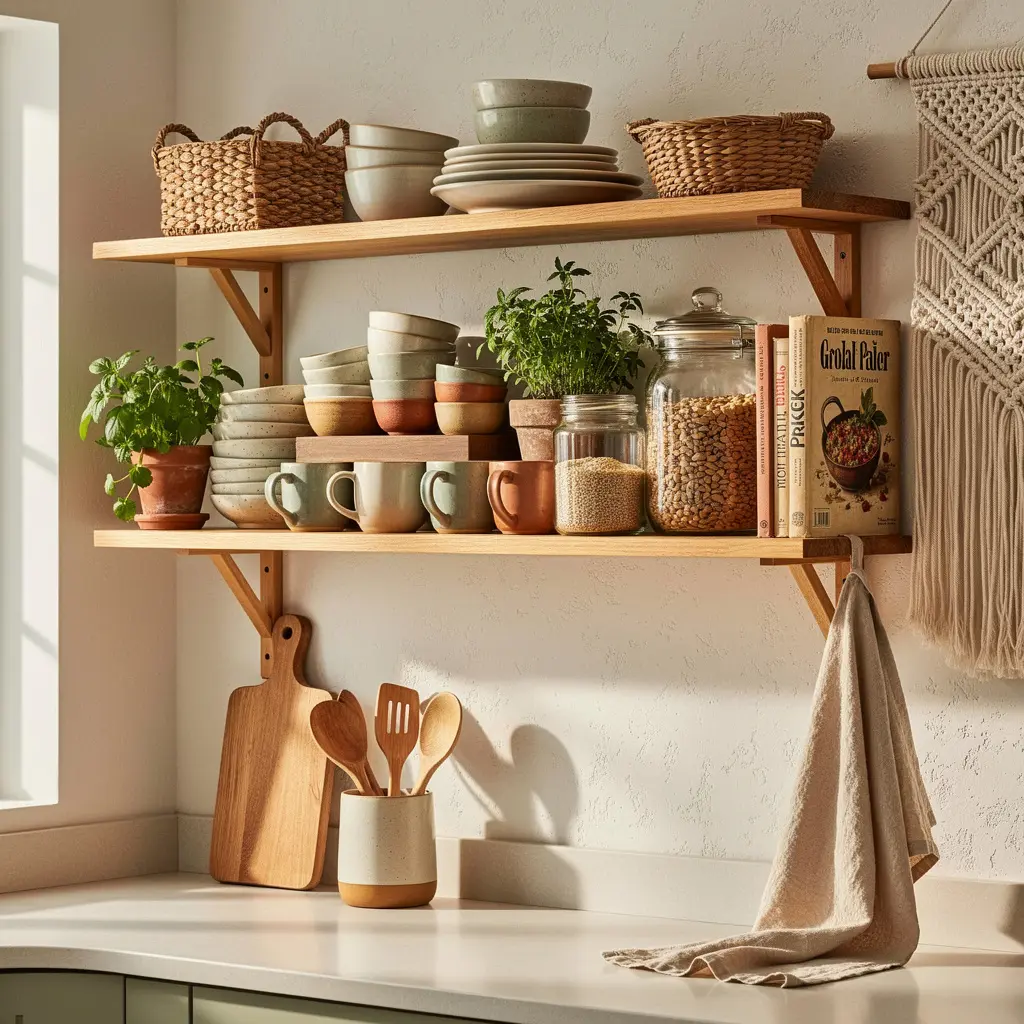
The shelves themselves should be in a warm wood tone. Natural oak, walnut, or reclaimed pine all work beautifully. Avoid anything painted or laminated because the raw wood grain is part of what makes this look feel organic and warm.
This works best on the wall directly opposite or adjacent to the main cooking area. It creates a focal point that draws the eye and gives the kitchen visual depth.
Style the shelves in a mix of functional and decorative items. Stack ceramic bowls and plates at varying heights. Tuck in a small trailing plant at the end of one shelf. Display a collection of vintage glassware in warm amber or green tones. Lean a small framed print casually against the wall on the top shelf.
For lighting, add a small puck light or LED strip along the underside of each shelf. It pools warm light on the displayed items and makes the kitchen glow beautifully in the evening.
Budget option: floating shelves from IKEA with a wood-look finish. Premium option: custom reclaimed wood shelves cut by a local woodworker with hand-forged iron brackets.
Mistake to avoid: overcrowding the shelves. Negative space between groupings is what makes each item readable and the overall display feel curated rather than cluttered.
Pro Designer Tip: Group shelf items in odd numbers and vary heights deliberately within each grouping. A tall ceramic jug next to a small bowl next to a trailing plant reads as naturally collected rather than staged.
2. Woven Pendant Lighting Over the Eating Area
Lighting in a boho kitchen needs to do double duty. It has to function as task and ambient lighting while also serving as a decorative element in its own right. Woven pendant shades accomplish both beautifully.
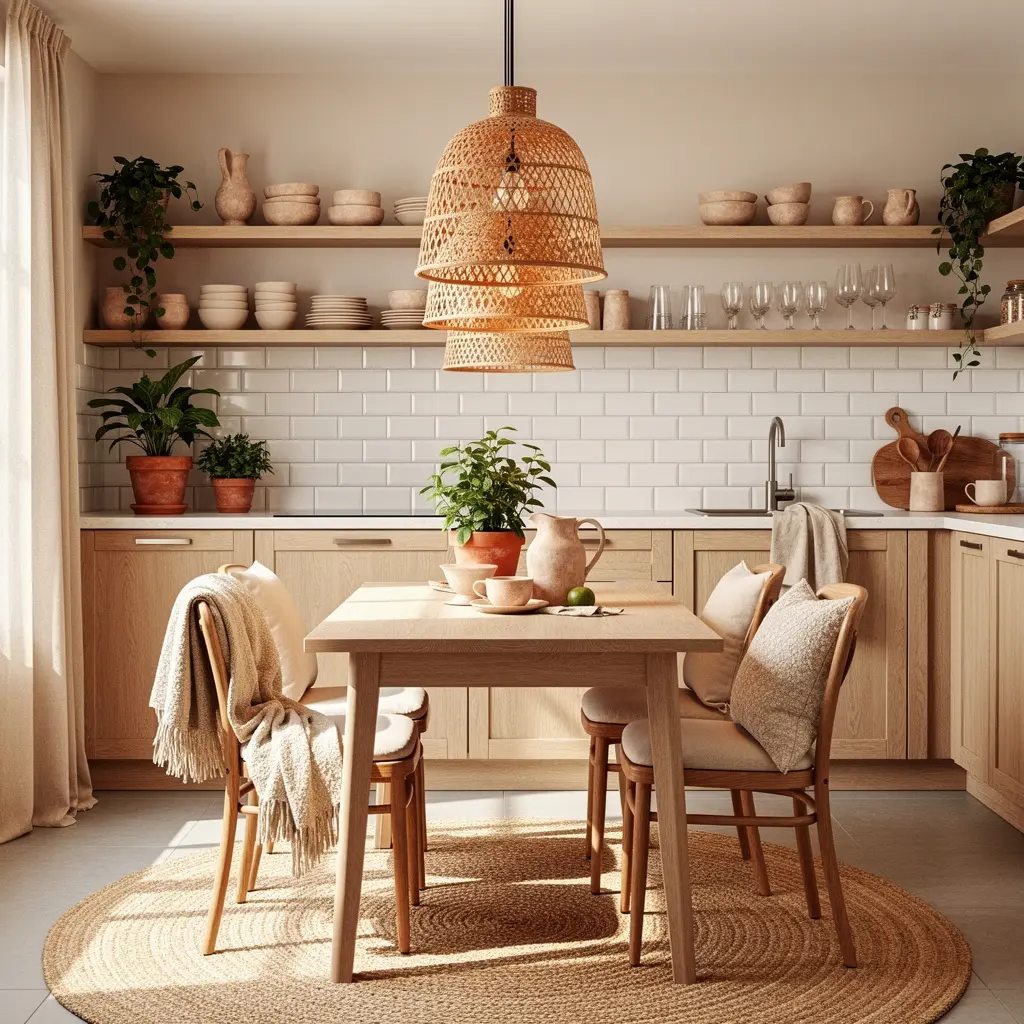
A woven rattan, seagrass, or bamboo pendant shade casts the most beautiful warm dappled light. The weave pattern creates small gaps that let light filter through in a way that produces soft, organic shadows on the ceiling and walls around it. In the evening especially, the effect is genuinely magical.
This works best over a kitchen island, a small eating table, or a breakfast bar. The pendant should hang low enough to feel intimate without obstructing sightlines across the space. Approximately 30 to 36 inches above the table surface is the standard range.
Choose warm Edison or amber bulbs inside woven pendants. The bulb is often partially visible through the weave, so the filament detail adds another layer of warmth and visual interest.
Pair the pendant with warm wood tones on the table or counter beneath it and a few ceramic accessories nearby. The natural materials complement each other and reinforce the boho palette.
Budget option: woven pendant shades from World Market or Amazon in the $30 to $60 range look genuinely good. Premium option: handwoven artisan pendants from Etsy sellers or Serena and Lily.
Mistake to avoid: hanging the pendant too high. A pendant that floats near the ceiling loses all its intimacy and looks like an afterthought rather than a deliberate choice.
Pro Designer Tip: Install a dimmer switch for any pendant light over an eating area. The ability to lower the light at dinner creates an entirely different atmosphere from daytime cooking light and makes the kitchen feel far more versatile.
3. Terracotta and Ceramic Accessories
Terracotta and hand-thrown ceramic accessories are the heart and soul of a cozy boho kitchen. Their warm color, irregular shapes, and matte surfaces bring in the organic, handmade quality that makes this aesthetic feel so alive and personal.
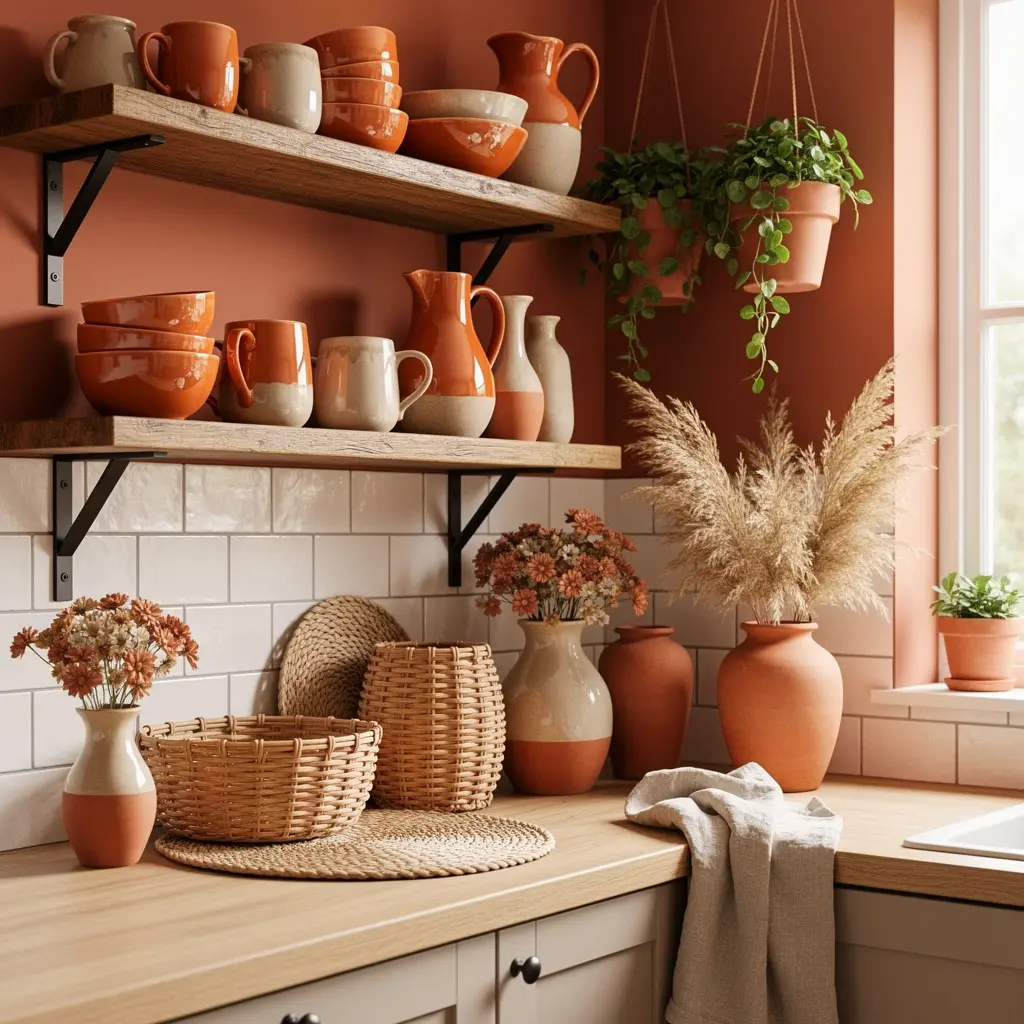
Visually, terracotta pots in varying sizes grouped on a countertop corner or windowsill create an earthy, sun-warmed quality. The burnt orange and clay tones complement warm wood and brass beautifully. Hand-thrown ceramic mugs displayed on open shelves add color variation and the sense that these items were gathered over time rather than bought as a set.
This approach works in virtually any kitchen regardless of the existing cabinet or countertop color. Terracotta warms up cool gray or white kitchens and deepens already warm spaces.
Mix terracotta with cream, warm white, sage green, and dusty amber ceramics for a collected, layered look. Avoid anything too bright or glossy, which fights the matte, organic quality of the palette.
Functional ceramic pieces are the priority here. Canisters for coffee and tea, a utensil holder, a fruit bowl, a butter dish. Every item on the counter should earn its place by being both beautiful and useful.
Budget option: Target’s Threshold ceramic collection and thrift store finds are excellent. Premium option: handmade ceramics from small Etsy potters or local craft markets.
Mistake to avoid: lining up accessories in a single straight row along the counter. Group them in clusters at varying heights for a more natural, organic arrangement.
Pro Designer Tip: Place a small terracotta saucer under each pot even indoors. It protects surfaces and adds a finished, intentional look to even the simplest plant arrangement.
4. Vintage Turkish or Kilim Runner Rug
A rug in a kitchen is one of those ideas that makes people hesitate until they actually try it, and then they cannot imagine the space without it. In a boho kitchen specifically, a vintage Turkish or kilim runner is transformative.
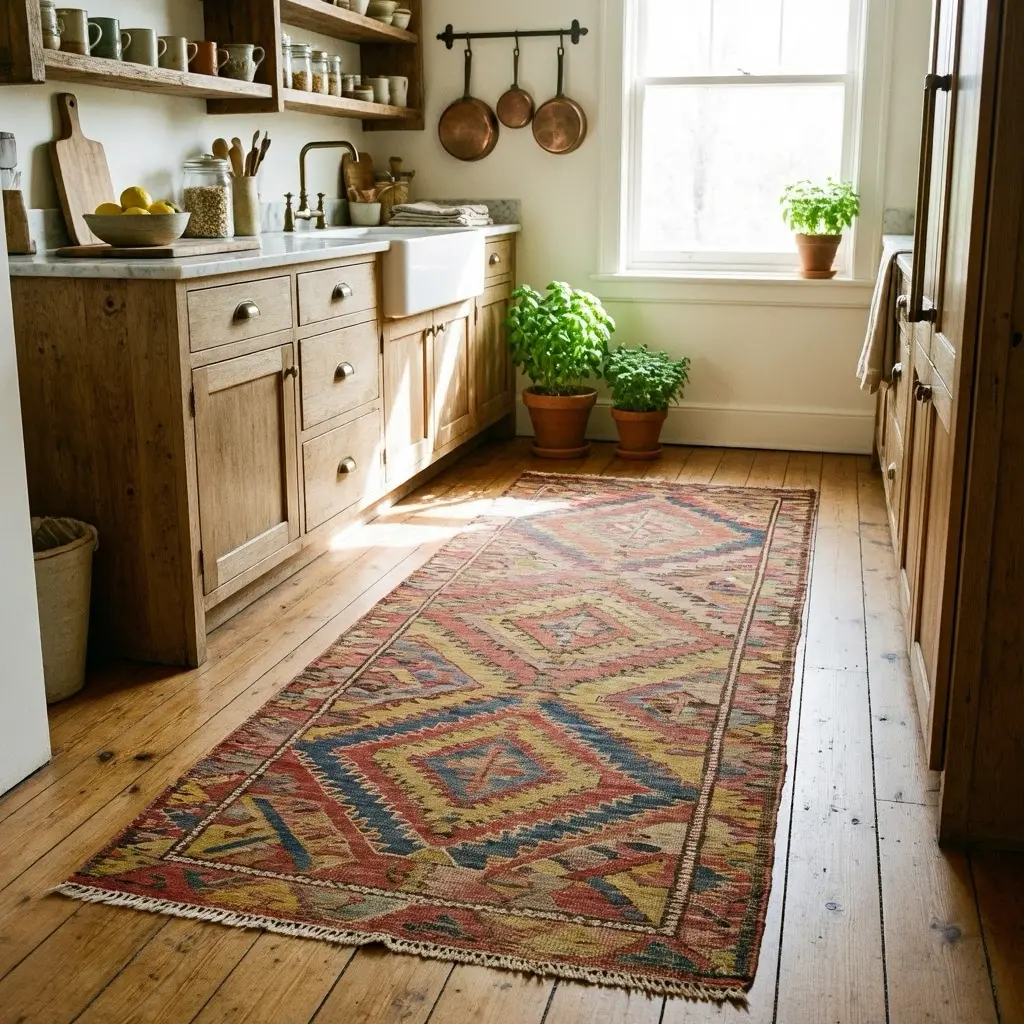
Visually, the geometric patterns and warm earth tones of a kilim rug add color, pattern, and texture to what is often the most hard-surfaced room in the home. The contrast between a patterned textile and tile or hardwood floor is visually rich and immediately makes the kitchen feel warmer and more layered.
Position the runner in front of the sink or along the main cooking corridor. These are the areas where you spend the most time standing, so the practical comfort benefit is real alongside the aesthetic one.
For color, look for kilims in terracotta, warm red, dusty blue, cream, and amber combinations. These tones complement wood cabinets, brass hardware, and ceramic accessories beautifully.
A washable or low-pile rug is important in a kitchen environment. Flat-weave kilim rugs are ideal because they lie flat, are easy to clean, and do not create a tripping hazard.
Budget option: vintage-look kilim runners from Ruggable are washable and very fairly priced. Premium option: genuine vintage Turkish kilims from Etsy or a rug dealer, which only get more beautiful with age.
Mistake to avoid: choosing a runner that is too short. It should span the full length of the counter or cooking area rather than sitting as a small mat in front of a single point.
Pro Designer Tip: Layer a small sheepskin or jute mat on top of the kilim runner directly in front of the sink. The layered rug look adds depth and the extra cushioning underfoot during long cooking sessions is genuinely appreciated.
5. Trailing Herb Garden and Indoor Plants
Plants in a kitchen do something that no accessory or textile can replicate. They bring life into the space in a literal sense and create an ever-changing organic quality that keeps the room feeling fresh rather than static.
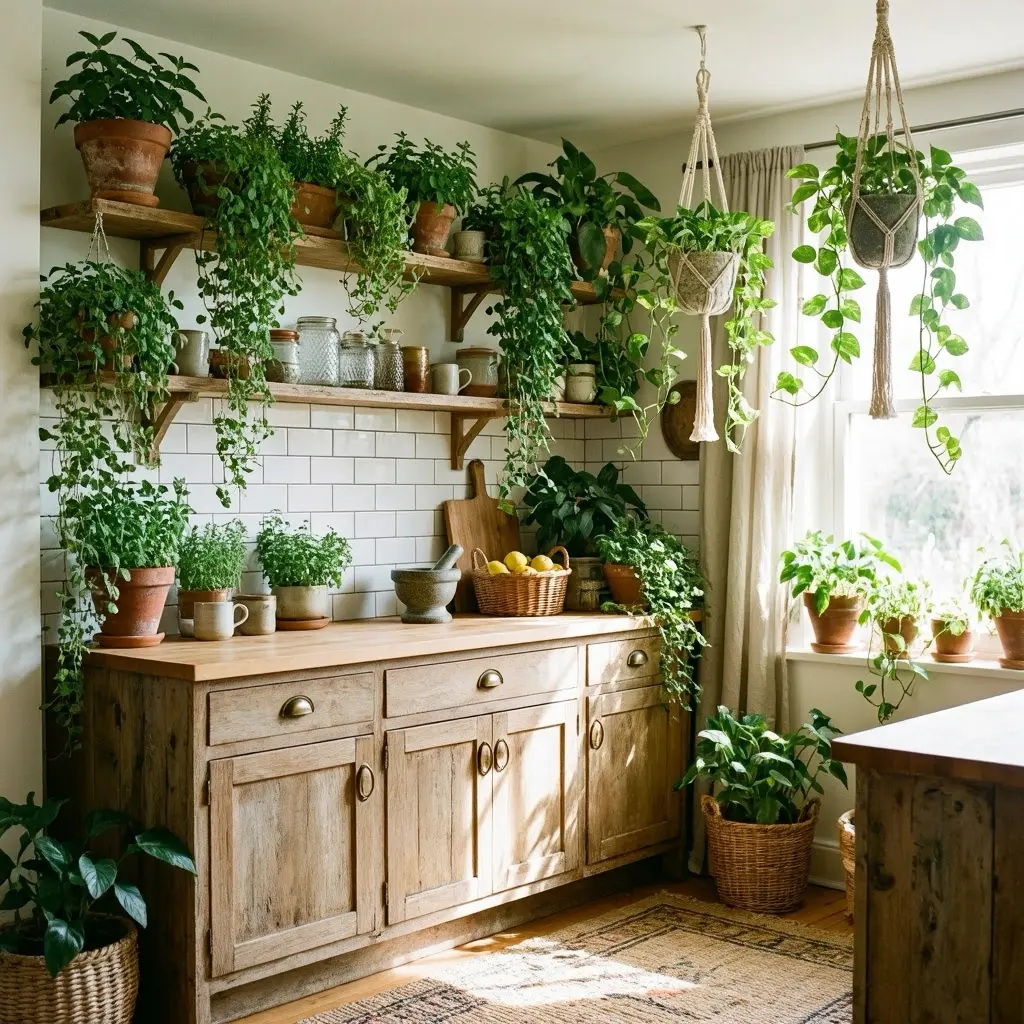
For a boho kitchen, the approach is abundance over precision. Trailing pothos vines on top of open shelves, a cluster of terracotta herb pots on the windowsill, a large leafy plant in a woven basket in a corner. The overall effect should feel like the kitchen is gently being reclaimed by nature.
Herbs are particularly perfect in kitchens because they are functional as well as beautiful. Basil, rosemary, thyme, and mint in mismatched terracotta pots on the windowsill look gorgeous and smell incredible. The scent alone shifts the sensory atmosphere of the room.
For low-light kitchens, pothos, philodendron, and snake plants are reliable and nearly indestructible. For brighter kitchens, herbs and trailing string of pearls or heartleaf philodendron thrive beautifully.
Budget option: propagate cuttings from existing plants or buy small starter plants from a grocery store or Home Depot garden center. Premium option: large statement plants like fiddle leaf figs or olive trees from a specialty plant nursery.
Mistake to avoid: grouping all plants together in one spot. Distribute them throughout the kitchen at different heights so the greenery is woven through the space rather than concentrated in one corner.
Pro Designer Tip: Place your tallest plant on the floor in a woven basket planter in the corner of the kitchen with the least visual interest. A large floor plant anchors an otherwise dead corner and adds vertical scale that draws the eye upward.
Expert Note: The Boho Kitchen Formula
After styling dozens of boho kitchens at every budget level, the formula that consistently works is this: warm wood plus natural fiber plus ceramic plus living plant plus one vintage or handmade element. Get all five of those layers into the space and the boho aesthetic locks in almost automatically. Miss one and the room tends to feel like it is trying but not quite landing. Start with these five categories and build from there.
6. Warm Earthy Cabinet Colors
Cabinet color sets the entire emotional tone of a kitchen. In a boho space, the goal is warmth and depth rather than the cool, clean neutrals that dominate contemporary kitchen design.
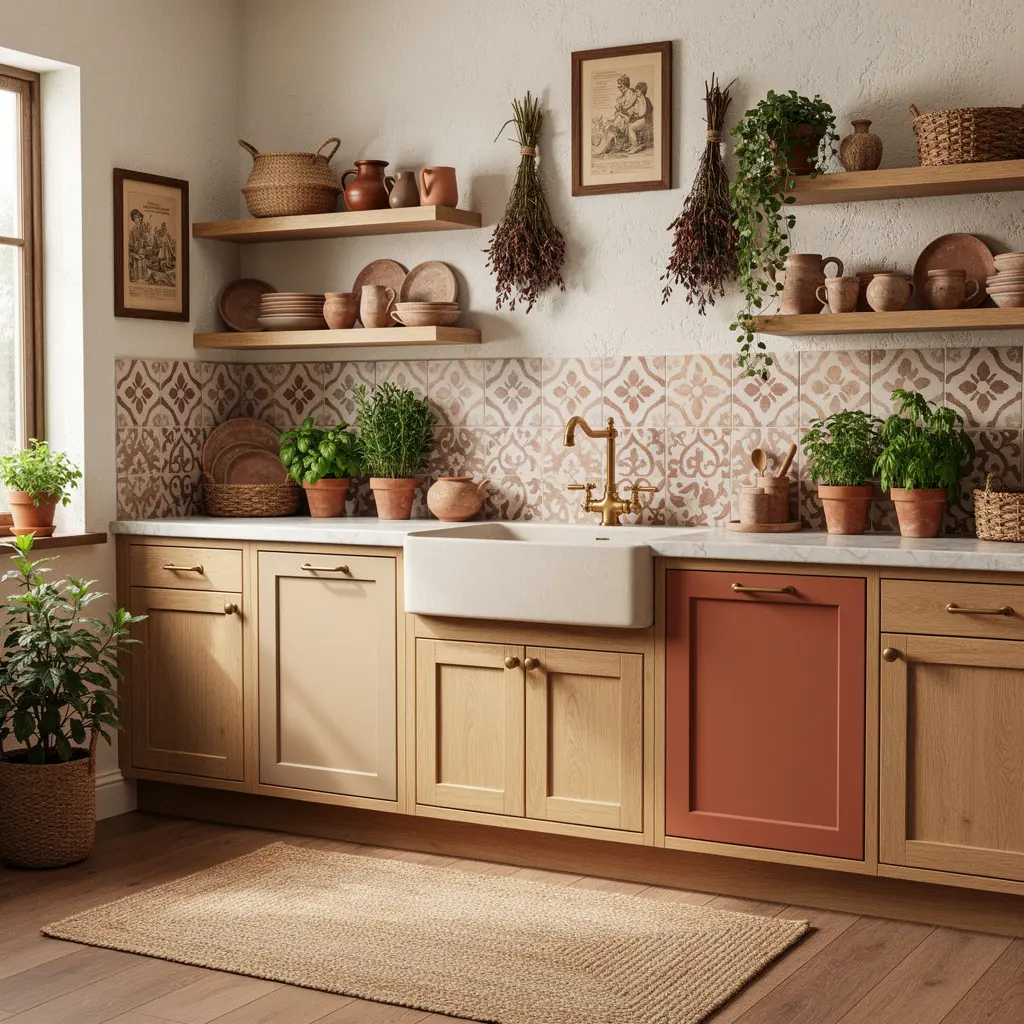
Warm sage green is currently one of the most beautiful cabinet colors for boho kitchens. It reads as natural and earthy without being dark or heavy. Sherwin-Williams Clary Sage and Farrow and Ball Mizzle are both stunning options. Paired with brass hardware and wood open shelving, warm sage cabinets feel genuinely special.
Deep terracotta or burnt clay on lower cabinets with cream or warm white uppers is another combination I have used to great effect. The contrast grounds the kitchen visually and creates a two-tone look that feels far more custom than a single cabinet color.
For kitchens that cannot be repainted, removable peel-and-stick contact paper in wood grain or a warm color is a legitimate option, especially for renters. The quality has improved dramatically in recent years.
Warm white or cream walls complement almost every boho cabinet color. Avoid cool gray walls with warm cabinet tones, as the undertone clash creates a subtly unresolved feeling.
Budget option: chalk paint or cabinet paint from Rust-Oleum applied with a quality roller gives excellent results for a fraction of professional refinishing cost. Premium option: professional cabinet refinishing or custom painted cabinetry.
Mistake to avoid: using a satin or high-gloss finish on boho kitchen cabinets. A matte or eggshell finish reads as more organic and handcrafted, which fits the aesthetic far better.
Pro Designer Tip: Paint the inside of glass-front cabinets in a contrasting warm tone. A sage green cabinet with a warm cream interior looks incredibly refined and adds depth to whatever is displayed inside.
7. Mismatched Vintage Ceramics and Glassware
One of the most charming qualities of a genuinely boho kitchen is that nothing quite matches, and yet everything feels cohesive. Mismatched vintage ceramics and glassware are central to achieving that quality.
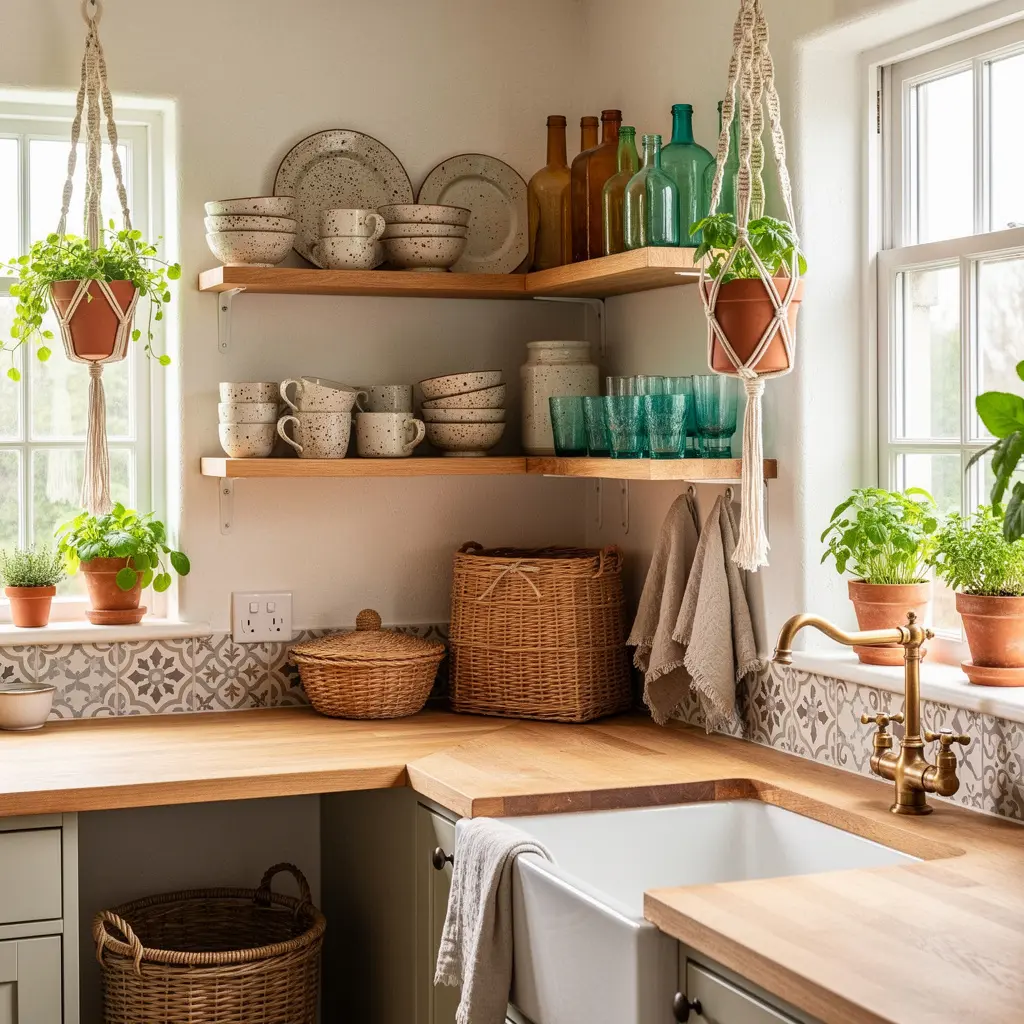
Visually, a collection of ceramic plates in different patterns but similar warm tones displayed on open shelves creates a story. Vintage amber glassware catching the light on a shelf, a collection of hand-painted mugs in various sizes, a stack of plates where no two are exactly the same pattern. It looks collected and personal because it genuinely is.
The key to making mismatched ceramics feel cohesive rather than chaotic is keeping to a consistent color family. Warm neutrals, terracotta tones, dusty sage, and amber all live together naturally. Introducing cool blues or bright colors breaks the warmth of the palette.
Shop for vintage ceramics at estate sales, thrift stores, antique markets, and flea markets. The hunt is part of the joy, and pieces acquired this way always feel more meaningful than a matching set from a big-box store.
Budget option: Goodwill and thrift stores are genuinely excellent sources for beautiful vintage ceramics for almost nothing. Premium option: handmade ceramic sets from independent potters on Etsy or at local craft fairs.
Mistake to avoid: mixing too many patterns of similar scale. Vary the pattern scale significantly, a large bold geometric next to a small delicate floral, for visual balance.
Pro Designer Tip: Limit your ceramic color story to three or four tones maximum. Even within a mismatched collection, keeping to a tight palette creates visual cohesion that makes the overall display feel curated and intentional.
8. Macrame Wall Hanging or Textile Art
Textile art on kitchen walls is a boho signature, and macrame in particular adds warmth, texture, and handmade quality that framed prints simply cannot replicate. The organic, slightly imperfect quality of knotted cotton or jute is genuinely beautiful in a kitchen setting.
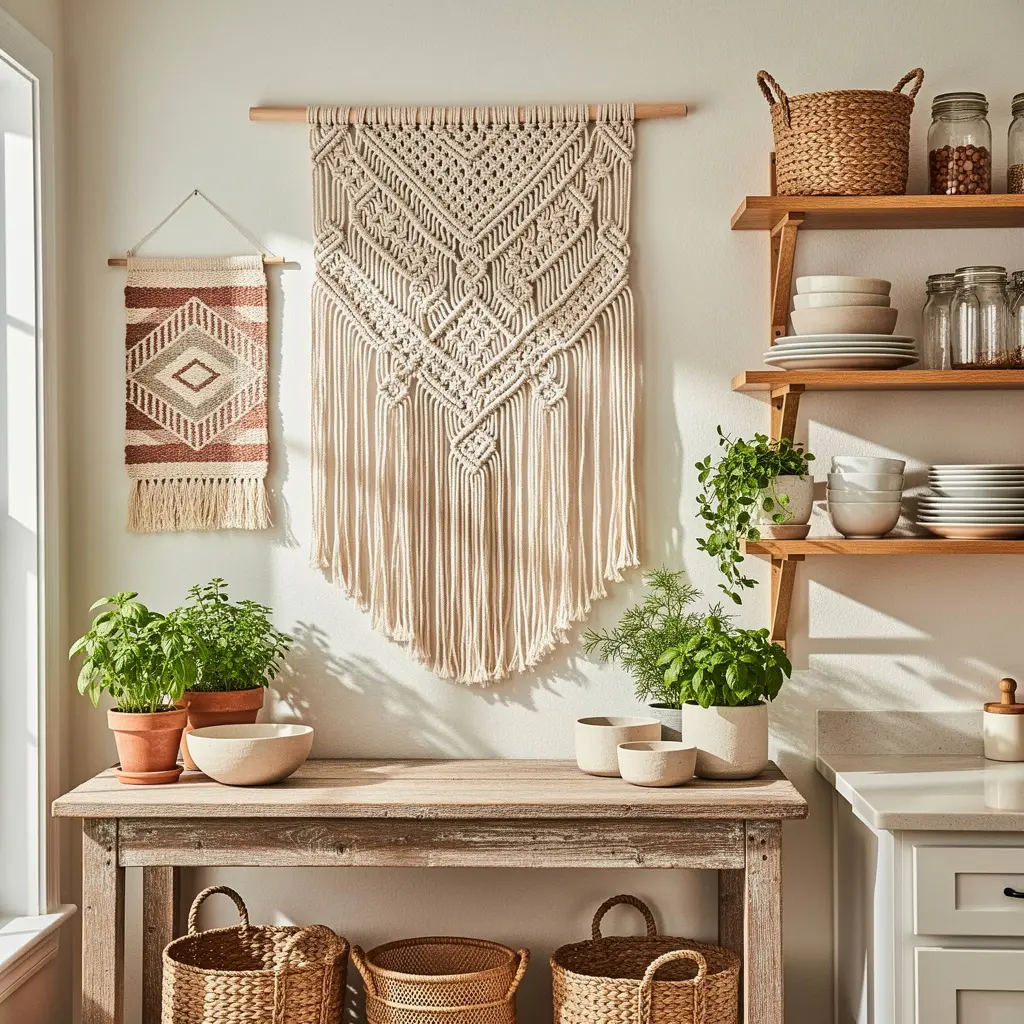
A medium to large macrame wall hanging on a blank kitchen wall transforms it from dead space into a genuine focal point. The natural cotton cord in cream or warm white complements wood, terracotta, and brass beautifully. The knotted texture creates depth and shadow that changes subtly throughout the day as light shifts.
This works best on the wall opposite the main cooking area or in the eating area adjacent to the kitchen. In a small kitchen, a smaller macrame piece or a woven tapestry above a window works without overwhelming the space.
Pair the macrame with a few small floating shelves on either side holding ceramic accessories or trailing plants to extend the vignette across the wall.
Budget option: DIY macrame is genuinely achievable even for beginners. Cotton macrame cord costs very little and basic knotting tutorials are widely available. Premium option: large-scale artisan macrame pieces from Etsy sellers who specialize in fiber art.
Mistake to avoid: hanging macrame too close to an active cooking area where steam and grease from the stove could damage the fibers over time.
Pro Designer Tip: Hang macrame from a piece of driftwood rather than a standard dowel rod. The irregular shape and natural texture of driftwood adds another organic layer that reinforces the boho aesthetic beautifully.
9. Natural Wood Cutting Boards and Countertop Styling
Countertop styling is one of the most overlooked opportunities in kitchen decor. In a boho kitchen, the countertop is not just a work surface. It is a display opportunity, and natural wood cutting boards are the anchor of a beautifully styled counter vignette.
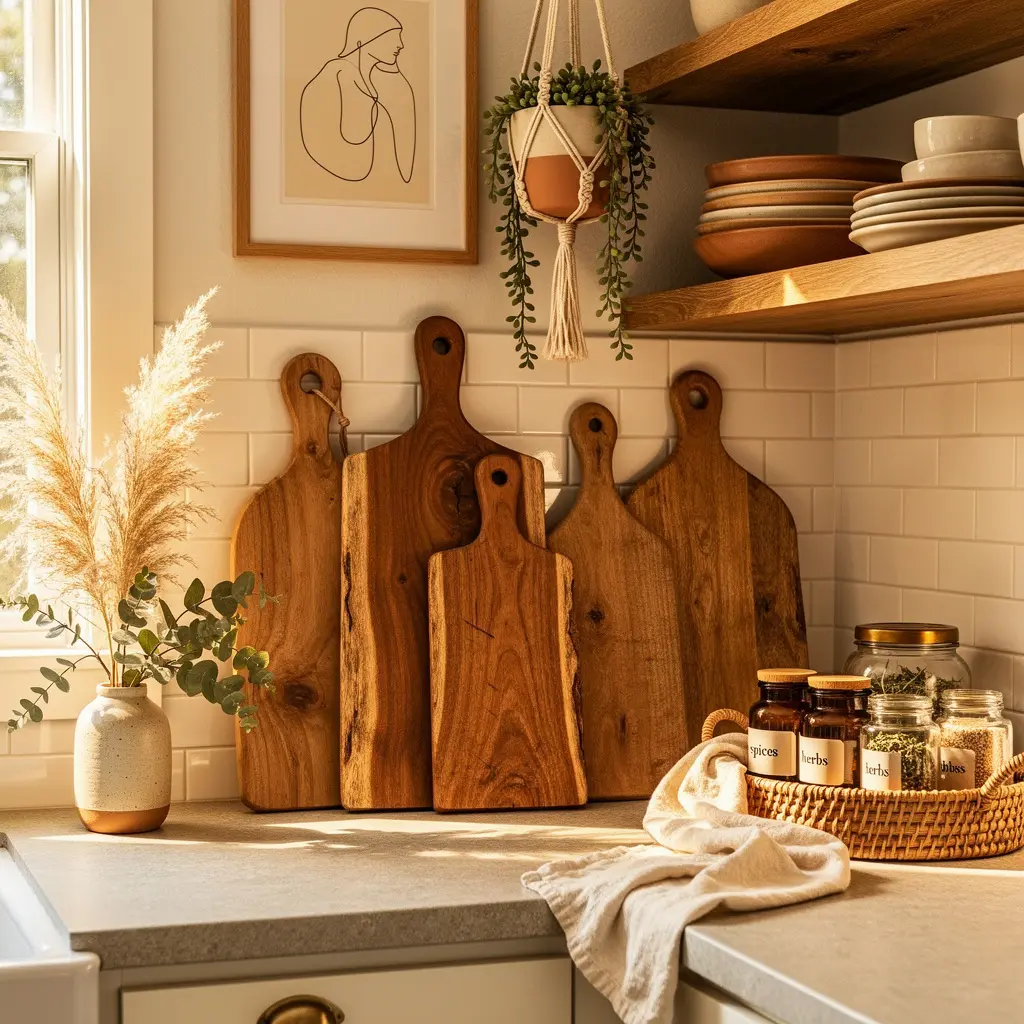
Large end-grain or edge-grain cutting boards in walnut, acacia, or maple propped against the backsplash create an immediate sense of warmth and craftsmanship. Layer a smaller board in front and a ceramic utensil holder to one side. A small potted herb and a ceramic oil bottle complete the vignette without cluttering the workspace.
This works in every kitchen regardless of counter material. A wood cutting board against a white tile backsplash, a dark granite surface, or a butcher block counter all look beautiful.
The key is keeping the vignette tight and intentional. Everything within it should be functional and beautiful simultaneously. Decorative items that serve no practical purpose in a kitchen tend to collect grease and dust quickly.
Budget option: acacia wood cutting boards from IKEA or TJ Maxx are genuinely well made for the price. Premium option: large custom end-grain walnut boards from small woodworking shops or Etsy makers.
Mistake to avoid: using plastic or synthetic boards in a boho kitchen display. Even a single plastic cutting board in an otherwise natural material vignette disrupts the organic quality of the overall look.
Pro Designer Tip: Rub wood cutting boards monthly with food-safe mineral oil or beeswax conditioner. It deepens the wood grain, prevents cracking, and keeps the boards looking beautiful on display rather than worn and neglected.
10. Brass and Aged Metal Hardware
Cabinet hardware is the jewelry of a kitchen. It is small in scale but enormous in visual impact, and swapping standard builder hardware for brass or aged metal pulls and knobs is one of the fastest and most affordable ways to shift the entire personality of a boho kitchen.
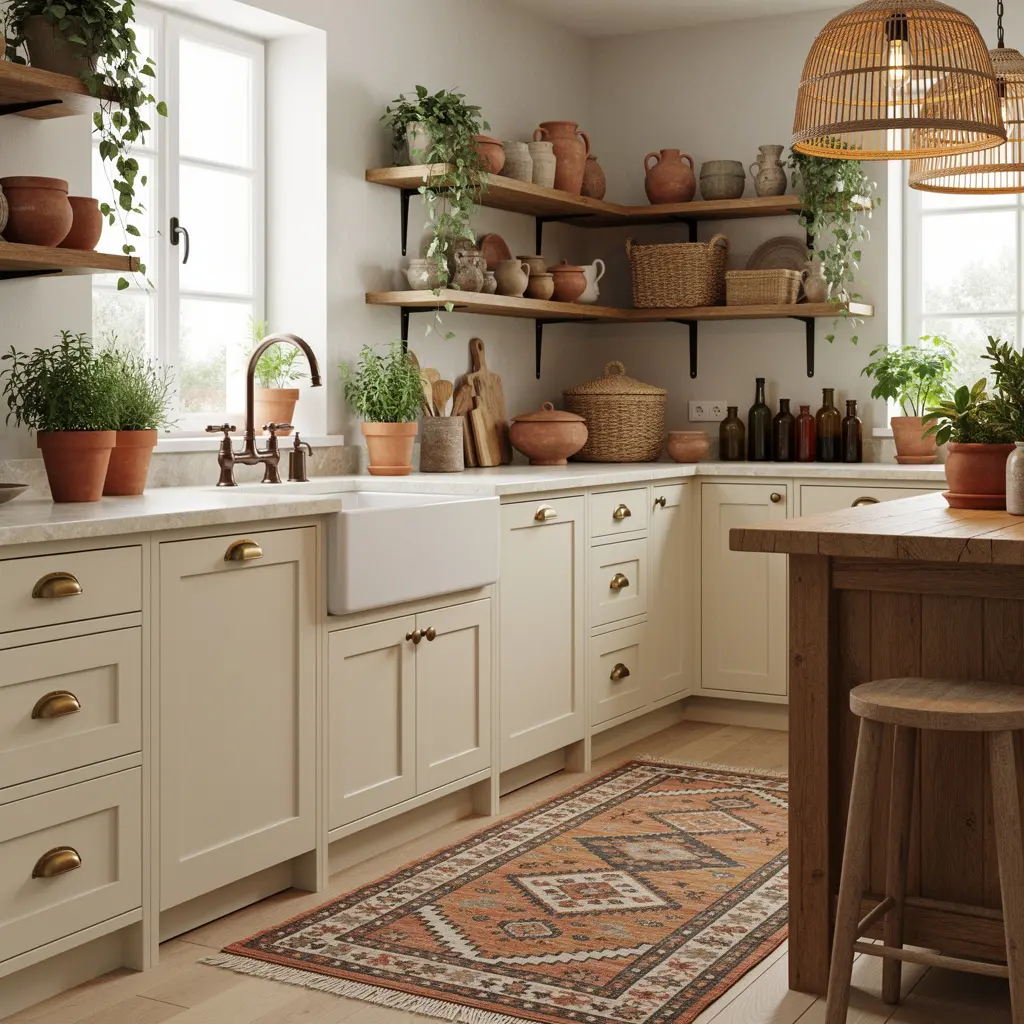
Unlacquered brass hardware develops a natural patina over time that fits perfectly into the boho aesthetic of collected, slightly worn, and beautifully imperfect. Hand-hammered brass pulls in particular have a handmade quality that reads as artisanal and warm.
Aged bronze and oil-rubbed iron are excellent alternatives to brass if you prefer a darker metal tone. Both complement warm wood, terracotta, and sage green beautifully.
Replace every single hardware piece in the kitchen for maximum impact. Mixing old and new hardware styles on the same run of cabinets rarely looks intentional. The hardware should be consistent throughout even if it is mismatched in finish by design.
Budget option: Amazon and Etsy have extensive selections of brass and aged metal hardware for $2 to $8 per piece, which makes a full kitchen swap very affordable. Premium option: unlacquered brass hardware from Rejuvenation or House of Antique Hardware.
Mistake to avoid: choosing hardware that is too small in scale for the cabinet door size. Undersized pulls look timid and get lost visually. When in doubt, go slightly larger than you think you need.
Pro Designer Tip: Mix knobs on upper cabinets with bar pulls on lower cabinets and drawers. This combination is both practical and visually dynamic, and it is exactly what custom kitchen designers do in high-end boho spaces.
Expert Note: Patience Builds the Best Boho Kitchens
The boho kitchens that look genuinely beautiful in real life rather than just on a mood board are always the ones that were built slowly. A vintage bowl found at a flea market. A macrame piece bought from a local artist. A cutting board handed down from someone’s grandmother. These rooms have layers of meaning that you simply cannot replicate by ordering everything from one website in a single afternoon. Give yourself permission to build this kitchen over time, and it will keep getting better.
Frequently Asked Questions
What is a boho kitchen style?
Boho kitchen style combines natural materials, warm earthy tones, handmade or vintage elements, and an abundance of plants and textiles to create a kitchen that feels personal, warm, and genuinely lived in. It draws from global and vintage influences and prioritizes character over uniformity.
How do I make my kitchen look boho on a budget?
Swap cabinet hardware for brass or aged metal pulls, add a vintage kilim runner, style open shelves with mismatched ceramics and trailing plants, and bring in a woven pendant shade. These four changes cost very little individually but create significant visual impact together.
What colors work best in a boho kitchen?
Warm sage green, terracotta, cream, warm white, dusty amber, and muted gold are the most versatile boho kitchen colors. Keep the overall palette warm toned rather than cool and let natural wood tones anchor the color story.
Can I create a boho kitchen in a rental apartment?
Absolutely. Focus on changes that require no permanent modification. Swap hardware using existing screw holes, add removable peel-and-stick wallpaper or contact paper, hang open shelving on removable wall anchors, bring in rugs and textiles, and style with plants and ceramics. All of these are fully reversible.
What plants work best in a boho kitchen?
Pothos, philodendron, and snake plants thrive in lower-light kitchens. Herbs including basil, rosemary, and mint are perfect for sunny windowsills and add functional value alongside their beauty. Trailing plants on open shelving add a beautiful cascading quality that reinforces the boho aesthetic.
How do I style open shelves in a boho kitchen?
Mix functional and decorative items, group in odd numbers, and vary heights within each grouping. Include ceramics, glassware, a small plant, and one or two personal or vintage items. Leave negative space between groupings so each item is readable rather than lost in a crowded display.
What lighting works best in a boho kitchen?
Woven rattan or seagrass pendant shades over eating areas or islands are the most impactful lighting choice. Pair with warm Edison bulbs at 2200K to 2700K. Under-shelf LED strips in warm white add functional task lighting that also highlights open shelf displays beautifully.
How do I keep a boho kitchen from looking messy?
Edit ruthlessly and keep a consistent color palette across all accessories. Group items intentionally rather than scattering them randomly across surfaces. Ensure every countertop item is both functional and beautiful. Reserve true open display for shelving and keep countertops relatively clear for a balanced, curated result.
What type of rug is best for a boho kitchen?
Flat-weave kilim or Turkish runners are ideal because they lie flat, are easy to clean, and bring in pattern and warmth without creating a tripping hazard. Washable rug options from brands like Ruggable make kitchen rugs practical as well as beautiful.
How do I choose boho kitchen hardware?
Unlacquered brass, hand-hammered brass, aged bronze, and oil-rubbed iron all work beautifully. Choose a single metal finish and apply it consistently throughout the kitchen. Mix knob styles on upper cabinets with bar pull styles on lower cabinets for a designer-level detail that looks custom and intentional.
Final Thoughts
A cozy boho kitchen is not about having the right cabinets or the perfect countertops. It is about layering the right materials, colors, and personal touches in a way that makes the kitchen feel genuinely warm and alive.
The Austin rental I mentioned at the beginning of this post had every structural strike against it. Wrong cabinets, wrong countertops, wrong lighting. But none of that mattered in the end because the layers we built on top of those fixed elements were warm, personal, and beautifully chosen.
Your kitchen can feel the same way. Start with one idea from this list, execute it well, and let the room guide you from there. The best boho kitchens are never finished all at once. They grow, they evolve, and they get better with every new piece that finds its way home.

Leave a Reply