
You want your kitchen to have that soft, collected vintage feeling, worn wood, warm color, hardware with real character, but every attempt to recreate it ends up looking more like a themed diner than an actual kitchen someone cooks in every day. Cozy vintage kitchen ideas that genuinely work depend on restraint in the details that matter most, cabinetry, color, and hardware, rather than piling on every vintage cliché at once.
1. Choose Shaker or Beadboard Cabinetry as Your Foundation
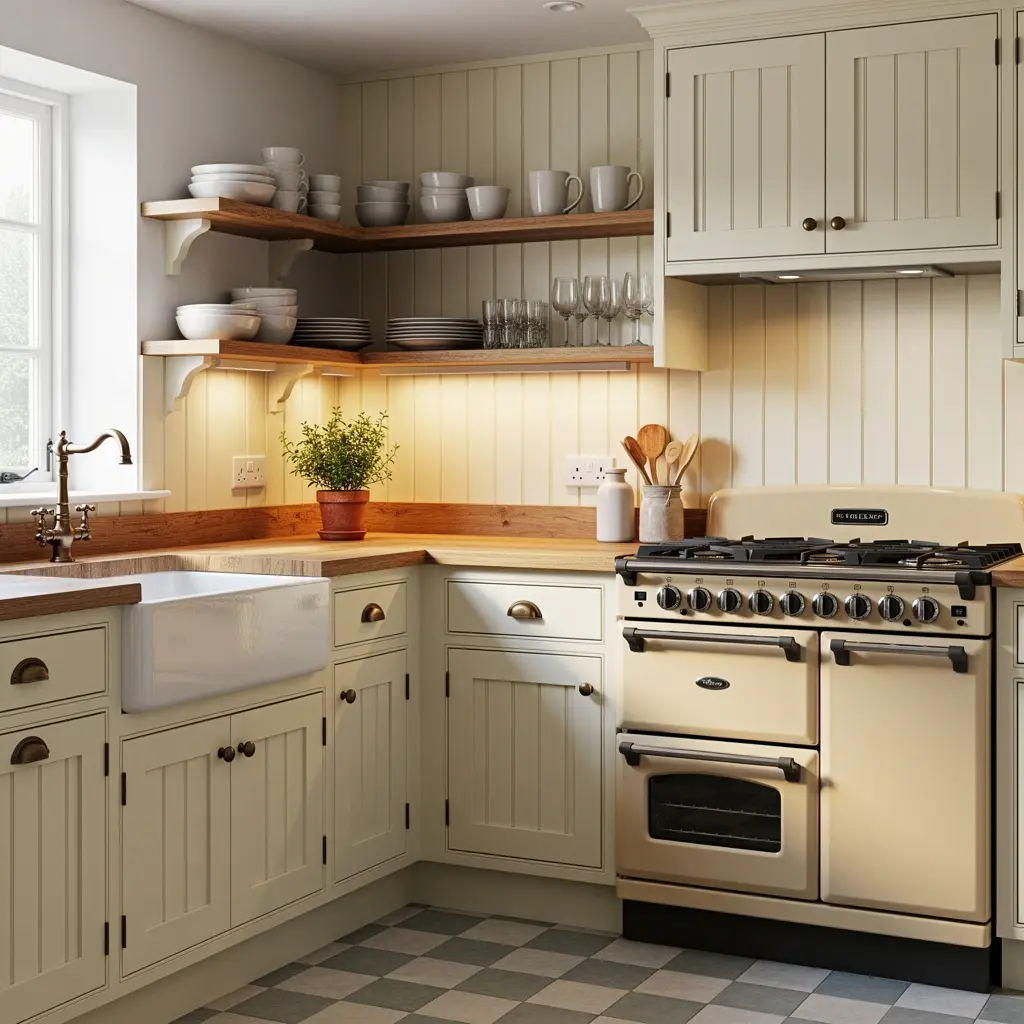
Simple Shaker style cabinets or beadboard fronts are the backbone of a genuinely vintage kitchen, offering a classic, unfussy silhouette that suits almost any era of vintage styling. This foundation lets the room’s other details, hardware, color, lighting, do more of the personality driven work. A plain Shaker door with a simple recessed panel has looked at home in kitchens from the 1920s through today for exactly this reason.
Why Simple Cabinetry Reads as More Authentic Than Ornate Options
Heavily detailed, ornate cabinetry can tip a kitchen into looking like a themed set rather than a genuine vintage space. Simpler cabinet fronts age more gracefully and suit a wider range of vintage eras, from farmhouse to mid century, without looking tied to one overly specific decade. That flexibility matters if your taste shifts over the years, since a simple cabinet front adapts far more easily than an ornate one.
2. Paint Cabinets in a Warm, Muted Color

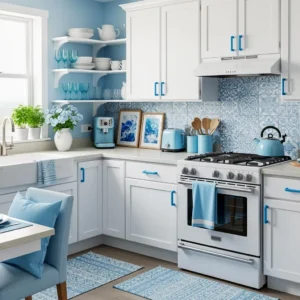
A soft sage, buttery cream, or muted blue on lower cabinets, paired with white or cream uppers, is a classic vintage kitchen combination that reads as warm and current rather than dated. Avoid anything too bright or saturated, since muted tones suit the nostalgic feeling far better. A sage green, in particular, has shown up in kitchens for close to a century, which is part of why it still reads as timeless rather than trendy.
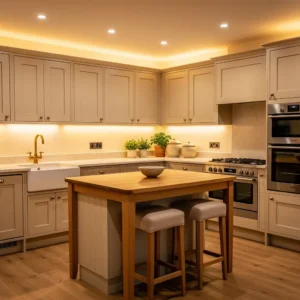
3. Choose Warm Brass or Black Iron Hardware
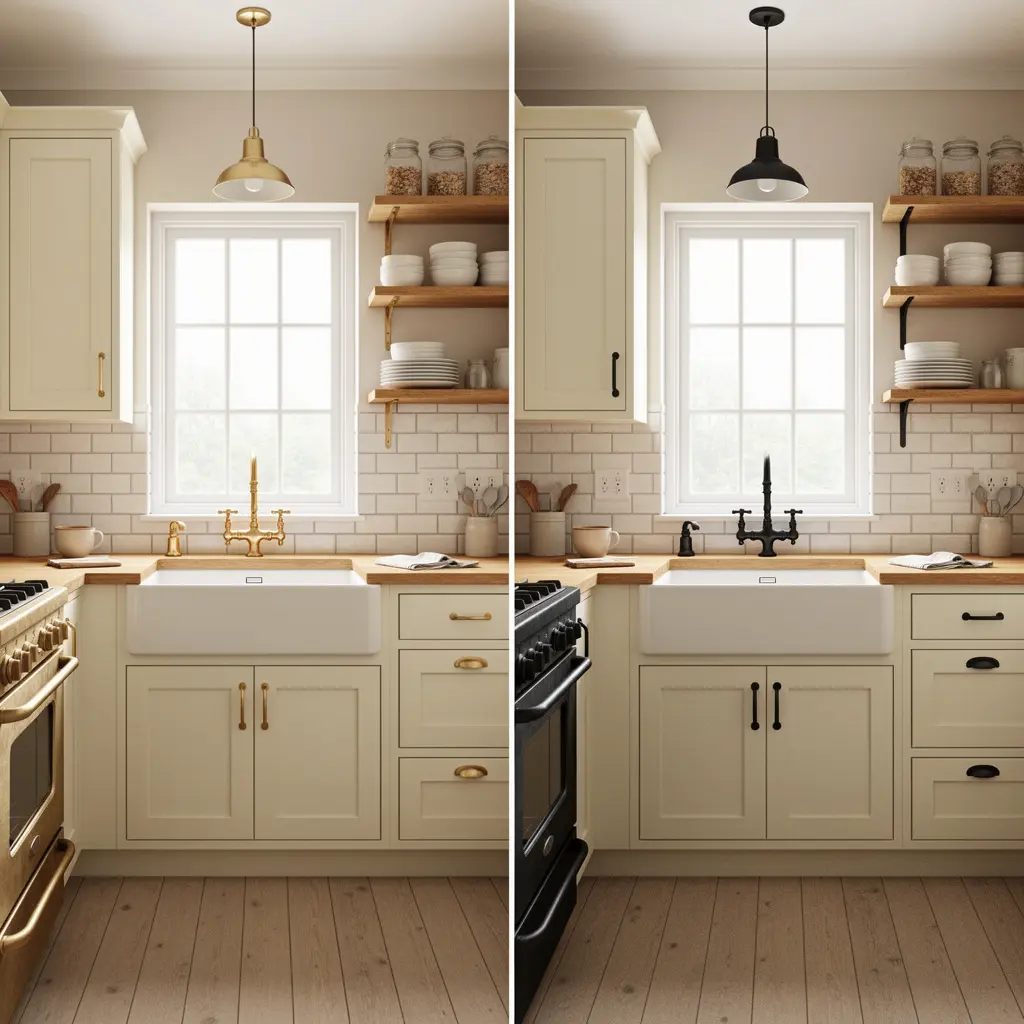
Cabinet pulls and knobs in an aged brass or matte black finish reinforce the vintage feeling more than sleek, modern chrome ever could. This detail is small but genuinely impactful, since hardware shows up on nearly every cabinet in the room. Swapping existing pulls for a warmer finish is also one of the cheapest updates on this entire list.
4. Add a Farmhouse Sink as a Genuine Focal Point
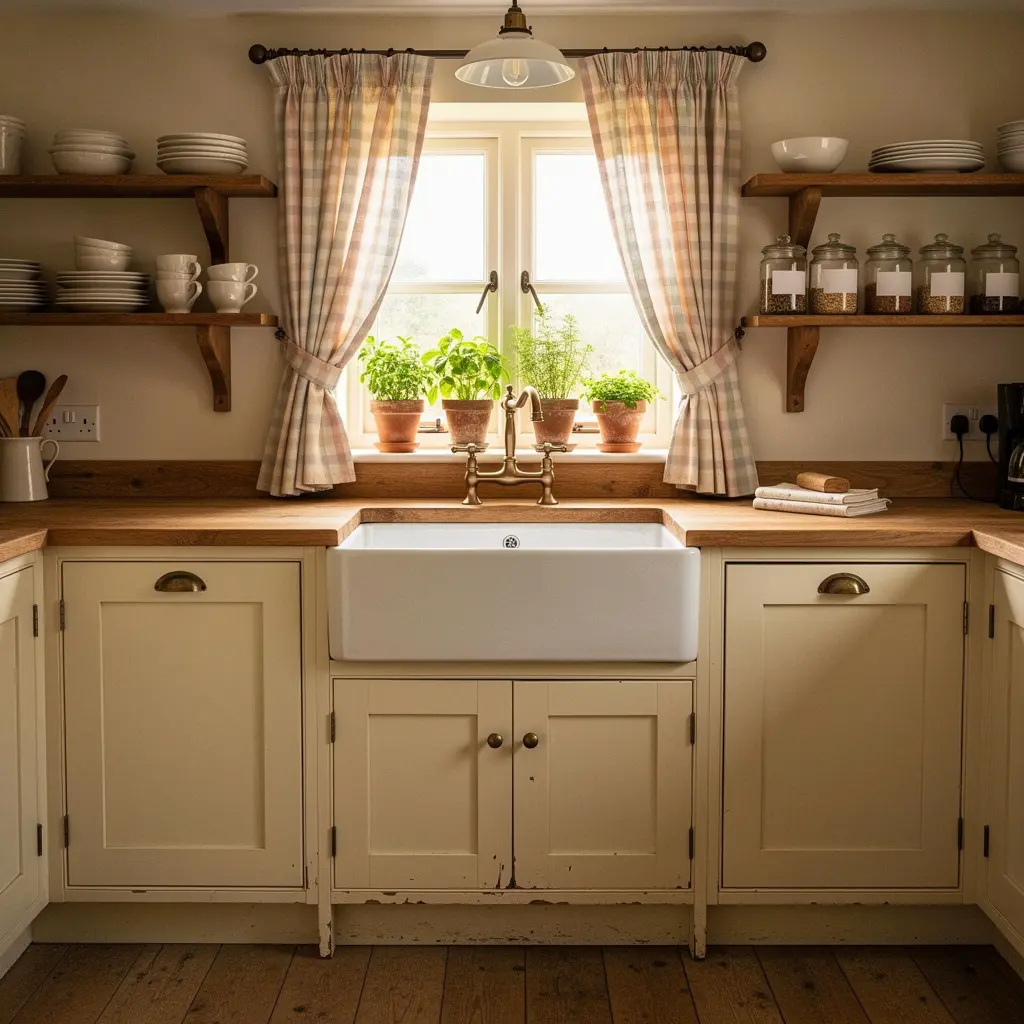
A deep, apron front farmhouse sink is one of the most recognizable vintage kitchen features, and it functions as a real focal point in a way a standard undermount sink simply doesn’t. This one fixture does a lot of visual work relative to its cost, and it holds up to decades of daily use in a way many trend driven fixtures don’t.
5. Bring in Open Shelving for Displayed Dishware
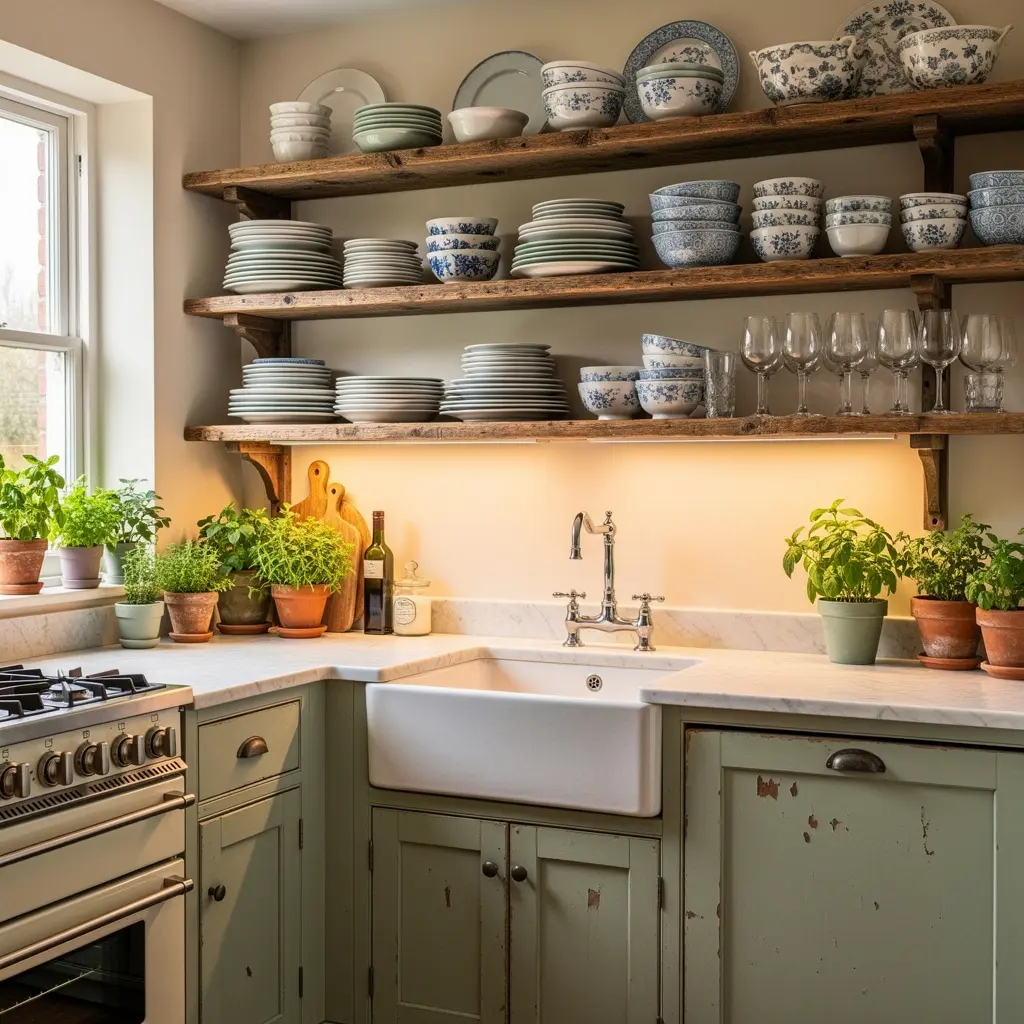
Open wood shelving, styled with mismatched vintage plates, glassware, and everyday dishes, gives a kitchen a genuinely collected, lived in feeling that closed cabinetry alone can’t achieve. This kind of open display also makes daily cooking feel more like using a well loved kitchen than a showroom, since the dishes you actually reach for stay visible instead of tucked behind a closed door.
6. Choose Warm Wood Countertops Instead of Cold Stone
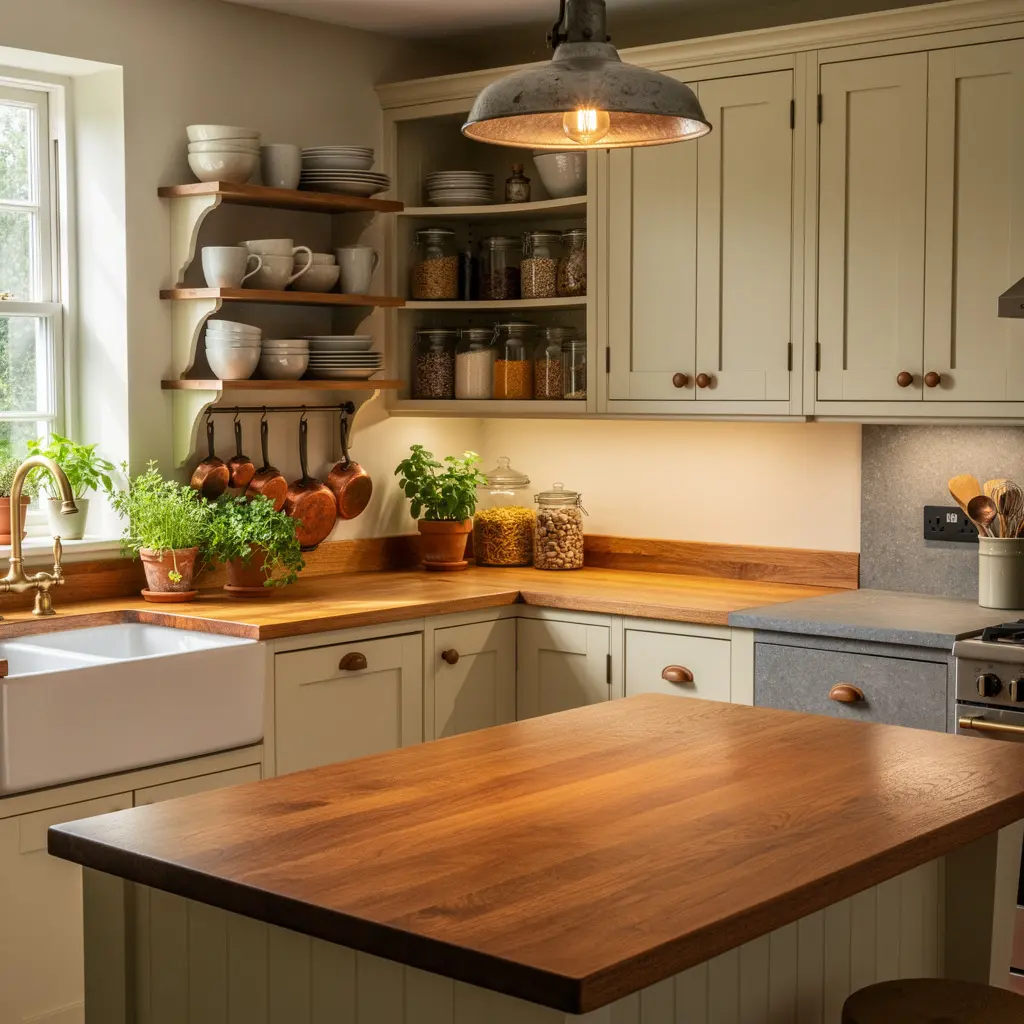
Butcher block or another warm wood countertop suits a vintage kitchen’s overall softness better than a cool, polished stone surface. Wood countertops also develop character over years of use, which fits naturally with the whole vintage aesthetic, picking up small marks and a deepening color that only add to the story.
7. Add Patterned Tile as a Backsplash
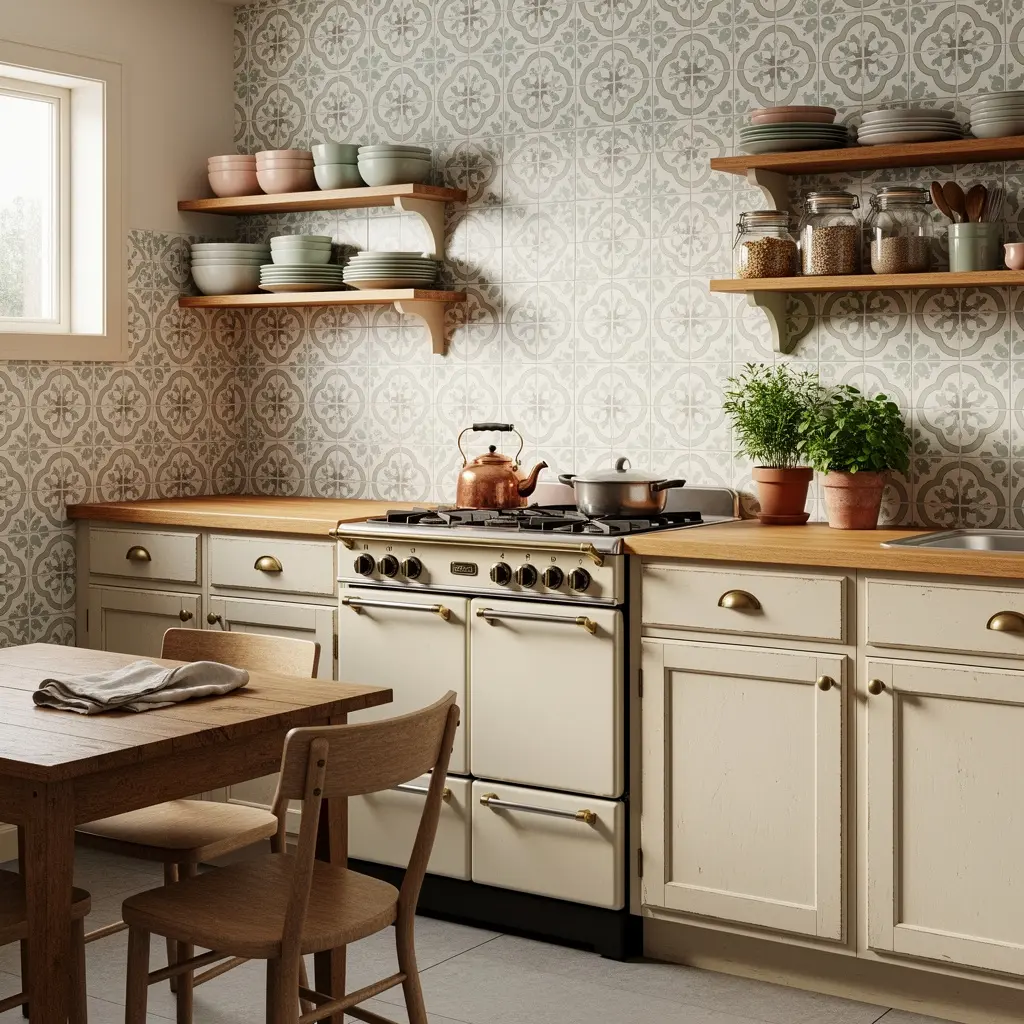
A checkerboard, encaustic, or subtly patterned tile backsplash brings genuine vintage character into the kitchen without requiring a full renovation. This detail pairs especially well with simple, painted cabinetry, letting the tile carry more of the room’s personality.
8. Layer in Warm, Vintage Inspired Lighting
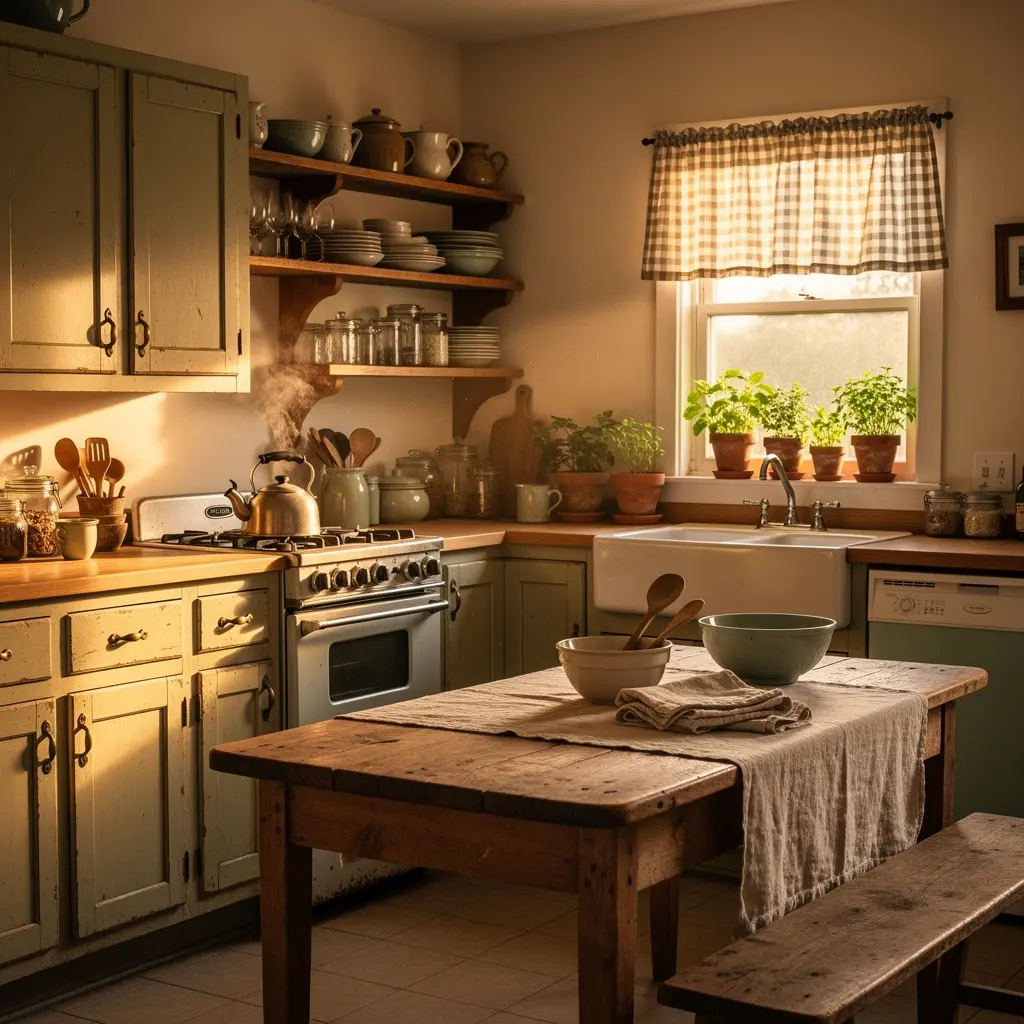
A pendant light with an aged brass finish, or a simple schoolhouse style fixture, adds warm, period appropriate lighting that suits the room far better than a modern, bright overhead fixture. This detail matters more than people expect, since lighting shapes the whole mood of a kitchen.
9. Bring in a Vintage or Vintage Inspired Rug
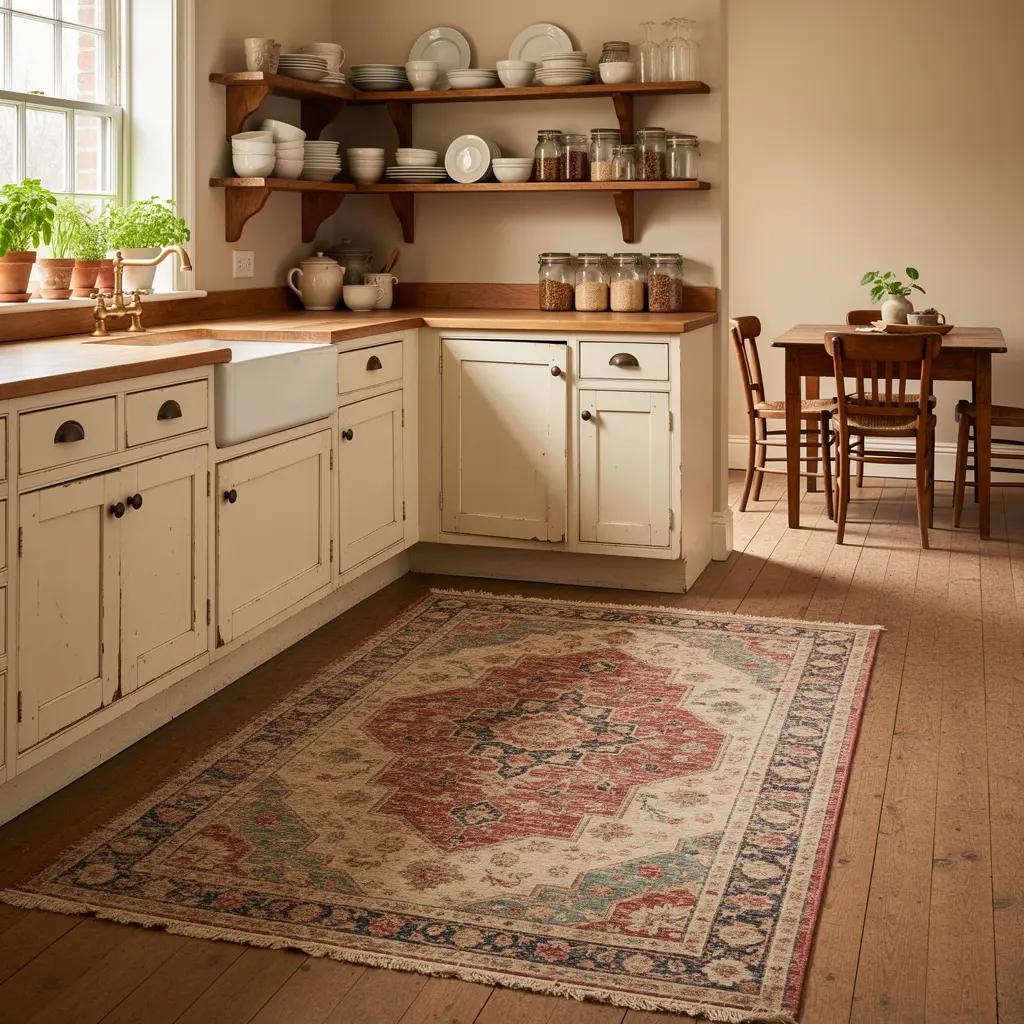
A runner with a faded, traditional pattern in front of the sink or stove adds warmth underfoot and reinforces the room’s overall collected feeling. This is a detail often overlooked in kitchens but genuinely impactful once it’s in place.
10. Display a Few Genuine Collected Items
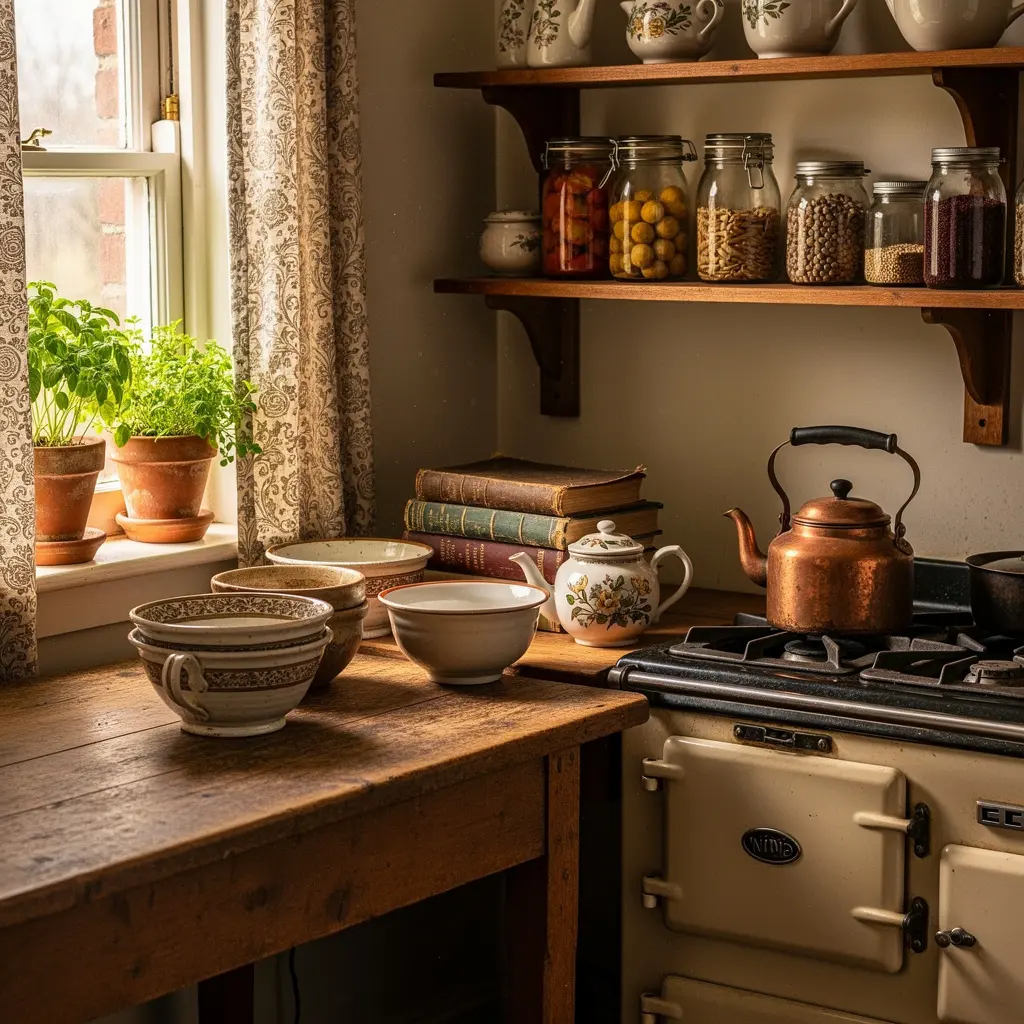
A vintage sign, a well loved set of mixing bowls, or an old family recipe box on the counter gives the kitchen a sense of real history that purchased decor can’t replicate. These small personal touches are what actually separate a genuine vintage kitchen from a themed one.
Mistakes to Avoid
- Choosing heavily ornate, overly detailed cabinetry instead of a simple Shaker or beadboard style
- Painting cabinets in a bright, saturated color instead of a softer, more muted tone
- Using sleek chrome hardware instead of warmer brass or matte black finishes
- Skipping open shelving entirely, which limits the room’s sense of genuine, collected character
- Choosing cold, polished stone countertops instead of warmer wood surfaces
- Filling the kitchen with purchased vintage themed decor instead of genuinely personal, collected objects
Frequently Asked Questions
What cabinet style works best for a vintage kitchen? Simple Shaker or beadboard cabinetry offers a classic, versatile silhouette that suits a wide range of vintage eras without looking overly tied to one specific decade.
What colors suit a vintage kitchen best? Softer, more muted tones like sage, buttery cream, or muted blue tend to read as warm and current rather than dated, especially when paired with white or cream uppers.
Do I need a farmhouse sink for a genuine vintage kitchen feel? Not strictly, but a deep, apron front farmhouse sink is one of the most recognizable vintage kitchen features and works as a real focal point relative to its cost.
Should kitchen hardware be brass or matte black for a vintage look? Either works well, since both read as considerably warmer and more period appropriate than sleek, modern chrome finishes.
How can I make a vintage kitchen feel personal rather than themed? Display genuinely collected items, an old recipe box, well loved dishware, a vintage sign, rather than relying entirely on purchased vintage themed decor.
Conclusion
Cozy vintage kitchen ideas work best when the foundation, cabinetry, color, hardware, does most of the work, with a few genuinely personal touches layered on top rather than an entire room full of themed purchases. Start with simple cabinetry in a warm, muted color, add brass or black hardware, and let open shelving and personal collected items give the kitchen its real character over time.

Leave a Reply