10 Grandmillennial Living Room Decor Ideas for a Room That Feels Collected
You keep seeing rooms online with chintz pillows, a skirted sofa, and gallery walls full of mismatched frames, and you love it, but your own living room is still stuck somewhere between blank and boring. Grandmillennial living room decor ideas take the traditional pieces you’d find in your grandmother’s house, floral fabric, brass, needlepoint, and mix them with a younger, more playful sense of color and scale. It’s a style built on contrast. Old meets new. Formal meets fun. And that tension is exactly what makes it work.
Here are ten specific ways to bring the grandmillennial look into a living room, plus a few habits that turn the style precious instead of lived in.
1. Start With a Chintz or Floral Sofa
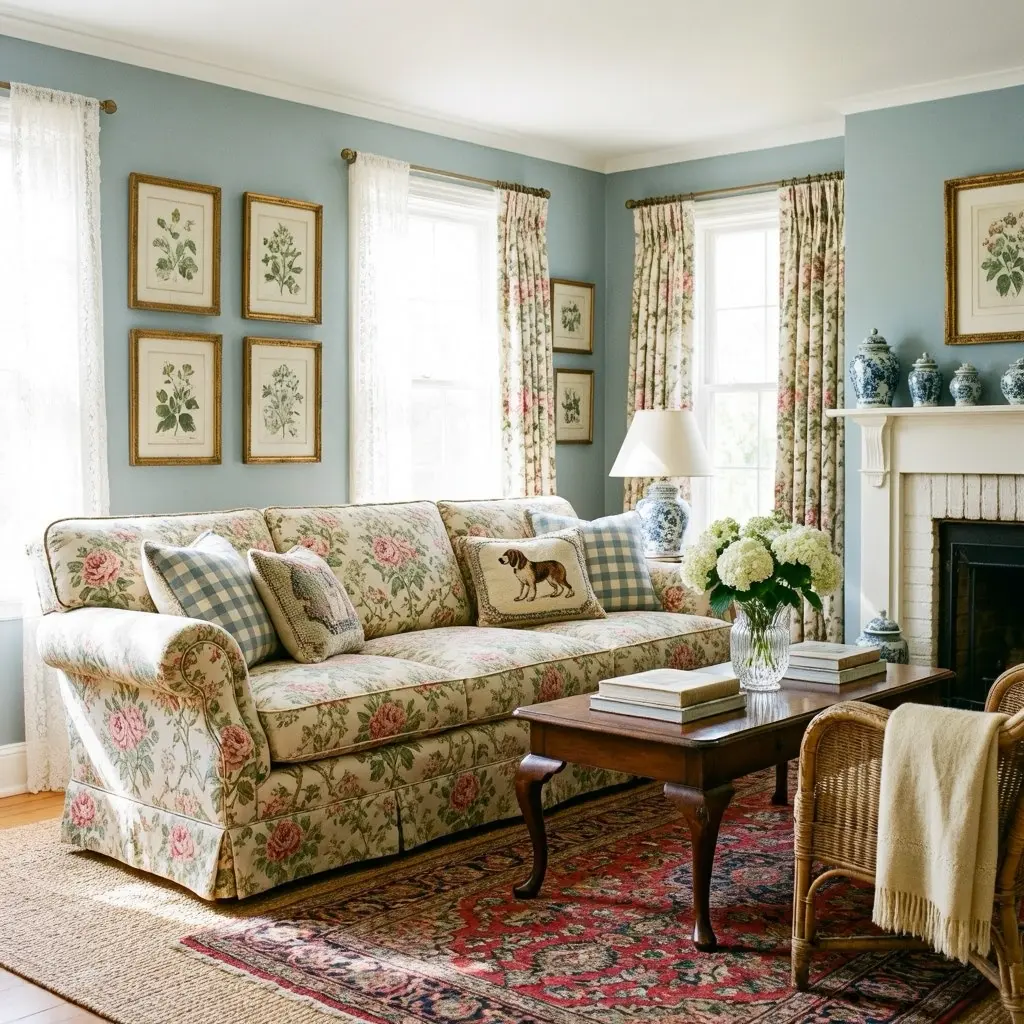
A patterned sofa is the boldest, most defining move in this style, and it’s worth committing to if you’re serious about the look. Skip anything too matched or too safe. A busy floral in a saturated color, think deep red, forest green, or navy, does more work here than a subtle, muted pattern ever could.
Not ready for a full sofa in pattern? Start with a slipcover. Several companies now make chintz slipcovers sized for standard sofa shapes, which is a lower risk way to test the look before reupholstering anything permanently.
2. Mix High and Low Furniture Without Apology
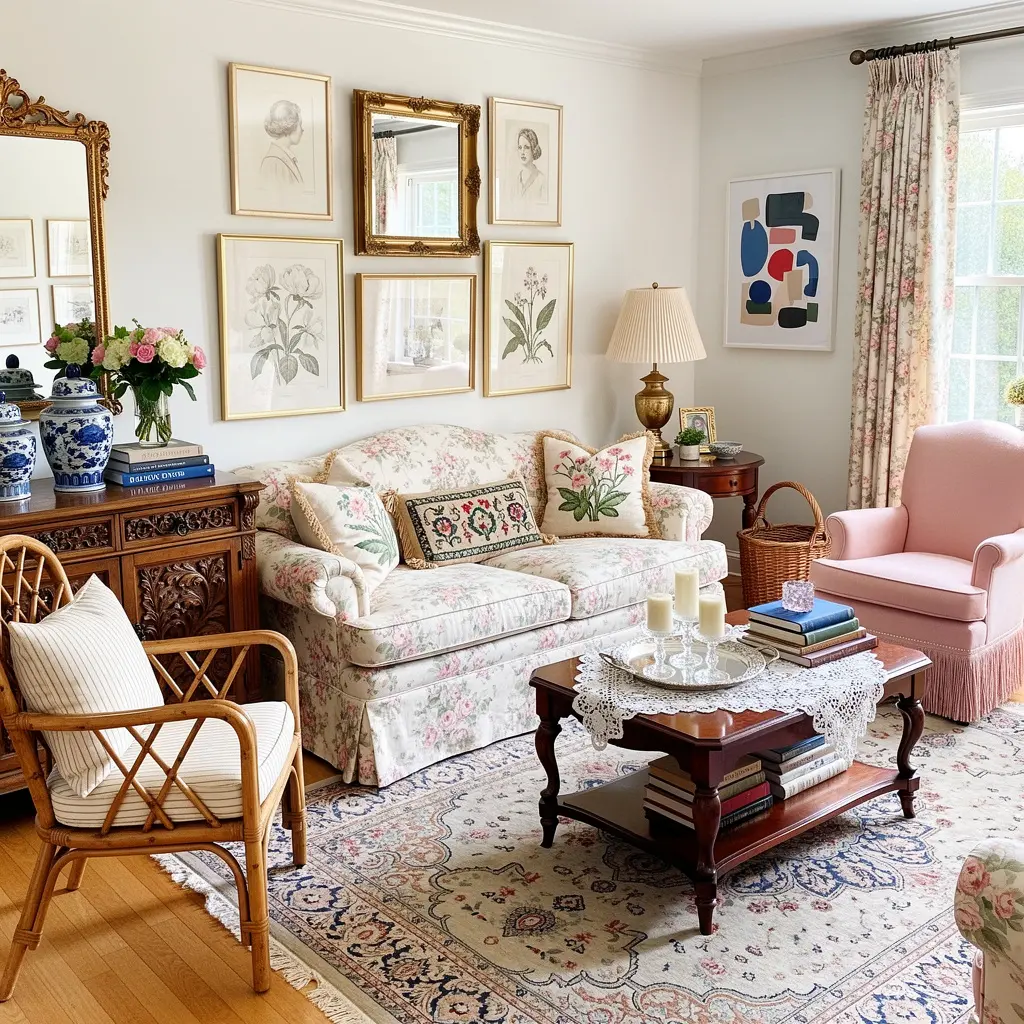
Grandmillennial rooms rarely look like a single furniture store haul. A thrifted brass side table sits next to a new, well made sofa. An inherited lamp sits on a console you bought online last year. This mixing is the point, not a compromise you’re making until you can afford better.
Where the Mixing Matters Most
Focus the higher end investment on pieces you touch daily, a sofa, a good rug, and let smaller accent pieces, side tables, lamps, small chairs, come from wherever you find them: estate sales, family hand me downs, secondhand shops.
3. Build a Gallery Wall With Mismatched Frames
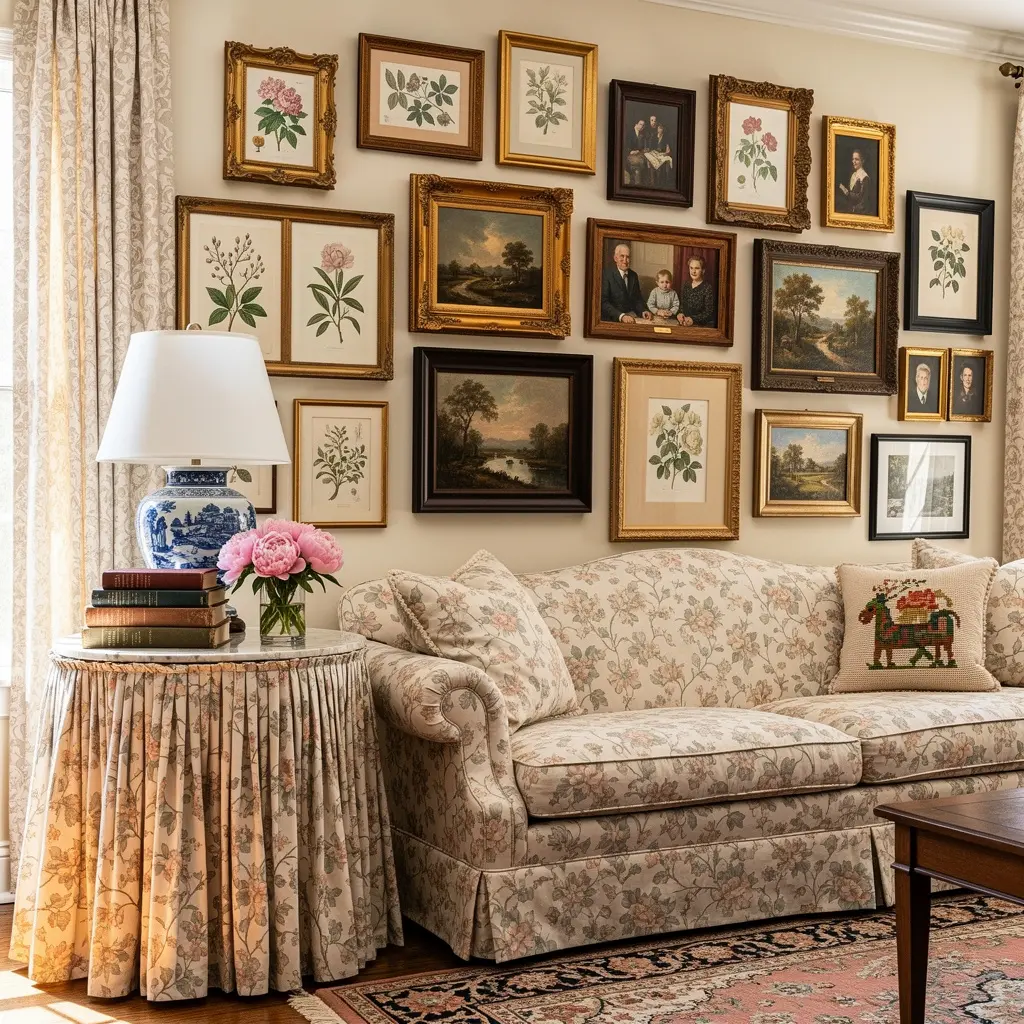
A tightly curated, matching frame gallery wall reads as modern minimalism, which is the opposite of what this style is going for. Grandmillennial gallery walls mix gold, wood, and even a few ornate frames, hung close together with art and photos of varying subjects and eras.
Don’t measure everything out with a template first. Part of the charm here is a slightly imperfect arrangement that looks like it accumulated over years rather than got planned on a single Saturday.
4. Add Needlepoint or Embroidered Pillows
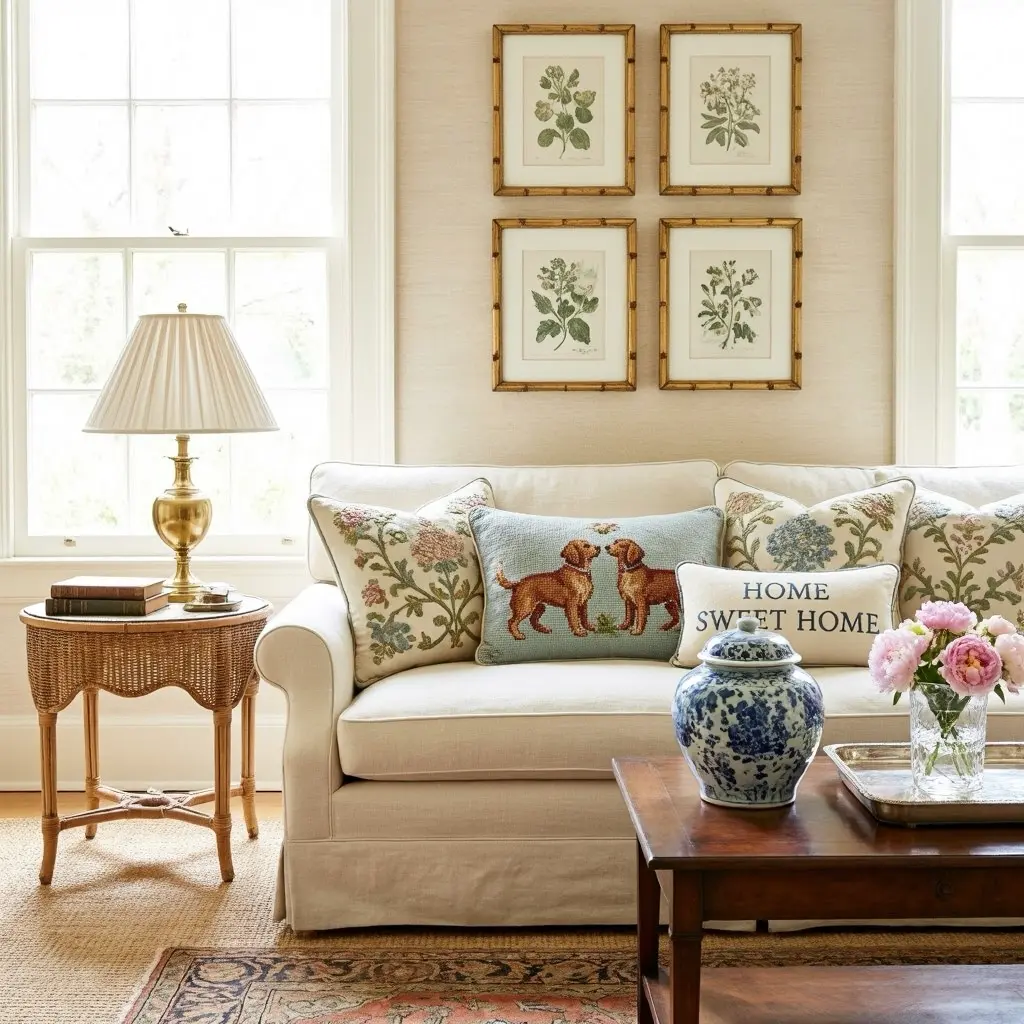
A needlepoint pillow with an animal, a monogram, or a whimsical phrase is a signature grandmillennial detail. These pieces bring in a handmade quality and a bit of humor that keeps the whole room from feeling too serious or too formal.
Vintage needlepoint pillows show up regularly at estate sales and secondhand shops, often for less than a new equivalent, and they carry more character than something mass produced.
5. Use Brass Lighting With Real Presence
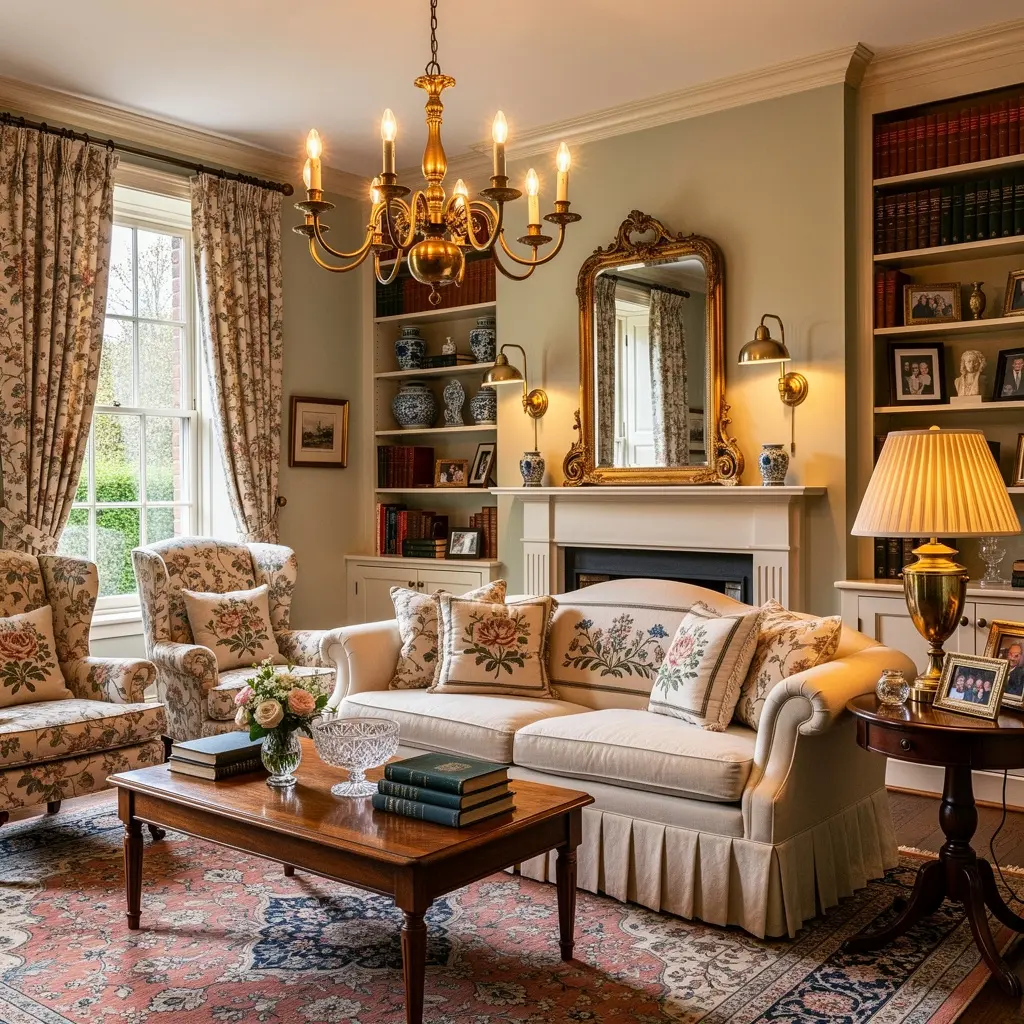
Skip minimalist, blackened metal fixtures here. Brass table lamps, a brass floor lamp with a pleated shade, or an antique brass chandelier all fit the traditional, slightly formal foundation this style is built on. The brass doesn’t need to be brand new. Aged, slightly tarnished brass often looks more authentic than a polished replica.
Layering Multiple Light Sources
A single overhead fixture rarely does justice to a grandmillennial room. Add table lamps, a floor lamp, and maybe a small picture light over a piece of art, so the room has several warm points of light instead of one flat source.
6. Skirt Your Furniture
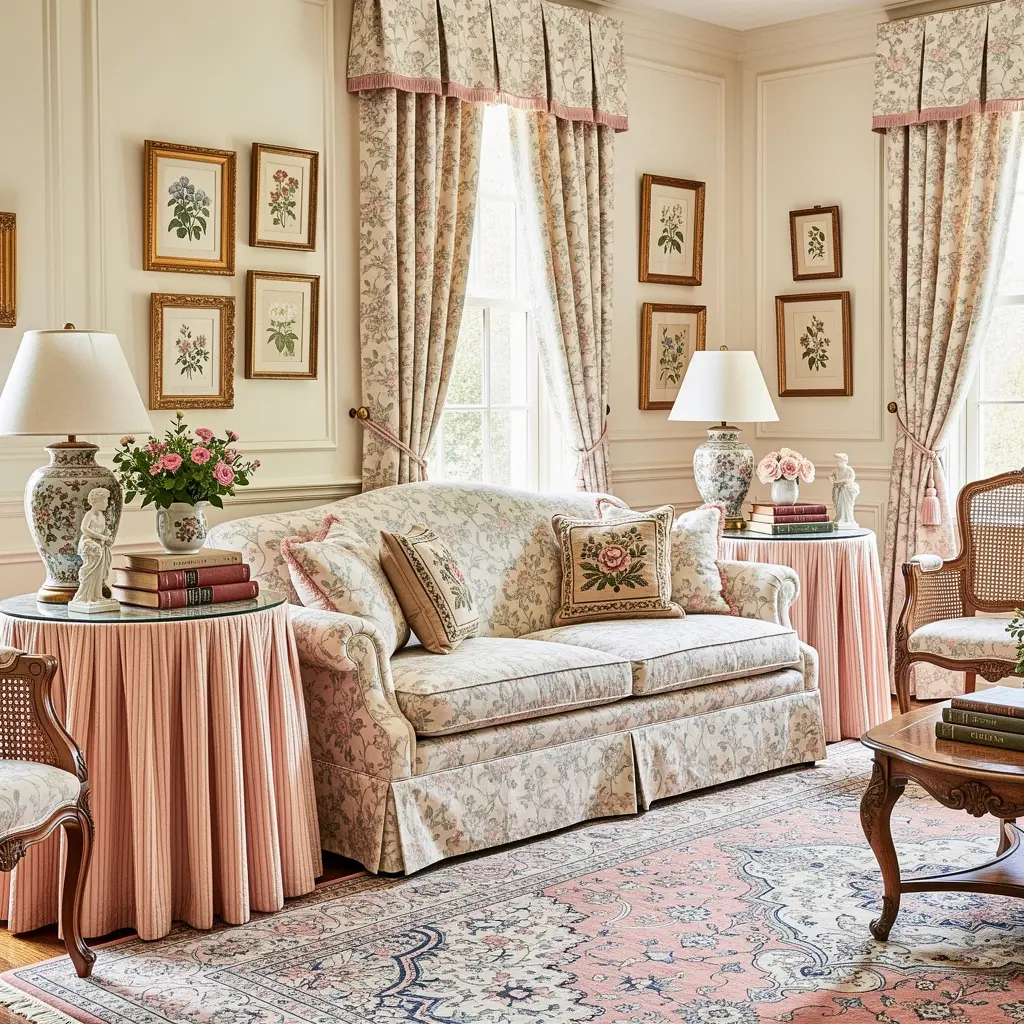
A skirted sofa or a round skirted table is a classic traditional silhouette that grandmillennial decor leans into rather than avoids. The soft, tailored fabric hanging to the floor reads as formal but not stiff, especially when the fabric itself is a bold color or pattern rather than a plain neutral.
7. Layer Patterns Instead of Picking Just One
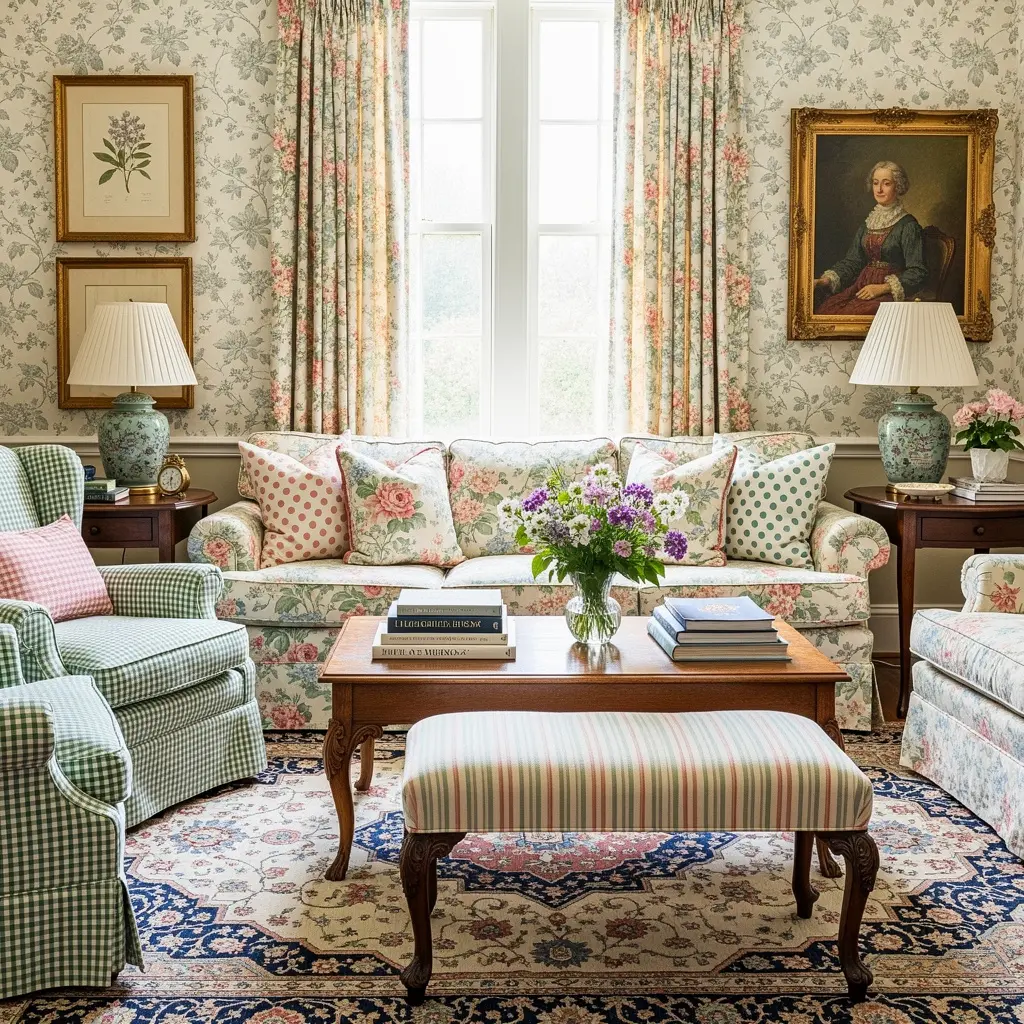
This is where grandmillennial decor differs most from a typical modern room. Instead of one accent pattern, layer several: a floral sofa, a striped throw pillow, a checked ottoman. The trick is keeping the color palette connected, even if the patterns themselves are quite different, so the room reads as coordinated rather than chaotic.
A Simple Way to Start Layering
Pick two or three colors you want repeated throughout the room, then look for patterns in those colors regardless of the pattern type. A green and cream floral, a green and cream stripe, and a green and cream check will work together even though none of them match exactly.
8. Add a Traditional Rug With Some Age to It
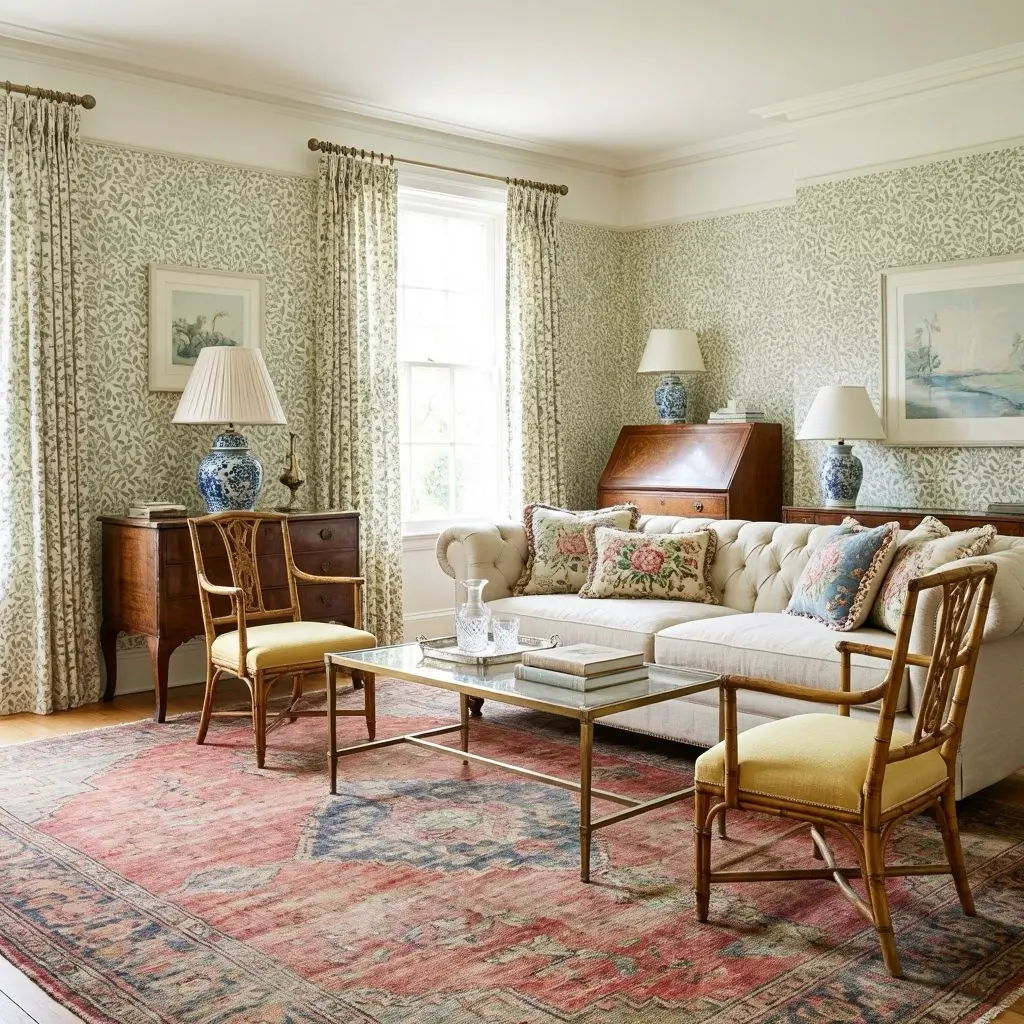
A worn Persian or Oriental style rug, ideally an actual vintage or antique find rather than a brand new reproduction, grounds a grandmillennial room in a way a flat, contemporary rug can’t. The slight wear and faded color variation reads as history rather than damage.
9. Bring in China, Silver, or Glassware as Decor
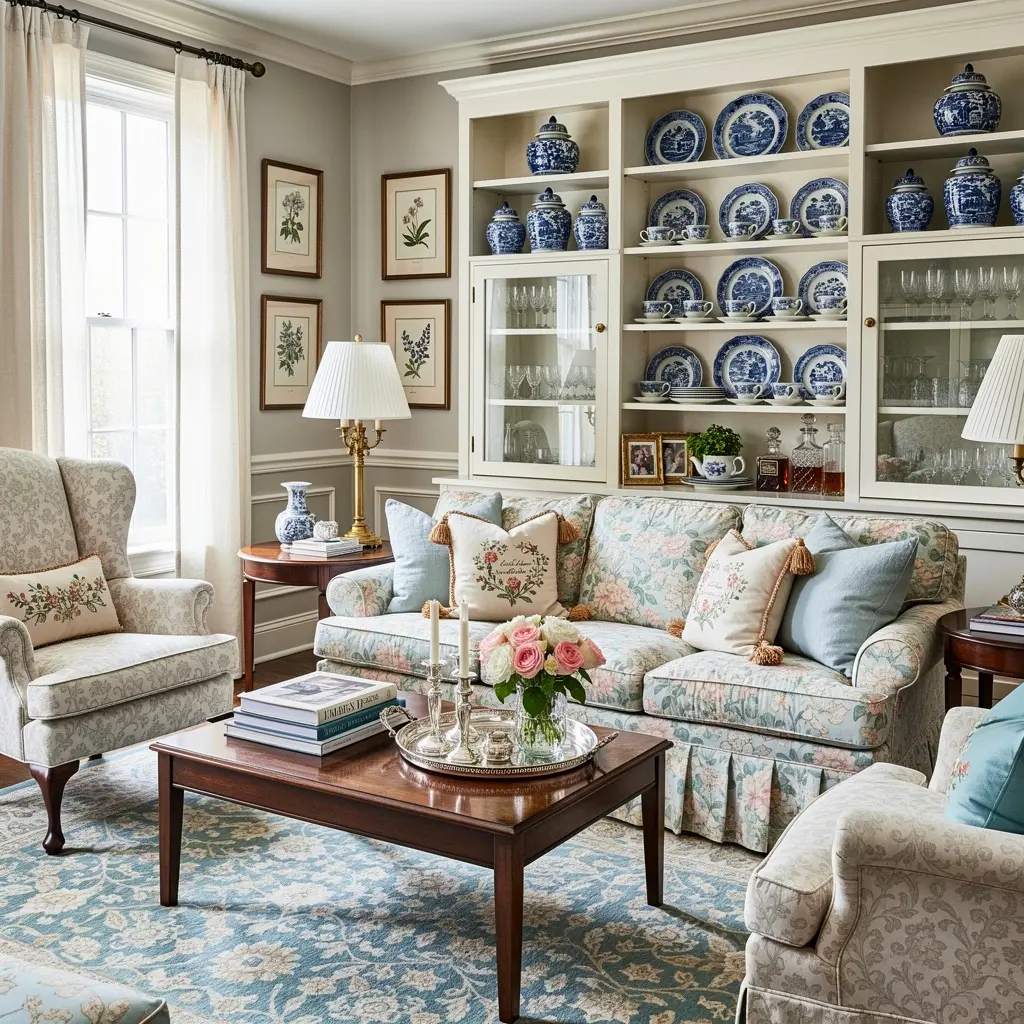
Displaying a stack of vintage china, a silver tray, or a set of cut glass tumblers on a shelf or console isn’t just for the dining room in this style. These pieces show up in living rooms too, often repurposed to hold flowers, mail, or small trinkets rather than sitting unused in a cabinet.
10. Include a Bold Color Beyond the Usual Neutrals
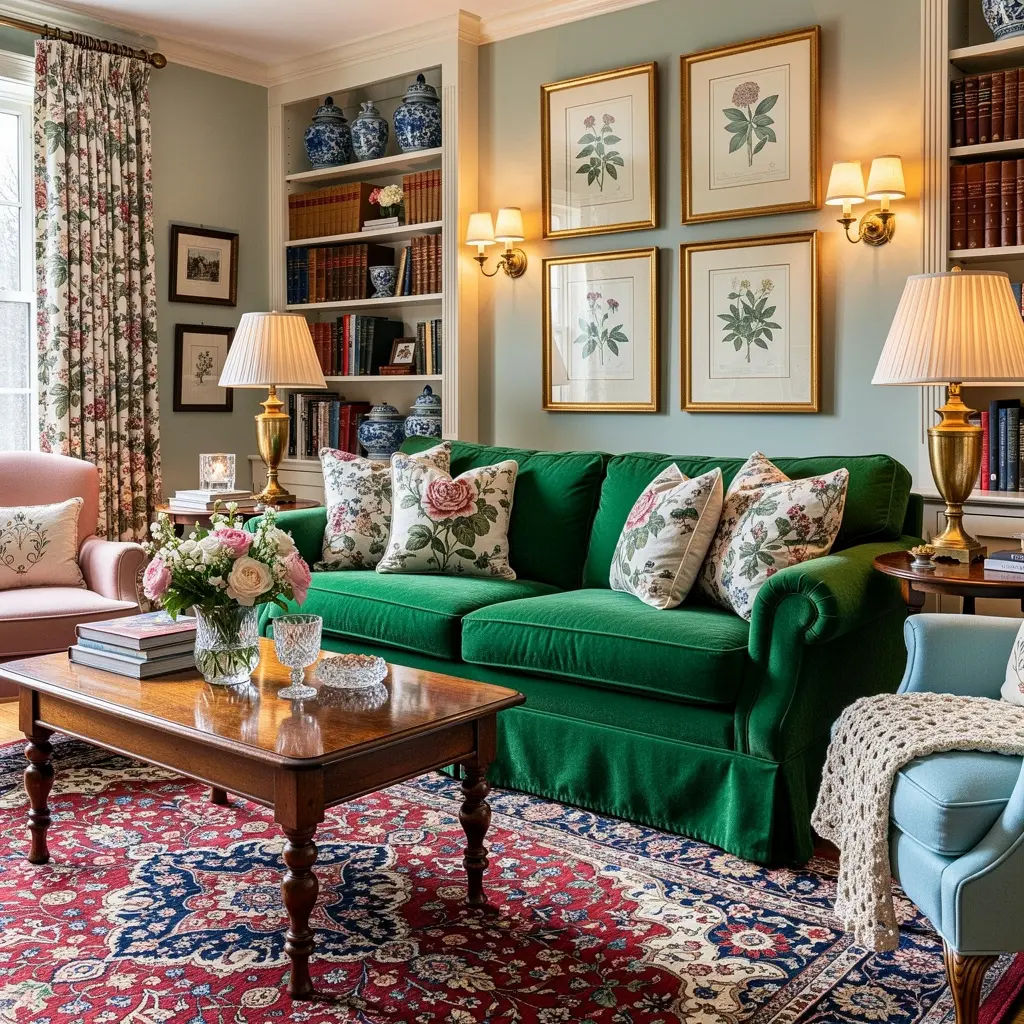
Where a lot of modern styles default to white, gray, and beige, grandmillennial decor isn’t afraid of color: kelly green, coral, deep red, or a rich navy all show up regularly. Choosing one of these as a dominant color, rather than an occasional accent, is often what separates a genuinely grandmillennial room from a traditional room that’s simply avoiding trends.
Mistakes to Avoid
- Matching every pattern too closely instead of layering different pattern types in a connected palette
- Choosing a perfectly matched gallery wall frame set instead of mixing styles and finishes
- Sticking to safe neutrals and skipping bold color entirely
- Buying only new furniture instead of mixing in vintage or secondhand pieces
- Using cool, minimalist lighting instead of warm, traditional brass fixtures
- Over planning the room until it feels staged rather than gradually collected
Frequently Asked Questions
Is grandmillennial decor the same as traditional decor? Not exactly. Grandmillennial style borrows heavily from traditional decor, chintz, brass, needlepoint, but adds a younger, more playful sensibility through color and a willingness to mix eras rather than stick to one period.
Do I need real antiques for this style to work? No. A mix of genuinely old pieces, secondhand finds, and new furniture is actually more true to the style than an entirely antique room, since the mixing itself is part of the look.
What colors work best for a grandmillennial living room? Saturated, classic colors like kelly green, navy, coral, and deep red tend to define the style, often paired with cream or white as a base rather than gray or beige.
Can this style work in a small living room? Yes. A patterned accent chair, a gallery wall, and a few brass lamps can bring the look into a smaller space without needing a full skirted sofa or a huge antique rug.
Where can I find affordable grandmillennial pieces? Estate sales, secondhand shops, and online marketplaces are usually the best sources for the vintage brass, china, and needlepoint pieces central to the look, often at a fraction of what new versions cost.
Conclusion
Grandmillennial living room decor works because it doesn’t try too hard to look perfect. It mixes eras, mixes budgets, and leans into color and pattern rather than hiding from them. Start with one bold move, a patterned sofa, a gallery wall, a vintage rug, and build the rest of the room around it slowly. The style rewards patience more than a single big shopping trip ever could, and honestly, that’s part of the appeal. A room that comes together over a year or two, piece by piece, tends to hold up better than one assembled in a single weekend anyway.