10 Living Room Furniture Ideas That Look Stylish & Comfortable
Furniture can look incredible in a showroom and completely fall apart once it’s in your actual house. The sofa’s suddenly too big. The coffee table’s out of reach. There’s nowhere to set a drink down without leaning across the room. That gap between how furniture looks on its own and how it actually functions together is what these living room furniture ideas are about. This isn’t a trend list. It’s about picking pieces that fit your space and get used every day, not just admired from across the room.
Most of it comes down to two things: scale and function. A gorgeous sofa that’s two feet too long for your room isn’t a good choice, no matter how nice the fabric feels under your hand in the store. Here are ten ways to think through your living room furniture so it looks intentional and actually holds up to how people really live in it, day after day, not just on the afternoon it gets delivered.
1. Start With a Sofa That Fits Your Actual Room, Not the Showroom
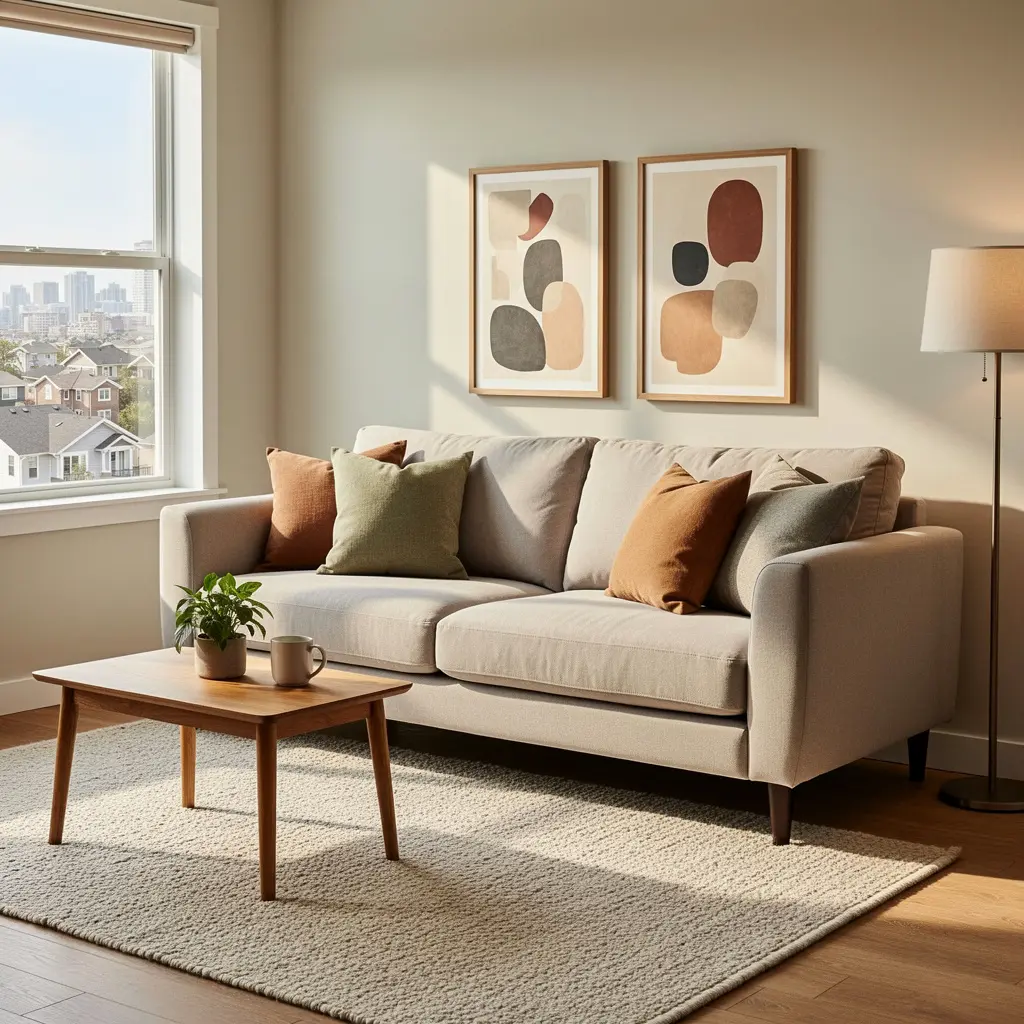
A sofa that looked perfectly reasonable in a huge, open showroom can swallow a smaller living room whole. Measure your space first, and don’t forget the doorways and hallways the thing has to travel through to actually get there. Standard sofas run 72 to 96 inches wide, and that’s a big enough range to matter a lot in a smaller room.
Leave at least 30 inches of walking space around it wherever you can. A sofa that technically fits but blocks every path through the room will bother you daily, even if it looked perfect the day you bought it.
2. Choose a Coffee Table Sized to Your Seating Arrangement
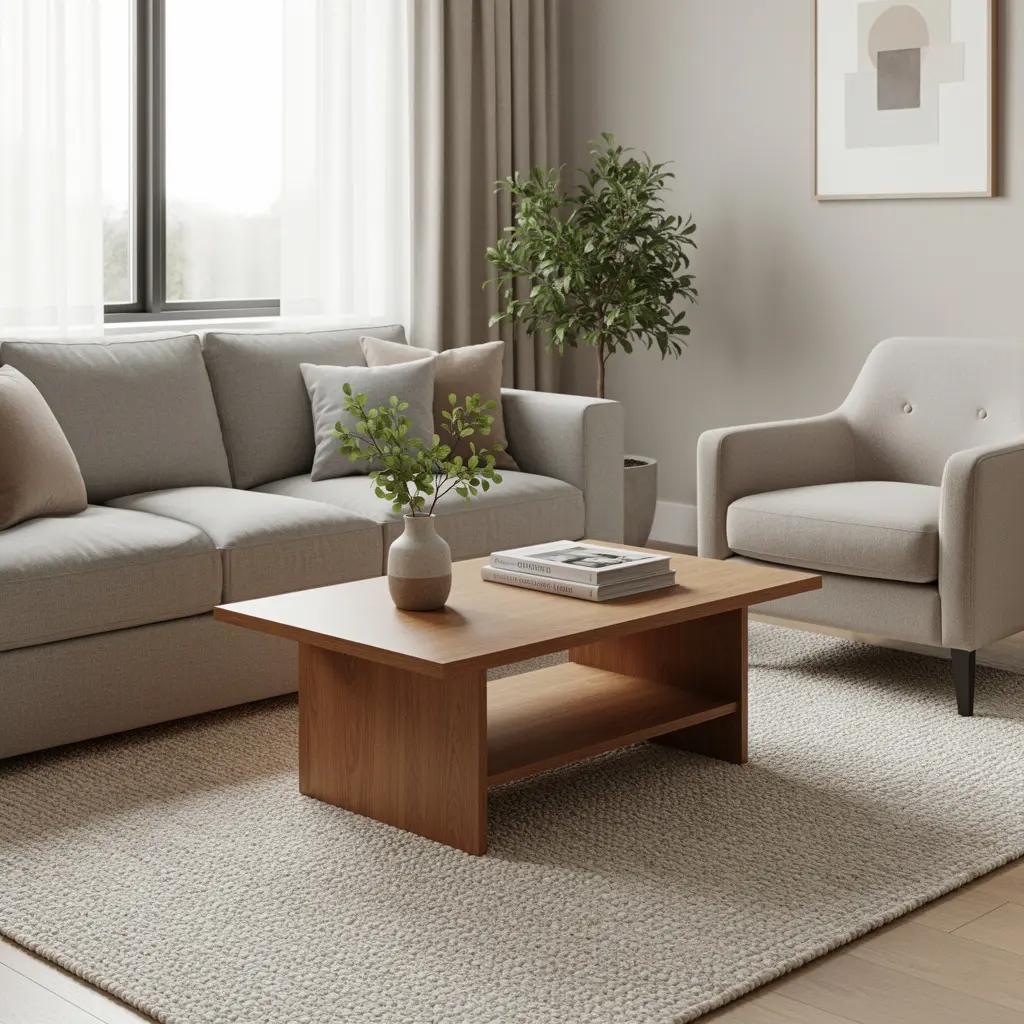
Too small, and the table gets lost in front of a big sectional. Too big, and it blocks the walkway and makes the whole room feel tight. Aim for 14 to 18 inches between the table and the sofa. Close enough to grab your coffee, far enough that you’re not banging your shins every time you walk past.
Height matters more than people think too. A coffee table should sit close to the height of your sofa cushions, give or take a couple inches, so it’s actually usable for setting things down or propping up your feet at the end of the day.
3. Add an Accent Chair for Extra Seating and Visual Interest
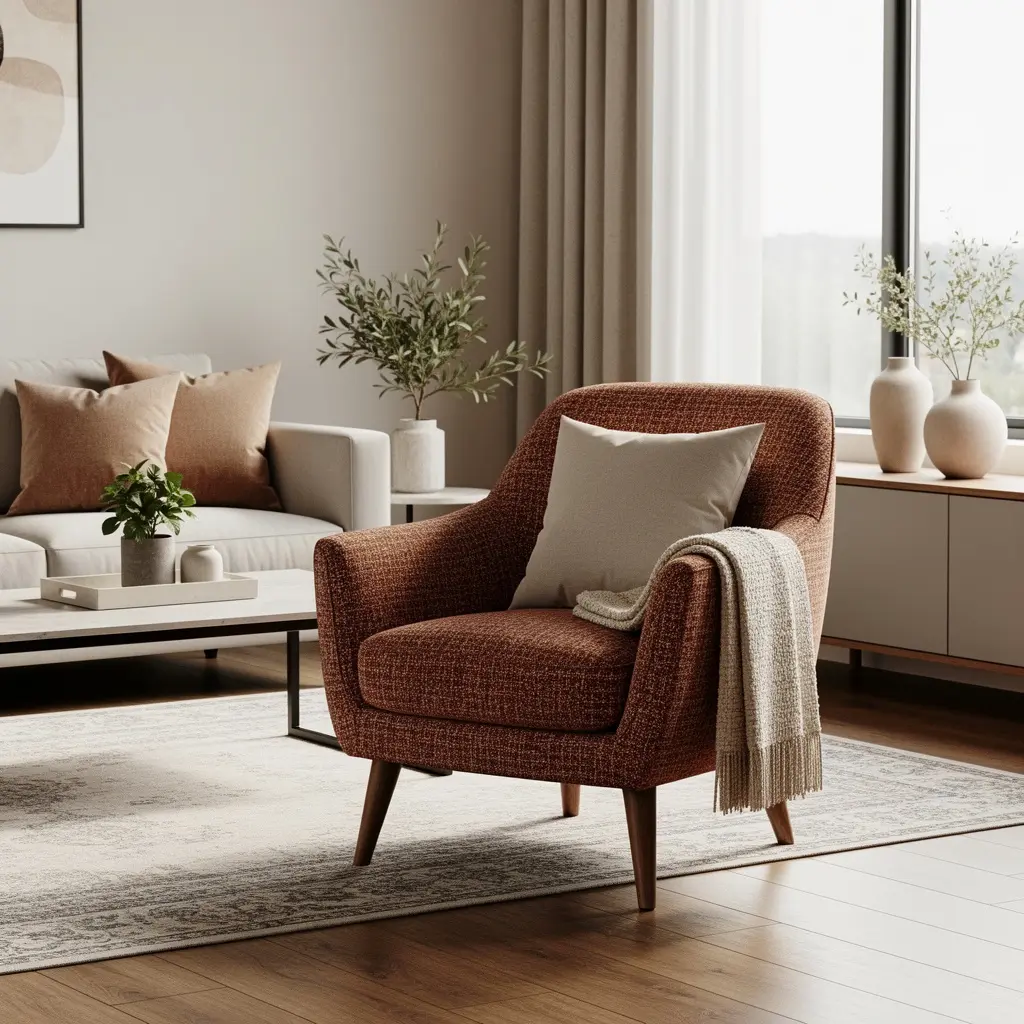
One or two accent chairs, angled toward the main seating area instead of lined up in a row like a waiting room, add both extra seating and a bit of visual variety. A different fabric or color than the sofa breaks up what can otherwise start to feel like one big block of furniture, especially in a room where the sofa already dominates most of the visual space.
And don’t feel like the chair has to match the sofa exactly. A slightly different but complementary style usually reads as more intentional than a perfectly matched set, honestly.
4. Pick a Media Console That Hides the Clutter
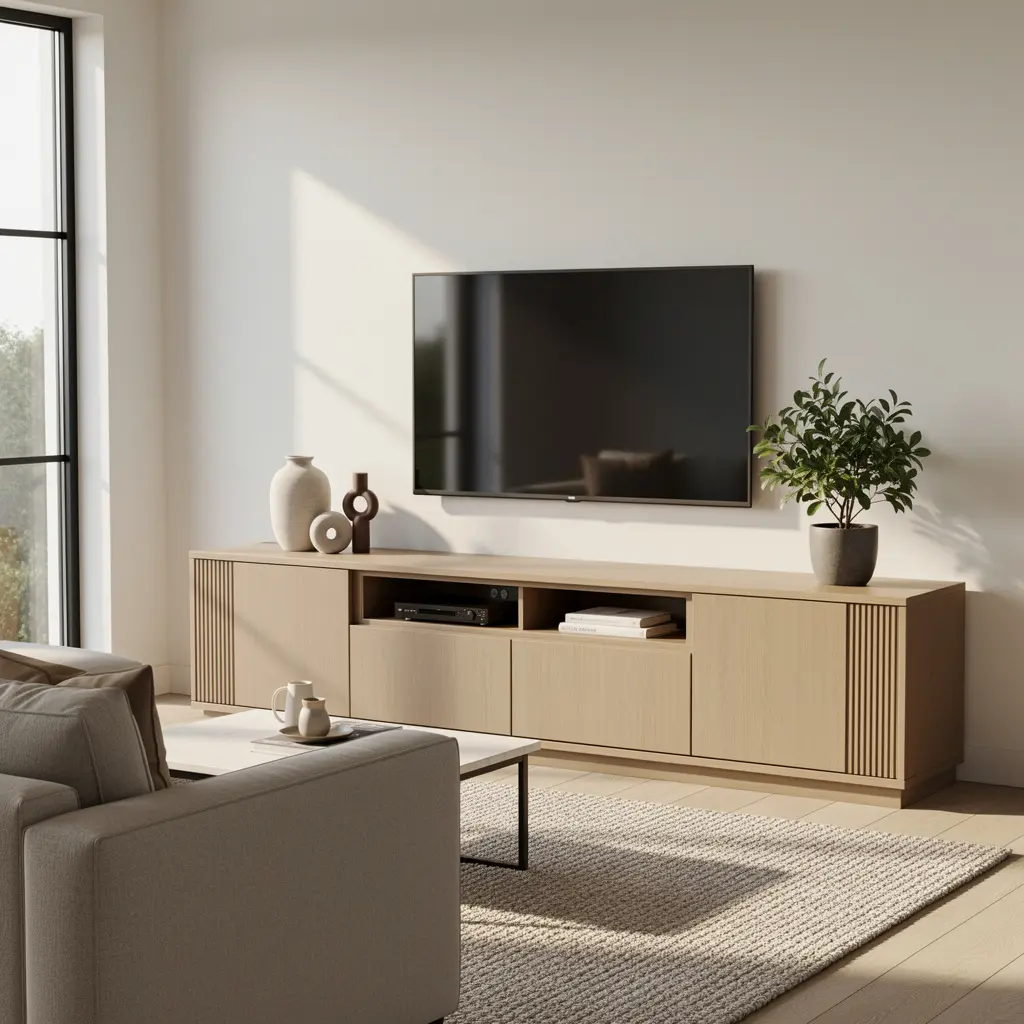
Closed storage beats open shelving alone for hiding remotes, cables, and whatever gaming console someone in the house insists on keeping out in plain sight. Look for at least one or two cabinet doors, even if you keep some open shelving too for displaying a few things.
Cable management matters here. A console with a back panel cutout for cords saves you from a tangle the second you plug in something new.
5. Use a Console Table Behind the Sofa for Extra Function
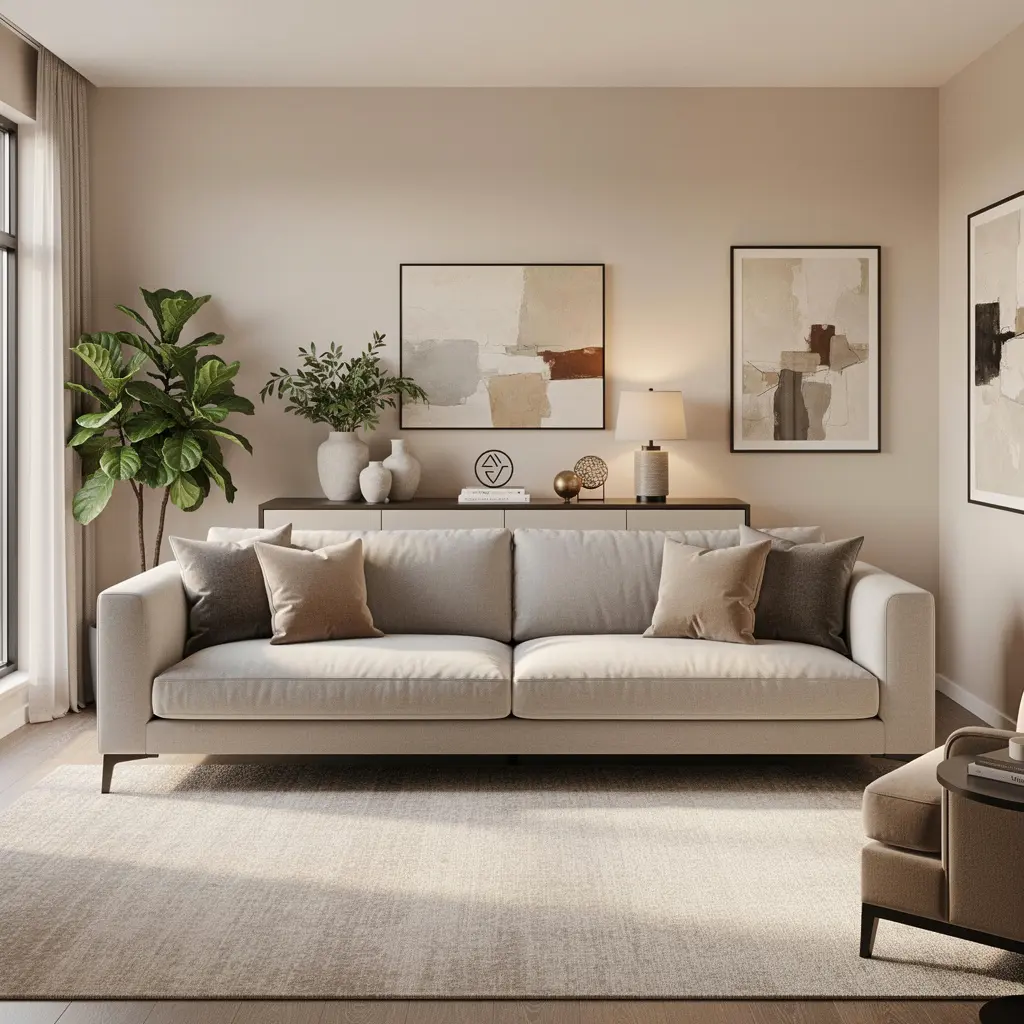
If your sofa sits in the middle of the room instead of against a wall, a console table behind it gives you somewhere for a lamp, some books, or a small tray, without making you walk across the room to a side table. This works especially well in open concept layouts where the back of the sofa faces a walkway.
Keep the console slightly shorter than the sofa itself. One that extends well past the sofa on either side tends to look like an afterthought instead of a planned piece.
6. Layer in Side Tables Within Reach of Every Seat
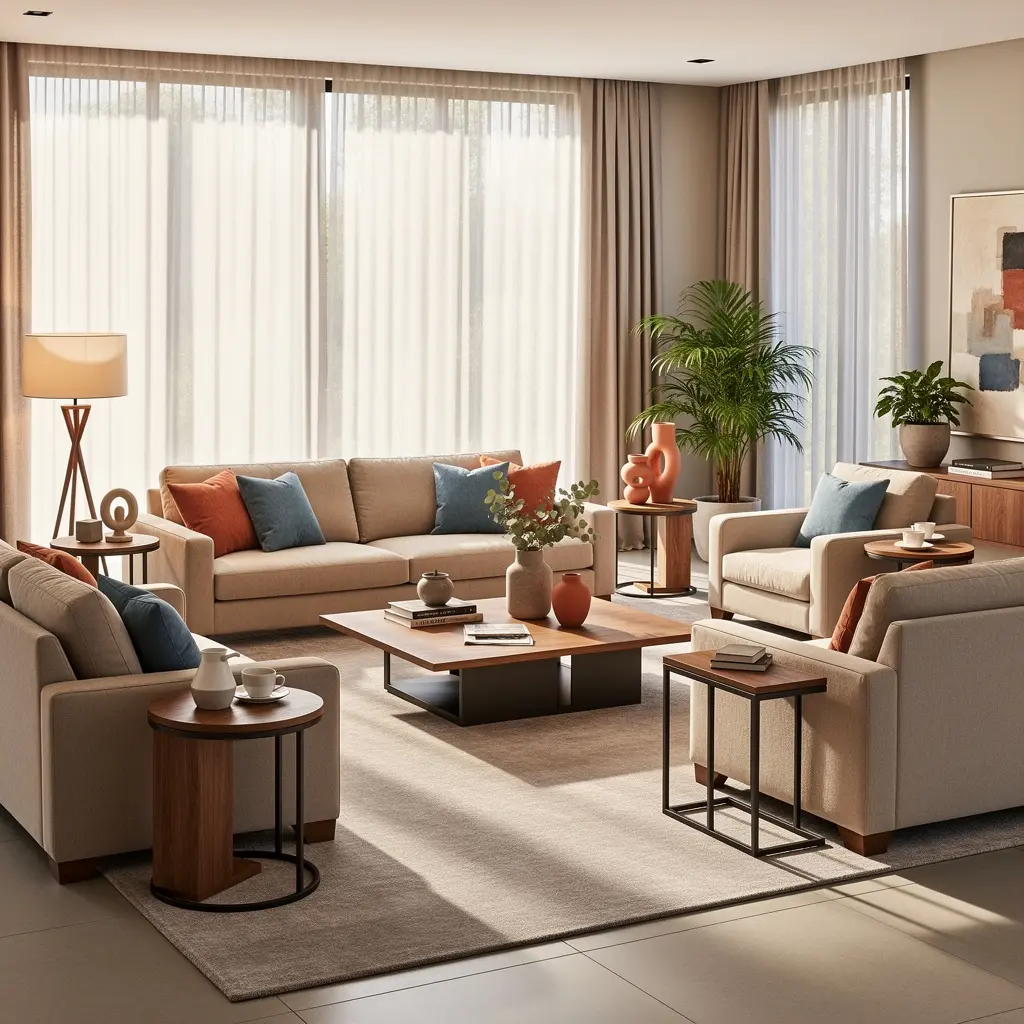
There’s nothing more annoying than a great chair with nowhere nearby to set your coffee. Every major seat, the ends of the sofa, beside the accent chair, should have a side table within arm’s reach.
They don’t need to match each other. Actually, a wood table on one side and a slightly different finish on the other can look more collected than furniture bought as one matching set.
7. Choose an Ottoman for Flexible Extra Seating or Storage
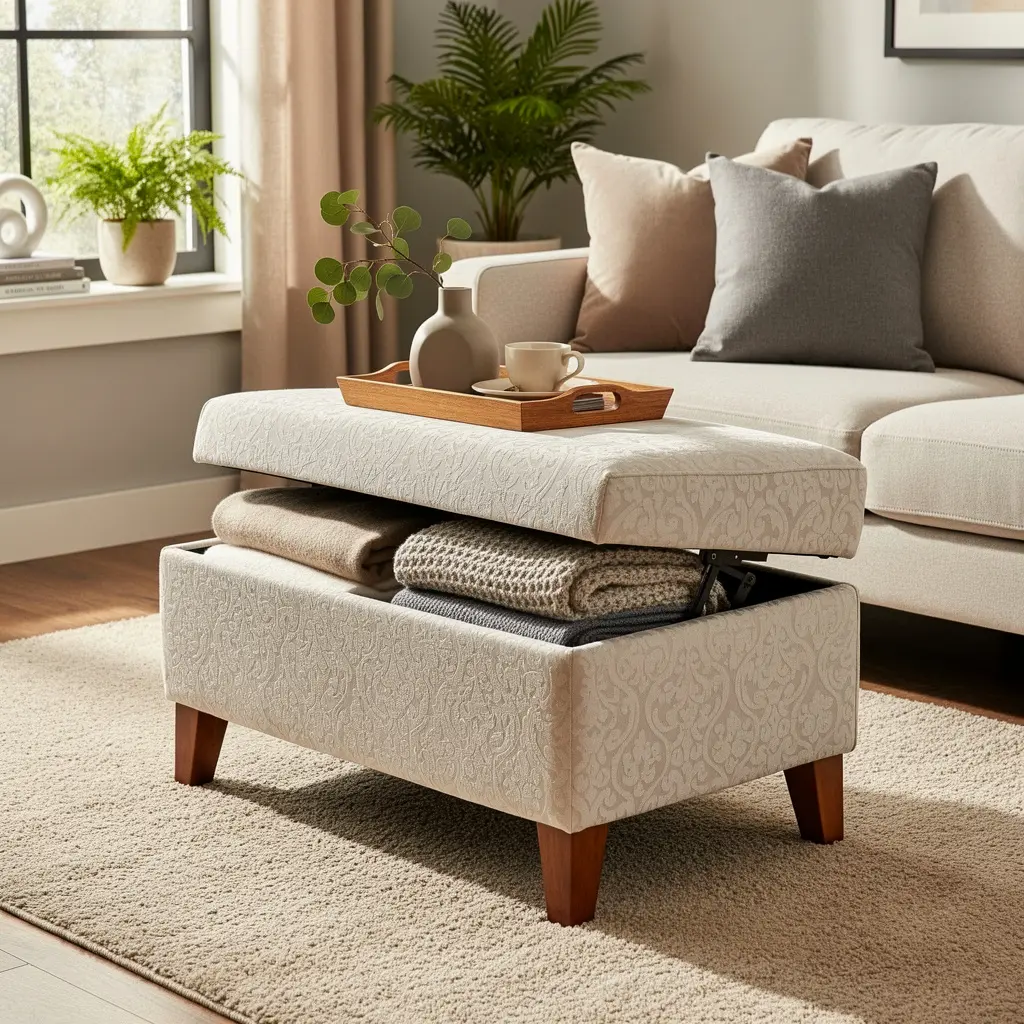
An ottoman does a lot of jobs. Footrest most days, extra seating when people come over, a spot for a tray of snacks when you’re hosting. A storage ottoman takes it further, giving you a place to stash blankets or remotes when you need the room to look tidy in about thirty seconds.
Size it to roughly two thirds the width of the coffee table if you’re using both together. Otherwise the proportions look off.
8. Add Bookshelves or a Bookcase for Storage and Display
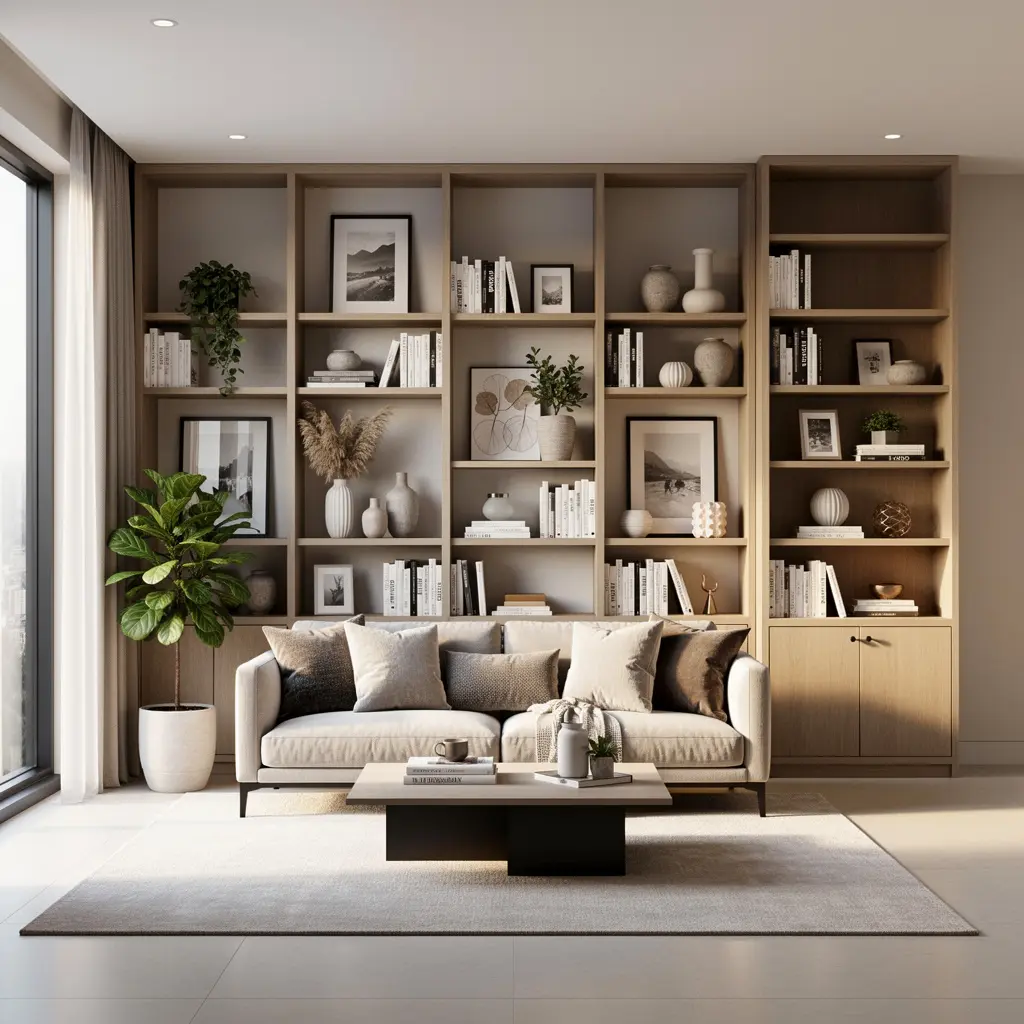
A bookshelf pulls double duty. Real books, sure, but also a spot for a few decorative objects, photos, or a plant. That’s especially useful in a room that has to handle relaxed everyday life and the occasional guest.
Don’t cram every shelf full. Leave some breathing room between groupings of books and objects, or the whole thing starts to look like storage that happens to be visible instead of something actually styled.
9. Mix Furniture Styles Instead of Buying a Matching Set
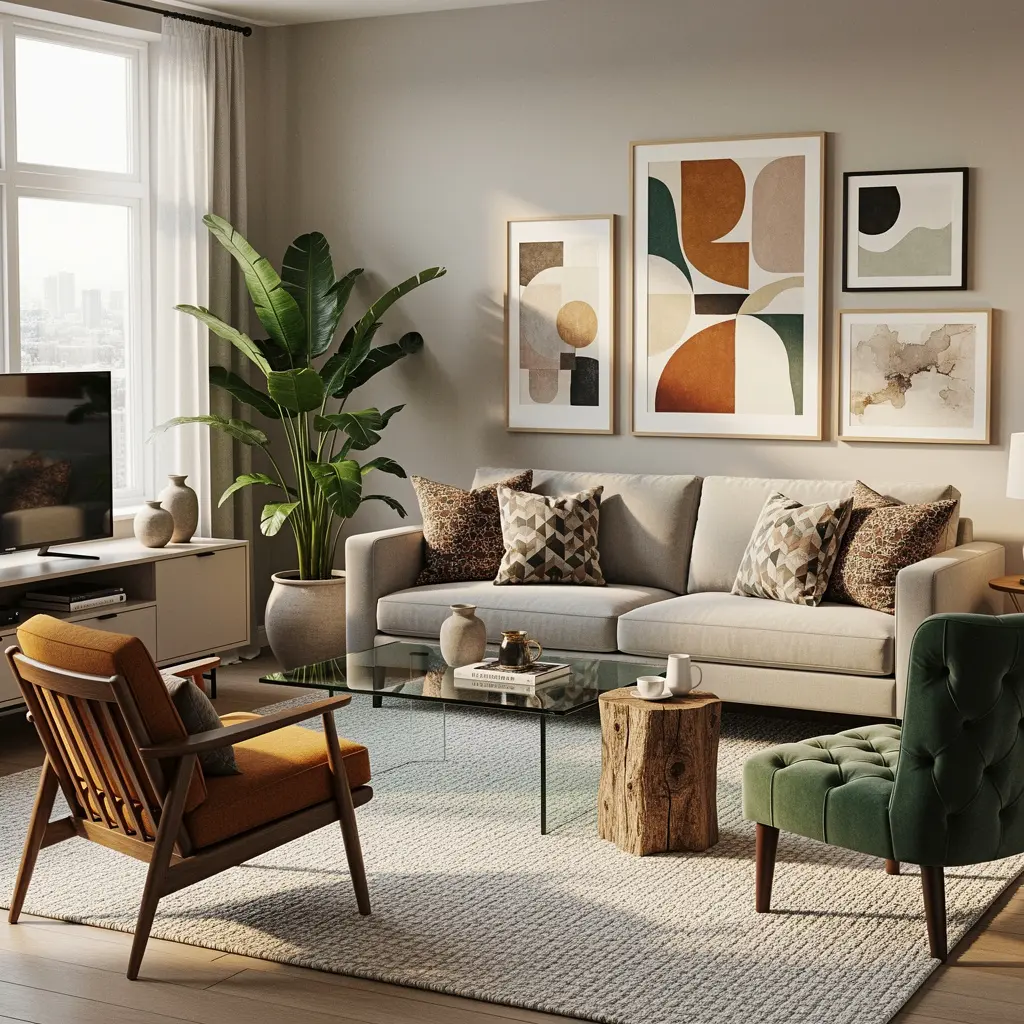
A living room built from one matching furniture set can end up looking like a showroom floor rather than someone’s actual home. A modern sofa with a vintage coffee table. A traditional accent chair next to a more contemporary console. That kind of mix tends to feel more personal, more collected over time, like it grew alongside the people living there instead of arriving in one truck.
The thread tying it together doesn’t have to be style at all. A shared color palette or wood tone across otherwise different pieces is usually enough to keep things from feeling chaotic, even when the individual pieces come from completely different eras or stores.
10. Leave Enough Walking Space Between Furniture Pieces
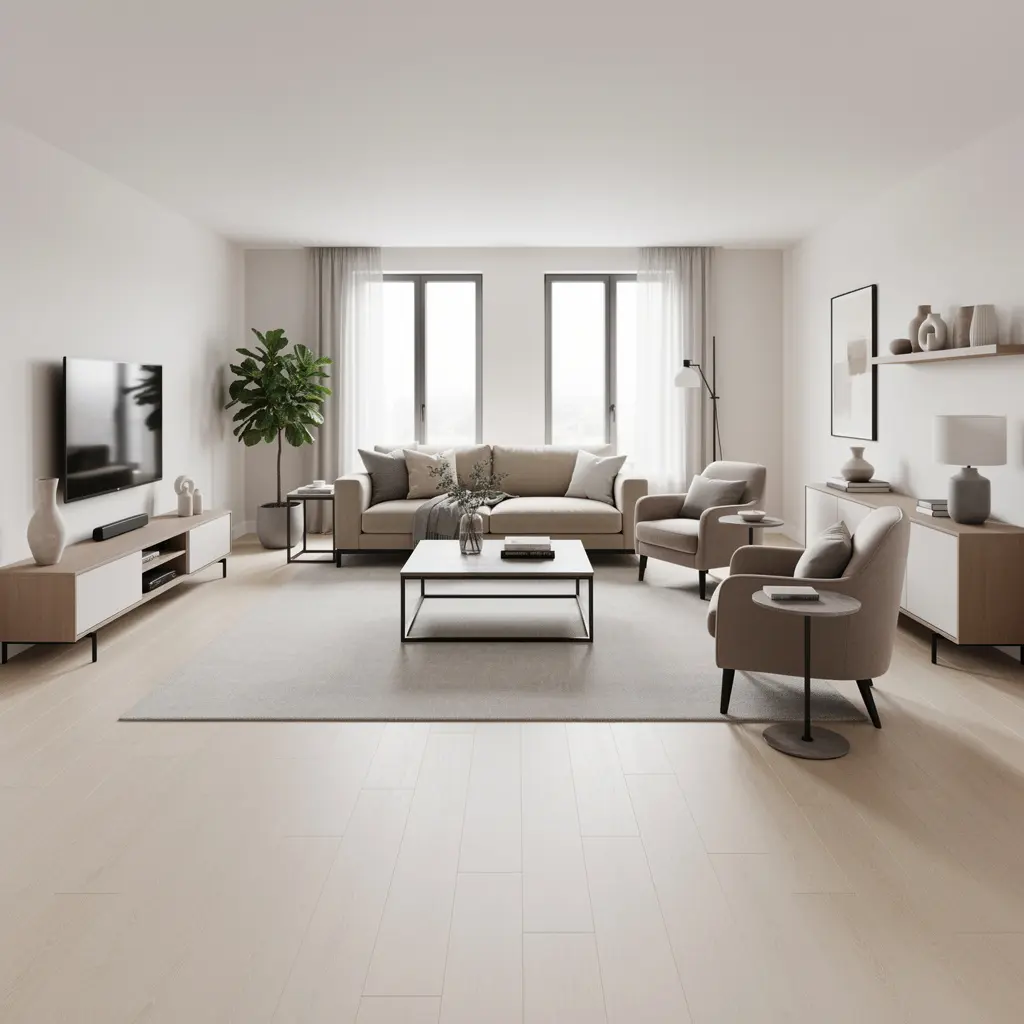
Even great furniture can make a room feel cramped if there’s no clear path through it. Aim for at least 18 inches between pieces you’ll walk past regularly, closer to 30 inches for a main walkway.
This is probably the most common mistake in living room layouts. People fall in love with individual pieces one at a time and forget to think about how someone actually moves through the room once it’s all in place.
Mistakes to Avoid
- Buying a sofa sized for a showroom without measuring your actual room and doorways
- Choosing a coffee table that’s too tall or too short relative to your seating
- Skipping side tables and leaving seats with nowhere nearby to set down a drink
- Buying an entire matching furniture set instead of mixing styles for a collected look
- Overfilling bookshelves and open storage until they look cluttered rather than curated
- Ignoring walking space between furniture, which makes even a well decorated room feel cramped
Frequently Asked Questions
How do I choose the right size sofa for a small living room? Measure the room first, then look for something that leaves at least 30 inches of walking space around it. A sectional or a smaller two seat sofa usually works better in a compact room than a large three seat one.
What’s the right distance between a sofa and a coffee table? 14 to 18 inches, generally. Close enough to reach things easily, far enough that you’re not clipping your shins walking past it every day.
Should all my living room furniture match? No, honestly. A room built entirely from one matching set can end up feeling flat. Mixing styles and finishes, tied together with a shared color palette, tends to look more intentional and lived in.
How many accent chairs should a living room have? Most living rooms do fine with one or two, depending on how much extra seating you actually need beyond the sofa itself.
What furniture pieces are essential for a functional living room? A properly sized sofa, a coffee table, at least one side table, and some form of storage, whether that’s a media console or a bookshelf. Those cover the basics for most living rooms.
Conclusion
Good living room furniture isn’t about the most expensive pieces or a perfectly matched set from one store. It’s about choosing furniture sized right for your actual room, giving it enough space to move through comfortably, and mixing it up enough to feel collected rather than staged. Start with the sofa, since everything else gets planned around it, and build outward from there one piece at a time, rather than trying to furnish the whole room in a single weekend.