10 Modern Farmhouse Decor Ideas for 2026 That Feel Updated
You furnished your home in classic modern farmhouse style a few years ago, shiplap, black metal, mostly white everything, and it’s starting to feel more like a trend snapshot than a room that’s evolved with you. Modern farmhouse decor ideas for 2026 are moving in a warmer, softer direction, away from the stark black and white contrast that defined the style’s earlier years and toward richer wood tones, warmer whites, and a bit more texture and color throughout.
This guide covers ten specific ways to update modern farmhouse decor for 2026, along with the older elements of the style that are starting to feel dated rather than timeless. The good news is that most of these updates layer on top of what you already own rather than requiring a full teardown, since the underlying bones of farmhouse style, practical furniture, natural materials, a relaxed feel, haven’t really changed. It’s the finishes and color choices sitting on top of those bones that are shifting.
1. Swap Stark White Walls for Warmer, Creamier Tones
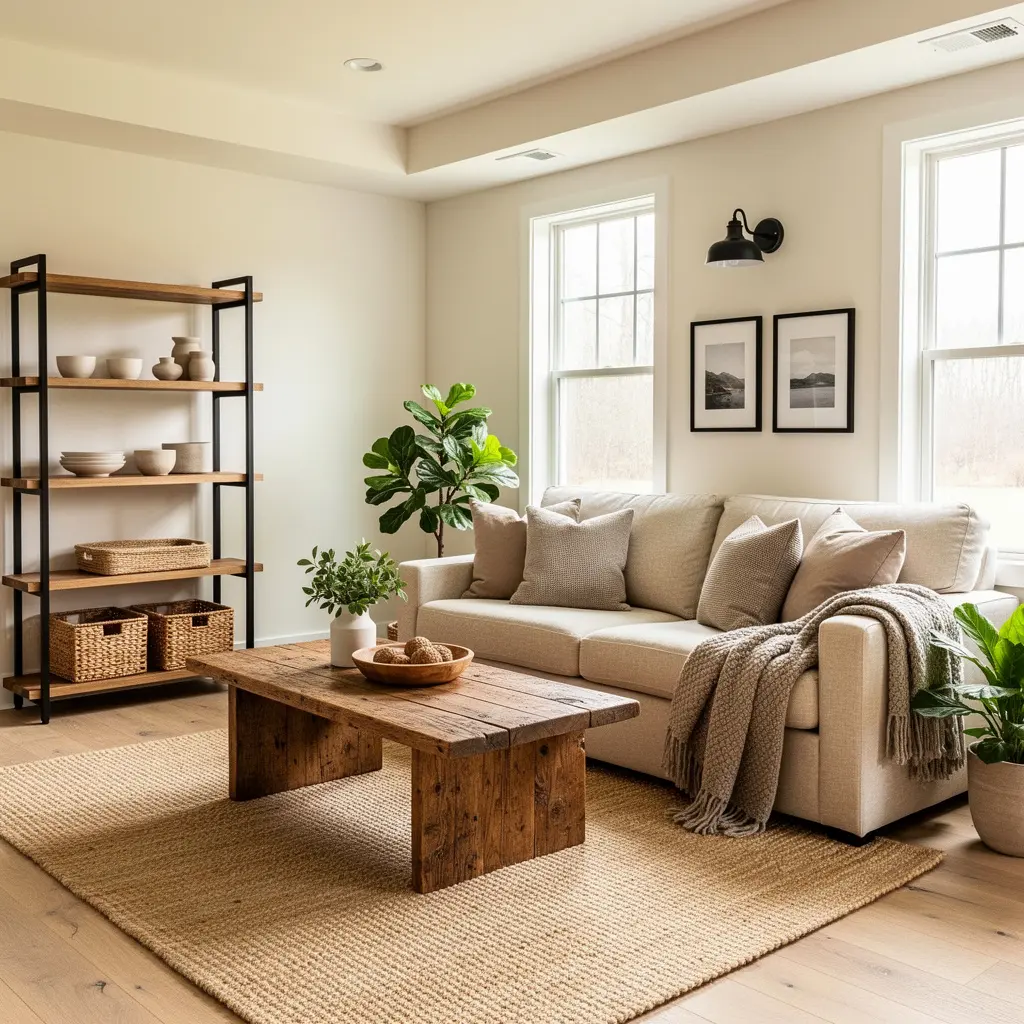
The bright, cool white that defined earlier farmhouse interiors is giving way to warmer off whites and soft creams, which pair better with the wood tones and warmer accent colors that are also trending. This shift alone can make an existing farmhouse space feel more current without any major renovation, since wall color has an outsized effect on how every other element in the room, from wood tones to metal finishes, ends up reading together.
Choosing the Right Warm White
Look for a white with a slight yellow or beige undertone rather than a blue or gray based white, since the warmer undertone reads as cozier and less clinical than the crisp whites common in earlier farmhouse interiors.
2. Move Away From All Black Hardware and Fixtures
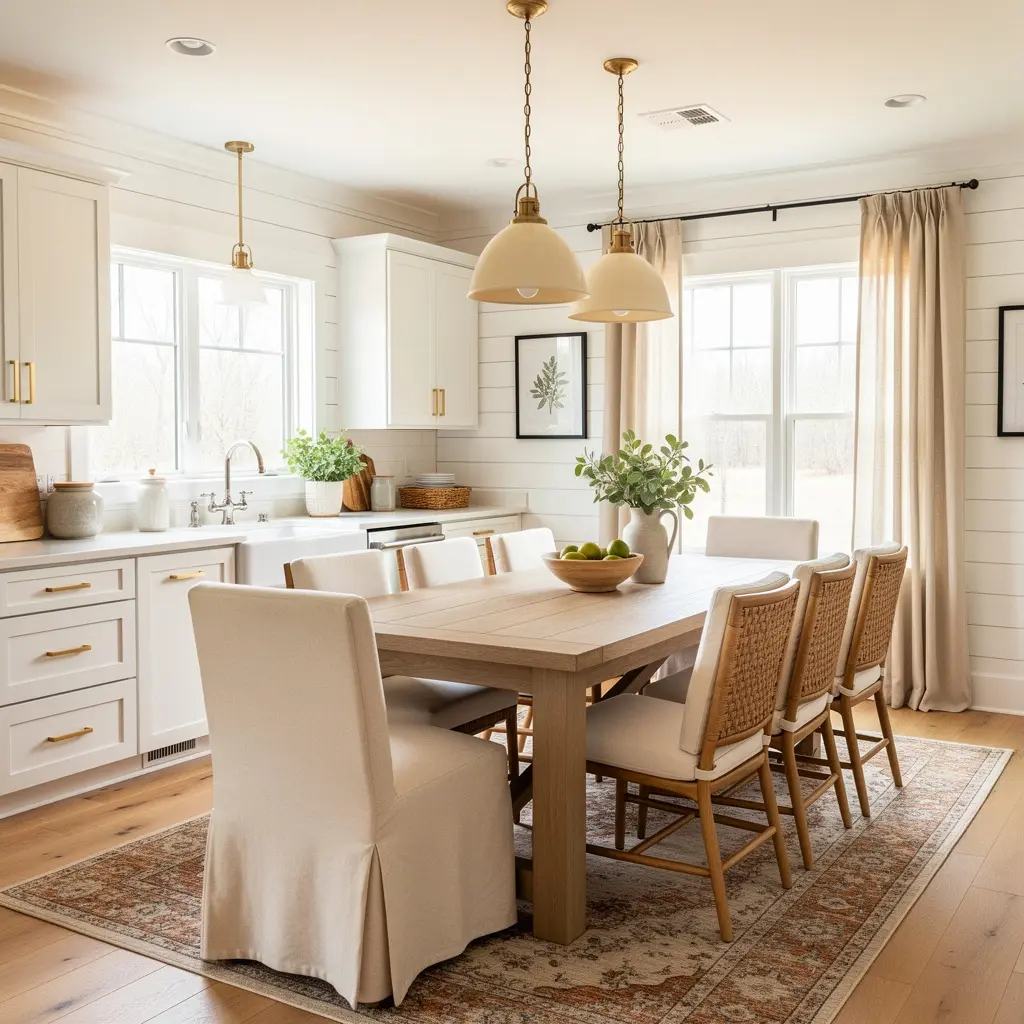
Matte black hardware, faucets, and light fixtures were a defining feature of classic farmhouse style, but 2026 is seeing a shift toward warmer finishes like aged brass, bronze, and even brushed nickel used more sparingly alongside black rather than replacing every fixture with it. Mixing metals, rather than committing entirely to one, is part of what makes an updated farmhouse space feel less matched and more collected.
3. Incorporate Curved Furniture Silhouettes
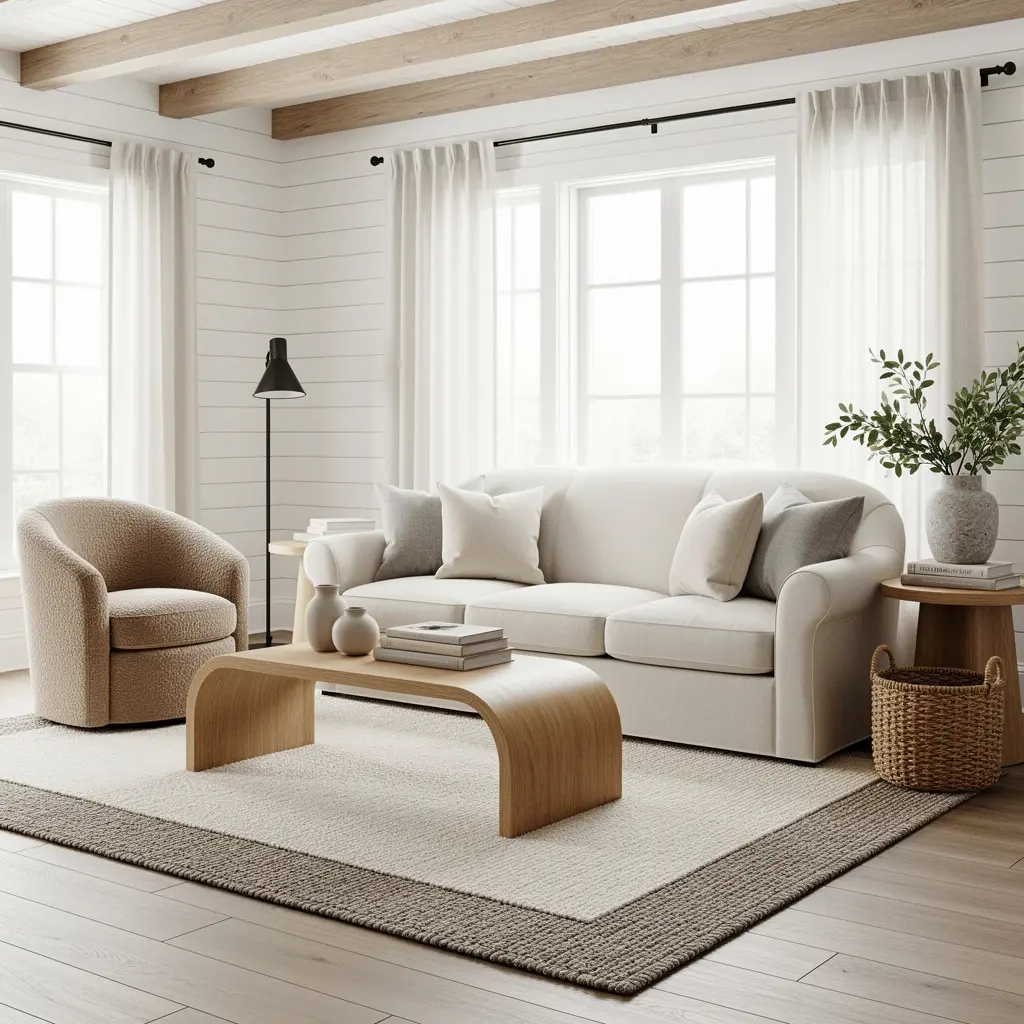
Classic farmhouse furniture leaned heavily on straight lines and sharp angles, think boxy sofas and rectangular tables. The 2026 update softens this with curved arm chairs, rounded coffee tables, and arched doorways or mirrors that bring a bit of softness into an otherwise structured, practical style.
Where Curves Work Best
A single curved accent chair or a round coffee table is often enough to soften a room without abandoning the overall farmhouse structure, rather than needing to replace every piece of furniture.
4. Add Warm Wood Tones Instead of Painted or Whitewashed Wood
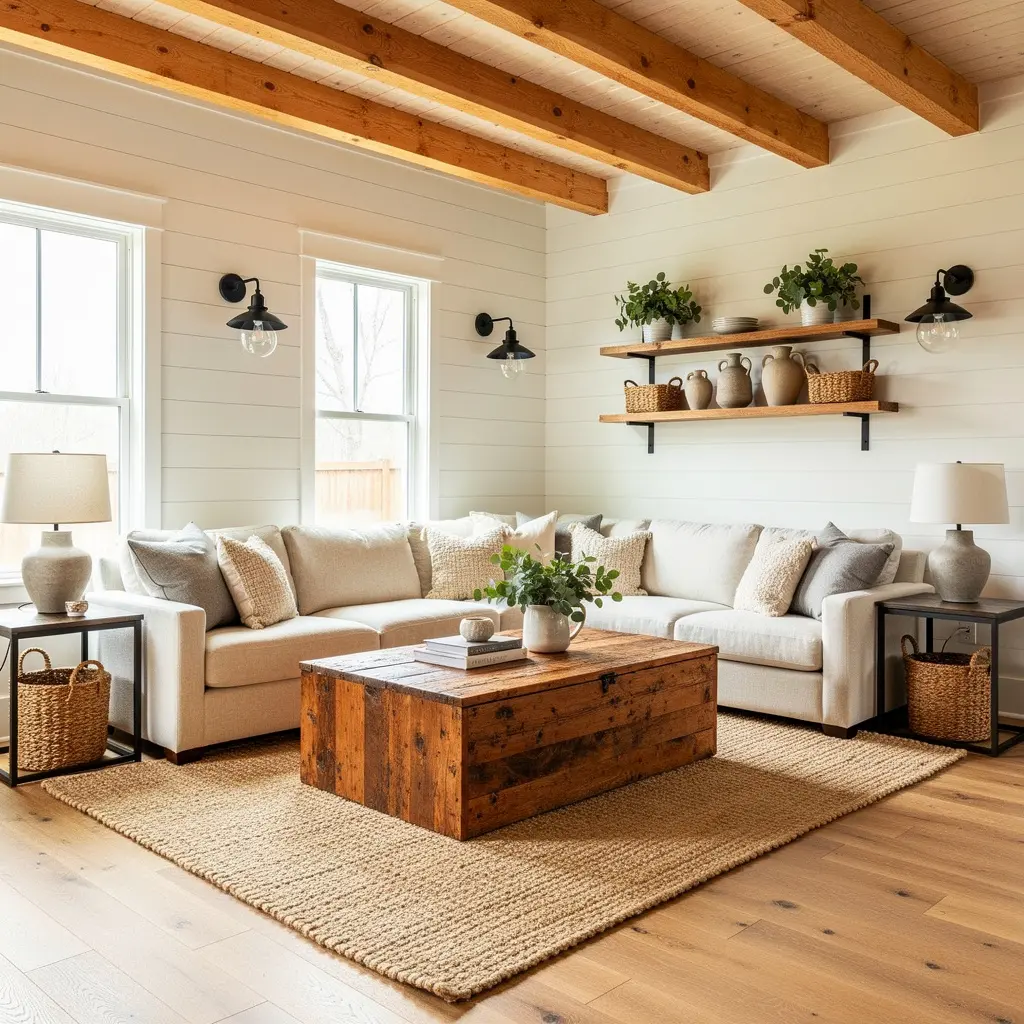
Whitewashed or painted wood furniture, common in earlier farmhouse interiors, is giving way to natural, warmer wood finishes like oak or walnut left largely unpainted. This shift brings richness and depth that a flat white or gray washed finish doesn’t offer, and it pairs well with the warmer overall palette trending for 2026.
5. Introduce Color Beyond Neutral White and Gray
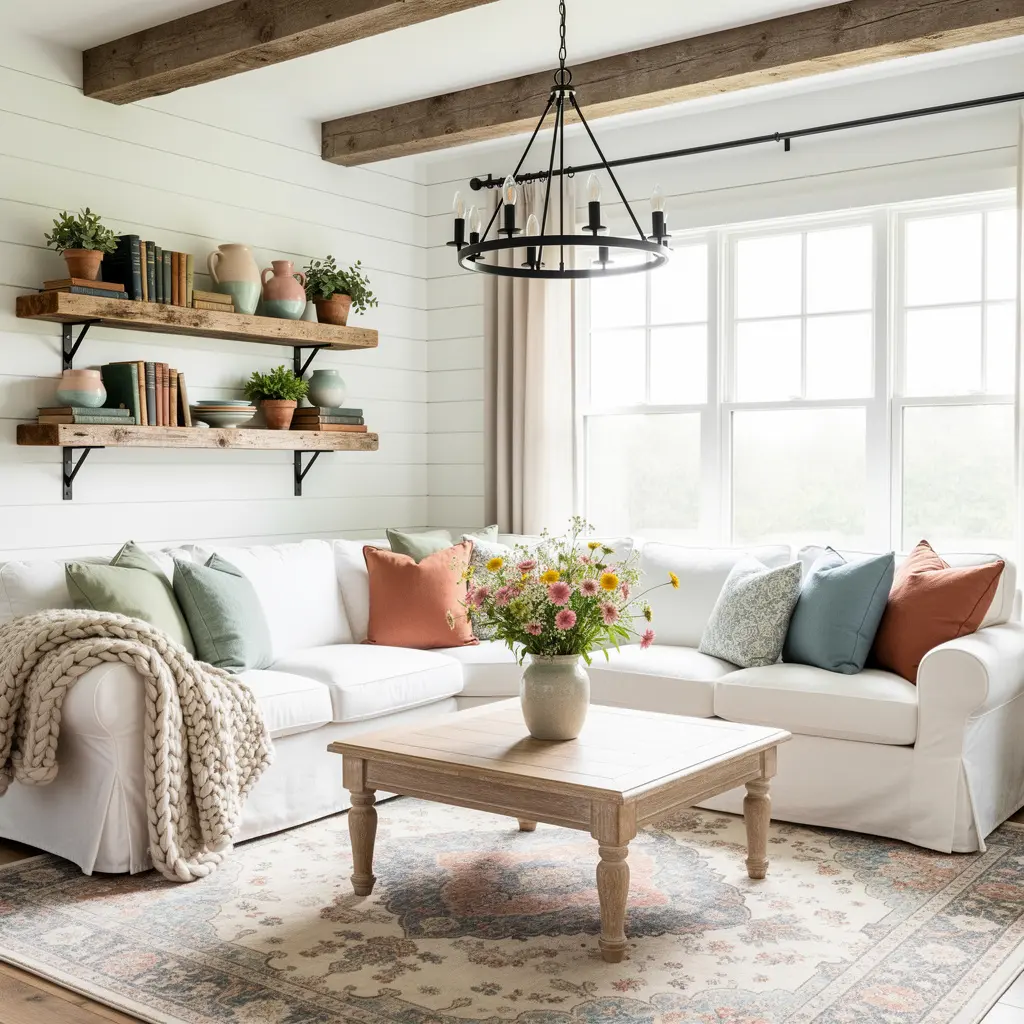
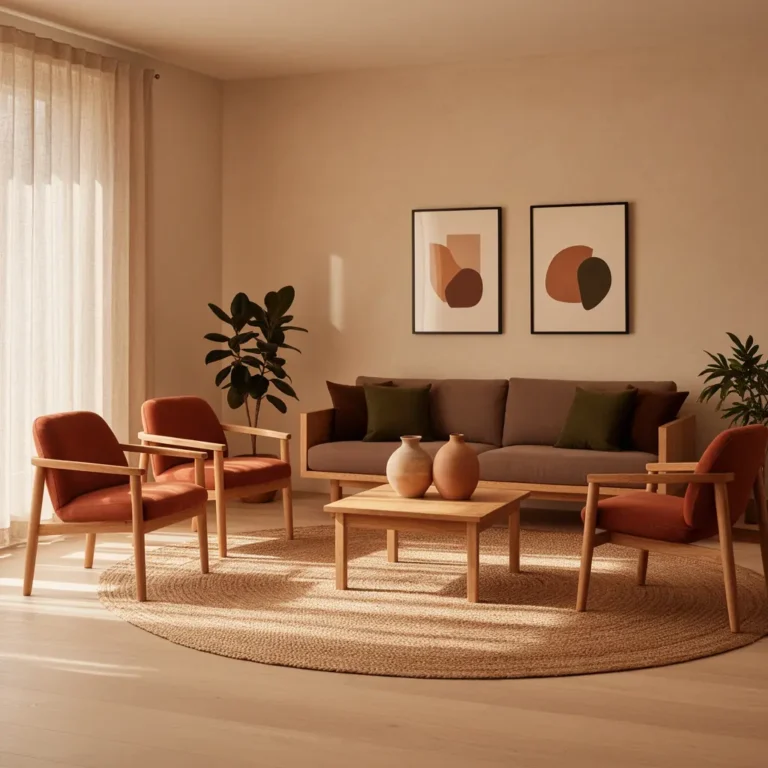
Earlier farmhouse decor leaned almost entirely on white, gray, and black, but 2026 is seeing muted, earthy colors, like sage green, warm terracotta, and deep olive, worked into the palette through paint, textiles, or accent pieces. These colors still feel grounded and understated rather than bold, which keeps them compatible with the practical, unfussy farmhouse aesthetic.
Where to Introduce These Colors
A single painted cabinet, a set of throw pillows, or a piece of pottery in one of these earthy tones is often enough to modernize a farmhouse room without overhauling the entire color scheme.
6. Use Less Shiplap and More Textured Plaster or Wood Paneling
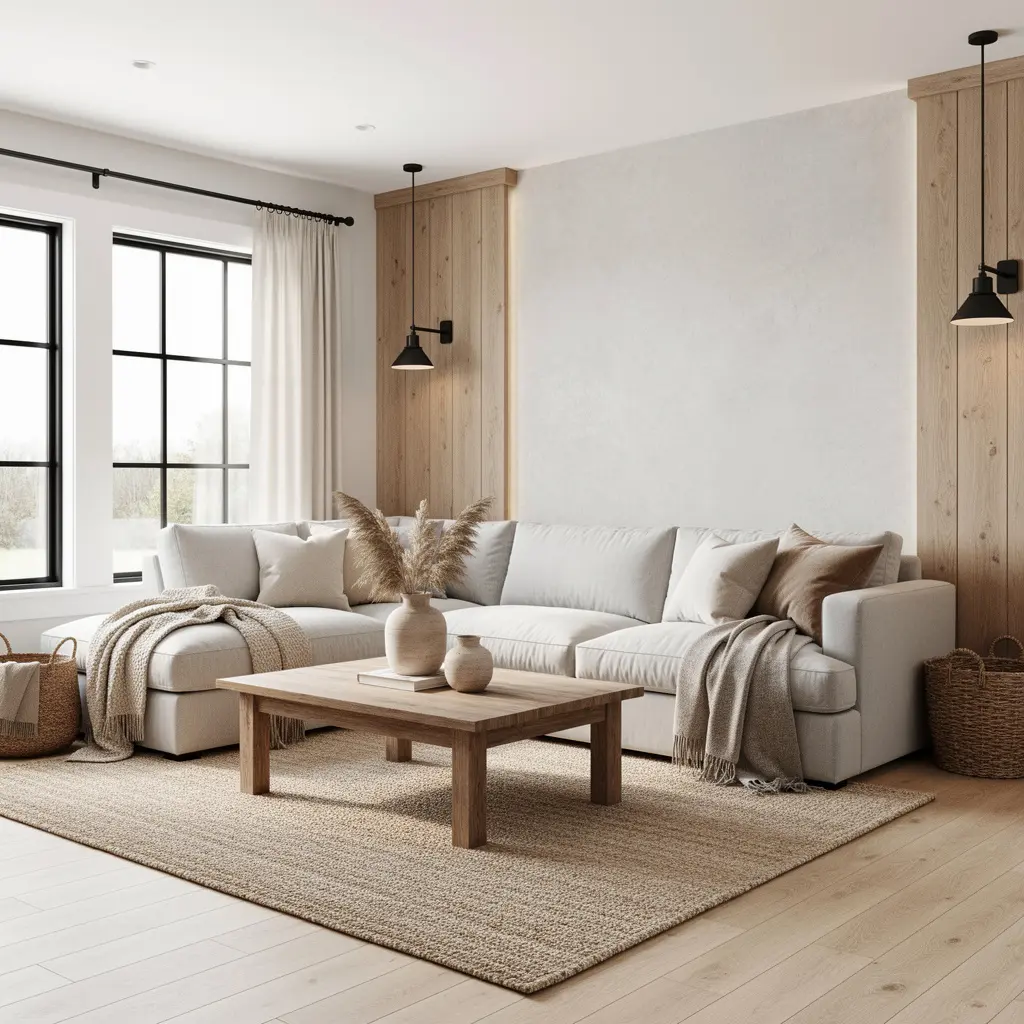
Shiplap, once nearly synonymous with the farmhouse look, is being replaced in updated interiors with limewash finishes, textured plaster, or vertical wood paneling that offers a similar rustic, tactile quality without feeling as tied to a specific past trend cycle. These finishes tend to read as more timeless since they aren’t as immediately associated with one particular design moment.
7. Choose Woven and Natural Fiber Lighting Fixtures
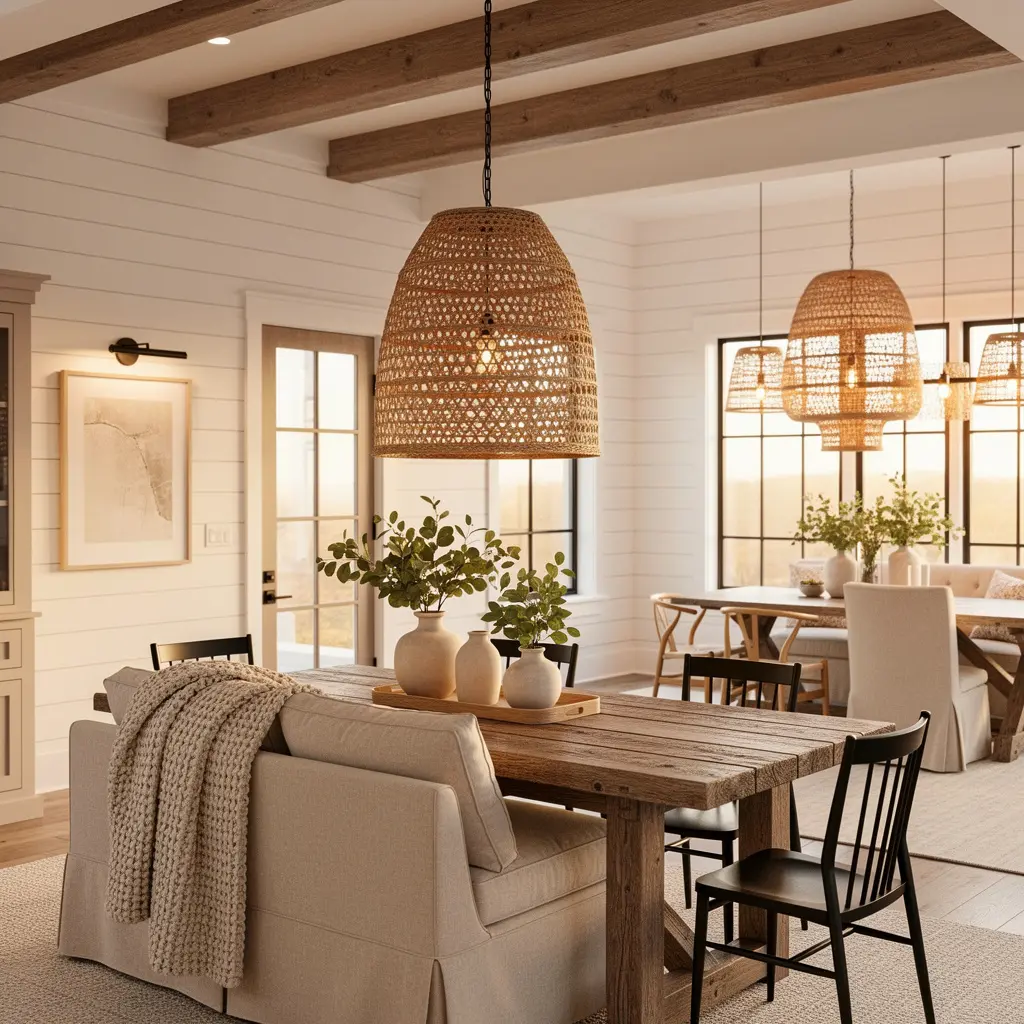
Classic farmstyle lighting often leaned on black metal cage pendants. The 2026 update incorporates more woven rattan, linen drum shades, and natural fiber pendant lights, which bring warmth and texture that pure black metal doesn’t offer on its own.
8. Layer in Vintage and Antique Pieces
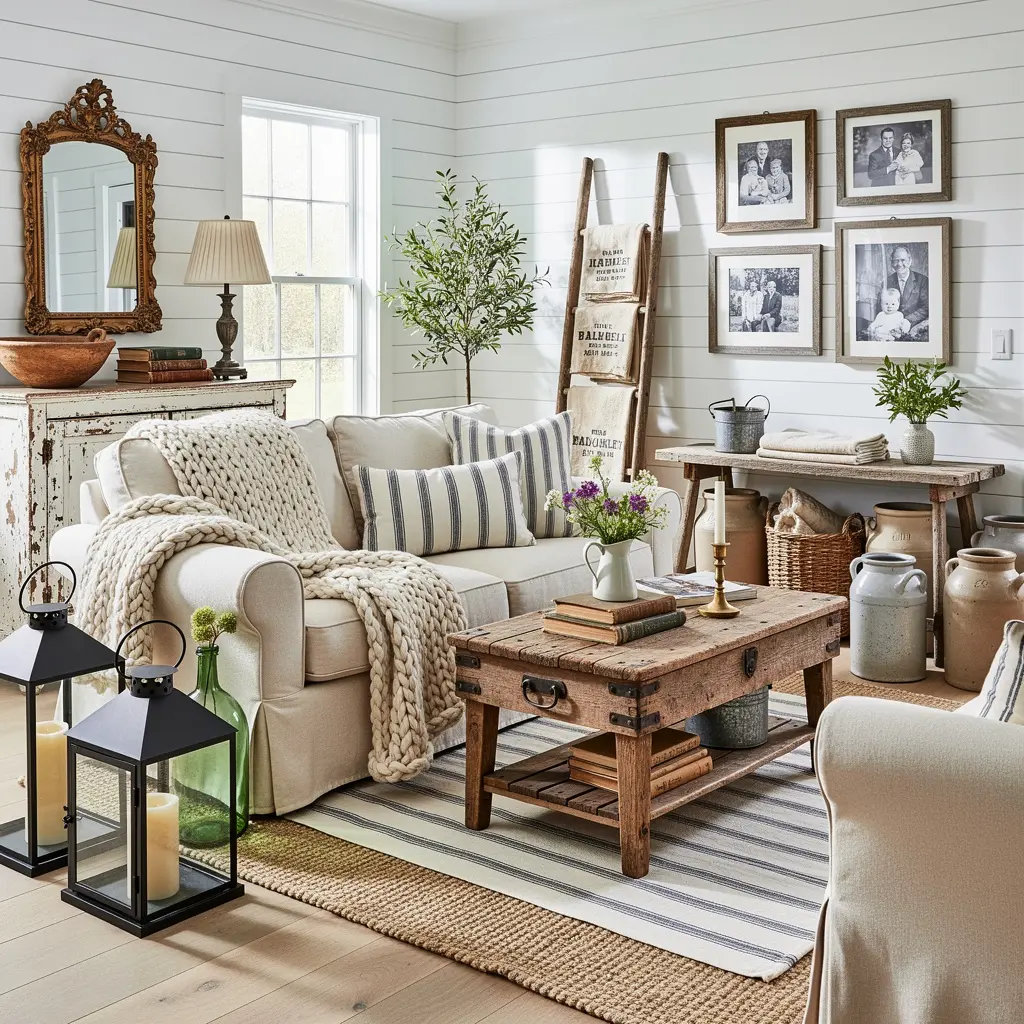
Rather than an entirely new furniture set purchased at once, an updated farmhouse look incorporates a genuinely vintage piece or two, an antique dresser, an old wood ladder, a weathered mirror, which adds authenticity and history that new furniture built to look old can’t quite replicate.
Sourcing Vintage Pieces
Estate sales, local antique shops, and secondhand marketplaces tend to offer better quality and more character than mass produced furniture marketed as farmhouse style, often at a comparable or lower price.
9. Mix in Global and Handmade Textiles
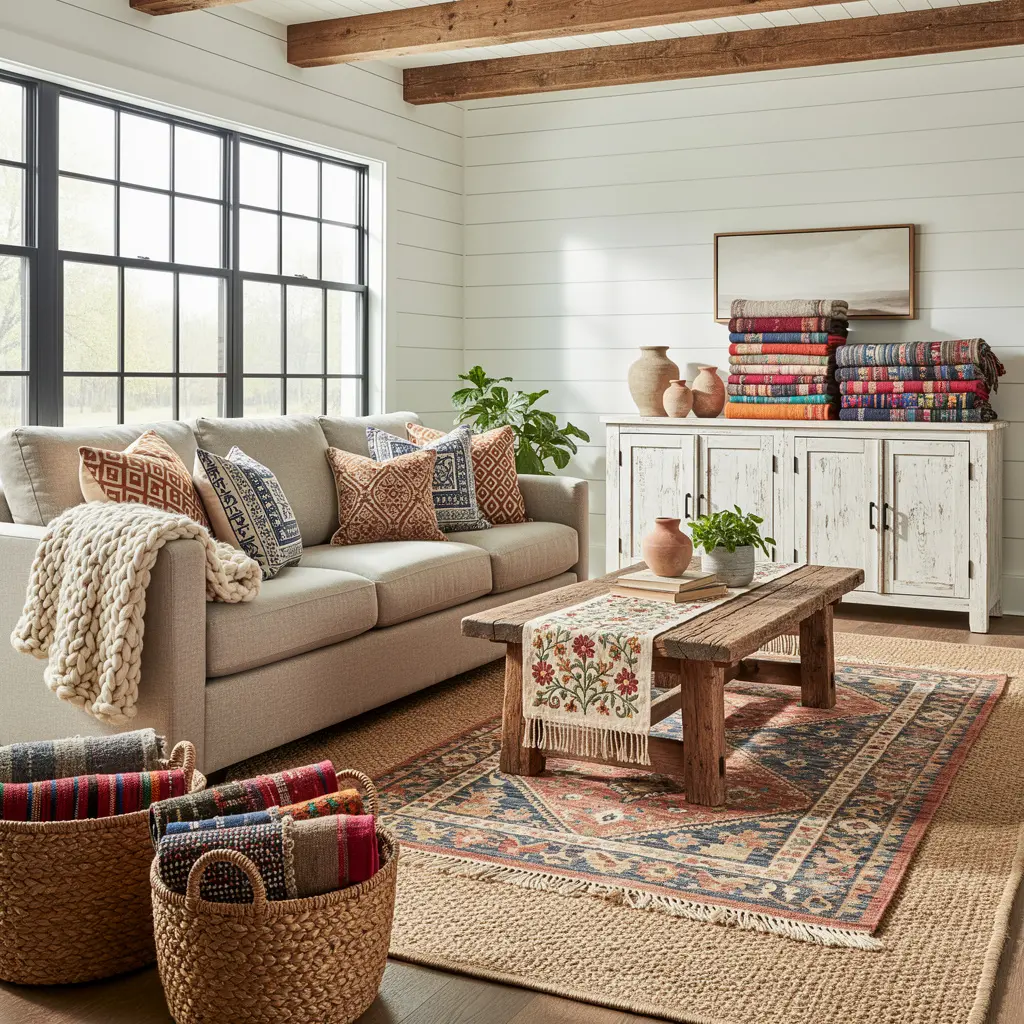
Handwoven textiles, block printed fabrics, and natural fiber rugs from a range of traditions are increasingly part of an updated farmhouse look, adding a layer of global, handmade character that keeps the style from feeling like a single uniform aesthetic. A block printed throw pillow or a handwoven table runner introduces this without overhauling the entire room.
10. Balance Rustic Elements With Cleaner, Modern Lines
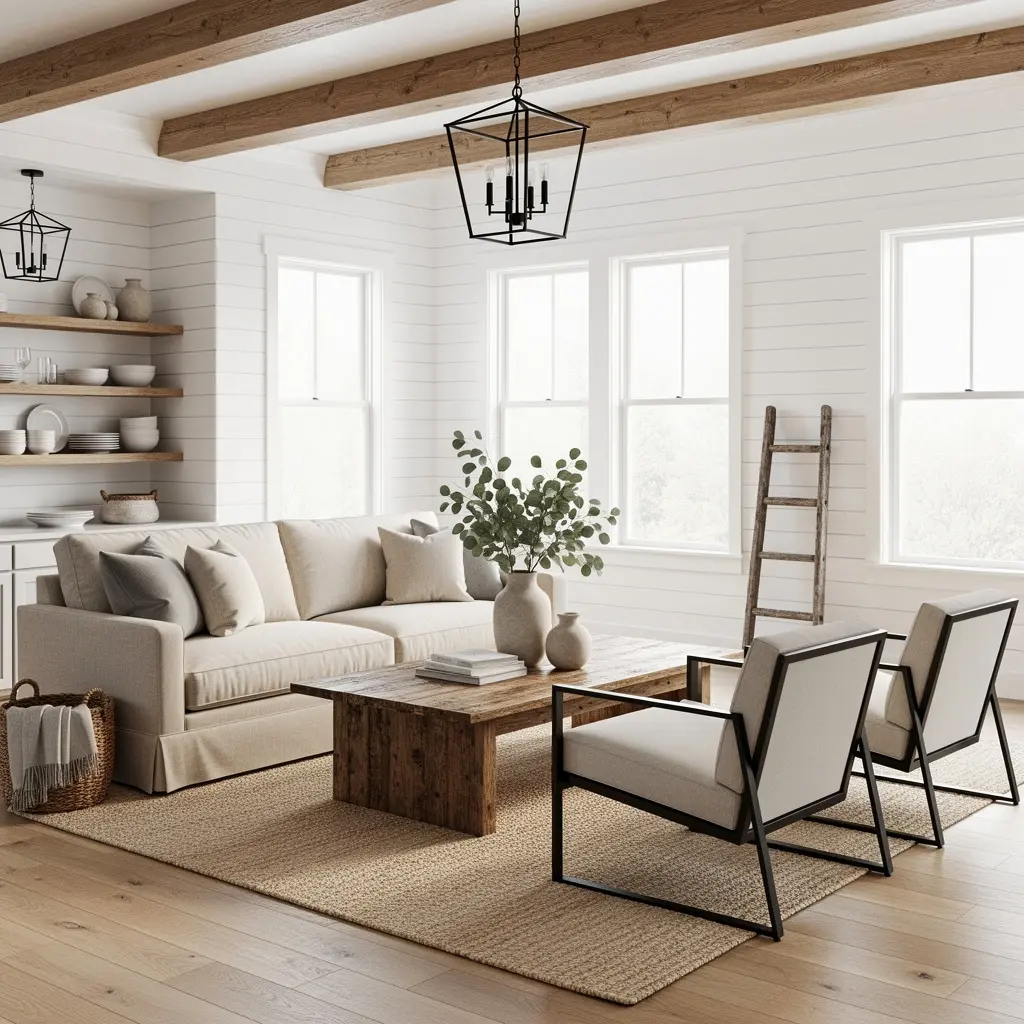
The 2026 take on farmhouse style leans more heavily on the modern half of modern farmhouse, pairing rustic wood beams or a reclaimed wood table with cleaner, simpler furniture silhouettes and less ornamentation overall. This balance keeps the style from tipping too far into a purely rustic, cabin like look.
Mistakes to Avoid
- Relying entirely on black hardware and fixtures instead of mixing in warmer metals
- Keeping walls in a stark, cool white instead of shifting toward warmer creams
- Filling a room with shiplap on every surface instead of varying the texture
- Avoiding color entirely and sticking only to white, gray, and black
- Buying an entire matching farmhouse furniture set instead of layering in vintage pieces
- Ignoring curved silhouettes entirely and keeping every piece sharp edged and boxy
Frequently Asked Questions
Is modern farmhouse decor going out of style in 2026? The core style isn’t disappearing, but it’s evolving toward warmer tones, more texture, and softer silhouettes rather than the stark black and white look that defined its earlier years.
Do I need to replace my furniture to update an older farmhouse room? Not necessarily. Swapping wall color, mixing in warmer metal accents, and adding a vintage piece or two can meaningfully update a room without replacing major furniture.
What colors are replacing the black and white farmhouse palette? Warm creams, sage green, terracotta, and deep olive are increasingly common accent colors in updated 2026 farmhouse interiors, layered alongside the traditional neutral base.
Is shiplap still a good design choice? Shiplap can still work well used sparingly, but textured plaster, limewash, and wood paneling are increasingly popular alternatives that offer a similar rustic feel with a more current look.
How do I add vintage pieces without the room looking mismatched? Sticking to a consistent wood tone or metal finish across your vintage and newer pieces helps tie a mixed collection together, even when the individual pieces come from different eras or styles.
Conclusion
Modern farmhouse decor for 2026 keeps the practical, unfussy bones of the original style while warming up the palette, softening hard edges, and layering in more genuine vintage character. Start by shifting your wall color and metal finishes toward warmer tones, then build in a vintage piece or two and a touch of earthy color to bring an older farmhouse space fully into its next chapter. None of these updates require abandoning the style entirely, they just ask you to loosen the strict black and white rulebook that defined its first wave and let a bit more warmth and personality into the room.