10 Cozy Kitchen Decor Ideas with Warm Wood and Soft Lighting
Your kitchen works fine, the appliances run, the cabinets close, but it doesn’t feel like the kind of room where people want to linger over coffee or a long conversation. That flat, purely functional feeling usually comes down to a handful of specific choices rather than the room’s size or layout. Cozy kitchen decor ideas focus on warmth, texture, and lived in details that turn a kitchen from a place you pass through into the actual heart of the home. This article covers the practical, specific changes that make that difference, without requiring a full renovation.
1. Choose Warm Neutral Cabinetry Over Stark White
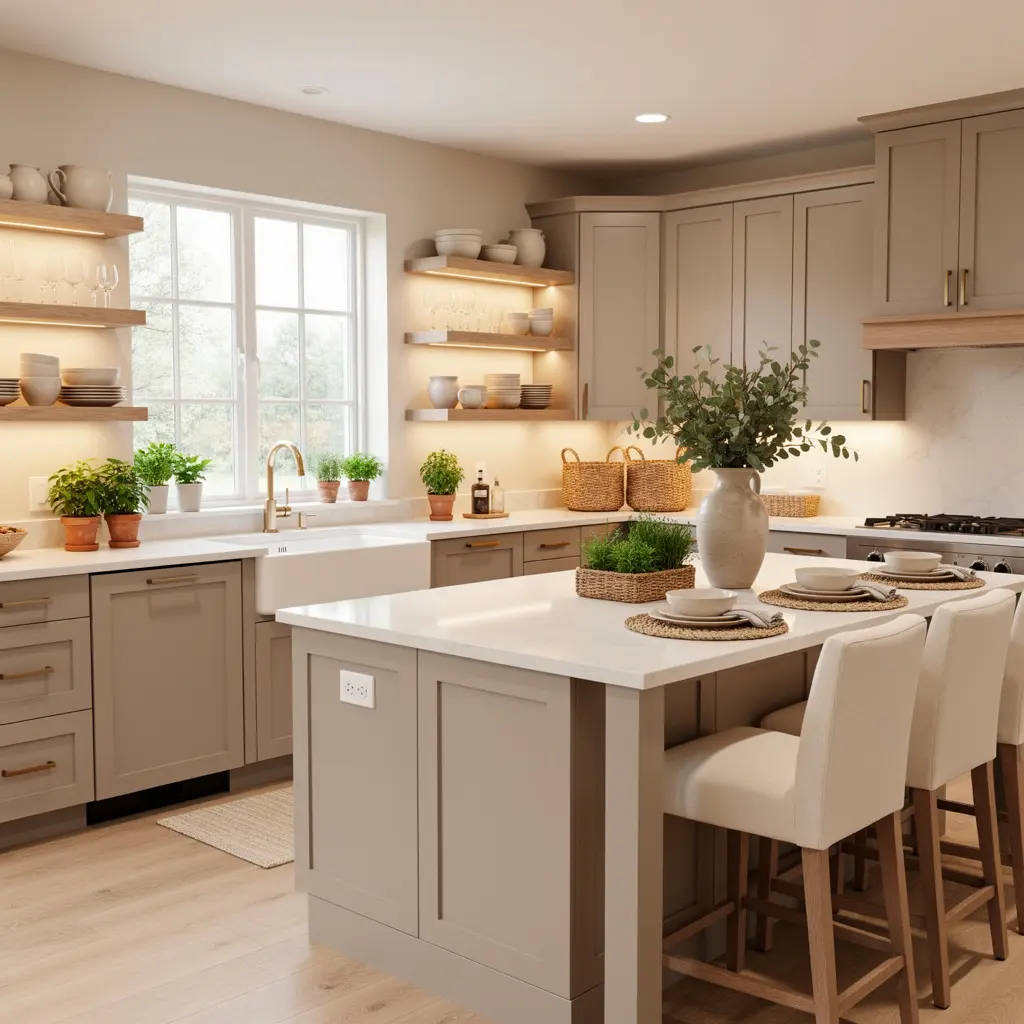
Crisp, cool white cabinetry has been a kitchen default for years, but warmer tones like alabaster, warm greige, and soft taupe have become the more inviting choice in recent kitchen design. These warmer neutrals still feel clean and versatile, but they read as softer and more residential than a stark, cool white, especially once the sun goes down and artificial lighting takes over. They also tend to pair more naturally with the warm wood and brass accents covered later in this guide.
Updating Cabinetry Without A Full Renovation
If replacing cabinets isn’t in the budget, a fresh coat of cabinet paint in a warmer tone is one of the highest impact, lowest cost updates available for shifting a kitchen’s overall feel.
2. Add Warm Wood Accents
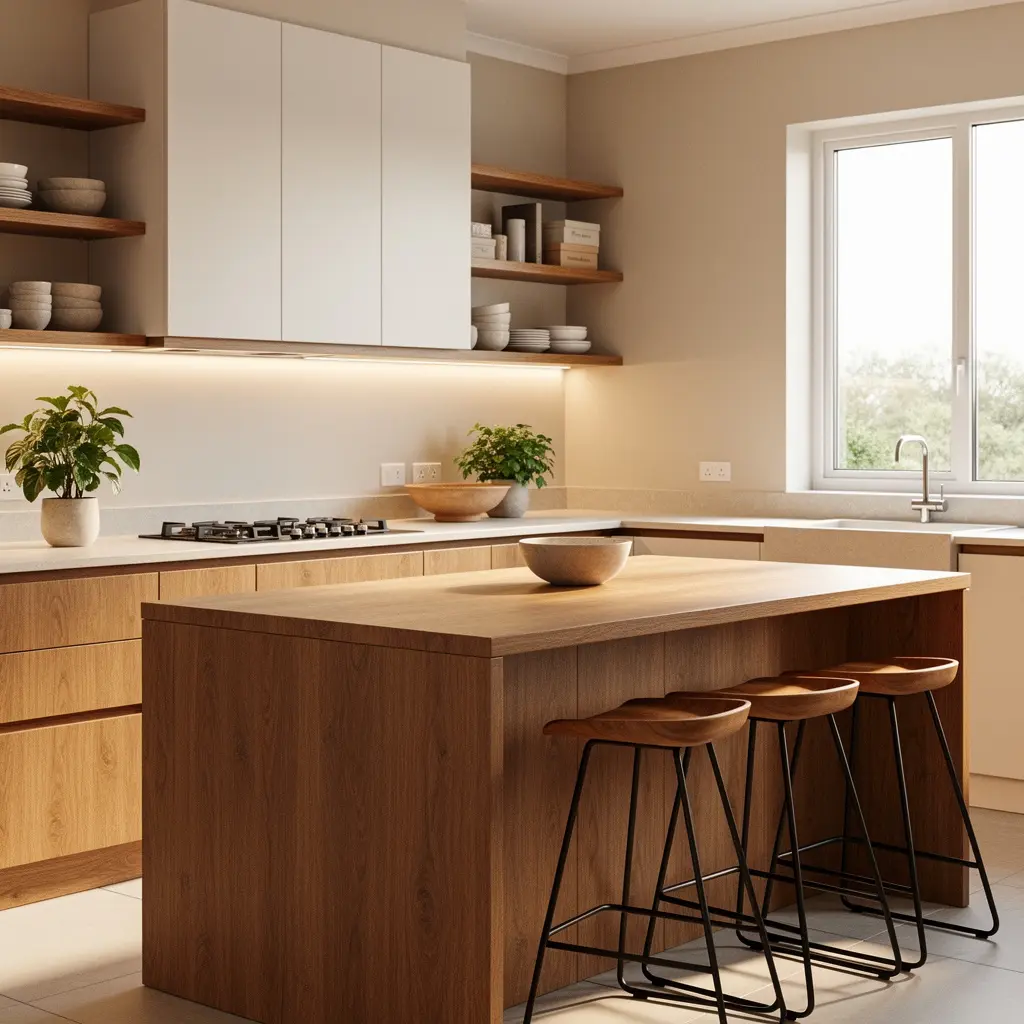
Butcher block counters, open wood shelving, or simply a wood cutting board displayed on the counter all bring natural warmth into a kitchen that’s otherwise dominated by hard, cool surfaces like stone and stainless steel. Wood paneling on an island or a range hood is a bigger commitment but adds significant warmth as a focal point if you’re planning a larger update, and even a single open shelf in a warm wood tone can anchor an otherwise all cabinetry wall.
3. Layer In Brass Or Bronze Lighting
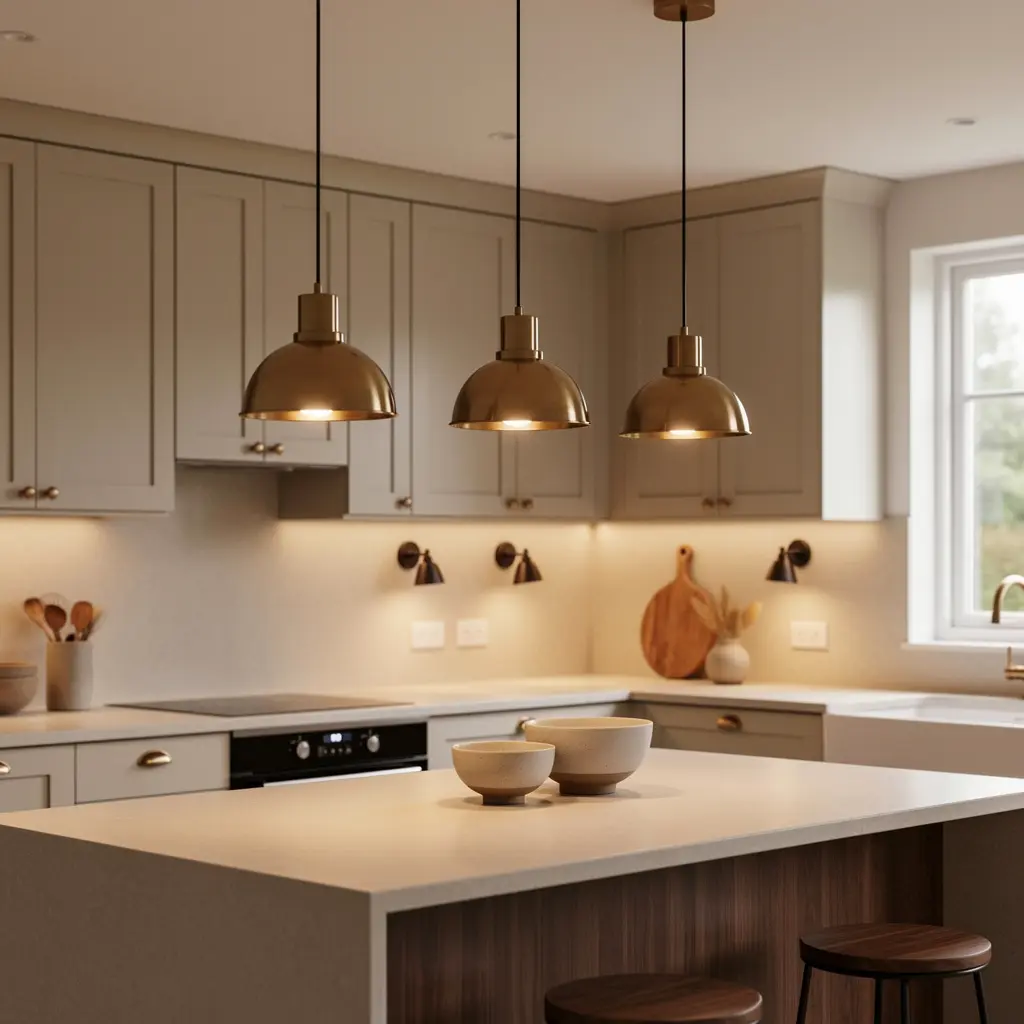
Rattan and bronze pendant lighting over an island signals a considered, current kitchen design, and warm metal fixtures generally read as cozier than cool toned chrome or stainless finishes. Mixing a woven pendant with a more traditional bronze fixture, rather than choosing two identical lights, adds a collected character that a fully matched pair doesn’t achieve, and it gives you more flexibility to update just one fixture later without replacing the whole set.
Choosing Pendant Height Over An Island
Hanging pendants roughly 30 to 36 inches above the island countertop generally provides enough light for tasks while keeping sightlines clear across the room.
4. Use A Warm Bulb Temperature Throughout
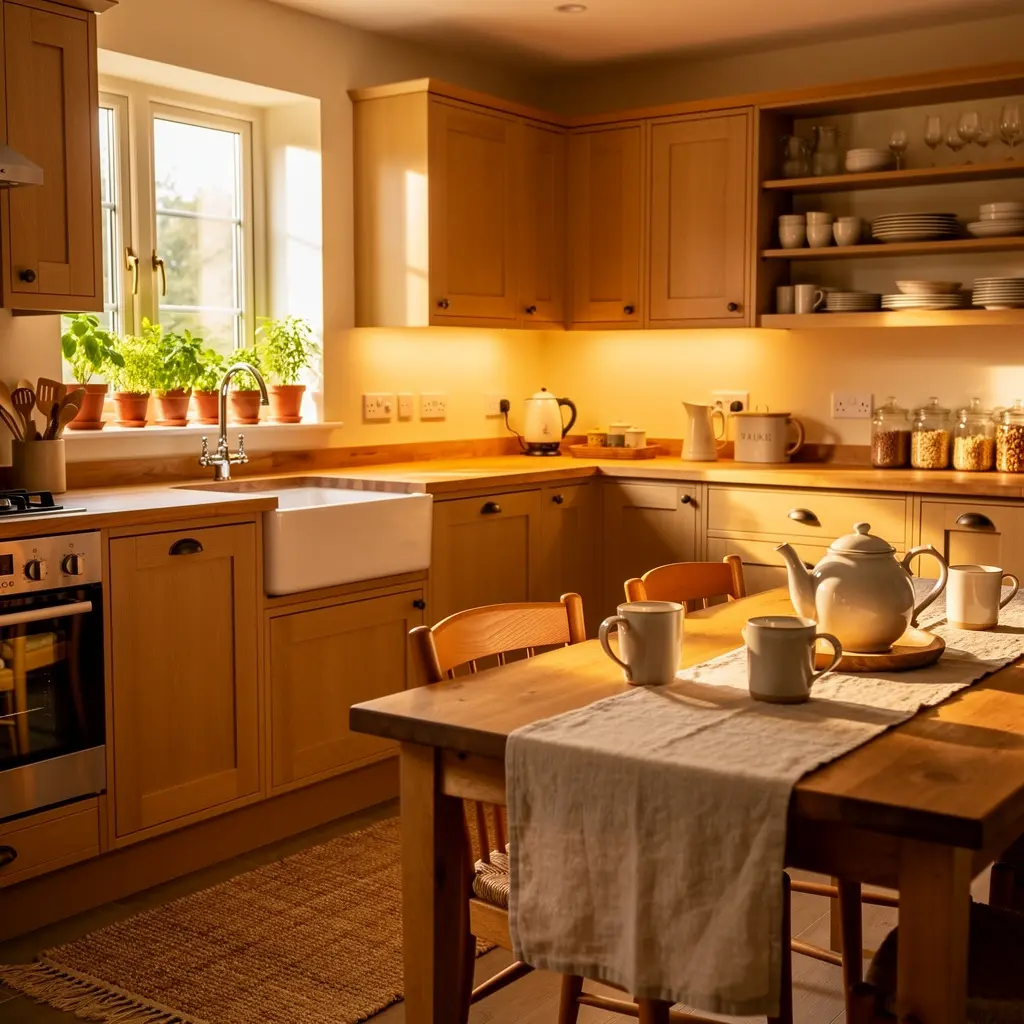
Cool, bright white bulbs can make even a well designed kitchen feel clinical rather than welcoming. Choosing warm white bulbs, generally in the 2700K to 3000K range, for ambient and pendant lighting creates a softer, more residential glow, while reserving a slightly cooler, brighter bulb for direct task lighting over prep areas where visibility matters most.
5. Bring In Open Shelving With Styled Items
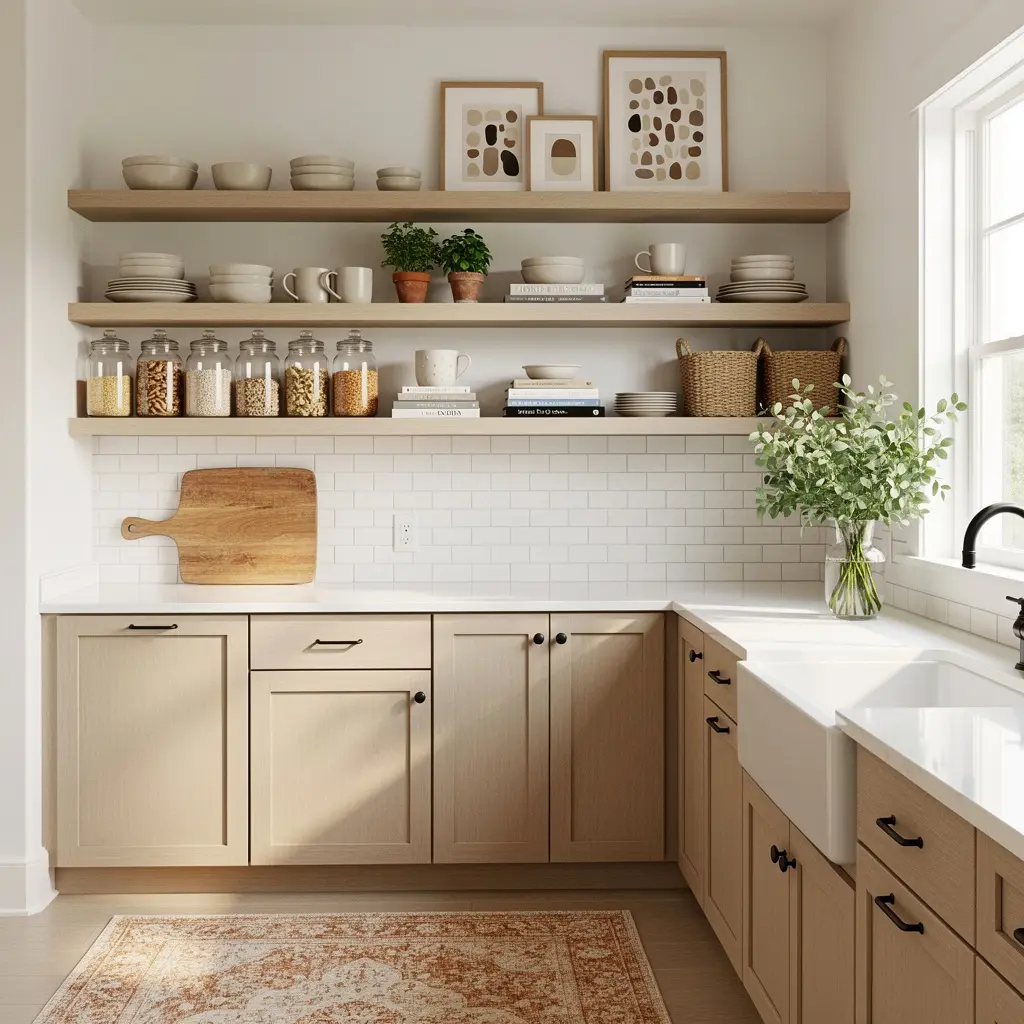
A section of open shelving, styled with a mix of everyday dishware, a few cookbooks, and one or two decorative pieces, adds warmth and personality that closed cabinetry alone can’t provide. This works best when the shelving isn’t overcrowded, since a few well chosen, frequently used items read as more inviting than a shelf packed with decor that never gets touched. Grouping similar items together, like a stack of bowls beside a small collection of mugs, also tends to look more intentional than spacing everything out evenly.
Keeping Open Shelving Functional
Store items you actually use daily on open shelves, and reserve closed cabinets for less attractive but necessary items like small appliances and bulk pantry goods, so the visible shelving stays both practical and good looking.
6. Add Layered Textiles
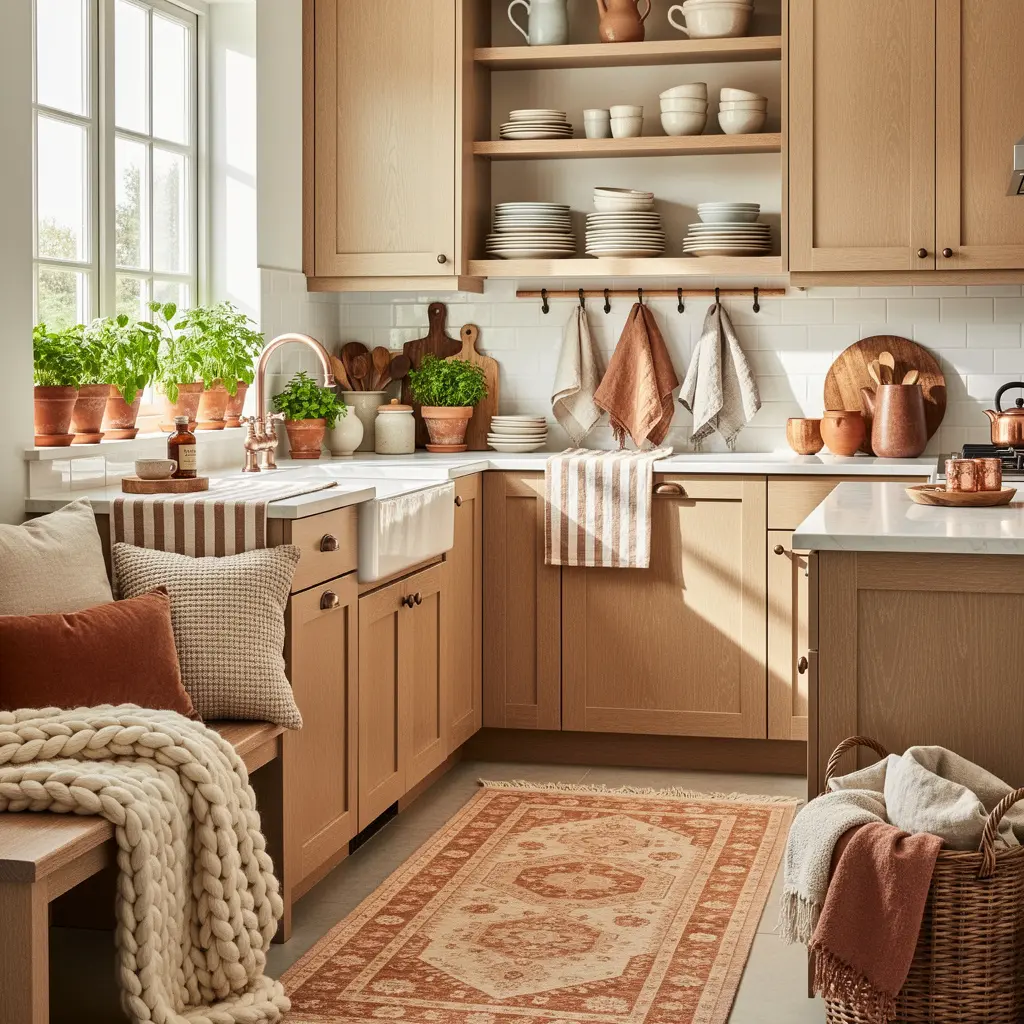
A patterned runner rug near the sink, woven placemats on the island, or simple linen tea towels hung on the oven handle all add soft texture to a room that’s otherwise mostly hard surfaces. These textiles are also one of the easiest and most affordable ways to update a kitchen’s look seasonally without touching anything structural. Swapping a runner or a set of tea towels takes minutes and can shift the room’s feel noticeably heading into a new season.
7. Create A Small Dining Or Gathering Nook
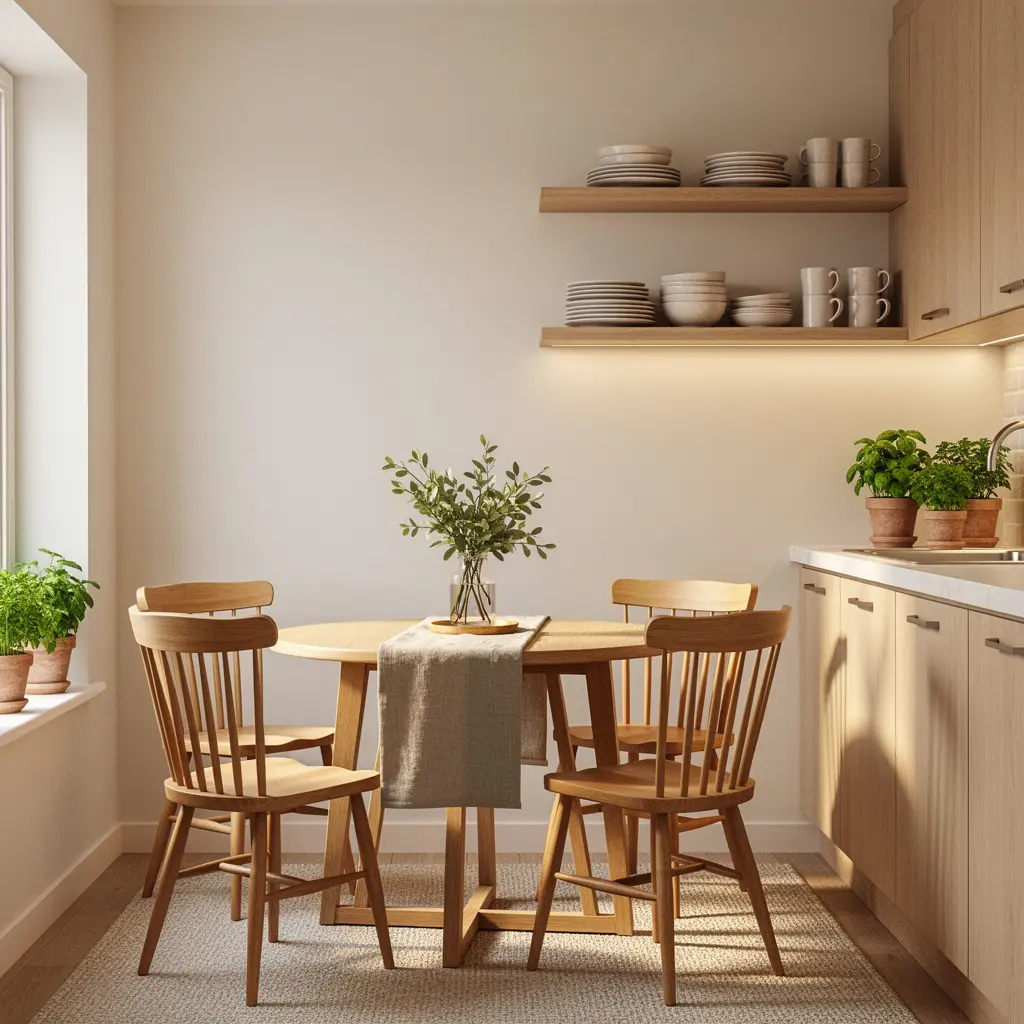
Even a modest kitchen can often fit a small breakfast nook or a couple of stools pulled up to the island, and this small addition gives the room a reason for people to linger rather than just pass through. A nook tucked near a window, if the layout allows it, adds natural light to the seating area and makes it feel like its own small, cozy room within the kitchen. Even two stools at a slightly widened counter edge can create this same sense of a dedicated spot to sit and talk.
8. Bring In Greenery And Fresh Herbs
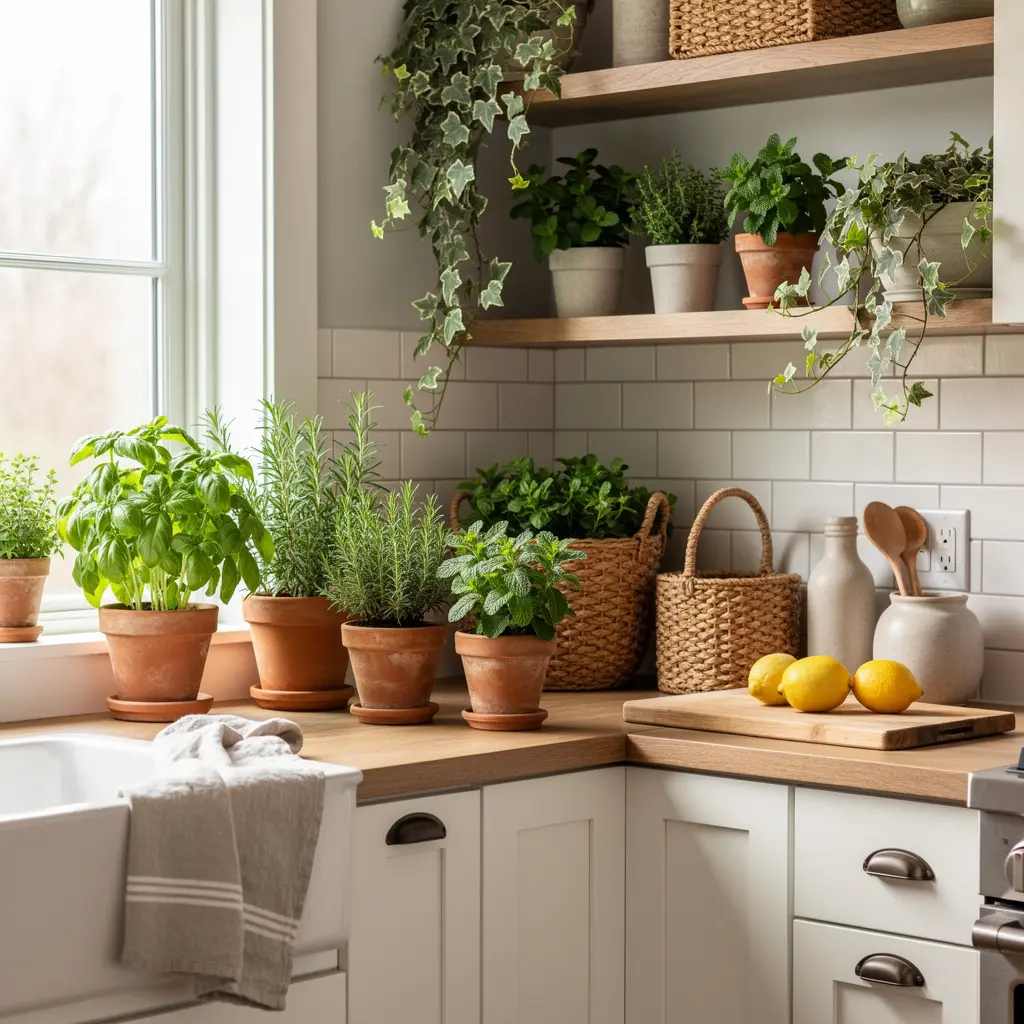
A small potted herb garden on a sunny windowsill adds both visual warmth and a genuinely useful element to daily cooking. Fresh herbs like basil, thyme, or rosemary tend to do well in a kitchen window with decent light, and trimming them for actual use keeps the display from feeling purely decorative. A small collection of three or four pots is usually enough to add visual warmth without crowding a windowsill that also needs to let in light.
9. Add A Statement Backsplash Or Wallpaper Moment
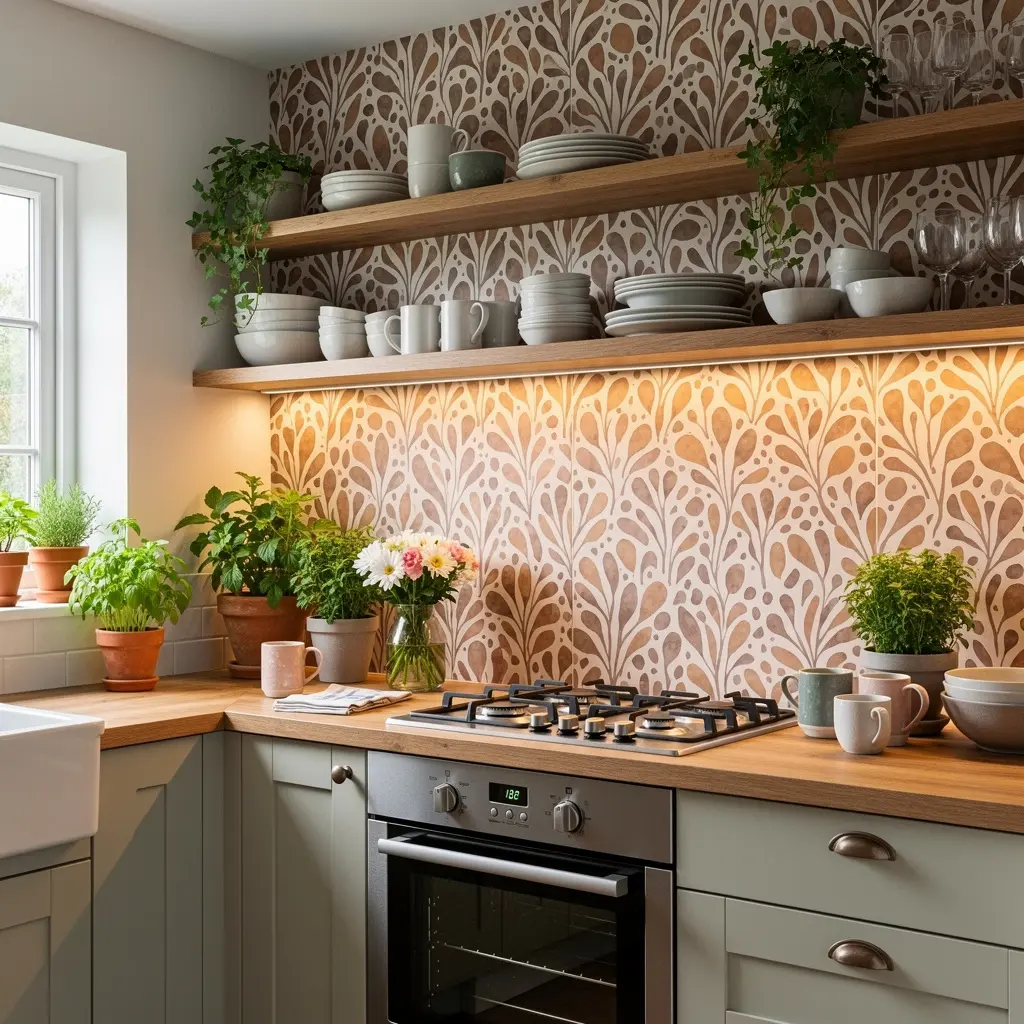
A patterned tile backsplash or a section of wallpaper behind open shelving adds personality and warmth to a kitchen without requiring a full remodel. This kind of detail works particularly well in a smaller kitchen, where a single bold moment can define the whole room’s character without overwhelming the space the way it might in a much larger layout. Choosing a pattern that echoes a color already present in your cabinetry or countertop helps it feel integrated rather than randomly placed.
Choosing Where To Place A Statement Moment
Behind the range or the sink tends to be the most visually prominent spot in most kitchens, making it the highest impact location for a patterned backsplash or an accent wall.
10. Keep Countertops Curated, Not Cluttered
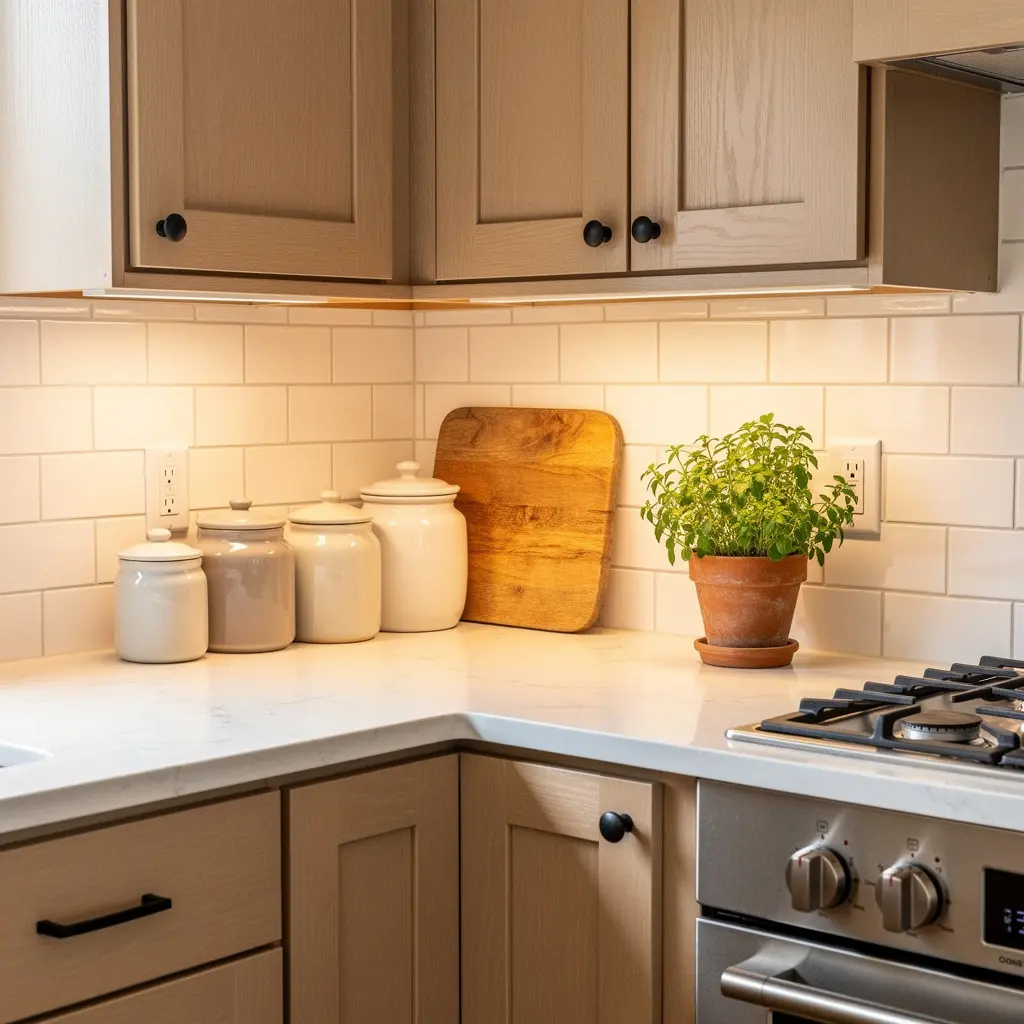
A counter crowded with every small appliance and gadget undercuts the cozy, put together feeling you’re building elsewhere in the kitchen. Keeping daily essentials, like a coffee maker or a cutting board, out while tucking away rarely used items in a cabinet or a pantry reads as far more intentional and calm than a fully packed counter. A single tray to corral the items you do keep out also helps the counter read as styled rather than simply cluttered.
Mistakes to Avoid
- Choosing a stark, cool white for cabinetry that can feel clinical rather than warm
- Relying entirely on cool, bright overhead lighting without a warmer secondary source
- Overcrowding open shelving with decorative items that are never actually used
- Skipping natural materials like wood, which leaves the kitchen feeling flat and one dimensional
- Leaving every small appliance out on the counter instead of storing rarely used items away
- Choosing a lighting fixture purely for style without considering task lighting needs over prep areas
Frequently Asked Questions
What color cabinetry makes a kitchen feel the coziest? Warm neutrals like alabaster, warm greige, and soft taupe tend to feel more inviting than a stark, cool white, while still staying versatile enough to pair with most countertop and hardware choices.
Do I need a full renovation to make my kitchen feel cozy? No. Repainting cabinets in a warmer tone, swapping to warm white bulbs, and adding textiles like a runner rug or tea towels are all changes that don’t require construction and still make a noticeable difference.
What lighting works best for a cozy but functional kitchen? A warm white bulb in the 2700K to 3000K range for ambient and pendant lighting, paired with a slightly cooler, brighter bulb for direct task lighting over prep areas, balances coziness with practical visibility.
Is open shelving a good idea in a small kitchen? Yes, as long as it’s kept from becoming overcrowded. Styling it with everyday dishware and a few meaningful items tends to read as warmer and more personal than fully closed cabinetry throughout.
What’s the fastest way to make a kitchen feel less clinical? Swapping to warm white bulbs and adding one or two natural material accents, like a wood cutting board or a woven basket, are usually the quickest, lowest cost changes that shift a kitchen from purely functional to genuinely cozy.
A Genuinely Useful Takeaway
A cozy kitchen comes down to warm materials, layered lighting, and a few personal touches, not a full remodel. Choose warmer cabinetry tones, bring in wood and woven texture, and layer your lighting so the room feels as good for lingering as it does for cooking. Handled this way, even a fully functional, standard kitchen can become the room everyone naturally gathers in.