
You love blue, but every time you try to actually decorate with it, the room ends up feeling more like a waiting room than a living room. Too much blue, especially in the wrong shade, reads as sterile fast, and that’s the exact opposite of what a living room is supposed to feel like. Blue living room decor ideas can absolutely feel warm, layered, and lived in, but the difference between a cold blue room and a genuinely cozy one comes down to a handful of specific choices in shade, texture, and what you pair the blue against, not the color itself being wrong for the room.
1. Choose a Warm Undertone Blue as Your Base
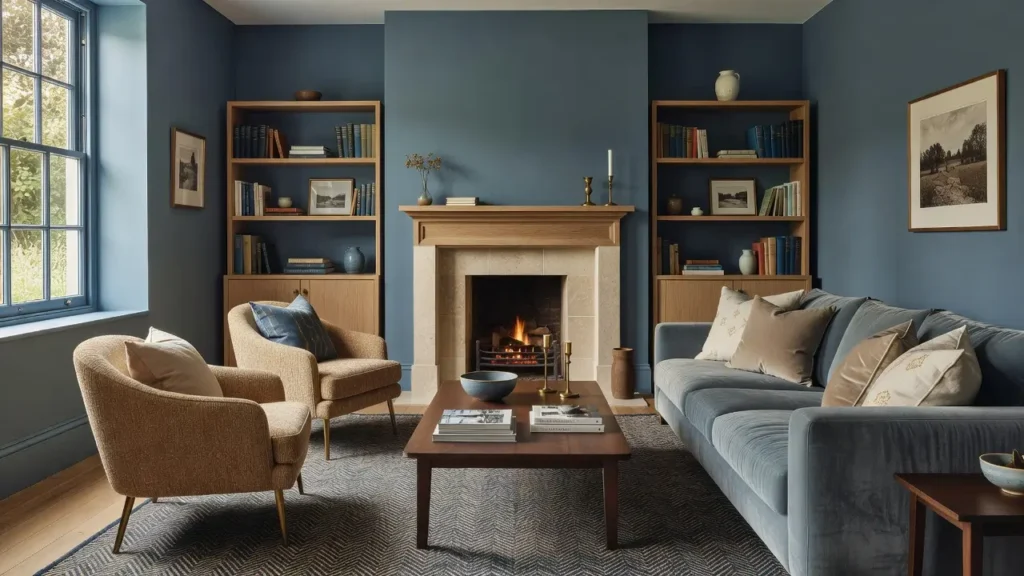
Not all blues read the same way in a room. A blue with a slight gray or green undertone, like a dusty slate or a muted teal, feels considerably warmer and more livable than a true, bright navy or a cool icy blue. Starting with a warmer toned blue on your largest surface, usually the sofa or an accent wall, sets the tone for everything else in the room.
Why Undertone Matters More Than the Name of the Color
Two paint chips can both be labeled “blue” and still feel completely different once they’re actually on a wall, depending on whether gray, green, or purple sits underneath the surface color. Warmer undertones tend to photograph and live better in rooms with less natural light, while cooler, truer blues need more daylight to avoid feeling flat.
2. Pair Blue With Warm Wood Tones, Not Just White
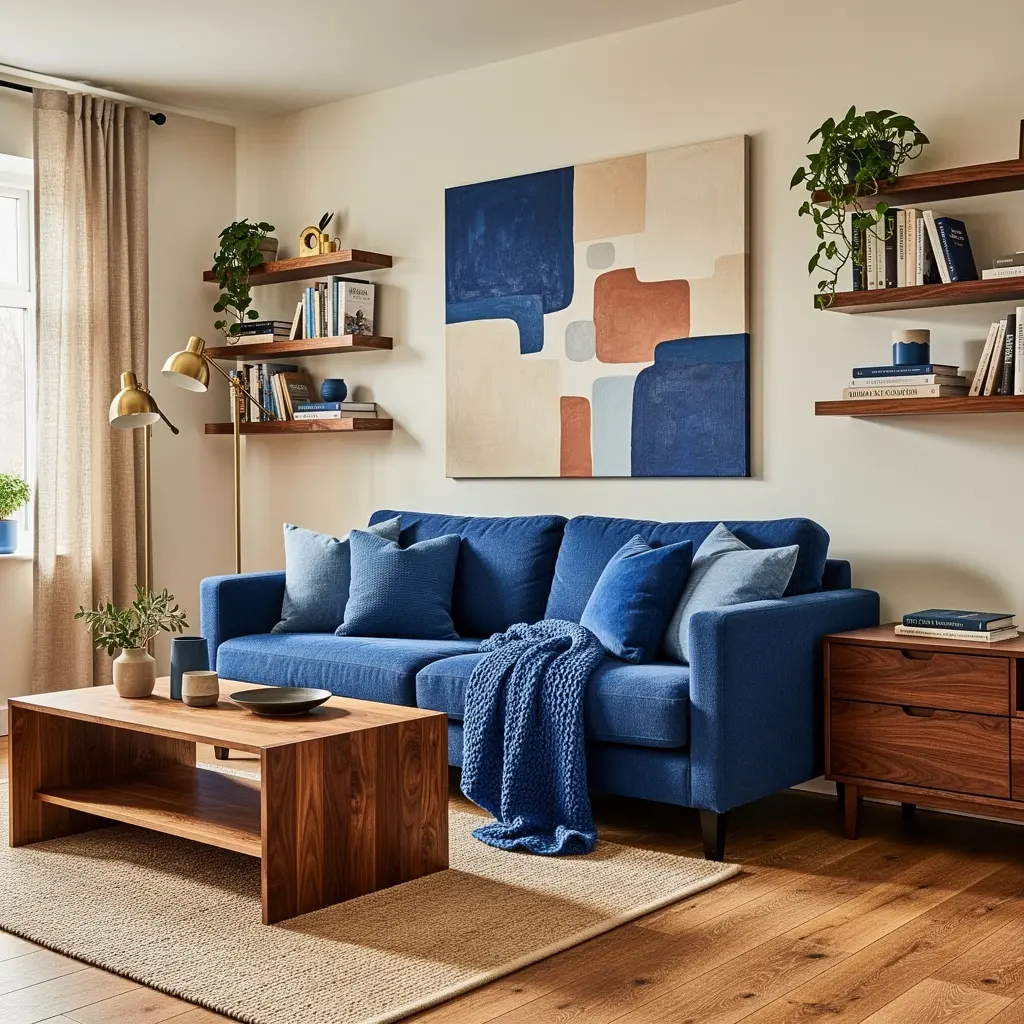
An all blue and white room can tip cold fast, especially if the white leans stark rather than creamy. Warm wood furniture, a natural rattan chair, a wood coffee table, or wood framed art, grounds the blue and keeps the room from feeling like it belongs in a hospital rather than a home.

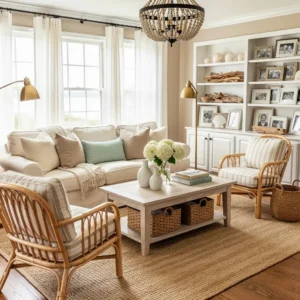
3. Layer in Cream and Tan Instead of Pure White
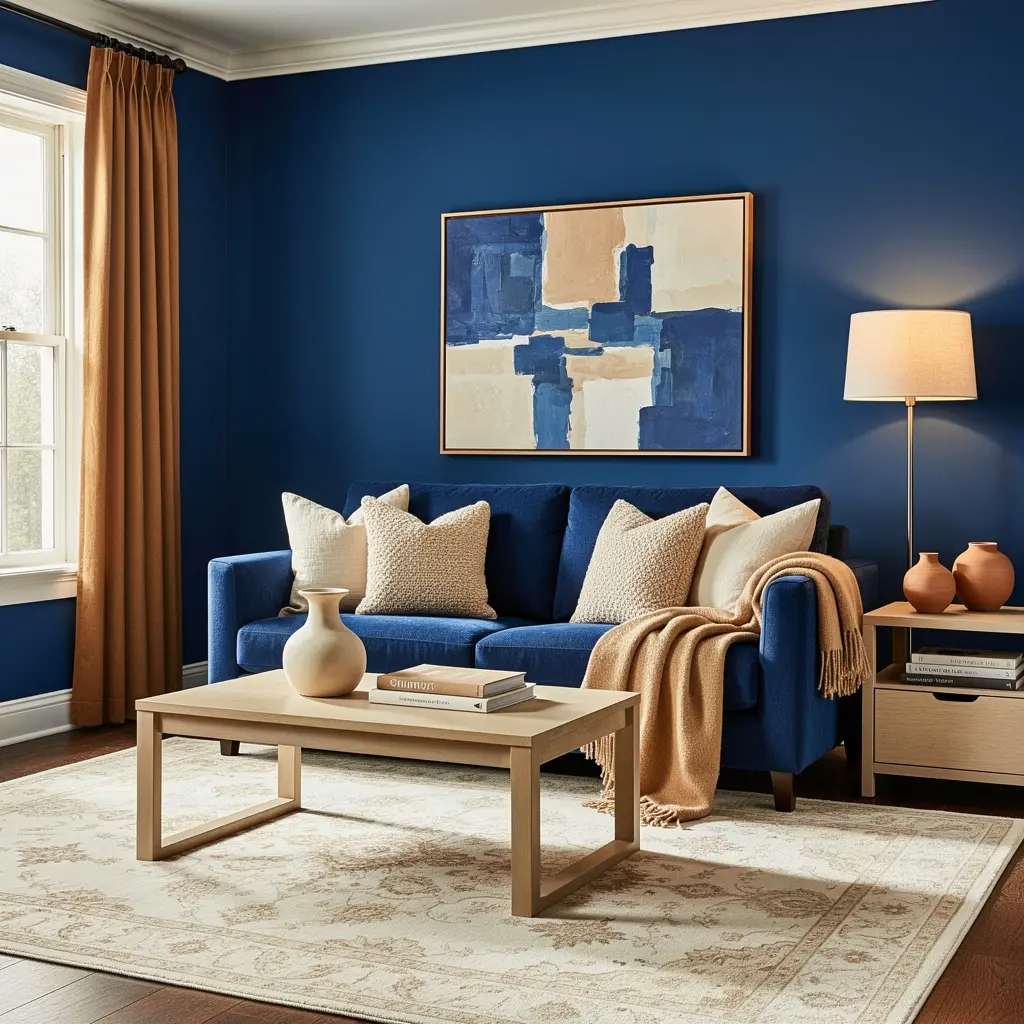
Pure white against blue can create a lot of contrast, which reads as crisp but also cold in a room meant for lounging and relaxing. Swapping pure white for cream, tan, or a soft off white in your rugs, throw pillows, and trim softens that contrast considerably while still keeping the room feeling bright and open.
A Simple Formula That Works in Most Rooms
Blue sofa, cream or tan rug, warm wood coffee table, and one or two brass or gold accents is a combination that shows up constantly in rooms people describe as calm rather than cold, mostly because it balances the cool blue with genuinely warm elements throughout.
4. Add Texture Through Textiles, Not Just Color
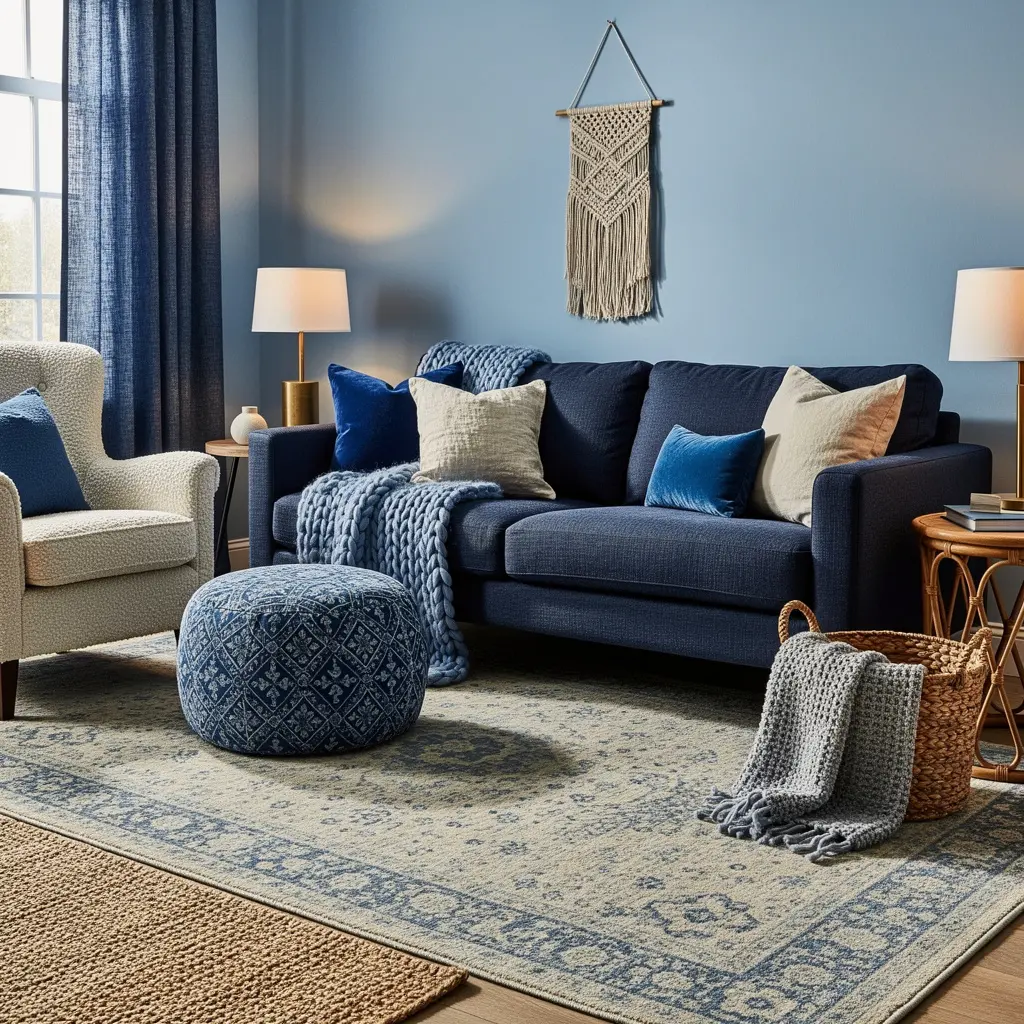
A flat blue sofa with no texture reads as much colder than the same sofa in a nubby boucle or a soft chenille fabric. Textured throw pillows, a chunky knit blanket, and a rug with some pile or weave all add warmth that color alone simply can’t provide, regardless of how warm the actual shade of blue is.
5. Bring in Brass or Gold Metal Accents
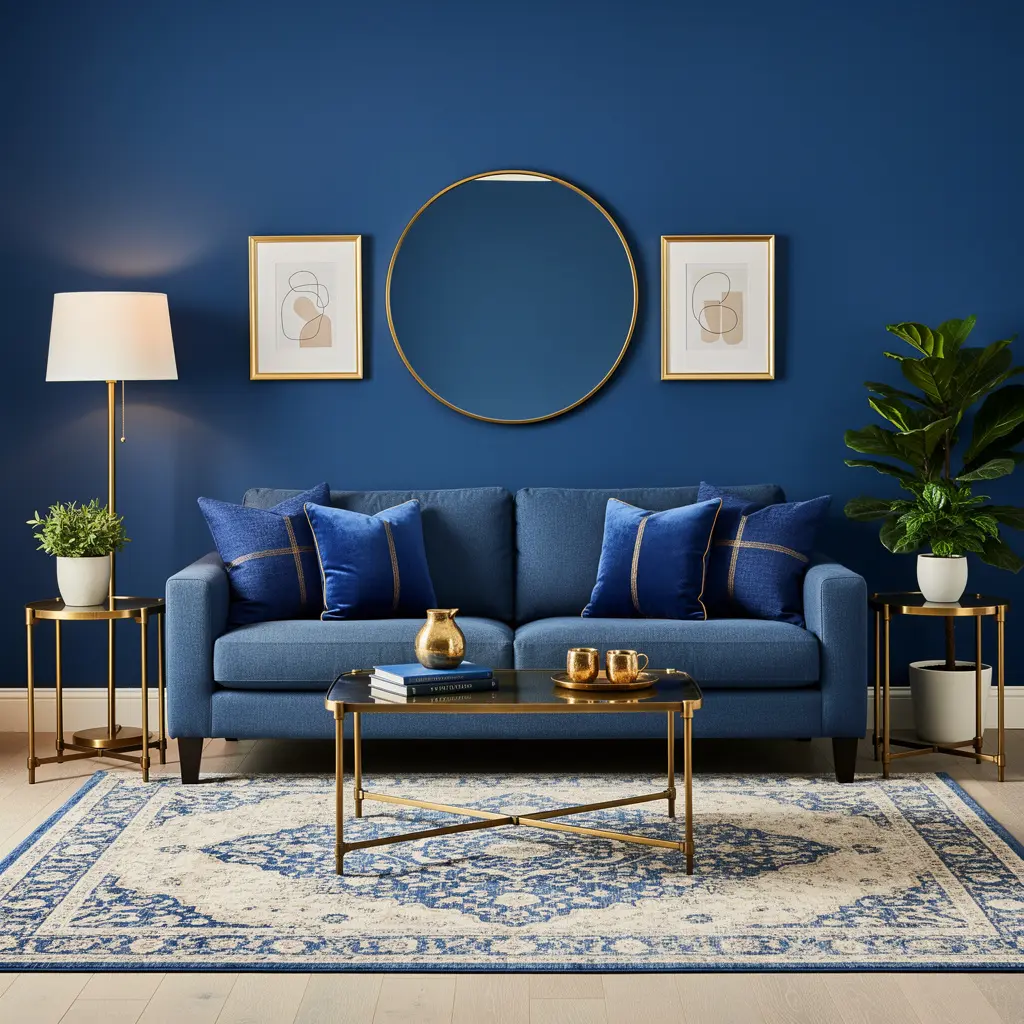
Cool metals like chrome or brushed nickel can push a blue room further into cold territory, while warm metals like brass, gold, or an aged bronze finish balance the coolness of the blue itself. A brass floor lamp, gold picture frames, or a brass tray on the coffee table are small touches that make a noticeable difference in how the whole room reads.
6. Layer Your Lighting for Warmth After Dark
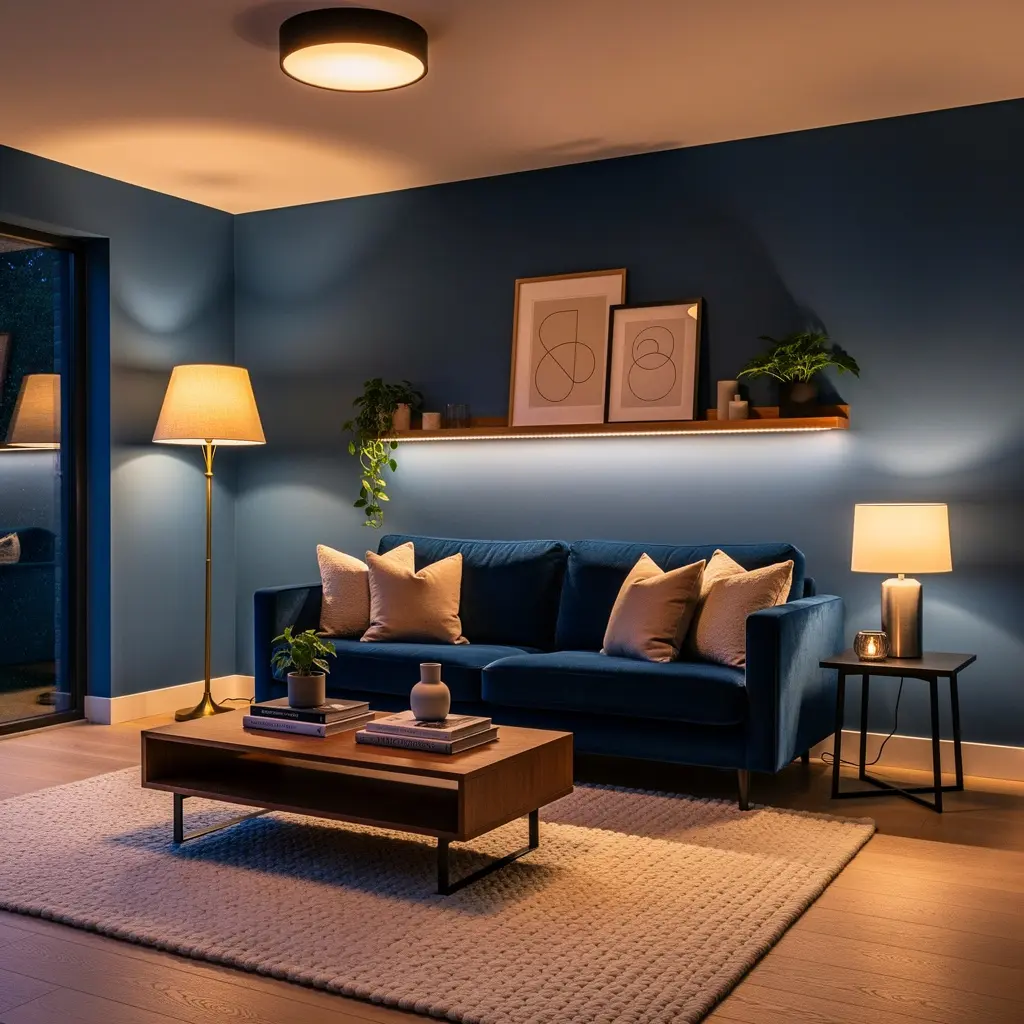
Bright, cool overhead lighting flattens a blue room the same way it flattens any other color palette, but it’s especially noticeable with blue since the color itself already reads as cool. Warm white bulbs, a floor lamp, and a table lamp or two spread around the room create pools of warm light that counteract the blue’s natural coolness once the sun goes down.
7. Add Greenery to Soften an All Blue and Neutral Palette
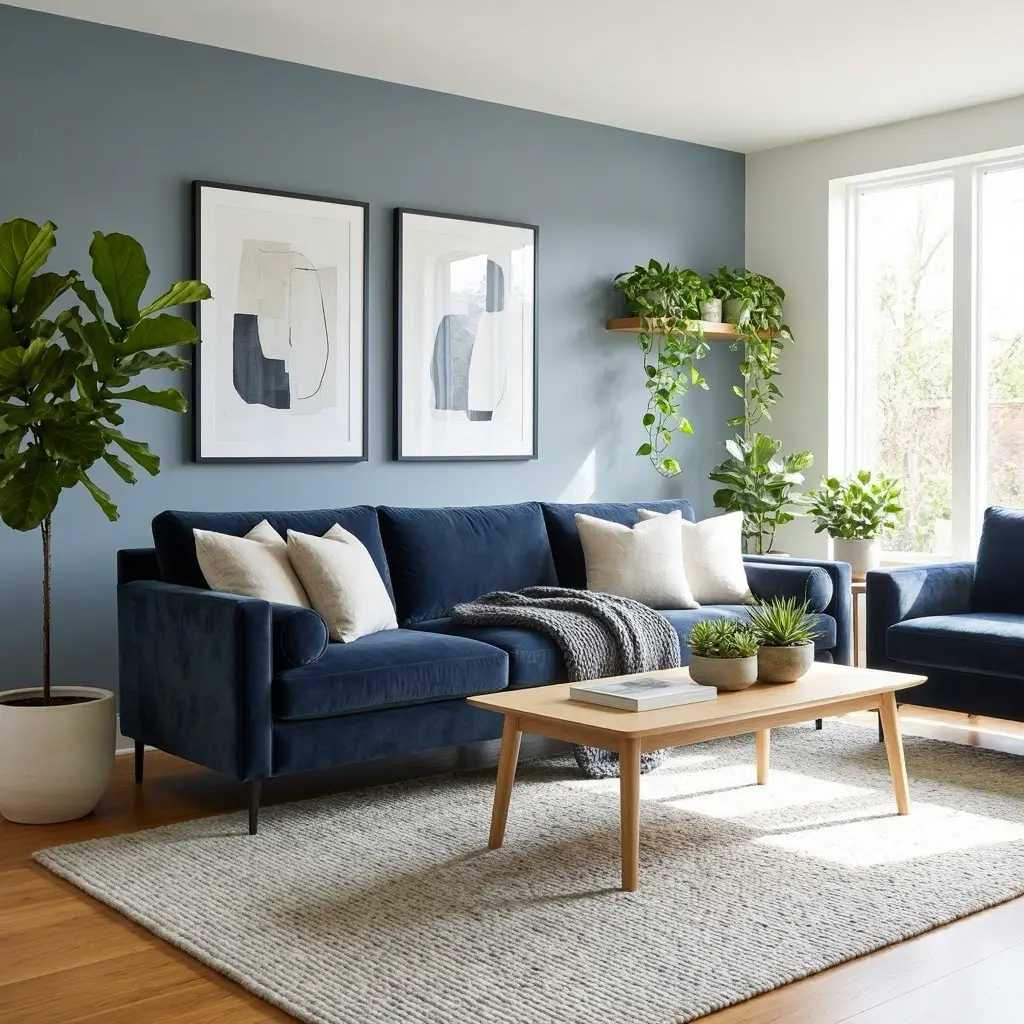
Plants bring a genuinely living element into a room that might otherwise feel a little too controlled or color coordinated. A large leafy plant in a corner, or a few smaller potted plants on shelves and side tables, adds visual softness and breaks up what could otherwise become a very flat, monochromatic look.
Green also happens to sit right next to blue on the color wheel, so plants tie into a blue palette more naturally than almost any other accent color would. A fiddle leaf fig or a large snake plant works well as a single statement piece in an empty corner, while smaller trailing plants like pothos add softness to shelves without demanding much light or maintenance in return.
8. Choose Patterned Textiles That Include a Warm Color
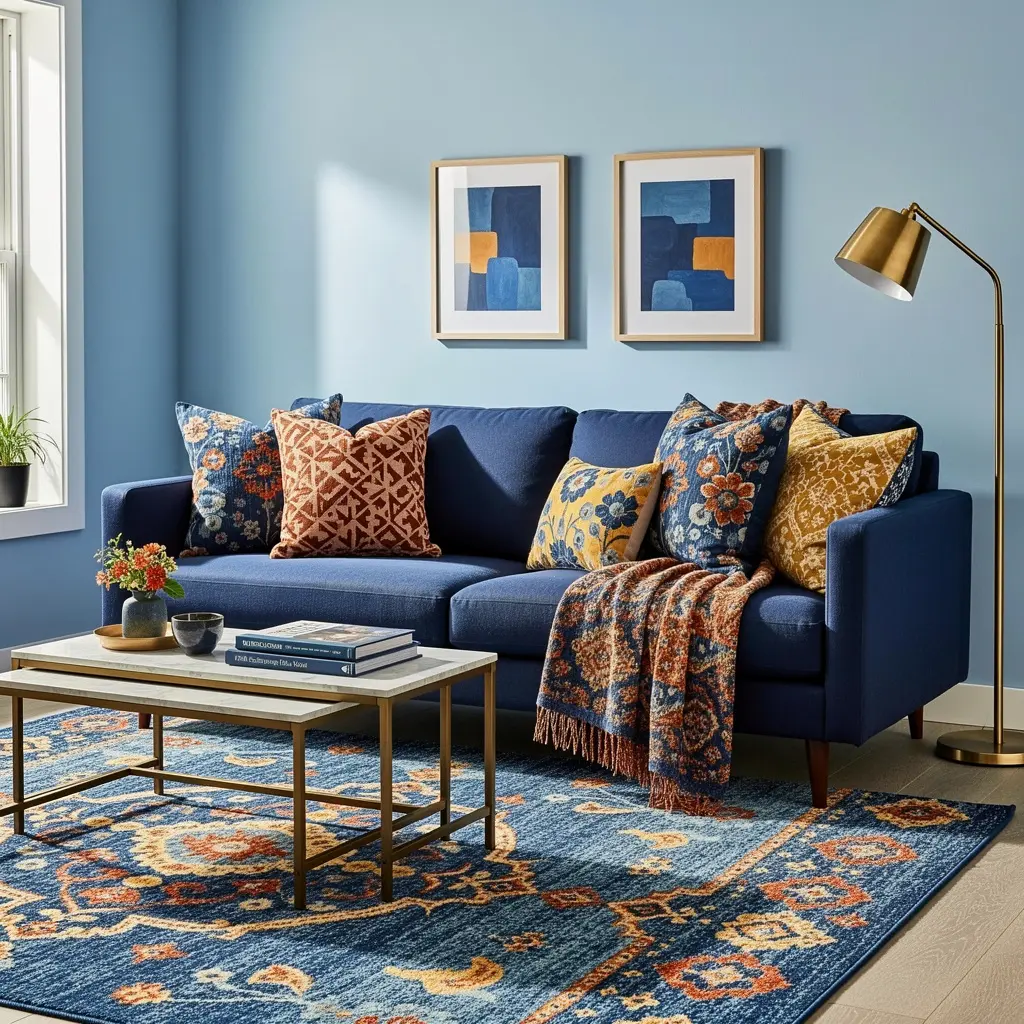
A solid blue sofa paired with solid blue or white everything else can start to feel one note fast. Introducing a patterned rug, patterned curtains, or patterned throw pillows that include a warm accent color, rust, mustard, terracotta, keeps the palette from feeling flat while still staying clearly within a blue color story.
Choosing a Pattern Scale That Works
A larger scale pattern on one statement piece, like a rug or a set of curtains, usually reads better in a living room than several small scale patterns competing across multiple pieces. Pick one pattern to carry the warm accent color and keep everything else in the room comparatively simple.
9. Use Blue in Layers of Tone, Not One Flat Shade
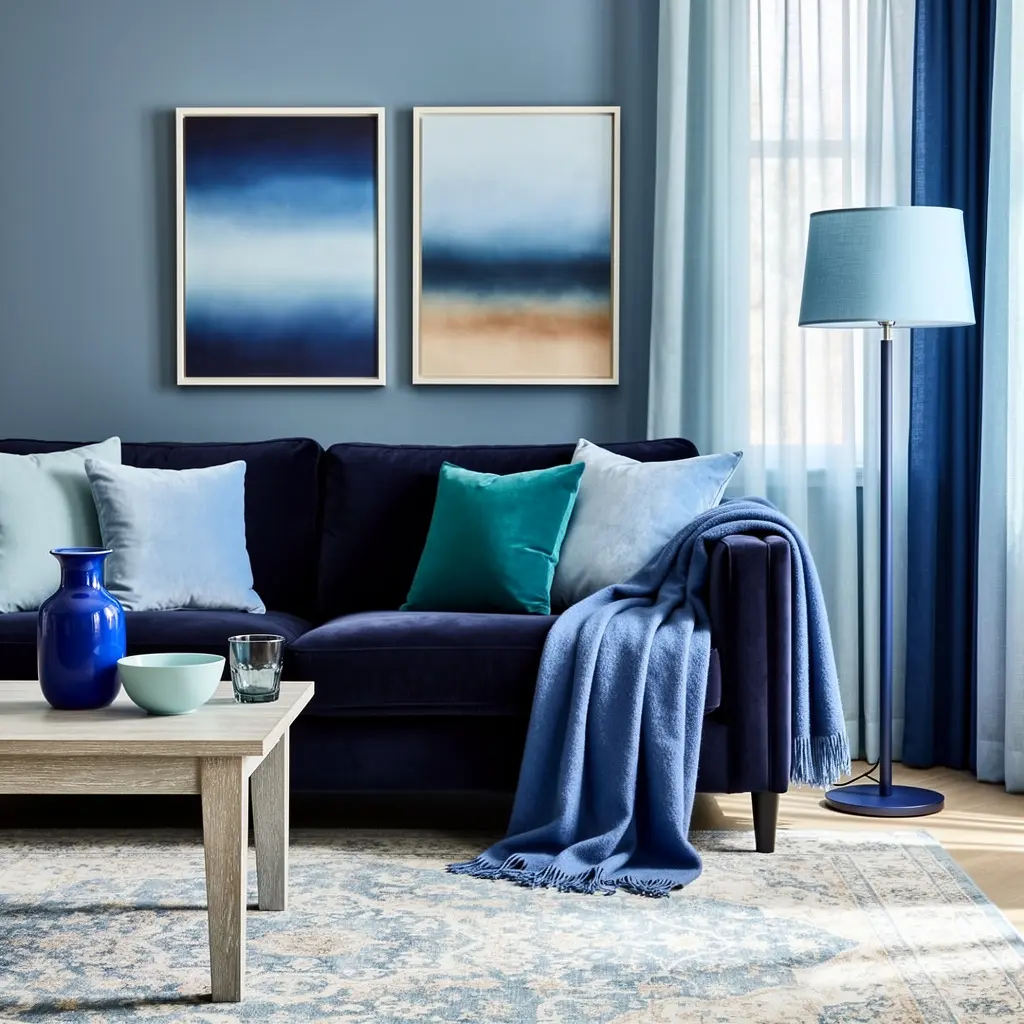
The same trick that works for other monochromatic color schemes applies here too. A navy accent chair, a mid tone blue sofa, and a pale blue or blue gray wall, layered together, create depth that a single flat shade of blue repeated everywhere simply can’t achieve, no matter how nice that one shade is on its own.
10. Keep One Wall or Zone Neutral to Give the Eye a Rest
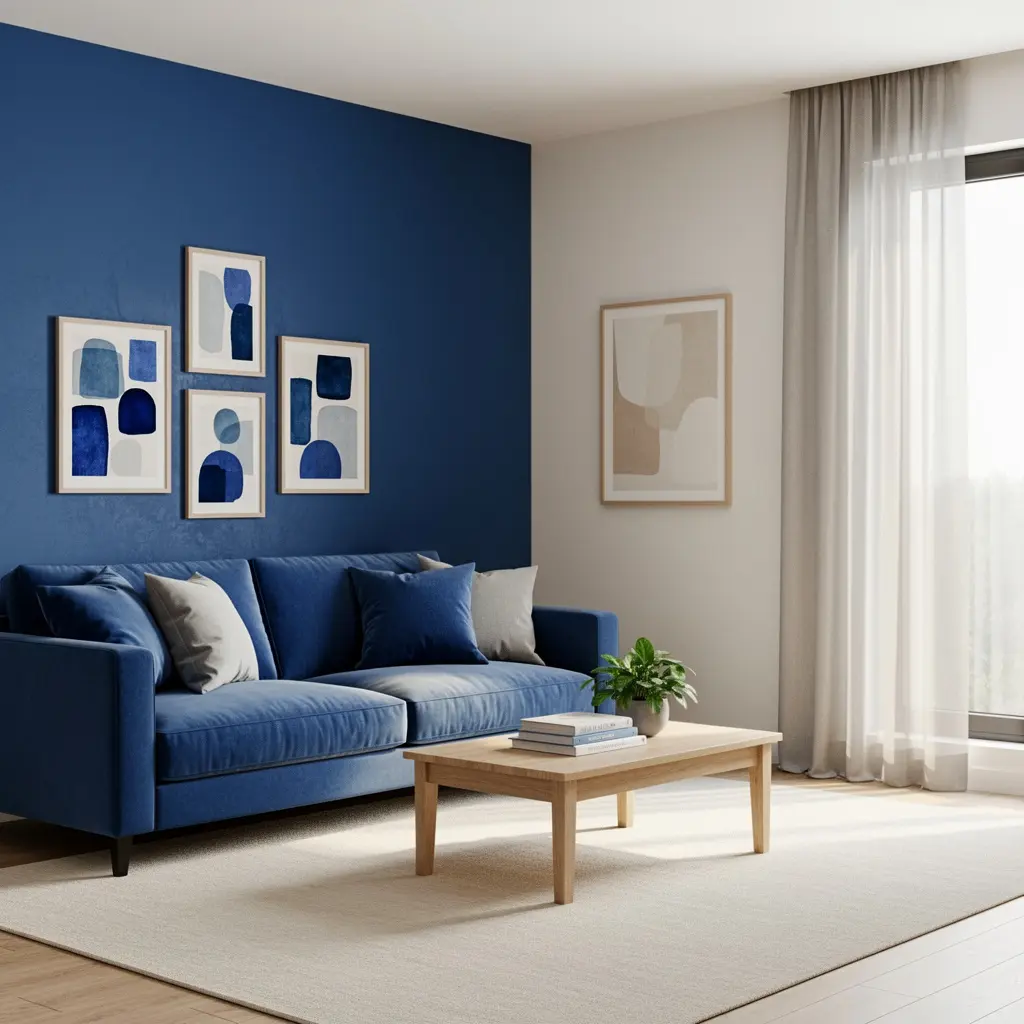
An entire room saturated in blue, even a warm toned blue, can start to feel visually heavy after a while. Keeping one wall, usually the one behind the main seating area, in a neutral cream or warm white gives the eye somewhere to rest and actually makes the blue elsewhere in the room read as more intentional rather than overwhelming.
This doesn’t mean avoiding blue on that wall entirely. A single piece of art with blue tones, or a neutral curtain with a subtle blue trim, keeps the wall connected to the rest of the room’s palette without adding another full block of saturated color. The goal is contrast and breathing room, not a complete break from the color story you’ve built everywhere else.
Mistakes to Avoid
A few small missteps show up over and over in blue rooms that end up feeling cold instead of calm, and most of them are easy to avoid once you know what to look for.
- Choosing a cool, icy blue as your primary color in a room without much natural light, which reads as flat and cold
- Pairing blue only with stark white instead of warmer creams and tans that soften the overall contrast
- Using cool metals like chrome or nickel instead of warmer brass or gold accents throughout the room
- Relying entirely on flat, untextured fabrics instead of adding chunky knits, boucle, or textured rugs
- Sticking to one single flat shade of blue everywhere instead of layering navy, mid tone, and pale blue together
- Skipping warm lighting after dark and relying only on bright overhead fixtures that flatten the whole palette
Frequently Asked Questions
What shade of blue is warmest for a living room? Blues with a gray or green undertone, like slate or muted teal, tend to feel warmer and more livable than true navy or icy, cool toned blues, especially in rooms without a lot of natural light.
How do I keep a blue living room from feeling cold? Pair the blue with warm wood tones, cream instead of stark white, brass or gold metal accents, and layered warm lighting rather than relying on overhead fixtures alone.
Does blue work well in a small living room? Yes, especially lighter or mid tone blues paired with cream and warm wood, which keep a small space feeling open rather than closing it in the way a very dark, saturated color scheme might.
What colors pair best with blue in a living room? Cream, tan, warm wood brown, and small pops of rust, mustard, or terracotta all pair well with blue, balancing its natural coolness with genuinely warm tones throughout the space.
Do I need to commit to one shade of blue throughout the whole room? No, and layering two or three different blue tones, a navy accent chair, a mid tone sofa, a pale blue wall, actually reads as more intentional and designed than sticking to a single flat shade everywhere.
Conclusion
A blue living room feels calm instead of cold when the blue itself has a warm undertone and gets paired with genuinely warm elements throughout the room: wood, brass, cream textiles, and layered lighting after dark. Start with your base shade of blue and make sure it leans warm, then build the rest of the room around textures and materials that keep the whole space feeling lived in rather than staged.

Leave a Reply