
You sit down to study and your desk is a mess of tangled cables, mismatched supplies, and a color scheme that’s basically “whatever happened to be on sale.” It’s genuinely hard to feel calm or focused in a space that looks like that, and a plain white desk with zero personality doesn’t fix the problem either, it just trades clutter for boredom. Sage green aesthetic study desk setup ideas solve both issues at once. The muted, earthy tone is genuinely easy on the eyes for long stretches, and building a setup around one cohesive palette forces a level of organization that a random pile of supplies never will on its own.
1. Start With a Sage Green Desk Mat as Your Anchor Piece
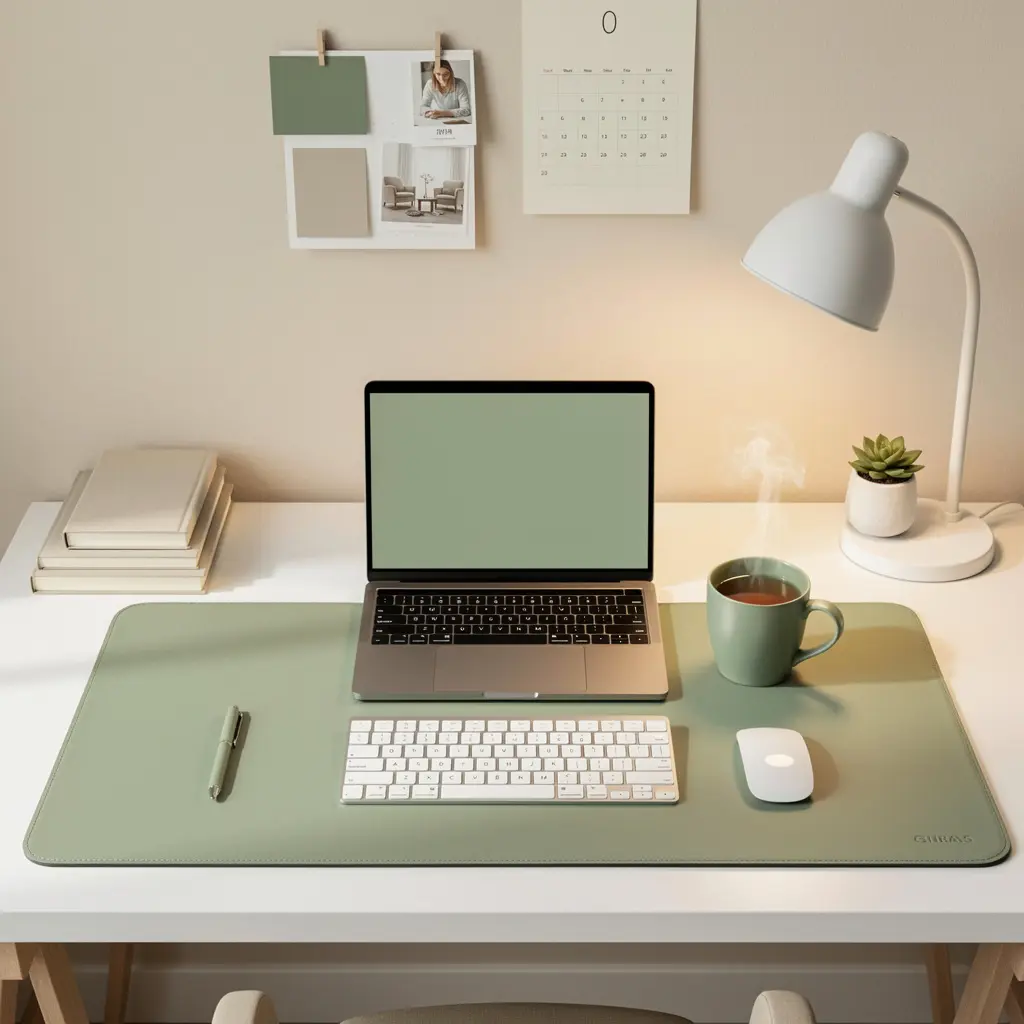
A large sage green desk mat is the fastest, cheapest way to commit to this look without repainting a wall or buying new furniture. Because it covers most of the visible surface, it becomes the one element that ties everything else together, your notebooks, your pen holder, your lamp, into a single cohesive picture instead of a handful of disconnected objects sitting on white laminate.
Why a Mat Works Better Than Scattered Accents
A single large surface reads as intentional in a way that five small sage colored items scattered around a desk just don’t. The mat also protects the surface underneath and defines a clear “workspace” zone, which some people genuinely find helps with focus, since it visually separates the work area from the rest of the room around it.
2. Bring in Real or Faux Plants for the Botanical Layer
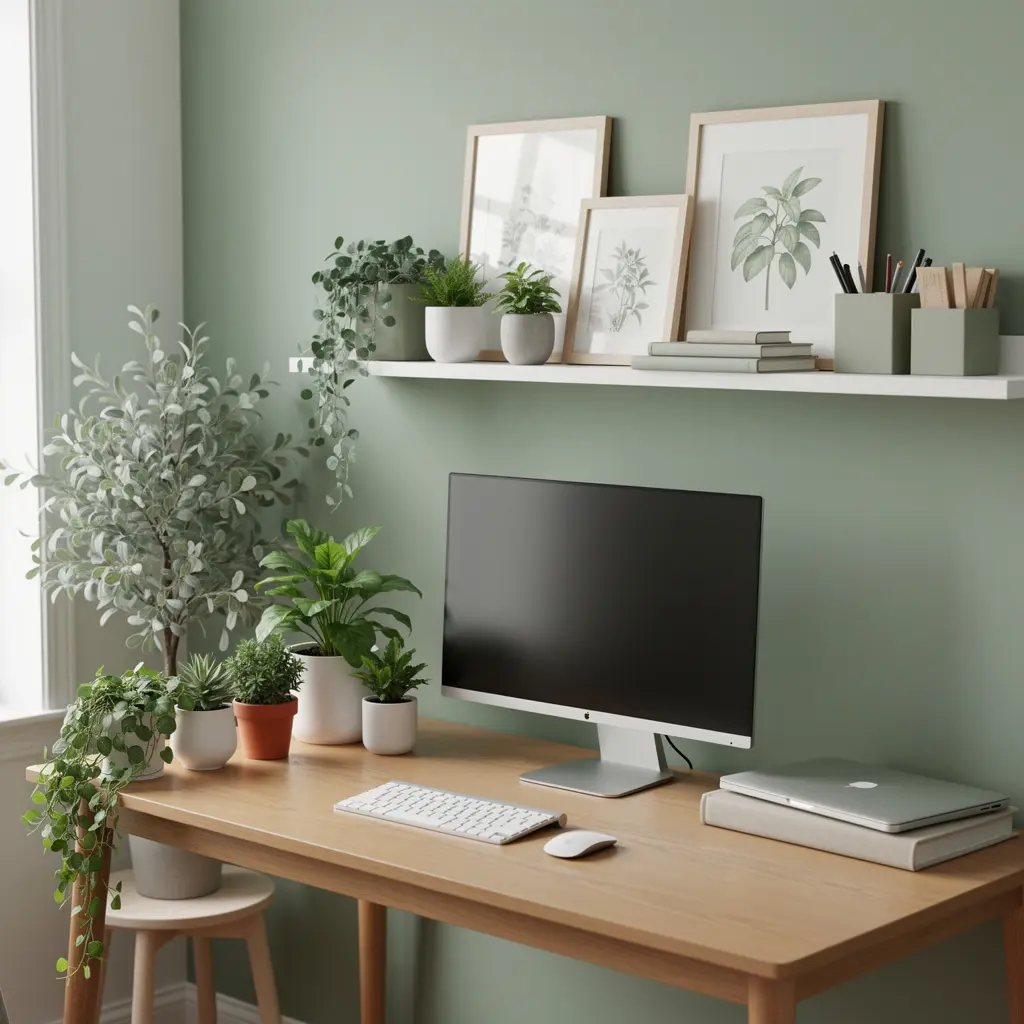
Sage green is, at its core, a nod to nature, so actual greenery reinforces the whole aesthetic in a way that color alone never quite manages. A small potted pothos, a snake plant, or a faux eucalyptus stem in a narrow vase adds texture and a living element to what would otherwise be a completely flat desk surface.
Real plants have the added benefit of naturally improving air quality in a small home office or study nook, though a good faux version is a perfectly reasonable substitute if natural light is limited or your track record with watering things isn’t great.
3. Choose Warm Metallic Hardware Over Cool Silver or Chrome
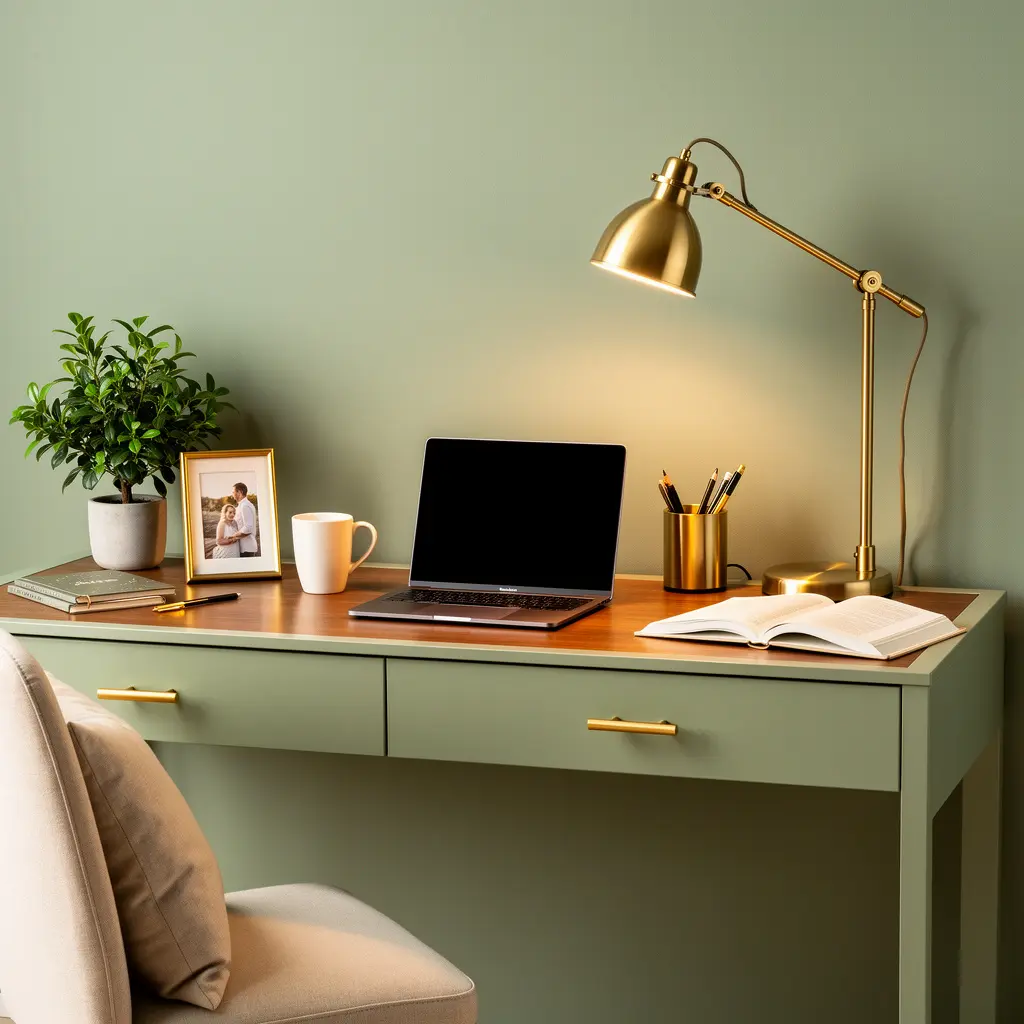
Gold or brushed brass accents, whether that’s a pen holder, drawer pulls, or the base of a desk lamp, pair with sage green in a way that reads as noticeably more elevated than cool silver or plain black hardware ever does. This particular combination of muted green and warm metal shows up over and over in the setups people describe as the most put together.
Where to Add Metallic Touches Without Overdoing It
Stick to one metallic finish throughout the whole setup rather than mixing gold, silver, and rose gold in the same space. A single finish repeated across two or three small items, a lamp, a pen cup, a small picture frame, keeps the look cohesive instead of turning it into a cluttered mix of competing metals.
4. Use Layered Storage to Keep the Desk Surface Clear
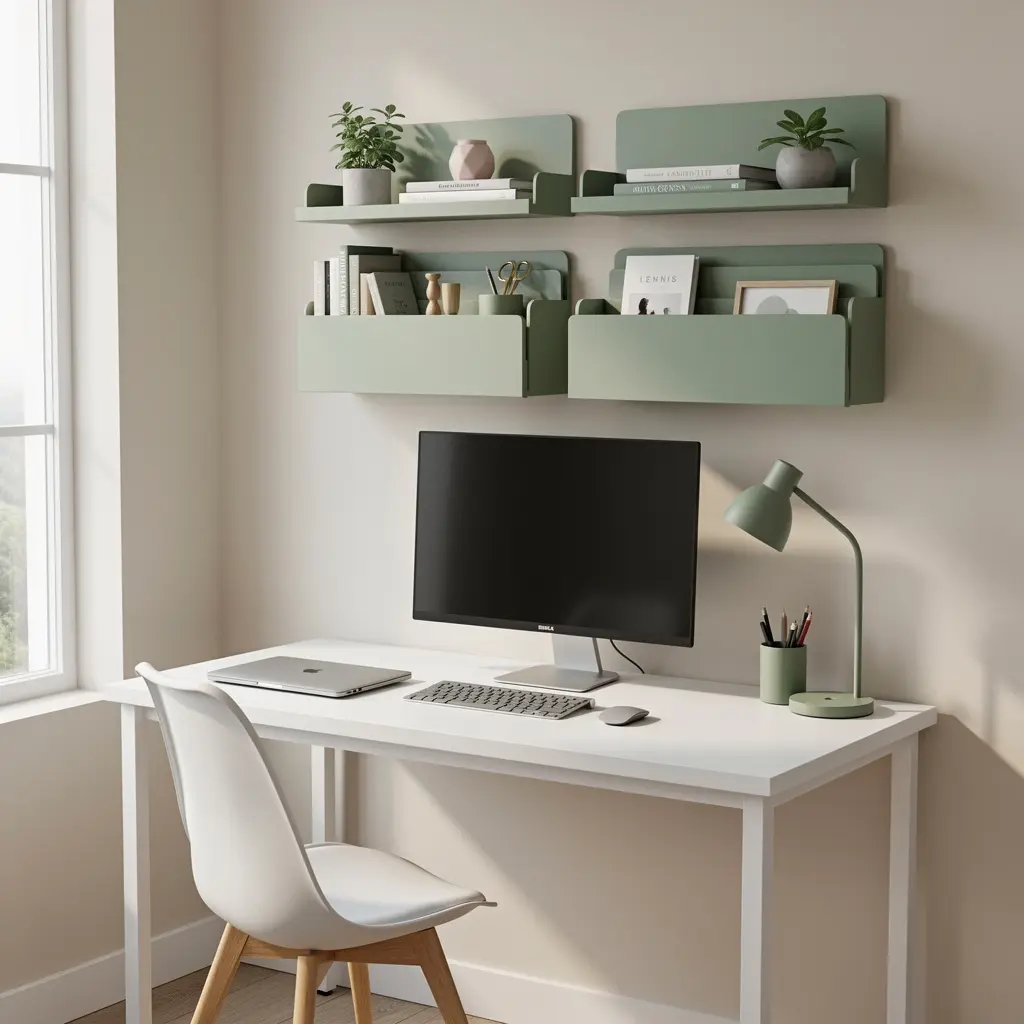
A cluttered desk undercuts even the most carefully chosen color palette. Layered storage, stacked trays, a small drawer organizer, or a vertical file holder, keeps papers and loose supplies contained without eating into surface space you actually need for working. Look for storage pieces in cream, white, or natural wood tones rather than anything bright that would compete with the sage green base for attention.
5. Choose a Curved or Softly Shaped Desk If You’re Buying New
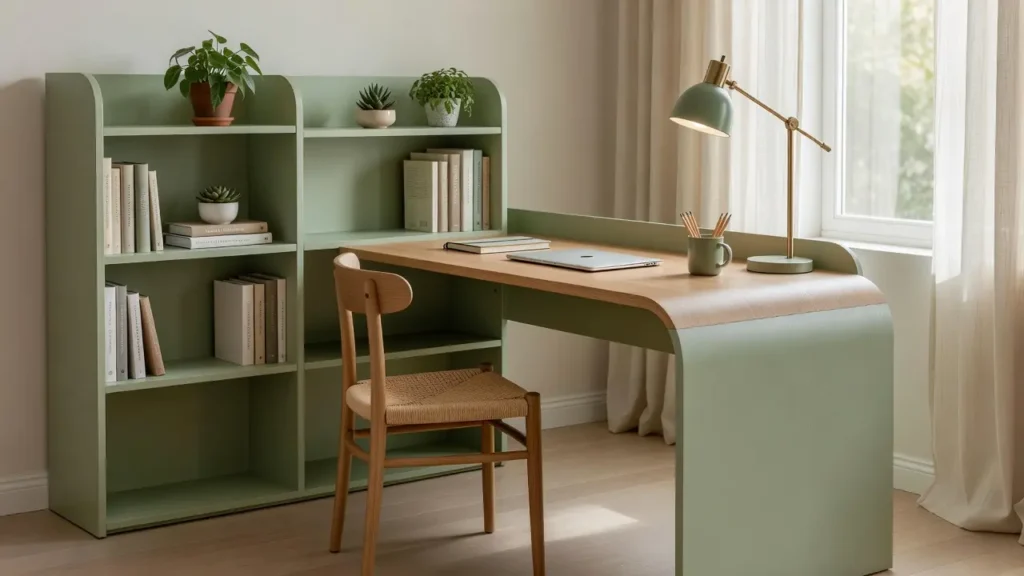
Standard rectangular desks work perfectly fine, but a curved accent desk with rounded edges softens the whole look and pairs particularly well with the calm, organic feeling sage green is meant to evoke in the first place. This isn’t a requirement by any means, but it’s a detail that comes up repeatedly in the setups people describe as feeling the most considered and least generic.
6. Layer in Warm, Soft Lighting Instead of Harsh Overhead Light
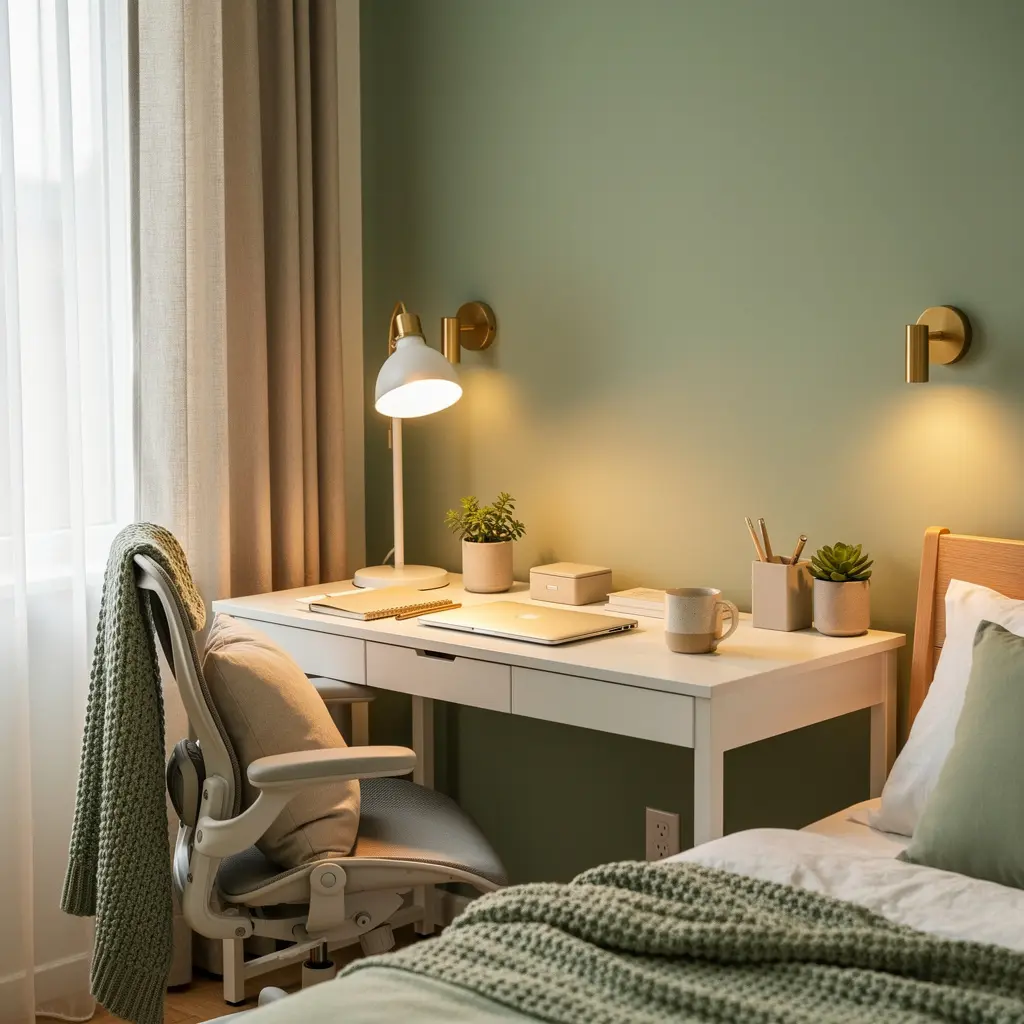
A small desk lamp with a warm white bulb, ideally under a fabric or frosted glass shade rather than an exposed bulb, does more for the calming effect of a sage green setup than almost any other single change you could make. Bright, cool overhead lighting flattens the muted tone and can leave the whole setup looking washed out instead of soothing.
Positioning Your Lamp for Both Function and Look
Place the lamp slightly off center, angled toward your main work area, instead of dead center on the desk. This creates a more natural, layered look while still giving you enough direct light to actually read and write comfortably for hours at a time.
7. Add Soft Textiles for Comfort and Texture
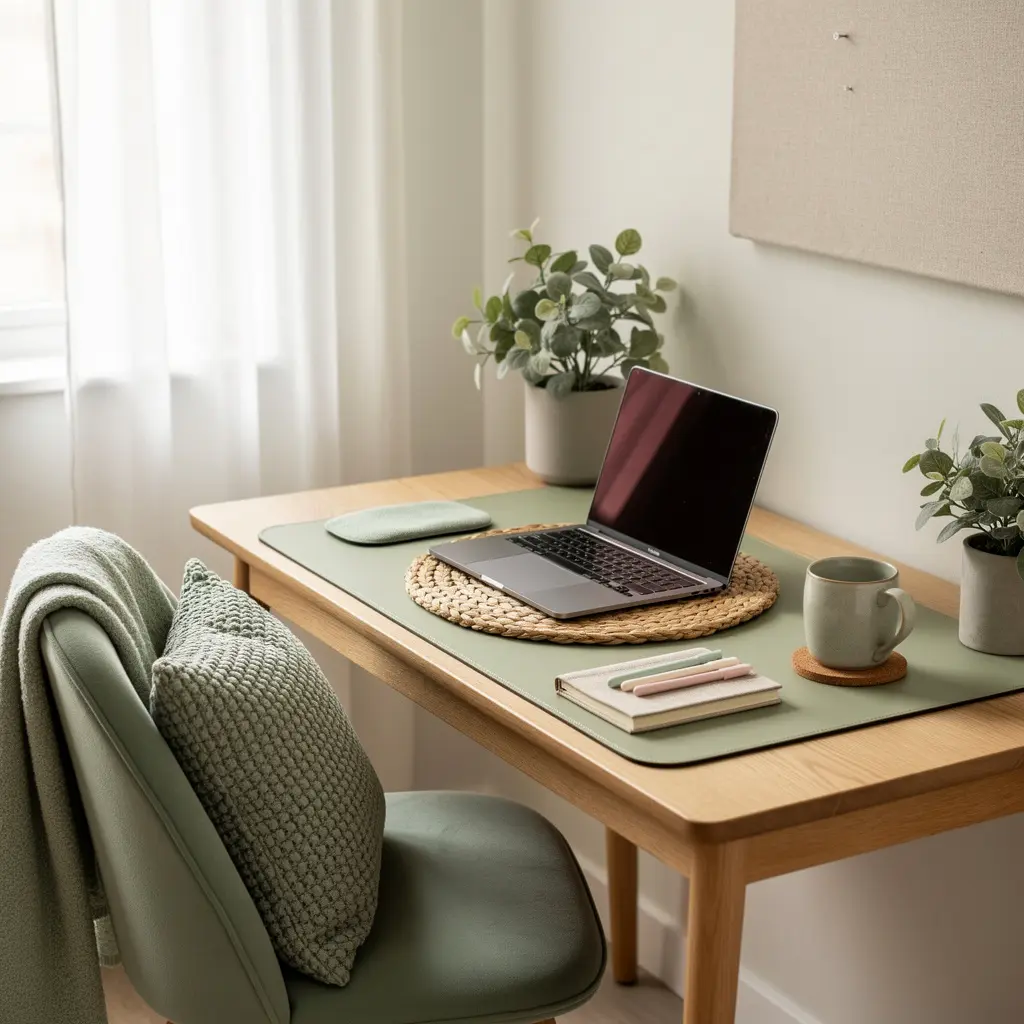
A small cushioned seat pad, a wrist rest in a coordinating cream or sage tone, or even a small woven basket for loose supplies adds a tactile, cozy layer that a purely visual setup tends to miss entirely. These textiles also make longer study sessions more physically comfortable, which matters a lot more than pure aesthetics once you’re actually spending hours at this desk instead of just photographing it.
8. Keep Your Wall Art and Decor Minimal and Cohesive
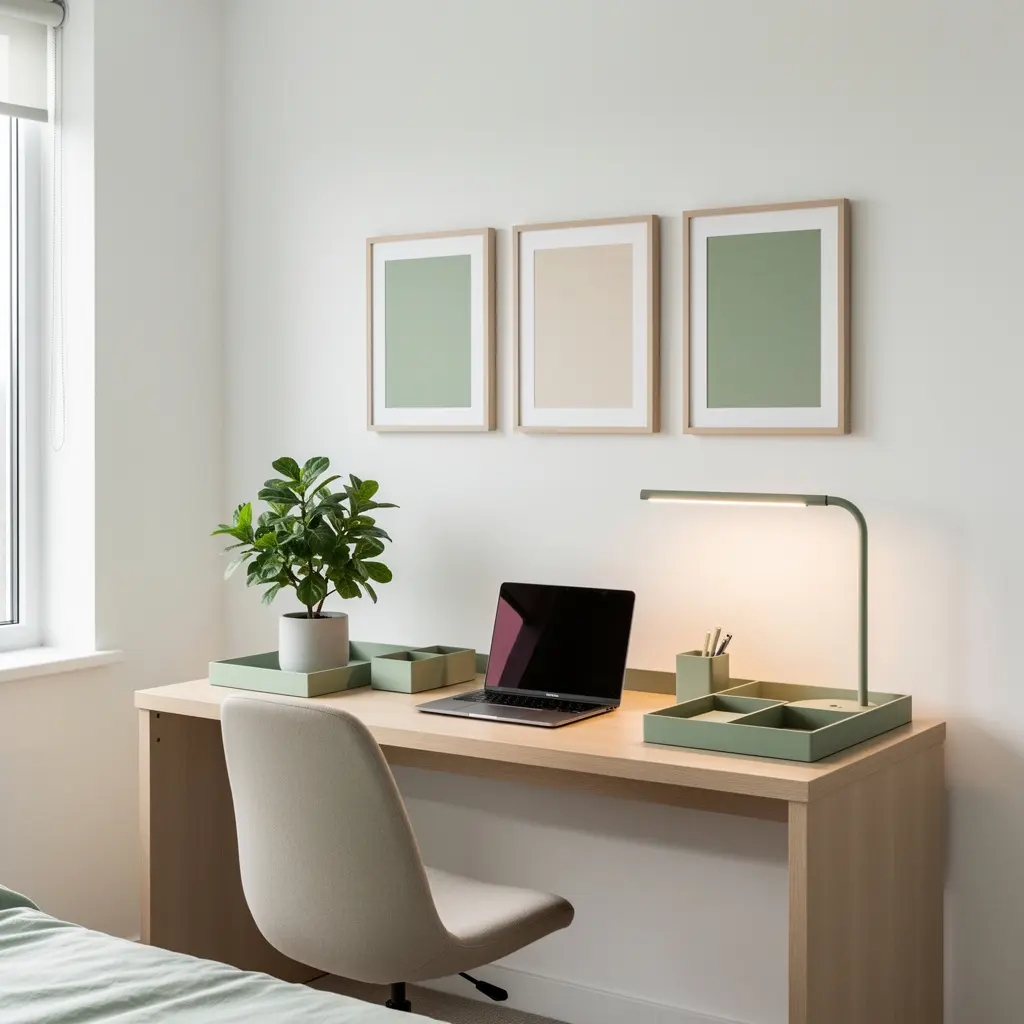
One or two pieces of wall art in complementary tones, cream, sage, soft brown, do more for the space than a wall covered in mismatched posters and prints ever will. A single botanical print, a small shelf holding two or three curated objects, or a simple framed quote keeps the visual noise low and lets the desk itself stay the actual focal point of the room.
9. Choose a Consistent Color Story for Notebooks and Supplies
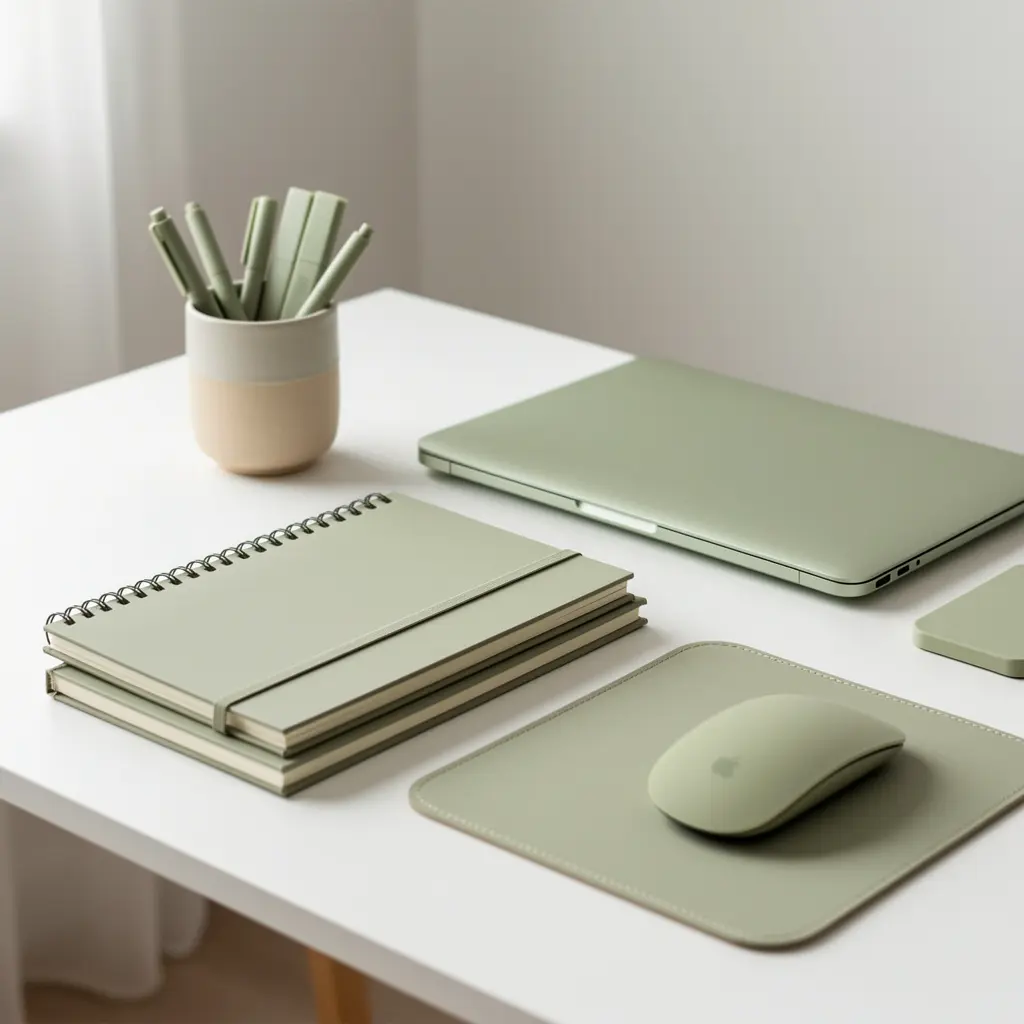
Notebooks, folders, and pens in cream, sage, and a touch of gold or brown keep even your everyday working supplies looking intentional instead of like a grab bag pulled from a school supply aisle. It’s a small detail, but it’s genuinely the difference between a desk that looks styled for one photo and a desk that stays cohesive through actual daily use, month after month.
10. Personalize With One or Two Meaningful Objects
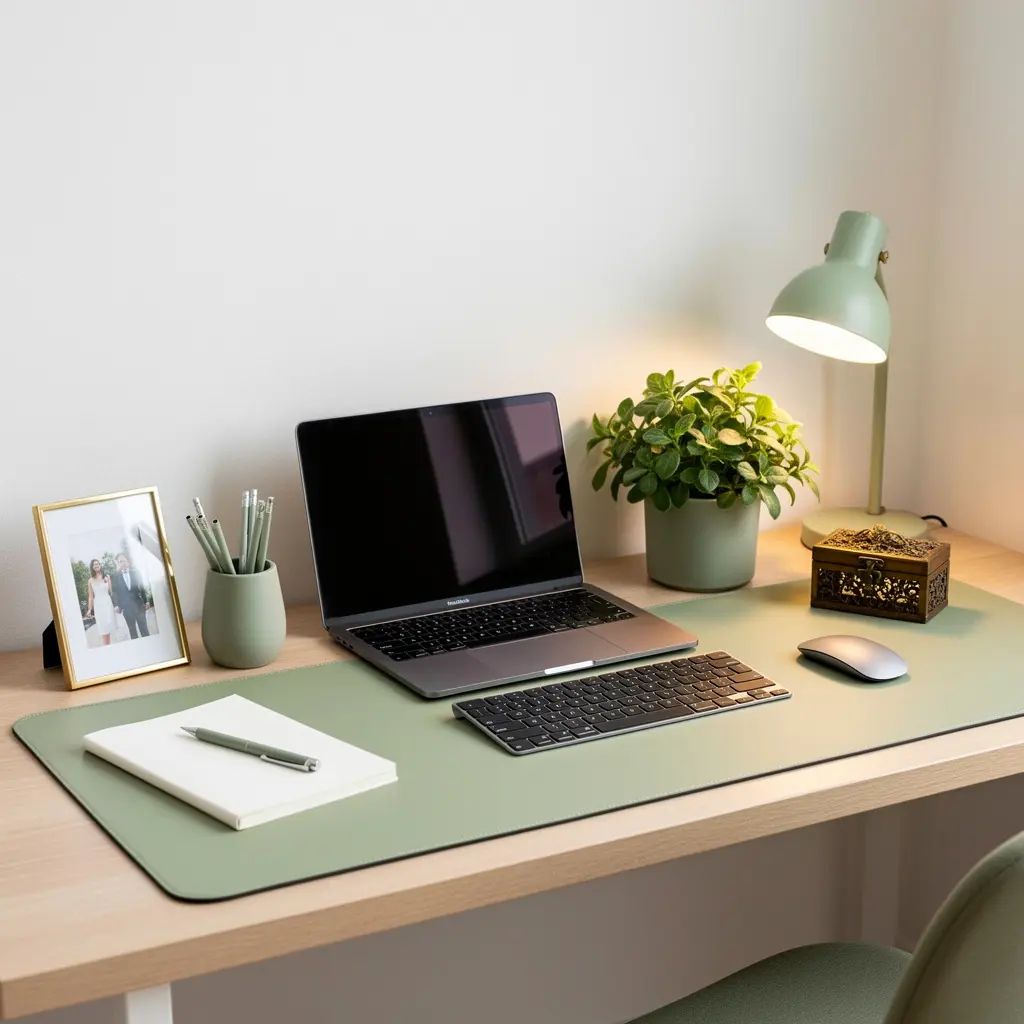
The most convincing sage green desk setups aren’t purely color matched. They include one or two personal touches, a small figurine, a photo, a specific mug, that reflect the person actually using the space. A setup built entirely around color coordination without any personality can start to feel sterile fast, so leave room for at least one object that’s just genuinely yours, even if it doesn’t perfectly match the rest of the palette.
Mistakes to Avoid
- Mixing gold, silver, and rose gold hardware in the same setup instead of committing to one metallic finish
- Overcrowding the desk with mismatched storage pieces in bright, competing colors
- Relying only on harsh overhead lighting instead of adding a warm desk lamp for actual working comfort
- Choosing artificial plants that look obviously fake instead of higher quality faux greenery or the real thing
- Skipping personal touches entirely, which can leave the setup feeling more like a showroom than a workspace
- Buying every accessory in the exact same shade of sage, which flattens the whole look instead of adding real depth
Frequently Asked Questions
What colors pair well with sage green for a desk setup? Cream, white, warm brown wood tones, and gold or brass metallics all pair naturally with sage green, building a calm, earthy palette without feeling flat or one note.
Do I need to buy a new desk to get this look? No. A large sage green desk mat, a few coordinating accessories, and a warm desk lamp can transform an existing desk completely without any furniture replacement at all.
Are real plants necessary for a sage green aesthetic? Not necessarily. High quality faux plants can achieve a similar visual effect, though real plants add the benefit of improved air quality if you have enough natural light to actually keep them alive.
How much does a sage green desk setup typically cost? A basic refresh with a desk mat, a small plant, and a few coordinating accessories can often be done for under $75, while a full setup with new lighting, storage pieces, and a repainted or replaced desk may run considerably higher depending on the quality and materials you choose.
Will a sage green desk setup actually help me focus? A decluttered, visually calm workspace is generally associated with fewer distractions, and muted, earthy tones like sage green tend to feel less visually stimulating than bright or high contrast colors, which some people genuinely find helps with sustained focus over time.
Conclusion
A sage green aesthetic study desk setup works because it forces two things that actually matter for focus: a decluttered surface and a calm, cohesive visual field around it. Start with one large anchor piece like a desk mat, add warm lighting and a single metallic finish, and layer in real or faux greenery before worrying about smaller decorative details. The color palette is really just the framework that makes the actual organization stick over time, and once it’s in place, maintaining it takes almost no extra effort compared to a desk with no system at all.

Leave a Reply