10 Cozy Vintage Living Room Ideas That Feel Genuinely Collected
You want a living room with real character, worn leather, a rug that’s seen some life, furniture with a story, but every attempt to buy your way into that look ends up feeling more like a themed restaurant than an actual home. Cozy vintage living room ideas that work best lean on restraint and real texture rather than a room full of purchases meant to look old, and the difference comes down to a handful of intentional choices.
1. Anchor the Room With One or Two Genuine Vintage Pieces
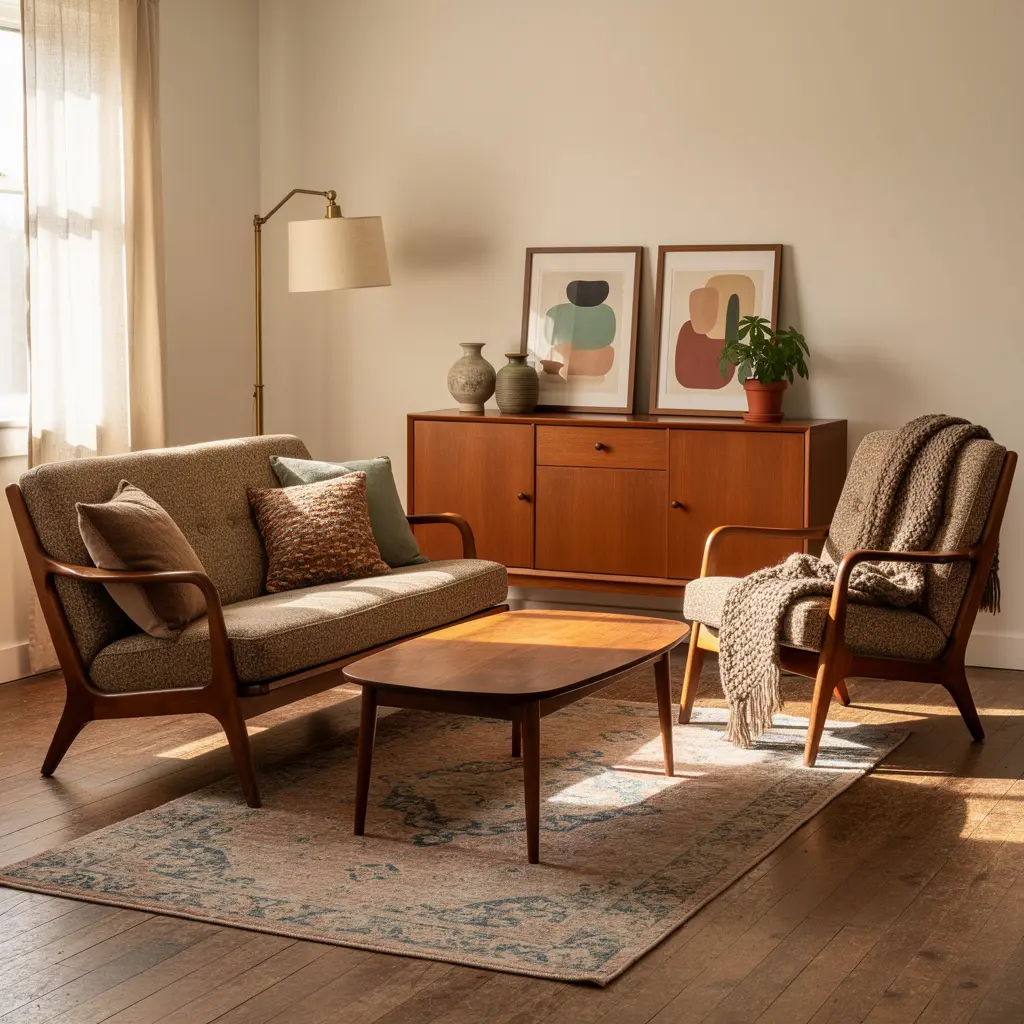
A real vintage sofa, an antique coffee table, or a genuinely old cabinet does more for the room’s authenticity than a dozen new pieces styled to look aged. Choose one or two pieces with real history and let everything else in the room be simpler, so the vintage pieces actually stand out rather than getting lost in a room trying too hard everywhere at once. A single antique cabinet can carry a whole room’s sense of history on its own.
Why Fewer, Better Pieces Work Better Here
A room where every single item is “vintage inspired” tends to feel a little flat, since nothing actually reads as more special than anything else. One or two genuine pieces, surrounded by simpler contemporary furniture, gives the eye something real to land on, and it’s usually the piece guests ask about first when they walk in.
2. Choose Leather or Velvet Upholstery That Develops Character Over Time
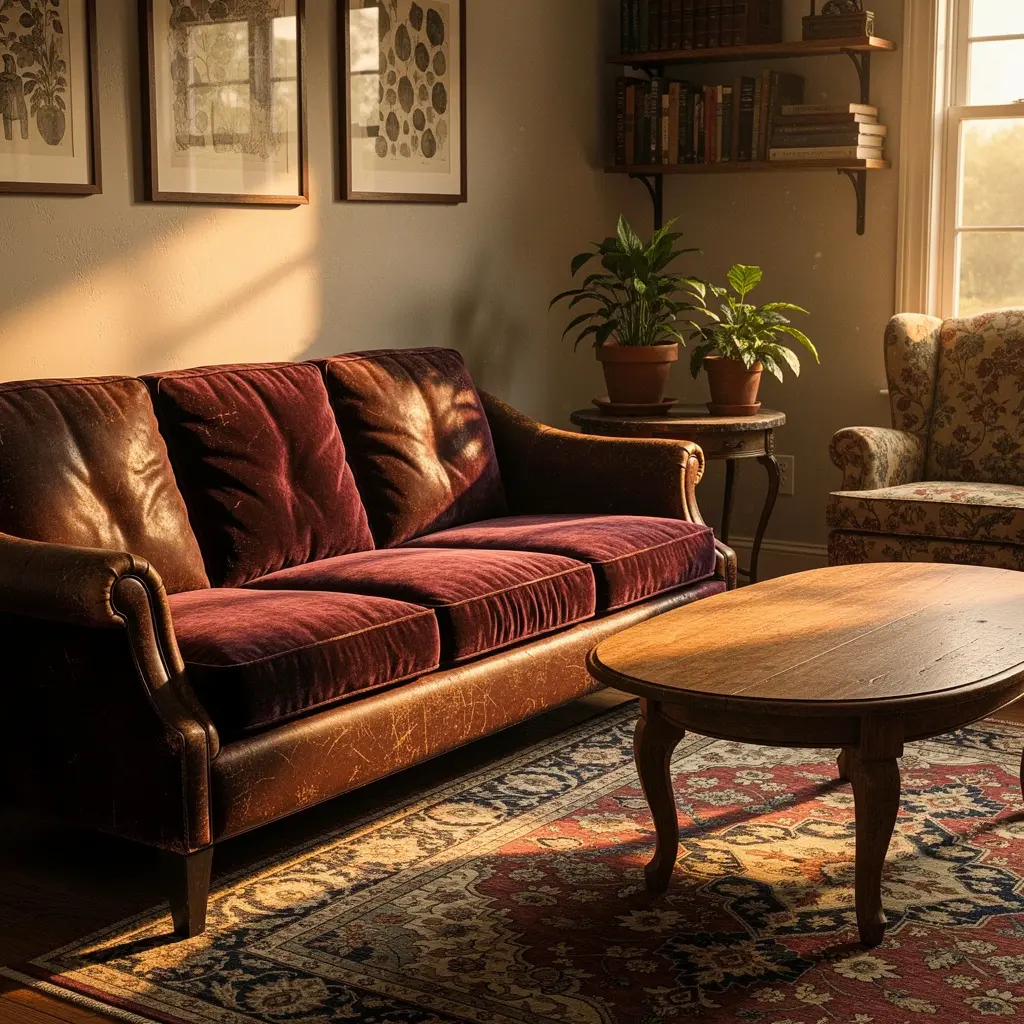
A worn leather chair or a velvet sofa in a rich, saturated color both age beautifully, developing a patina that actually improves the room’s character over the years rather than looking dated. These materials are staples of a genuinely vintage feeling living room for exactly this reason, and unlike most fabric upholstery, both actually look better after years of daily use rather than worse.
3. Layer Persian or Traditional Patterned Rugs
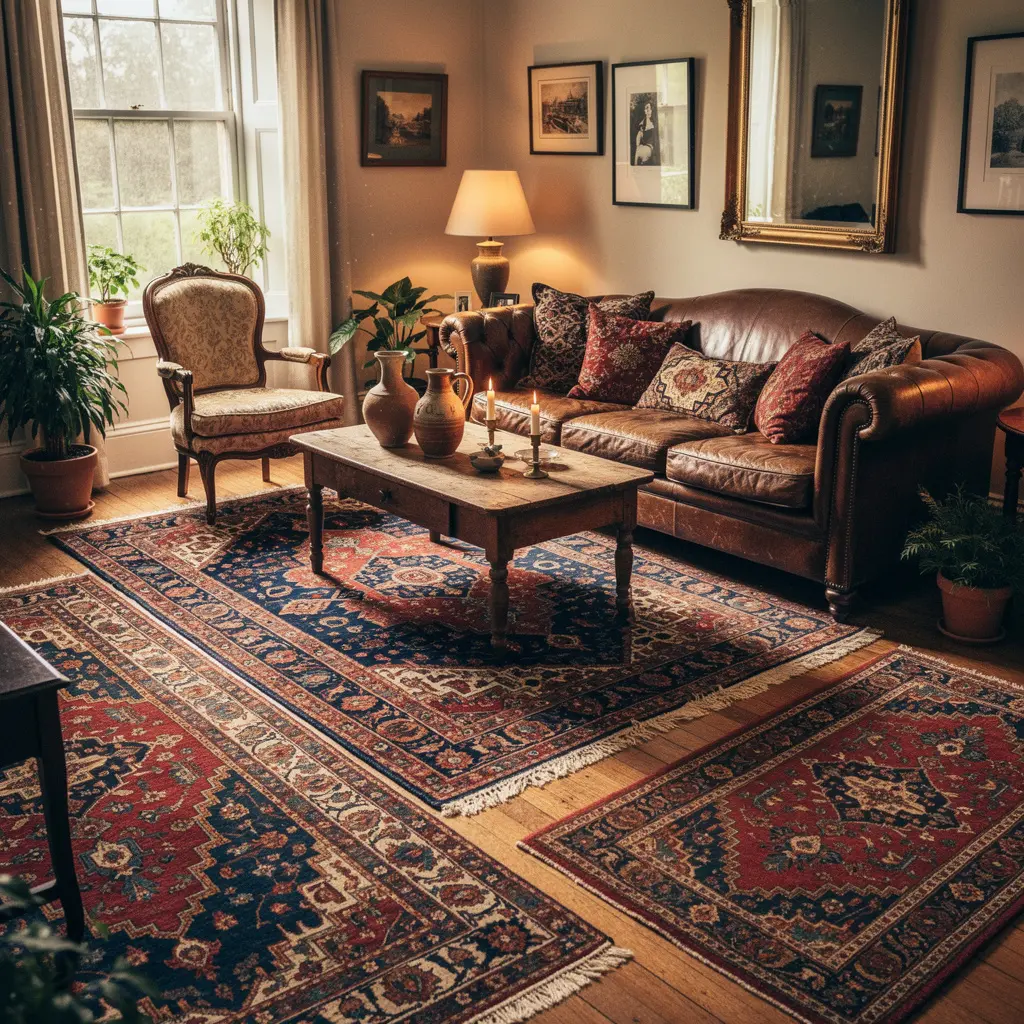
A rug with a traditional pattern, whether genuinely antique or a well made reproduction, grounds a vintage living room in a way a flat, solid colored rug never quite manages. Look for one with some visible wear or a slightly faded quality, since that softened look reads as more authentic than a crisp, brand new pattern. A rug that’s been walked on for decades tells a different story than one straight off the showroom floor.
4. Bring in Brass or Aged Metal Lighting Fixtures
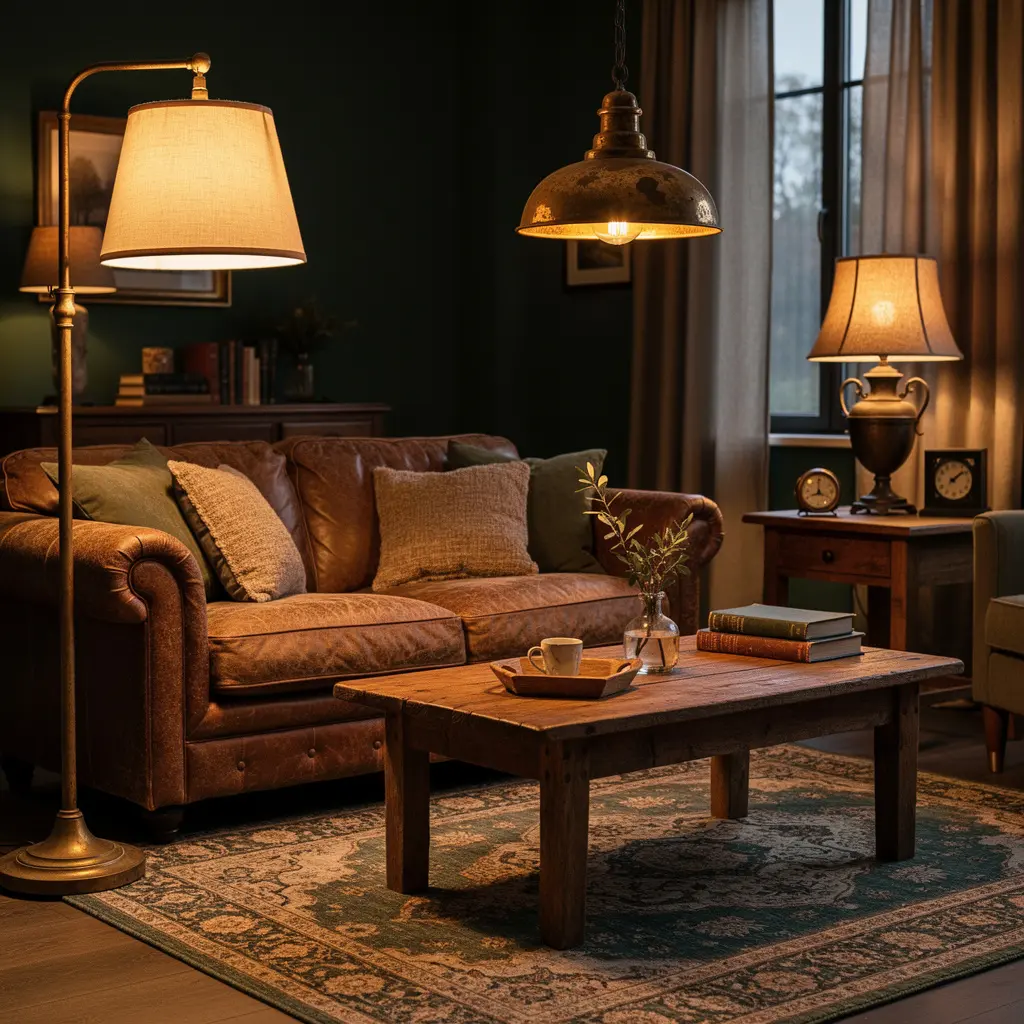
A brass floor lamp, an aged bronze sconce, or a vintage inspired chandelier all bring warm, period appropriate lighting into the room. These fixtures do double duty, providing genuinely warm ambient light while also reinforcing the room’s overall vintage character, in a way a modern fixture simply can’t replicate no matter how nice it looks.
5. Display Books, Art, and Collected Objects Openly
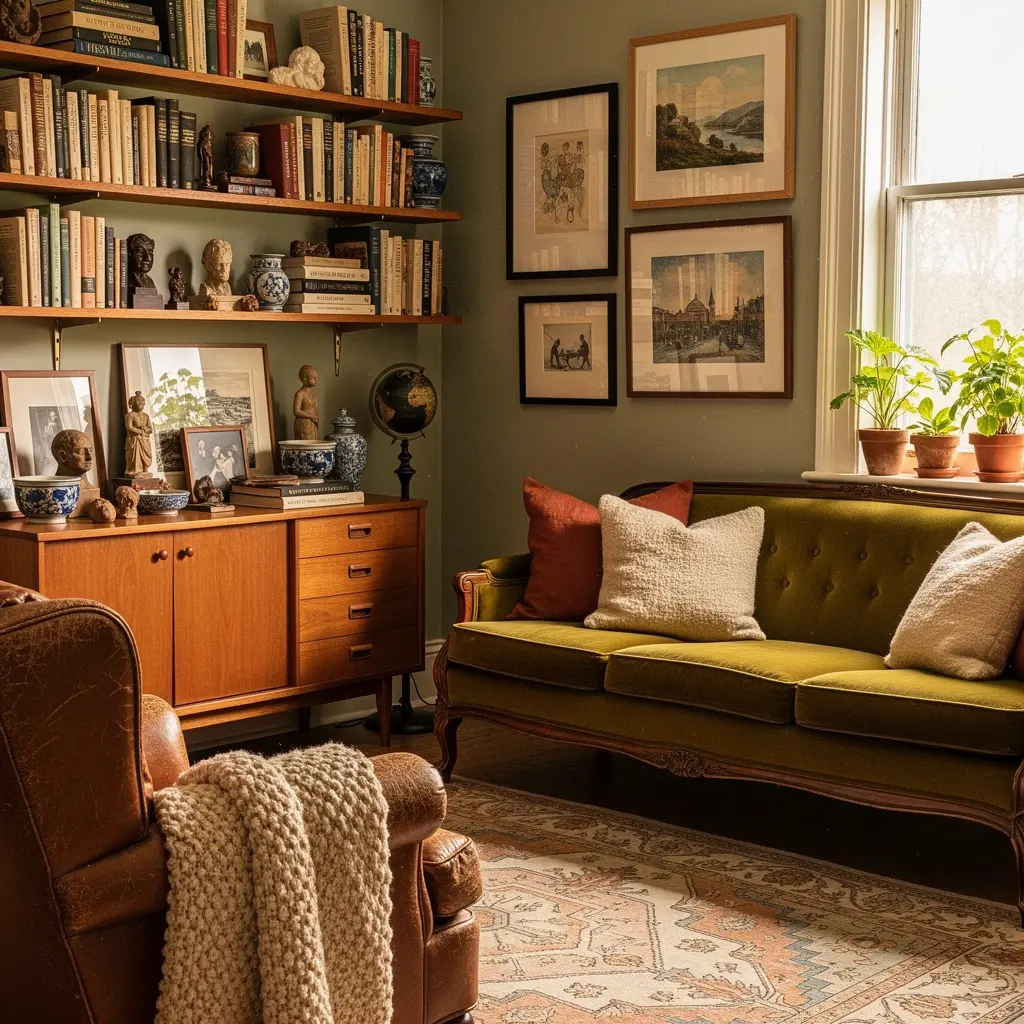
Stacks of well loved books, framed vintage prints, or small collected objects gathered over years give a living room the sense of real history that purchased decor alone can’t replicate. This kind of open display is often what actually makes a room feel collected rather than staged, since a collection built over ten or twenty years always reads as more genuine than one assembled in an afternoon.
6. Mix Furniture Eras Rather Than Matching Everything
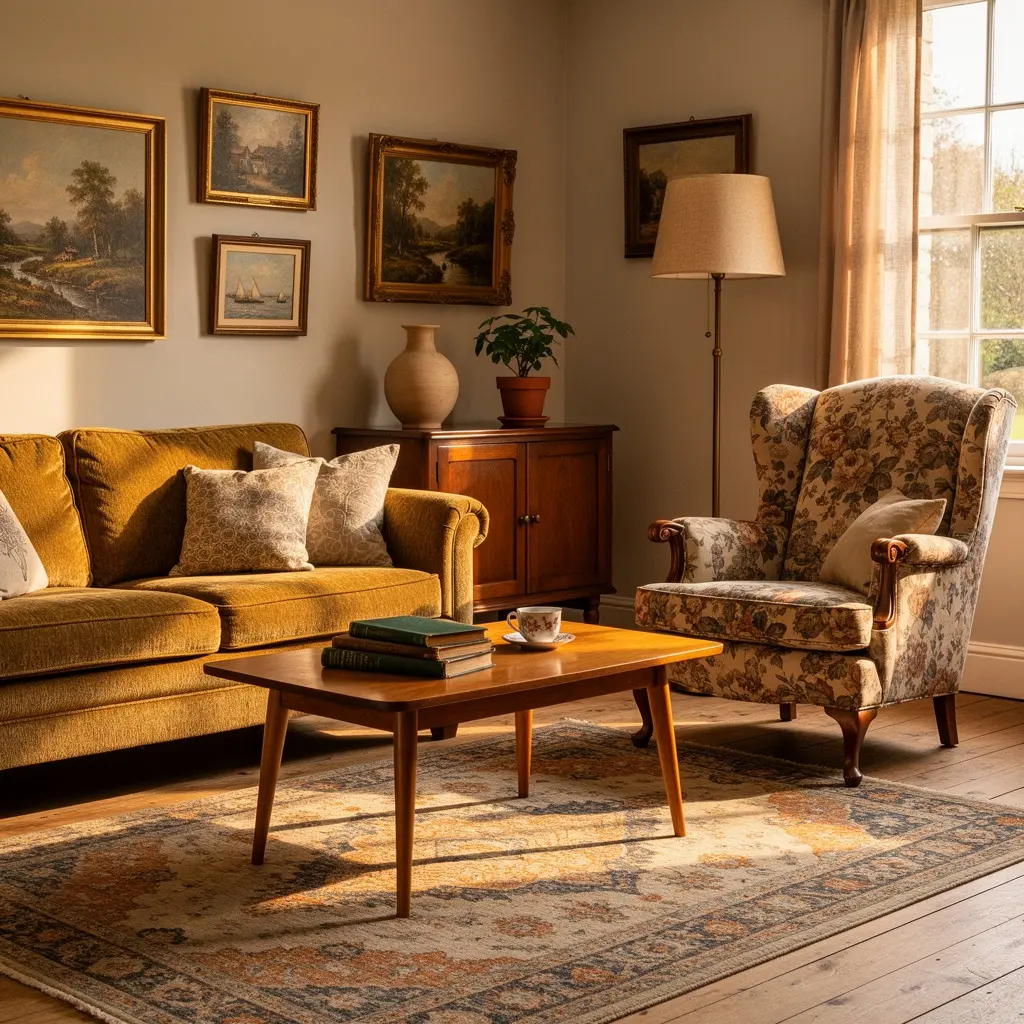
A genuinely vintage feeling room rarely has furniture that all matches perfectly. An antique side table next to a simpler, more contemporary sofa reads as more authentic than an entire room of furniture purchased as one coordinated set.
7. Choose Warm, Layered Lighting Over Bright Overhead Fixtures
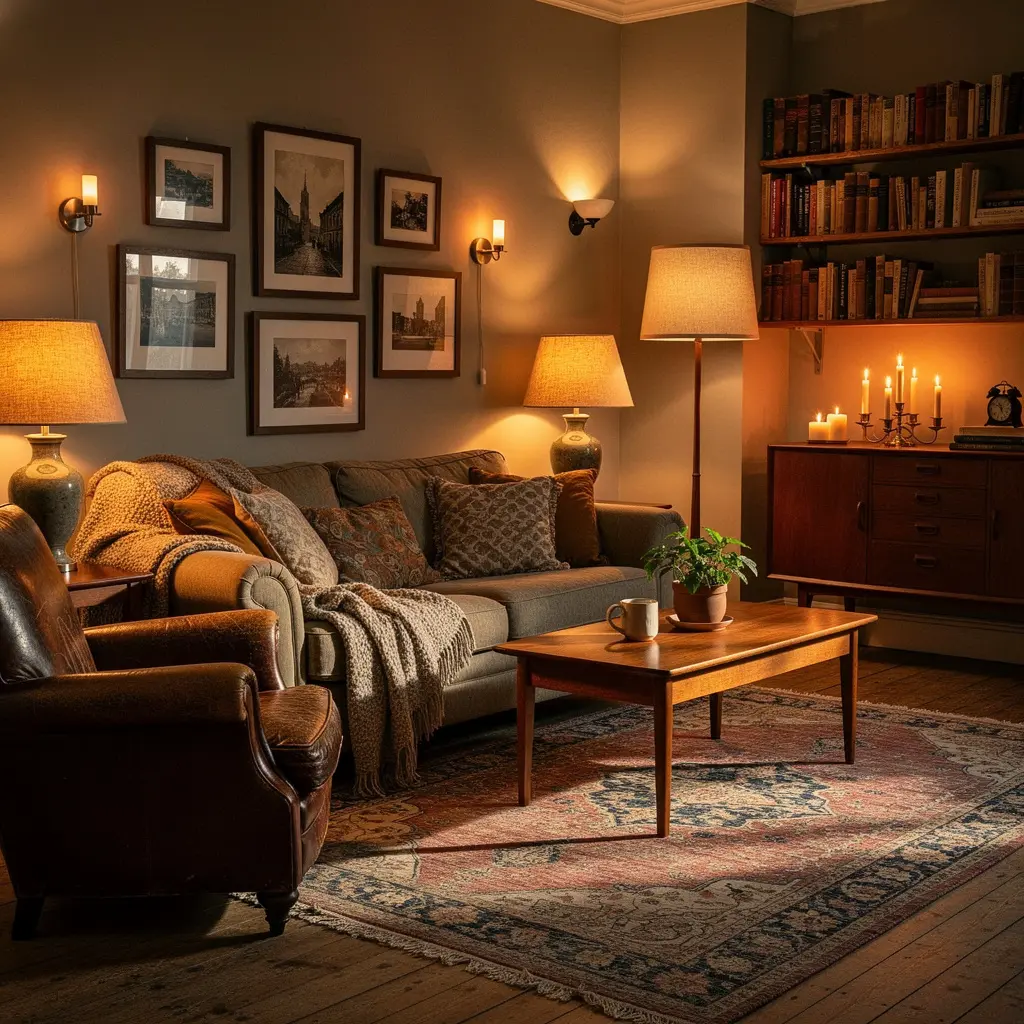
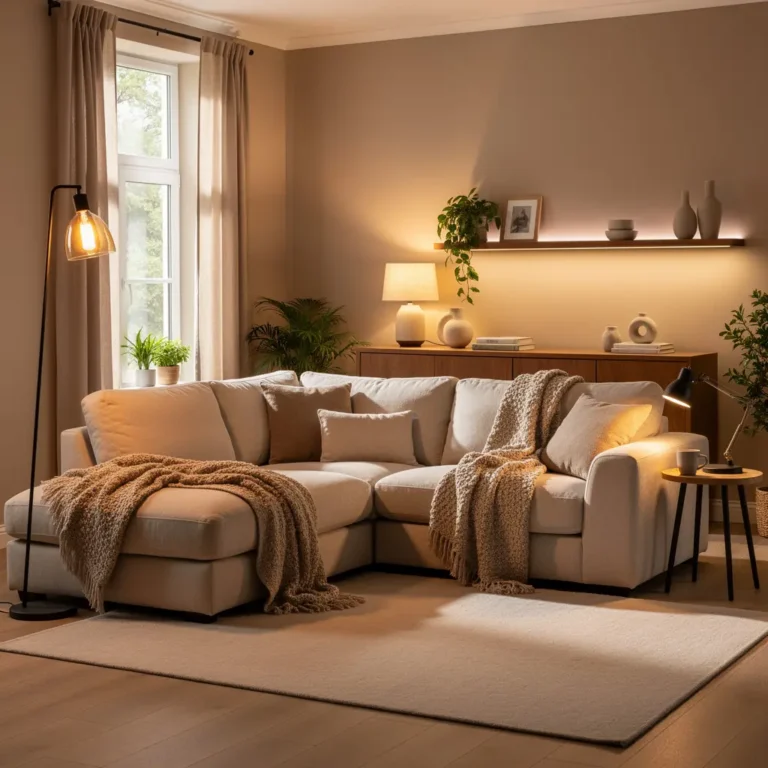
Bright, even lighting works against the moody, warm feeling a vintage living room depends on. Table lamps, floor lamps, and dimmed overhead lighting create the kind of soft, layered glow associated with a genuinely old, well loved room.
8. Add Heavy Drapery or Vintage Inspired Curtains
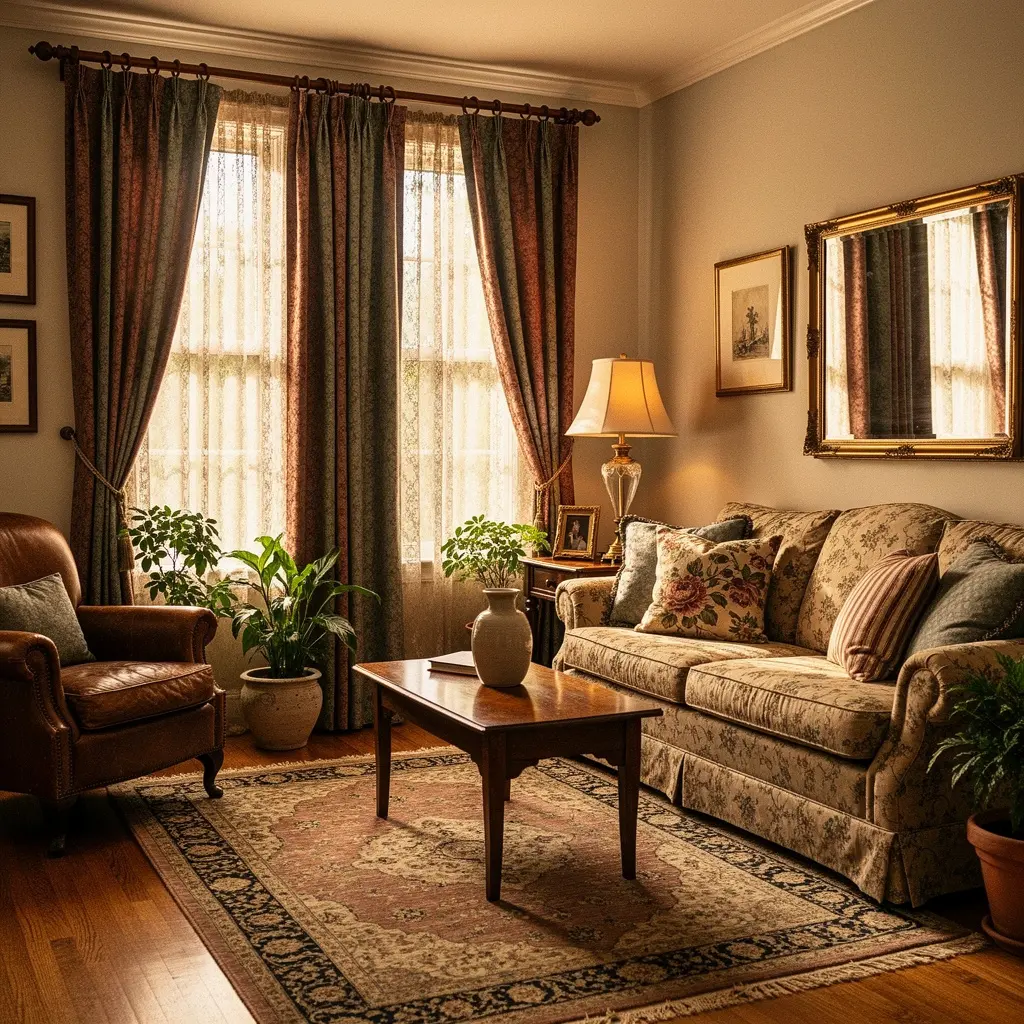
Full length curtains in a rich fabric, velvet, damask, a heavier linen, add a sense of formality and warmth that thin, modern curtains don’t. This detail is a classic vintage living room feature that instantly elevates the room’s overall feeling, and even swapping existing curtains for a heavier fabric makes a noticeable difference without any other changes.
9. Choose a Deep, Saturated Wall Color Rather Than Stark White

Vintage rooms tend to lean toward deeper, richer wall colors, a deep green, a warm burgundy, a rich navy, rather than the bright white associated with more modern interiors. These deeper tones make brass accents, leather furniture, and warm lighting read as considerably more cohesive.
10. Let the Room Feel Slightly Imperfect
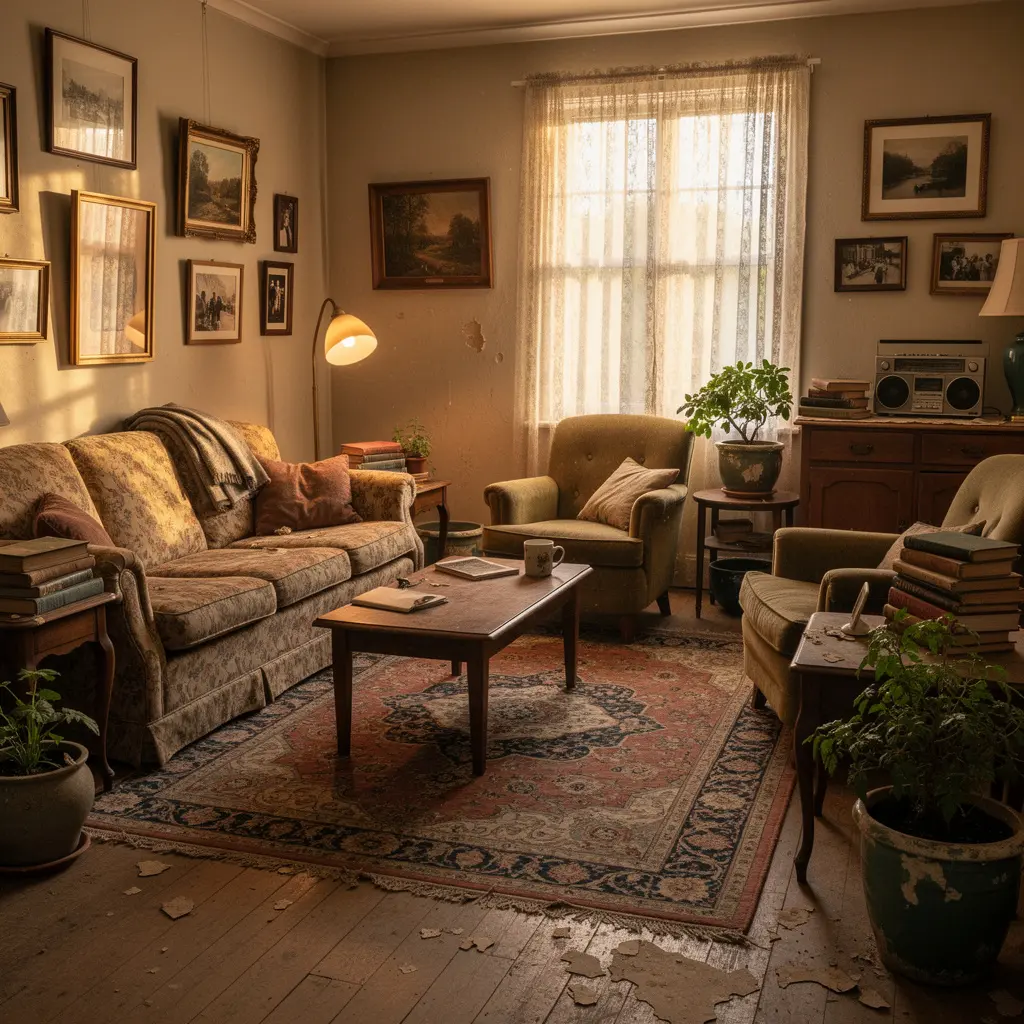
A vintage living room shouldn’t look freshly staged. A slightly worn rug, a coffee table with some visible history, art that’s hung a bit unevenly, all contribute to a sense that the room has genuinely been lived in rather than assembled in a single weekend.
Mistakes to Avoid
- Filling the room entirely with new furniture styled to look vintage instead of one or two genuine pieces
- Choosing a flat, solid rug instead of one with a traditional pattern and some visible character
- Relying on bright overhead lighting instead of warm, layered lamps
- Matching every piece of furniture perfectly instead of allowing intentional variation across eras
- Choosing stark white walls instead of deeper, richer tones that suit the room’s warmer palette
- Over polishing the room to the point that it loses any sense of genuine, lived in history
Frequently Asked Questions
Do I need real antiques for a genuine vintage living room? Not entirely, but one or two real vintage pieces as anchors do more for the room’s authenticity than a whole room of new furniture styled to look old.
What colors work best for a vintage living room? Deeper, richer tones like green, burgundy, and navy tend to suit vintage styling better than stark white, since they pair naturally with brass accents and warm lighting.
Should vintage living room furniture all match? No. Mixing furniture eras, rather than buying a single coordinated set, reads as considerably more authentic and collected over time.
What kind of rug works best in a vintage living room? A rug with a traditional pattern and some visible wear or fading grounds the room in a way a flat, solid colored rug generally doesn’t.
How do I keep a vintage living room from feeling too staged? Allow some intentional imperfection, a slightly worn rug, unevenly hung art, furniture with real history, rather than making every detail look freshly styled.
Conclusion
Cozy vintage living room ideas work best when the room feels genuinely collected rather than purchased all at once. One or two real vintage pieces, leather or velvet upholstery, warm layered lighting, and a deeper wall color will do more for the room’s authenticity than a house full of new furniture made to look old. Start with one meaningful piece and let the room build slowly around it.