10 Purple Living Room Ideas That Feel Rich, Cozy, and Beautiful
A purple living room can go two very different directions. Done well, it feels rich, moody, and a little luxurious, the kind of space that photographs beautifully and still feels comfortable to actually sit in every day. Done without much thought, it can tip into looking dated or overpowering fast, especially in a room where color choices are harder to change than in a bedroom. These purple living room ideas focus on the first outcome, using the color as one intentional layer rather than the entire personality of the room.
The living room carries more visual weight than almost any other room in the house, since it’s usually the largest shared space and the one guests see first. That makes shade selection and balance especially important here. A little purple goes a long way, and the goal is finding the right amount rather than avoiding the color altogether.
1. Choose a Purple Sofa or Accent Chair as Your Anchor Piece
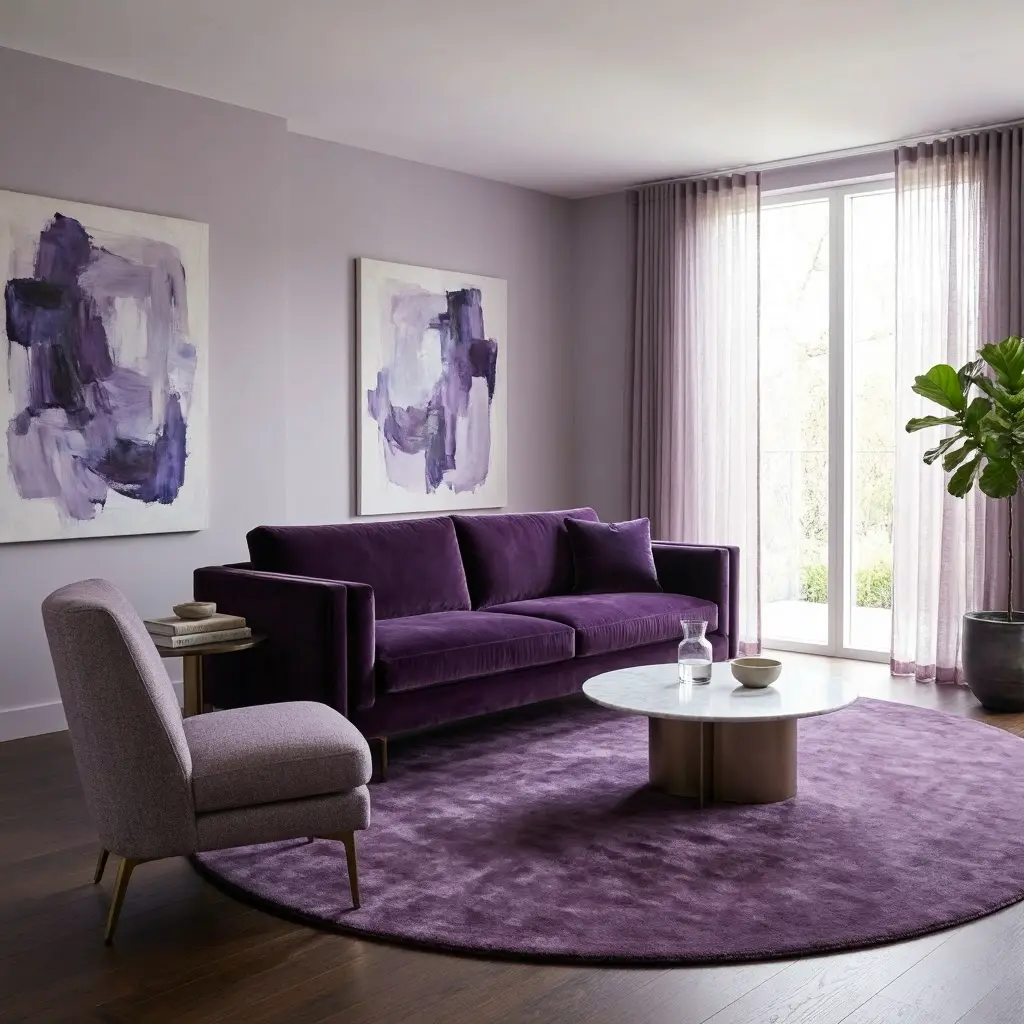
Rather than introducing purple through several small accessories scattered around the room, choosing one larger anchor piece, like a sofa or an accent chair, gives the color a clear focal point. A purple velvet or linen sofa, generally priced between 800 and 2000 dollars depending on the brand and fabric, works especially well as this anchor since it’s substantial enough to read as an intentional design choice rather than an afterthought.
If a full sofa feels like too much commitment, a single accent chair in a muted plum or aubergine tone lets you test the color at a smaller scale before committing to a larger purchase.
Why One Statement Piece Works Better Than Many Small Ones
When purple shows up in a pillow, a candle, a small vase, and a picture frame all scattered around the same room, none of those pieces get to carry any real visual weight. One larger piece solves that problem by giving the color a clear home base that the rest of the room can build around.
2. Balance Purple With Warm Neutrals So the Room Feels Grounded
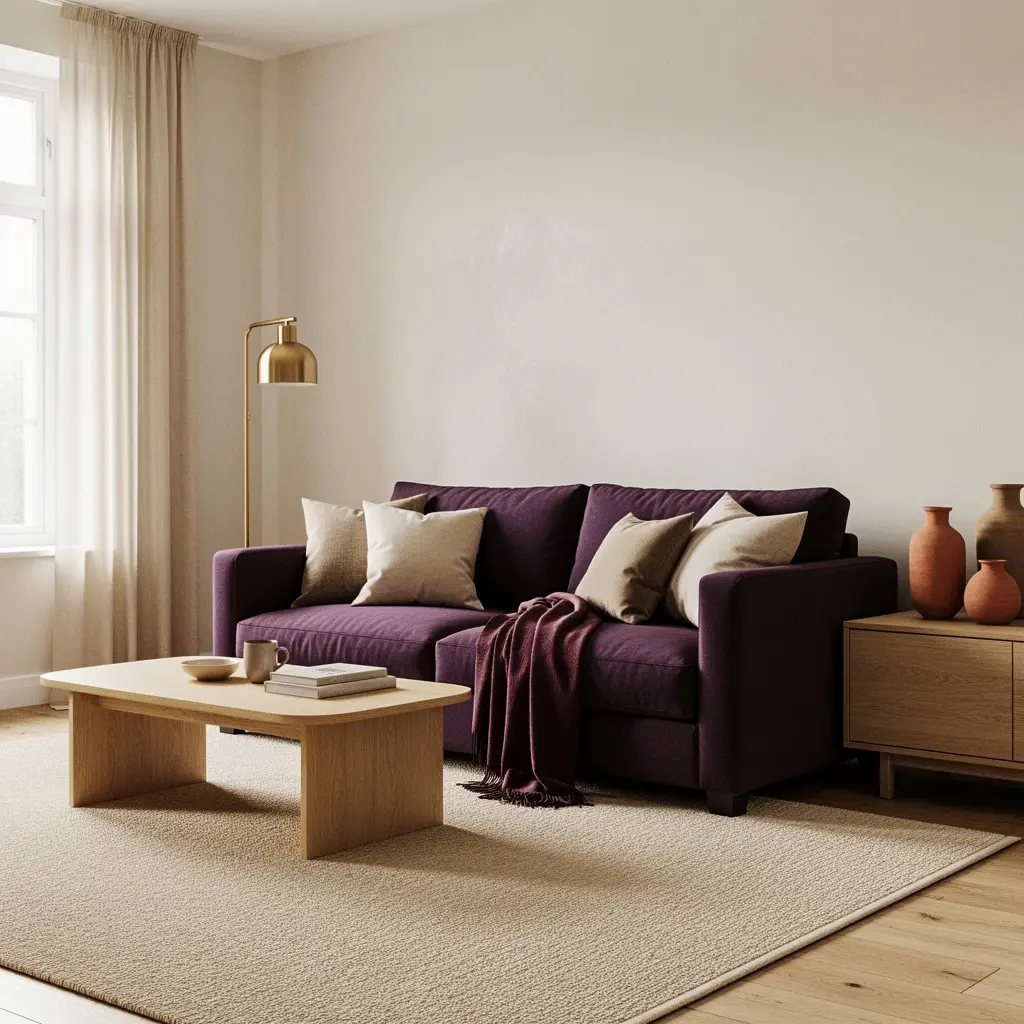
Purple paired only with cool grays and white can feel a bit flat or even slightly cold, since both of those neutrals lean in a different direction than most purple undertones. Warm neutrals, like cream, taupe, and soft camel, give purple something to visually lean against, which grounds the color rather than letting it feel isolated in the room.
This balance matters most in larger surfaces like walls, large area rugs, and big pieces of furniture, since those set the overall tone for the space before any accessories even come into play.
3. Add Purple Through Throw Pillows and Blankets
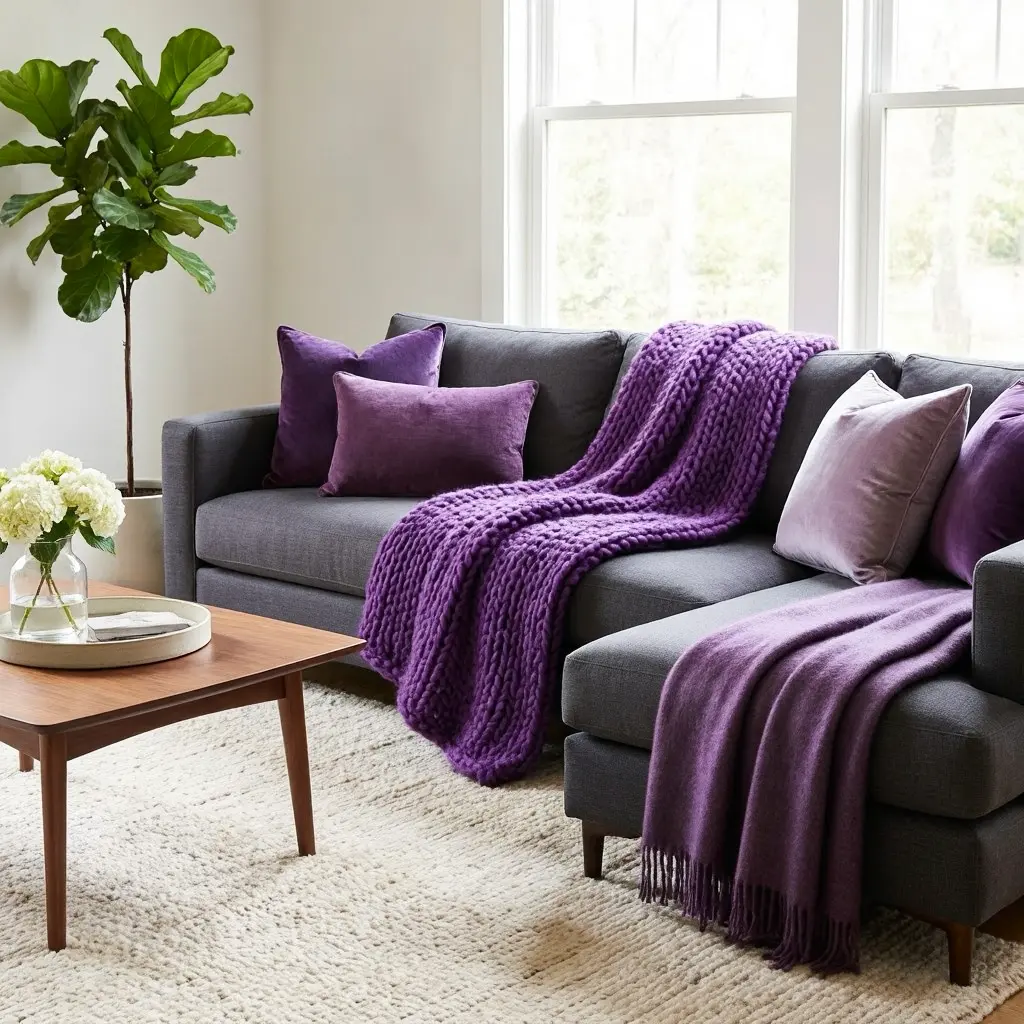
Pillows and throws are the lowest commitment way to bring purple into a living room that already has neutral furniture. Mixing a solid purple pillow with a textured cream or oatmeal pillow, plus one in a deeper complementary tone, keeps the arrangement from reading as one flat note.
Standard pillow covers generally run between 15 and 40 dollars each, which makes this one of the cheapest ways to test whether you like purple in the space before investing in bigger furniture pieces.
4. Pick a Rug That Ties Purple Into the Rest of the Room
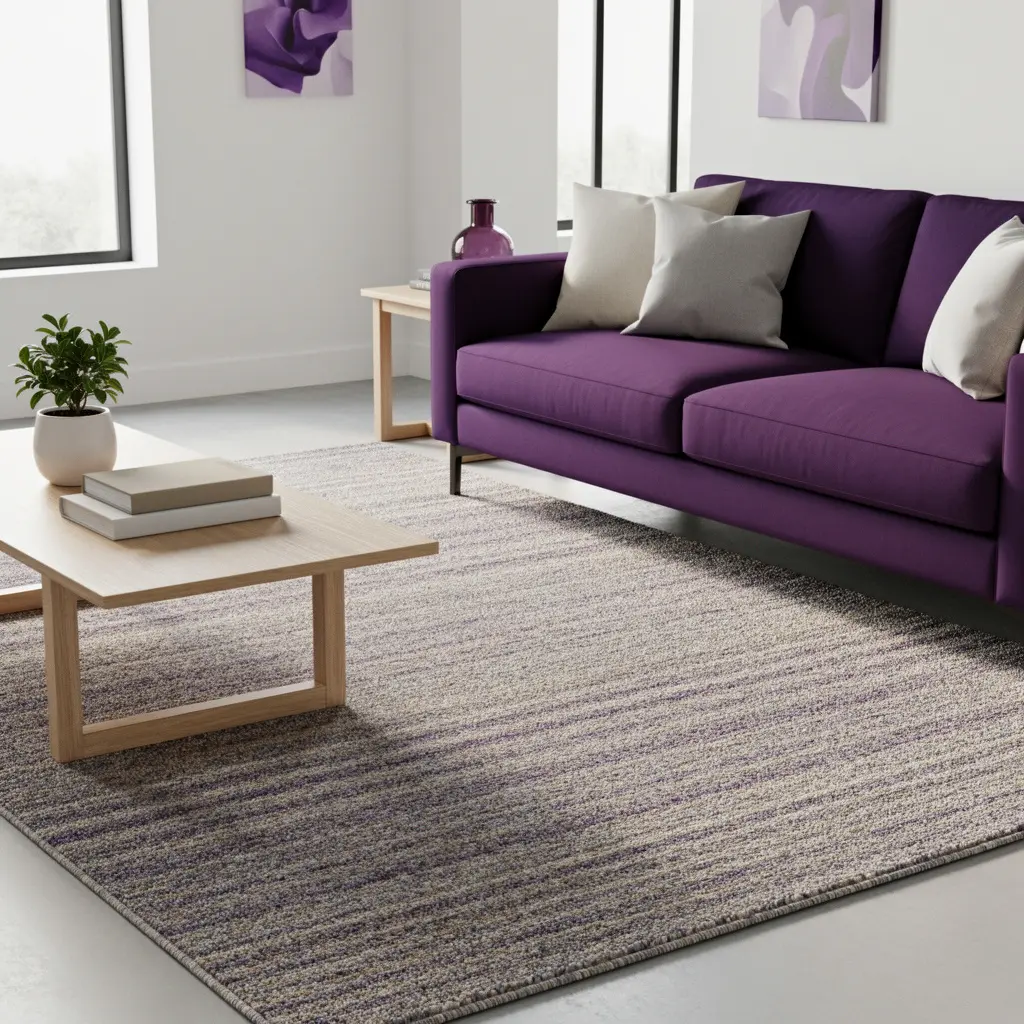
A rug that incorporates purple into a broader pattern, rather than a solid purple rug, tends to be easier to style around and holds up better as trends and personal taste shift over time. Rugs blending purple with cream, taupe, or gray in a muted pattern generally run anywhere from 150 dollars for a smaller size up to 600 dollars or more for larger, higher quality options.
Sizing the rug so that at least the front legs of your sofa and chairs rest on it helps anchor the seating arrangement, rather than letting the furniture look like it’s floating separately from the rug.
5. Use Metal Accents That Work With Purple Tones
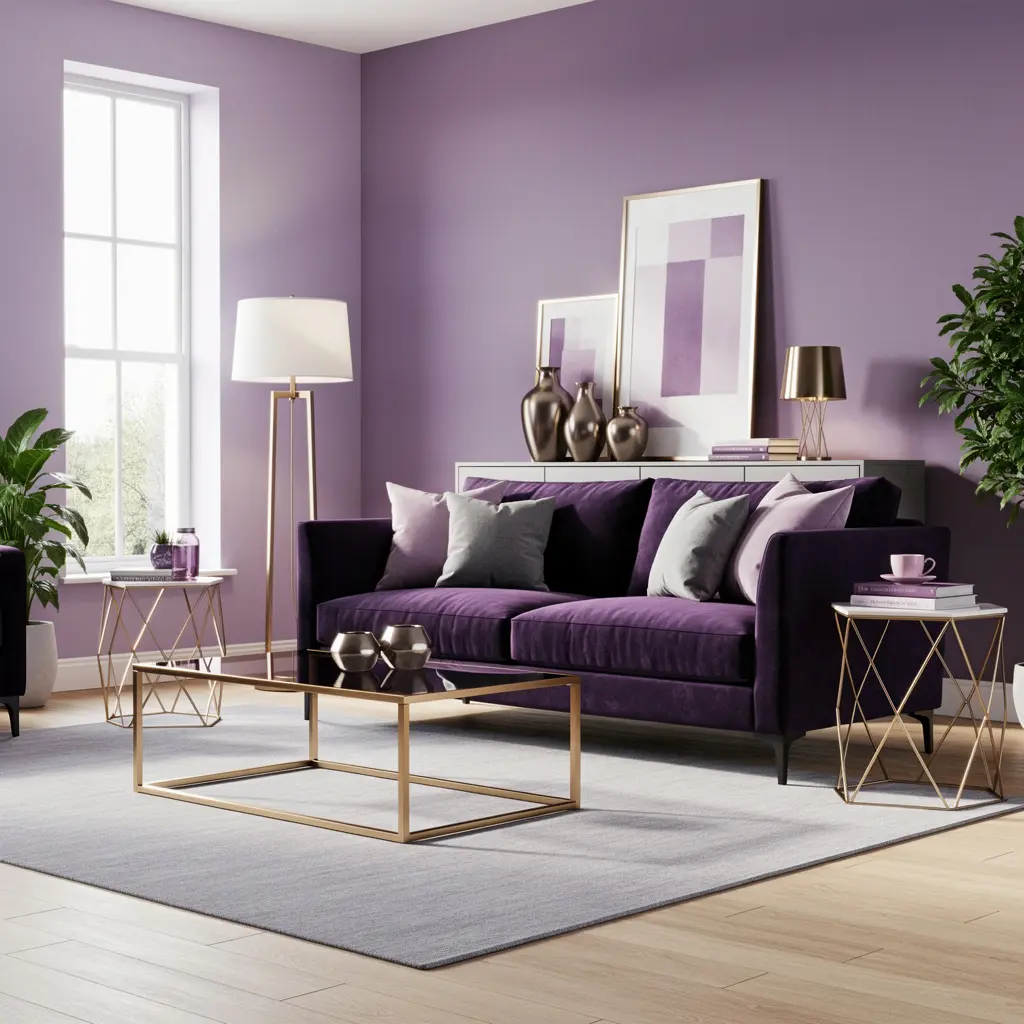
Warm brass and gold tend to soften a deep purple and make the room feel richer, while matte black adds a bit of contrast and a more modern edge. Chrome and cool silver can sometimes clash with warmer purple undertones, dulling both the metal and the wall or furniture color in the process.
Keeping one dominant metal finish consistent across lamp bases, picture frames, and any decorative trays helps a purple living room feel curated instead of assembled from unrelated pieces.
6. Layer in Greenery for a Natural Contrast
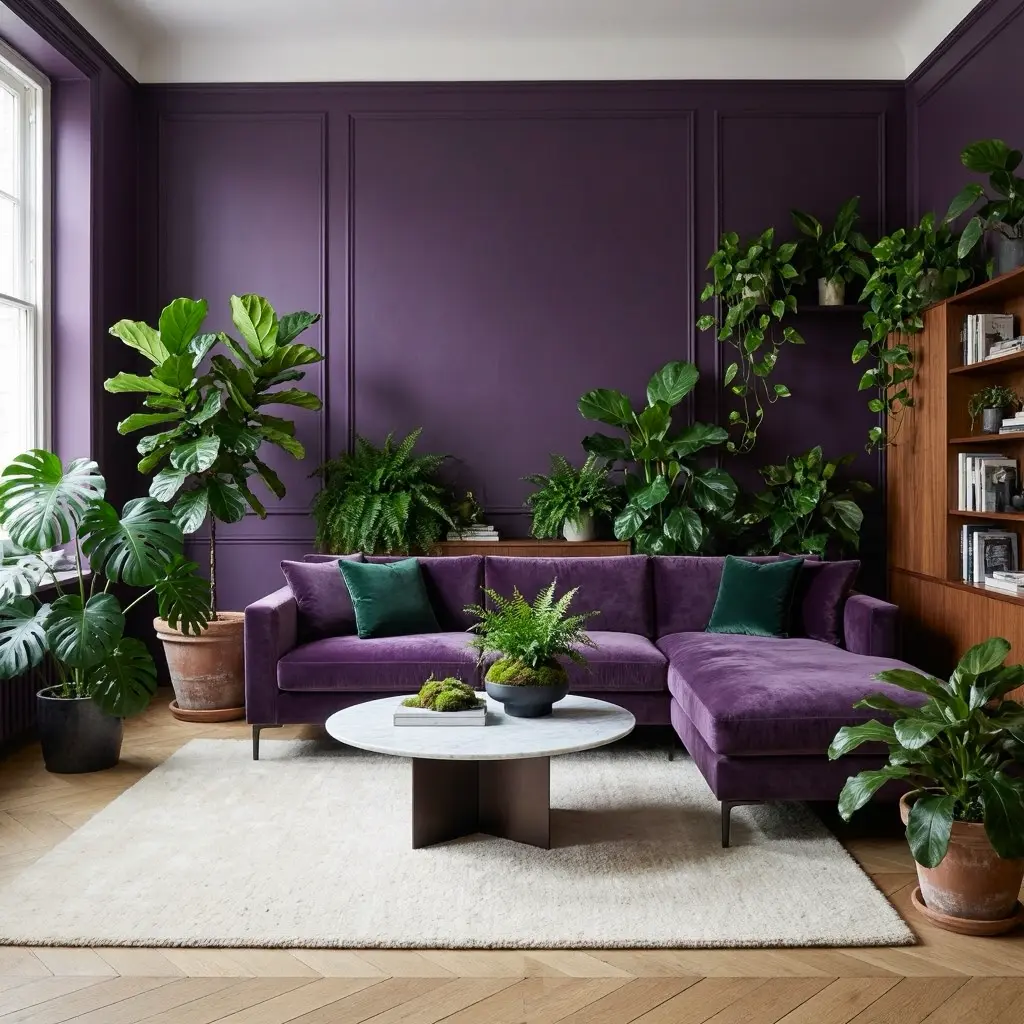
A large potted plant, like a fiddle leaf fig or a snake plant, adds height and a natural, organic texture that balances out the smoother, more polished surfaces of furniture and decor in a purple living room. Live plants also help keep a richly colored room feeling fresh rather than heavy or overly styled.
Smaller potted plants scattered on side tables and shelves throughout the room extend this same effect at a smaller scale, adding texture in spots that might otherwise feel a little flat.
7. Choose Art and Wall Decor That Complements a Purple Palette
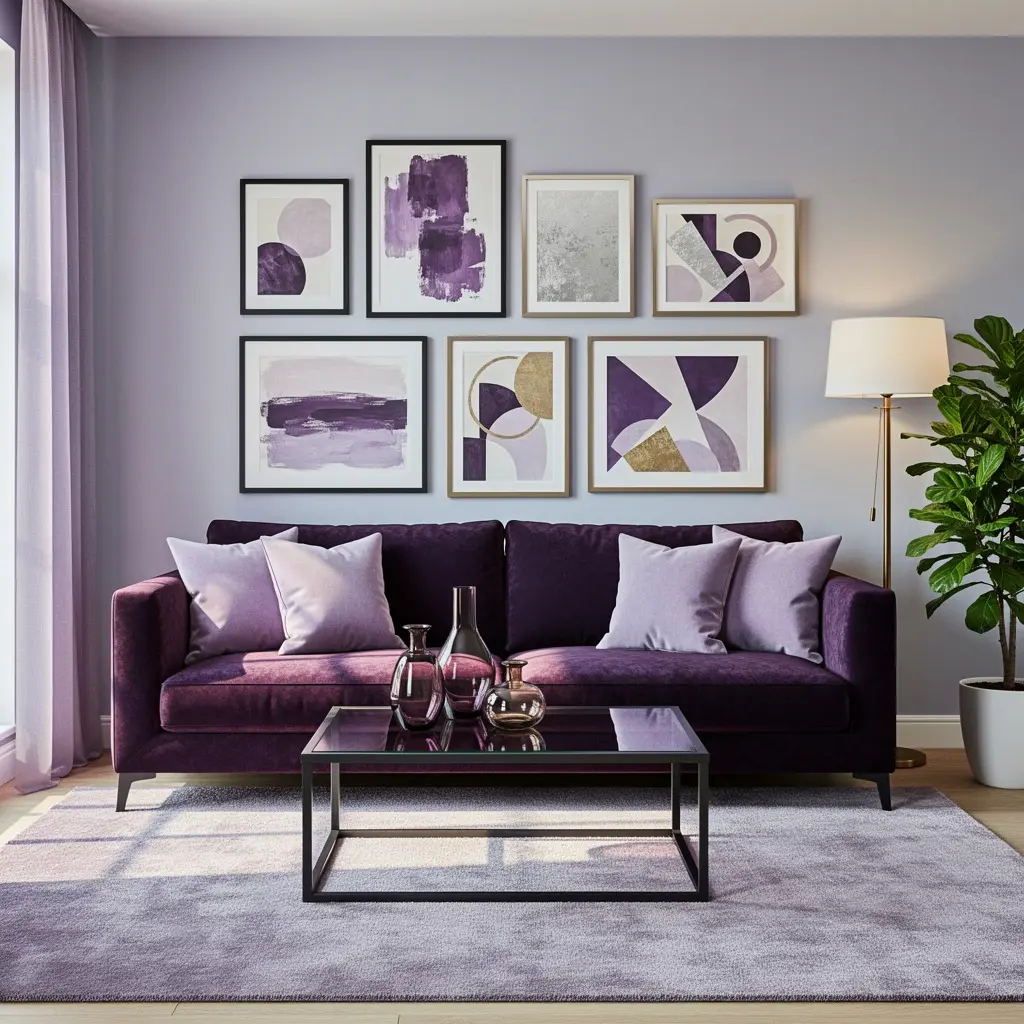
Framed art featuring muted, earthy tones alongside purple, rather than bright neon colors, tends to support the sophisticated feeling most purple living rooms are aiming for. A single large statement piece above the sofa, rather than several small mismatched frames, often reads as more intentional in a living room specifically.
Sizing Art for a Purple Sofa or Accent Wall
A general rule for art above a sofa is choosing a piece roughly two thirds the width of the sofa itself. Art that’s too small above a large piece of furniture can end up looking like an afterthought rather than a deliberate design choice.
8. Add Purple Through Curtains Without Overwhelming the Room
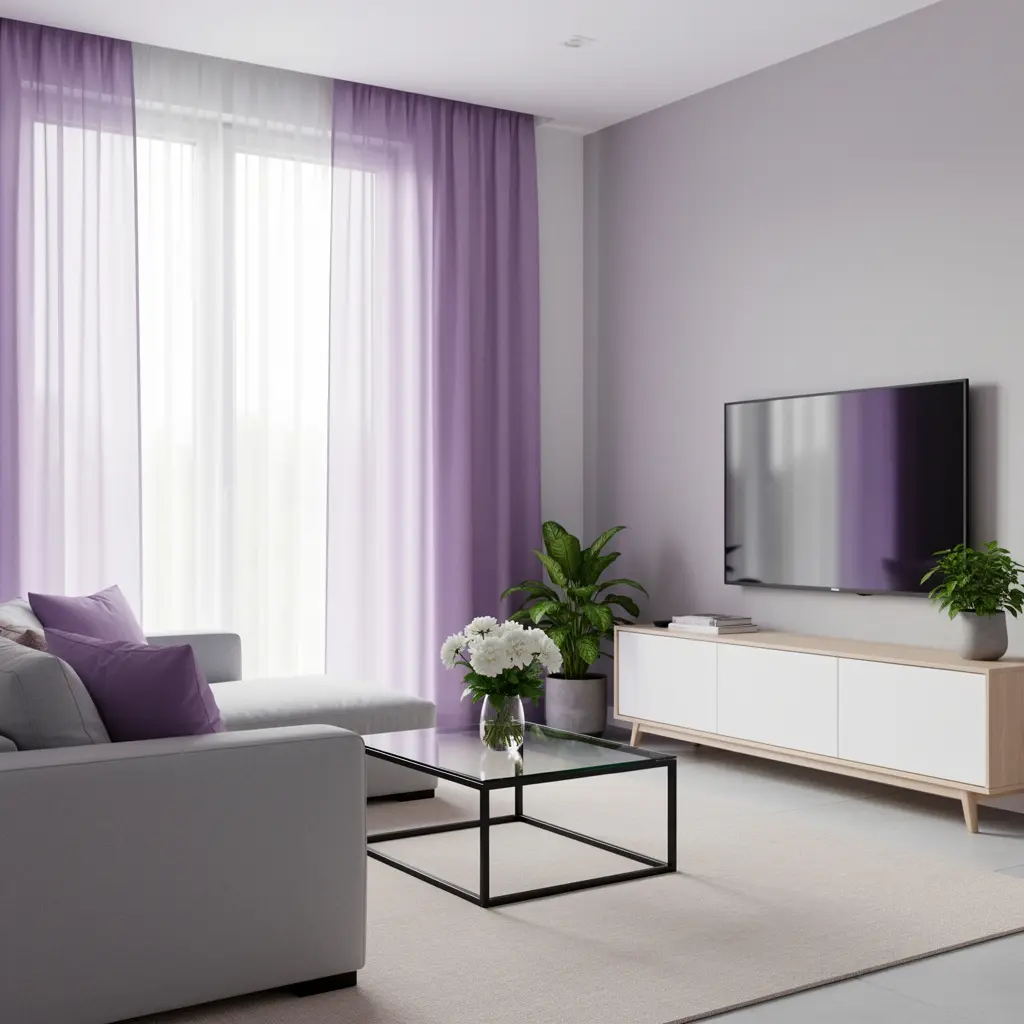
Curtains in a muted purple tone add color at a large scale without covering furniture or walls, and they also soften the hard lines of a window frame. Standard curtain panels in this style generally run between 30 and 80 dollars per panel depending on length and fabric quality.
Pairing purple curtains with lighter walls, rather than a purple wall behind them, keeps the room from feeling like purple is competing with itself in the same sightline.
9. Use Lighting That Keeps Purple From Looking Flat
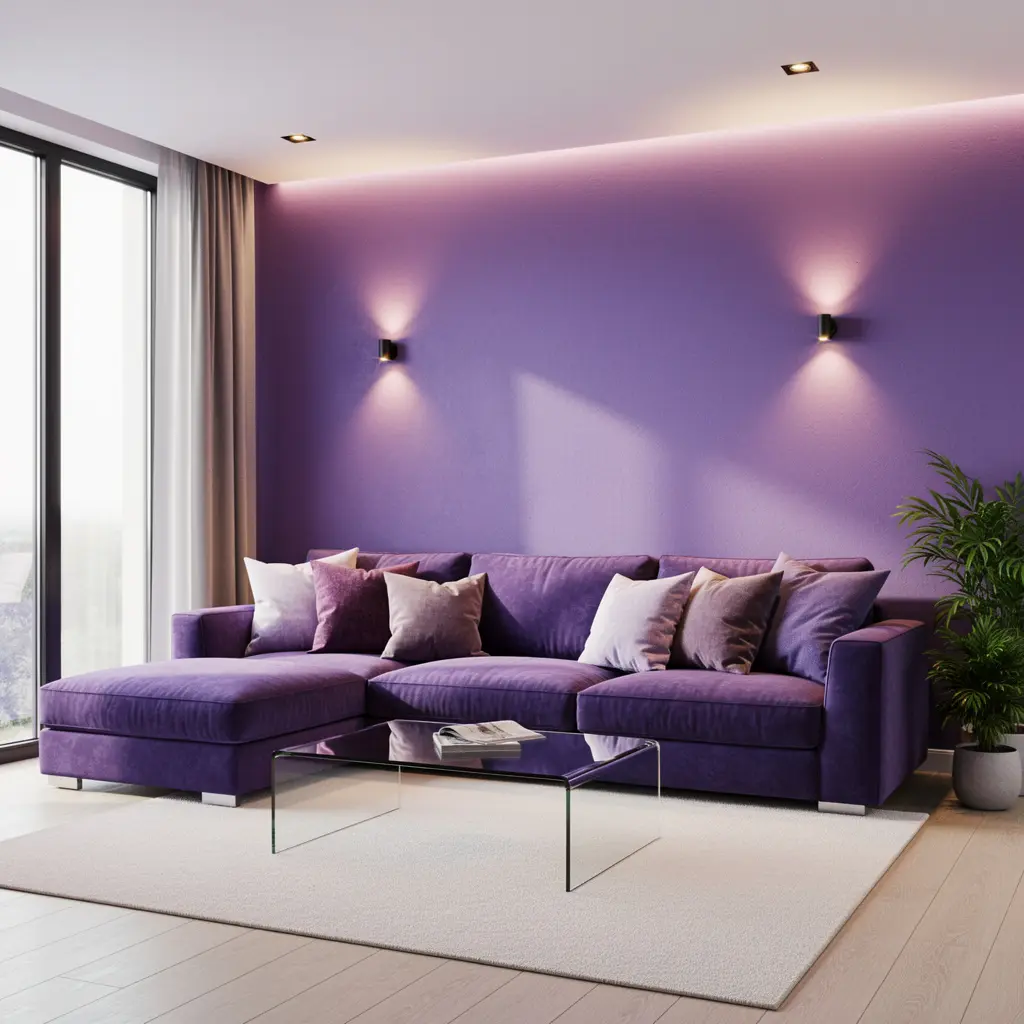
Cool, blue toned LED bulbs can make purple tones look muddy or gray, especially in the evening when a room relies entirely on artificial light. Bulbs labeled warm white, generally in the 2700K to 3000K range, keep purple looking rich rather than flat or dull.
Layering a few light sources, like a floor lamp, a table lamp, and one overhead fixture, rather than depending on a single bright light, also helps a purple living room feel warm and inviting instead of harsh.
10. Mix Purple With a Bold Neutral for a Grown Up Look
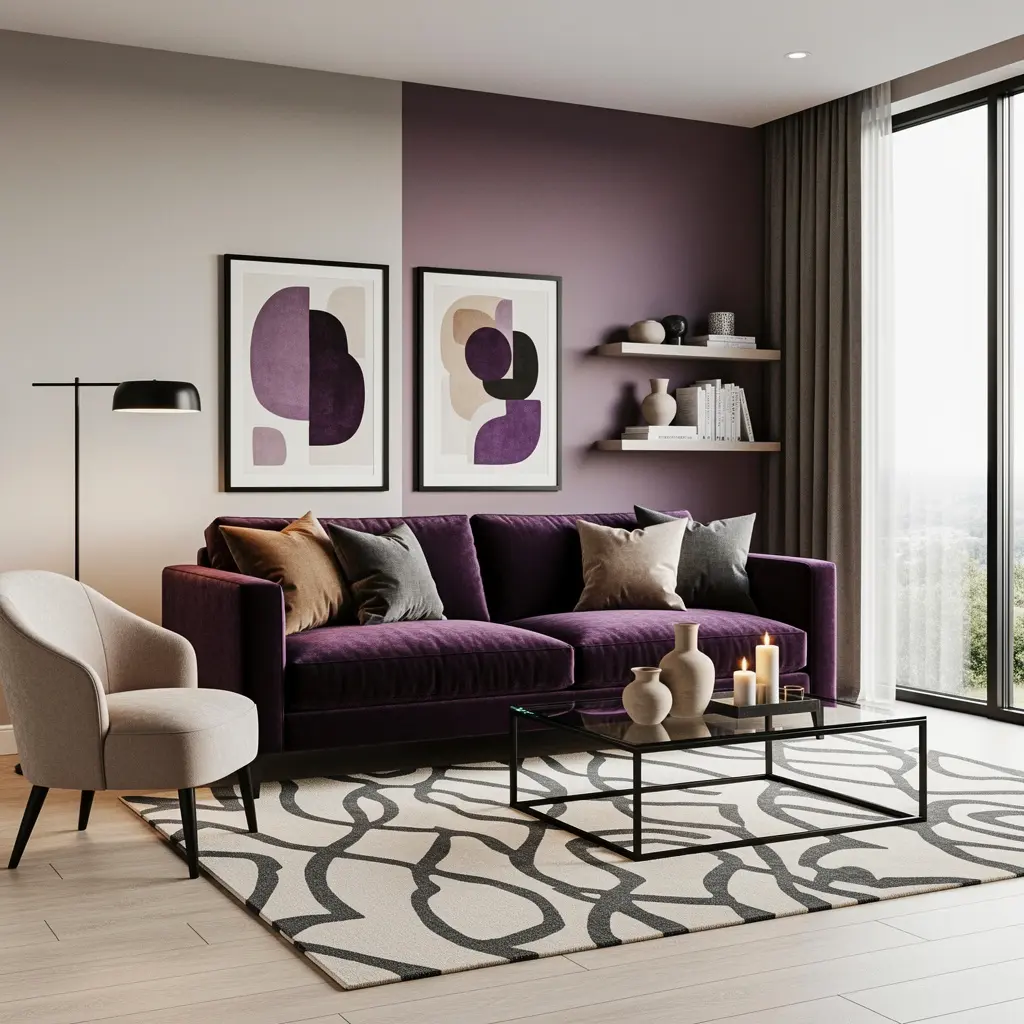
Pairing purple only with white and cream can start to feel a little one dimensional after a while, especially in a large room. Adding one deeper, bolder neutral, like charcoal or a rich espresso brown, in a single larger piece, such as a media console or a set of curtains, gives the room contrast and keeps it from feeling entirely pastel or overly soft.
This kind of contrast is often what separates a purple living room that feels sophisticated from one that reads as unfinished or a little too matched.
Mistakes to Avoid
- Choosing a bright, saturated purple for a large piece of furniture without testing it in your actual room
- Pairing purple only with cool gray or white, with no warm wood or metal to balance it
- Buying multiple small purple accessories instead of committing to one larger anchor piece
- Using only cool white LED lighting, which can make purple tones look flat
- Choosing a solid purple rug without testing how it looks against existing furniture first
- Skipping contrast entirely and keeping every element in the same tone of purple
Frequently Asked Questions
Is a purple sofa a risky investment for a living room? A muted, dustier purple tends to be a safer long term choice than a bright, saturated shade, since it pairs more easily with a range of other colors and doesn’t feel as tied to a specific trend cycle.
What color walls go best with a purple sofa? Warm neutrals like cream, oatmeal, or a soft white tend to let a purple sofa stand out as the focal point of the room without competing with it. A light gray wall also works well for a more modern, slightly cooler look.
How much purple is too much in a living room? A general guideline is keeping purple to roughly a third of the visible color in the room, concentrated in one or two anchor pieces rather than spread evenly across every surface. Beyond that, the room can start to feel like one flat note.
Can purple work in a small living room? Yes, especially through a single accent chair, pillows, or curtains rather than a full purple sofa, which can feel visually heavy in a smaller space. Keeping the surrounding walls and larger furniture pieces neutral helps a small purple living room feel balanced.
Does purple work in a living room with a lot of natural light? Yes, and a room with strong natural light can actually handle a slightly deeper or more saturated purple better than a dim room, since the light helps prevent the color from feeling heavy or closed in.
Conclusion
A purple living room works best when the color has one clear anchor point rather than being scattered evenly across every surface. Choose a sofa or accent chair as your starting point, layer in warm neutrals and metal accents, and finish with a rug and lighting that keep the whole space feeling grounded rather than flat. Building the room slowly, piece by piece, tends to produce a more balanced result than trying to commit to the full look all at once.