10 Linen Closet Organization Ideas That Keep Everything Neat & Tidy
A linen closet gets organized once, usually right after a burst of motivation, and then slowly falls apart over the following weeks as towels get shoved wherever they fit and sheet sets get separated from their matching pillowcases. That cycle is exactly what these linen closet organization ideas are meant to break. The goal isn’t a single perfect organizing day. It’s building a system simple enough that everyone in the household can actually maintain it without thinking too hard.
Most linen closets fail not because of a lack of storage bins, but because there’s no clear logic to where things go. Once every category has an obvious home, and the system doesn’t require more effort than just tossing something on a shelf, the closet tends to stay organized far longer.
1. Sort and Purge Before You Buy a Single Storage Bin
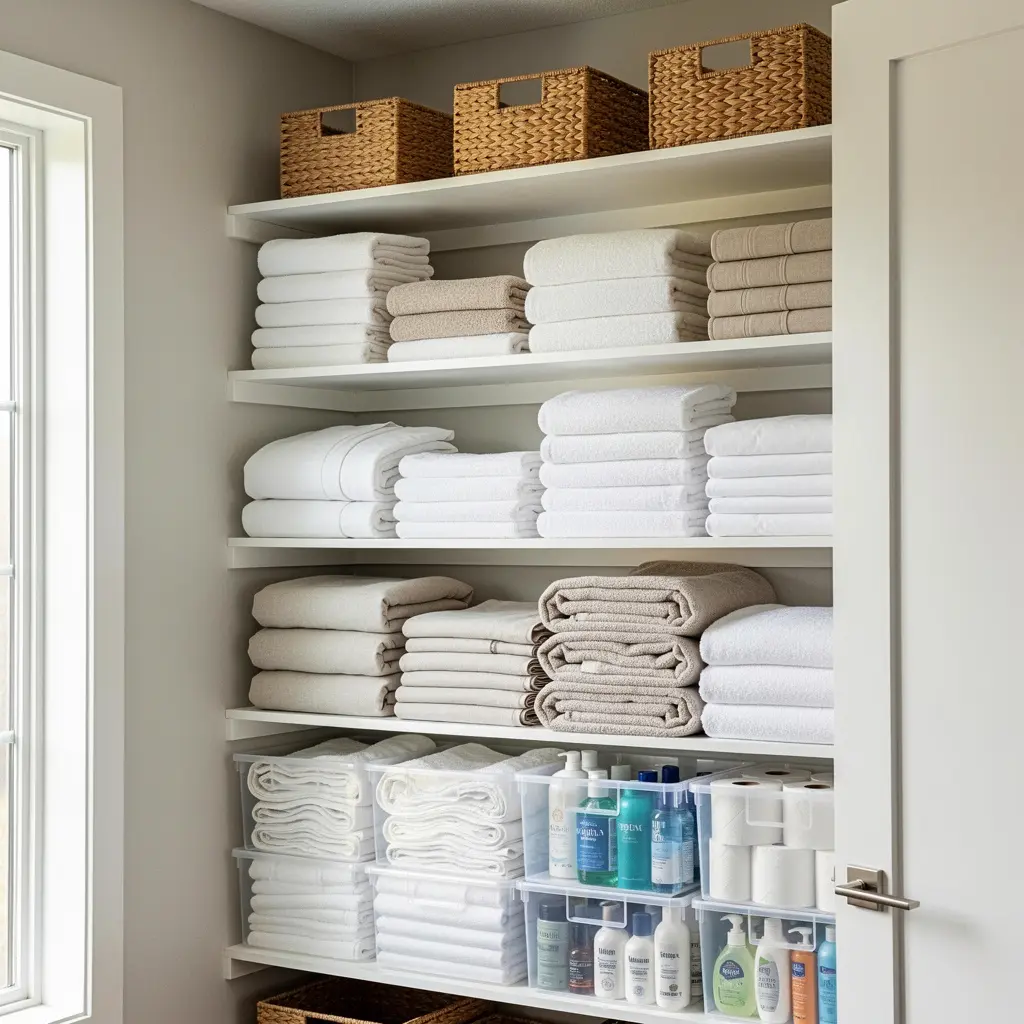
Buying bins and dividers before sorting through what you actually have is one of the most common organizing mistakes. Pull everything out of the closet, group it by category, like sheets, towels, and extra blankets, and set aside anything worn out, mismatched, or simply not used anymore.
A linen closet holding only what you actually use is dramatically easier to organize than one still storing three extra sets of sheets from a bed you no longer own. This step alone often solves half the clutter problem before any storage products enter the picture.
2. Choose Matching Bins or Baskets for a Cohesive Look
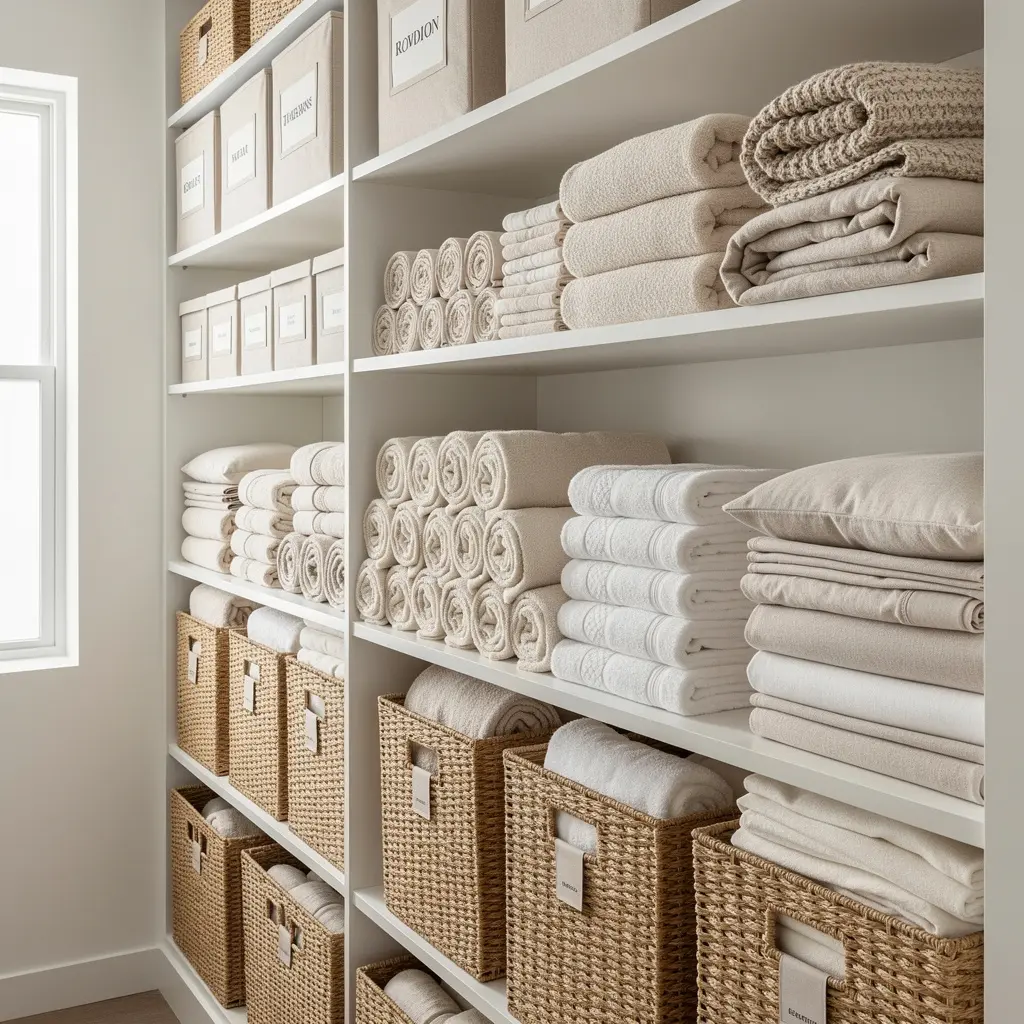
Once you know what’s staying, matching bins or baskets give the closet a cohesive, intentional look rather than a mix of random containers collected over time. Woven baskets or fabric bins, generally priced between 15 and 35 dollars each, work well for items like washcloths or spare pillowcases that don’t need to be visible individually.
Choosing Bin Size Based on Shelf Depth
Measuring your shelf depth before buying bins prevents the common issue of containers that stick out too far or don’t fit the available space. Most linen closet shelves run between 12 and 16 inches deep, and bins sized to match that depth make the best use of the space without wasted gaps.
3. Fold Sheets as Sets So They’re Easy to Find Later
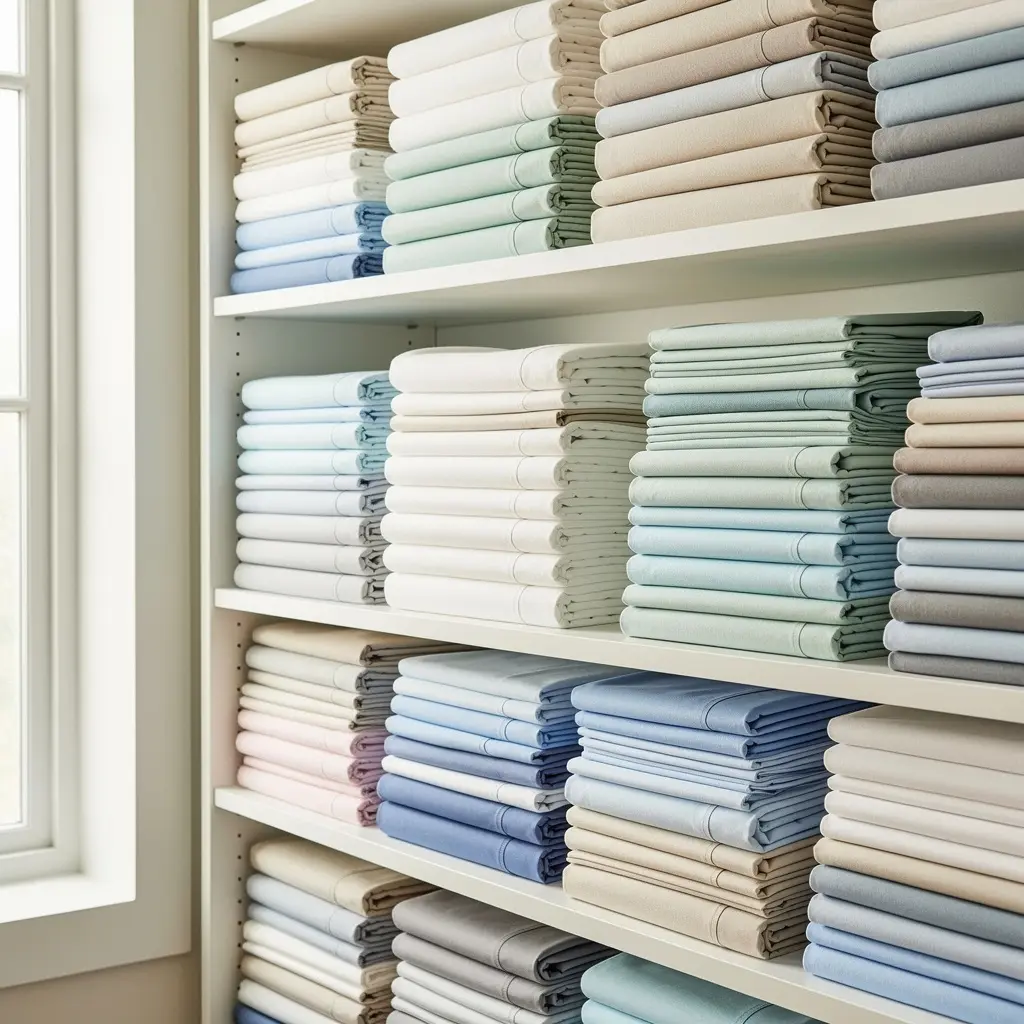
Storing a fitted sheet, flat sheet, and pillowcases as one folded bundle, rather than separate stacks of fitted sheets and flat sheets, saves significant time when you’re actually making a bed later. Tucking the folded set inside one of its own pillowcases keeps the whole bundle together and prevents pieces from getting separated.
This method also makes it immediately obvious how many complete sets you have for each bed size, which helps when deciding whether it’s time to buy new sheets or simply reorganize what’s already there.
4. Use Labels to Keep Everyone in the House on the Same System
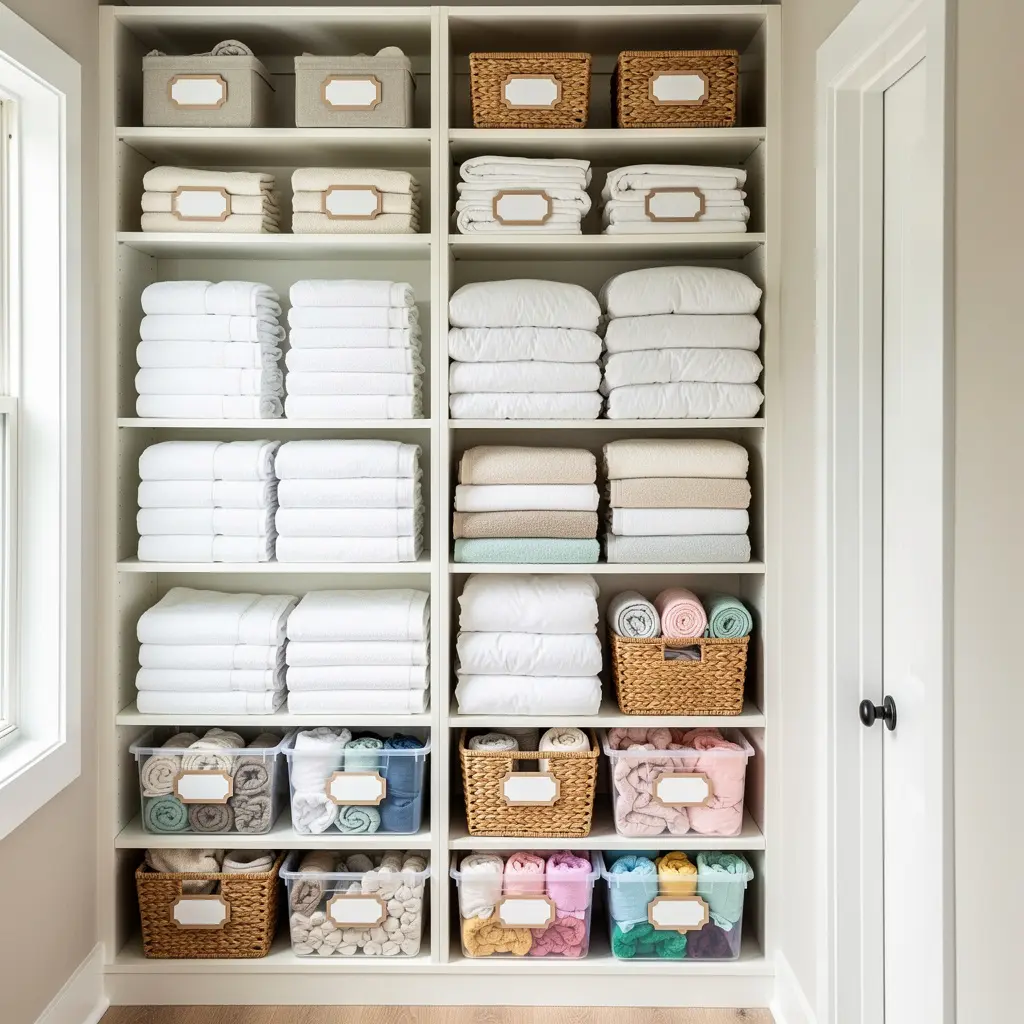
A labeling system, even a simple one using a label maker or handwritten tags, keeps everyone in the household putting things back in the correct spot. This matters especially in shared homes, where an organizing system only one person understands tends to break down quickly once other people start using the closet.
Labels can be as broad as “towels” and “sheets” or as specific as bed size categories like “queen sheets” and “twin sheets,” depending on how much storage space and how many linen sets your household manages.
5. Assign Shelves by Category Instead of Random Placement
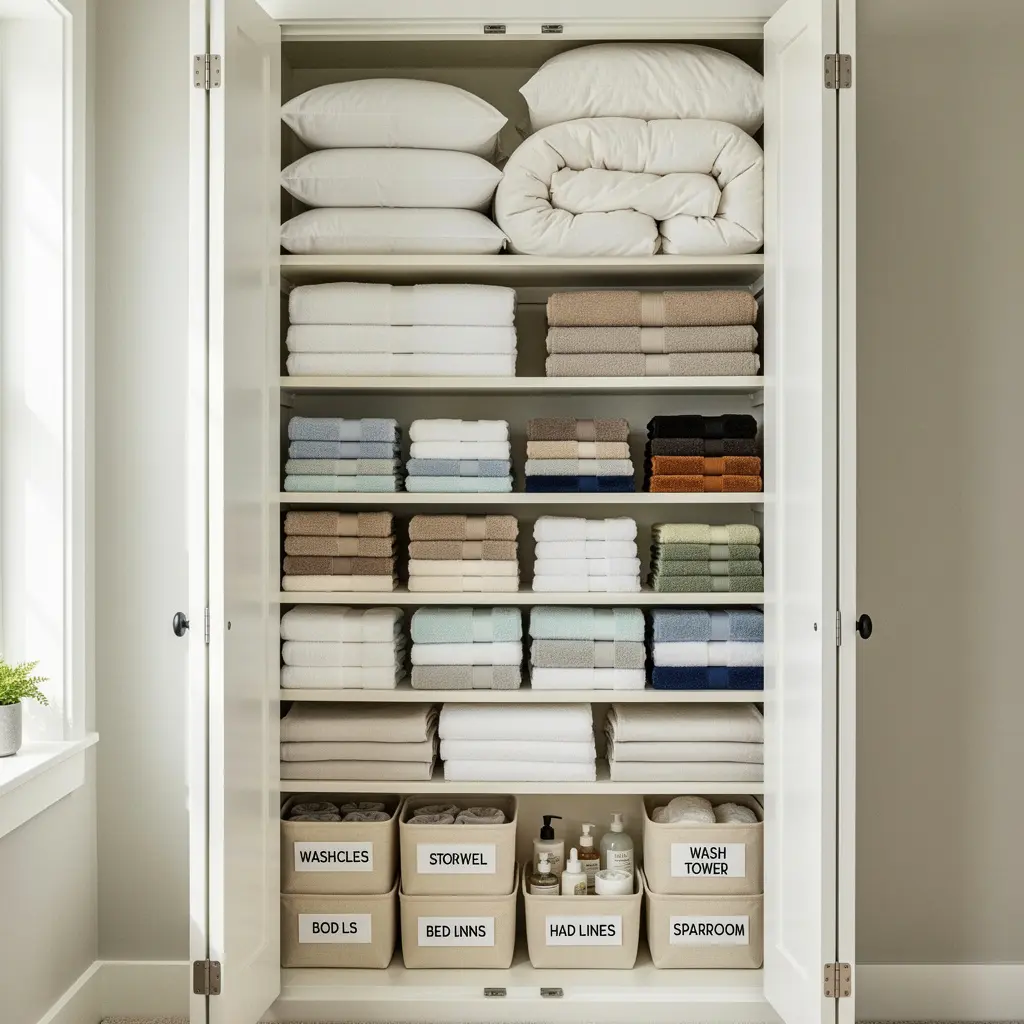
Designating specific shelves for specific categories, like towels on one shelf, sheets on another, and extra blankets on a third, creates a predictable system that’s easy to maintain. Once every category has a defined home, putting things away becomes a quick, automatic action rather than a decision that requires thought each time.
Placing frequently used items, like everyday bath towels, at an easily reachable middle shelf height, while less frequently used items go higher or lower, also makes daily use more convenient.
6. Add Dividers to Keep Stacks From Toppling Over
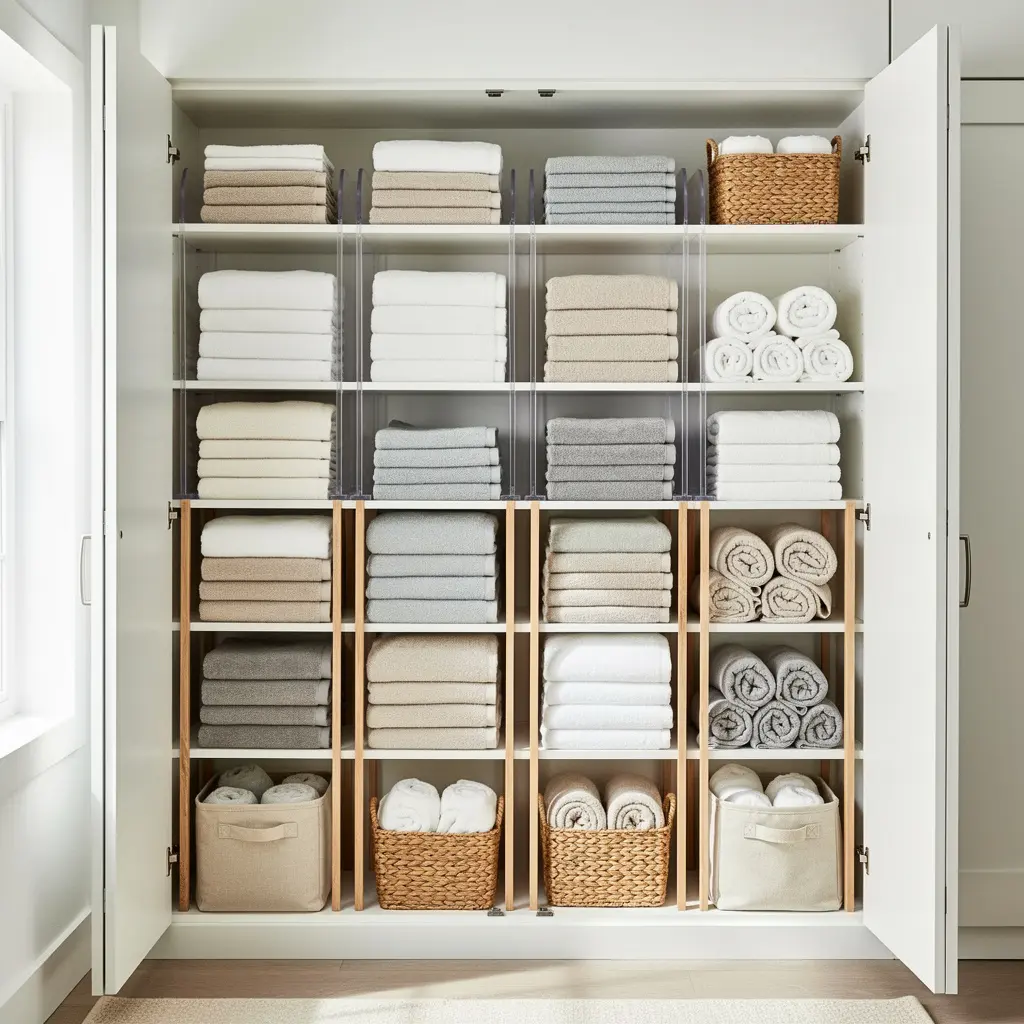
Shelf dividers, generally priced between 10 and 25 dollars for a set, keep folded stacks of towels or sheets from leaning and toppling into neighboring piles. This is especially useful on deeper shelves where multiple stacks sit side by side.
Choosing Dividers That Fit Your Shelf Style
Wire or acrylic dividers that clip or clamp onto the shelf edge work well for most standard closet shelving, while adjustable dividers offer flexibility if your shelf depth or the number of categories changes over time.
7. Store Out of Season Items on Higher or Harder to Reach Shelves
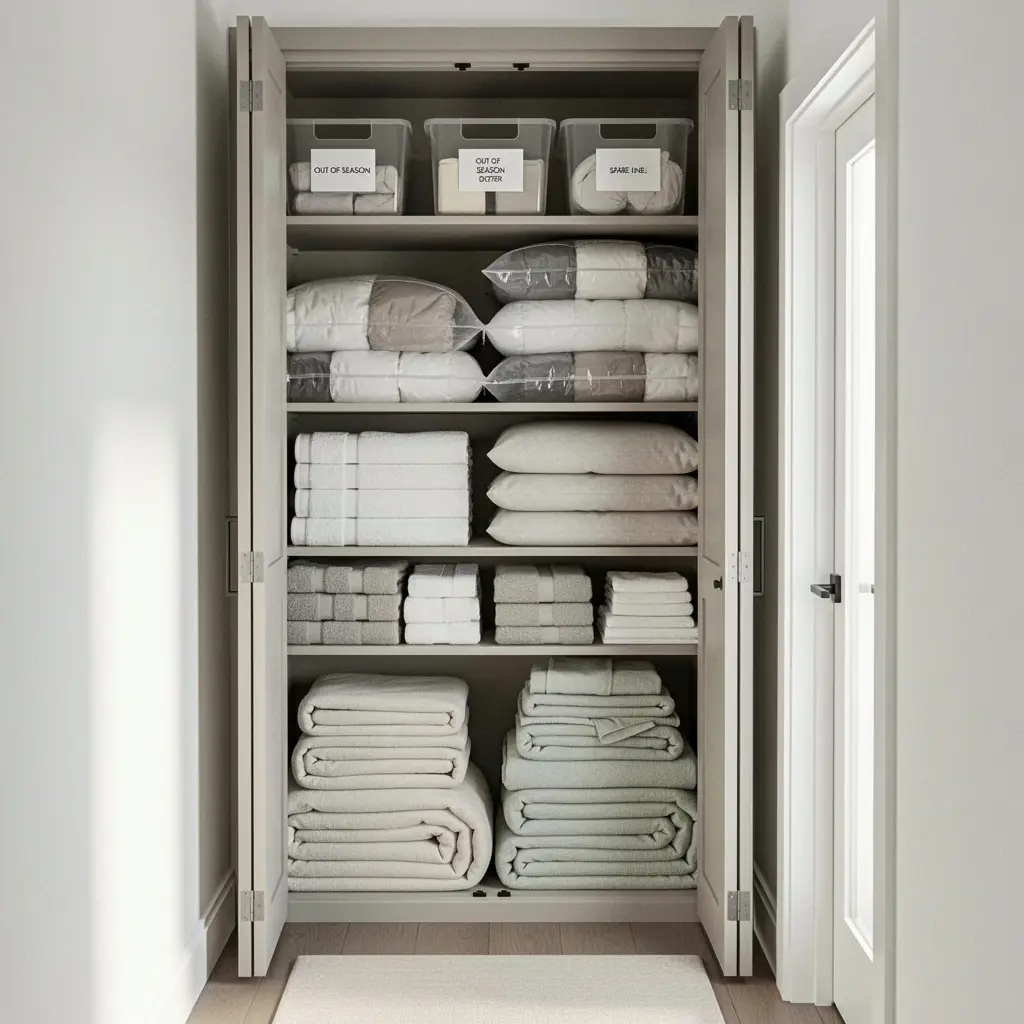
Heavier winter blankets or extra bedding you only use seasonally don’t need to occupy prime, easily accessible shelf space year round. Moving these items to the highest shelf, or a bin at the very back of a lower shelf, frees up the more convenient spots for items used daily or weekly.
This approach also makes seasonal transitions easier, since swapping in winter bedding becomes a simple matter of moving one bin forward rather than reorganizing the entire closet.
8. Use the Back of the Door for Extra Storage
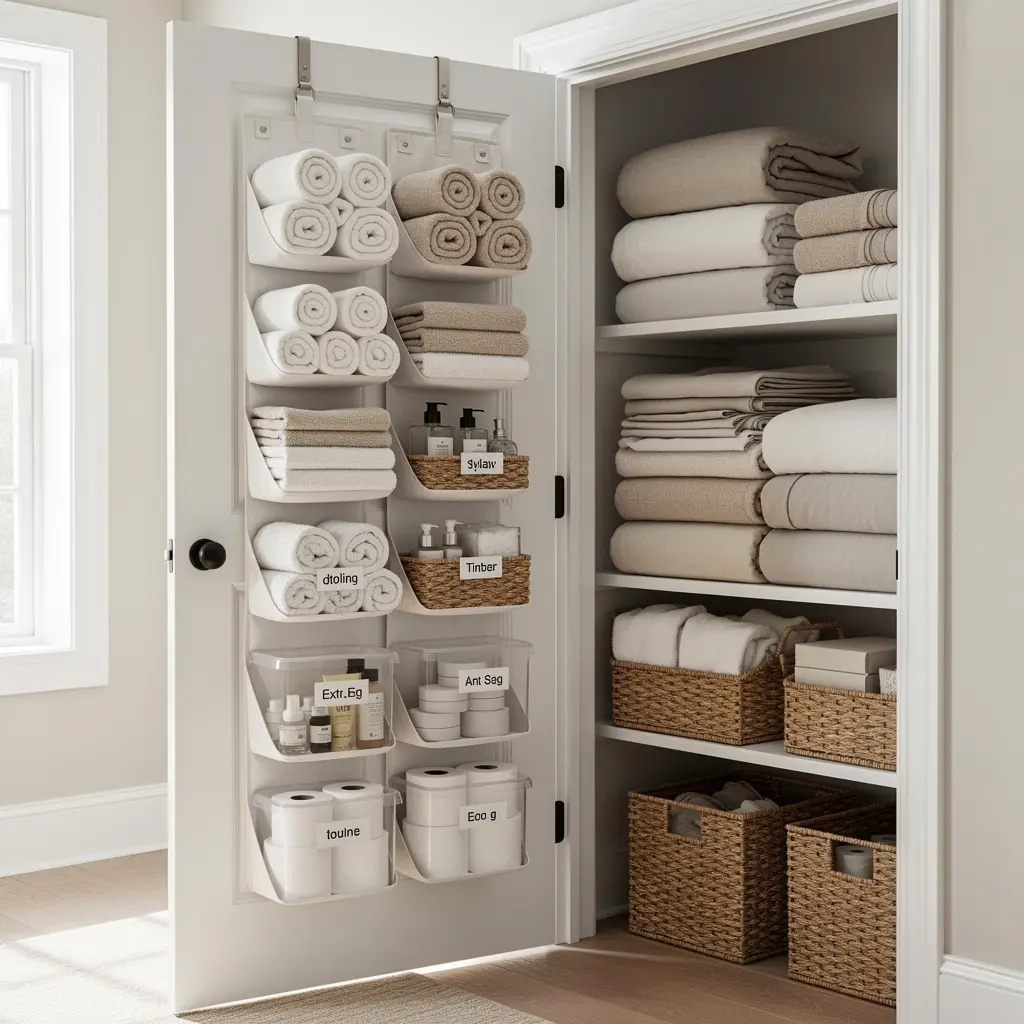
An over the door organizer, generally priced between 15 and 30 dollars, adds storage capacity without requiring any additional shelf space. This spot works well for smaller items like washcloths, extra pillowcases, or a small first aid kit that doesn’t need a full shelf of its own.
This kind of vertical storage is particularly useful in smaller linen closets, where shelf space is limited but the back of the door often goes completely unused.
9. Keep a Small Stock of Cleaning Supplies Separate From Linens
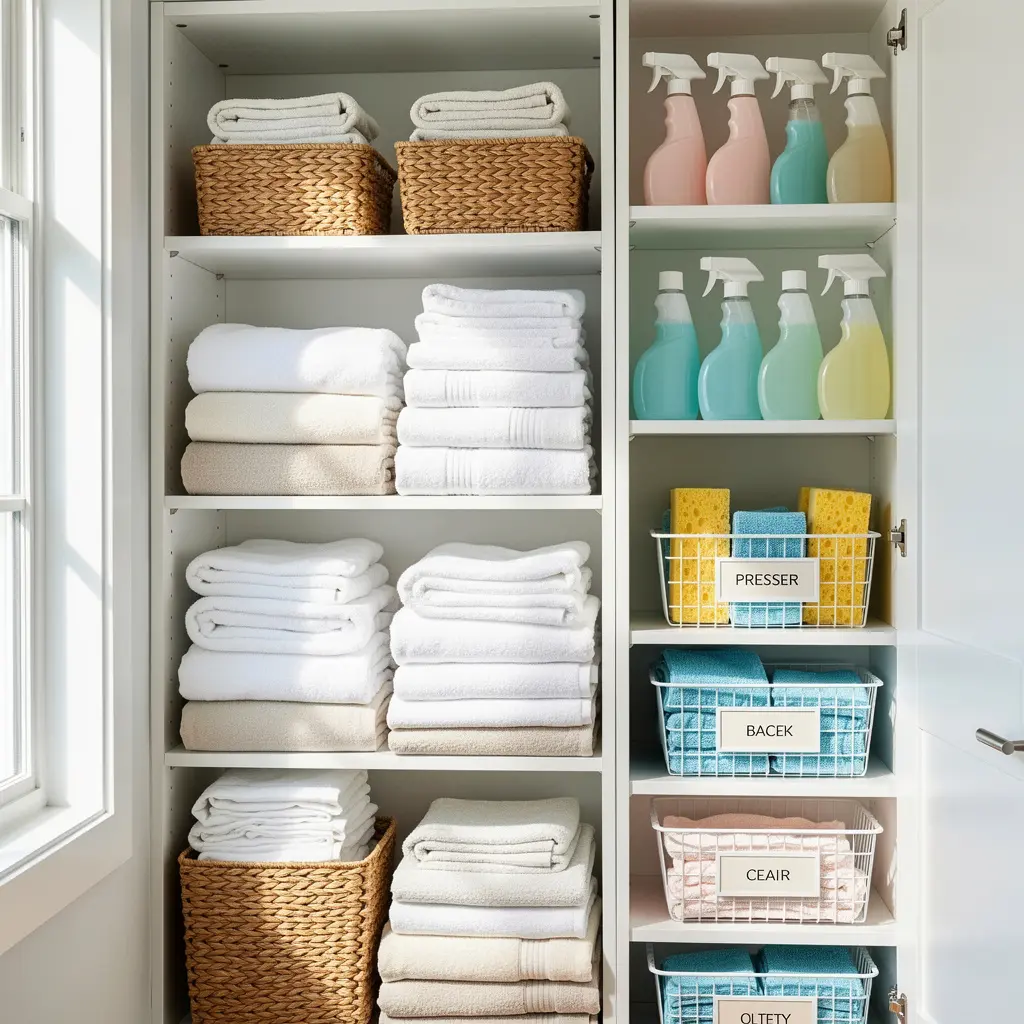
Many linen closets end up doubling as storage for cleaning supplies, which can quickly clutter a space meant primarily for towels and sheets. Designating a single, clearly defined shelf or bin for cleaning supplies, kept separate from linens rather than mixed in randomly, keeps both categories easier to find.
If a separate closet or cabinet is available elsewhere in the home, moving cleaning supplies out of the linen closet entirely often frees up meaningful space for the linens themselves.
10. Do a Quick Maintenance Check Every Few Months

Even a well organized linen closet drifts over time as new items get added and old habits creep back in. Setting a reminder to spend ten or fifteen minutes every few months refolding stacks, checking labels are still accurate, and pulling out anything that’s snuck in out of place keeps the system working long term.
This small, regular habit takes far less time than a full reorganization and prevents the closet from reaching the point where it needs to be completely emptied and redone again.
Mistakes to Avoid
- Buying storage bins before sorting through and purging what you actually have
- Storing fitted sheets, flat sheets, and pillowcases as separate, unmatched stacks
- Skipping labels in a shared household, which leads to items ending up in the wrong spot
- Placing frequently used items on hard to reach shelves out of convenience during the initial setup
- Letting cleaning supplies mix randomly with folded linens
- Assuming one organizing session will last indefinitely without any periodic maintenance
Frequently Asked Questions
How often should I reorganize my linen closet? A full reorganization is rarely necessary more than once a year if you build in a quick maintenance check every few months. That regular small effort prevents the kind of buildup that requires starting over completely.
What’s the best way to fold towels for a linen closet? Folding towels in thirds lengthwise, then in half or thirds again depending on shelf height, tends to create uniform stacks that use shelf space efficiently. Rolling towels is another option that works particularly well in a bathroom cabinet with limited shelf height.
How many sets of sheets do I actually need per bed? A common guideline is two to three sets per bed, which allows for one in use, one in the wash, and a spare. Storing more than that often leads to unnecessary clutter without adding much practical benefit.
Should I use clear bins or opaque baskets in a linen closet? Clear bins make it easy to see contents at a glance without opening them, which works well for smaller, mixed items. Opaque woven or fabric baskets tend to look more cohesive and hide slight mess, which can be useful for less frequently accessed items.
What’s the easiest way to keep a shared linen closet organized? Clear labeling and a simple, predictable shelf assignment by category are the two factors that make the biggest difference in a shared household. A system only one person understands tends to break down quickly once other people start putting things away.
Conclusion
A tidy linen closet comes down to a clear system rather than expensive storage products. Sort and purge first, assign each category its own shelf, fold sheets as complete sets, and label everything clearly enough that anyone in the household can follow the same logic. Building in a quick maintenance check every few months is what actually keeps the system working long after the initial organizing day, rather than letting it slowly slide back into clutter.
Small, consistent habits tend to matter more here than any single product purchase. A closet that’s easy to put things back into correctly is a closet that stays organized, and that ease usually comes down to clear categories and labels rather than an elaborate storage setup.