10 Plate Wall Decor Ideas That Add Instant Charm to Any Room
A plate wall has the potential to be one of the most personal, collected feeling pieces of decor in a home, or it can end up looking like a random assortment of dishes someone forgot to put away. The difference almost always comes down to planning. A plate wall that reads as intentional has a clear layout, a mix of sizes that creates rhythm, and enough restraint that it doesn’t feel overcrowded. These plate wall decor ideas walk through exactly how to get there.
Unlike a standard gallery wall of framed art, plates add dimension and texture that flat prints don’t, which is part of why they’ve remained a popular choice for dining rooms, hallways, and kitchens. The trick is treating the arrangement with the same intentionality you would any other piece of wall art, rather than just hanging whatever plates happen to be on hand.
1. Choose a Mix of Plate Sizes for Visual Interest
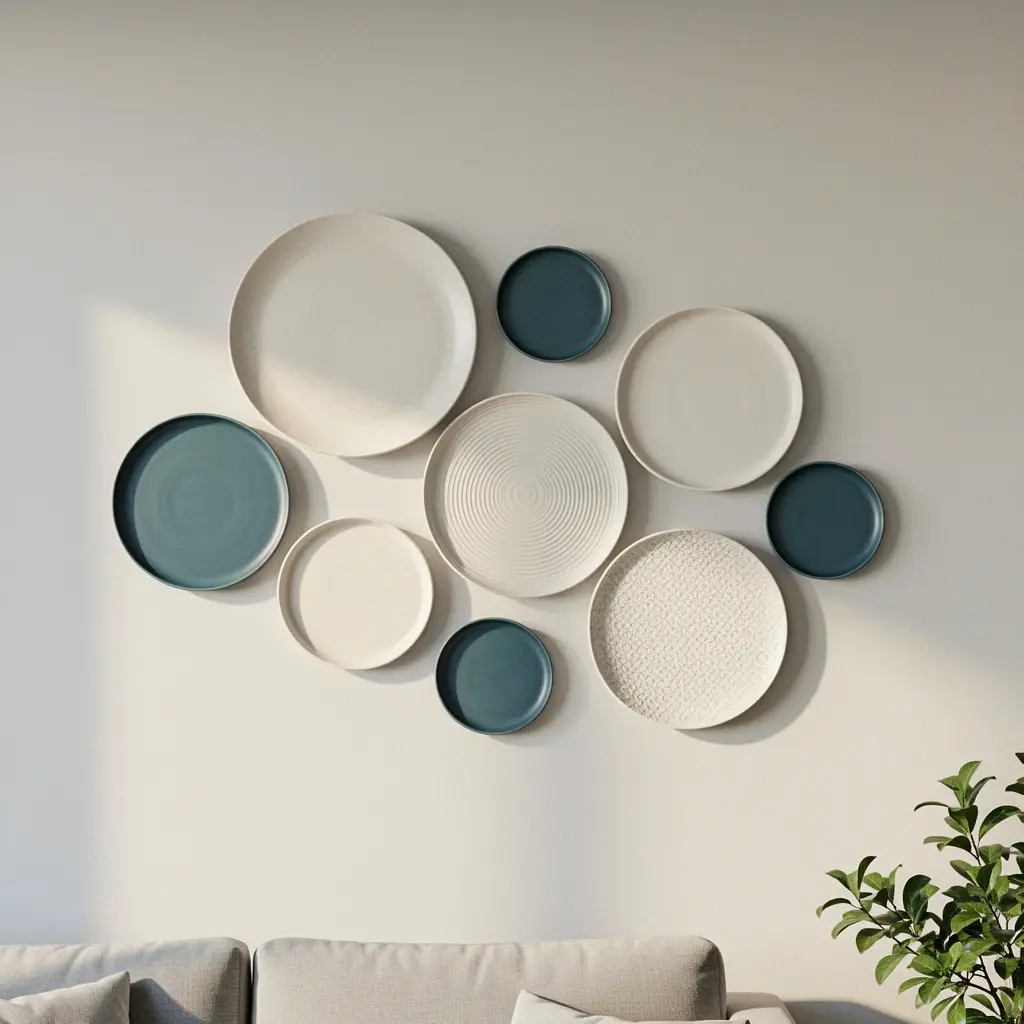
A plate wall made entirely of identically sized plates can look flat and a bit repetitive, even if the individual plates are beautiful. Mixing sizes, generally ranging from a small 6 inch salad plate up to a larger 12 inch charger, creates visual rhythm that a uniform grid doesn’t provide.
A useful approach is planning for roughly three size categories, small, medium, and large, and distributing them throughout the arrangement rather than grouping all the large plates together in one spot.
2. Decide on a Layout Before You Hang a Single Plate
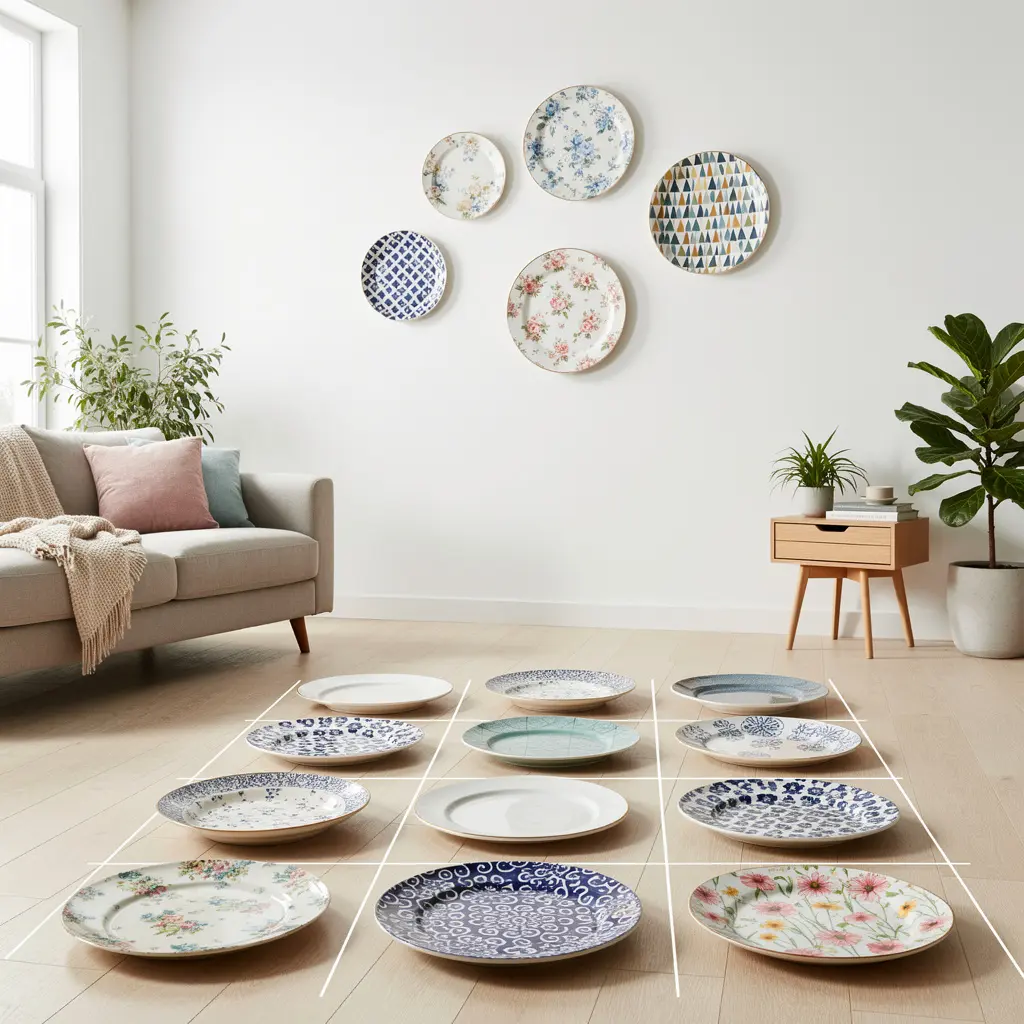
Planning the arrangement on the floor first, or tracing paper templates and taping them to the wall, prevents the frustration of extra nail holes from repositioning plates after the fact. Photographing the floor layout from above gives you a reference to work from once you start hanging.
Common Layout Shapes to Consider
A loose oval or circular arrangement tends to feel organic and works well above a piece of furniture like a buffet or console table. A more structured grid layout, by contrast, suits a modern or more formal dining room, though it requires more precise spacing to look intentional rather than mechanical.
3. Use the Right Hangers for Different Plate Materials
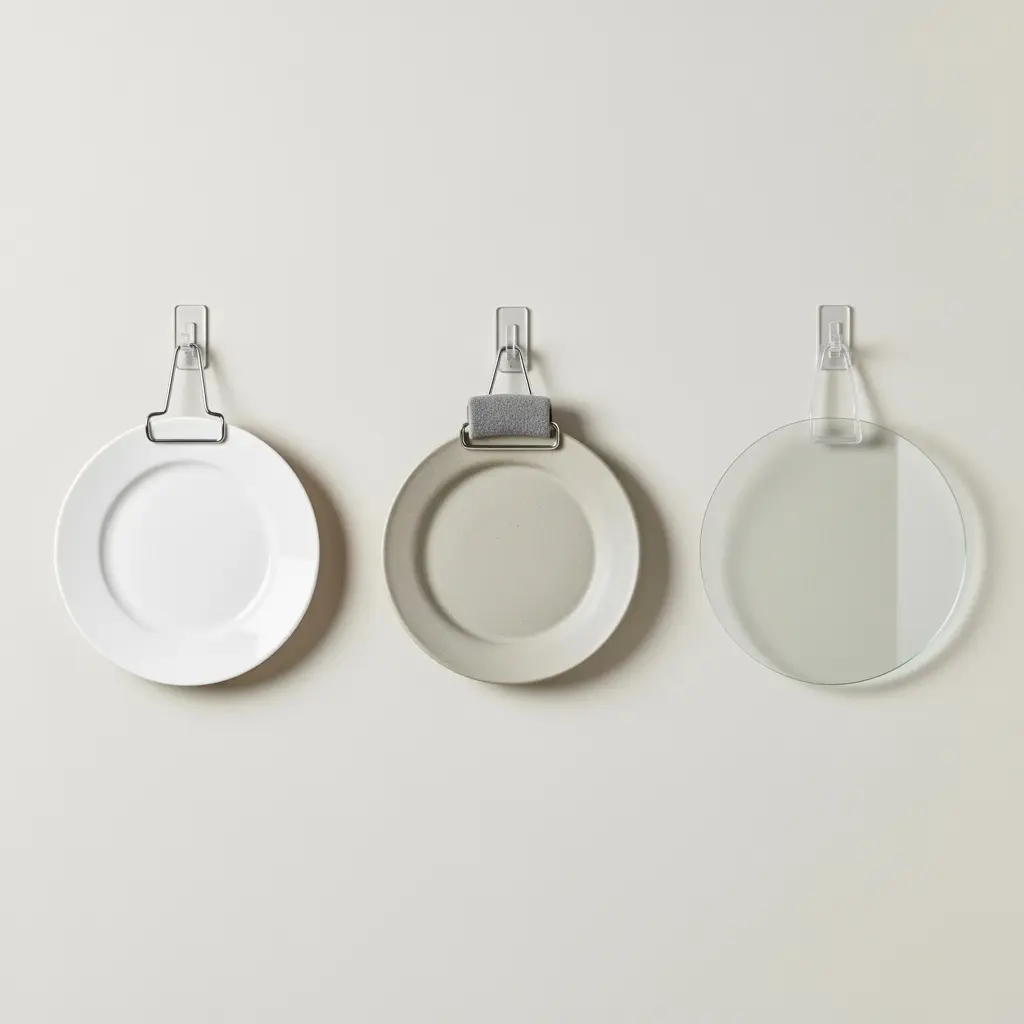
Plate hangers, generally priced between 2 and 8 dollars each depending on size, come in adjustable spring style options and adhesive backed options that avoid visible wire on the front of the plate. Checking the hanger’s weight rating against your plate’s actual weight, particularly for heavier ceramic or stoneware pieces, prevents a plate from slipping loose after installation.
Adhesive plate hangers work well for lighter, thinner plates, while heavier vintage china generally holds more securely with a spring style hanger that grips the plate’s rim from both sides.
4. Mix Patterns and Colors Without Making It Look Chaotic
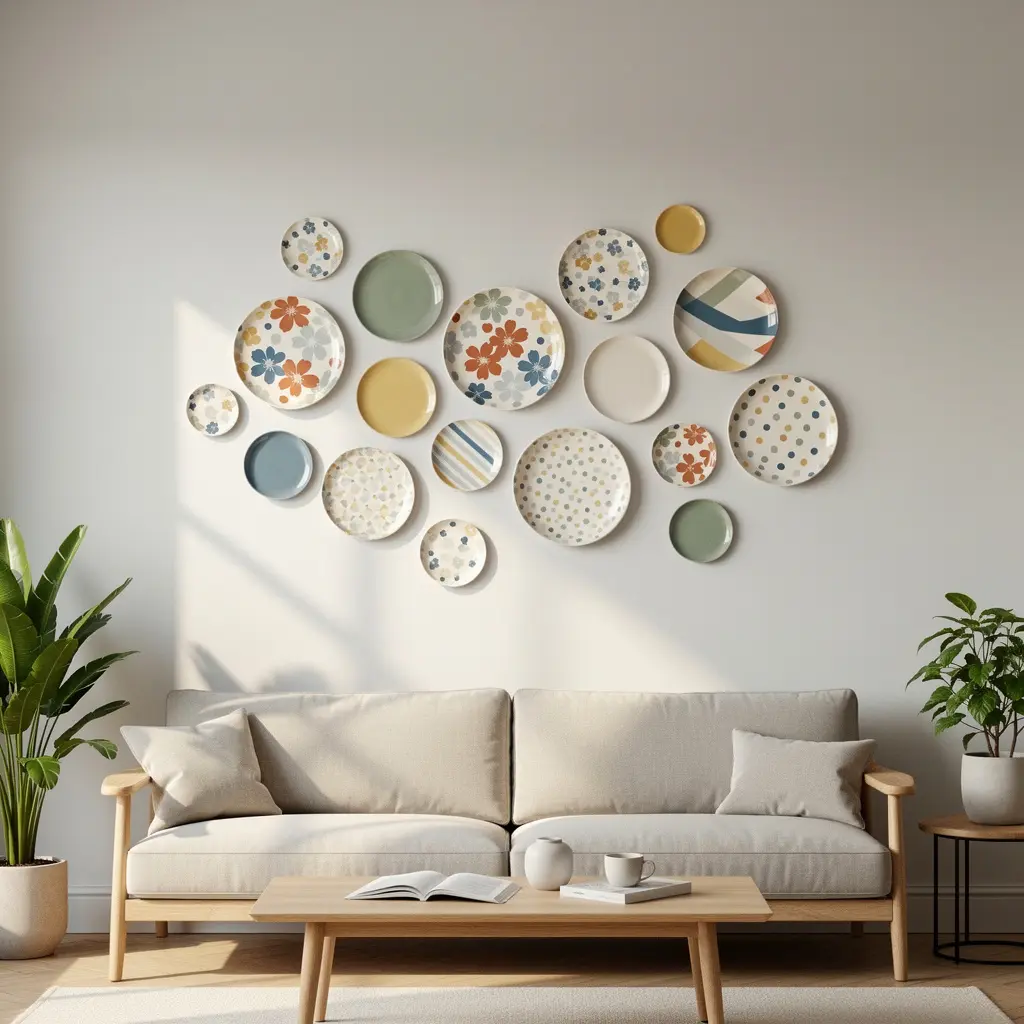
A plate wall built entirely from a single pattern can look monotonous, while one mixing too many unrelated patterns can feel visually overwhelming. Choosing a shared color palette, even if the specific patterns vary between floral, striped, and solid plates, keeps a mixed arrangement feeling cohesive rather than random.
Limiting the palette to two or three main colors across the entire wall, even with several different patterns represented, tends to produce a more intentional looking result than an anything goes approach.
5. Incorporate Vintage or Thrifted Plates for Character
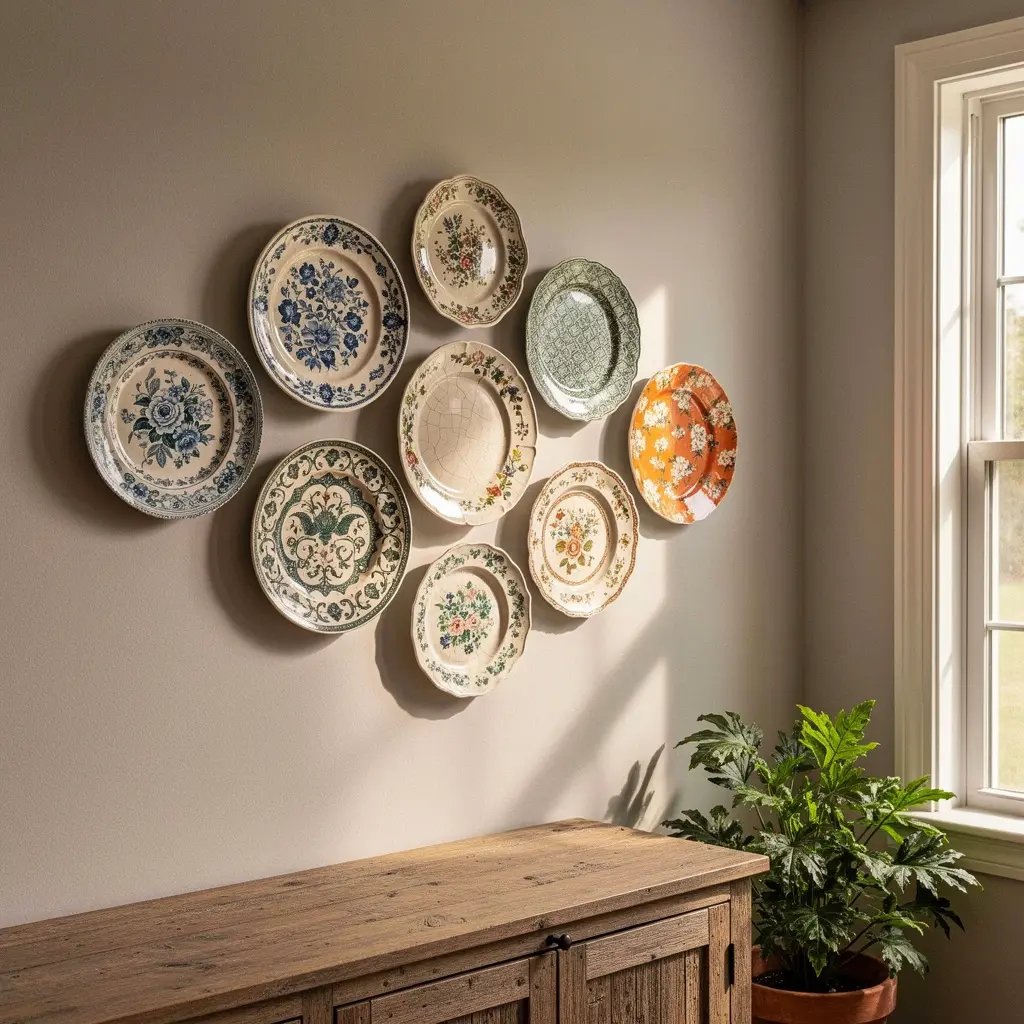
Thrifted and vintage plates, often found at estate sales, flea markets, or secondhand shops for a few dollars each, add a collected over time quality that an entirely new, matching set doesn’t provide. Mismatched vintage pieces also tend to have more visual character, with details like hand painted patterns or aged gilt edges that newer manufactured plates rarely include.
Mixing a few vintage finds with newer plates, rather than relying entirely on one or the other, gives the wall both cohesion and a sense of history.
6. Balance a Plate Wall With Surrounding Wall Space
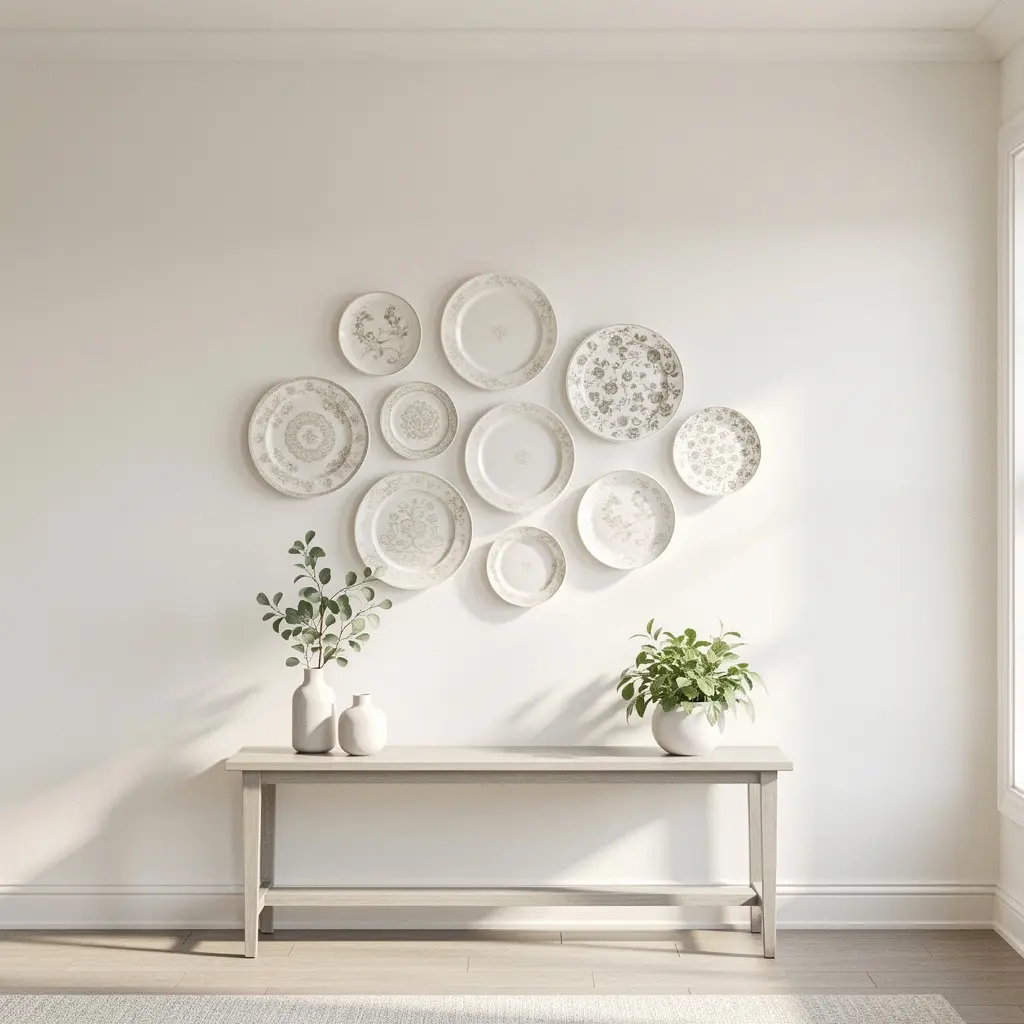
A plate wall that stretches edge to edge across an entire wall with no breathing room can feel overwhelming, particularly in a smaller room. Leaving a border of blank wall space around the arrangement, generally at least 6 to 8 inches, helps the display read as a defined piece of art rather than wallpaper.
This matters especially above furniture, where the plate wall should generally be sized to roughly two thirds the width of the piece it’s positioned above, similar to how framed art is typically scaled.
7. Choose a Focal Point Plate to Anchor the Arrangement
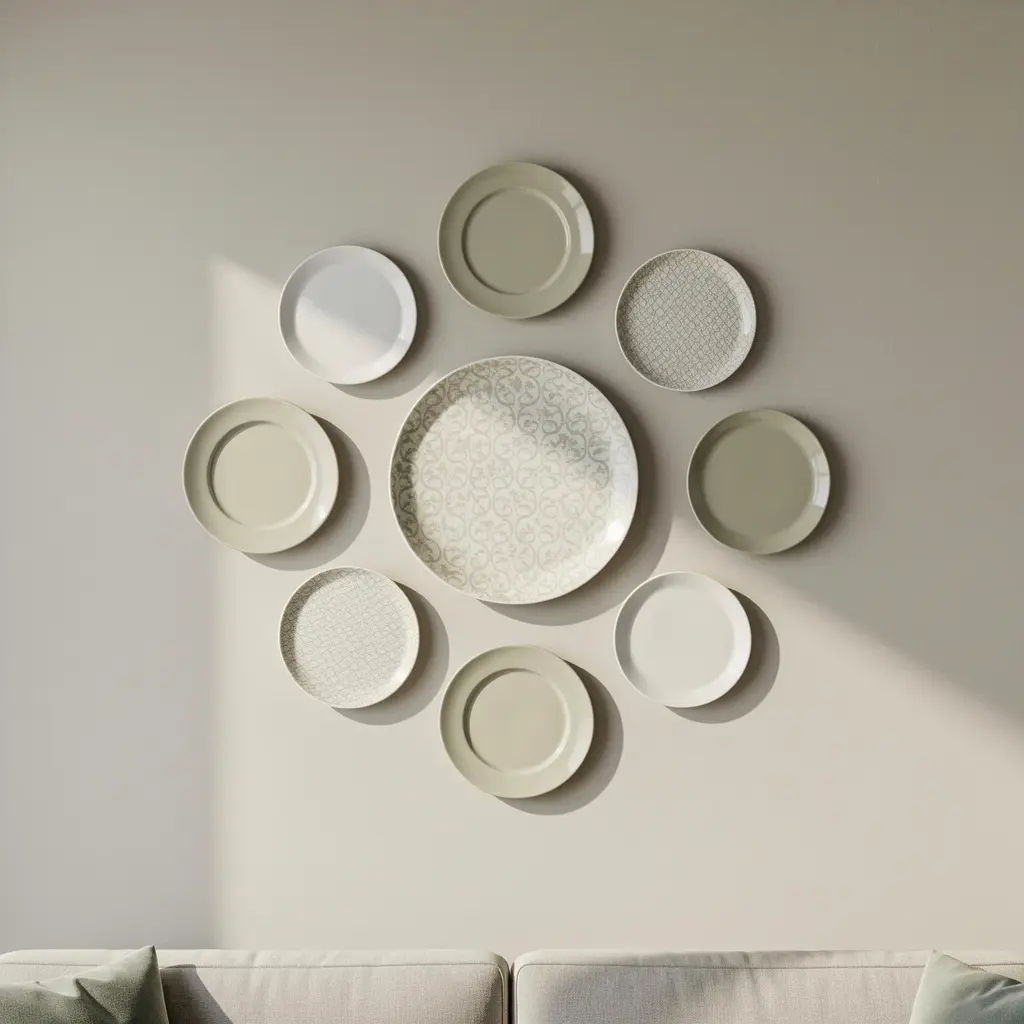
Selecting one larger, more visually striking plate, whether due to size, color, or pattern, and positioning it as the anchor point of the arrangement gives the whole wall a clear starting place for the eye. This focal plate is often placed slightly off center rather than dead center, which tends to feel more dynamic than a perfectly symmetrical layout.
Building Outward From the Anchor
Once the focal plate is placed, arranging the remaining plates in gradually decreasing size and visual weight as they move outward from that anchor point creates a sense of intentional flow across the whole display.
8. Add Other Wall Decor Between Plates for Variety
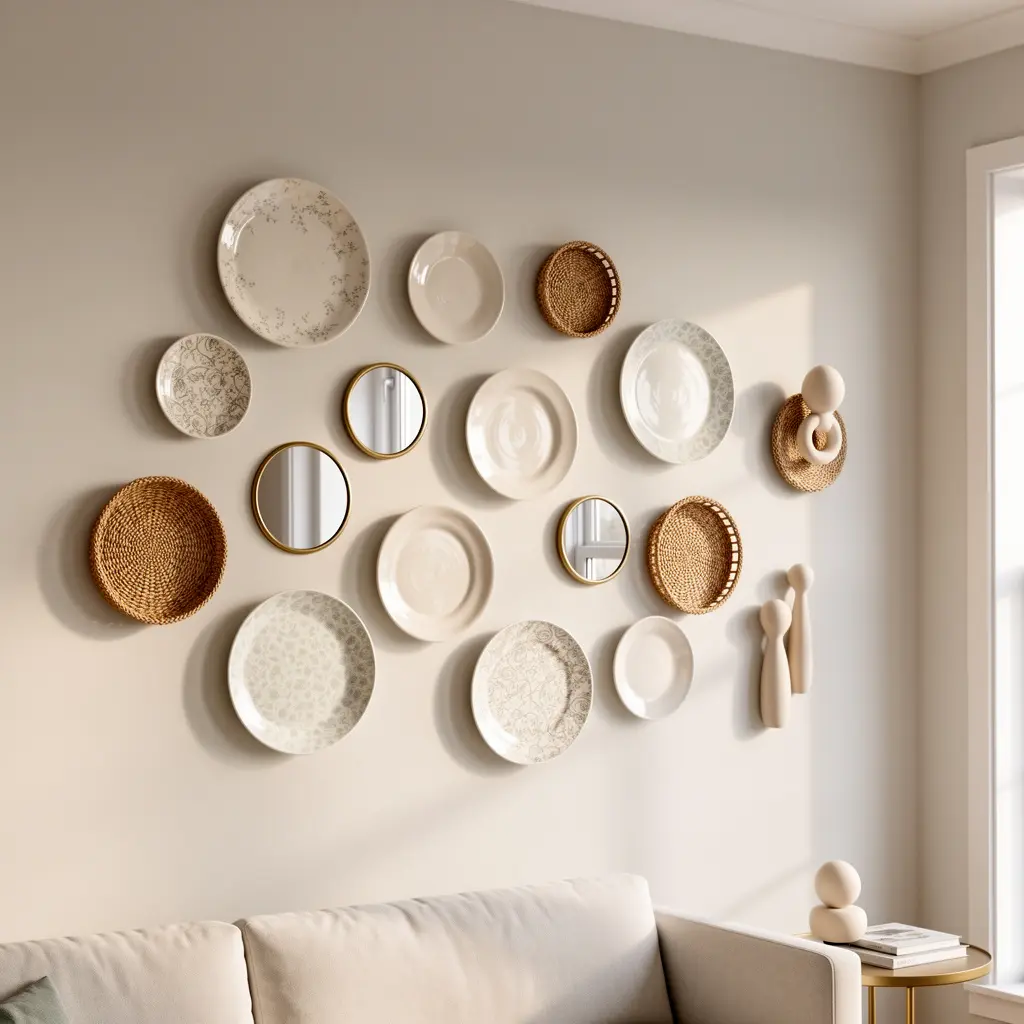
A small framed print, a decorative fork or spoon, or a small wall sconce placed among the plates breaks up what could otherwise be a repetitive pattern of circular shapes. This mixed media approach also allows a plate wall to extend and fill a larger space without requiring an excessive number of plates.
Keeping any additional pieces relatively small and simple prevents them from competing with the plates themselves for visual attention.
9. Consider Plate Wall Placement Beyond the Dining Room
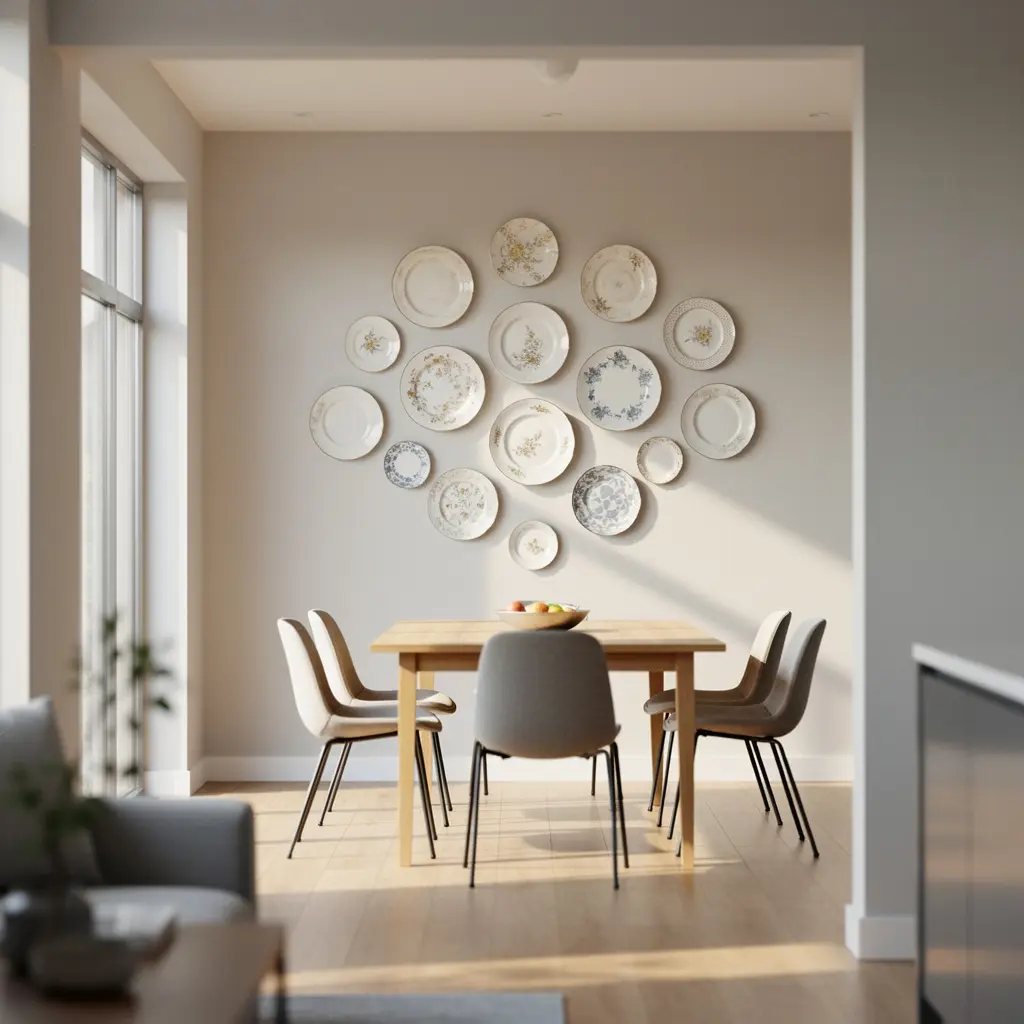
While dining rooms are the traditional home for plate walls, the same technique works well in a kitchen, above a bed in a bedroom, or along a stairwell where the varied heights of individual steps create a natural, tiered backdrop for an arrangement. Each of these spaces benefits from the same planning principles, though the overall scale and plate selection might shift depending on the room.
A kitchen plate wall, for example, might incorporate more everyday, functional looking dishware, while a bedroom arrangement often leans toward softer colors and more delicate patterns.
10. Protect and Maintain Your Plate Wall Over Time
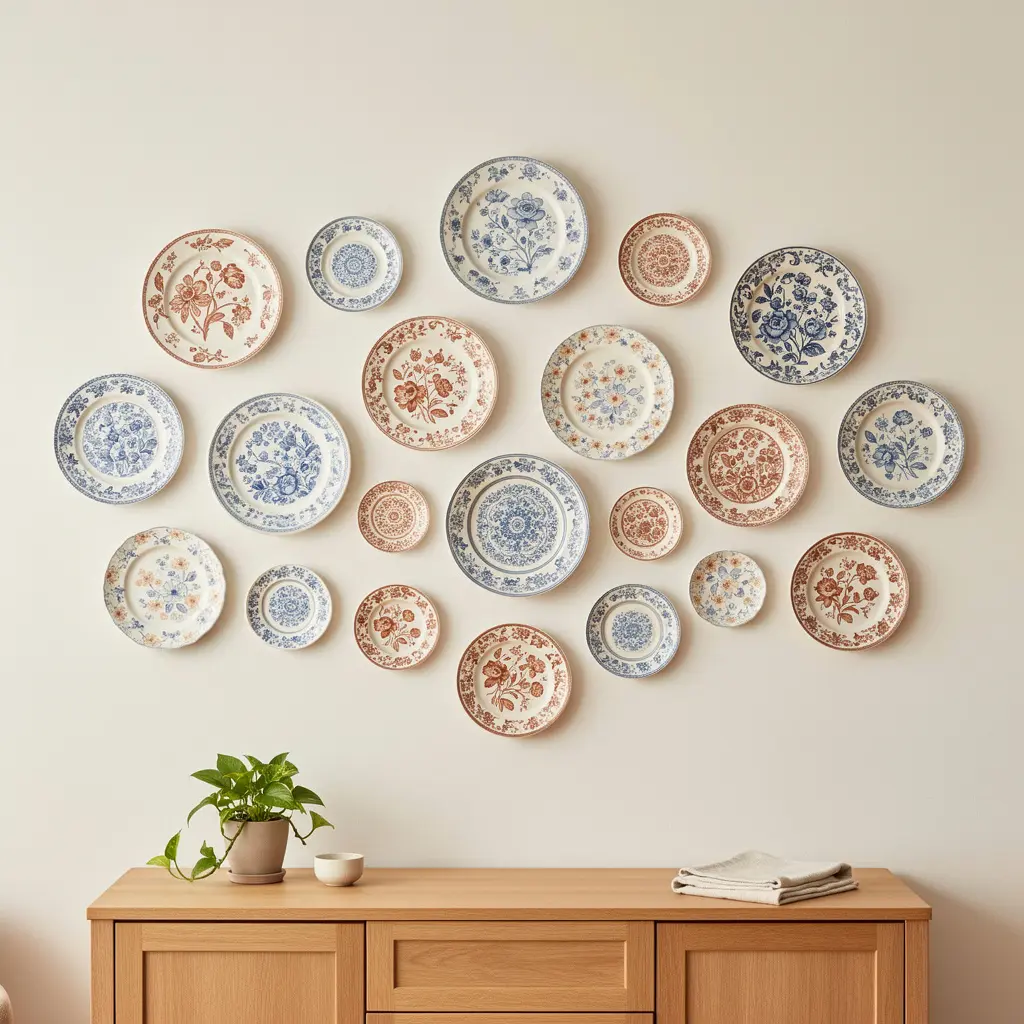
Dusting plates periodically with a soft, dry cloth prevents buildup that can dull the finish over time, particularly on textured or hand painted pieces. Checking that hangers remain secure every few months, especially in homes with fluctuating humidity that can affect adhesive backed hangers, helps avoid an unexpected plate falling from the wall.
Avoiding direct, prolonged sunlight on the arrangement also helps preserve painted patterns and gilt detailing, which can fade or discolor over years of consistent exposure.
Mistakes to Avoid
- Hanging plates without planning the layout on the floor first
- Using a hanger not rated for the actual weight of a heavier ceramic or stoneware plate
- Mixing too many unrelated patterns without a shared color palette to tie them together
- Filling the entire wall edge to edge with no border of blank space
- Choosing all identically sized plates, which flattens the visual rhythm of the arrangement
- Skipping regular dusting and hanger checks, which can lead to a plate coming loose over time
Frequently Asked Questions
How many plates do I need for a plate wall? This depends heavily on the wall size and plate sizes chosen, but a small arrangement above a console table might use 7 to 12 plates, while a larger dining room wall could use 20 or more. Planning the layout on the floor first gives a clear sense of how many plates a specific space actually needs.
What’s the safest way to hang heavier vintage plates? Spring style plate hangers, which grip the rim of the plate from both sides rather than relying on adhesive, tend to hold heavier ceramic or stoneware plates more securely than adhesive backed options.
Can I mix different plate materials, like glass and ceramic, on the same wall? Yes, mixing materials can add texture and visual interest, as long as the color palette stays cohesive enough to tie the different materials together. Just be sure each material has a hanger rated for its specific weight and thickness.
Do plate walls work in modern or minimalist homes? Yes, particularly with a more structured grid layout and a limited color palette, often working with solid or subtly patterned plates rather than heavily ornate vintage china. The layout and restraint matter more than the plates themselves in achieving a modern look.
How do I keep a plate wall from looking dated over time? Choosing plates based on shape, color palette, and timeless pattern styles, rather than a single trend specific design, helps a plate wall age well. Mixing in a few new pieces occasionally also keeps the display feeling current without requiring a full redo.
Conclusion
A plate wall becomes a genuine focal point when it’s planned with the same care as any other piece of wall art. Choose a mix of sizes, plan the layout before hanging anything, use hardware rated for each plate’s weight, and keep the color palette cohesive even while mixing patterns. That combination of planning and restraint is what separates a curated plate wall from a wall that just happens to have some plates on it.