10 Moody Bathroom Decor Ideas for a Dramatic & Luxe Look
A moody bathroom, done well, feels like a genuine retreat, dark and dramatic in a way that reads as intentional and a little indulgent. Done without much thought, it can tip into feeling more like a cave than a calming space, especially if the lighting and texture choices don’t keep up with the bold color decision. These moody bathroom decor ideas focus on the first outcome, building richness through color while making sure the room still feels warm and functional to actually use every day.
The difference between a moody bathroom that works and one that feels off usually comes down to balance. Dark walls need warm lighting to counteract them, matte finishes need something reflective to bounce light around, and every hard surface benefits from at least one soft, textured element nearby.
1. Choose a Deep, Saturated Paint or Tile Color
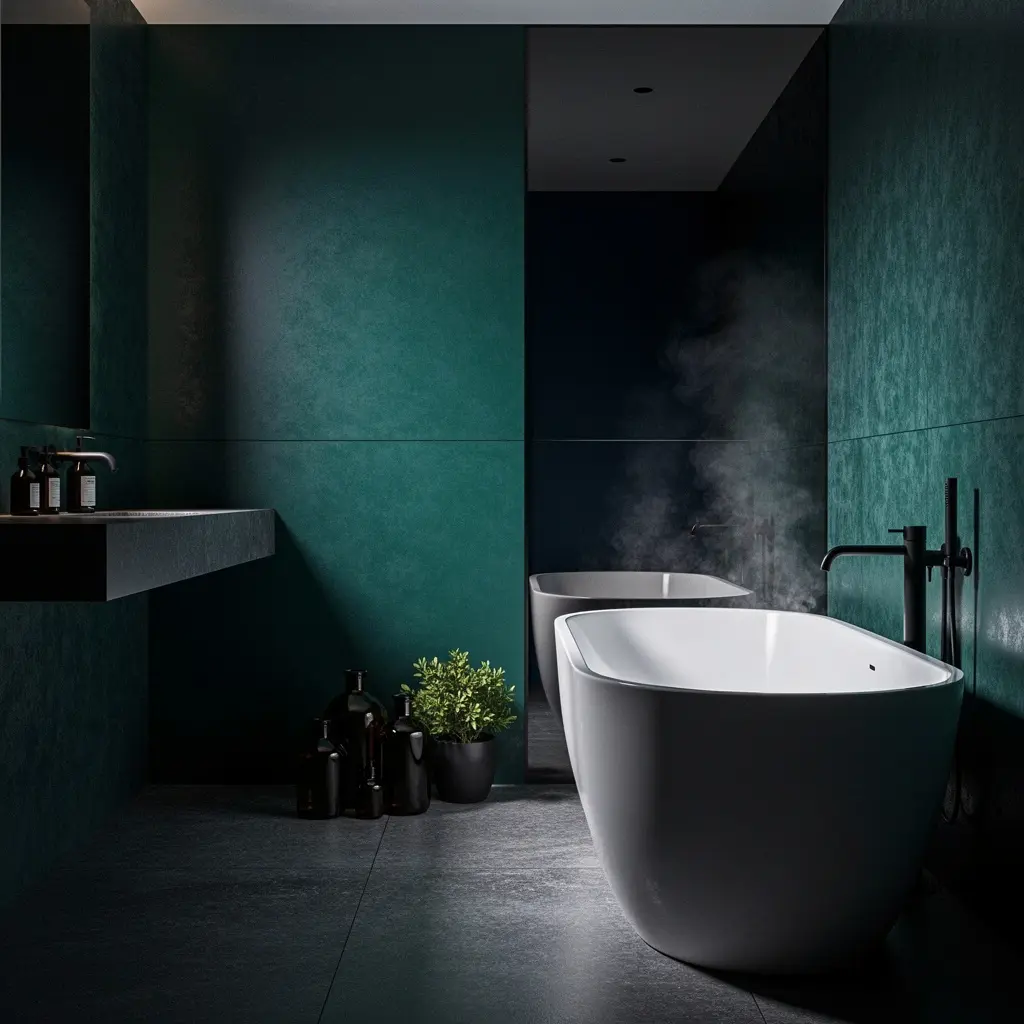
The foundation of any moody bathroom is a deep, saturated color, whether that’s a charcoal gray, a deep forest green, a rich navy, or a near black plum. Bathroom specific paint in these shades generally runs between 40 and 65 dollars per gallon, and a semi gloss or satin finish holds up better against humidity than a flat finish would.
Testing the shade directly in your bathroom, under both natural and artificial light, matters even more with dark colors than lighter ones, since a shade that looks appropriately moody in one lighting condition can look flat or muddy under another.
Why Undertone Still Matters in Dark Colors
Even within deep, dark shades, undertone changes the overall feeling significantly. A charcoal with a warm brown undertone feels cozier than one with a cool blue undertone, which can lean closer to feeling cold or clinical despite being technically dark and dramatic.
2. Balance Dark Walls With Warm, Layered Lighting
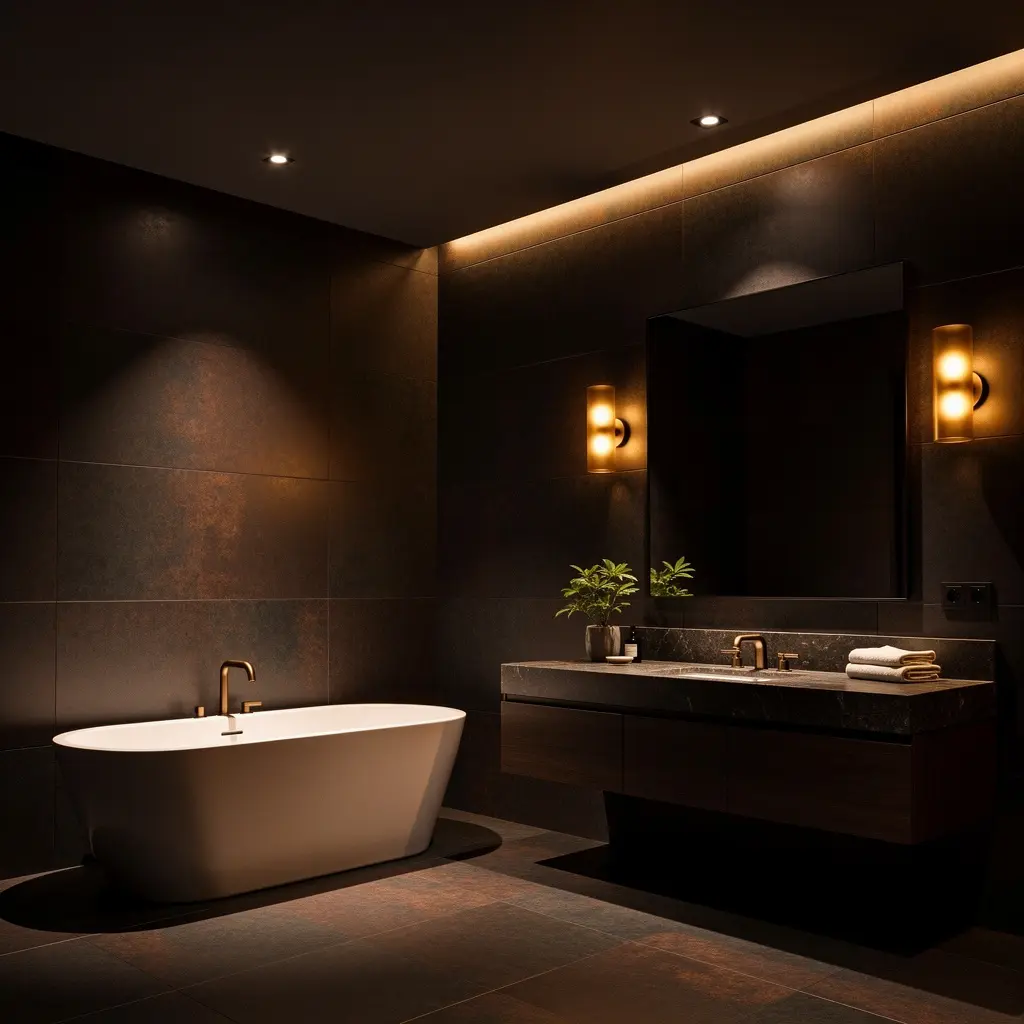
Dark walls absorb significantly more light than pale ones, which means a moody bathroom needs more intentional lighting than a typical white bathroom to avoid feeling dim or cave like. Layering a few light sources, like sconces beside the mirror and an overhead fixture, rather than relying on one single light, keeps the room feeling balanced rather than shadowy.
Bulbs in the 2700K to 3000K range, labeled warm white, are essential here, since cool white bulbs can make dark walls look even flatter and more closed in than they already are.
3. Add Brass or Matte Black Fixtures for Contrast
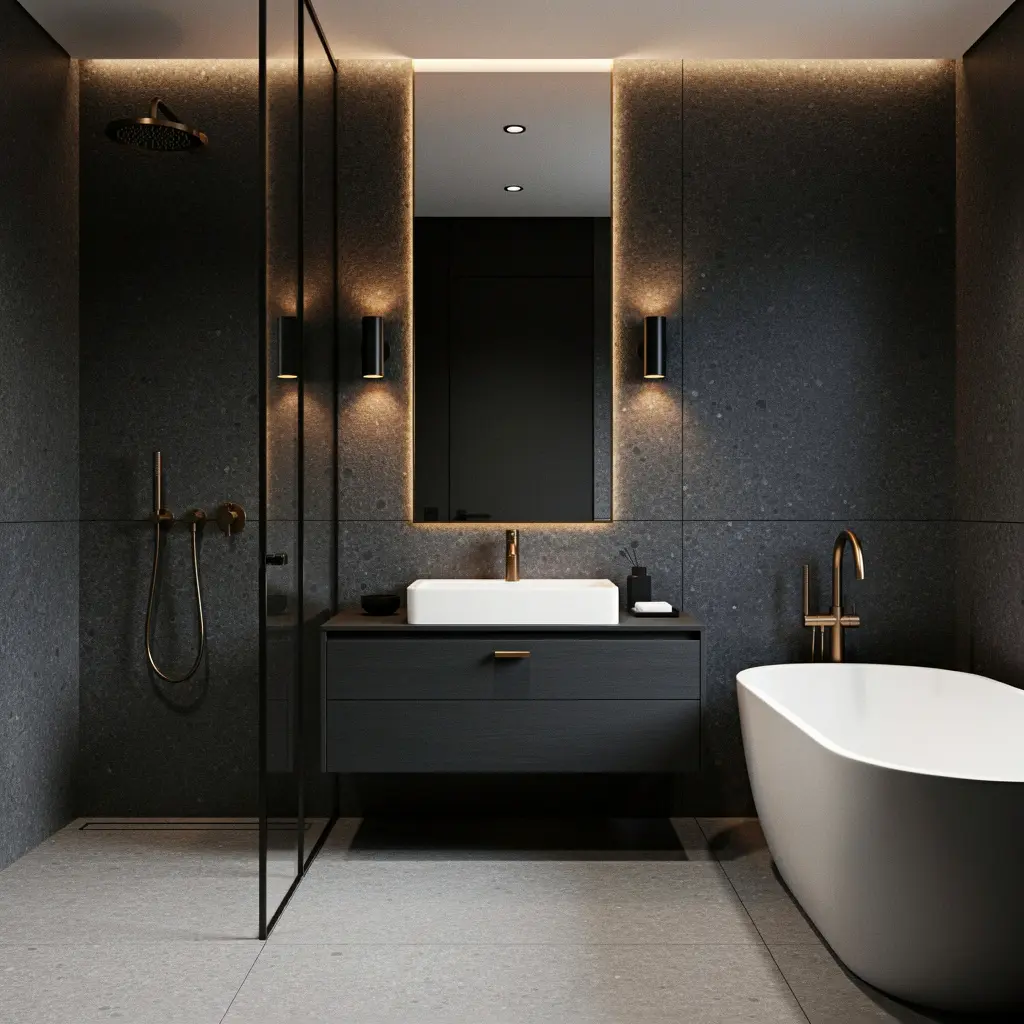
Warm brass fixtures create a soft, glowing contrast against dark walls that tends to feel rich and intentional. Matte black, on the other hand, creates a more dramatic, higher contrast look that leans into the moodiness rather than softening it.
Both approaches work, but mixing the two inconsistently throughout the same bathroom, rather than committing to one finish, tends to make the space feel less cohesive. Fixtures in either finish generally run between 60 and 250 dollars depending on the specific piece and brand.
4. Use Marble or Stone Accents to Add Light and Texture
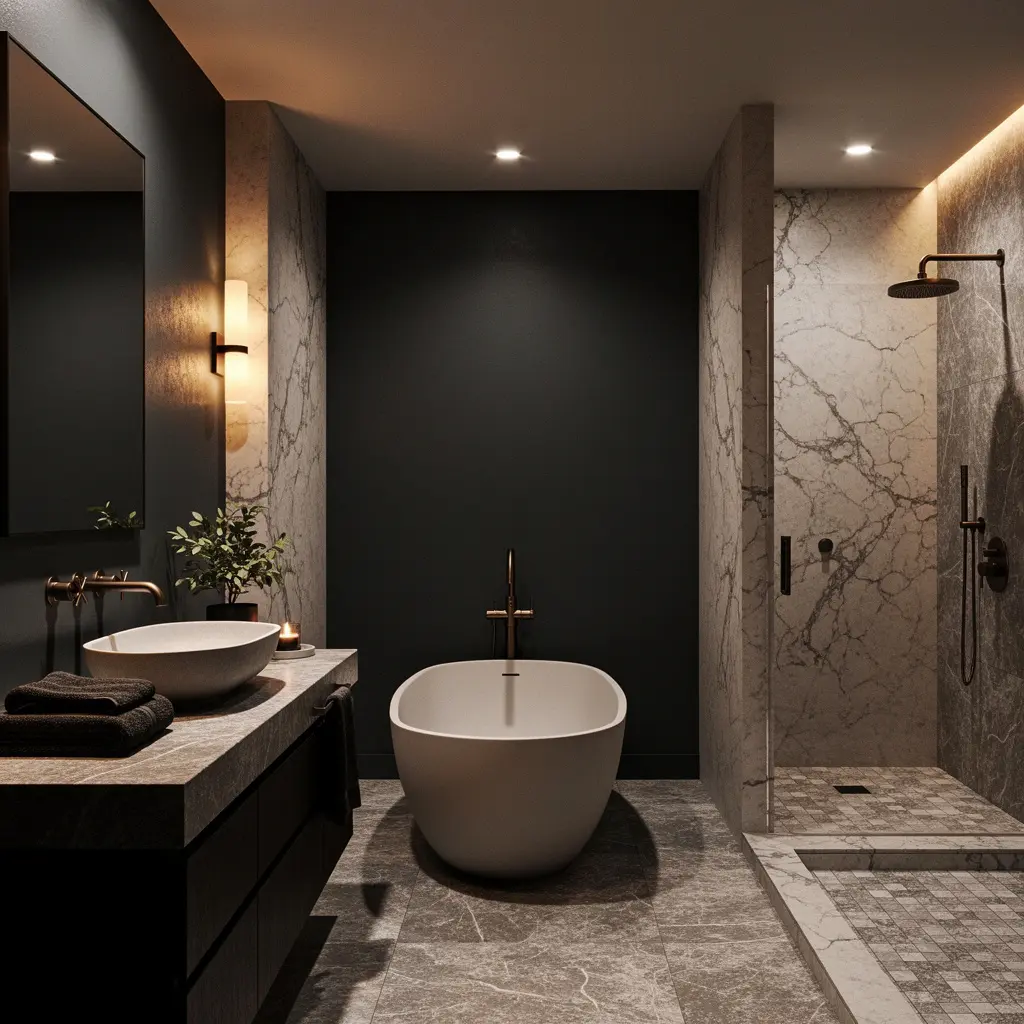
Marble, or a budget friendly faux marble laminate, introduces a lighter, reflective surface that breaks up an otherwise entirely dark palette. A marble countertop, generally priced between 40 and 100 dollars per square foot depending on the stone type, or a smaller marble tray for around 20 to 40 dollars, both add contrast without requiring a full light colored wall.
The subtle veining in marble also catches light in a way that a completely matte, dark surface doesn’t, which helps keep the room from feeling flat despite the overall dark color scheme.
5. Choose Dark Textiles That Still Feel Soft
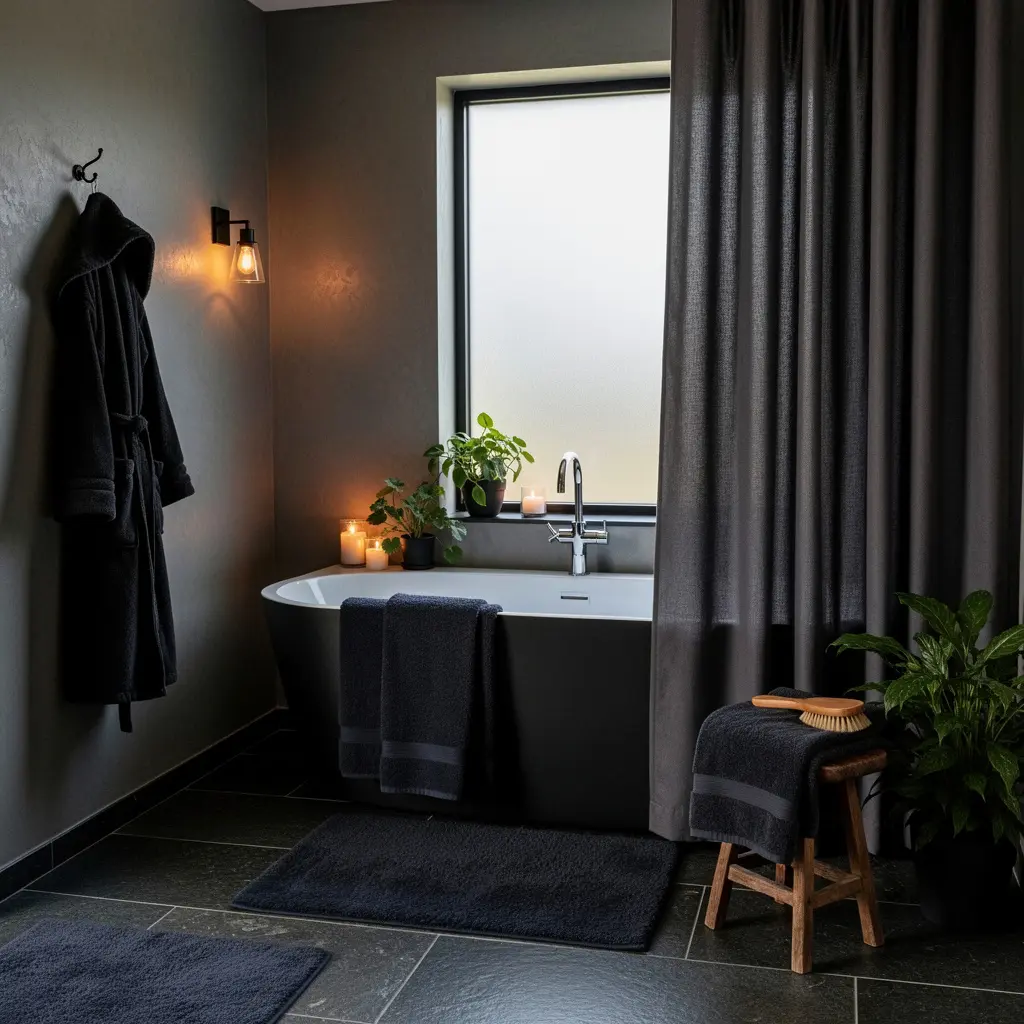
Towels, a bath mat, and a shower curtain in deep, complementary tones continue the moody color palette into softer materials, which keeps the room from feeling like it’s made entirely of hard, cold surfaces. A set of dark toned bath towels, generally priced between 25 and 60 dollars, adds texture and warmth against the harder surfaces of tile and stone.
Choosing Fabric Weight for a Cozier Feel
A slightly heavier, more plush towel or bath mat tends to read as more luxurious in a moody bathroom than a thin, lightweight fabric, since the extra texture reinforces the rich, indulgent feeling the space is going for.
6. Add Greenery to Keep a Moody Bathroom From Feeling Cold
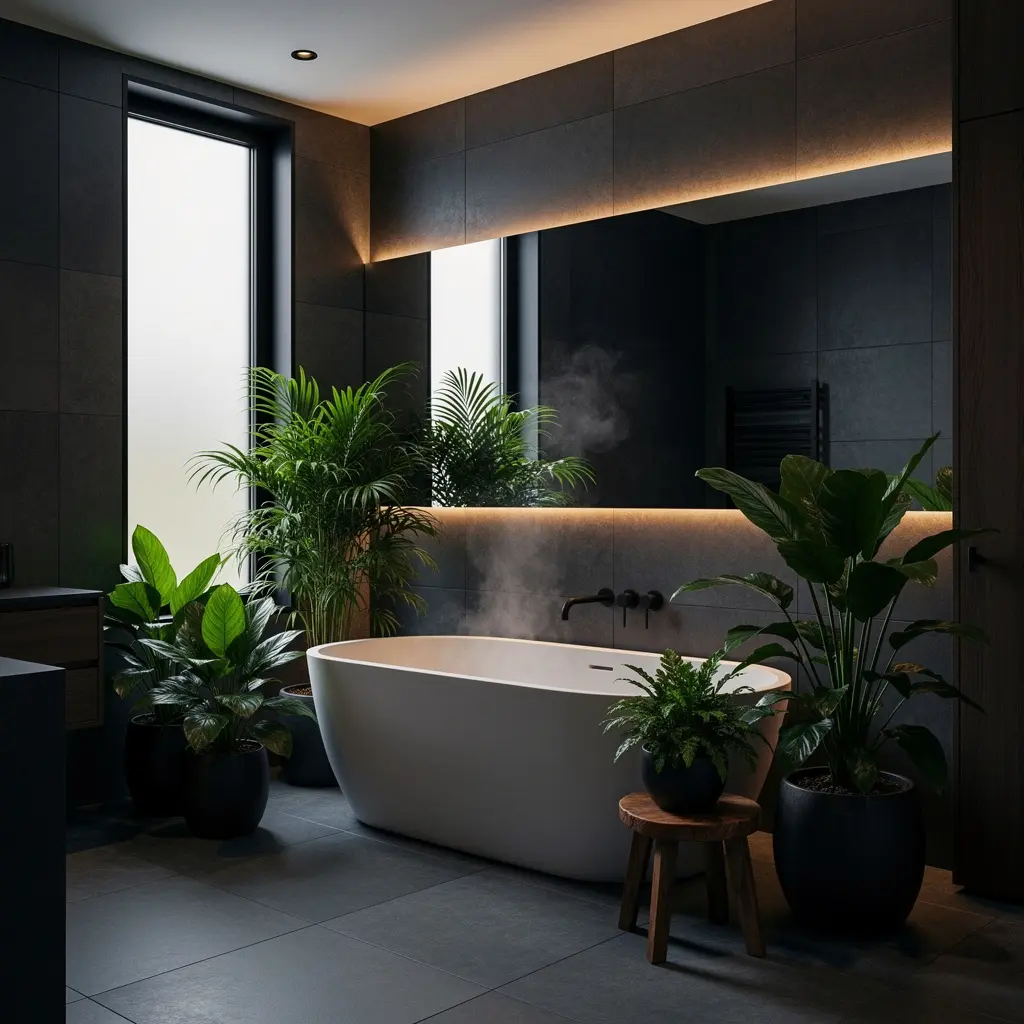
A trailing plant, like a pothos or a spider plant, both of which tolerate bathroom humidity reasonably well, adds a living, organic element that keeps a dark color palette from feeling static or overly formal. Live plants also introduce a small amount of unpredictability and texture that a fully styled, symmetrical bathroom can otherwise lack.
If natural light is limited, a quality faux plant provides a similar softening effect without the risk of it dying, which matters in a windowless bathroom especially.
7. Use Mirrors Strategically to Bounce Available Light
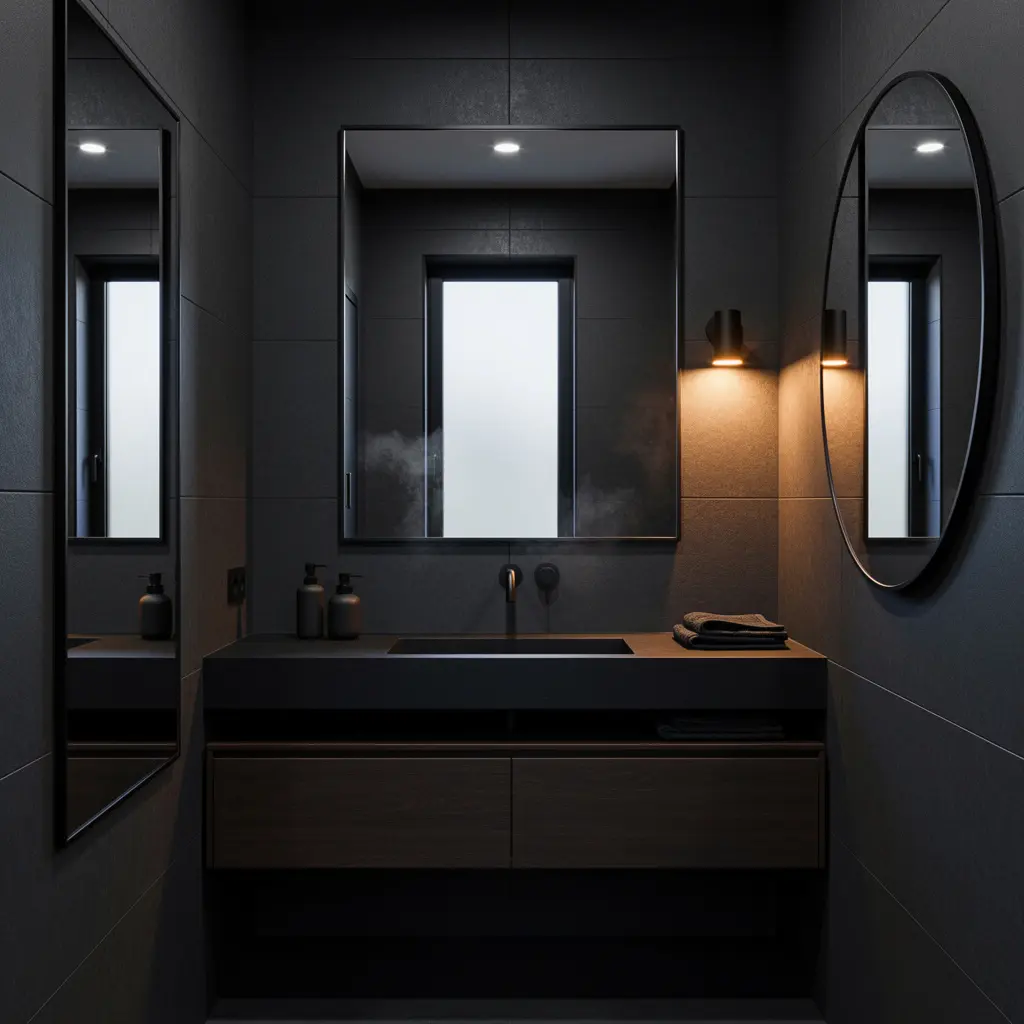
A dark bathroom needs every available light source working as efficiently as possible, and a well placed mirror helps bounce both natural and artificial light back into the room rather than letting dark walls absorb it entirely. A large mirror, generally priced between 100 and 250 dollars depending on size and frame material, also visually opens up a smaller bathroom that might otherwise feel closed in by the dark palette.
Positioning the mirror directly across from the room’s main light source, whether that’s a window or a central overhead fixture, maximizes how much light gets reflected back into the space.
8. Layer in Candles and Warm Scented Details
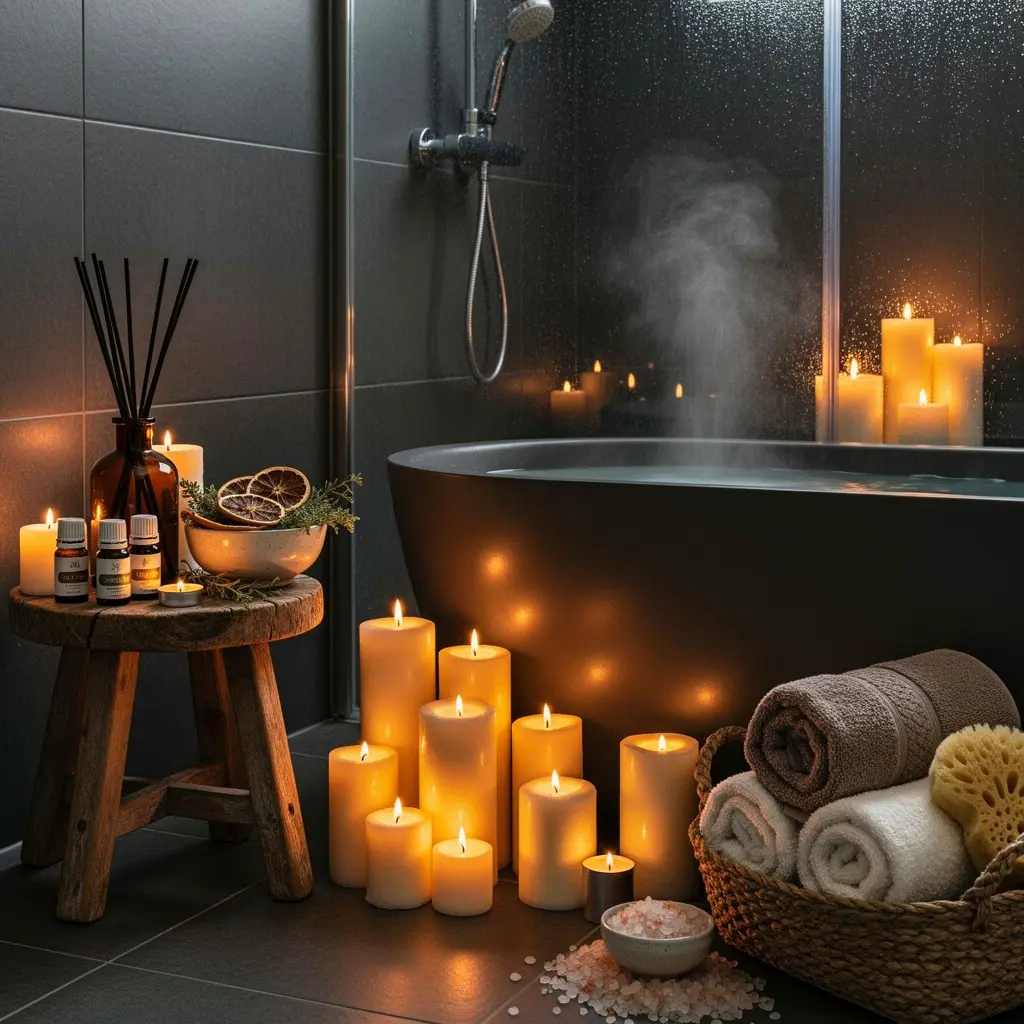
A few candles in warm, muted scents add both a soft, flickering light source and a sensory layer that photographs alone can’t capture. This small detail is often what makes a moody bathroom feel like an actual retreat rather than just a room styled around a dark color scheme.
Grouping two or three candles at varying heights on a marble or wood tray, rather than scattering them individually around the room, keeps this detail looking curated rather than incidental.
9. Choose Dark Cabinetry or Vanity Pieces for Cohesion
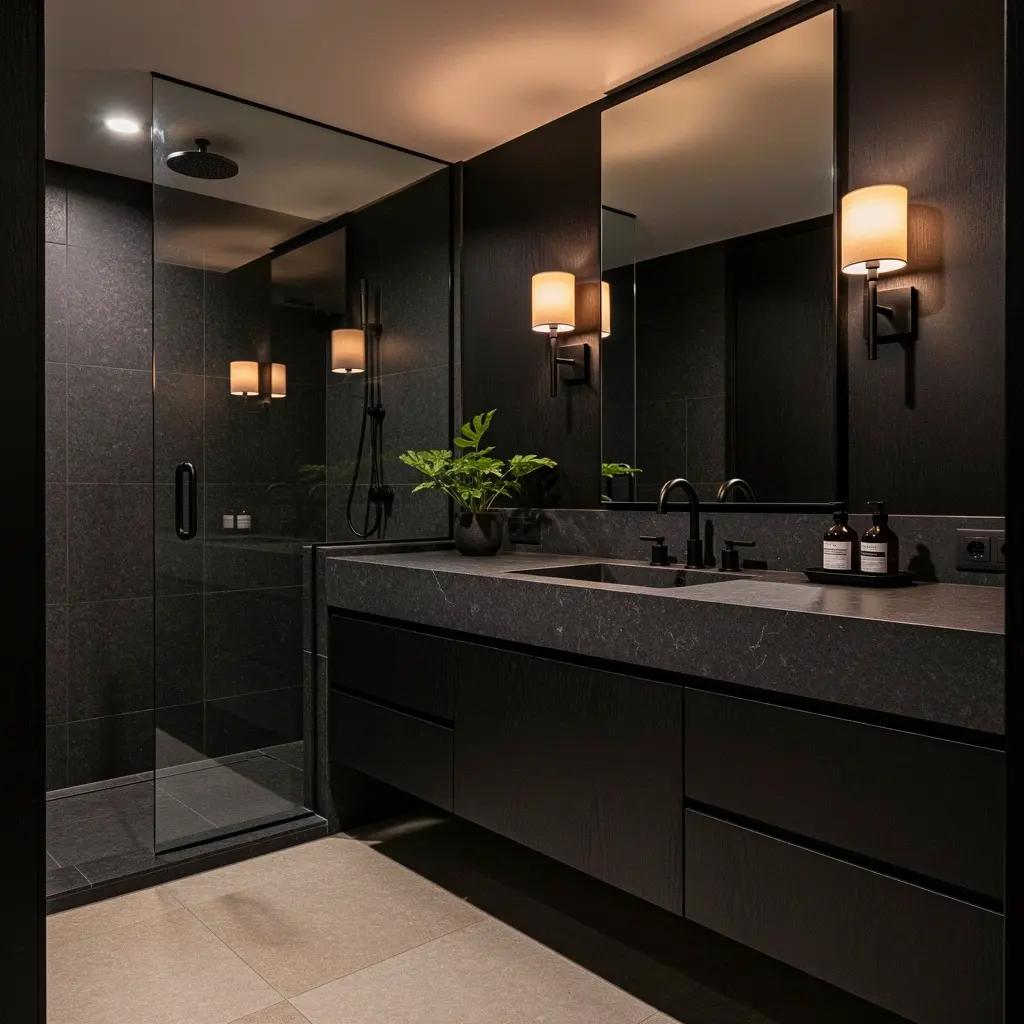
A vanity in a deep, matching or complementary tone to the walls creates a more cohesive, immersive feeling than a stark white vanity interrupting an otherwise dark room. Cabinet painting services for an existing vanity generally run between 200 and 500 dollars depending on size, which is often more affordable than replacing the vanity entirely.
Keeping the vanity’s hardware in the same warm brass or matte black finish used elsewhere in the bathroom ties the whole space together as one cohesive design rather than a collection of separate decisions.
10. Balance Moody Elements With Enough Neutral Space
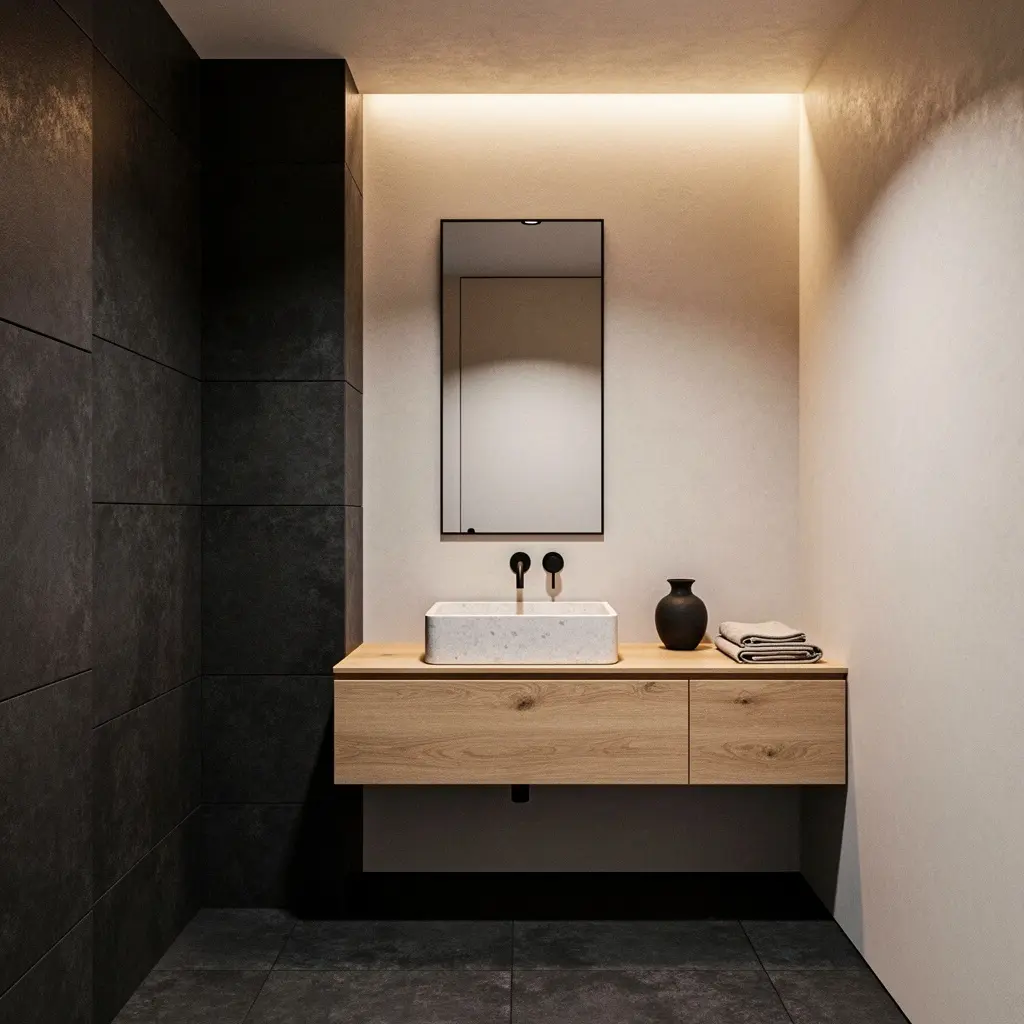
Even a fully committed moody bathroom benefits from some lighter, neutral elements, whether that’s a white marble countertop, light colored towels mixed in among darker ones, or simply plenty of mirror and glass surfaces reflecting light around the room. Without any lighter contrast at all, even a well lit dark bathroom can start to feel heavy after extended daily use.
This balance is what separates a moody bathroom that feels rich and intentional from one that feels more like an experiment in how dark a small room can get.
Mistakes to Avoid
- Choosing a deep, saturated color without testing it under your actual bathroom lighting
- Relying only on a single overhead light source in an already dark colored room
- Mixing warm brass and cool chrome fixtures inconsistently throughout the space
- Skipping reflective elements like mirrors and marble, which help distribute available light
- Using only thin, lightweight textiles that don’t add the texture a moody room benefits from
- Committing to dark surfaces everywhere with no lighter, neutral contrast anywhere in the room
Frequently Asked Questions
Does a moody bathroom work in a small space? Yes, though it requires more intentional lighting than a larger bathroom to avoid feeling closed in. A well placed mirror and layered warm lighting help a small moody bathroom feel rich rather than cramped.
What colors work best for a moody bathroom? Deep charcoal, forest green, navy, and near black plum tones are common choices, generally with a warm rather than cool undertone to keep the space feeling inviting rather than clinical or cold.
Is a moody bathroom harder to keep well lit? Dark walls do absorb more light than pale ones, which means layering several light sources, rather than relying on a single overhead fixture, matters more in a moody bathroom than in a typical white one.
Can I create a moody look without repainting the whole bathroom? Yes, through darker textiles, a vanity repaint, and warm brass or matte black fixtures rather than a full wall color change. These smaller updates can shift the overall mood significantly without the commitment of a complete room overhaul.
How do I keep a moody bathroom from feeling too dark or cave like? Balancing dark walls with reflective surfaces like mirrors and marble, layering in warm lighting from multiple sources, and keeping at least a few lighter elements, like towels or countertop material, in the mix all help prevent a moody bathroom from feeling closed in.
Conclusion
A moody bathroom works best when richness and warmth are treated as equally important. Choose a deep, warm toned color, layer in warm lighting from several sources, and balance dark surfaces with reflective elements like mirrors and marble. That combination is what turns a dark bathroom into a genuinely inviting retreat rather than a room that just happens to be painted a dramatic color.