10 Cottage Patio Decor Ideas for a Cozy Outdoor Retreat
You step out onto your patio hoping for a moment of calm, and instead you’re staring at mismatched plastic chairs and a bare concrete slab that never quite came together. Cottage patio decor solves that problem by leaning into soft, layered charm, climbing roses, natural materials, warm lighting, that turns even a small outdoor space into something that feels like a genuine escape rather than an afterthought. This look has real momentum heading into 2026 too, with cottage patios frequently described as bringing a European countryside feeling right into an ordinary backyard. Here are ten ways to build that cozy, storybook retreat right outside your own door.
1. Start With Climbing Plants for Instant Charm

Climbing roses, jasmine, and clematis trained along a trellis, arbor, or pergola do more for a cottage patio’s atmosphere than almost any single furniture purchase, since they soften hard edges and add movement and fragrance to the space.
Getting Climbers Established
Most climbing plants take a full growing season or two to fill in properly, so patience matters here more than with other decor choices. Positioning a trellis where the plant gets adequate sun for its specific variety, and training the vines along the structure early with soft garden ties, helps the coverage develop evenly rather than clustering in one spot.
2. Choose Thrifted or Painted Furniture Over Anything Matching

A cottage patio deliberately avoids the matched patio set look, favoring furniture that feels collected over time instead. Thrifted chairs and small sofas, repainted in creamy white, soft blue, or sage green, bring in exactly the nostalgic, slightly imperfect character the style is built around.
Mixing two or three different furniture pieces rather than a uniform set is part of what makes this work, a painted wicker chair next to a simple wooden bench reads as considered rather than mismatched, as long as the color palette stays cohesive across the pieces.
3. Layer in Block Print and Gingham Textiles
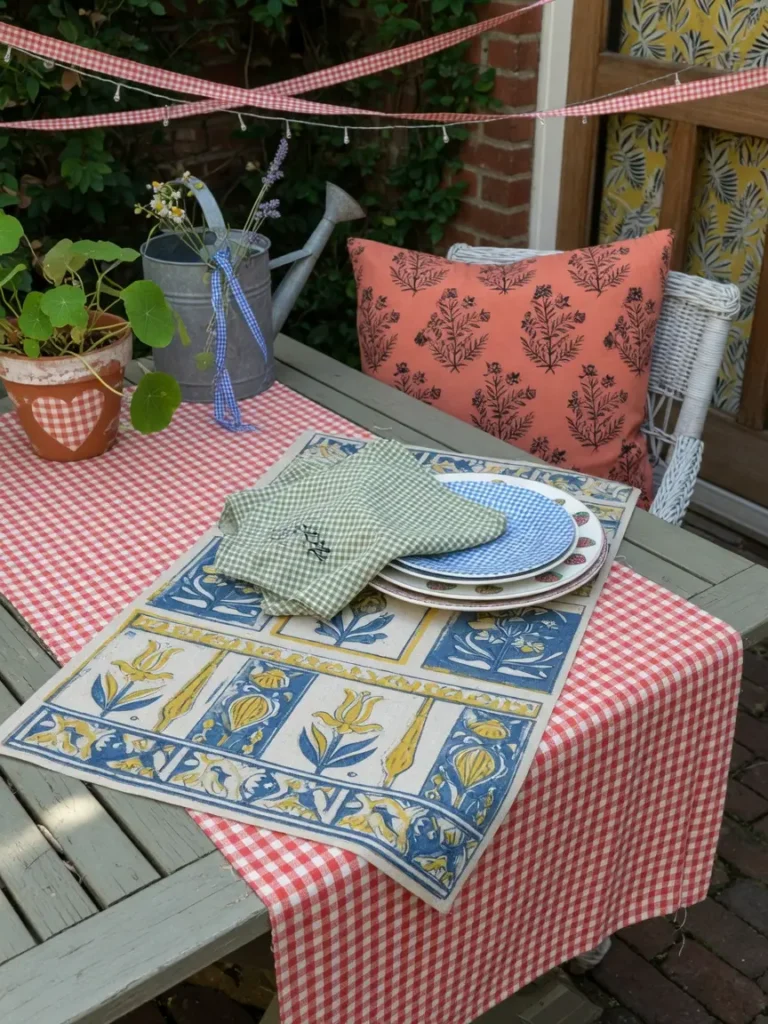
Fabric does a lot of the visual work in cottage patio decor, and block print patterns paired with gingham details are two of the most consistently referenced textile choices for the look.
Where to Use Pattern
Cushions, table linens, and even a fabric umbrella or awning are all natural places to introduce block print or gingham. Accenting these patterns with a bit of lace trim adds a slightly nostalgic, grandmother’s-garden feeling without tipping into costume territory, especially when kept to just a few pieces rather than covering every textile in the space.
4. Use Terracotta Pots and Natural Planters
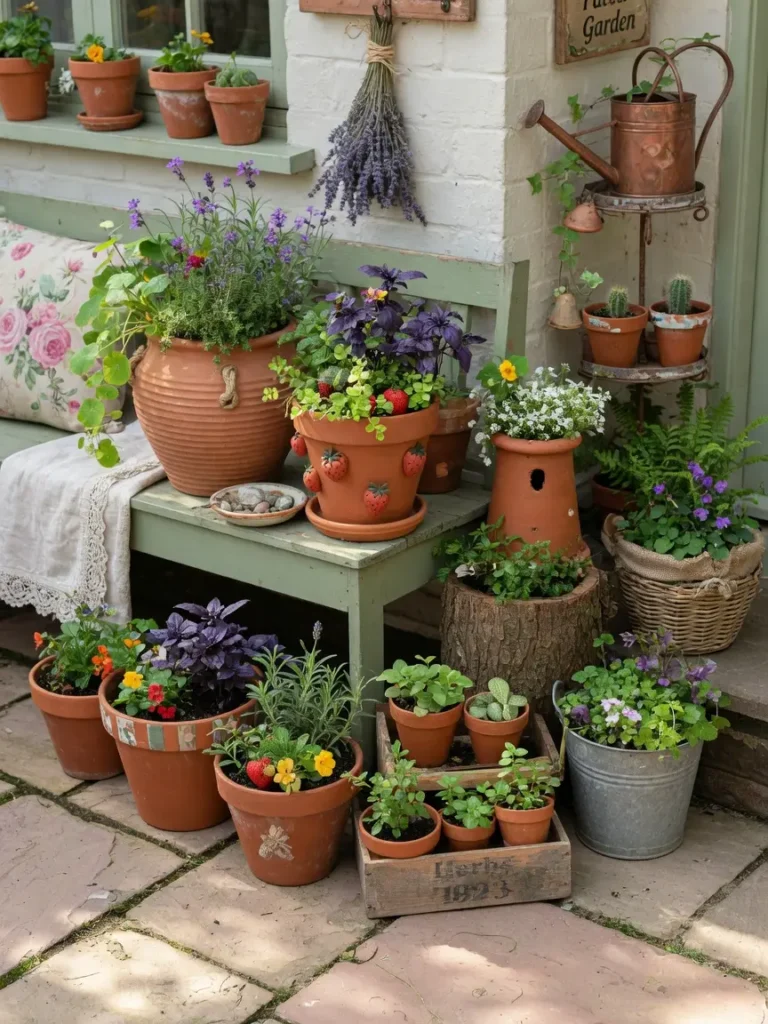
Terracotta pots are a defining container choice for cottage style, and their warm, matte, slightly weathered look fits the aesthetic better than glossy ceramic or plastic ever could.
Clustering terracotta pots of varying sizes near a seating area, rather than spacing them evenly around the perimeter, creates a fuller, more established look faster. Reclaimed items work well here too, an old galvanized bucket, a weathered watering can, or a wooden crate can all function as characterful planters that add to the collected, non-matching feel the style depends on.
5. Add String Lights and Lanterns for After Dark
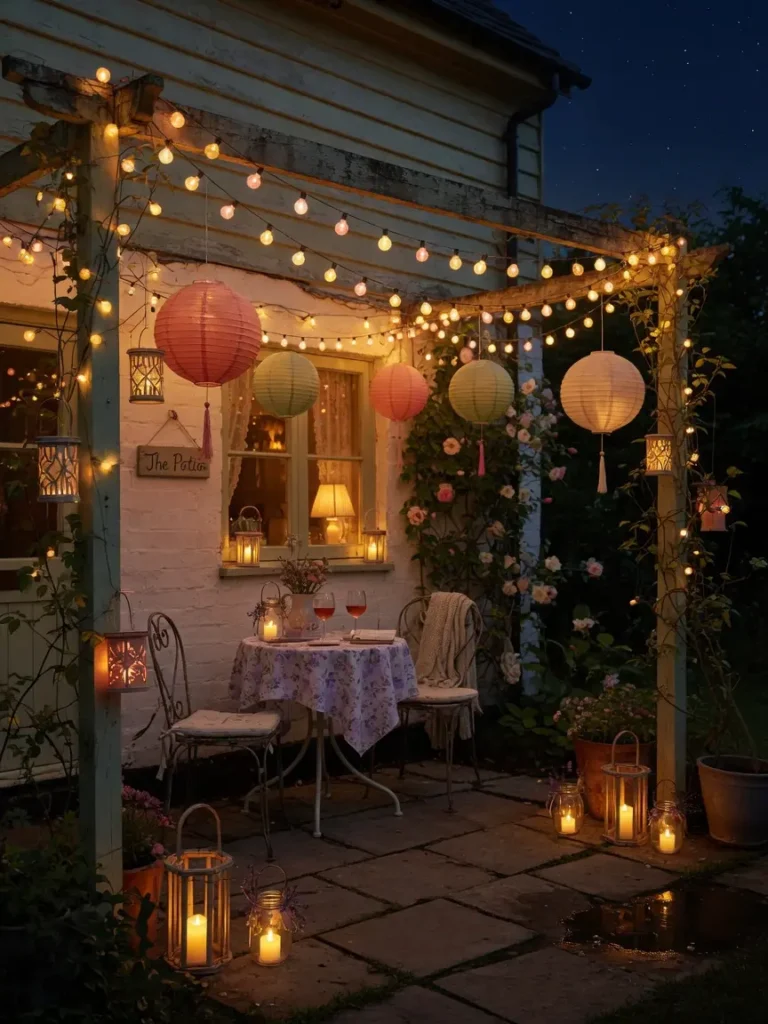
A cottage patio that looks lovely at noon and goes completely dark and unused after sunset is missing half the point, since soft, warm lighting is central to the cozy, intimate feeling the style is known for.
Layering the Light
String lights woven along a pergola or draped between two posts create ambient overhead light without harsh shadows. Lanterns, whether candle-powered or battery LED for safety, placed at table height or along a pathway add a second layer of warmth. Together, these create the kind of soft, layered evening scene that makes a small patio corner feel intimate rather than simply lit.
6. Bring In Soft Furnishings for Real Comfort

Hard furniture alone, even beautifully thrifted and repainted, doesn’t finish a cottage patio on its own. Cushions, throws, and an outdoor rug are what actually make the space comfortable enough to want to sit in for a while.
Large, colorful outdoor cushions on any sofa-style seating, paired with a couple of blankets kept nearby for cooler evenings, extend how much of the year the patio genuinely gets used. If there’s a dining area, laying an outdoor rug underneath the table makes the whole space feel more finished and keeps evening chill off bare feet.
7. Use Natural, Non-Synthetic Materials Throughout
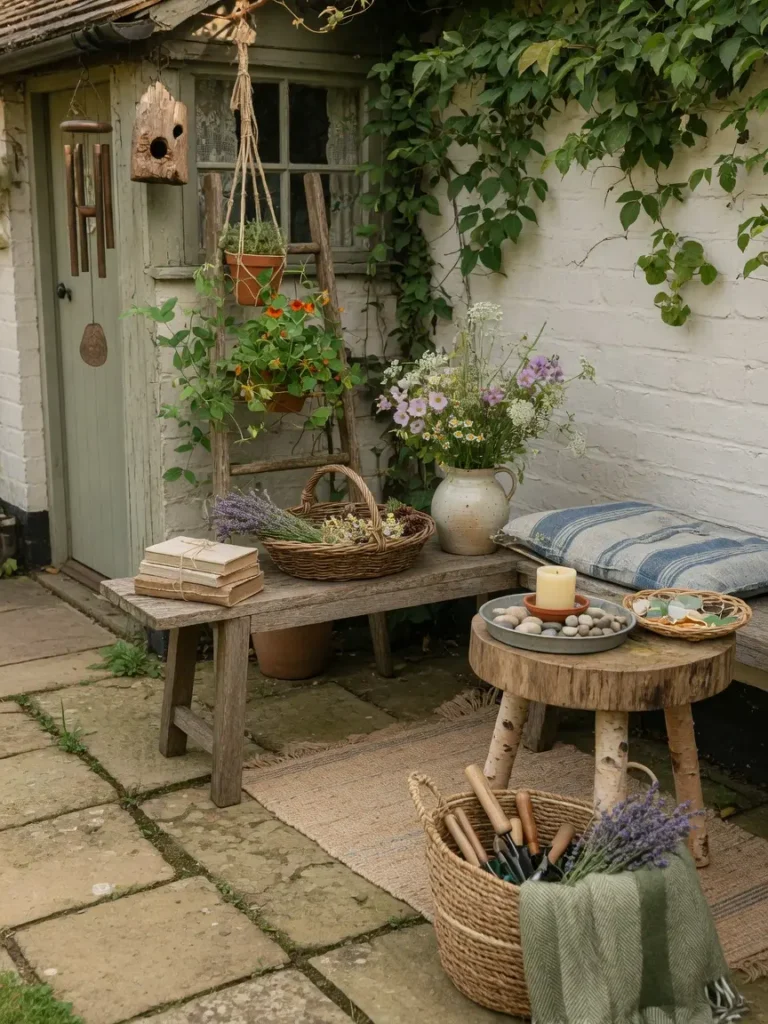
Cottage style leans specifically on natural materials, wood, stone, wicker, ceramic, linen, and steers away from anything that reads as overly synthetic or mass produced, since the goal is a look with texture and history rather than a showroom finish.
Materials to Prioritize
Weathered wood furniture or trellising, stone or gravel underfoot, and wicker or rattan seating all fit this material story. Avoiding plastic planters and obviously mass produced signage in favor of simpler, higher quality pieces keeps the space feeling timeless rather than trend-driven, even as specific decor items change over the years.
8. Add a Pergola or Arbor for Structure and Shade

A pergola, especially one clad in climbing plants, adds both practical shade and a real architectural anchor to a cottage patio, giving the space a sense of enclosure that flat, open patios often lack.
Finishing a pergola area with outdoor heating for cooler months and layered garden lighting extends its usefulness well beyond just sunny afternoons. Even a smaller arbor positioned over a bench or a narrow side path can introduce this same cozy, enclosed feeling on a patio too small for a full pergola structure.
9. Keep the Color Palette Soft and Slightly Muted

Cottage patio decor favors warm, soft neutrals and gentle pastels over bright, saturated color, which is part of what separates it from a louder, more playful cottagecore aesthetic.
Creamy whites, soft blues, sage green, and blush pink work well across furniture, textiles, and even trim details, while brighter, more saturated colors are generally used sparingly, if at all. This restraint is what keeps a cottage patio feeling elegant and lived-in rather than overly sweet or costume-like.
10. Add a Few Whimsical, Personal Details
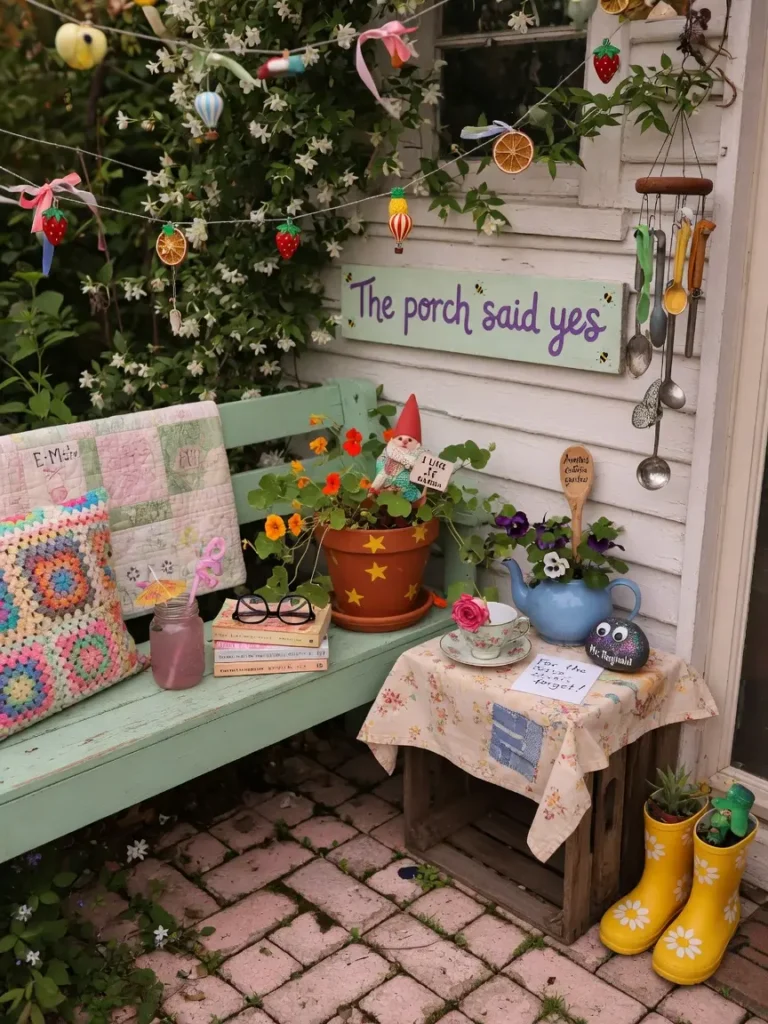
Small, characterful touches, a bird bath, a sundial, a bit of bunting strung along a doorway, are what push a cottage patio from simply pretty to genuinely personal and memorable.
Finding These Pieces
Salvage yards, estate sales, and secondhand marketplaces are realistic sources for these kinds of characterful details, often at a much lower cost than buying new decorative garden pieces. Adding just one or two of these focal details, rather than scattering many small ornaments throughout, keeps the space feeling curated instead of cluttered.
Mistakes to Avoid
- Buying a matched patio furniture set. Cottage style depends on furniture that feels collected over time, not uniform.
- Skipping evening lighting entirely. Without string lights or lanterns, a beautiful daytime patio can go completely unused after dark.
- Using synthetic or plastic materials. Natural materials like wood, wicker, and terracotta are central to the look’s texture and history.
- Overloading the space with bright, saturated color. A soft, muted palette is what keeps cottage style from tipping into overly sweet or costume-like territory.
- Expecting climbing plants to fill in immediately. Most climbers take a full season or two to establish real coverage.
- Cluttering the space with too many small ornaments. One or two well chosen whimsical details usually read better than many scattered around.
Frequently Asked Questions
What plants work best for a cottage patio? Climbing roses, jasmine, and clematis are commonly used on trellises and arbors, while lavender, hydrangeas, and boxwood are popular for surrounding container or bed planting.
How long does it take for climbing plants to fill in a trellis? Most climbing plants take a full growing season or two to establish real coverage, so it’s worth planning for a gradual transformation rather than expecting an instant, fully covered look.
What colors work best for cottage patio furniture and textiles? Soft, muted tones like creamy white, sage green, and soft blue are most common, often applied to thrifted or repainted furniture, with brighter colors used sparingly if at all.
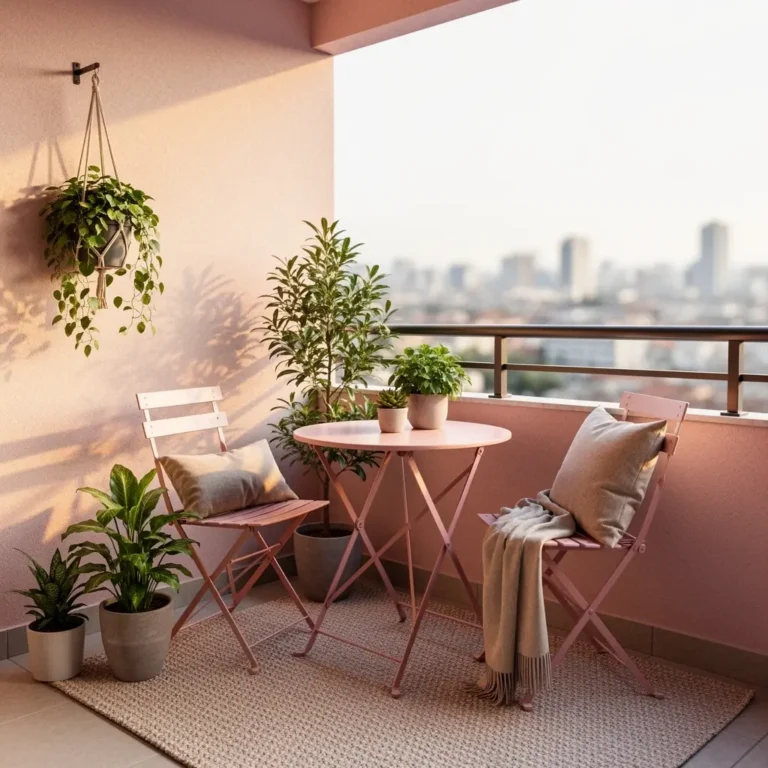
Do I need a lot of space for a cottage patio look? No. Even a small screened porch, balcony, or narrow patio corner can achieve the look with a café table, potted plants, soft lighting, and one or two characterful details.
What materials should I avoid in cottage patio decor? Plastic planters, overly synthetic furniture, and mass produced decorative signage tend to work against the timeless, natural feeling the style depends on. Natural materials like wood, wicker, and terracotta hold up better both practically and aesthetically.
Bringing It All Together
A cottage patio doesn’t come together overnight, and honestly, it isn’t meant to. Starting with a trellis or arbor for climbing plants, a couple of thrifted and repainted furniture pieces, and warm string lighting usually gets a space most of the way there. From there, let the patio develop gradually, terracotta pots, soft textiles, a whimsical found object here and there, until it feels less like a purchased look and more like a genuine, personal retreat that happened to grow over time.