10 Scalloped Tile Kitchen Backsplash Ideas for Softer, More Personal Kitchens
You’ve looked at subway tile in every color combination possible, and none of it feels like it’s actually saying anything about your kitchen, just another safe, straight-lined choice that looks like everyone else’s. Scalloped tile kitchen backsplash ideas solve that problem by trading hard, rigid lines for soft, curved edges, a shift that’s showing up across 2026 kitchen design coverage as straight corners and sharp lines give way to more sculptural, personal touches. Composite stone and modern tile manufacturing have also made these curved shapes considerably more accessible than they used to be, without requiring expensive custom fabrication. Here are ten ways to bring that softer, more distinctive look into your own kitchen.
1. Understand the Difference Between True Scallop Tile and a Scalloped Effect
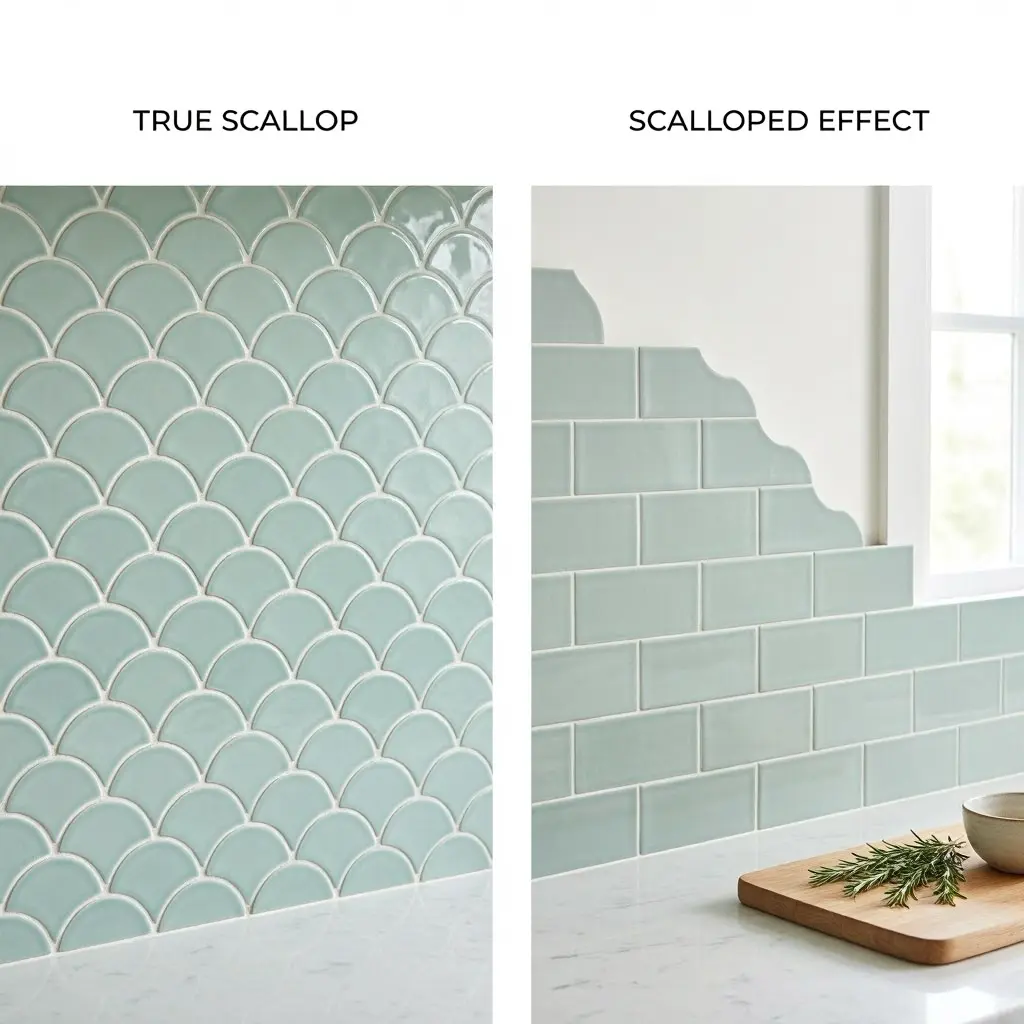
Scalloped backsplashes can be achieved two different ways, and knowing the difference helps you choose the right approach and budget for your kitchen before you start shopping for materials.
Two Paths to the Same Look
True scallop or fan-shaped tiles are manufactured with the curved edge already built into each individual piece, giving you a precise, repeating wave pattern. Alternatively, round or penny round tiles can be arranged and cut along the top edge to create a similar scalloped silhouette using the tile’s natural curved edge, which is often a more affordable route if you’re working with a material you already love in a round format.
2. Try a Full Scalloped Tile Backsplash for Maximum Impact
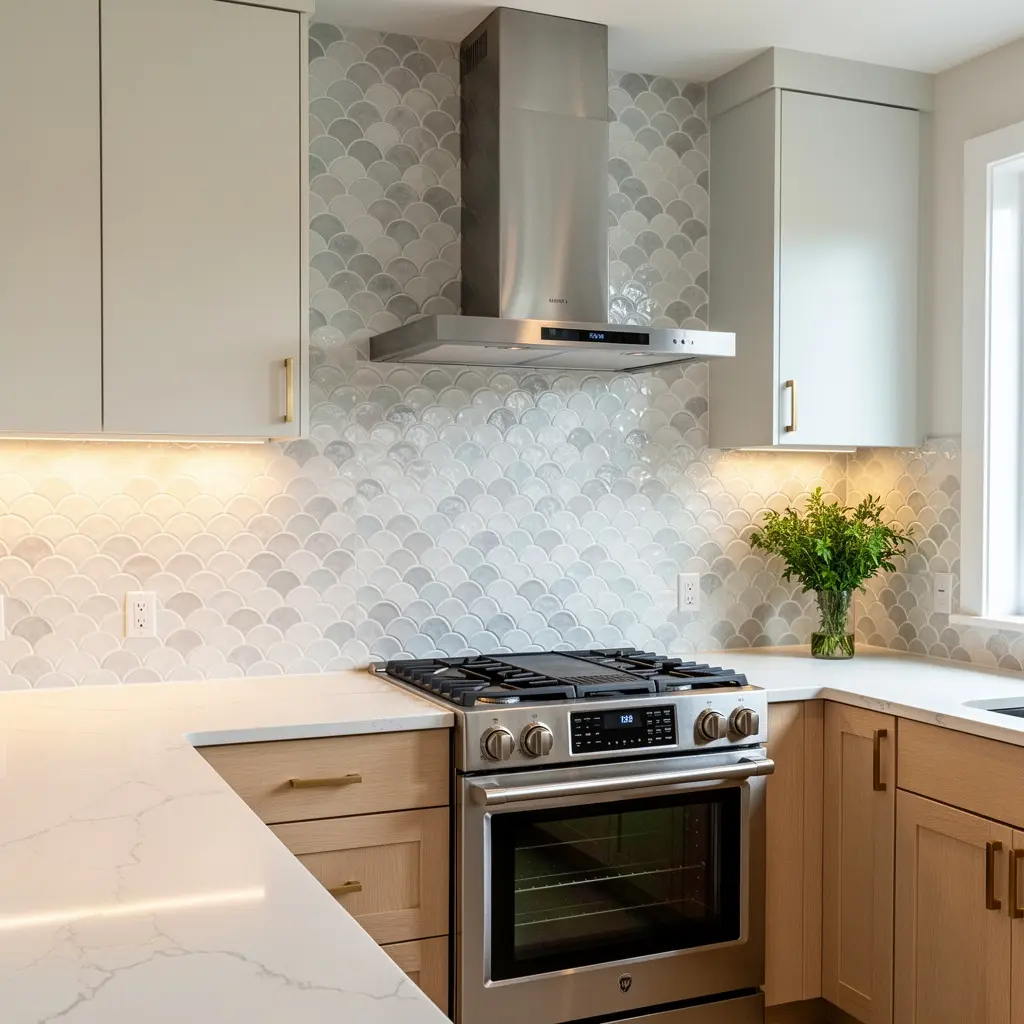
A backsplash made entirely of scallop or fan-shaped tile creates the boldest version of this trend, with the repeating curved pattern becoming the clear visual centerpiece of the kitchen.
This works particularly well in a kitchen that’s otherwise fairly simple and neutral, since the scalloped tile itself provides enough visual interest without needing a bold countertop or cabinet color to compete with it. Choosing a soft, muted tile color, cream, sage, or a warm terracotta, keeps the overall look from feeling too busy despite the pattern’s inherent movement.
3. Use Penny Round Tile for a Subtler, Textured Scallop
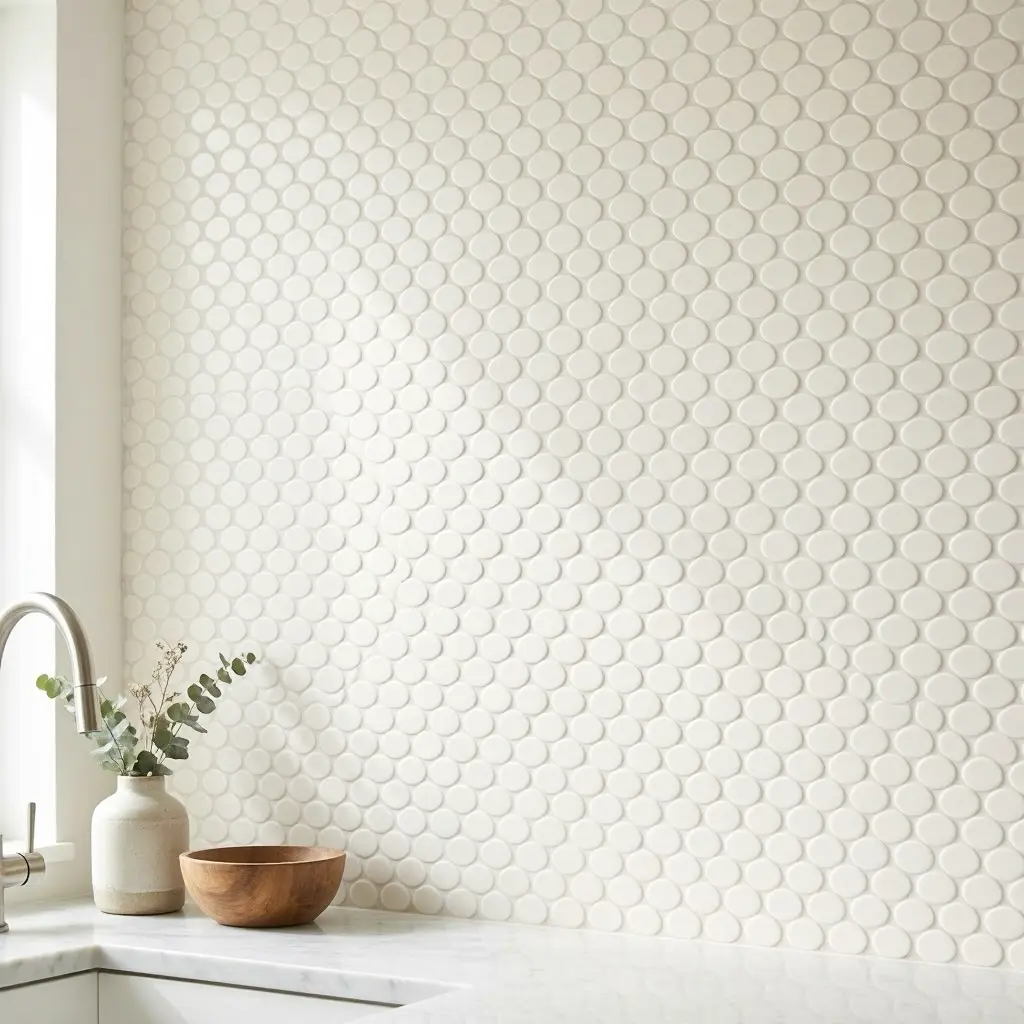
Penny round tiles arranged with their natural curved edges exposed along the top of the backsplash create a softer, more textured take on the scalloped look compared to a fully fan-shaped tile.
Why This Option Works Well
Small round tiles draw the eye across the wall in a way that can make the space feel more expansive, which is a genuine practical advantage in a smaller kitchen. This approach also tends to be more budget-friendly, since penny round tile is widely available in a range of price points and finishes, unlike specialty scallop-shaped tile that can be harder to source.
4. Add a Scalloped Arch Above the Stove
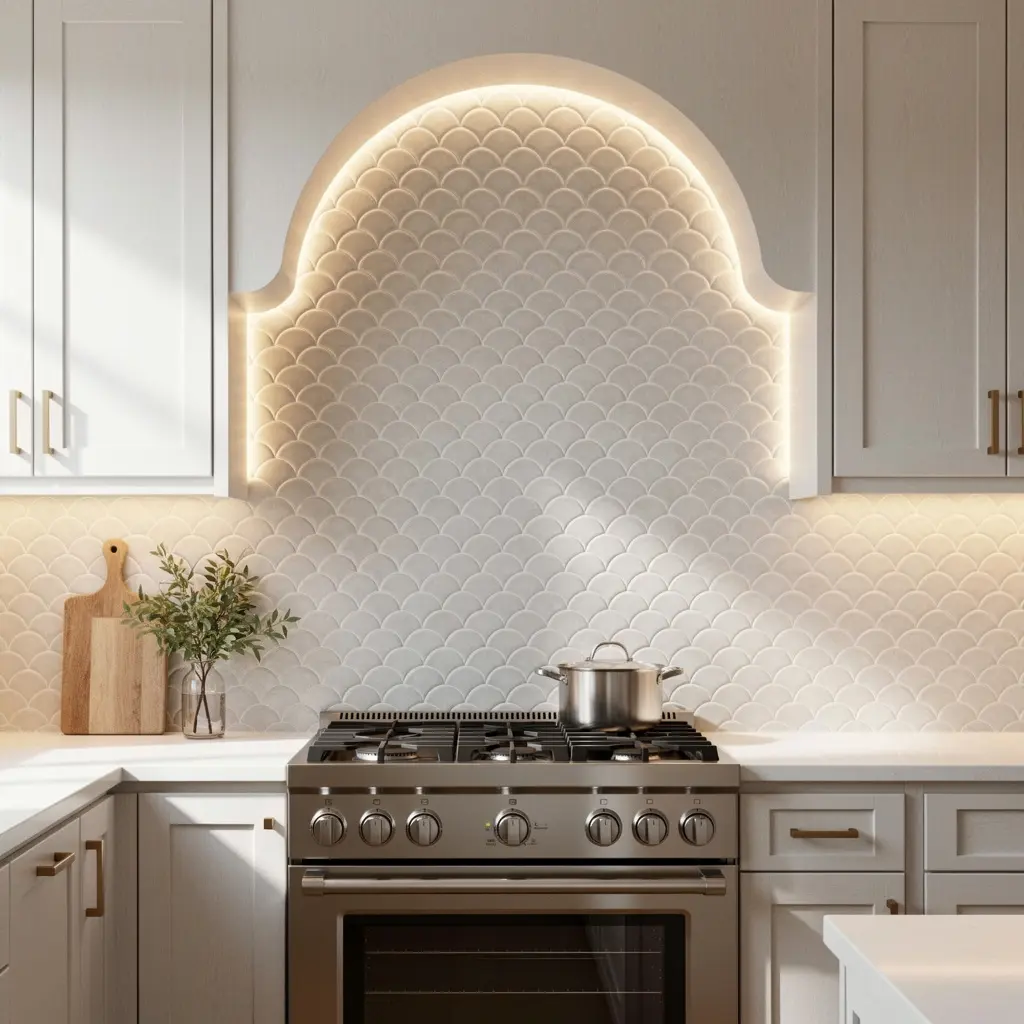
Rather than covering the entire backsplash, framing just the area above your range with an arched or scalloped niche has become a popular way to introduce the look as a focal point rather than a full commitment.
An arched tile surround above the cooktop, especially when paired with open shelving or a hood on either side, draws the eye directly to the stove as the kitchen’s natural centerpiece. This approach also tends to be more affordable than a full scalloped wall, since you’re working with a smaller, contained area.
5. Pair Scalloped Tile With a Deep, Moody Wall Color
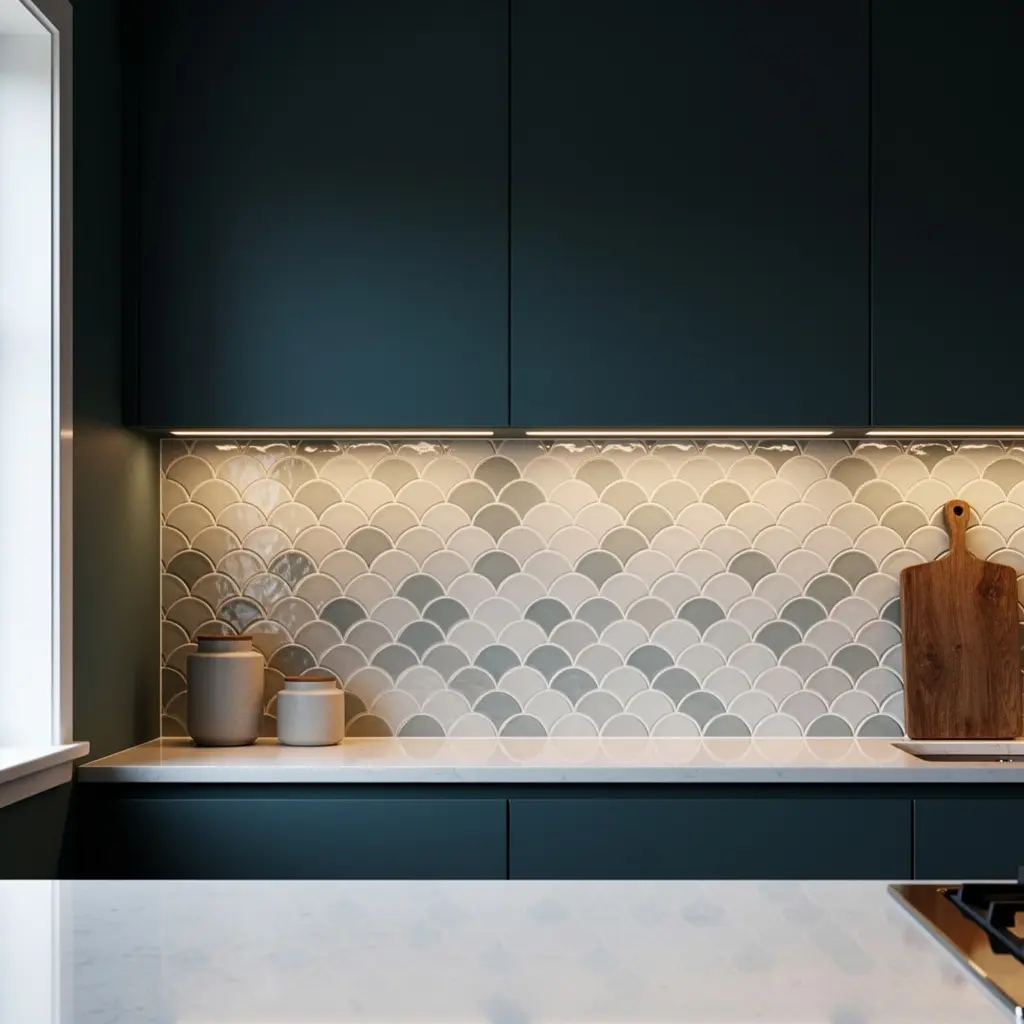
The all-white kitchen has been sharing the spotlight in 2026 with deeper, richer tones, and scalloped tile in a soft neutral color reads especially well against a wall painted in dusty blue, plum, warm charcoal, or forest green.
Getting the Contrast Right
Keeping the scalloped tile itself in a lighter, more neutral shade while the surrounding wall carries the bolder color lets the texture of the scallop pattern stand out clearly, rather than getting lost against an equally saturated backdrop. This pairing also gives you flexibility, since a neutral tile install is easier to work around if you decide to change your wall color again down the road.
6. Extend Scalloped Tile From Counter to Ceiling
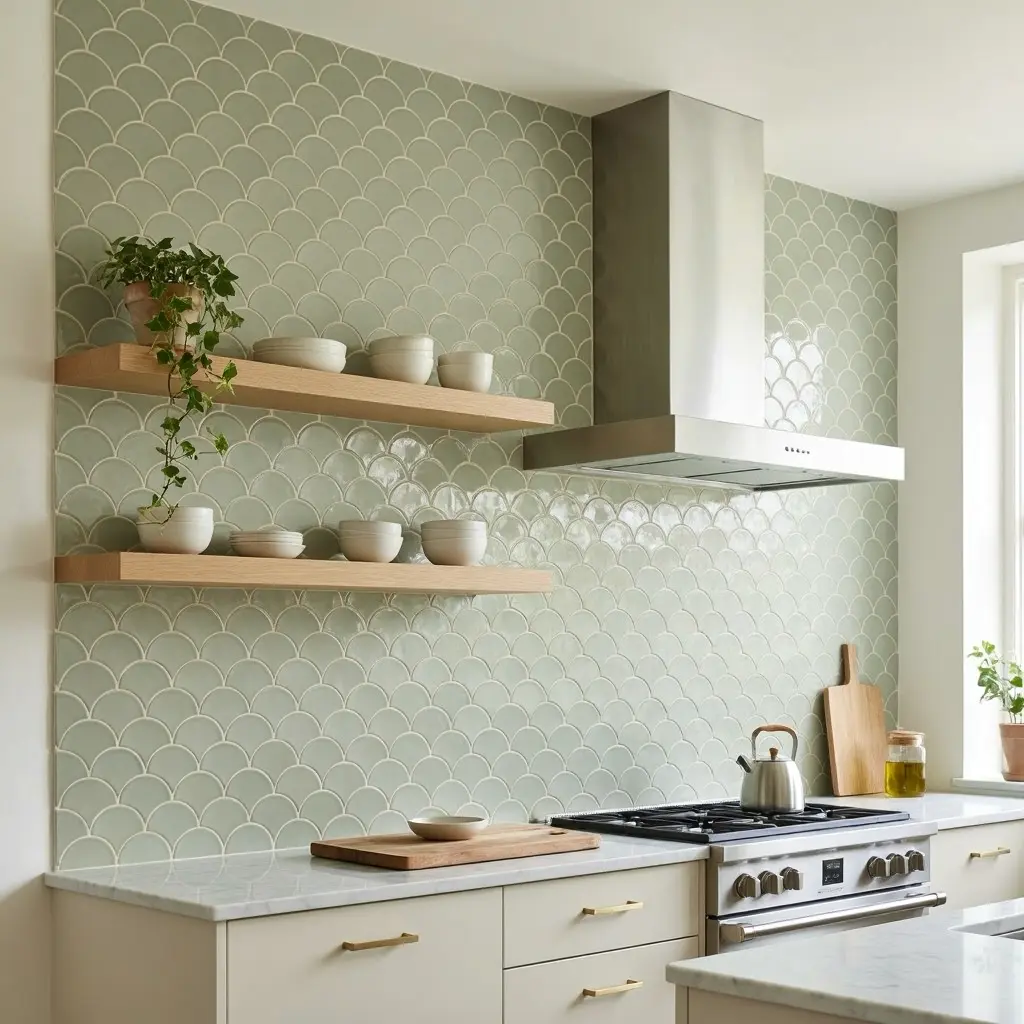
Full-height backsplashes, running tile all the way from the countertop to the ceiling, have become a significant 2026 kitchen trend on their own, and scalloped or fan-shaped tile makes this treatment feel especially intentional rather than simply practical.
This full coverage approach creates a genuinely seamless, cohesive look, and it offers a real functional benefit too, protecting more of the wall from splatter and daily wear. If a full scalloped installation feels like too much texture for a full wall, consider running a simpler tile most of the way up and reserving the scalloped detail for a band near the top or around a range hood.
7. Mix Scalloped Tile With Natural Stone
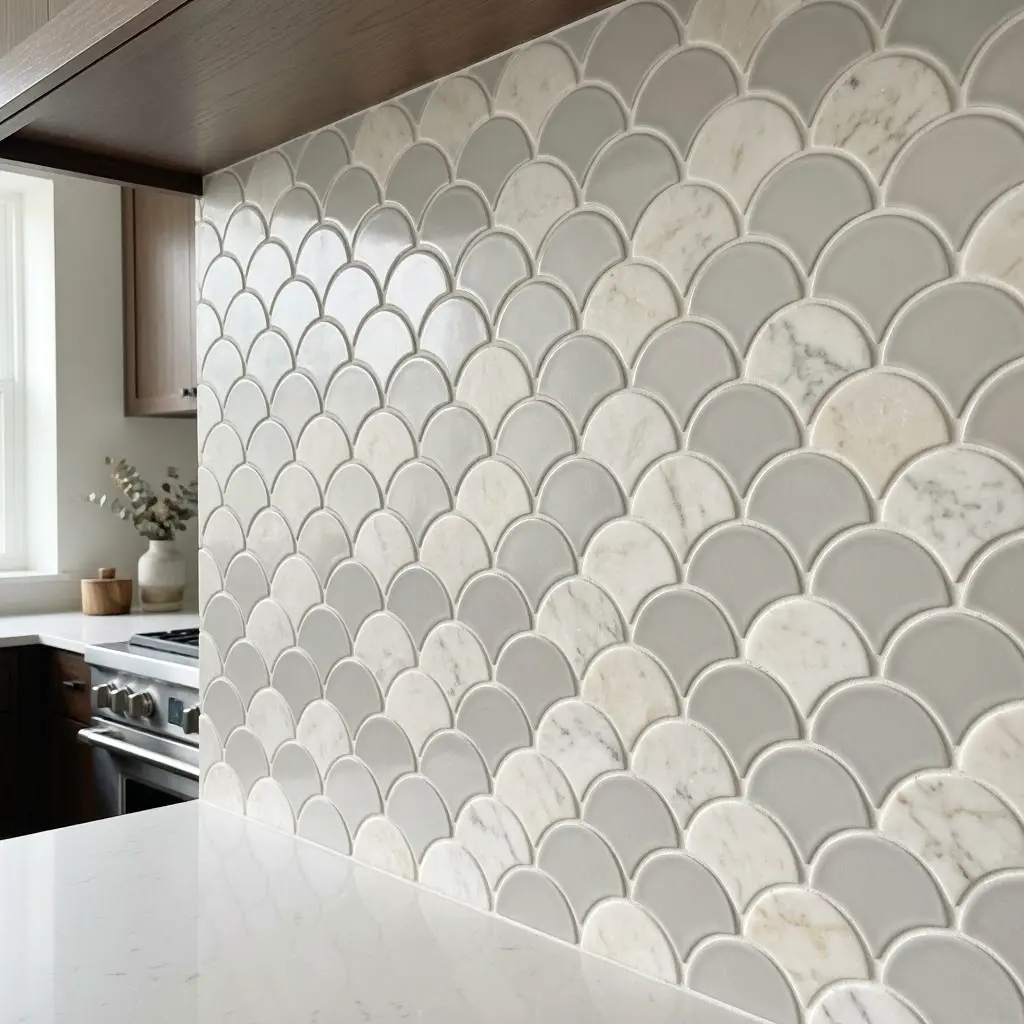
Combining a handmade-look scalloped tile with a natural stone slab, marble or quartzite with visible veining, has become a favored pairing in current backsplash trend coverage, since the combination balances organic movement with soft, repeating geometry.
How to Balance the Two Materials
Using stone as the primary surface, around the range or sink, for instance, and reserving the scalloped tile for a smaller accent area keeps the combination from feeling like too many competing textures in one space. Letting one material lead while the other plays a supporting role is a reliable way to combine bold materials without the kitchen feeling visually chaotic.
8. Choose a Handmade-Look Finish for Extra Texture
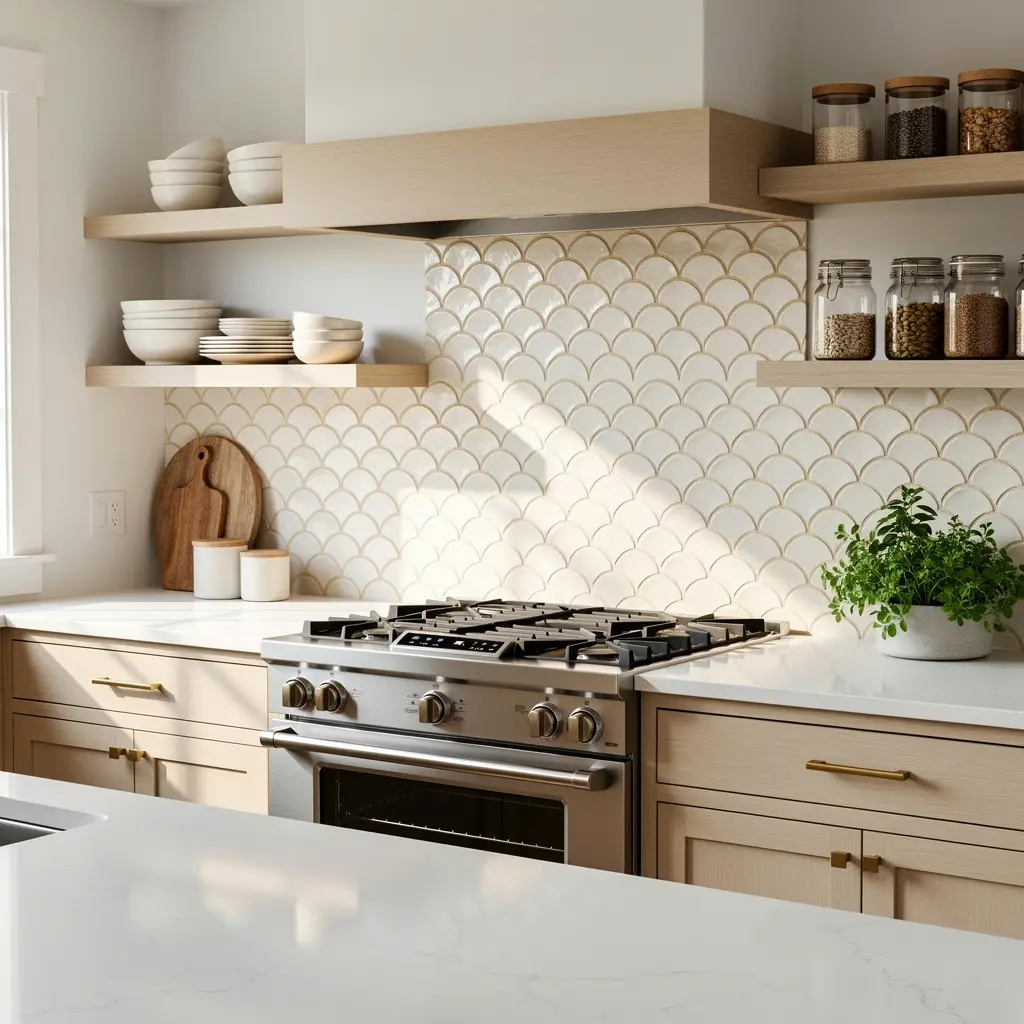
Zellige and other handmade-style tiles, known for their slightly irregular surface and warm, artisanal character, pair especially well with scalloped shapes, since both elements lean into the same softer, less mechanically perfect aesthetic.
This combination tends to photograph beautifully, since the slight variation in each tile catches light differently, adding depth that a perfectly uniform, glossy tile can’t replicate. It’s worth budgeting a bit more for this option though, since handmade-style tile generally costs more than standard machine-manufactured alternatives.
9. Use a Scalloped Tile Trim Instead of a Full Pattern
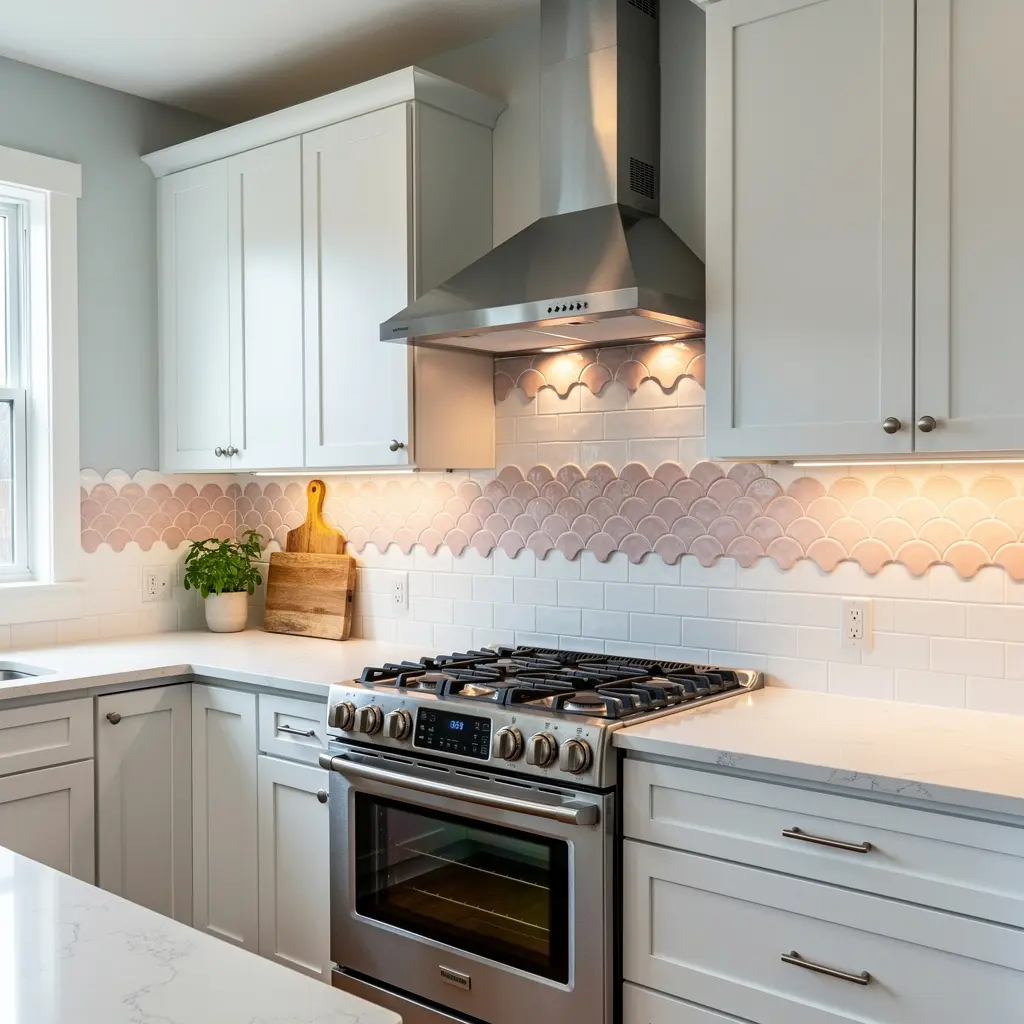
If a full scalloped backsplash feels like too much commitment, a scalloped or fan-shaped trim border along the top edge of a standard backsplash offers a subtler way to bring the look in.
Where This Detail Works Best
A simple white or cream backsplash finished with a scalloped trim, or an ogee-profile edge for a similar curved effect, adds architectural interest without requiring the entire wall to carry the pattern. This is a genuinely practical entry point for anyone renovating on a tighter budget, since trim tile typically costs less than covering a full wall in a specialty shape.
10. Keep the Rest of the Kitchen Simple to Let the Tile Lead
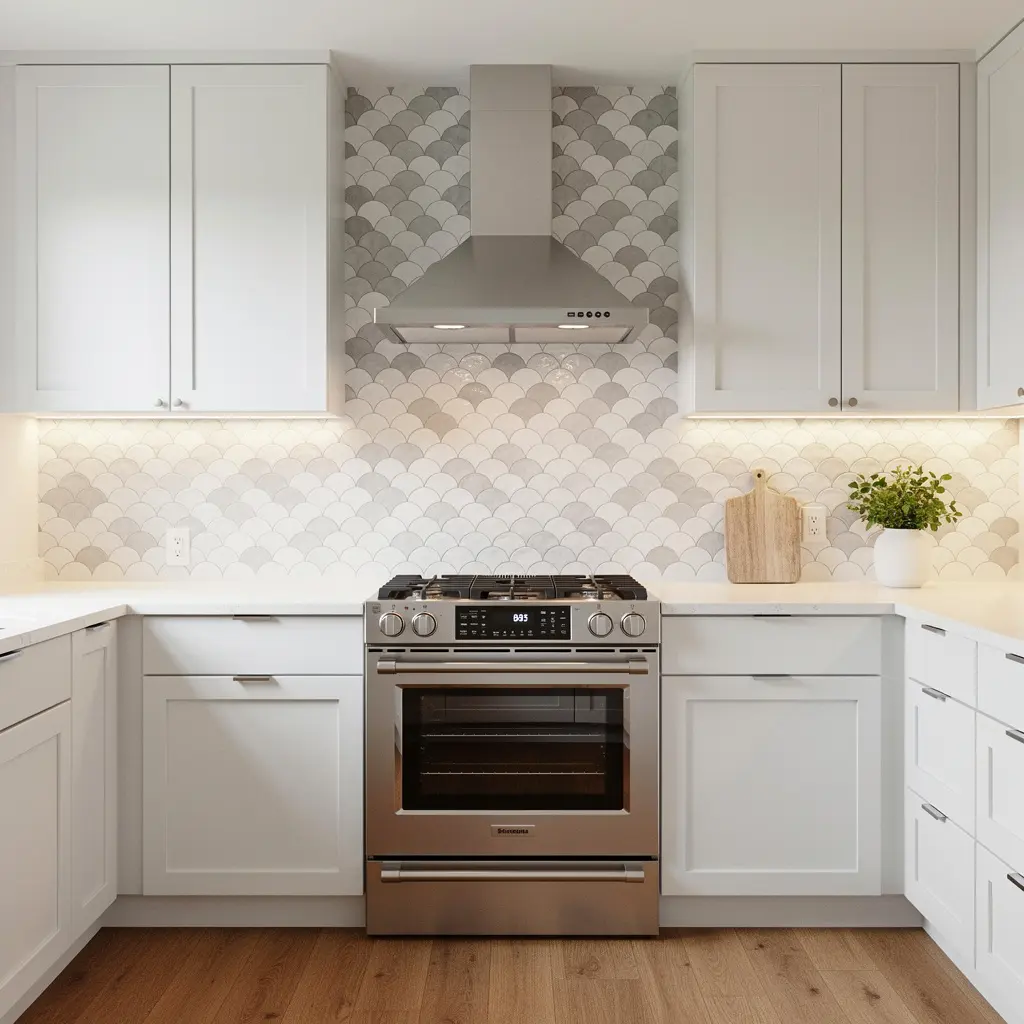
A scalloped tile backsplash carries enough visual interest on its own that it generally looks best paired with fairly understated cabinetry, countertops, and hardware, rather than competing with several other bold design choices at once.
Letting the material speak for itself, as several 2026 kitchen designers have specifically advised, means choosing simpler cabinet colors and finishes that complement the tile rather than pulling focus from it. This restraint is what separates a scalloped backsplash that feels timeless and intentional from a kitchen that reads as overly busy or trend-driven.
Mistakes to Avoid
- Confusing scallop tile with a scalloped effect using round tile. Both create a similar look, but they come at different price points and installation complexity, so know which you’re actually shopping for.
- Choosing a bold tile color against an already bold wall. Keeping one element neutral lets the scalloped texture stand out rather than competing with the wall color.
- Skipping the budget-friendly trim option. A scalloped or ogee trim border is a lower cost way to bring in the look without a full specialty tile installation.
- Overloading the kitchen with multiple bold materials at once. Scalloped tile generally looks best when the rest of the kitchen stays fairly simple and understated.
- Using scalloped tile in a very small area where the pattern gets lost. The repeating curve needs enough surface area to actually read as a scalloped design rather than a few oddly placed tiles.
- Forgetting to budget more for handmade-look finishes. Zellige and similar artisanal tiles tend to cost more than standard machine-made options.
Frequently Asked Questions
What’s the difference between scallop tile and penny round tile used for a scalloped effect? Scallop or fan-shaped tile is manufactured with the curved edge already built in, creating a precise, repeating wave pattern. Penny round tile can be arranged to expose its natural curved edge along the top of a backsplash for a similar but softer, more textured scalloped look.
Is a full scalloped tile backsplash more expensive than standard subway tile? Generally, yes, especially for handmade-look or specialty fan-shaped tile. A scalloped trim border or an arched accent above the stove are more budget-friendly ways to bring in the look without covering the full wall.
What wall colors pair well with a scalloped tile backsplash? Deeper, moodier tones like dusty blue, plum, warm charcoal, or forest green pair well when the scalloped tile itself stays in a lighter, more neutral shade, letting the curved texture stand out against the bolder backdrop.
Does a scalloped backsplash work in a small kitchen? Yes, particularly with penny round tile, since the small curved pieces can help draw the eye across the space in a way that makes a smaller kitchen feel more expansive.
Can I combine scalloped tile with natural stone countertops? Yes, and it’s a favored pairing in current design coverage. Letting the stone lead as the primary surface while scalloped tile plays a smaller accent role keeps the combination from feeling like too many competing textures.
Bringing It All Together
A scalloped tile kitchen backsplash doesn’t require a full wall commitment to make a real difference. Starting with a smaller detail, a scalloped trim border, an arched niche above the stove, or a penny round accent, lets you test whether the softer, curved look genuinely fits your kitchen before scaling it up. From there, the right wall color pairing, a bit of restraint elsewhere in the room, and letting the tile’s natural texture lead are what turn a good material choice into a kitchen that feels distinctive and considered rather than simply trend-driven.