
You’ve tried the all white, all minimal bedroom, and it never quite felt like yours, more like a hotel room you’re renting than a space that reflects who you actually are. Afrohemian bedroom decor solves that problem by blending African design heritage, handwoven textiles, carved wood, earthy pattern, with the relaxed, layered warmth of bohemian style, creating a room that feels collected and personal rather than matched from a catalog. This isn’t a passing aesthetic either. Pinterest named it one of its top home trends heading into 2026, with search interest around the look climbing sharply as more people move away from cold, sterile minimalism. Here are ten ways to bring that soulful warmth into your own bedroom.
1. Start With an Earthy, Grounded Color Base
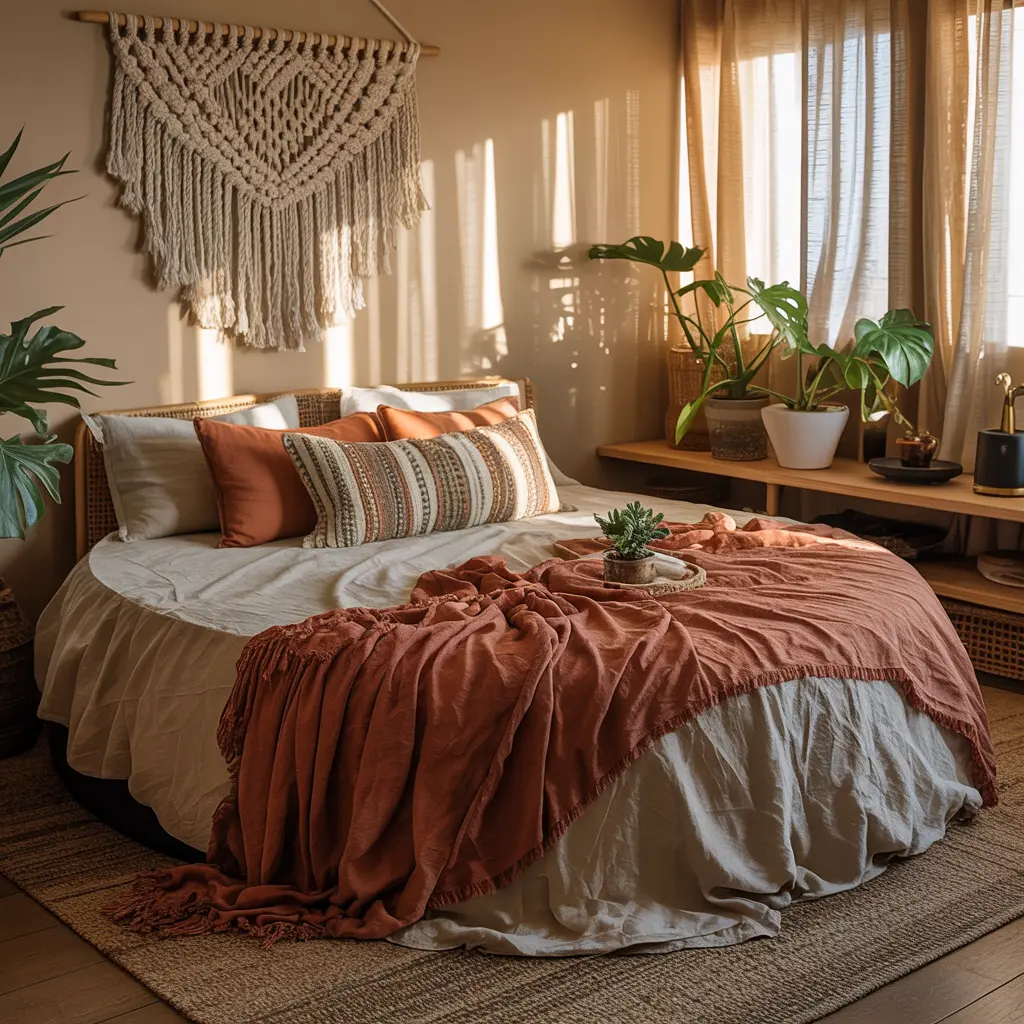
Afrohemian bedroom decor works best when it starts from a warm, earthy foundation rather than a stark white or cool gray backdrop, since the textiles and patterns that define the look need warmth to sit against.
Building the Base Palette
Terracotta, rust, warm beige, clay, and olive green all work well as a wall or bedding base. Richer accent colors, deep indigo, saffron, or emerald, can layer on top in smaller doses through textiles and art. Starting with a neutral, earthy base and building up from there, rather than trying to fit every bold color in at once, keeps the room feeling grounded instead of chaotic.
2. Bring In Handwoven Textiles With Real Cultural Roots
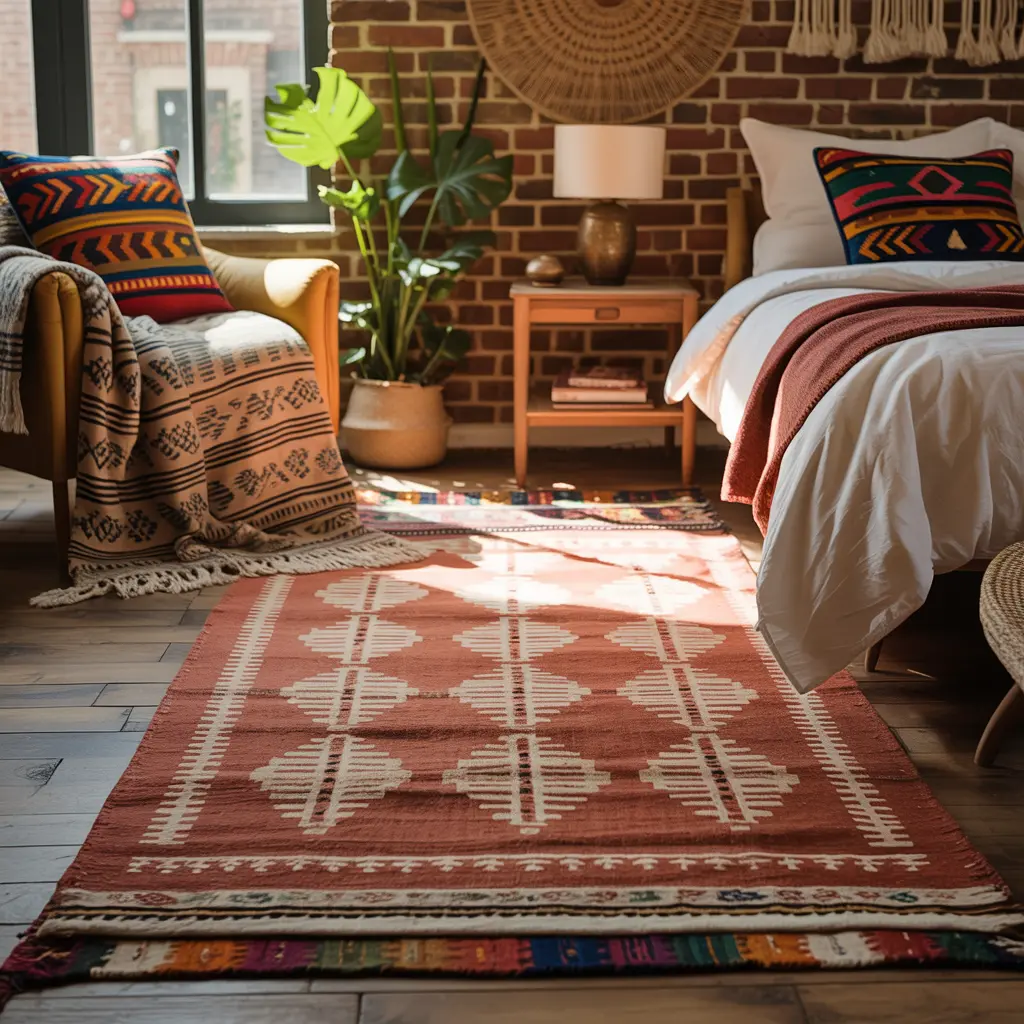
Textiles are the heart of Afrohemian bedroom decor, and the difference between a room that feels authentic and one that feels like generic boho comes down to using textiles with genuine African design roots rather than a vague pattern that just looks “tribal.”
Adire, a Nigerian resist-dyed indigo fabric, mudcloth from Mali, and kente inspired weaving are three textile traditions that show up often in Afrohemian styling, each with distinct patterns and a real cultural history behind them. A mudcloth-style lumbar pillow or an adire throw draped across the bed brings in pattern and story at the same time, rather than pattern for its own sake.
3. Layer Natural Materials Through Furniture and Accents
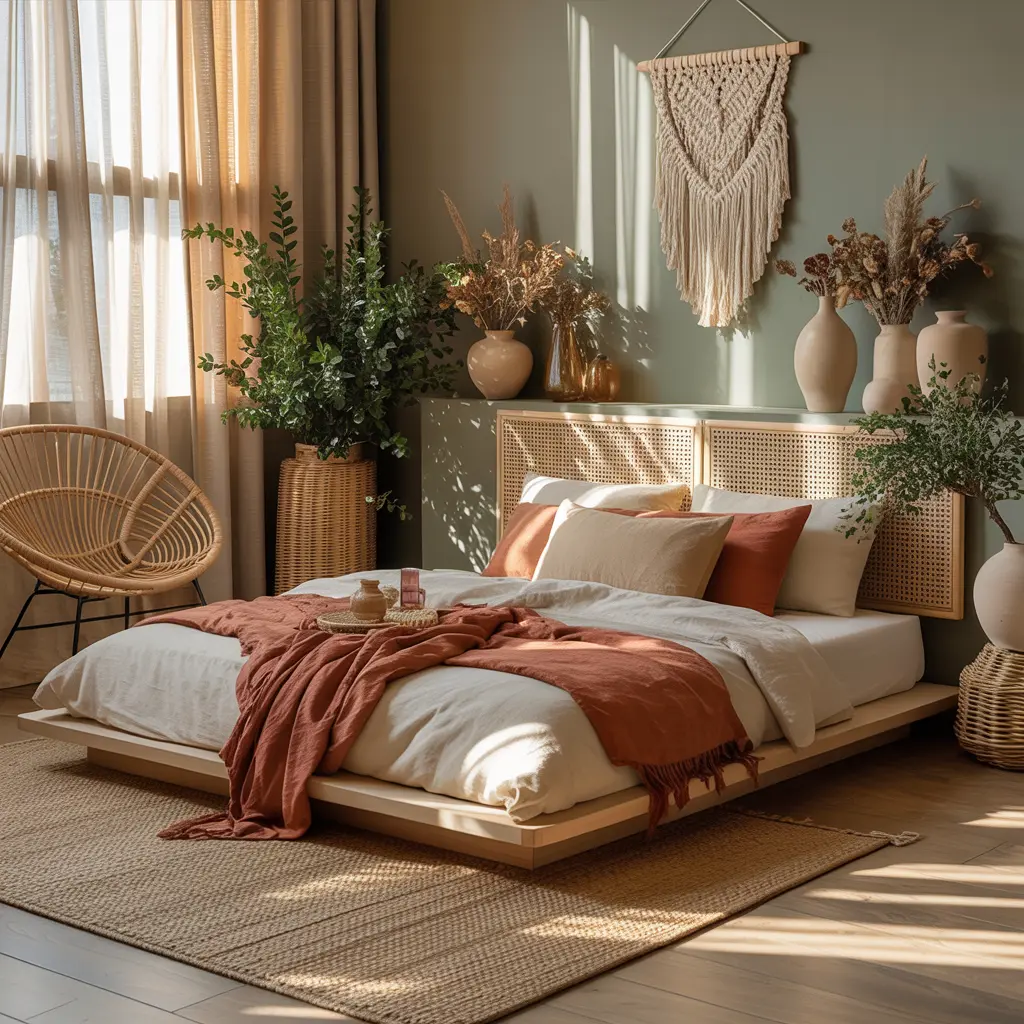
Afrohemian style leans on natural, tactile materials, rattan, jute, carved wood, and clay, to build texture the same way other bohemian styles do, but with African craft traditions specifically informing the shapes and details.
Where to Start
A rattan or carved wood nightstand, a jute area rug, or a set of woven storage baskets in the corner of the room all introduce this natural material layer without requiring a full furniture overhaul. If you’re starting small, a single carved wood accent piece, a stool, a small side table, a mirror frame, is often enough to anchor the material story in a bedroom.
4. Add Woven Wall Hangings for Texture Above the Bed
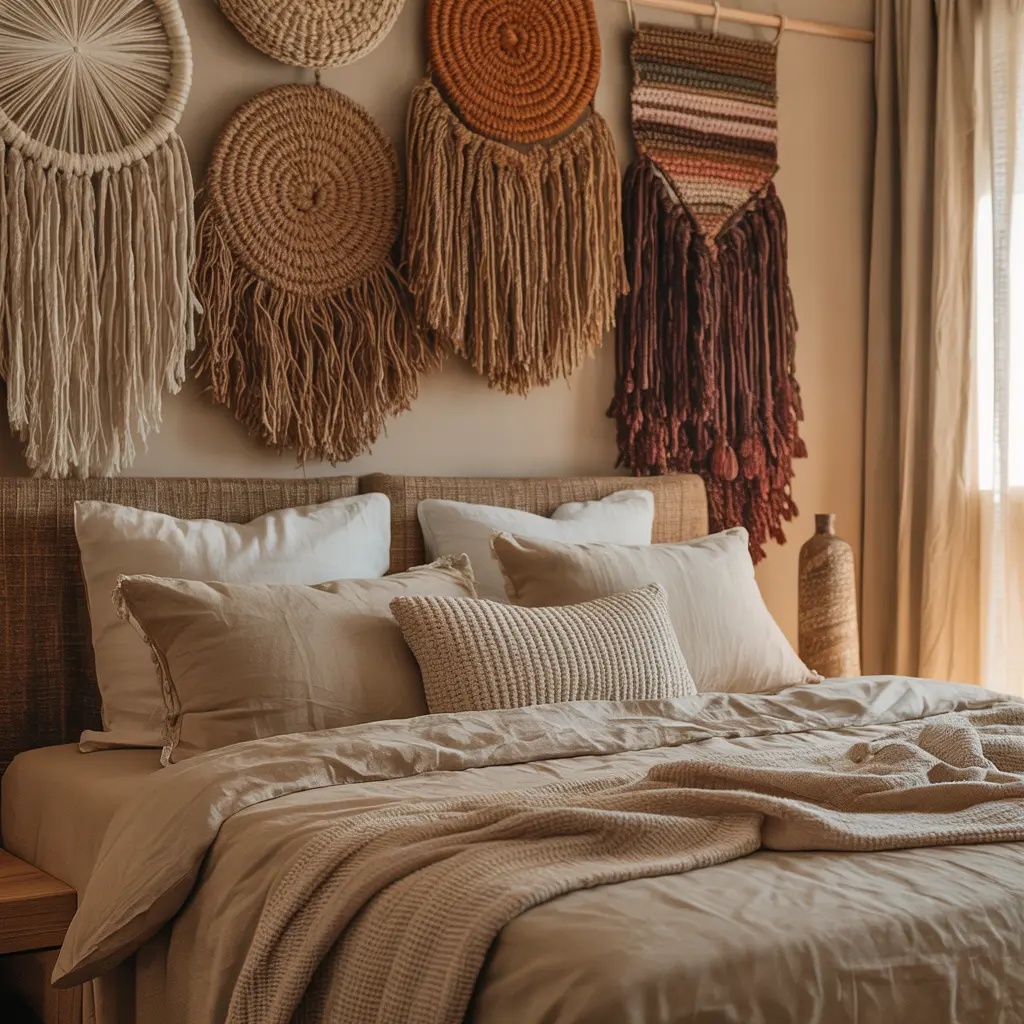
A large woven wall hanging above the headboard does a lot of visual work in an Afrohemian bedroom, filling wall space with texture and craft rather than a flat framed print.
Macrame pieces incorporating natural fiber alongside beadwork or bone accents add both texture and a layer of symbolic meaning, since many traditional accents carry cultural significance around protection or prosperity. If you’re sourcing these pieces, look for makers who are transparent about the origin and meaning of the materials they use, since that context is part of what makes the piece feel intentional rather than decorative.
5. Keep the Bedroom’s Pattern Mix Calmer Than Your Living Areas
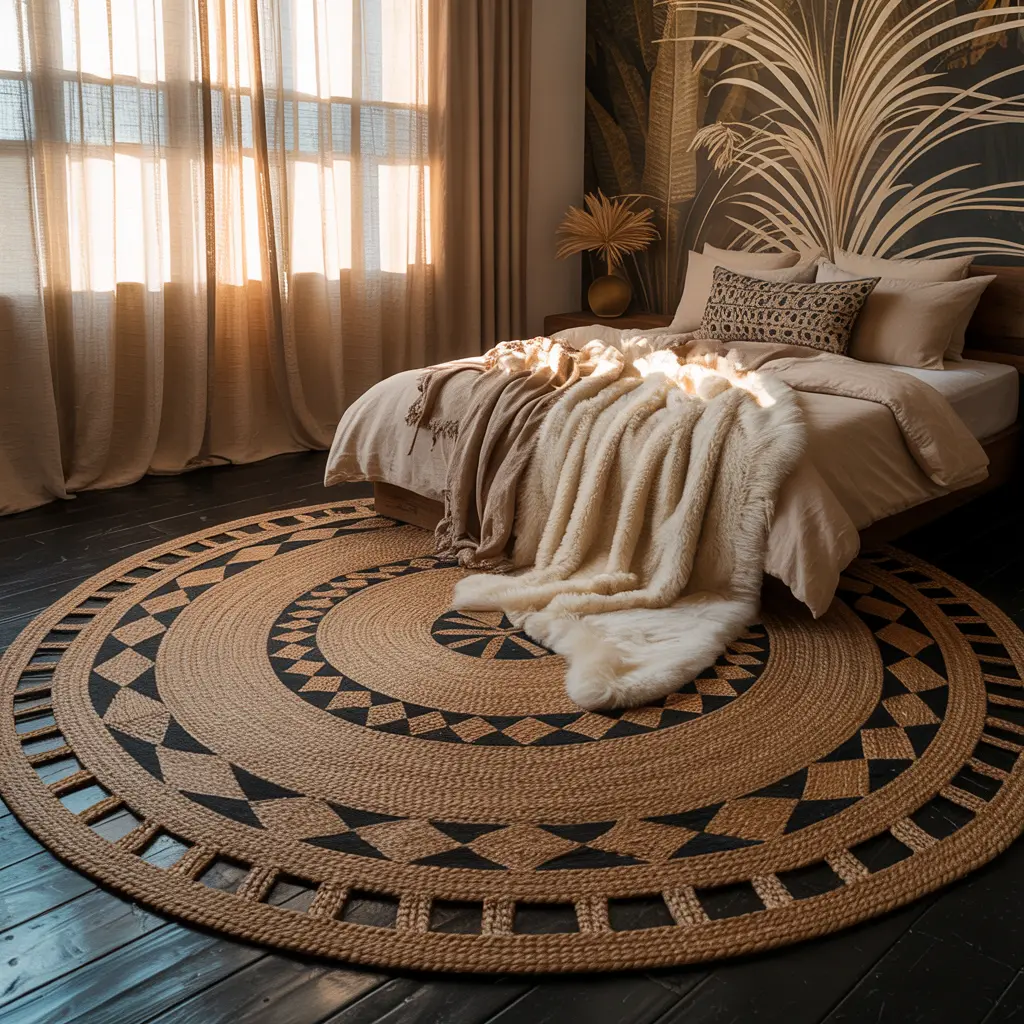
Afrohemian decor in a living room or entryway can handle bold, saturated pattern layered densely, but a bedroom generally benefits from a bit more restraint, since it’s a space meant for rest rather than visual stimulation.
Finding the Right Balance
Pick one or two patterned textiles, a mudcloth pillow and an adire throw, for example, and let everything else in the room stay in a narrower, calmer palette of cream, wood tone, clay, and one accent color. This keeps the room feeling warm and grounded rather than overstimulating right before bed.
6. Use Terracotta and Indigo as Your Anchor Colors
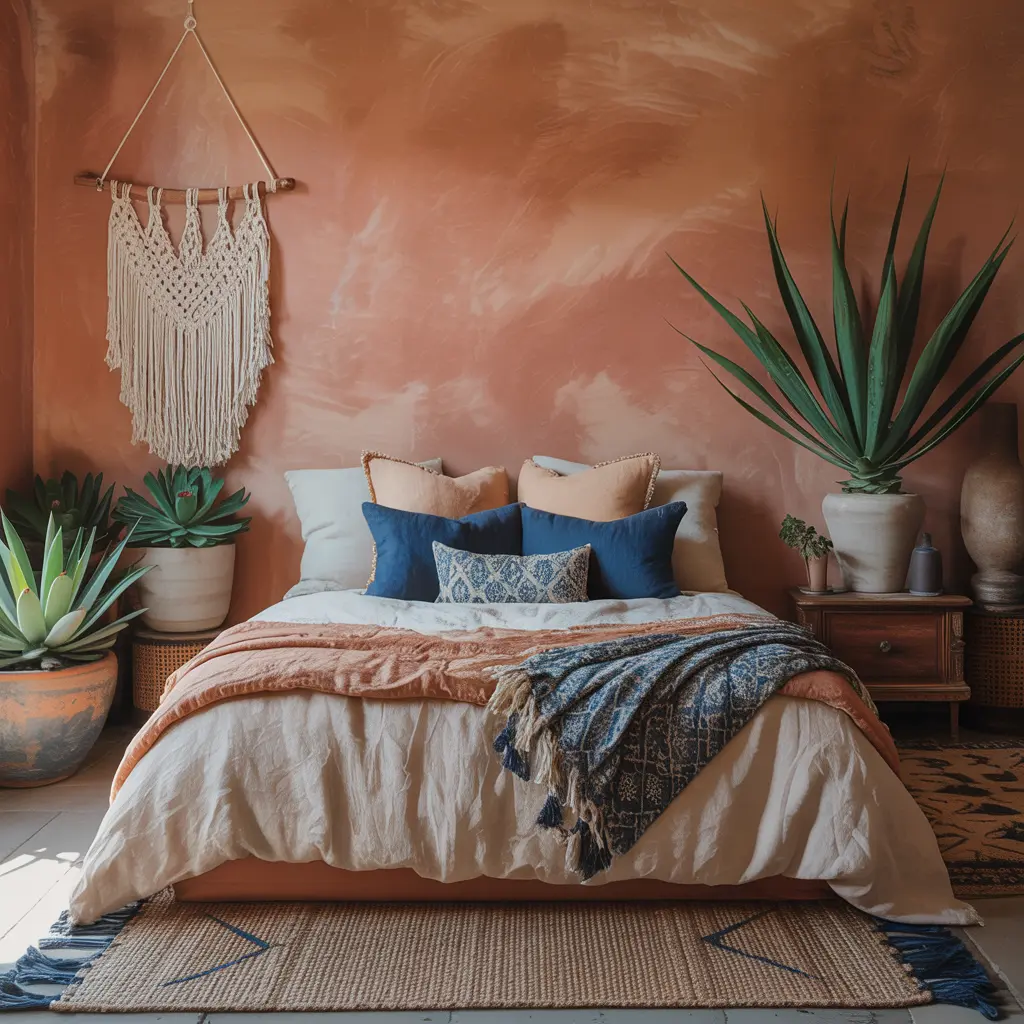
Two colors show up consistently across Afrohemian interiors: warm terracotta and deep indigo, and using them as your anchor pair gives the room a cohesive thread even as you layer in additional pattern and texture.
Terracotta bedding or an accent wall paired with an indigo adire throw or pillow creates immediate visual harmony, since both colors are already central to the traditional textiles the style draws from. Building outward from this pairing, rather than introducing five or six unrelated colors, keeps an Afrohemian bedroom looking intentional.
7. Bring In Plants for a Living, Organic Layer
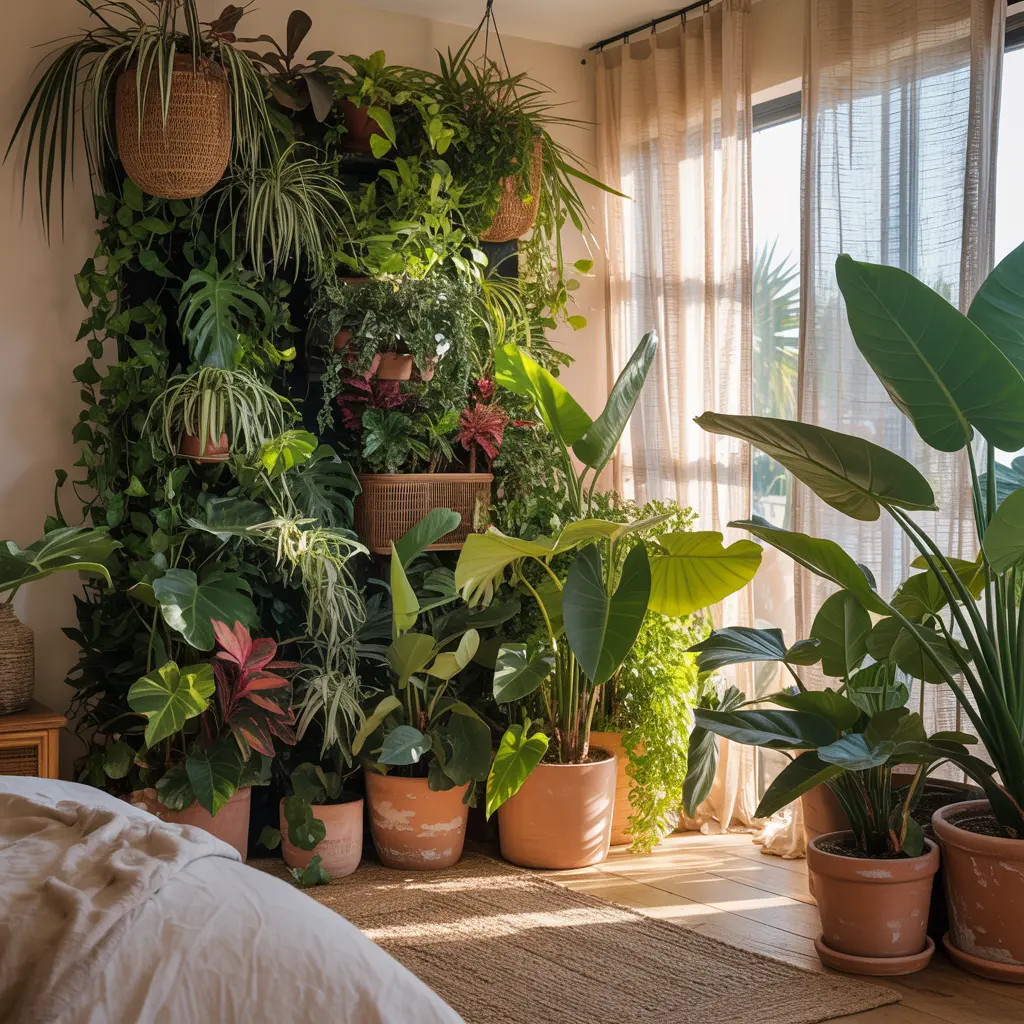
Greenery is a consistent thread across Afrohemian styling advice, since a living plant adds warmth and texture that fabric and wood alone can’t replicate, and it echoes the style’s broader connection to natural materials.
A medium plant in a woven or clay pot on the floor, or a smaller one on a nightstand, softens the room’s hard lines and reinforces the grounded, natural feeling the style is going for. If natural light is limited in your bedroom, choose a lower light tolerant variety rather than forcing a sun loving plant into a dim corner.
8. Choose Warm, Ambient Lighting Over Cool Overhead Light
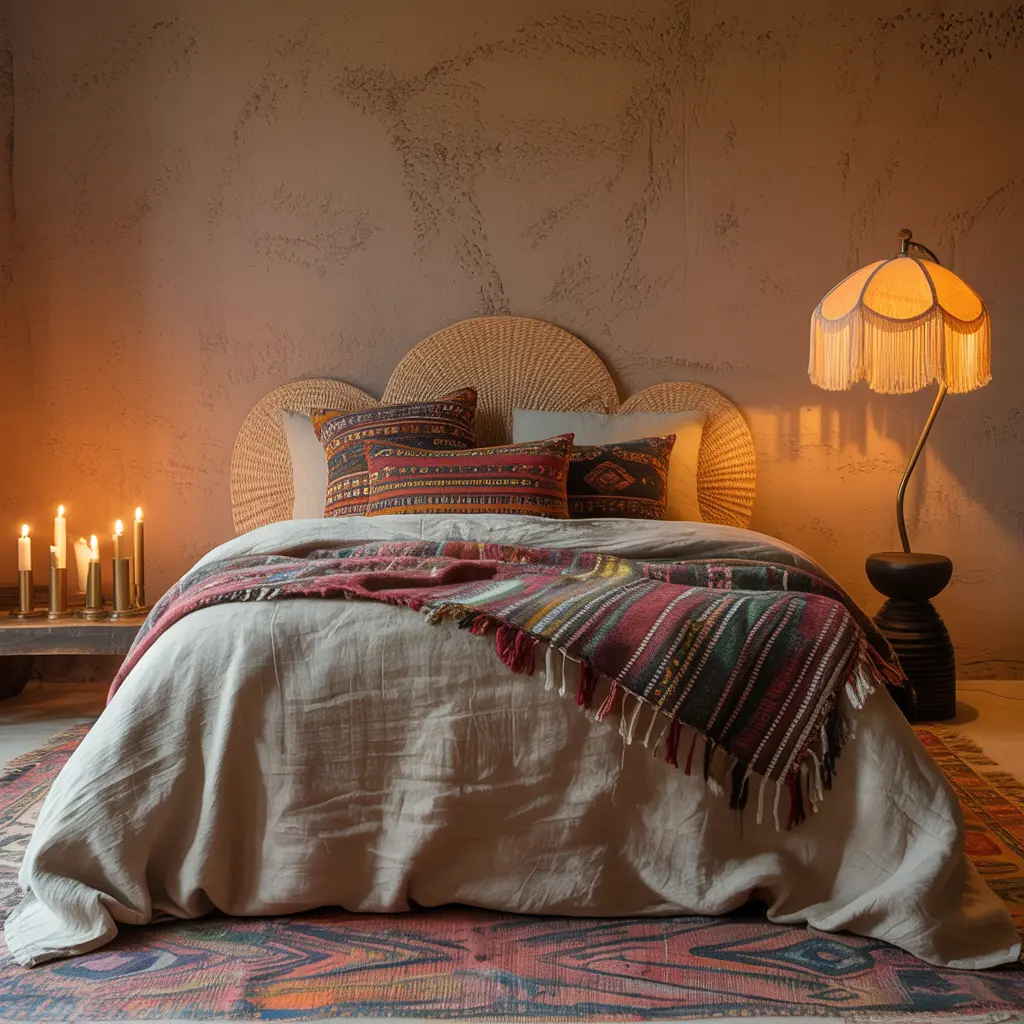
Cool, harsh overhead lighting works against nearly every element of Afrohemian bedroom decor, washing out the warmth of terracotta and clay tones and flattening the texture of woven pieces that are meant to catch shadow and depth.
Warm bulbs, a bedside lamp with a woven or ceramic base, and even a small string of warm toned lights woven along a shelf all keep the room feeling soft and layered after dark. This matters more in an Afrohemian bedroom than in a starkly minimal one, since so much of the visual interest in this style comes from texture, and texture needs warm, angled light to actually read.
9. Add One Meaningful Art Piece Rather Than a Full Gallery Wall
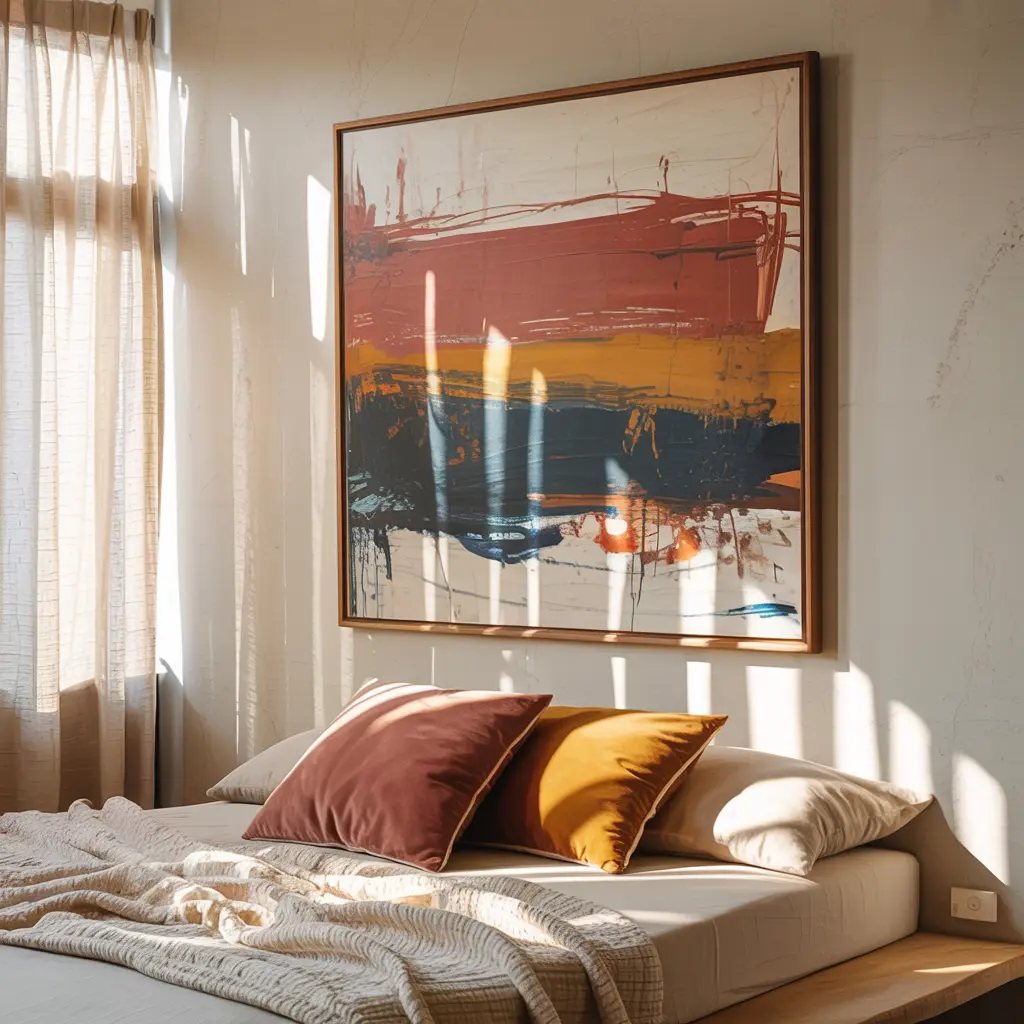
A single warm toned piece of art, whether that’s a framed print, a small painting, or a textile hung as art, tends to suit an Afrohemian bedroom better than a dense gallery wall, since the bedroom is already carrying pattern through textiles and woven pieces.
Choosing one piece that genuinely means something to you, whether it reflects heritage, a place you’ve traveled, or simply a color story you love, keeps the room feeling personal rather than assembled purely for visual effect. This is a style built on storytelling, and a single considered piece tells a clearer story than a wall crowded with unrelated prints.
10. Let the Room Build Slowly Instead of All at Once
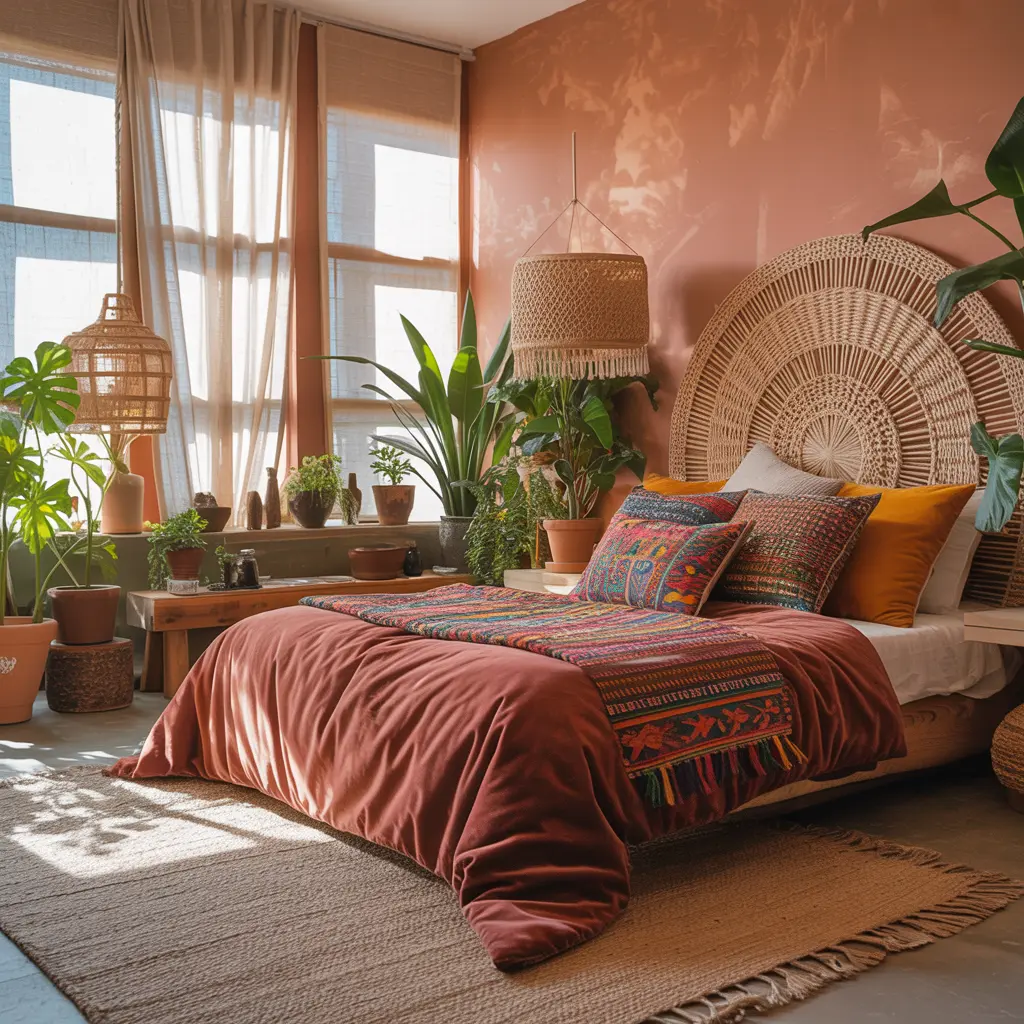
Afrohemian interiors are meant to feel collected over time rather than purchased in a single afternoon, and that collected quality is genuinely hard to fake if you buy every piece in one order.
Starting with two or three foundational pieces, a textile, a wood accent, a plant, and adding new pieces gradually as you find ones that genuinely resonate, produces a more authentic result than filling the room all at once. This approach also gives you room to source pieces thoughtfully, including from artisans and makers connected to the traditions the style draws from, rather than defaulting to mass produced approximations.
Mistakes to Avoid
- Using vague “tribal print” fabric instead of textiles with real roots. Adire, mudcloth, and kente inspired weaving each carry distinct patterns and history, and using them thoughtfully is part of what makes the style feel authentic.
- Overloading the bedroom with saturated pattern. A bedroom generally works better with one or two patterned pieces and a calmer supporting palette than a living room would.
- Skipping natural materials for an all-fabric approach. Wood, rattan, and clay accents are just as central to the look as textiles are.
- Relying on cool overhead lighting. It flattens texture and washes out the warm tones that define the style.
- Buying every piece at once. Afrohemian interiors are meant to feel collected over time, and that quality shows in the finished room.
- Treating cultural elements as purely decorative. Where possible, understanding the origin and meaning behind a textile or accent adds depth that a purely aesthetic choice can’t.
Frequently Asked Questions
What’s the difference between Afrohemian and regular bohemian decor? Standard bohemian style draws loosely from many global influences without a specific cultural anchor. Afrohemian decor specifically centers African design heritage, textiles like adire and mudcloth, carved wood, and earthy palettes rooted in African landscapes, layered with bohemian’s relaxed, textural approach.
What colors work best for an Afrohemian bedroom? Terracotta, rust, warm beige, clay, and olive green work well as a base, with deeper accent colors like indigo, saffron, or emerald layered in through textiles and smaller decor pieces.
Do I need authentic African textiles, or can I use similar-looking fabric? Textiles with real roots in African design traditions, like adire, mudcloth, and kente inspired weaving, carry specific patterns and cultural history that generic “tribal print” fabric doesn’t. Sourcing from makers who are transparent about origin adds authenticity and supports the craft traditions the style draws from.
Is Afrohemian decor expensive to achieve? Not necessarily. Starting with a few foundational pieces, one textile, one wood accent, a plant, and building the room gradually is both more affordable and more in keeping with the style’s collected, over-time approach than buying everything at once.
How do I keep an Afrohemian bedroom from feeling too busy? Keep pattern to one or two statement textiles and let the rest of the room rest in a narrower palette of cream, wood tone, and one or two anchor colors like terracotta and indigo.
Bringing It All Together
An Afrohemian bedroom doesn’t come together in a single shopping trip, and honestly, it isn’t supposed to. Starting with an earthy color base, one meaningful textile, and a natural wood or rattan accent gets a room most of the way there. From there, let the space grow slowly, a plant, a woven wall hanging, a piece of art that actually means something to you, until the room feels less like it was decorated and more like it was genuinely lived in.

Leave a Reply