
The first truly rustic bedroom I ever styled was in a converted barn outside Asheville, North Carolina. The owners wanted something that felt intentional but not overdone — warm without being dark, natural without feeling like a hunting lodge. We worked with the existing rough-hewn ceiling joists, layered in chunky linen bedding, brought in a hand-thrown ceramic lamp, and finished with a vintage wool rug we found at an estate sale for forty bucks.
When we were done, the homeowner walked in, sat on the edge of the bed, and said, “This feels like the best hotel room I’ve ever stayed in — except it’s mine.”
That’s exactly what a well-executed cozy rustic bedroom should feel like.
I’ve styled this aesthetic dozens of times since then — in New York City apartments, Colorado mountain cabins, suburban farmhouses, and tiny studio spaces. Each time, the same principles hold true. Rustic style is about honesty. Honest materials, honest color, honest texture. Nothing fussy, nothing forced.
What trips people up is thinking rustic means rough or unfinished in a sloppy way. It doesn’t. The best rustic bedrooms I’ve ever walked into are actually very carefully curated — they just don’t look that way, and that’s the whole point.
Over the years, I’ve learned which ideas genuinely work in real homes and which ones look great on Pinterest but fall flat in practice. This post covers the ones that actually deliver — with real notes on colors, materials, furniture, lighting, and the mistakes that quietly ruin an otherwise beautiful room.
Let’s get into it.
1. Exposed Wood Beam Ceilings
Visually, exposed ceiling beams do something no paint color or furniture piece can replicate — they give a room a sense of age and permanence. The moment you walk into a bedroom with genuine or well-executed faux wood beams overhead, the ceiling stops being forgotten dead space and becomes one of the most compelling design elements in the room.
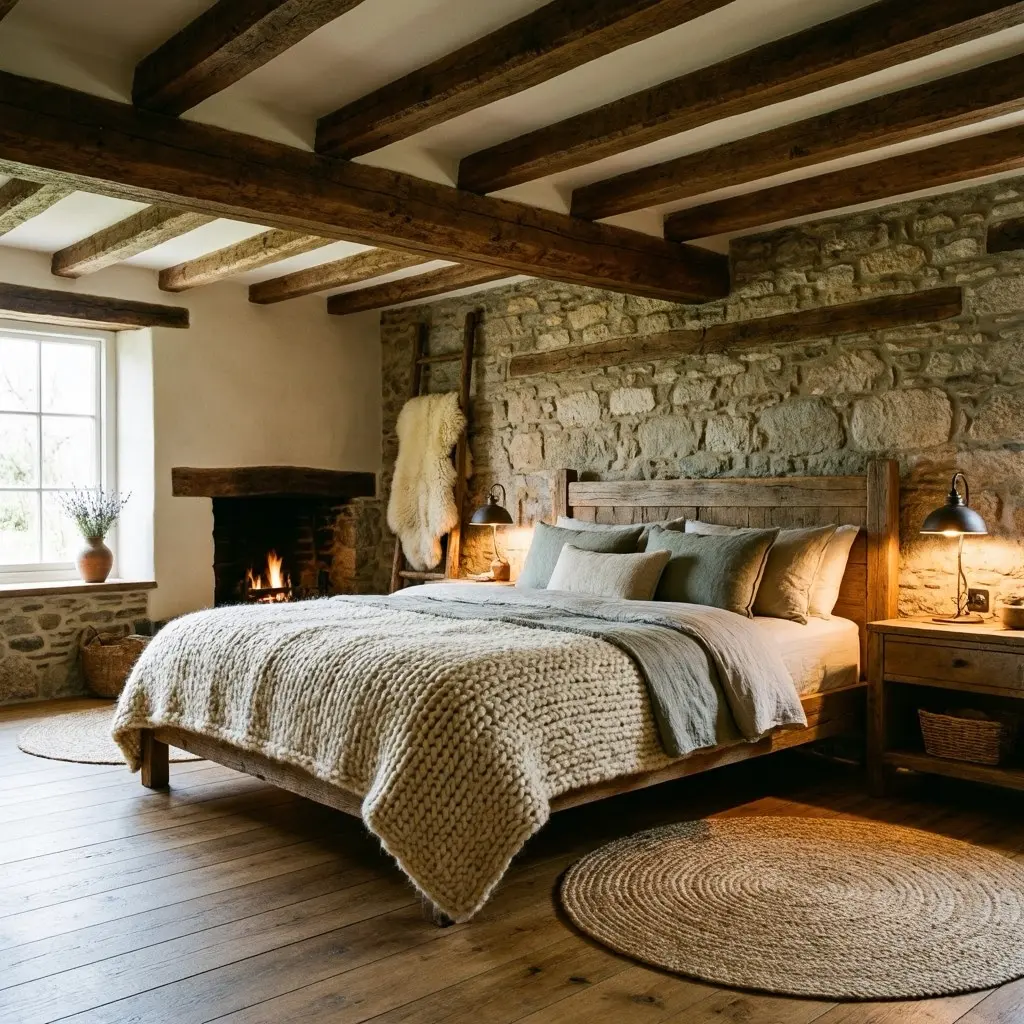
This works best in bedrooms with at least nine-foot ceilings. Vaulted or cathedral ceiling layouts are absolutely ideal. In a standard eight-foot room, beams can feel oppressive rather than inviting.
Keep beam tones in natural walnut, honey oak, or weathered barnwood. Pair them against soft warm white or a creamy greige wall — that contrast is everything. The dark beam against a light ceiling creates depth without heaviness.
For lighting, hang pendant lights directly from the beams using black iron or aged brass hardware. It looks intentional and removes the need for a clunky ceiling medallion.
Mistake to avoid: painting beams white or gray to “modernize” them. I’ve seen this done and it strips out all the warmth instantly.
Real reclaimed wood beams are the premium route. Faux polyurethane beams from Barron Designs are the smart budget alternative — genuinely convincing from any normal viewing distance.
Pro Designer Tip: Drape a loosely knotted length of sheer linen fabric from one beam near the bed. It softens the architecture without covering it and adds a romantic, effortless quality that photographs beautifully.
2. Layered Linen and Chunky Knit Bedding
The bed is the room. Everything else is supporting cast. And in a rustic bedroom, the way you build the bed determines whether the whole space feels genuinely cozy or just vaguely wood-themed.
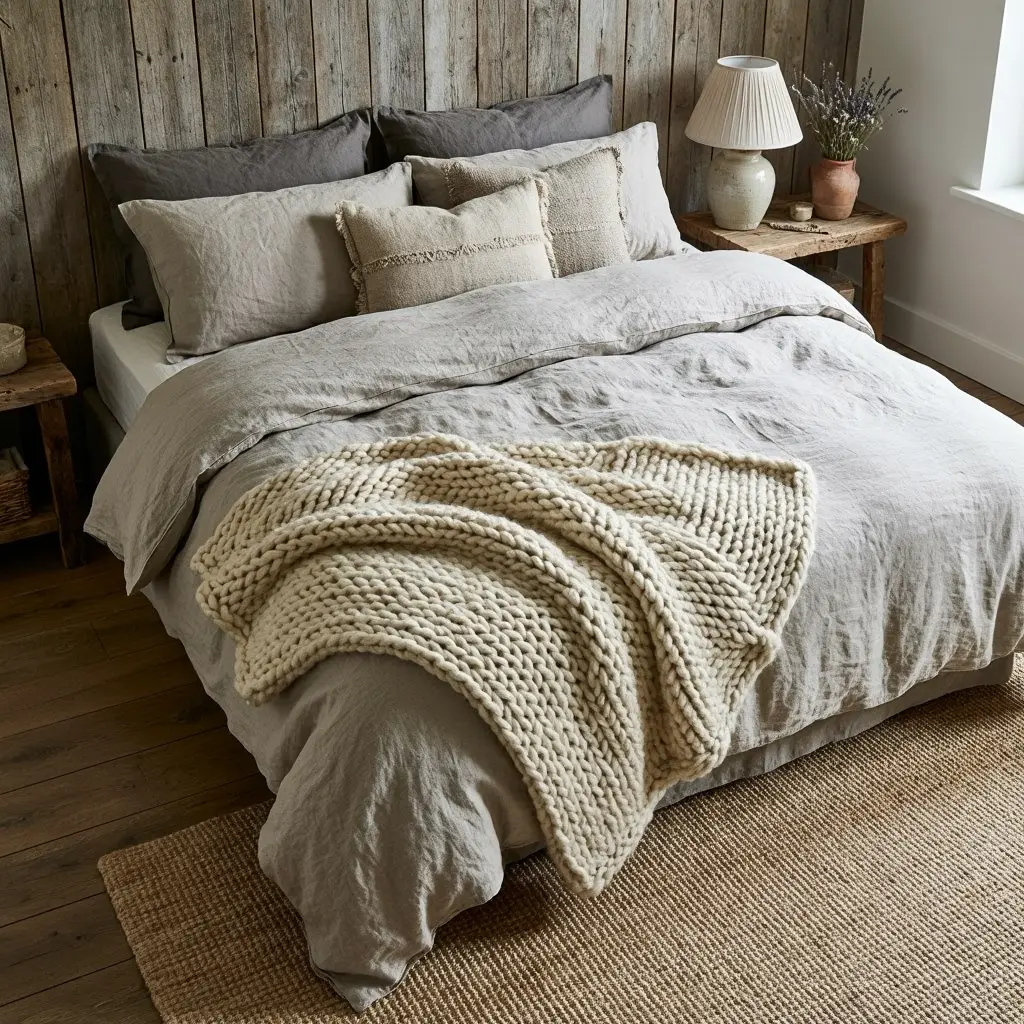
I always start with a washed linen fitted sheet in warm ivory or oatmeal — never a cool white. Layer a linen duvet in a complementary tone on top, left slightly rumpled rather than pulled tight. Across the foot of the bed, I drape a chunky hand-knit throw in cream or a muted warm gray, folded loosely and slightly off-center.
That combination of textures — smooth linen, loosely woven knit, possibly a flannel sleeping pillow underneath — creates the kind of visual depth that makes people want to climb straight in.
Pillow arrangement matters too. Two sleeping pillows in textured linen shams, one oversized euro pillow behind them, and a single woven or embroidered lumbar pillow in front. That’s the formula I use every single time.
Budget option: IKEA PUDERVIVA linen duvet covers genuinely hold up. Premium option: Cultiver or Parachute linen for superior texture and longevity.
Styling mistake: tucking everything in too neatly. Rustic bedding should look lived-in, not hospital-cornered.
Pro Designer Tip: Slightly mist linen bedding with a fine water spray before styling — it relaxes the fabric naturally and gives that effortless, casual drape that’s nearly impossible to achieve by hand alone.
3. Reclaimed Wood Headboard
A reclaimed wood headboard is the single most impactful furniture investment in a rustic bedroom. Full stop. I’ve seen it shift the entire personality of a room overnight.
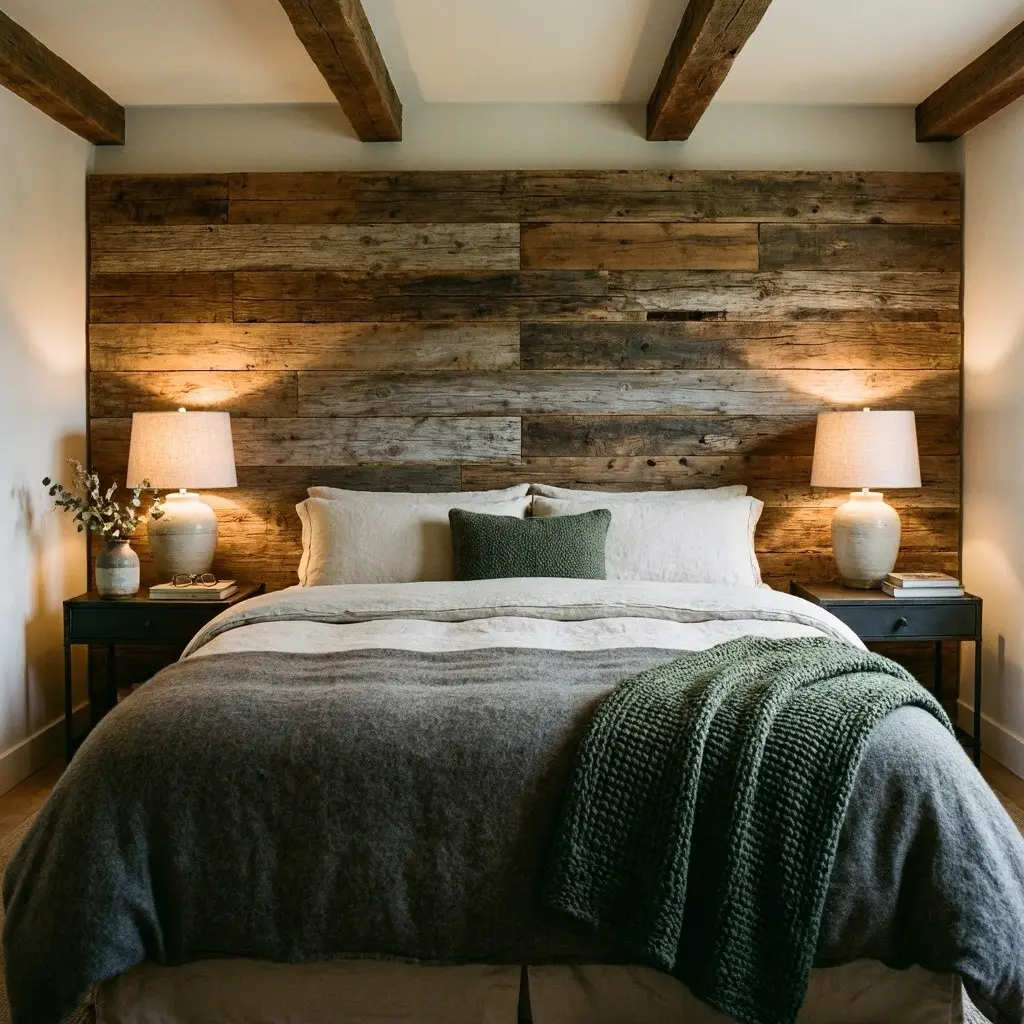
The visual appeal comes from the wood’s history — the grain variations, knot marks, nail holes, and weathering that new manufactured wood simply doesn’t have. Each plank tells a story, and that sense of authenticity is exactly what makes rustic interiors feel warm rather than decorative.
Plank-style headboards in barnwood or walnut tones work beautifully in both master bedrooms and guest rooms. A live-edge headboard — where the natural outer edge of the tree is preserved — is the premium version and genuinely stunning.
Pair the headboard with simple nightstands in a complementary wood tone or matte black metal for contrast. Avoid matching furniture sets — they make the room feel like a catalog spread rather than a real home.
Flank the headboard with wall-mounted swing-arm sconces in aged brass or blackened iron rather than table lamps if nightstand space is limited. It looks cleaner and more architectural.
Budget option: Facebook Marketplace and Craigslist regularly have solid wood headboards for next to nothing. Premium option: custom work from a local woodworker or Restoration Hardware’s reclaimed collection.
Mistake to avoid: hanging the headboard too low. The top should sit roughly 24 to 30 inches above the mattress surface for proper visual proportion.
Pro Designer Tip: Apply one coat of Howard Feed-N-Wax to reclaimed wood annually. It deepens the natural grain, adds a subtle luster without looking polished, and genuinely extends the life of the wood.
4. Warm Edison Bulb Lighting
Lighting is where most bedroom designs succeed or fail quietly. You can have every other element exactly right — beautiful bedding, great furniture, perfect wall color — and the wrong bulbs will flatten all of it.
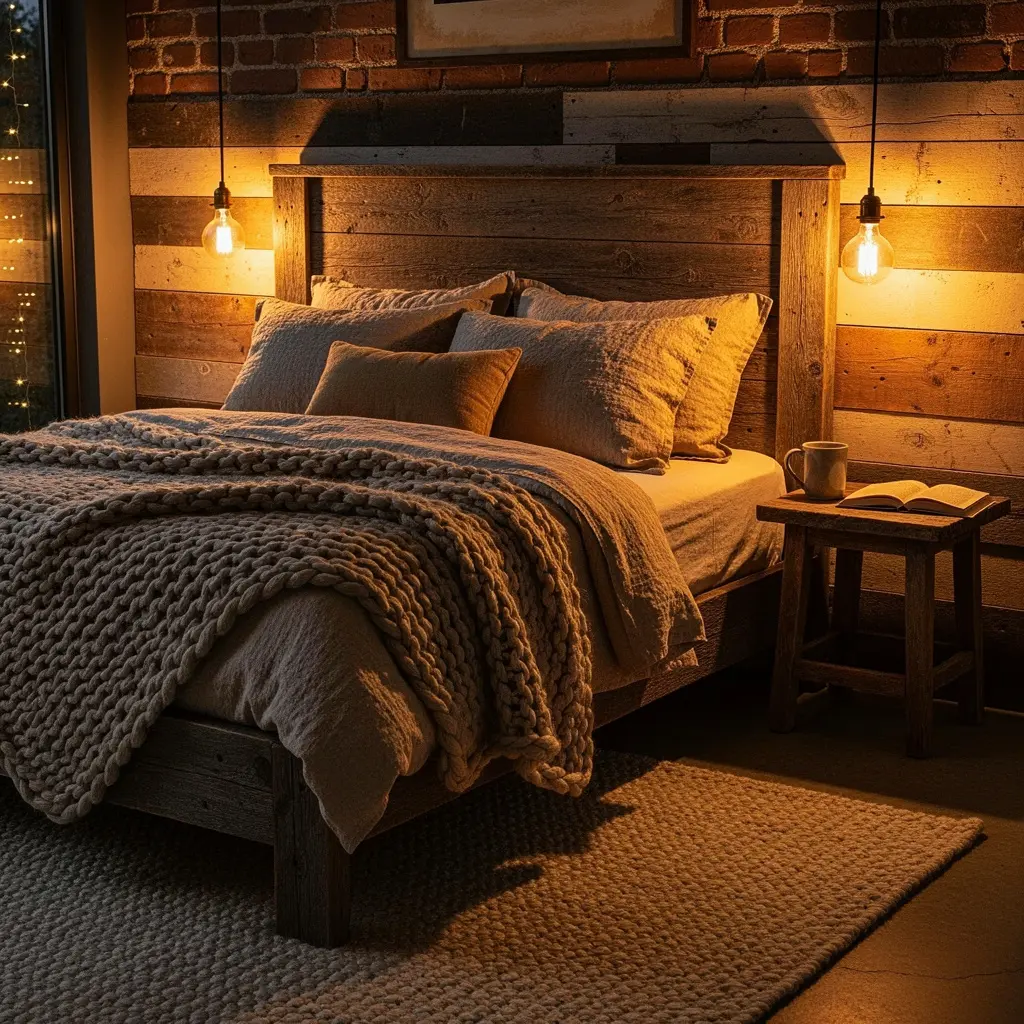
In a rustic bedroom, the goal is warmth. Specifically, a 2200K to 2700K color temperature, which produces that amber, almost candlelike glow. Edison bulbs with visible filaments hit this range perfectly and add a vintage visual detail even when the bulb isn’t switched on.
Pendant lights hung from ceiling beams or mounted on either side of the bed create warm pools of light rather than the flat, overhead brightness that kills atmosphere. A dimmer switch is essential — being able to bring light down to thirty percent at night changes the entire mood of the space.
For nightstand lighting, I prefer swing-arm wall sconces over table lamps in smaller rooms. They free up surface space, sit at exactly the right reading height, and look far more intentional.
Budget option: basic Edison pendant kits from Home Depot cost under $30 each and look genuinely great. Premium option: Visual Comfort or Hudson Valley Lighting in aged brass or oil-rubbed bronze.
Mistake to avoid: using daylight or cool white bulbs anywhere in a rustic space. Even one cool bulb in a warm room will throw off the entire color temperature.
Pro Designer Tip: Layer three light sources in every bedroom: overhead, bedside, and ambient (candles or a low accent lamp). This creates depth that flat overhead lighting never can.
5. Stone or Brick Accent Wall
Behind the headboard, a stone or exposed brick wall does something visually remarkable — it creates an anchor for the entire room. The texture, the color variation, the sense of mass and age — none of that can be replicated with paint or wallpaper.
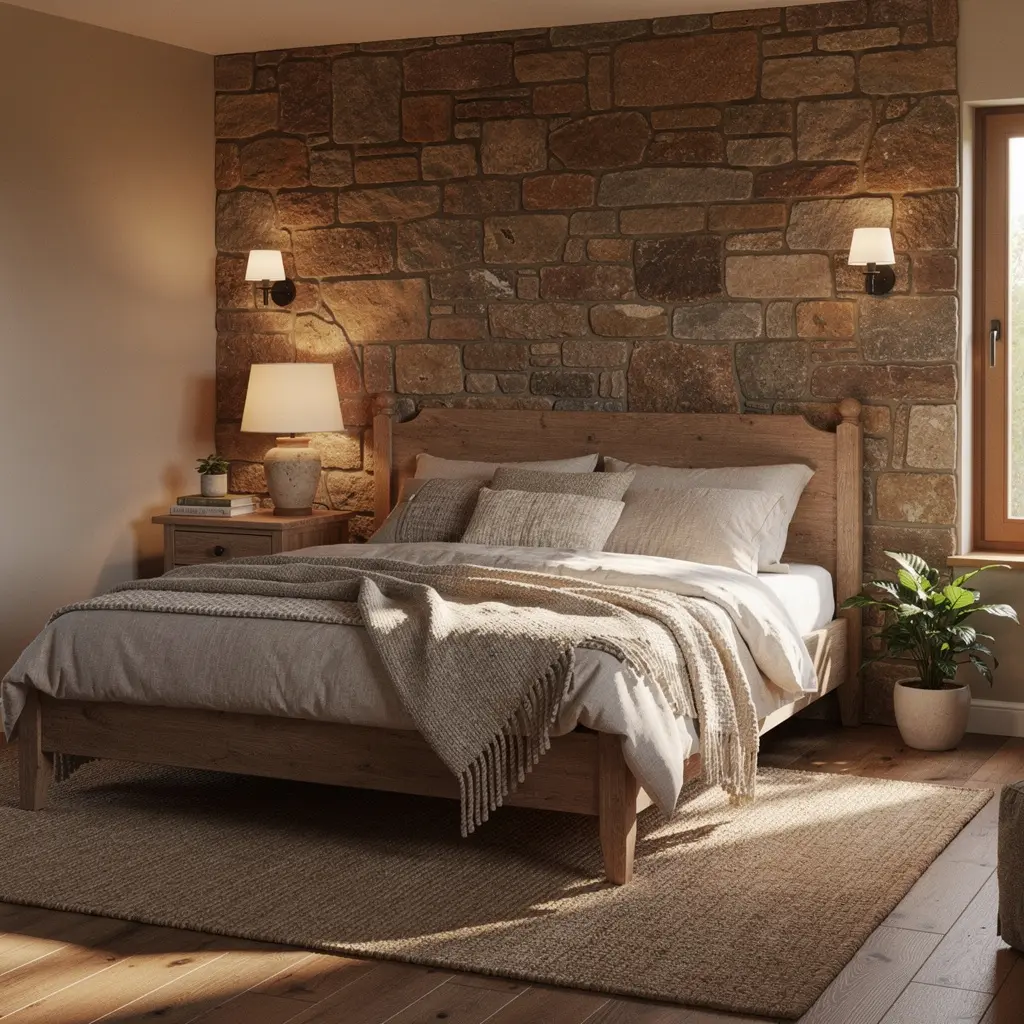
Fieldstone works best in mountain, cabin, or more rugged rustic spaces. Exposed brick feels at home in urban loft conversions and softer farmhouse-style rooms. Both work beautifully when the surrounding walls are kept light.
Keep adjacent walls in warm white or soft greige. Resist the urge to paint them a contrasting color — the stone or brick provides all the contrast you need.
Light the wall dramatically. Upward-facing sconces or a large pendant lantern positioned nearby cast shadows that emphasize the texture beautifully at night. During the day, natural light is your best friend here.
Real stone installation is expensive and permanent — worth it in the right home. Peel-and-stick stone veneer panels have genuinely improved in quality and are a completely reasonable budget alternative for renters or anyone not ready to commit.
Mistake to avoid: overcrowding the stone wall with artwork or shelving. The wall itself is the feature. One simple element — a wooden shelf, a single wreath, a sconce — is all it needs.
Pro Designer Tip: Position a large, simply framed vintage mirror on the adjacent wall rather than on the stone wall itself. It reflects the stone’s texture from an angle and creates a layered visual depth that makes the room feel twice as considered.
⭐ Expert Note — The Foundation Rule
After styling rustic bedrooms for over a decade, the most consistent mistake I see is trying to build the room all at once. The rooms that turn out best always start with one strong foundation piece — usually the headboard or the accent wall — and grow organically from there. Resist the urge to buy everything at the same time from the same store. The best rustic rooms look like they were assembled slowly, because they were.
6. Antler and Dried Botanical Accents
Accessories in a rustic bedroom should feel foraged rather than purchased. Antler decor — whether genuine shed antlers or quality resin versions — brings organic sculpture into the space without requiring any maintenance or fuss.
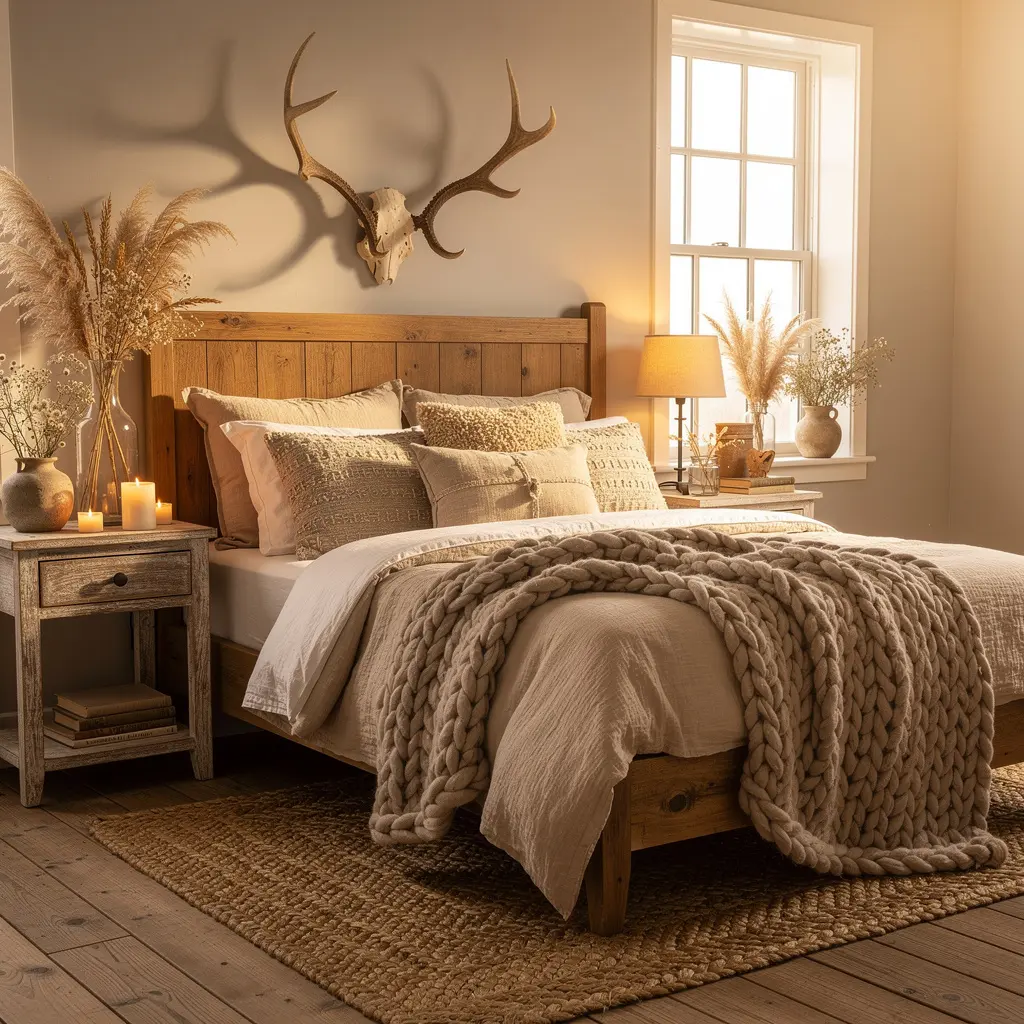
A small pair of antlers on a wooden shelf or used as wall-mounted hooks reads as both decorative and practical. Pair them with dried botanicals: pampas grass in a tall ceramic vase, eucalyptus in a terracotta pot, dried lavender in a small bundle tied with twine.
These natural elements soften harder surfaces — wood, stone, iron — and add visual movement to what might otherwise feel static.
Color-wise, stay in the natural range: cream, warm tan, dusty sage, rust, muted brown. Nothing saturated or bright. The whole point is that these pieces look like they came from outside.
Mistake to avoid: filling every shelf and surface. Negative space in a rustic room isn’t emptiness — it’s breathing room that lets each individual piece be noticed.
Pro Designer Tip: Group accessories in odd numbers. Three items on a shelf, five on a dresser. Asymmetrical arrangements read as naturally collected rather than purposefully staged — and that distinction matters enormously in rustic style.
7. Earthy Neutral Color Palette
Getting color right in a rustic bedroom is less about choosing the perfect shade and more about understanding what temperature you’re working with. Everything should feel warm — like sunlight through amber glass, not light through a window on an overcast day.
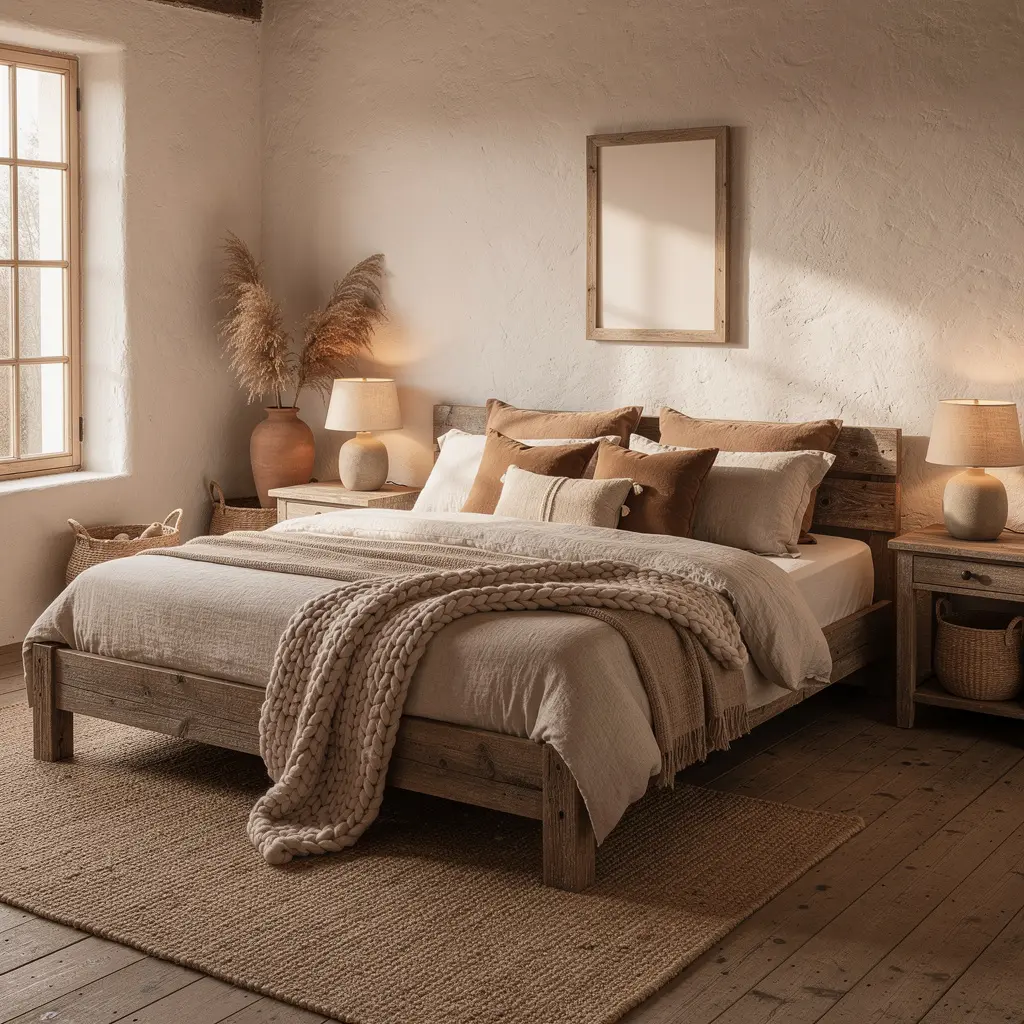
On walls, I reach for warm whites and soft greiges almost every time. Benjamin Moore “White Dove,” Sherwin-Williams “Accessible Beige,” and Farrow & Ball “Elephant’s Breath” are the three I recommend most often. All three read differently depending on light conditions, which is exactly why I suggest sampling on a large swatch and observing at morning, midday, and evening before committing.
Bring deeper tones in through textiles and accessories rather than wall color. A terracotta lumbar pillow, a dusty sage ceramic vase, a rust-toned wool throw — these add color without overwhelming the palette.
Mistake to avoid: introducing cool tones. Even a single blue-gray pillow or a cool white trim can visually disconnect from the warm overall palette and create an unresolved feeling.
Pro Designer Tip: Pull your accent colors directly from the wood tones already present in the room. If your headboard has reddish undertones, a terracotta accessory will feel completely natural. If your wood reads more golden, lean toward amber and warm honey accents.
8. Vintage Lantern Styling
Vintage lanterns bring atmosphere that no standard fixture can replicate. Aged iron, burnished bronze, or blackened steel — these finishes carry the kind of visual weight that anchors a rustic vignette beautifully.
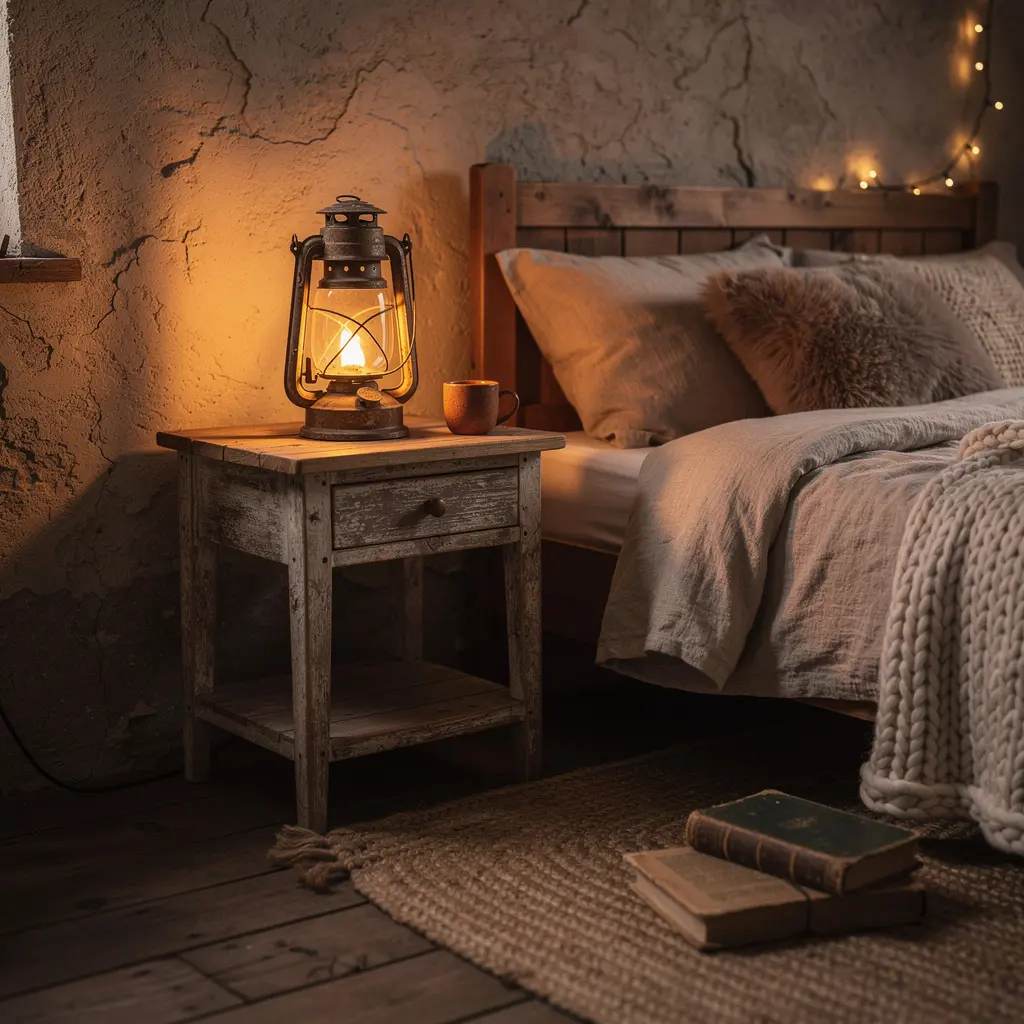
On a nightstand, a single lantern with a pillar candle inside creates an instant focal point. On a dresser, a cluster of three lanterns in varying heights — with real or battery-operated candles inside — becomes a full vignette.
Battery-operated candles with realistic flicker modes are absolutely worth considering, especially in bedrooms where open flames aren’t practical. The best ones (Luminara makes excellent versions) are nearly indistinguishable from real candlelight at normal viewing distances.
Scent matters in this context too. Cedar, beeswax, sandalwood, or a woodsy amber candle fragrance deepens the sensory experience of the room. Stick to one scent — competing fragrances create a muddled, almost anxious quality rather than calm.
Mistake to avoid: buying cheap lanterns with shiny chrome or nickel hardware. Bright metallic finishes fight the aged, organic quality that makes this look work.
Pro Designer Tip: Position a small vintage mirror directly behind your lantern grouping. The reflection multiplies the light source and creates a beautiful depth and drama that looks far more expensive than it actually is.
9. Cozy Reading Nook Corner
A dedicated reading corner converts a bedroom from a room you sleep in into a room you genuinely retreat to. All it requires is a small corner, a comfortable chair, a source of light, and a few accessories done right.
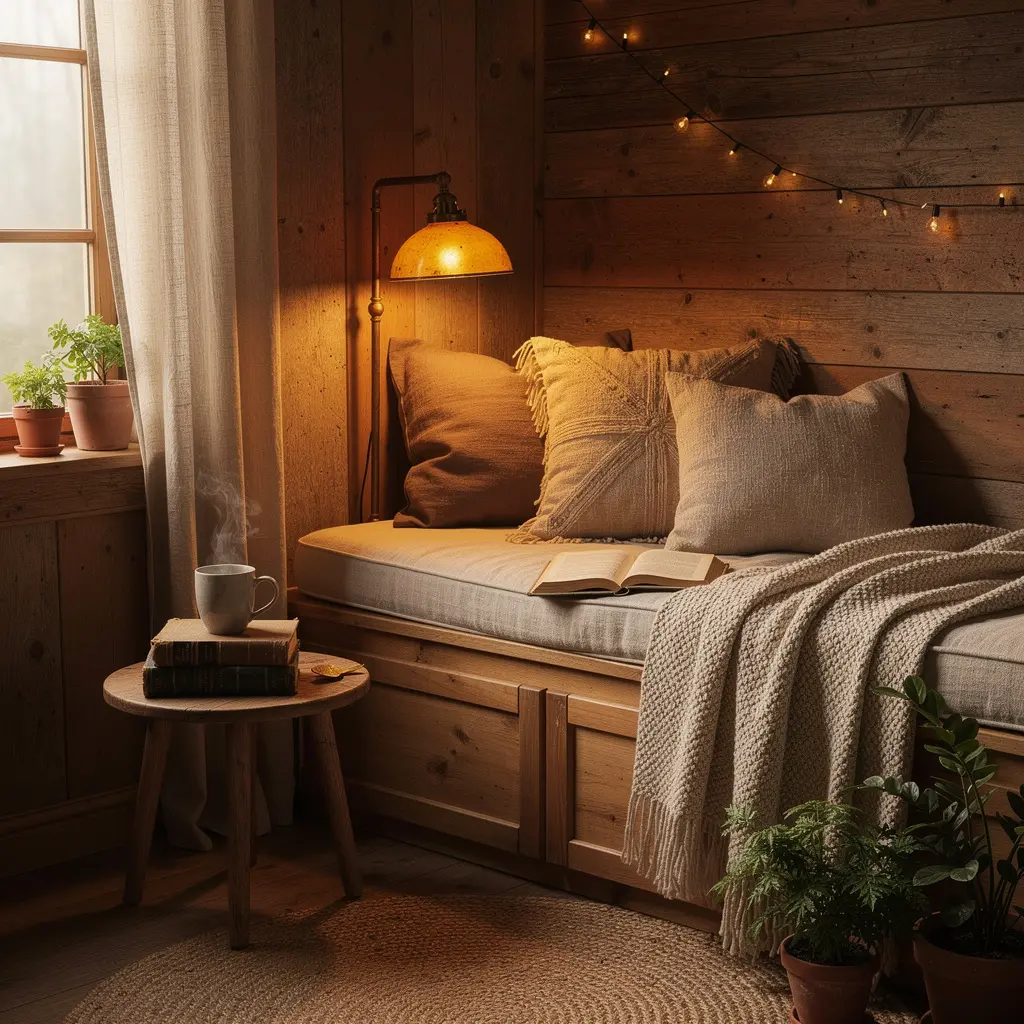
Choose an upholstered chair in a natural, textured fabric — nubby linen, worn leather, or a soft boucle. Drape a plaid wool throw in earth tones over one arm. Pull in a small wooden side table to hold a ceramic mug and a couple of books stacked without bookends.
Position the chair near a window wherever possible. Natural reading light is unbeatable, and the window view adds an organic element — trees, sky, garden — that reinforces the natural aesthetic of the room.
For evening reading, a floor lamp with a warm Edison bulb positioned just behind and above the chair shoulder height provides perfect task lighting without harsh glare.
Budget option: a thrifted armchair reupholstered in a neutral fabric costs a fraction of buying new and often has better bones. Premium option: McGee & Co or Pottery Barn upholstered chairs in performance linen.
Mistake to avoid: choosing a chair that’s purely decorative. It needs to be genuinely comfortable — the kind of chair you can spend an actual hour in.
Pro Designer Tip: Add a small woven basket beside the chair filled with folded extra throws. It’s functional, it photographs beautifully, and it sends a clear signal that this corner was designed to be used — not just admired.
10. Woven and Natural Fiber Rugs
A rug anchors a bedroom. Without one, furniture floats and the room loses its sense of intention. With a well-chosen natural fiber rug, the whole space clicks into cohesion.
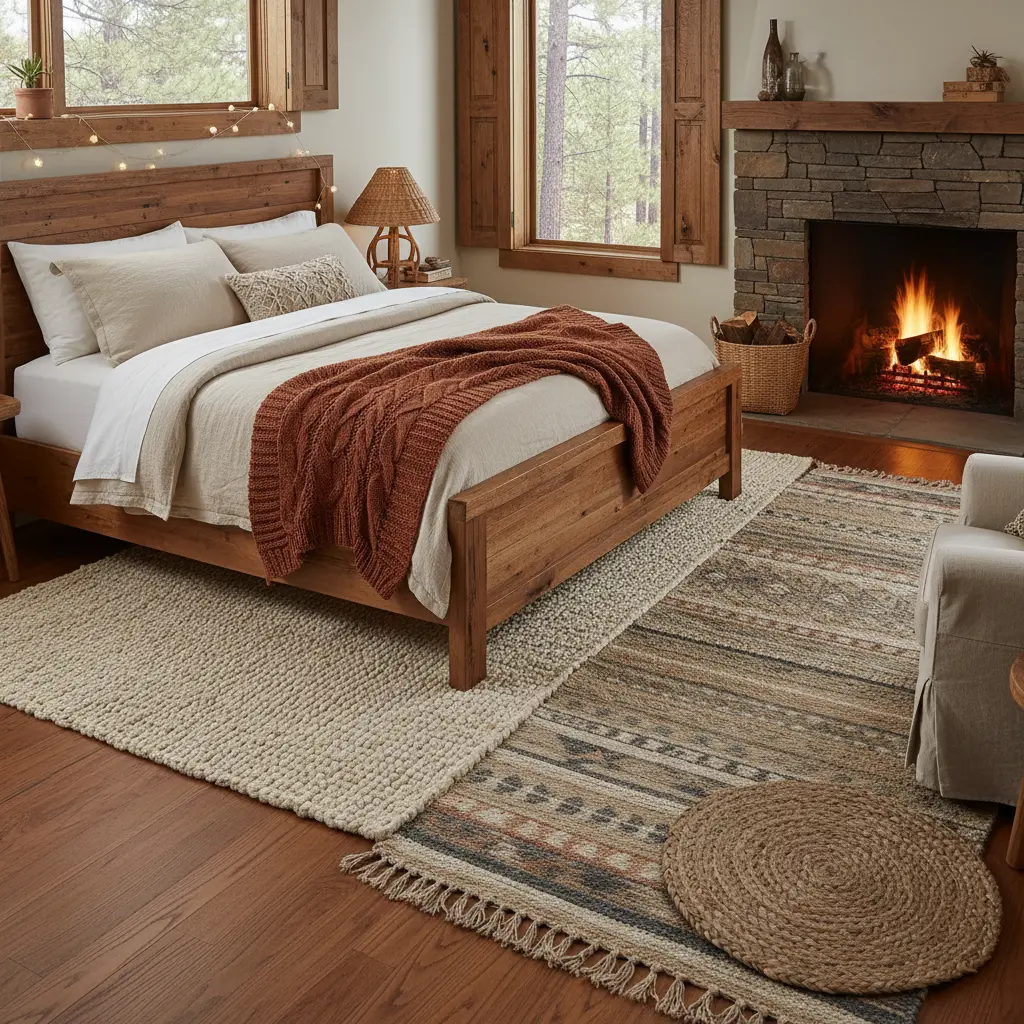
Jute, sisal, and seagrass rugs are the most authentically rustic options — their natural color variation and coarse texture read immediately as organic and grounded. For added softness underfoot, layer a smaller wool or cotton rug on top, particularly on the side of the bed where feet land first thing in the morning.
Sizing is critical. The rug must extend at least 18 to 24 inches beyond the sides and foot of the bed. An undersized rug is the single most common bedroom decorating mistake I see — it makes everything look smaller and slightly awkward.
For pattern, simple stripes, subtle geometric weaves, or completely plain natural fiber all work well. Busy patterns fight the calm, organic quality of rustic style.
Budget option: Ruggable’s washable jute-look rugs are practical and very fairly priced. Premium option: hand-knotted wool rugs from Loloi or the Amber Lewis collection.
Mistake to avoid: centering the rug too precisely. A rug that’s perfectly centered to the millimeter reads as rigid and forced. A slight, natural offset gives the room a more organic, lived-in feel.
Pro Designer Tip: Rotate your rug 180 degrees every six months to distribute wear evenly, especially near the foot of the bed where foot traffic concentrates. It genuinely doubles the usable life of the rug.
⭐ Expert Note — Embrace Imperfection Deliberately
Rustic style fails when it tries too hard to look perfect. The rooms that genuinely work — that stop people in their tracks — always have something slightly undone. A throw that’s not quite straight. A stack of books that leans a little. A candle that’s burned halfway down. These small “imperfections” signal that a real person lives here and loves this space. That’s far more powerful than anything perfectly staged.
Frequently Asked Questions
What is the best wall color for a cozy rustic bedroom?
Warm neutrals are almost always the right answer — creamy whites, soft beige, and greige tones. My most-used choices are Benjamin Moore “White Dove,” Sherwin-Williams “Accessible Beige,” and Farrow & Ball “Elephant’s Breath.” Avoid cool grays or bright whites, which fight the warm, natural quality of rustic materials.
How do I create a rustic bedroom look without doing major renovations?
Swap your bedding for washed linen, add a woven jute rug, hang a reclaimed wood shelf on one wall, replace your light bulbs with warm Edison types, and bring in some dried botanicals. Those five changes alone will shift the room’s entire personality without touching a single wall.
Can rustic bedroom style work in a small room?
Absolutely — and often beautifully. The key is using lighter wood tones, keeping walls pale and warm, maximizing natural light with sheer curtains, and focusing textural interest in the bedding rather than heavy furniture. A single statement piece, like a reclaimed wood headboard, does more work in a small room than a whole collection of smaller rustic accessories.
What bedding fabrics work best for rustic bedrooms?
Linen is the clear first choice — natural, breathable, and it develops a beautiful softness over time. Flannel is excellent in colder months. Avoid polyester blends, which look synthetic and don’t drape with the organic quality that rustic rooms require.
Are faux wood beams worth using?
Yes, with a caveat — quality matters enormously here. Cheap faux beams look obviously fake. High-quality polyurethane beams from established manufacturers are genuinely convincing from a normal viewing distance and are a completely reasonable alternative to the real thing.
What’s the difference between rustic and farmhouse bedroom style?
Rustic leans toward raw natural materials — rough wood, stone, dark iron, antlers, organic textures. Farmhouse is slightly more polished and typically includes more white, shiplap, and vintage market finds. The two overlap significantly and blend beautifully in practice.
How do I keep a rustic bedroom from feeling dark?
Keep walls light, maximize natural light with sheer curtains instead of heavy drapes, use lighter wood tones for furniture, and layer your lighting with multiple warm sources rather than relying on a single overhead fixture. Strategic mirror placement also reflects light effectively.
What’s the best rug size for under a queen or king bed?
For a queen bed, an 8×10 rug is the minimum. For a king, go 9×12. The rug should extend at least 18 to 24 inches beyond the sides and foot of the bed — this proportion makes the room feel generous and well-considered rather than cramped.
How can I add rustic style to a bedroom on a tight budget?
Start with bedding — linen duvet covers make the biggest visual impact per dollar spent. Then shop Facebook Marketplace and estate sales for solid wood furniture. Add dried botanicals from a craft store, swap bulbs to warm Edison types, and layer in a jute rug from a discount retailer. Real rustic style rewards patience and thrift over big spending.
How do I prevent my rustic bedroom from looking cluttered?
Edit ruthlessly and leave intentional negative space on surfaces. Group accessories in odd numbers and vary heights within each grouping. Remember that empty space in a rustic room isn’t absence — it’s the breathing room that lets the materials and textures you’ve chosen actually be appreciated.
Final Thoughts
A cozy rustic bedroom isn’t built in an afternoon, and it definitely isn’t built by buying a matched furniture set from one store. The rooms that genuinely feel warm, layered, and alive are the ones assembled slowly — one meaningful piece at a time, chosen for how it feels as much as how it looks.
Start with your foundation: the headboard or the accent wall. Build the bed next, because it dominates the visual field. Bring in your lighting, your rug, your textiles. Then add accessories last, editing as you go and leaving more space than you think you need.
The rustic aesthetic rewards patience, imperfection, and a genuine appreciation for natural materials. Get those things right and the style takes care of itself.
There’s a reason people walk into a well-executed rustic bedroom and immediately want to stay. Build one of those, and you’ll understand exactly what I mean.

Leave a Reply