Midimalism Decor Ideas: Finding the Sweet Spot Between Minimal and Maximal
You’ve done the minimalist thing, one vase, empty countertops, nothing on the walls, and it never actually felt calm. It felt like living in a waiting room. Midimalism decor ideas exist because a lot of people ended up in exactly that spot: they wanted a home that felt organized and intentional, not one that felt sterile and a little anxiety-inducing every time they walked in. Multiple 2026 trend reports, from Yelp’s summer home data to interior designers quoted in Forbes, are pointing to the same shift: people are keeping the calm, curated bones of minimalism but layering in color, pattern, and personal objects on top. Here’s how that actually translates into a real room, not just a design term.
1. Understand What Separates Midimalism From Both Extremes
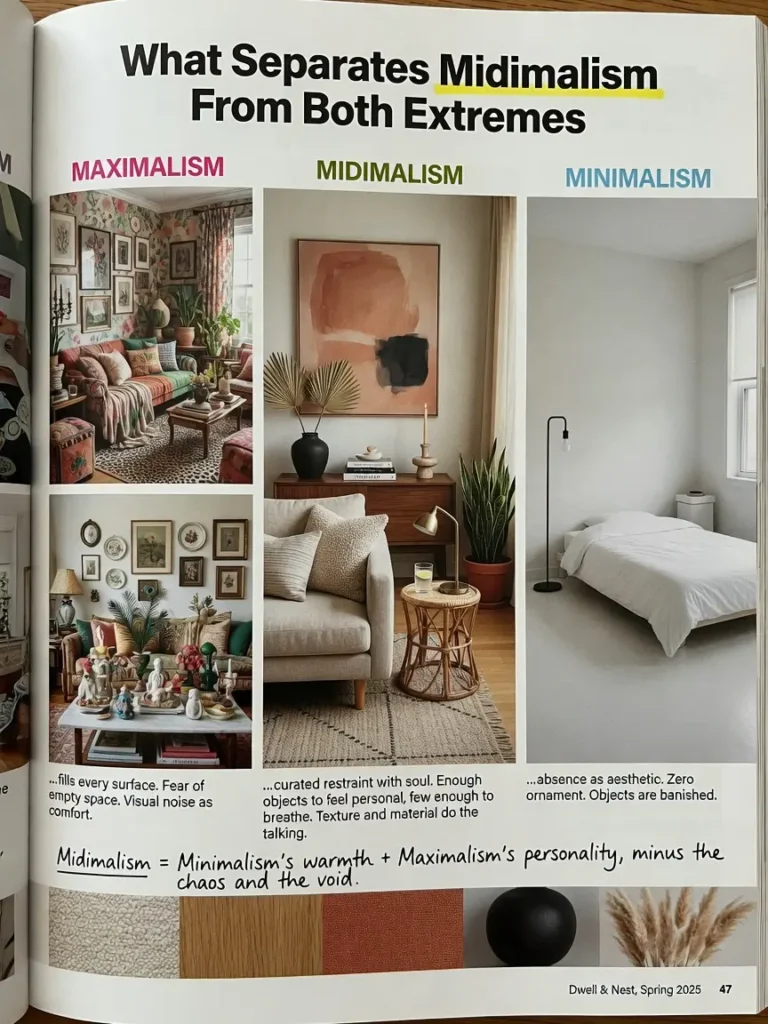
Before changing anything in your home, it helps to actually understand what this style is doing differently, since the name alone doesn’t tell you much.
The Core Idea
Minimalism reduces a room to its essentials, empty surfaces, one accent color, nothing extra. Maximalism goes the opposite direction, layering pattern, color, and objects until the room itself becomes the statement. Midimalism keeps minimalism’s clean structure and clear surfaces as the foundation, then adds curated layers of texture, color, and personal items on top, intentionally, rather than letting the room fill up by accident. The distinction that matters most: it’s not about having more stuff. It’s about having stuff that means something, displayed with some actual thought.
2. Start With a Calm, Neutral Base
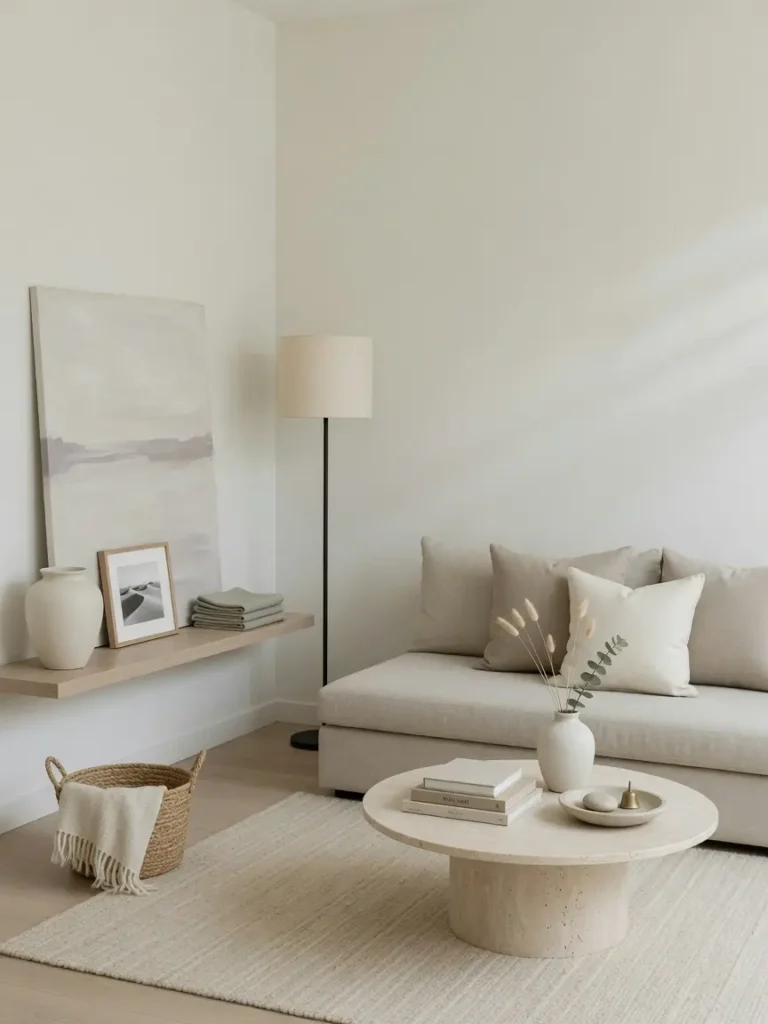
Every midimalist room still needs a foundation that reads as organized, since without that base, added color and pattern just tips the room into visual chaos rather than personality.
Warm whites, soft greige, and other muted neutrals on walls and large furniture pieces give you a canvas that can absorb bolder elements without the room losing its sense of order. This is where midimalism borrows most directly from minimalism. The walls and big furniture stay relatively quiet, which is exactly what makes it possible to add pattern and color elsewhere without the whole room feeling overwhelming.
3. Sprinkle in Pattern Rather Than Committing a Full Room to It
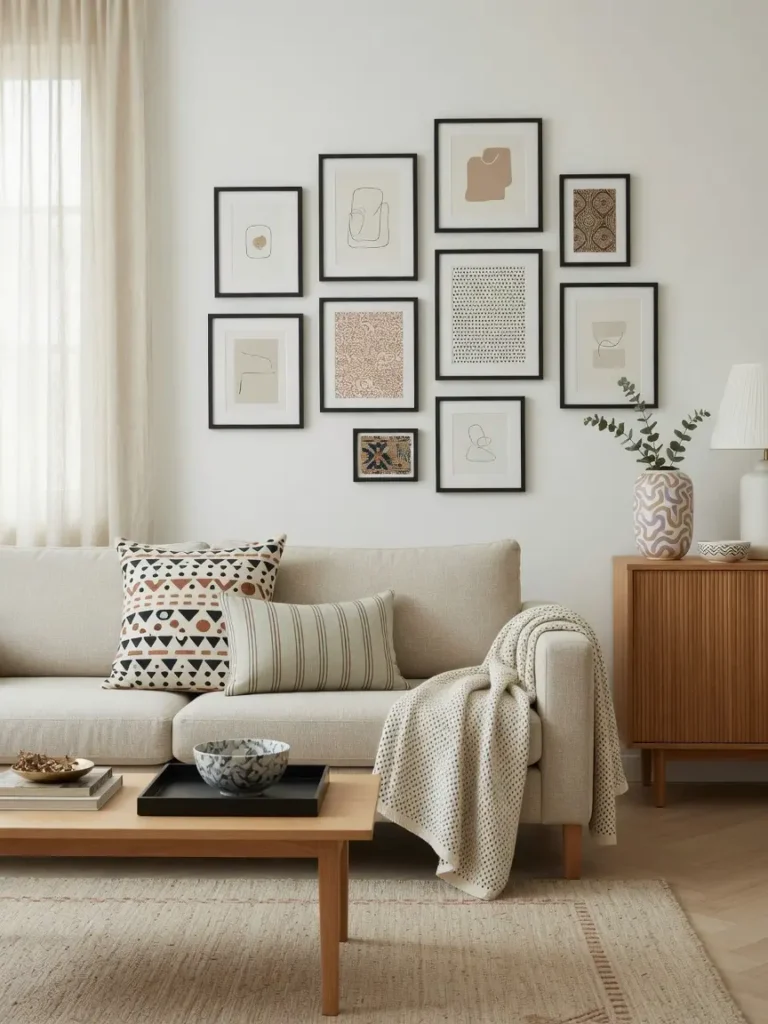
One interior designer covering this trend specifically described the approach as sprinkling color and pattern over a natural base rather than saturating an entire room in it, and that word choice matters.
Where Pattern Works Best
A patterned throw pillow, a single wallpapered wall instead of four, a textured rug, these are the entry points. Yelp’s 2026 summer trend data actually backs this up directly, showing wallpapering project requests up 450 percent, which suggests people are testing pattern in contained doses rather than avoiding it altogether or going all in on every surface.
4. Add Curves to Soften Minimalism’s Rigid Lines
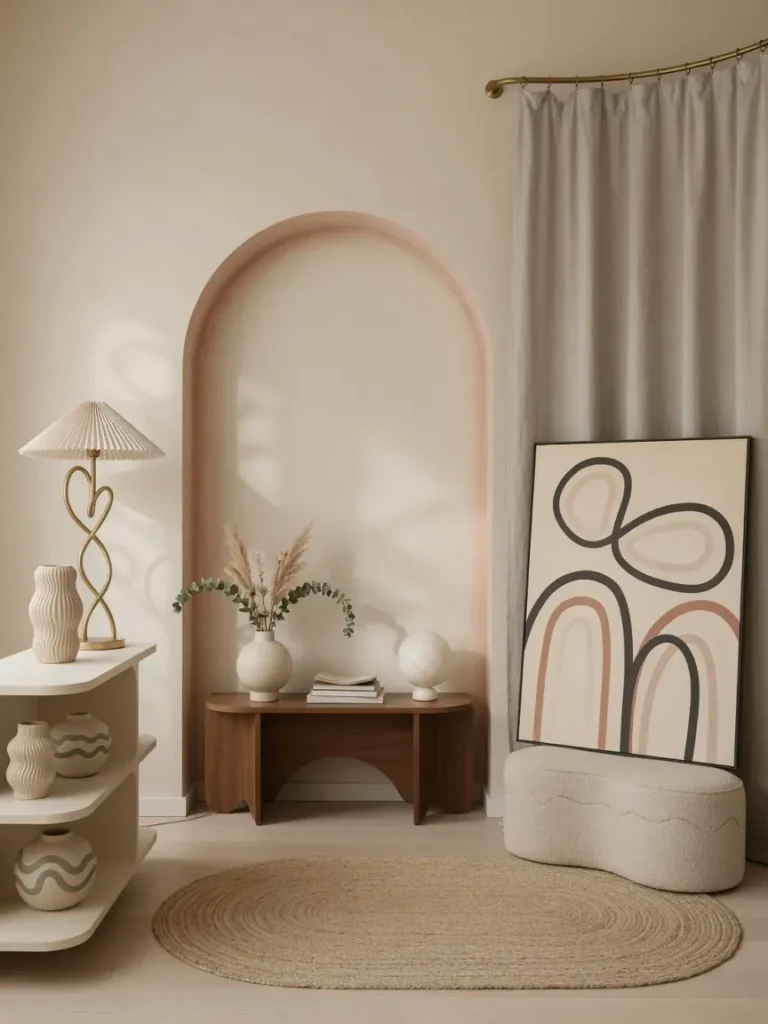
Midimalism moves away from the perfectly rigid, geometric furniture that defined strict minimalism, introducing arched doorways, rounded furniture edges, and soft corners wherever the architecture allows it.
A single curved accent chair or a coffee table with rounded rather than sharp edges brings this softness into a room without requiring you to replace every piece of furniture you own. This isn’t purely aesthetic either. Curved furniture tends to feel more comfortable and inviting than the hard-edged pieces minimalism often favored, which fits the broader goal of a home that feels lived in rather than staged.
5. Display Meaningful Objects Instead of Generic Decor
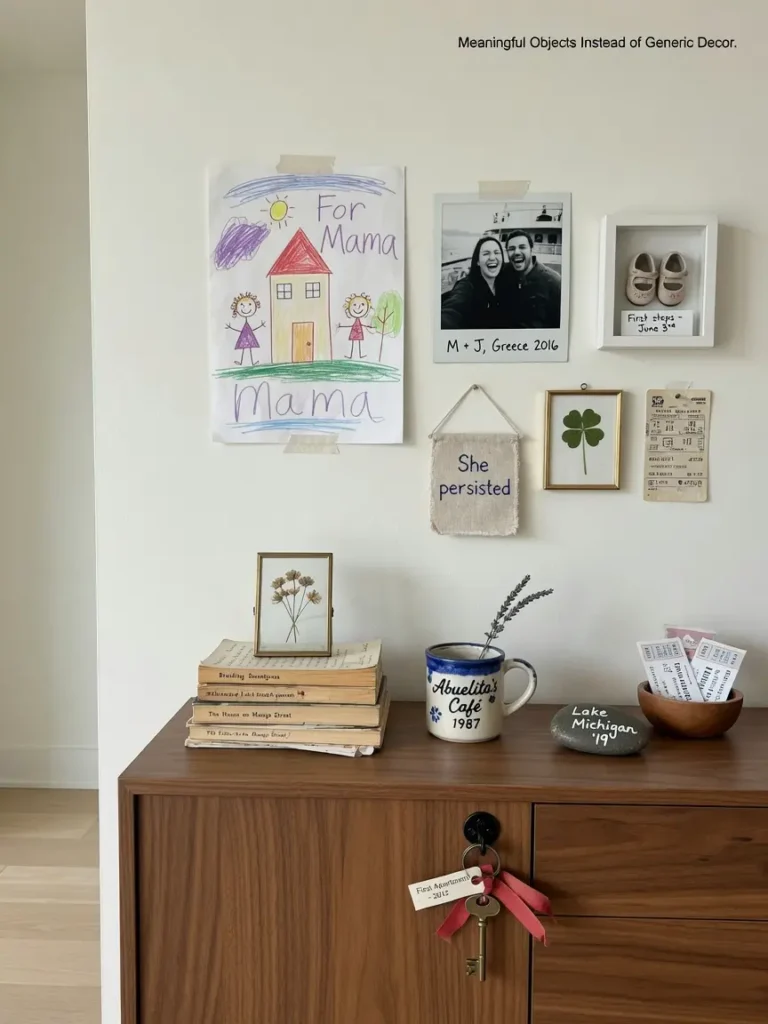
A defining feature of midimalism is intentional display, choosing what to put out based on what it actually means to you, rather than filling shelves with decor purchased purely to fill space.
What This Looks Like in Practice
A shelf with three or four objects that actually matter, a book you love, a piece from a trip, a photo in a frame you chose carefully, does more for a midimalist room than ten generic decorative items with no story behind them. Yelp’s data shows a 329 percent rise in custom framing searches for 2026, which lines up with this shift toward displaying things that are personal rather than purchased as filler.
6. Bring In Warm Woodwork and Built-In Storage
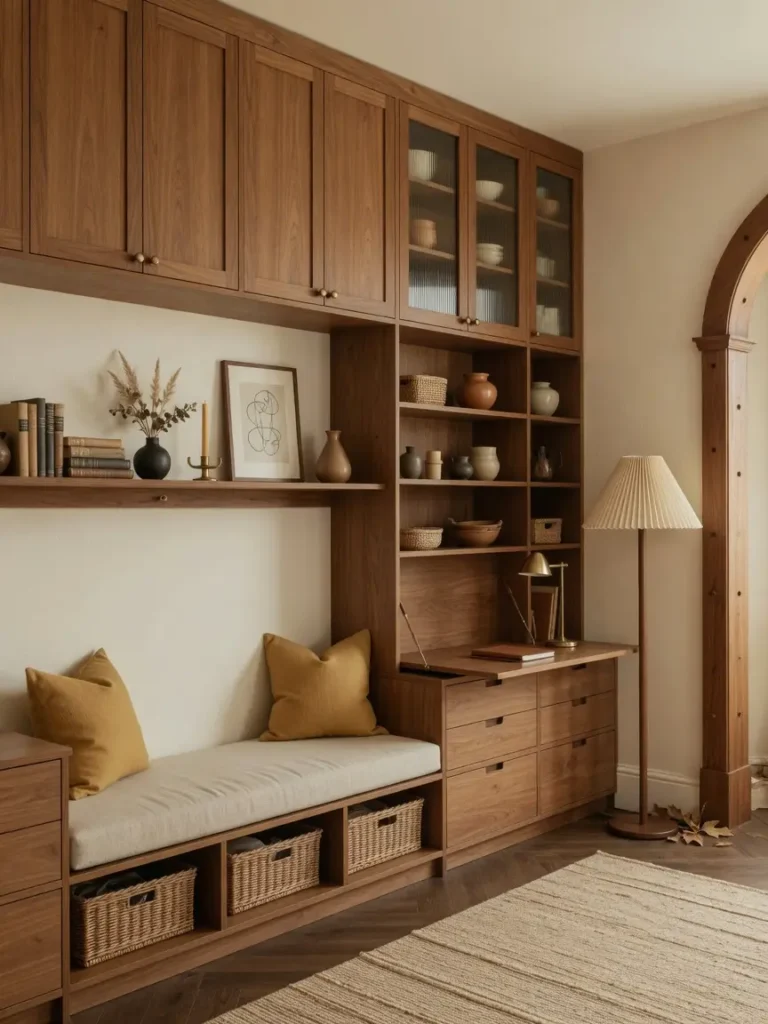
Built-in cabinets and shelving have become a defining structural element of midimalist spaces, and the scale of interest here is hard to overstate. Yelp reported a 13,389 percent surge in searches for built-in cabinets heading into summer 2026.
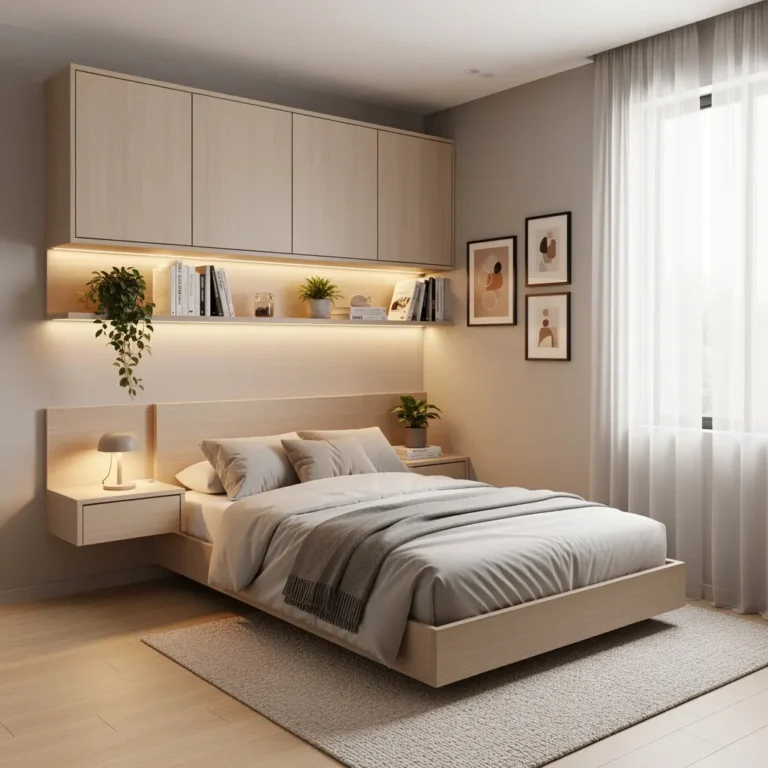
Built-ins solve a genuinely practical problem too, giving a room storage and display space that’s architecturally integrated rather than looking like separate furniture pieces bolted on afterward. If a full built-in isn’t realistic for your space or budget, a single floating shelf unit in warm wood, styled with the same intentional, curated approach, captures much of the same feeling.
7. Layer in Vintage and Secondhand Pieces
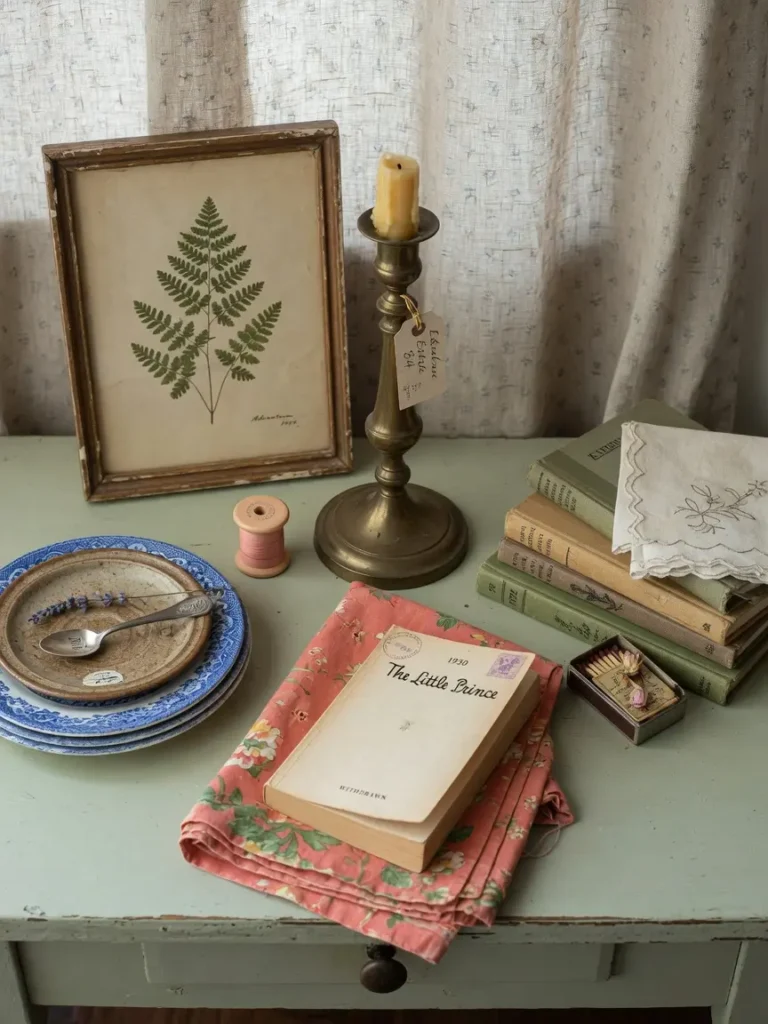
Midimalism leans into a lived-in quality that brand new, uniform furniture struggles to replicate, and vintage or secondhand pieces are a big part of how that texture actually gets built into a room.
One design writer covering this trend specifically noted a growing preference for homes that look like they were put together over years rather than staged for a single photo, and that imperfection, a slightly worn side table, a piece with visible history, is treated as a feature rather than something to hide. This also happens to be one of the more budget-friendly ways to add character to a room, since secondhand furniture is often considerably cheaper than new pieces in a similar style.
8. Add Custom Upholstery Where It Counts
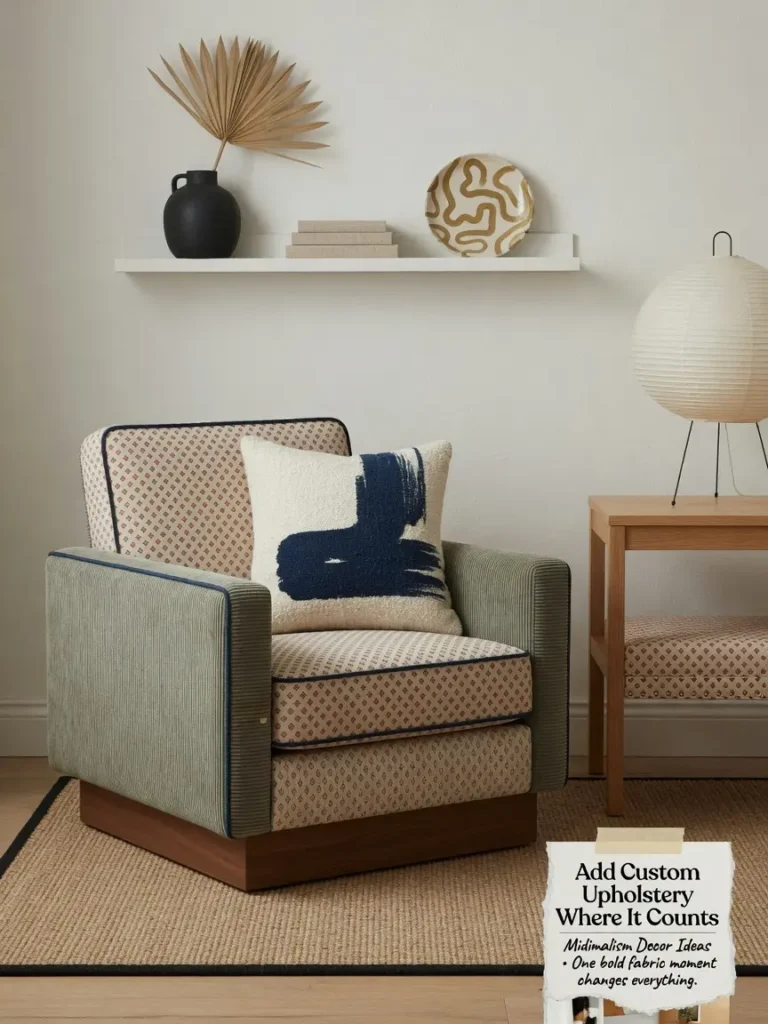
Rather than replacing furniture wholesale, custom or reupholstered pieces let you introduce a specific fabric, color, or pattern exactly where you want it, and this approach is gaining real traction, with Yelp reporting a 70 percent increase in custom upholstery requests for 2026.
Where to Start
A single reupholstered accent chair in a fabric that means something to you, rather than whatever came standard, is a lower cost way to bring midimalism’s personal, curated quality into a room than replacing the piece entirely. This also fits the style’s broader emphasis on longevity over disposable, trend-driven furniture purchases.
9. Keep Surfaces Intentional, Not Empty or Overloaded
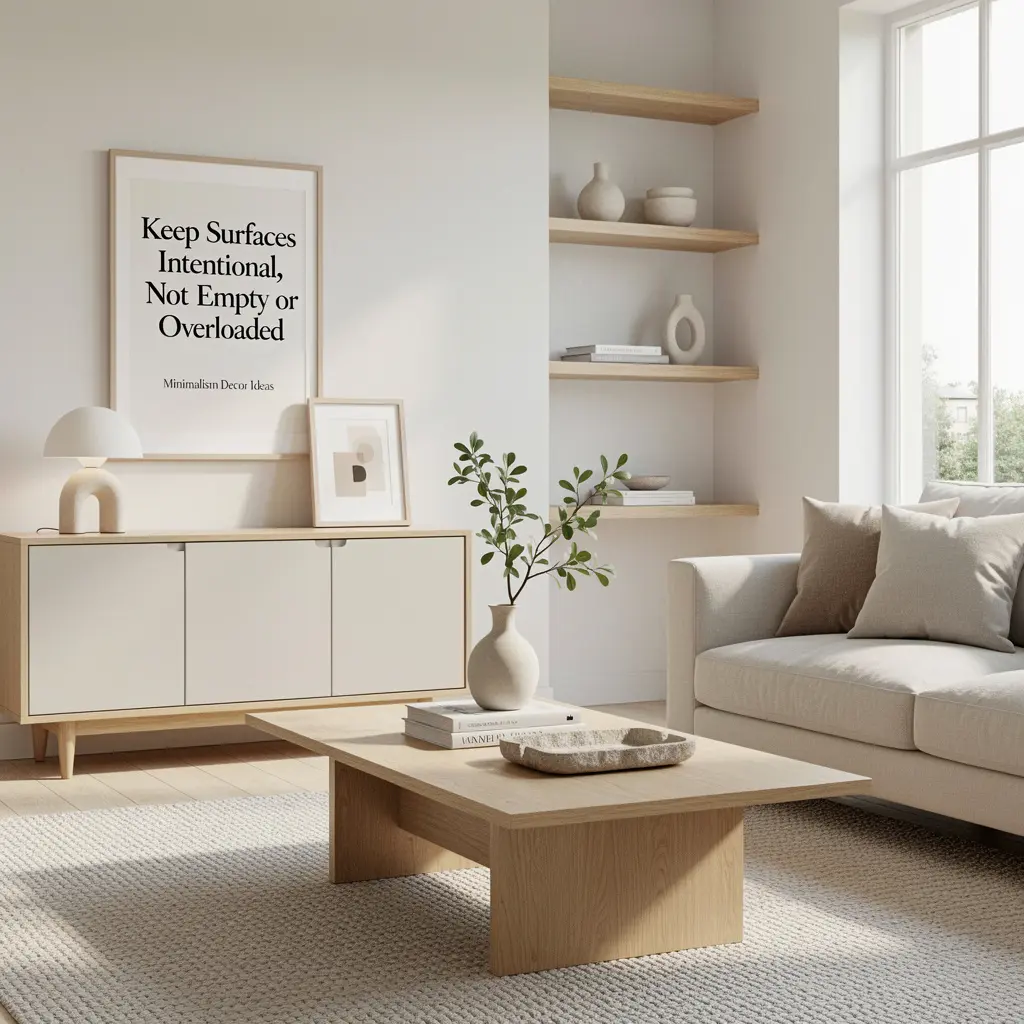
The test for whether a surface fits midimalism isn’t how much or how little is on it. It’s whether every item there is doing something, functionally or personally, rather than just occupying space.
A completely bare counter can feel just as cold as a cluttered one feels chaotic. A counter with two or three objects, something functional, something personal, something textural, sits in the actual middle ground the style is going for. This is worth revisiting periodically too, since it’s easy for a curated surface to slowly become a cluttered one without anyone noticing the shift happening.
10. Let the Room Develop Gradually Rather Than All at Once
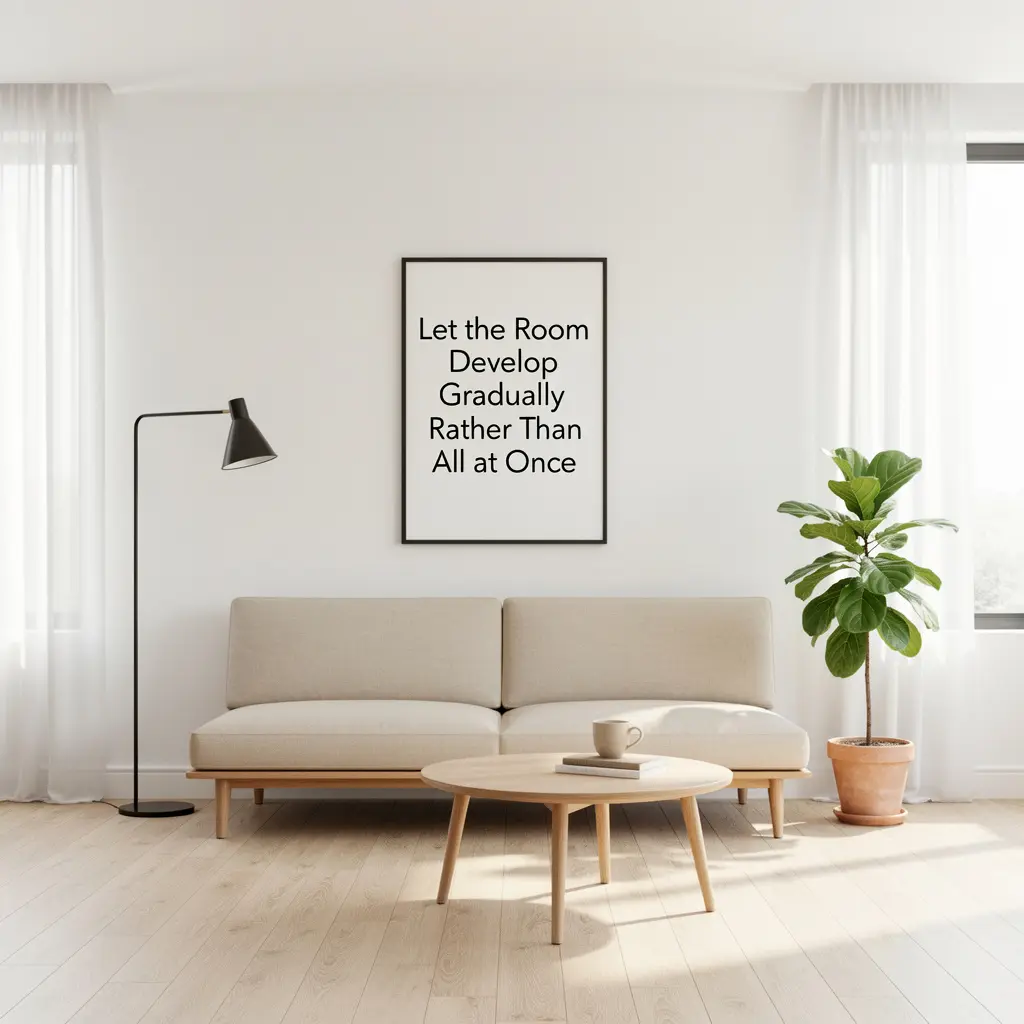
Midimalism resists the idea of a room being “finished” in a single shopping trip, since much of its character comes from pieces added over time, each with an actual reason for being there.
This is a genuinely practical point, not just a design philosophy. Buying everything for a room at once tends to produce exactly the kind of impersonal, showroom-like result that midimalism is a reaction against in the first place. Adding one intentional piece at a time, a vintage find here, a custom framed print there, gives a room more time to actually feel like yours.
Mistakes to Avoid
- Confusing midimalism with simply owning more stuff. The style is about curated, meaningful additions, not accumulation for its own sake.
- Committing an entire room to bold pattern all at once. Sprinkling pattern through pillows, one wallpapered wall, or a rug tends to work better than saturating every surface.
- Buying everything for a room in one trip. Midimalist spaces are meant to develop gradually, with pieces added over time rather than all at once.
- Displaying decor with no personal meaning behind it. Generic decorative objects work against the intentional, curated quality the style depends on.
- Avoiding vintage or secondhand pieces in favor of only new furniture. A slightly worn, characterful piece often fits midimalism better than something brand new and uniform.
- Letting a curated surface slowly become cluttered. Periodically revisiting what’s actually on display keeps the balance from tipping too far toward maximalism.
Frequently Asked Questions
What’s the actual difference between midimalism and minimalism? Minimalism reduces a room to bare essentials with very little decor. Midimalism keeps minimalism’s clean, organized structure but adds curated layers of color, pattern, and personal objects on top, intentionally rather than sparsely.
Do I need to buy all new furniture to try midimalism? No. Reupholstering a single chair, adding one wallpapered wall, or introducing a few vintage pieces gradually captures much of the style without a full furniture replacement.
Is midimalism just another word for eclectic decor? Not quite. Eclectic decor often mixes many different styles and eras somewhat freely. Midimalism is more restrained, built on a calm neutral base with a smaller number of carefully chosen, meaningful additions layered on top.
What colors work best for a midimalist home? A neutral base, warm white, soft greige, muted earth tones, works best for walls and large furniture, with bolder color introduced in smaller doses through textiles, art, or a single accent piece.
How long does it take to achieve a midimalist look in a room? There’s no fixed timeline, and that’s part of the point. The style favors rooms that develop gradually over months or years, with pieces added because they mean something, rather than a room fully furnished and finished in one trip.
Bringing It All Together
Midimalism decor ideas don’t ask you to choose between a cold, empty room and a cluttered, overwhelming one. Starting with a calm neutral base, adding one or two pieces of curved furniture, and displaying a handful of objects that actually mean something usually gets a room most of the way there. From there, a wallpapered accent wall, some vintage finds, and a bit of patience are what turn a good foundation into a home that feels genuinely lived in rather than staged for a single photo.