
You open a cabinet looking for one pan and three others fall out with it, and your counter is covered in appliances because there’s nowhere left to put them. Small kitchen storage ideas are less about buying more organizers and more about rethinking which spaces in your kitchen are actually going unused. Most small kitchens have wasted vertical space, awkward corner cabinets, and drawers packed with items that have never been sorted, and fixing those specific problem areas frees up far more room than trying to squeeze in extra shelving everywhere.
This guide covers ten specific ways to add real storage capacity to a small kitchen, along with a few organizing mistakes that make a small kitchen feel more cluttered instead of less.
1. Use the Space Above Your Cabinets
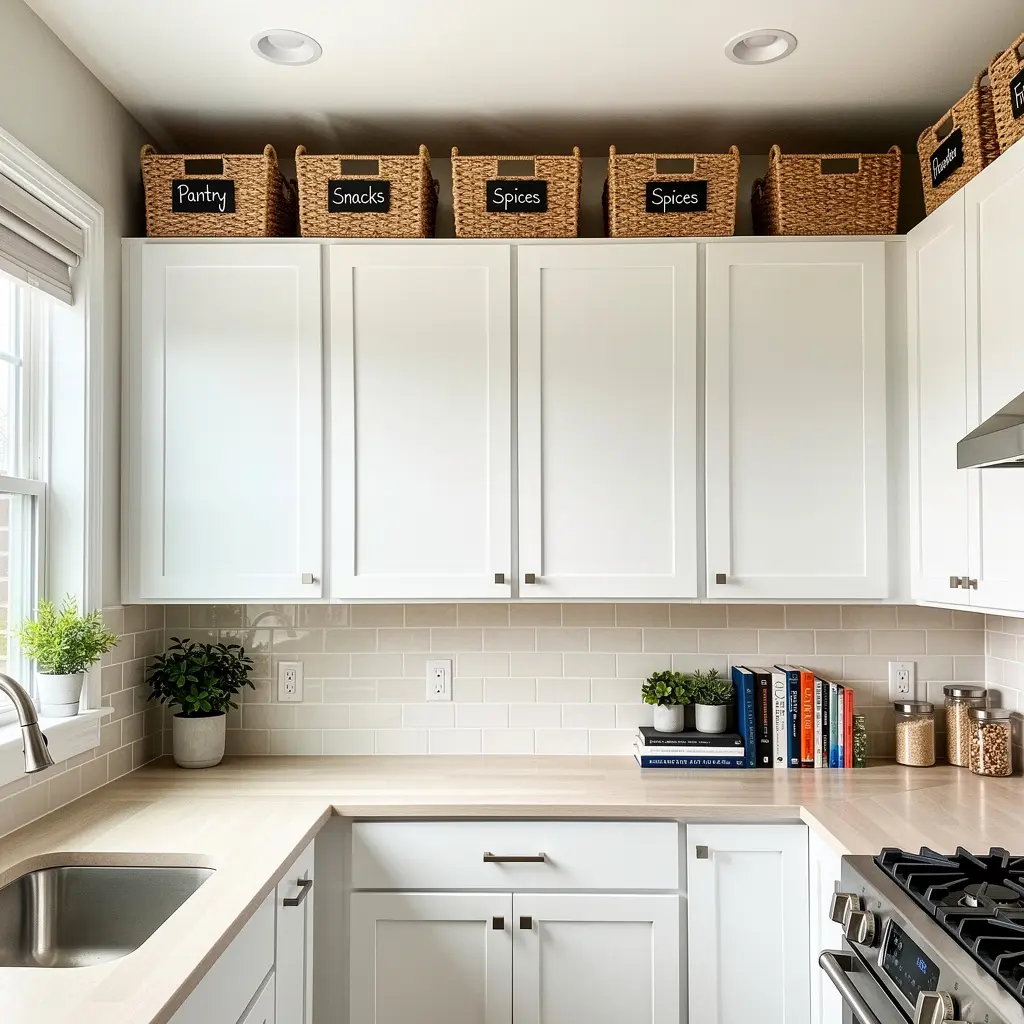
The gap between the top of standard upper cabinets and the ceiling is one of the most commonly wasted spaces in a small kitchen. Adding a row of matching baskets or bins up there gives you storage for items you don’t need daily, like seasonal serveware or extra small appliances, without taking up any usable counter or cabinet space.
What to Store in This Zone
Since this space is harder to reach, it works best for infrequently used items rather than everyday cookware. Holiday dishware, large serving platters, or backup small appliances are good candidates.
2. Add a Vertical Pot Rack Instead of Stacking Pans in a Cabinet
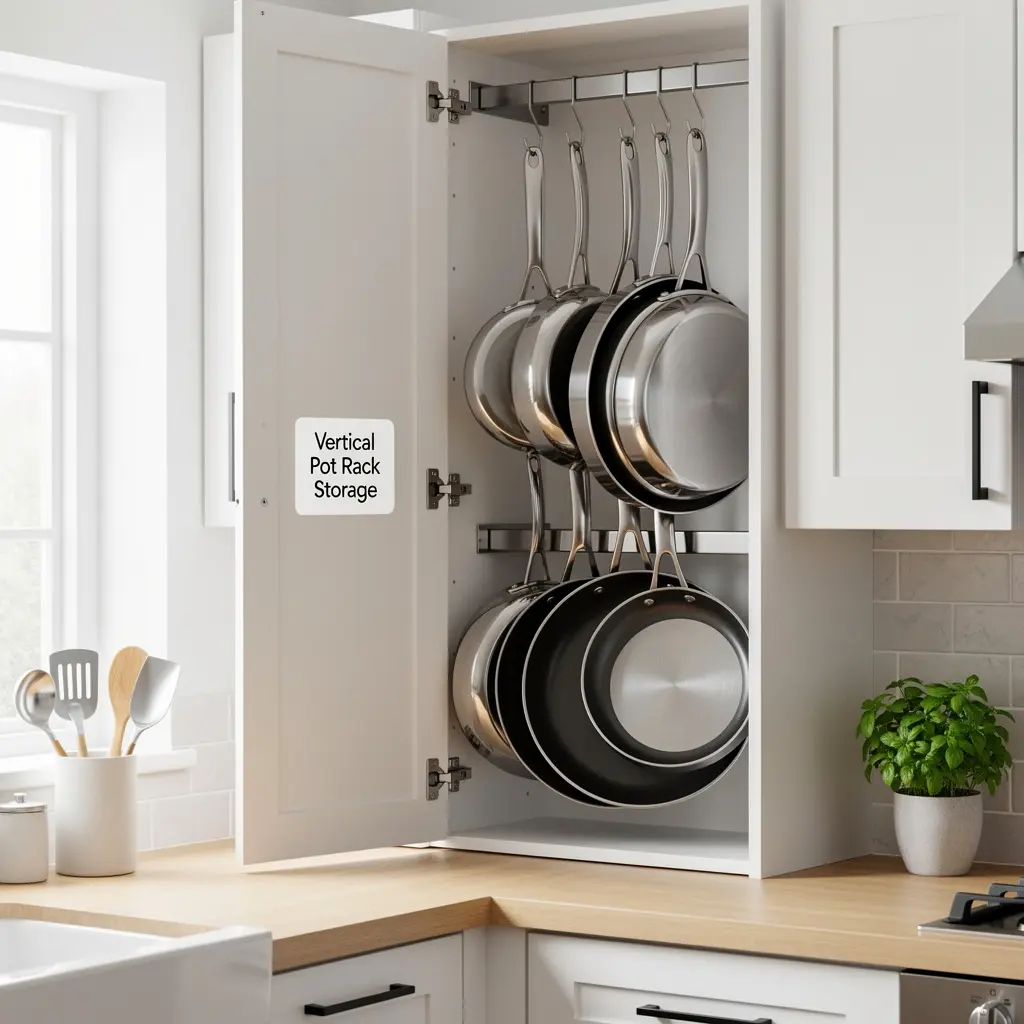
Stacked pots and pans in a lower cabinet are one of the biggest space hogs in a small kitchen, and they’re often disorganized enough that a simple task turns into unstacking half the cabinet to reach one pan. A wall mounted pot rack, or a smaller version mounted inside a cabinet door, frees up the cabinet floor space entirely and keeps frequently used pans within easy reach.
3. Install Pull Out Drawers in Lower Cabinets
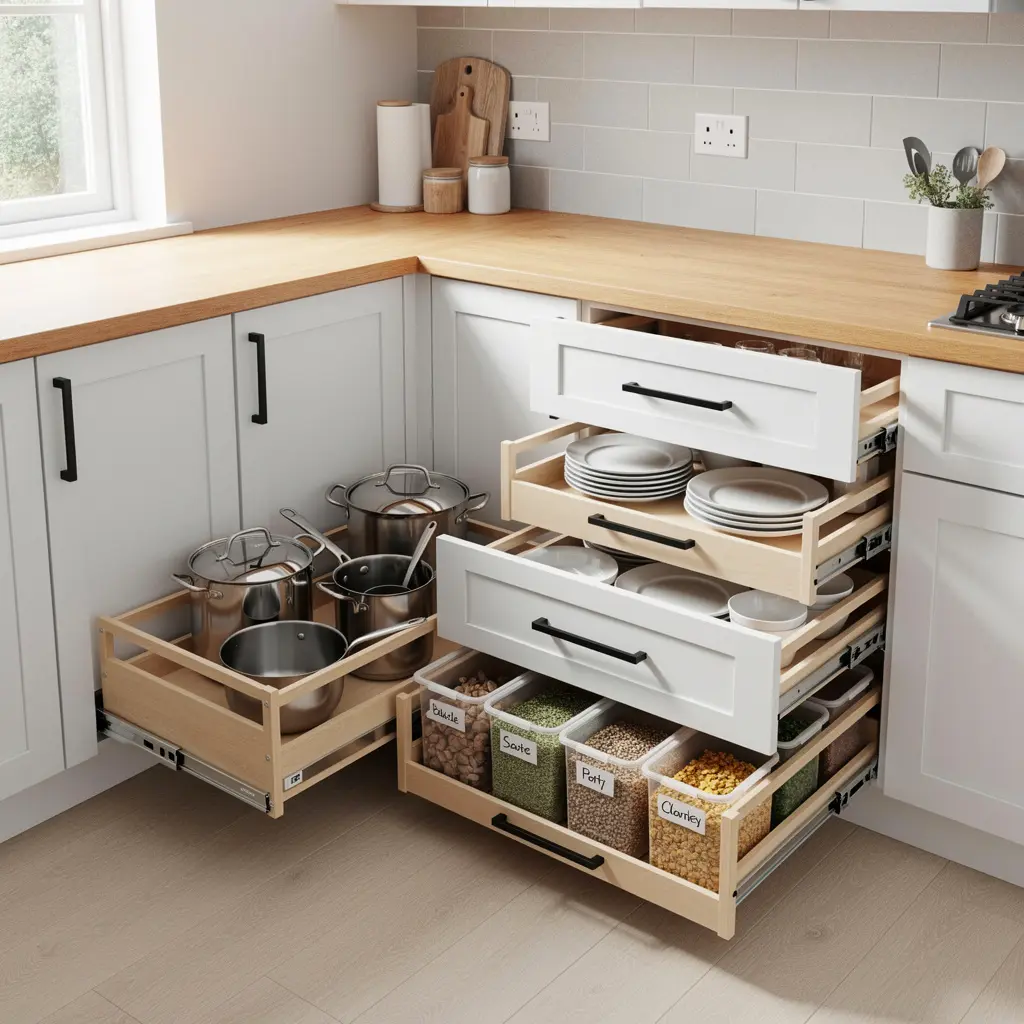
Standard lower cabinets with a single shelf waste a significant amount of depth, since anything stored in the back becomes difficult to reach and easy to forget about. Pull out drawer inserts, which can often be added to existing cabinets without a full renovation, make the entire depth of the cabinet usable and visible at a glance.
Where This Update Matters Most
This upgrade makes the biggest difference in cabinets storing small appliances, pots, or pantry items, since these are the categories most likely to get lost or forgotten in a deep, fixed shelf cabinet.
4. Use Tension Rods to Divide Baking Sheets and Cutting Boards
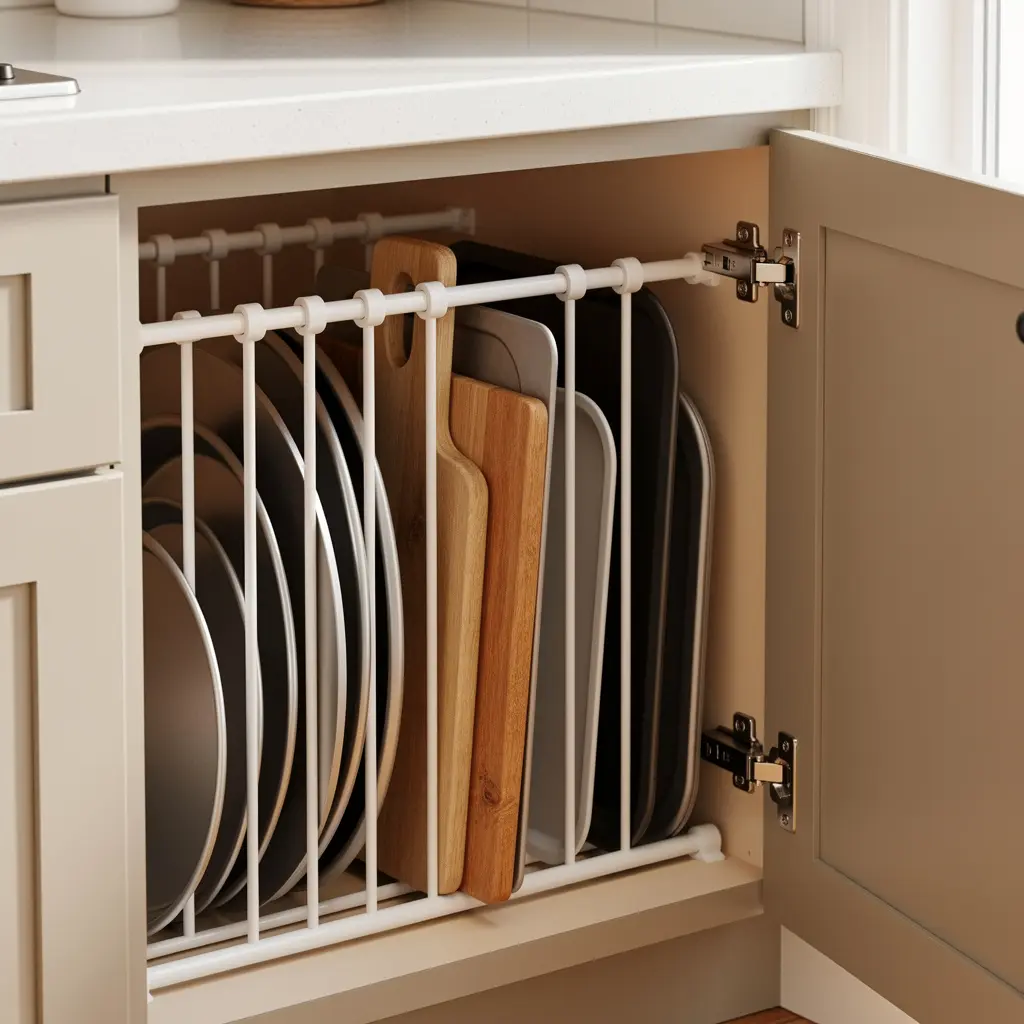
Flat items like baking sheets, cutting boards, and muffin tins tend to slide around and stack awkwardly in a standard cabinet. Installing a tension rod vertically inside a cabinet creates narrow slots that keep these flat items upright and separated, which makes them far easier to pull out individually instead of unstacking the whole group.
5. Add a Rolling Cart for Flexible Extra Storage
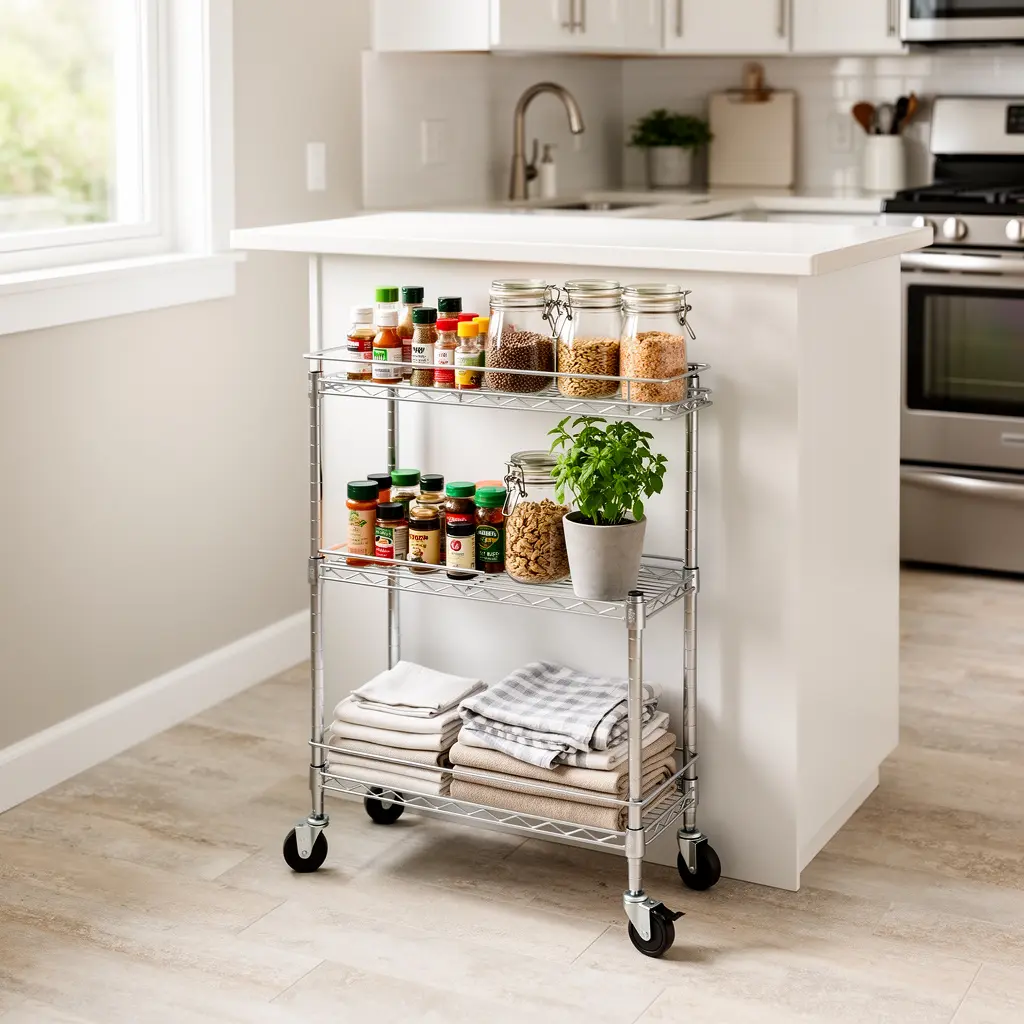
A small rolling kitchen cart, often available in the 40 to 100 dollar range, adds counter space, storage, or both in a kitchen that’s tight on built in cabinetry. Since it’s on wheels, it can be tucked into a corner when not needed and rolled out when you’re prepping food or hosting.
Choosing the Right Cart Size
A narrow cart, generally under 18 inches wide, fits into tighter kitchen layouts without blocking walkways, while a slightly wider cart works better if you have the floor space to spare and want it to double as extra counter surface.
6. Use Drawer Dividers for Utensils and Small Tools
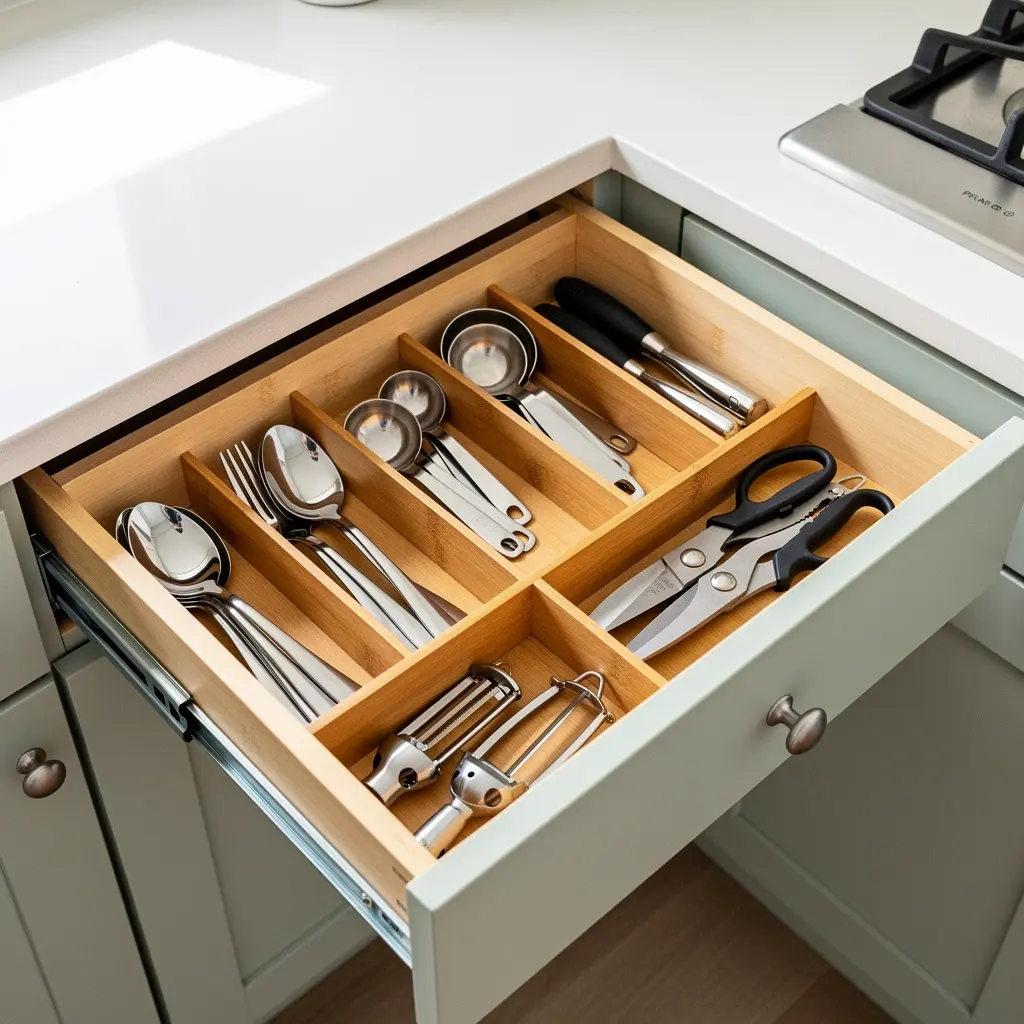
A junk drawer full of loose utensils, rubber bands, and random small tools wastes space simply because nothing has a defined spot. Adjustable drawer dividers, which typically cost 10 to 25 dollars for a full set, let you customize compartments to fit your specific utensils rather than relying on a generic tray insert.
7. Mount a Magnetic Knife Strip Instead of Using a Knife Block
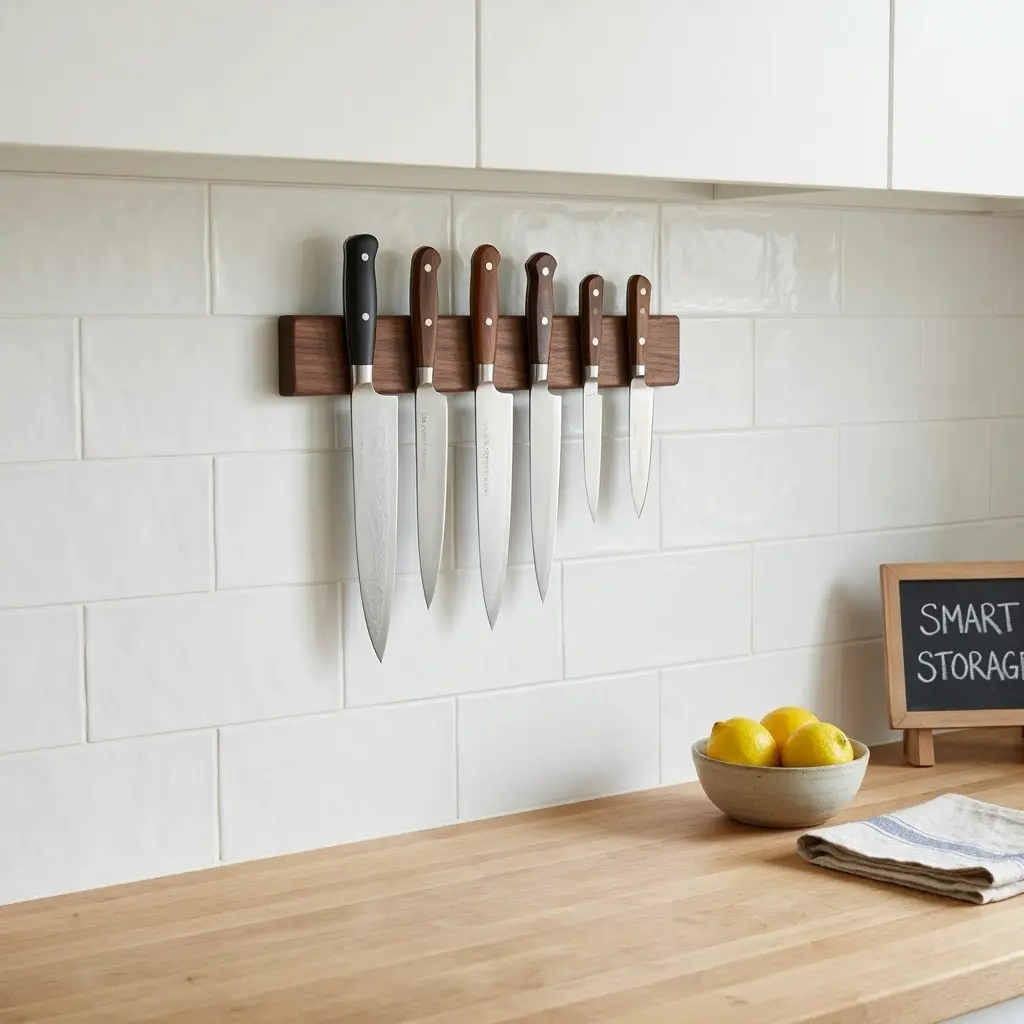
A knife block takes up a noticeable amount of counter space in a small kitchen, and it often only holds a fixed number of knives. A magnetic strip mounted on a wall or the side of a cabinet holds knives vertically, frees up the counter entirely, and can typically hold more knives than a standard block in the same footprint.
8. Use the Inside of Cabinet Doors for Extra Storage
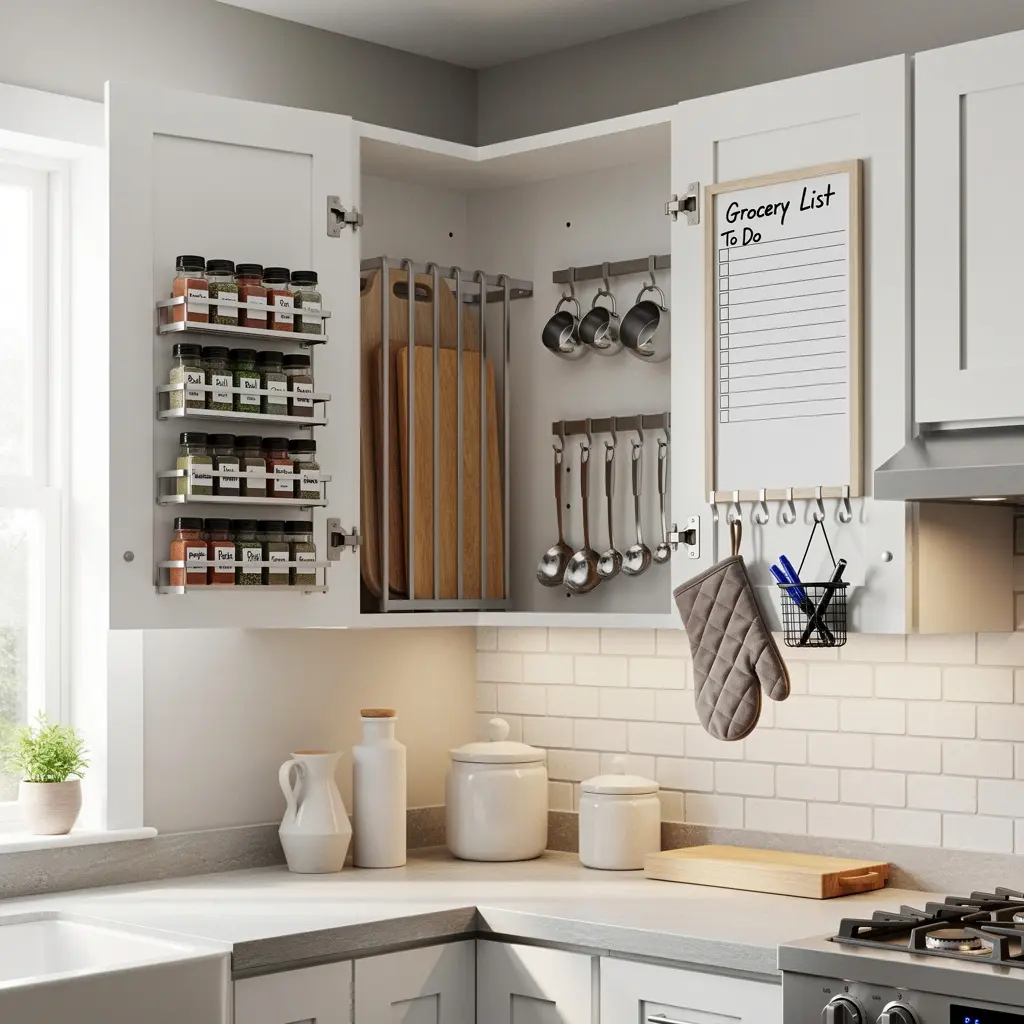
The flat, unused space on the inside of cabinet doors is one of the easiest places to add storage without any major installation. Small adhesive hooks, a spice rack, or a slim over the door organizer can hold spices, lids, or cleaning supplies that would otherwise take up shelf space.
Best Items for Door Storage
Lightweight items work best here, since heavier items can strain the hinges over time. Spice jars, pot lids, and small cleaning bottles are all good candidates.
9. Store Pot Lids Separately From the Pots Themselves
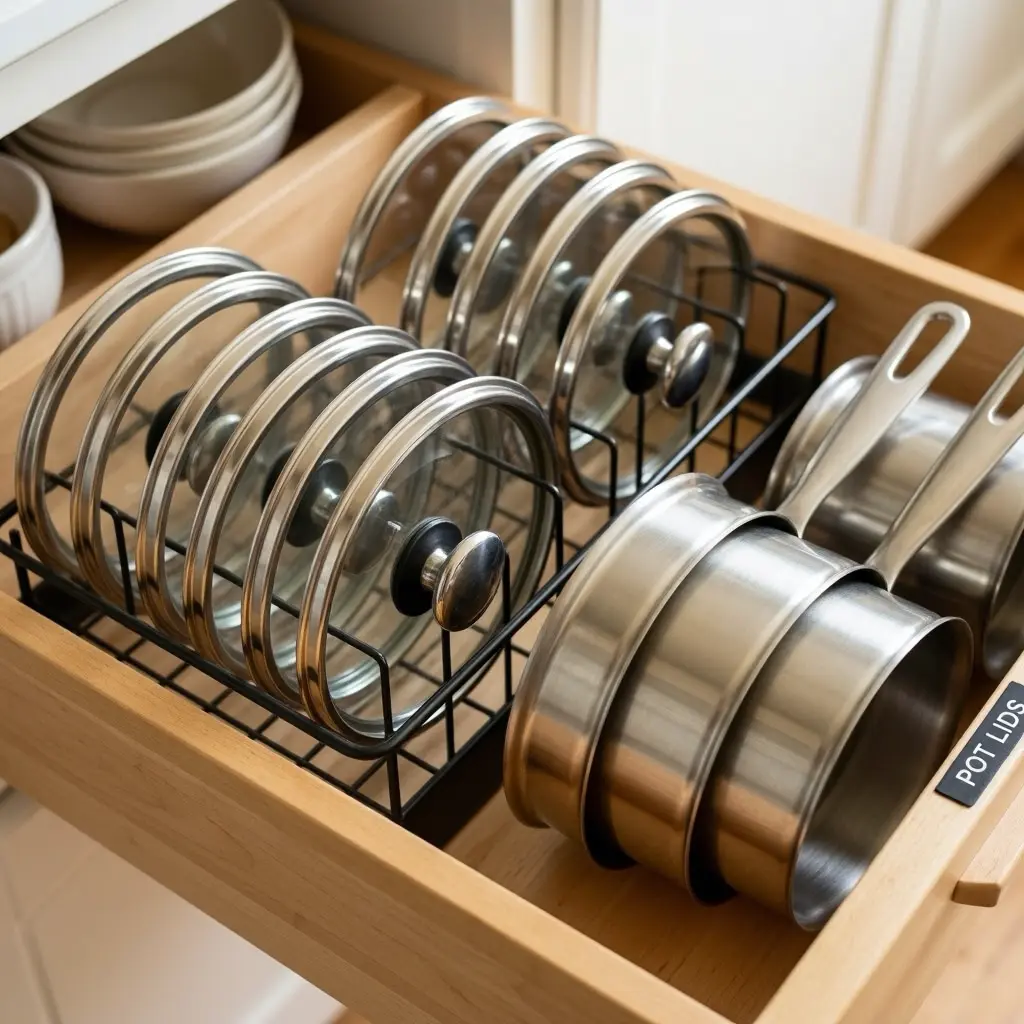
Pot lids are often the reason a stack of pots takes up more vertical space than necessary, since lids don’t nest as cleanly as the pots do. A simple lid organizer, either a rack that holds lids upright or a tension rod setup similar to the one used for baking sheets, separates lids from pots and lets both stack more efficiently.
10. Choose Stackable, Uniform Food Storage Containers
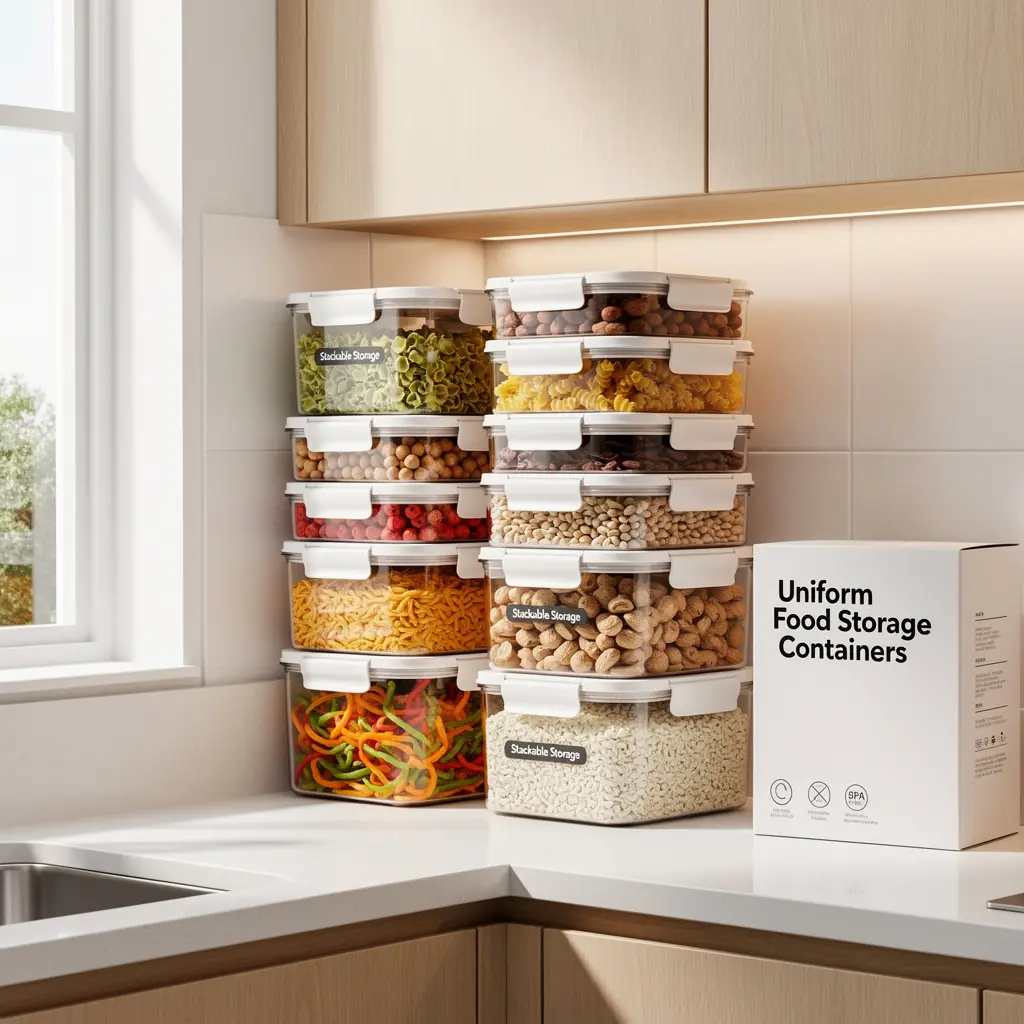
Mismatched food storage containers in different shapes and sizes waste cabinet space since they don’t stack or nest cleanly together. Switching to a single matching set of stackable containers, ideally ones where lids and bases nest separately, can free up a surprising amount of cabinet space compared to a mismatched collection accumulated over years.
Mistakes to Avoid
- Buying storage bins or organizers before measuring the actual cabinet or drawer space they need to fit
- Stacking pots and pans without any dividers, which makes reaching for one item a multi step process
- Ignoring the space above cabinets entirely instead of using it for infrequently used items
- Overloading cabinet door storage with heavy items that strain the hinges
- Keeping a mismatched collection of food storage containers instead of switching to a uniform stackable set
- Adding more storage bins without first decluttering items that are rarely or never used
Frequently Asked Questions
What’s the single most impactful small kitchen storage upgrade? Pull out drawer inserts for lower cabinets tend to make the biggest difference, since they make the entire depth of a cabinet visible and usable instead of losing items in the back.
Do I need to renovate to add more kitchen storage? No. Many of these updates, like tension rods, drawer dividers, magnetic knife strips, and door mounted organizers, can be added to an existing kitchen without any permanent construction or renovation.
How do I store small appliances if my counters are already full? A rolling cart, a cabinet with a pull out shelf, or the space above your upper cabinets are all good spots for small appliances that don’t need to be accessed daily.
What should I do with the awkward corner cabinet in my kitchen? A lazy Susan or a pull out corner organizer designed specifically for blind corner cabinets can make that space significantly more usable than a standard fixed shelf.
Is it worth buying a matching set of food storage containers? Yes, especially in a small kitchen, since a uniform stackable set typically takes up noticeably less cabinet space than a mismatched collection of containers gathered over time.
Conclusion
Small kitchen storage comes down to using every available space intentionally rather than buying more bins to cram into an already full cabinet. Start with the areas that are currently wasted entirely, the space above your cabinets, the inside of cabinet doors, and deep lower cabinets, before adding new furniture or major purchases. A few targeted changes usually free up more space than a full kitchen reorganization from scratch.

Leave a Reply