Desk Hutch Decor Ideas That Make the Extra Storage Actually Work
You have a desk hutch sitting on top of your desk, all that extra vertical storage that seemed like such a good idea when you bought it, and now it’s become the place where loose papers, old chargers, and things you don’t know what to do with all end up, quietly accumulating week after week. Desk hutch decor ideas that actually work solve this by giving that space a real function again, styled in a way that makes you want to keep it organized instead of just piling things up because there’s room to. A little bit of structure goes a long way here.
1. Divide the Hutch Into Clear Functional Zones
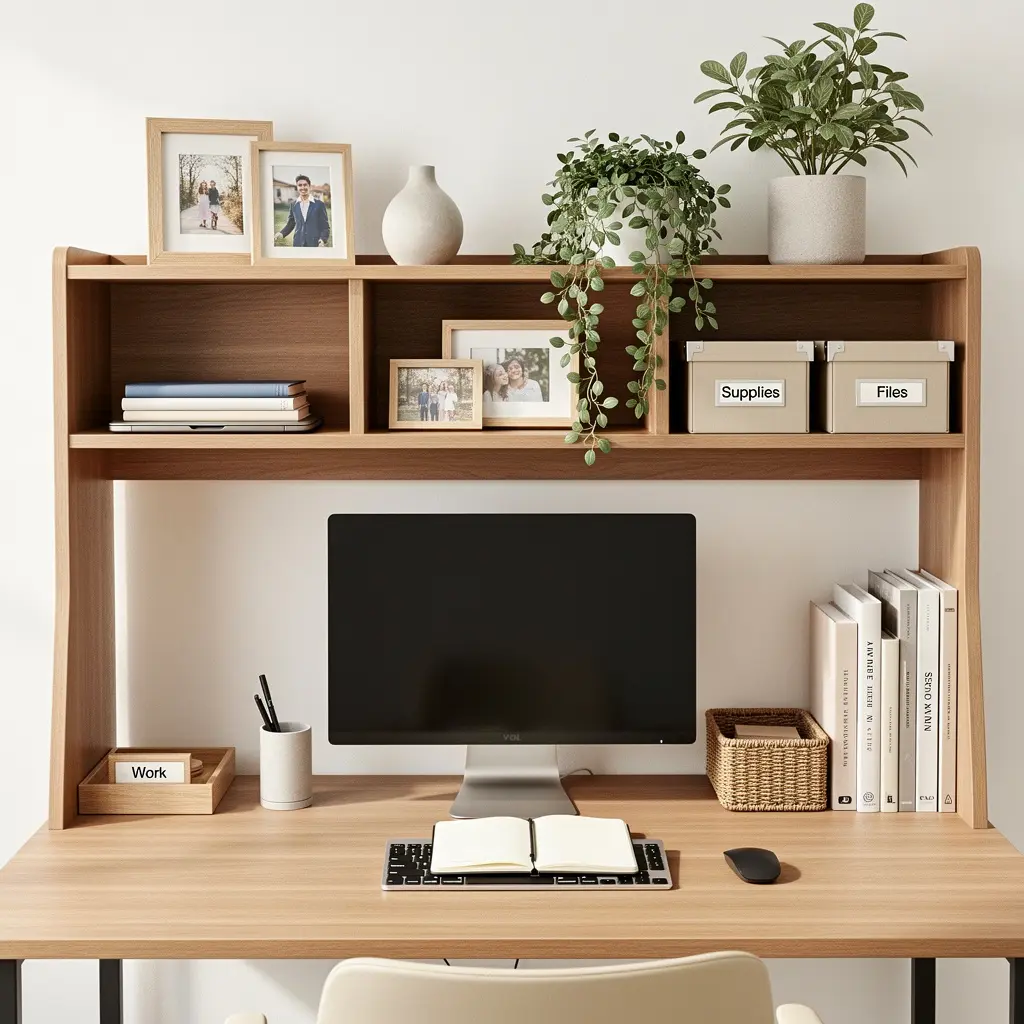
A hutch with no organizing system quickly turns into one undifferentiated pile of stuff, absorbing whatever loose item happens to be nearby at the end of a long day. Assigning specific zones, one shelf for books, one section for supplies, one small area for a plant or personal object, gives you a reason to put things back in a consistent place instead of wherever there happens to be room in the moment, the same way a labeled kitchen cabinet gets used more consistently than an unlabeled one.
Why Zones Matter More on a Hutch Than a Regular Shelf
A desk hutch sits directly in your line of sight while you work, so disorganization here is more visually distracting than clutter tucked away on a shelf across the room, and that distraction adds up over the course of an entire workday. Clear zones reduce that visual noise considerably, even if the total amount of stuff on the hutch doesn’t actually change, since the eye reads organized clutter very differently than scattered clutter, even at the exact same volume.
2. Use Small Baskets or Bins for Loose Supplies
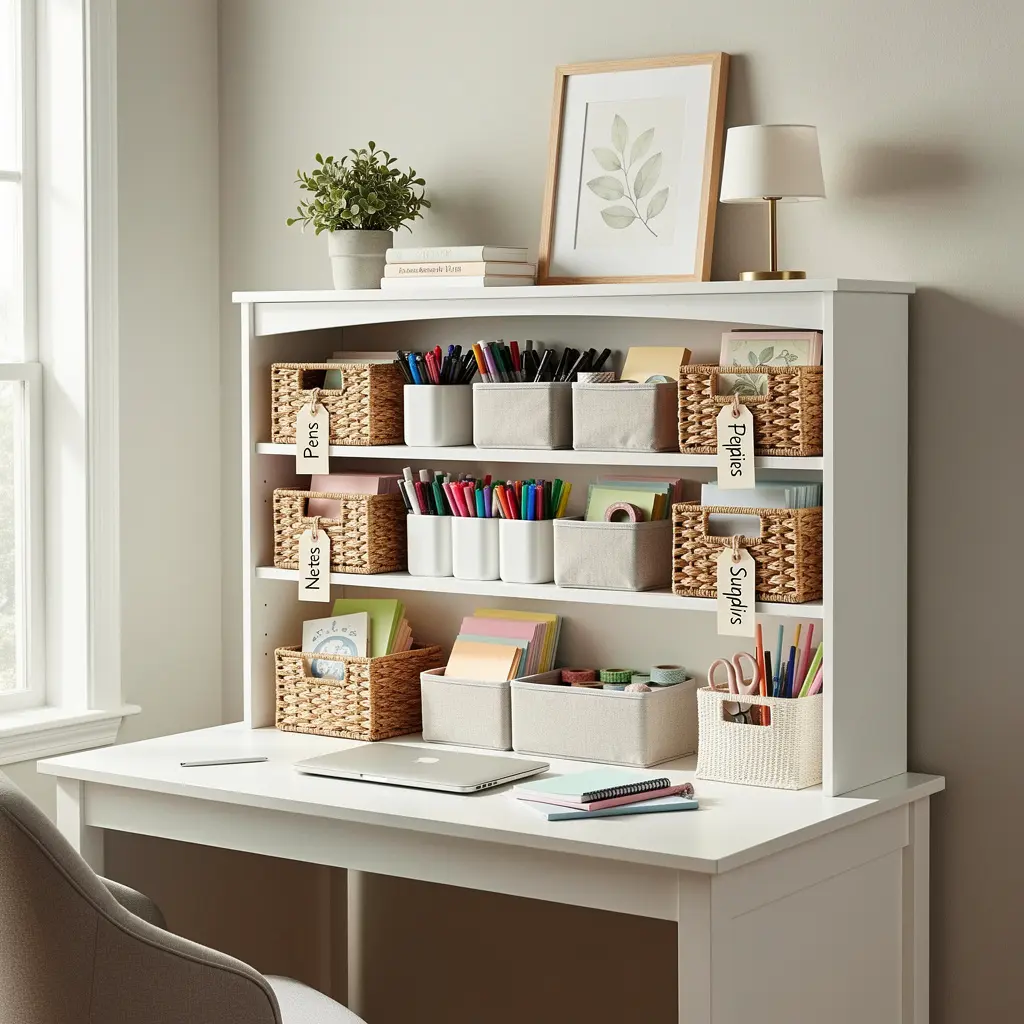
Pens, sticky notes, and small loose office supplies scattered directly on the hutch shelf create visual chaos fast, especially since these are exactly the kinds of items that tend to multiply without anyone noticing. A couple of small woven or ceramic baskets contain these items while still keeping them accessible, and they add texture to what would otherwise be a flat, hard surfaced shelf, which matters more on a hutch than people expect given how much time you actually spend looking directly at it.
3. Add a Row of Books as Both Function and Decor
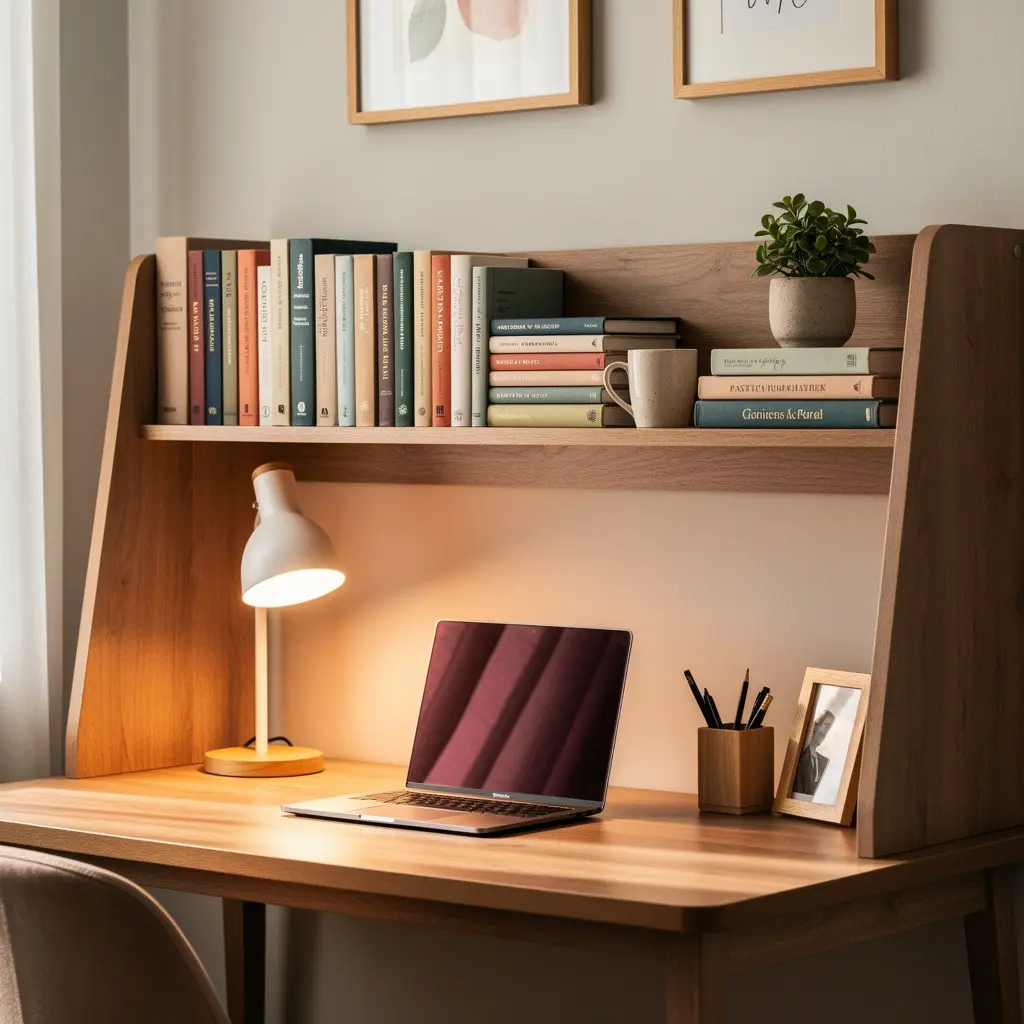
Books do double duty on a hutch, they’re genuinely useful if you reference them for work or school, and a row of spines in coordinating colors or a matching set adds visual structure to the shelf. Standing books upright, with a simple bookend on one side, reads as more intentional than a stack lying flat that can slide around, and it also happens to be easier to actually grab the one you need without disturbing the rest.
Choosing a Book Arrangement That Looks Considered
Grouping books by height, tallest to shortest or with one shorter stack breaking up a row of taller spines, creates the same kind of visual rhythm that works in any other type of styled shelf. Avoid perfectly uniform heights across the entire row, since a little variation actually reads as more intentional, the same way it does on any other styled bookshelf in the home.
4. Add One Framed Piece or Small Print for Personality
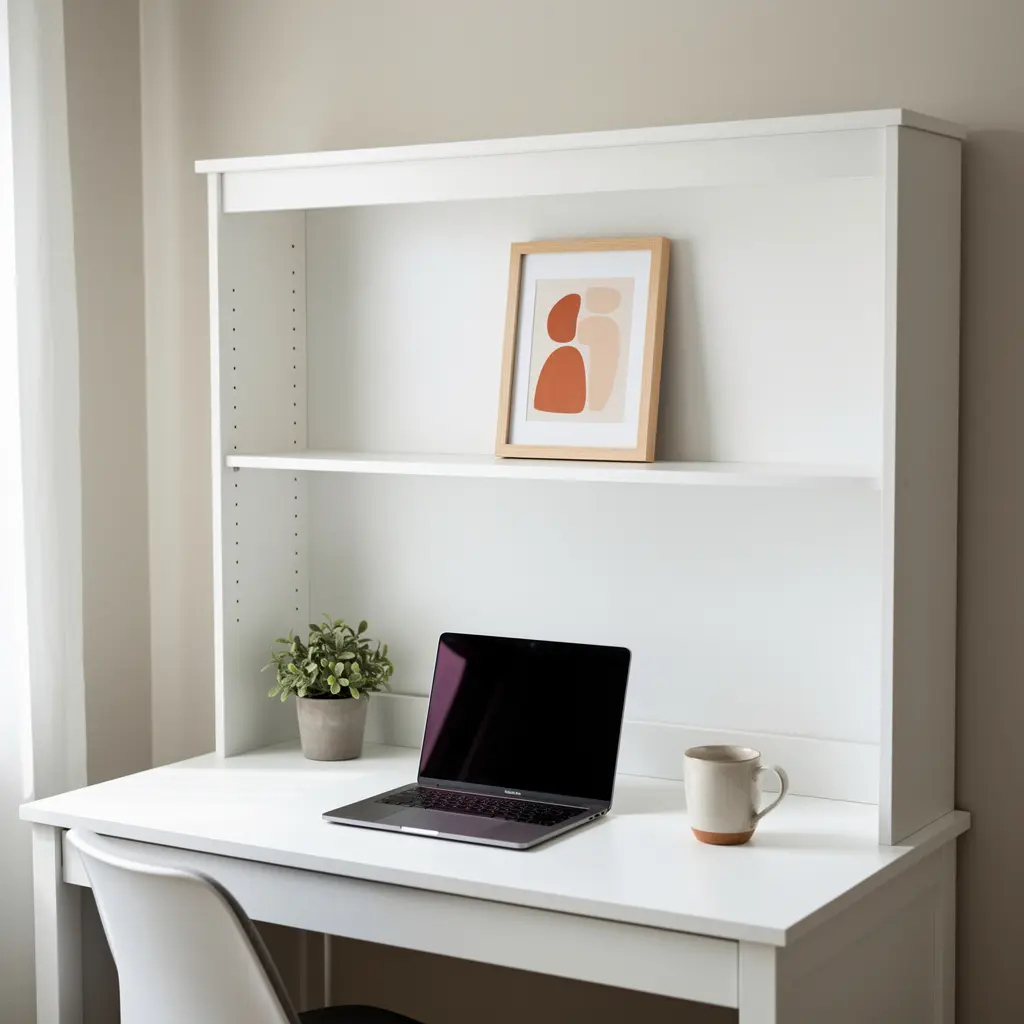
A single small framed print, a photo, or a piece of art leaned against the back of the hutch adds personality without requiring a full gallery wall setup. This is especially useful on a hutch specifically because the vertical backing gives you a natural spot to lean something rather than needing to hang it separately, which keeps the whole setup renter friendly if you’re not able to put holes in the wall, and it’s an easy detail to swap out whenever you want a change.
5. Use a Small Lamp to Add Warm Task Lighting
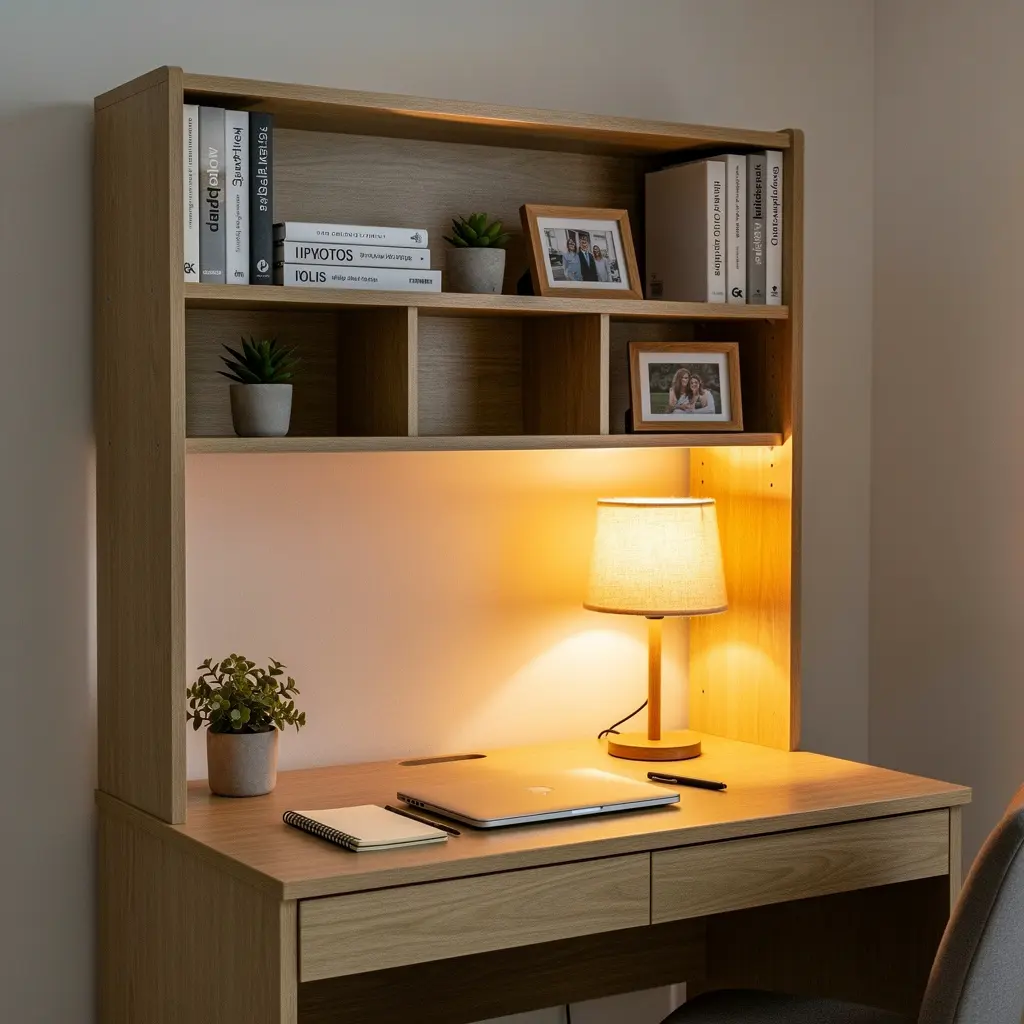
If your hutch has a shelf at a reasonable height, a small task lamp adds both function and warmth to what’s otherwise likely lit by an overhead fixture or a computer screen glow. It makes the whole hutch feel like a genuine part of the room rather than an afterthought bolted onto the desk. A warm white bulb here specifically helps during long stretches of work or study, reducing the flat, slightly harsh lighting a desk area often defaults to.
6. Keep Cables and Chargers Fully Out of Sight
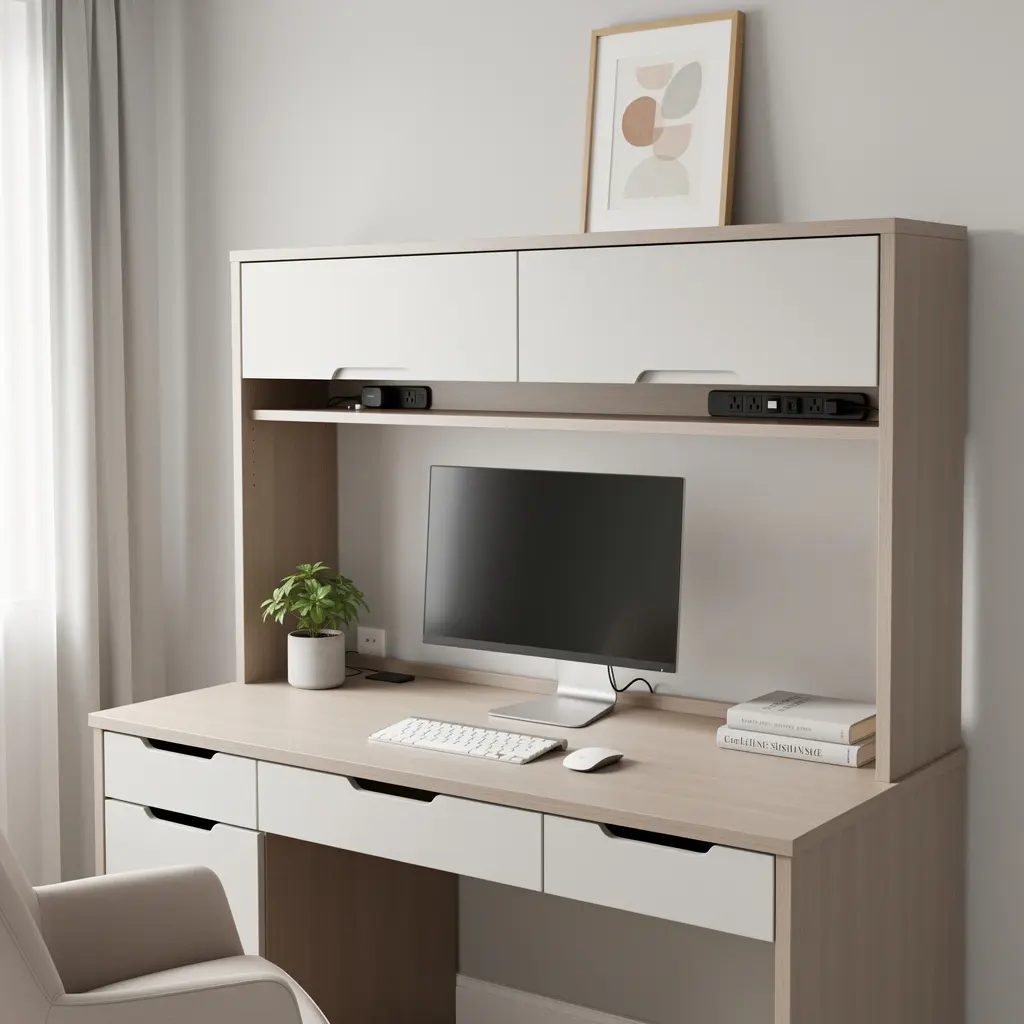
Visible cords and charging cables undercut even a well styled hutch faster than almost anything else, since they’re purely functional and visually messy by nature. A small cable organizer, or simply routing cords behind the hutch’s back panel if it has one, keeps this necessary clutter from pulling focus from everything else you’ve styled, and it’s often the single change that makes the biggest visible difference for the least effort.
7. Add a Small Plant Suited to Lower Light
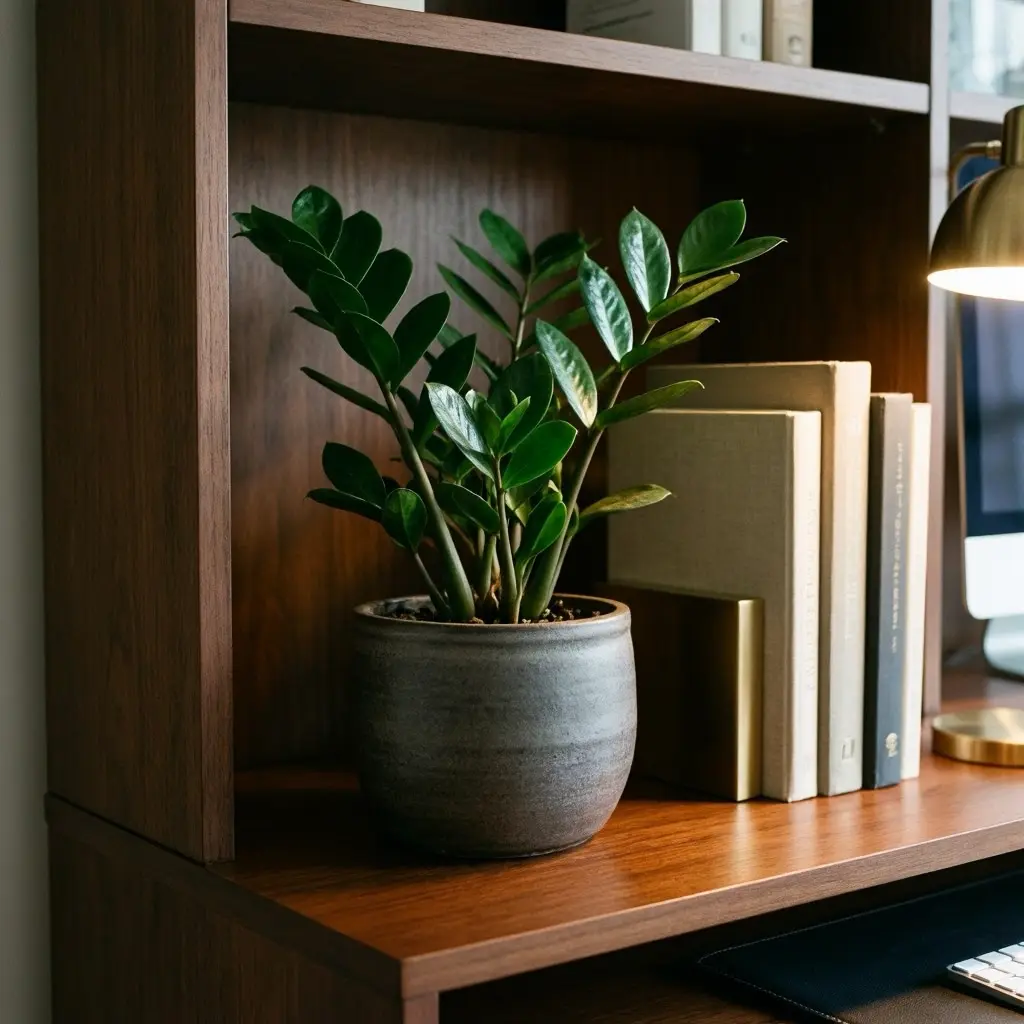
A desk hutch often sits further from a window than the rest of the room, so choosing a plant that tolerates lower light, a pothos or a small snake plant, keeps this green accent actually thriving rather than slowly dying in a spot that doesn’t get much sun. Even one small plant softens what’s otherwise a shelf full of hard edged office supplies and books, and it gives you one small thing to actually take care of during a long workday.
8. Choose a Consistent Color Palette for Visible Items
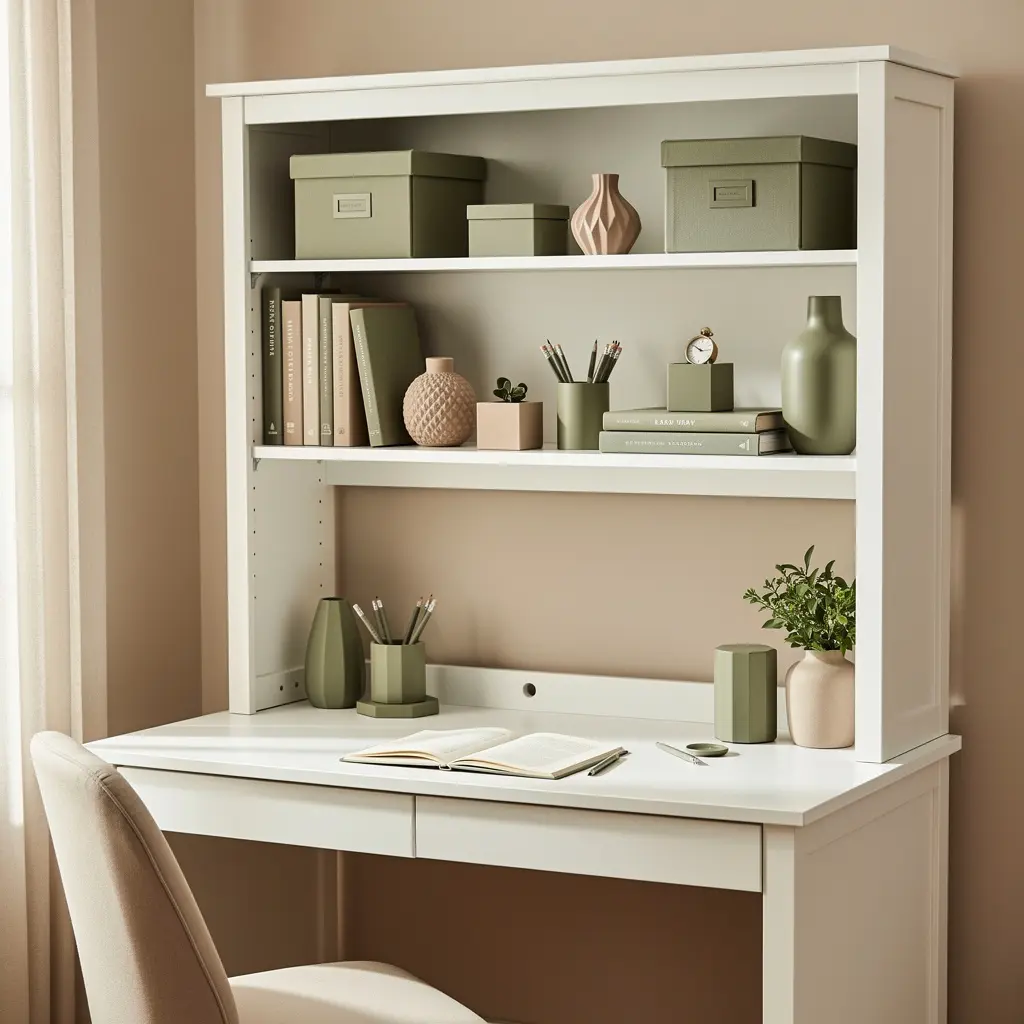
A hutch covered in mismatched colors, a bright red folder next to a blue binder next to a yellow sticky note holder, reads as chaotic even if everything is technically organized. Choosing supplies, baskets, and decor within a consistent color family keeps the whole hutch looking cohesive even as the actual contents shift day to day.
9. Reserve the Top Shelf for Decor, Not Daily Use Items
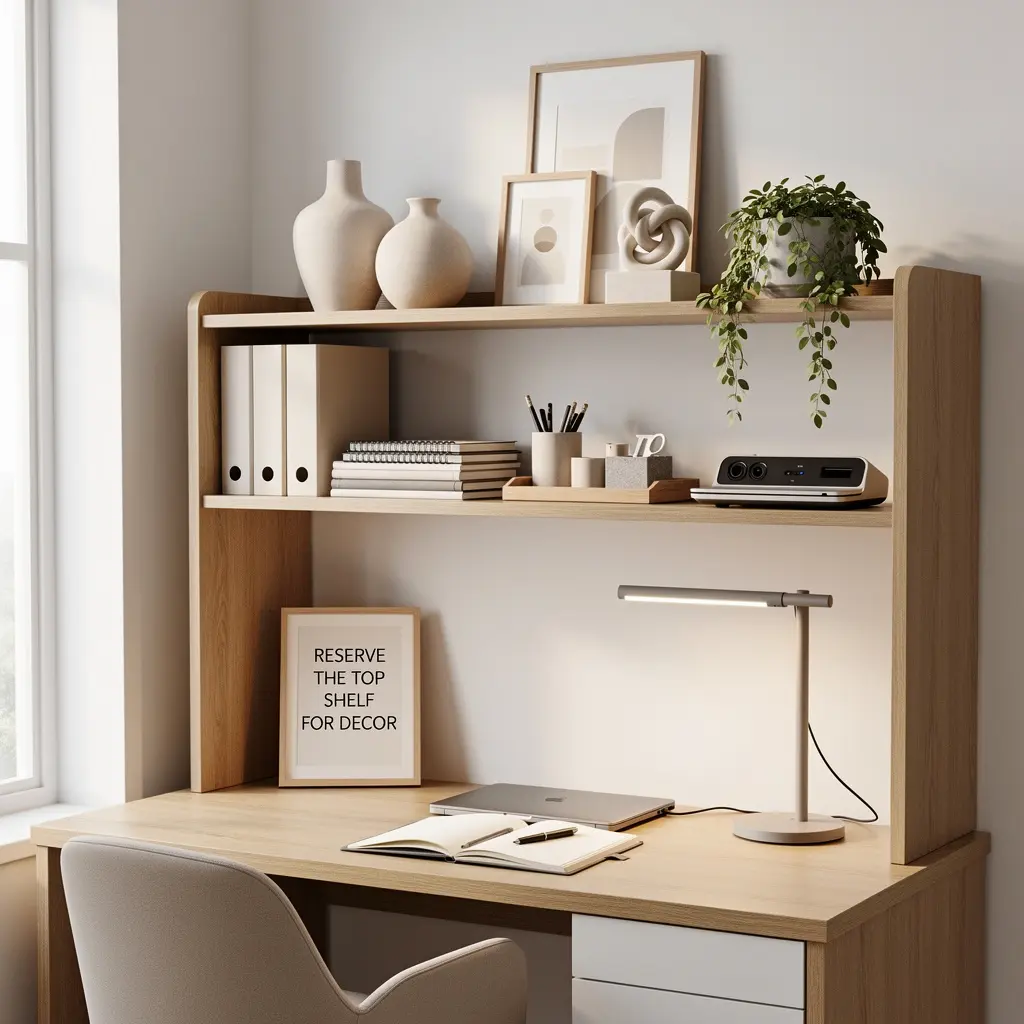
The highest shelf on a hutch is often the hardest to reach regularly, which makes it a poor spot for anything you need daily but a great spot for decor you don’t need to touch often, a vase, a framed print, a small collection of objects. This keeps your most frequently used items within easy reach while still using the whole hutch, top to bottom, for something purposeful, rather than leaving that upper shelf as unused, awkward space.
10. Edit the Hutch Down Regularly to Prevent Clutter Creep
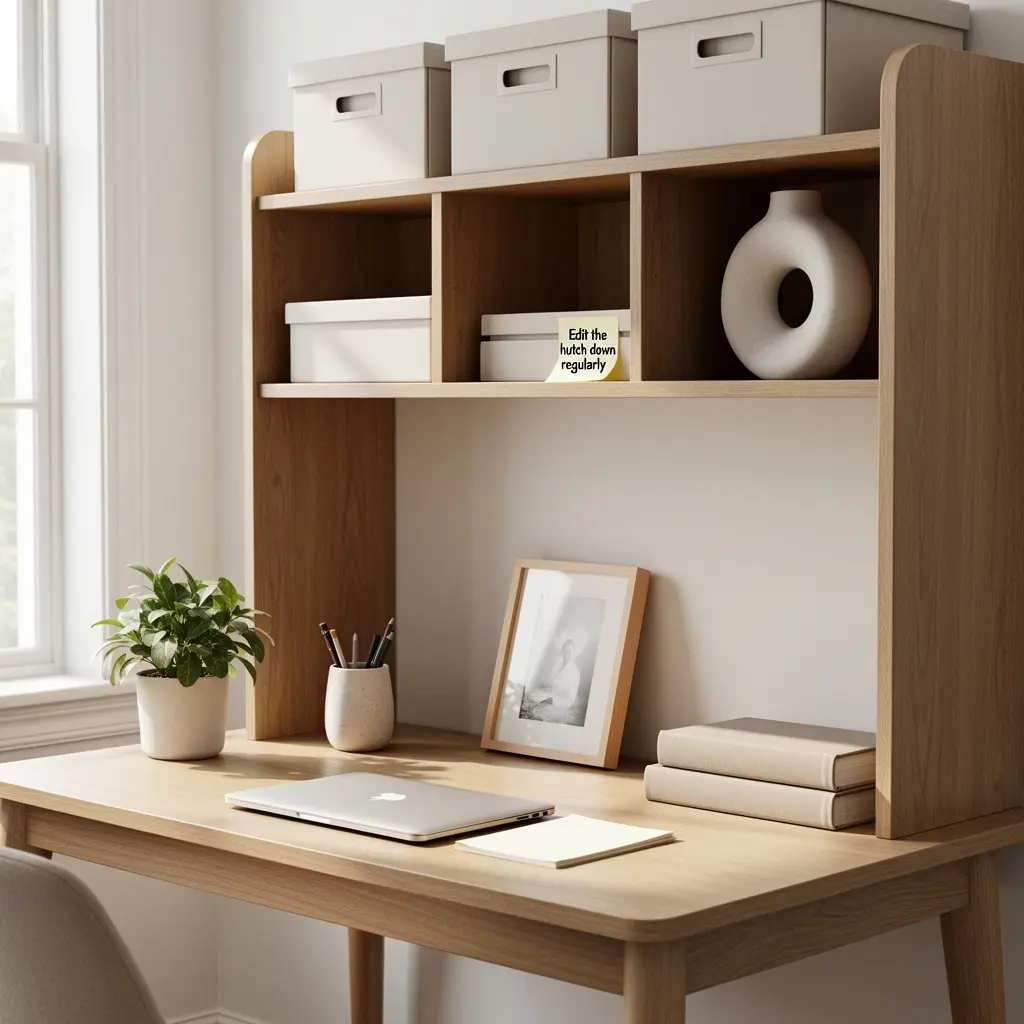
Because a hutch sits directly in your workspace, it tends to accumulate small items faster than almost anywhere else in a room. Doing a quick five minute edit every couple of weeks, removing anything that’s drifted there without an actual purpose, keeps the space from slowly sliding back into the cluttered dumping ground it probably started as, and it’s a far smaller task than the deep declutter you’d need if you let it go unchecked for months.
Mistakes to Avoid
- Leaving the hutch with no organizing system, which lets clutter accumulate with nowhere specific to go
- Scattering loose supplies directly on the shelf instead of containing them in small baskets or bins
- Choosing decor items with no shared color palette, which reads as chaotic even when technically organized
- Leaving cables and chargers fully visible instead of routing them out of sight
- Placing frequently needed items on the hardest to reach top shelf instead of reserving that space for decor
- Skipping regular edits, which lets small, purposeless items slowly accumulate again over time
Frequently Asked Questions
How do I keep a desk hutch from becoming a clutter zone? Assign clear zones for different categories, contain loose items in small baskets, and do a quick regular edit to remove anything that’s accumulated without an actual purpose.
What’s the best way to style books on a desk hutch? Stand them upright with a bookend, and group by height with some intentional variation rather than a perfectly uniform row, which reads as more considered.
Should I add a lamp to my desk hutch? If the shelf height allows for it, yes. A small warm task lamp adds both function and a softer glow than overhead lighting alone typically provides.
How do I hide cables on a desk hutch? A small cable organizer, or routing cords behind the hutch’s back panel if it has one, keeps this necessary but visually messy element out of sight.
Can I fit a plant on a desk hutch that doesn’t get much natural light? Yes. Choose a lower light tolerant variety, like a pothos or snake plant, rather than something that needs direct sun to actually thrive in that spot.
Conclusion
A desk hutch works best when it has a real system behind it, clear zones, contained supplies, a consistent color palette, rather than becoming an open ended catchall for whatever doesn’t have another home. Start by dividing the space into functional zones, add a few styled elements like books and a small plant, and commit to a quick regular edit so the hutch stays useful instead of sliding back into clutter.