
You love reading, but you do it hunched on the couch with a laptop light overhead, or propped up in bed with a pillow that’s slipping every five minutes. Cozy reading nook ideas exist to fix exactly that, taking whatever underused corner your home already has and turning it into a small, defined space built specifically for sitting down with a book and actually staying there.
1. Choose a Corner With Some Natural Boundary Already Built In
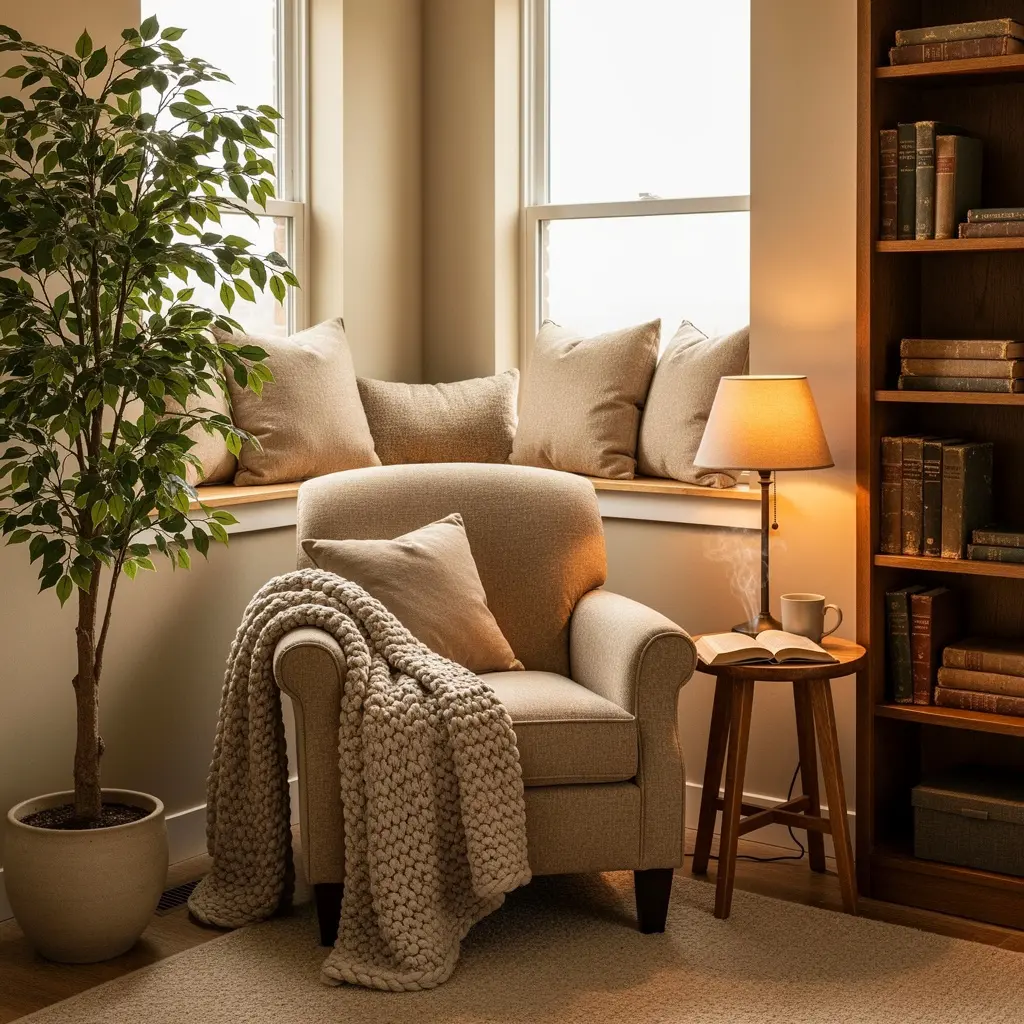
The easiest reading nook to build is one tucked into an existing architectural feature: a window bay, the angle where two walls meet, the space under a staircase, or a closet with the doors removed. These spots already have a sense of enclosure that a random spot in the middle of an open room lacks entirely.
Why an Underused Corner Works Better Than a Prime Spot
A nook built into a corner nobody uses for anything else avoids competing with the room’s main function. This is often the fastest way to add a reading spot without any construction, since two bookshelves placed perpendicular to each other in a corner already creates the angle a nook needs, with an armchair tucked into the space between them.
2. Prioritize One Genuinely Comfortable Chair Over Multiple Mediocre Seats
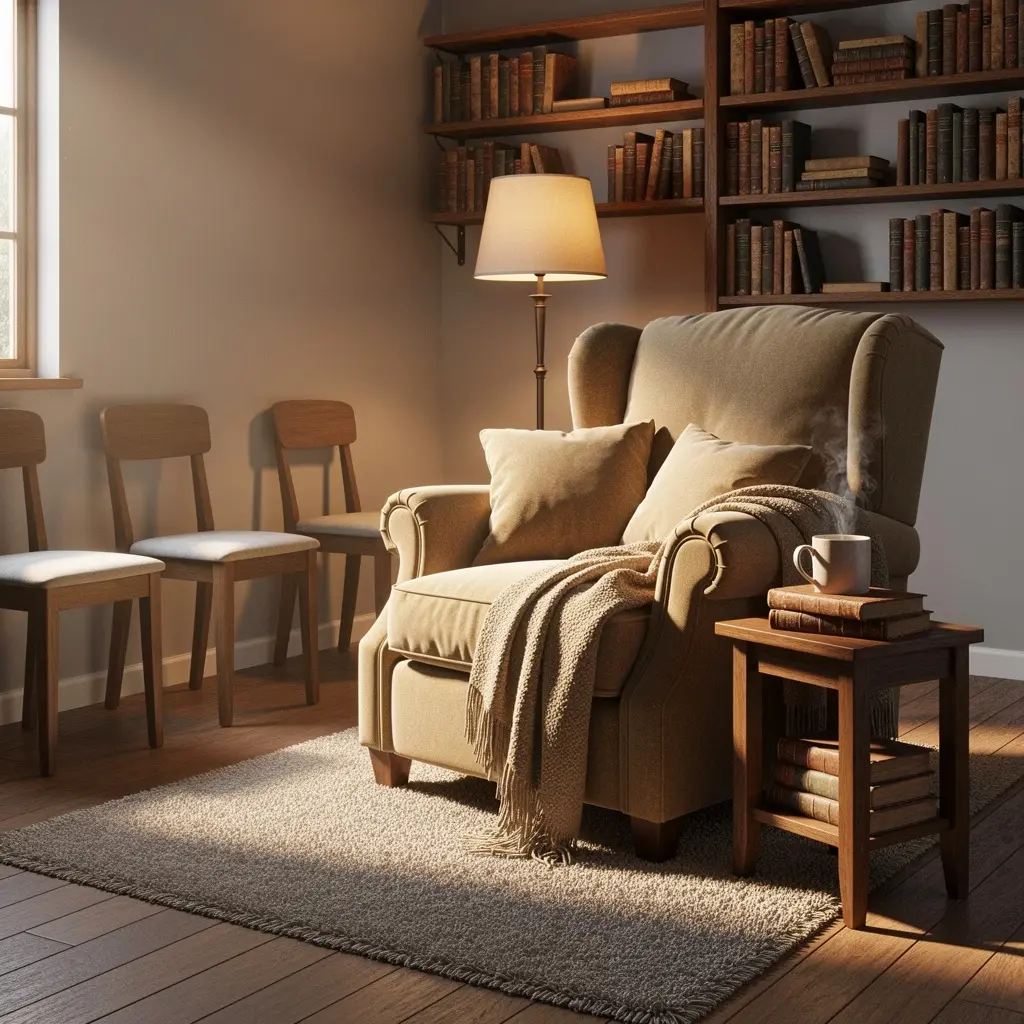
A single chair with real depth and a supportive backrest does more for a nook than several smaller, less comfortable options crammed into the same space. A chair with an eighteen to twenty inch seat depth generally allows for the kind of curled up, settled in posture most people actually want while reading. Look for something with a slight recline or deep seat cushion, since the whole point of the nook is staying in it for longer than ten minutes at a time.


3. Add Layered Lighting Built Specifically for Reading
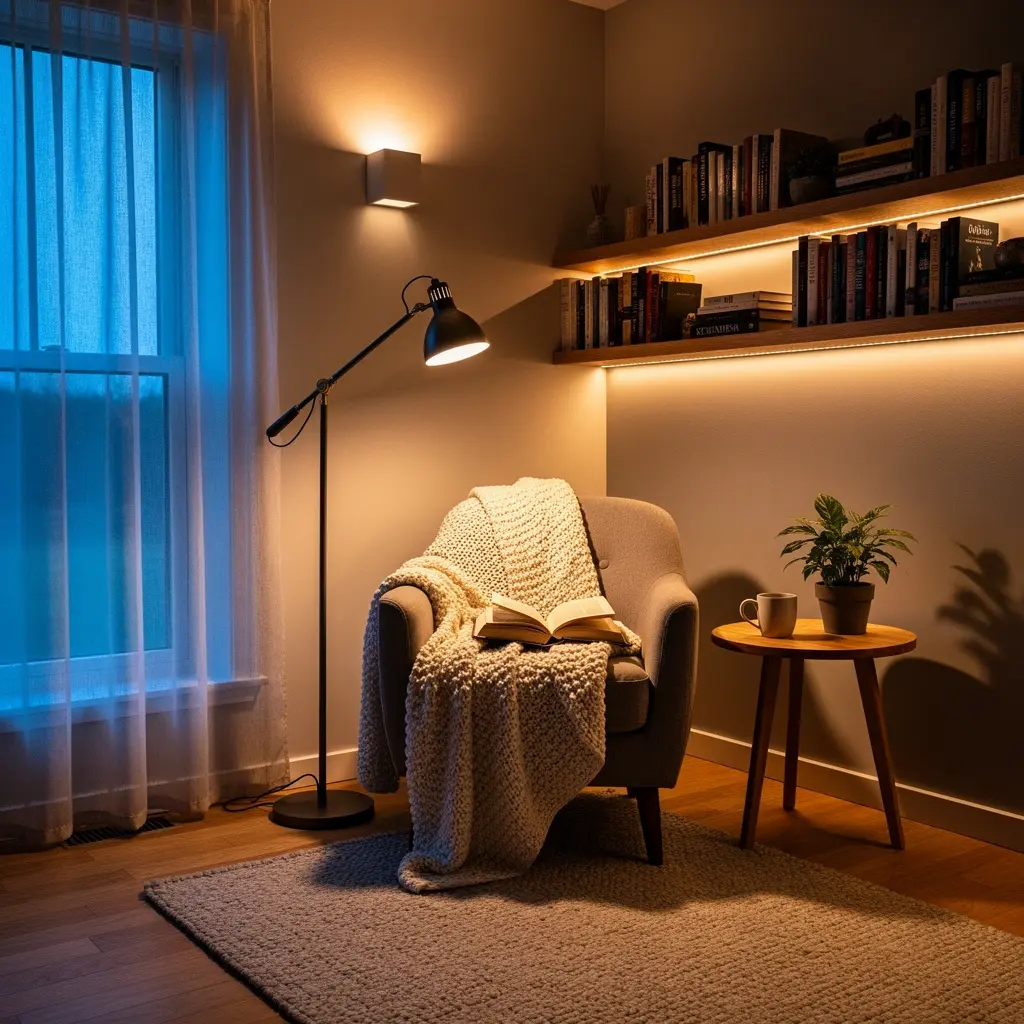
Overhead light alone flattens a nook and makes it hard to actually read comfortably. A dedicated reading lamp, positioned just behind or beside the shoulder rather than overhead, avoids glare on the page and creates the kind of warm, focused light a nook actually needs. A simple floor lamp with an adjustable arm, usually under fifty dollars, gives you the flexibility to aim the light exactly where you need it.
Choosing a Light Temperature That Feels Right for Reading
Warm white bulbs in the 2700K to 3000K range read as cozier and are easier on the eyes for long stretches than a cooler, bluer light, which can feel closer to office lighting than a relaxing evening glow.
4. Use a Rug to Define the Nook’s Footprint
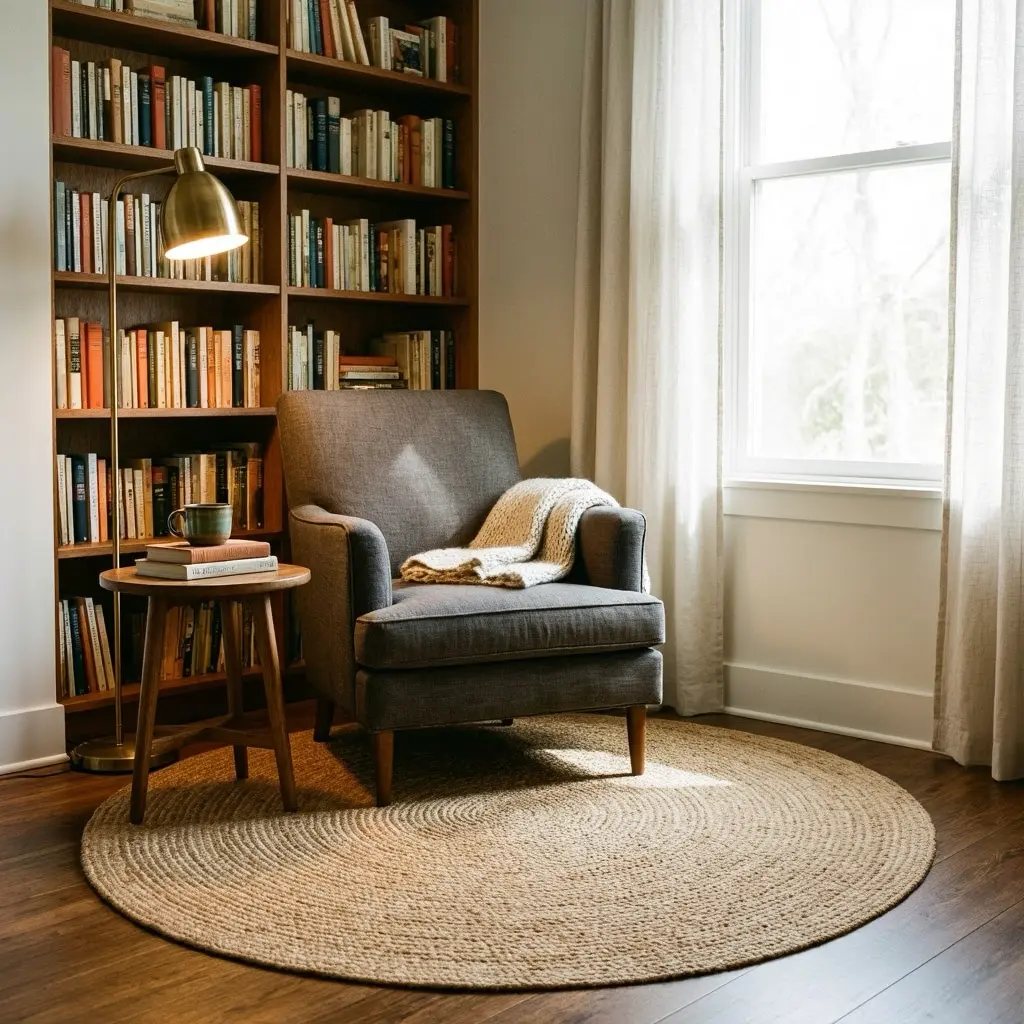
Even in a corner with no walls fully enclosing it, a rug placed under the chair and a small side table gives the space clear visual boundaries. This matters especially if the nook sits inside a larger open room, since the rug signals where the nook begins and ends without requiring any actual construction.
5. Add a Small Side Table Within Arm’s Reach
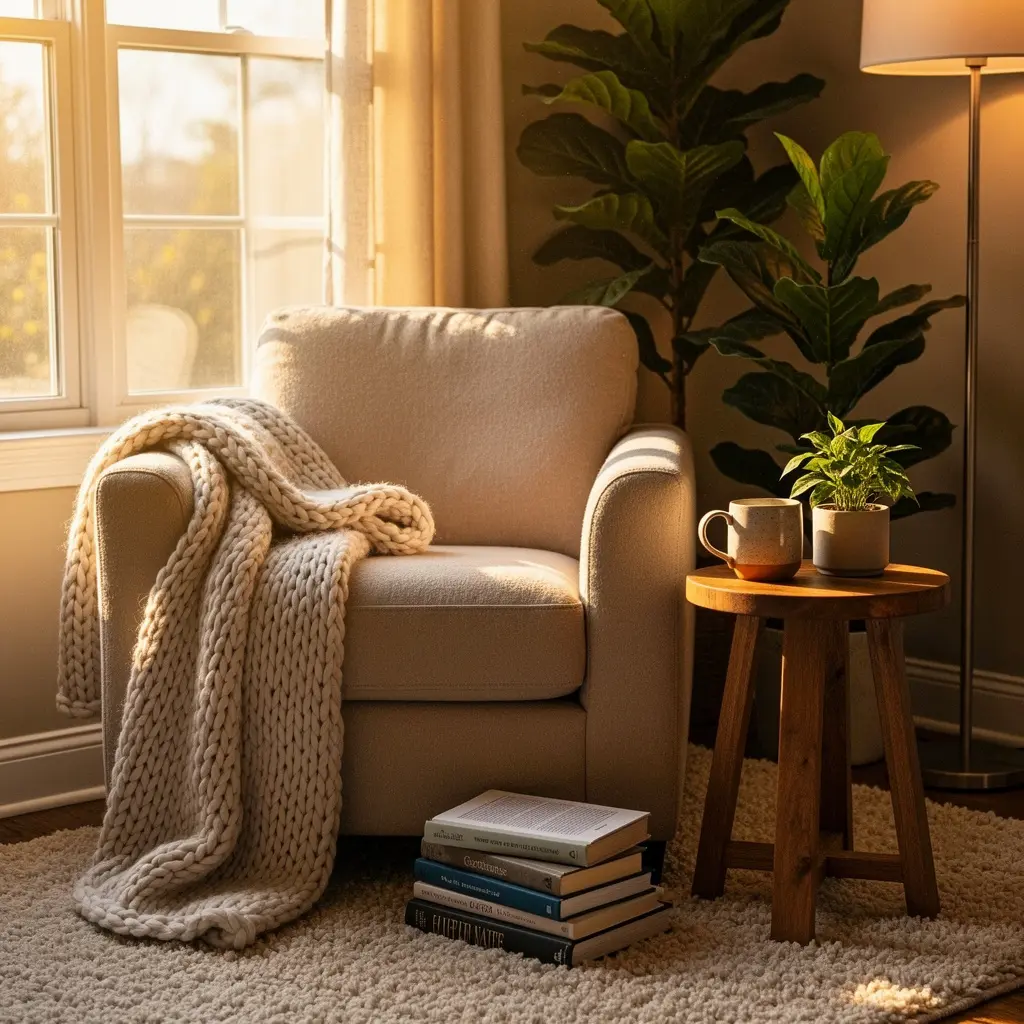
A cup of tea, a bookmark, reading glasses, all need somewhere to sit that isn’t the floor or balanced on the arm of the chair. A small side table, even a narrow one, makes the nook considerably more functional for actually settling in with a book for a while. Even a table twelve inches wide is enough surface for a mug and a phone.
6. Layer Textiles for Physical Comfort
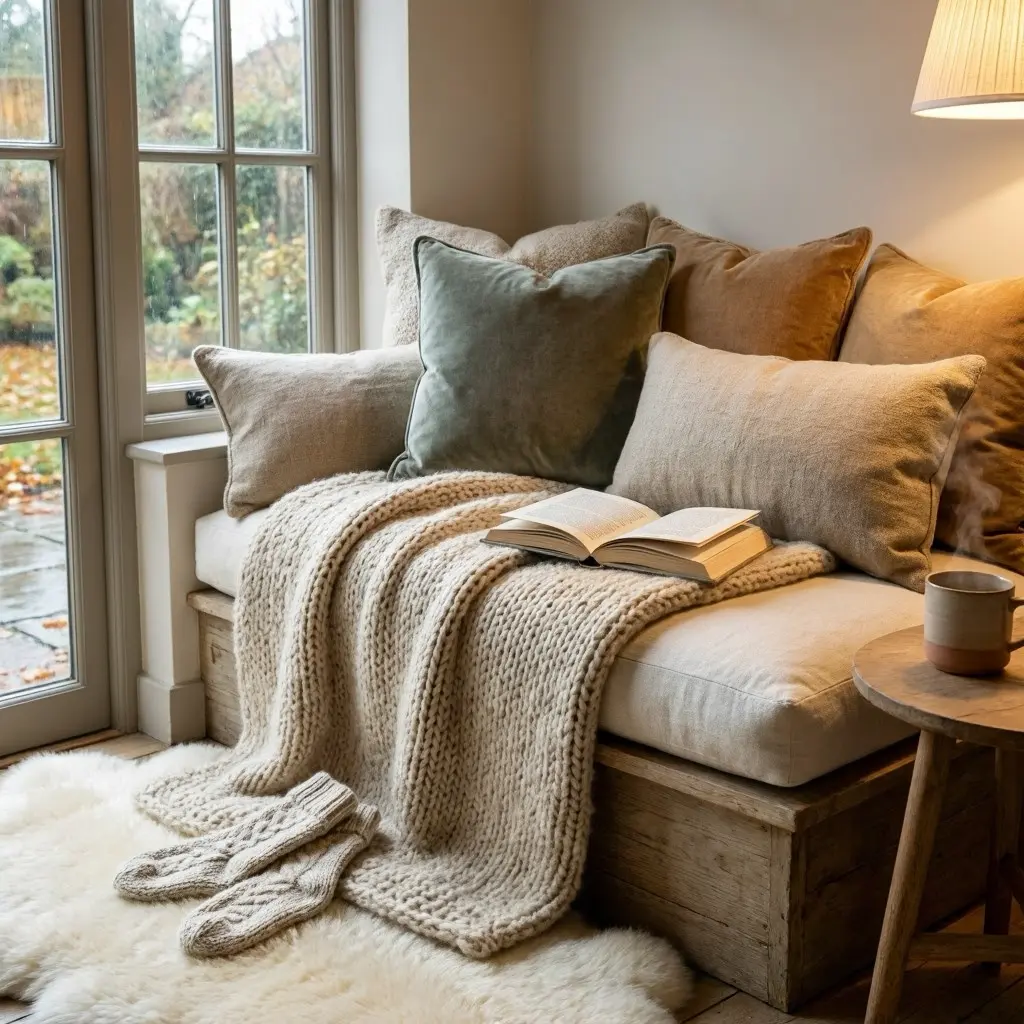
A soft throw blanket, a couple of pillows, and a textured cushion all add the kind of tactile comfort that makes a nook feel worth returning to. This is one of the cheapest ways to upgrade an existing chair into something that reads as genuinely cozy rather than simply functional. A knit throw and two pillows can transform a plain chair for well under fifty dollars total.
7. Keep a Small Stack of Current Reads Nearby
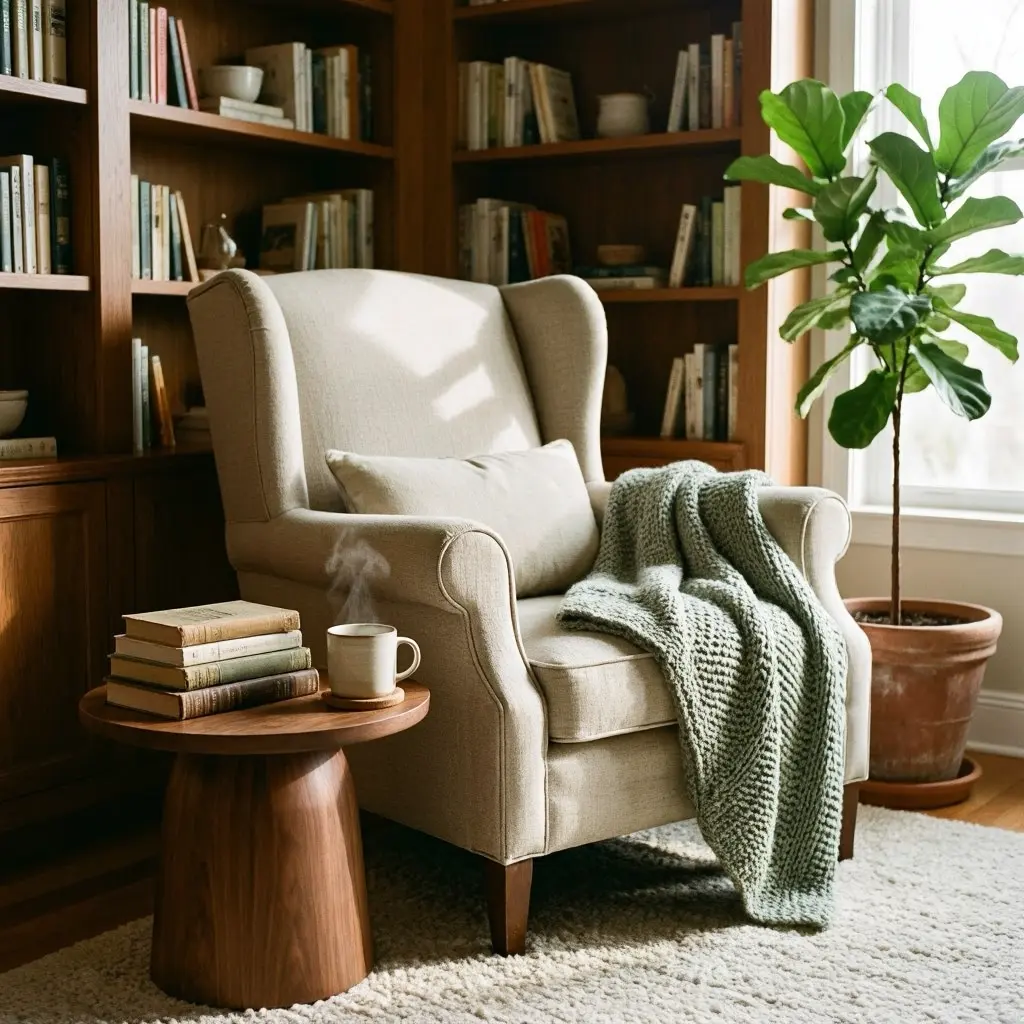
A small shelf, a basket, or even a stack of books on the side table keeps your current reading material within reach instead of scattered around the house. This detail also does real visual work, since a curated stack of books signals what the space is actually for, in a way an empty side table simply doesn’t.
8. Add a Plant to Soften the Space
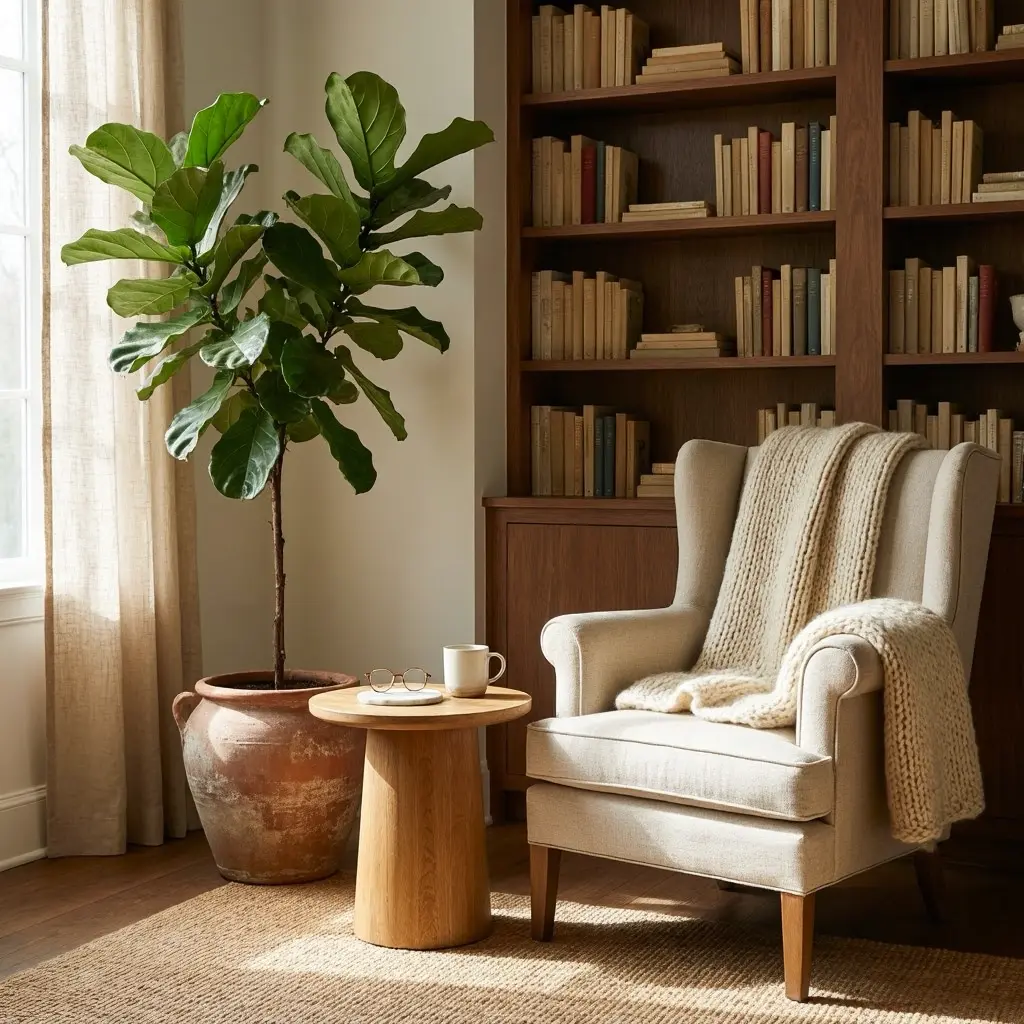
A small potted plant near the chair brings a living element into what might otherwise be an all hard surfaced corner, books, a chair frame, a side table. Even one plant suited to the light conditions of the spot adds a genuine sense of calm to the nook. A pothos or a small snake plant tolerates the lower light many nooks tend to have, tucked as they often are into a corner away from a window.
9. Choose a Curtain or Screen for Extra Privacy if Needed
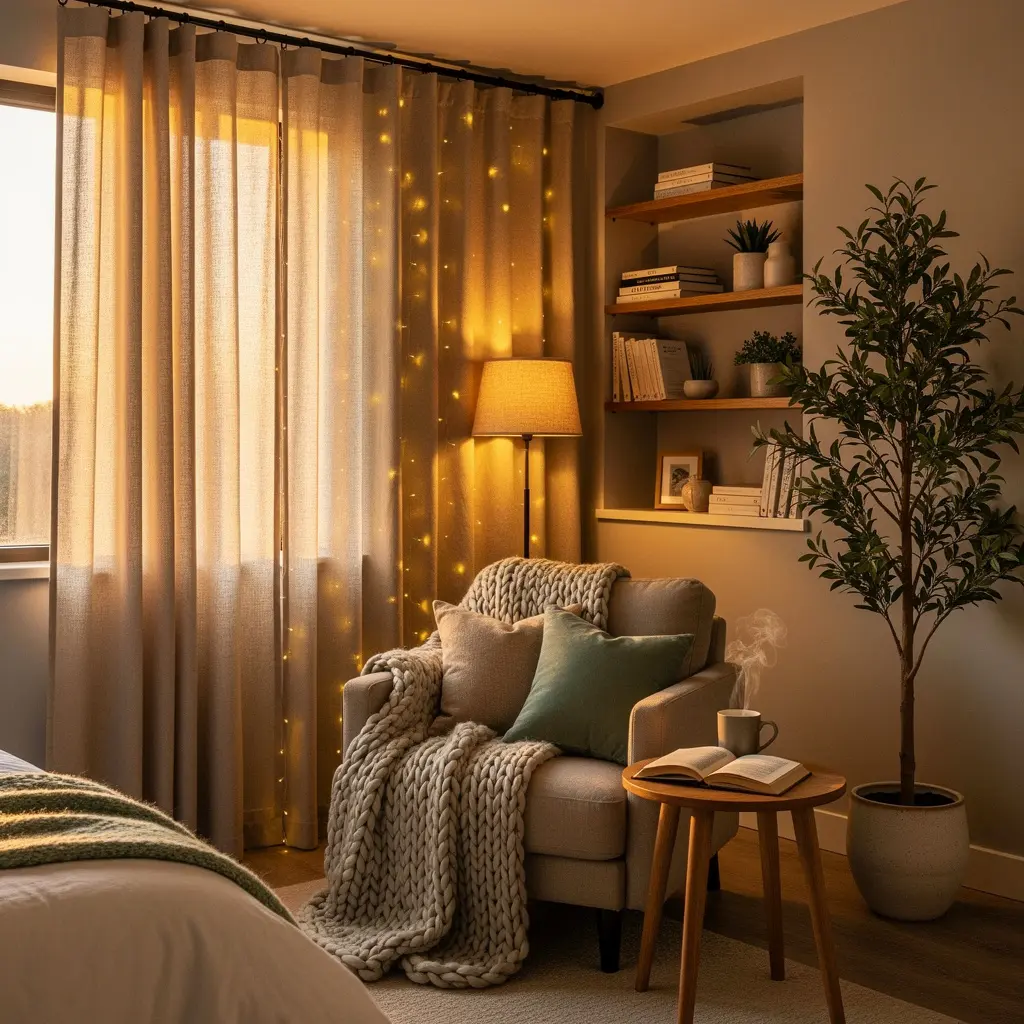
If the nook sits in a busier part of the home, a simple curtain on a tension rod or a slim folding screen adds a sense of enclosure and privacy without requiring permanent construction. This is especially useful for a nook built into a shared living space rather than a private bedroom.
10. Personalize With One or Two Meaningful Objects
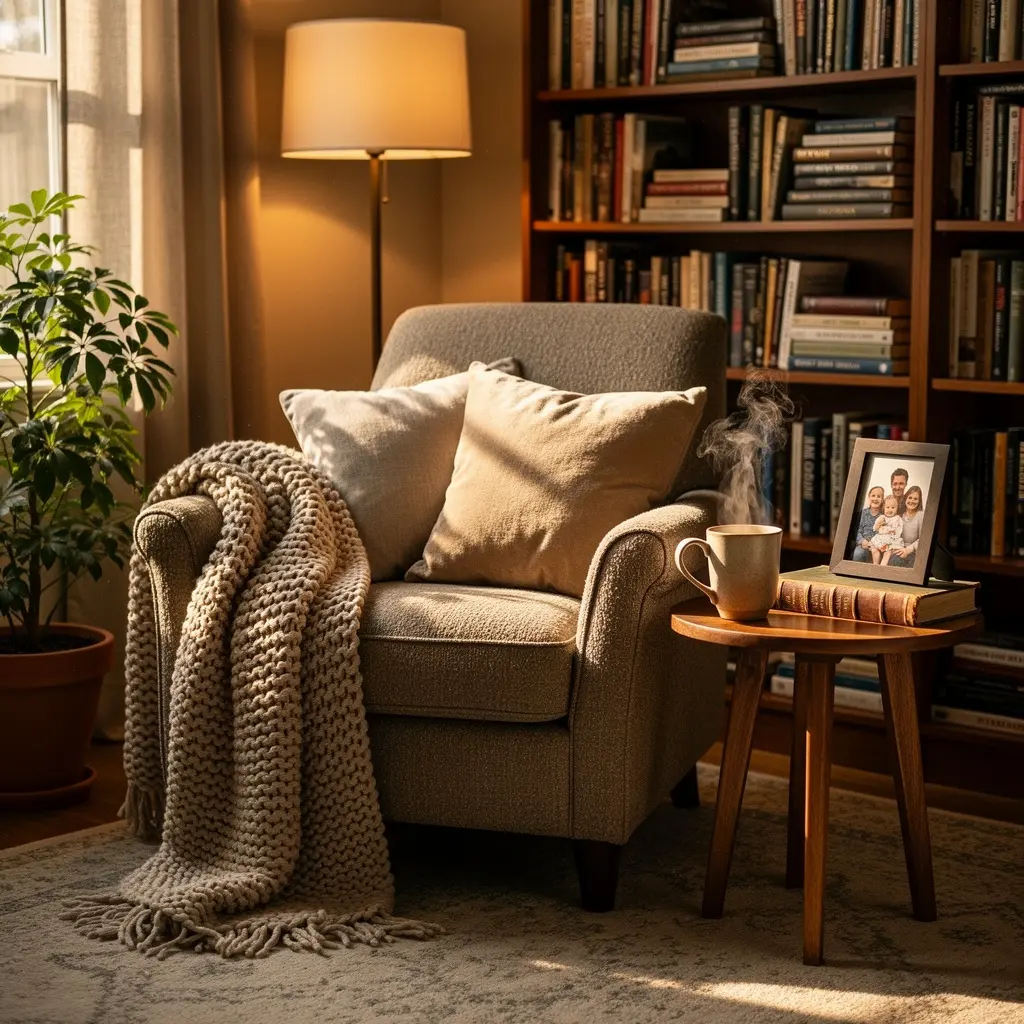
A framed photo, a specific mug you love, or a small object with real personal history keeps the nook from feeling like a generic display pulled from a catalog. These small details are usually what actually make people want to spend time in the space, beyond just the comfort of the chair itself.
Mistakes to Avoid
- Choosing a spot with no natural sense of enclosure instead of a corner, alcove, or window bay that already has boundaries
- Filling the nook with several mediocre seating options instead of investing in one genuinely comfortable chair
- Relying on overhead lighting instead of a dedicated reading lamp positioned to avoid glare
- Skipping a side table, which leaves nowhere for a drink, glasses, or a bookmark within reach
- Leaving the nook without a rug to define its footprint, especially within a larger open room
- Overcrowding the space with decor that has no personal meaning instead of a few pieces that genuinely matter
Frequently Asked Questions
What’s the easiest way to start building a reading nook? Look for a corner your home already has that offers some natural enclosure, a window bay, the angle where two walls meet, or the space under a staircase, since these spots need the least additional work.
Do I need built in furniture for a genuine reading nook? No. A single comfortable chair, a rug to define the footprint, and a small side table are enough to create a real reading nook without any construction at all.
What kind of lighting works best for a reading nook? A dedicated reading lamp positioned beside or just behind the shoulder, with a warm white bulb in the 2700K to 3000K range, avoids glare and creates a cozier feel than overhead lighting alone.
How much does it typically cost to build a reading nook? A nook styled around furniture you already own can cost very little, while a more complete setup with a new chair, lamp, and rug generally runs a few hundred dollars depending on what you choose.
Can a reading nook work in a small apartment with no spare room? Yes. Even a corner of a bedroom or living room, defined with a rug and one comfortable chair, functions as a genuine nook without requiring a dedicated room.
Conclusion
Cozy reading nook ideas work best when the space is built around a few specific choices rather than a lot of decor: a corner with some natural enclosure, one genuinely comfortable chair, lighting positioned specifically for reading, and a rug that defines the footprint. Start with the seat and the light, since those two decisions affect whether you’ll actually want to sit there, then layer in textiles, books, and personal touches as the nook comes together.

Leave a Reply