Cozy Bedroom Ideas With Soft Lighting and Warm Decor
There’s a bedroom I styled a few years back in a narrow rowhouse in Philadelphia that I still think about regularly. The owner was a nurse who worked overnight shifts and desperately needed her bedroom to feel like a genuine sanctuary the moment she walked through the door. No harsh overhead lighting, no cold surfaces, nothing that reminded her of the hospital she’d just left.
We worked with what the room had — a single south-facing window, original hardwood floors, and about 11 feet of usable wall space on each side. We brought in a warm amber floor lamp, layered her bed with a cotton quilt, a waffle-weave blanket, and a chunky knit throw. We swapped her ceiling fixture for a dimmer-controlled pendant, added a small tray of candles on the dresser, and hung a sheer curtain panel that softened the afternoon light beautifully.
She texted me three days after we finished and said she’d slept better that week than she had in two years.
That’s what a truly cozy bedroom does. It signals to your nervous system that it’s safe to slow down. And the good news is that achieving that feeling has very little to do with square footage or budget.
Over 15 years of bedroom styling, I’ve learned that coziness comes from specific, intentional choices. Soft layered lighting rather than one harsh overhead source. Blankets and textiles in natural fibers that look as good as they feel. Warm colors on the walls, the bed, and the accessories that work together rather than compete.
This post covers my best cozy bedroom ideas drawn straight from real projects. I’ll walk you through what works, what to buy, and just as importantly, what to avoid.
1. Layered Warm Blankets and Throws
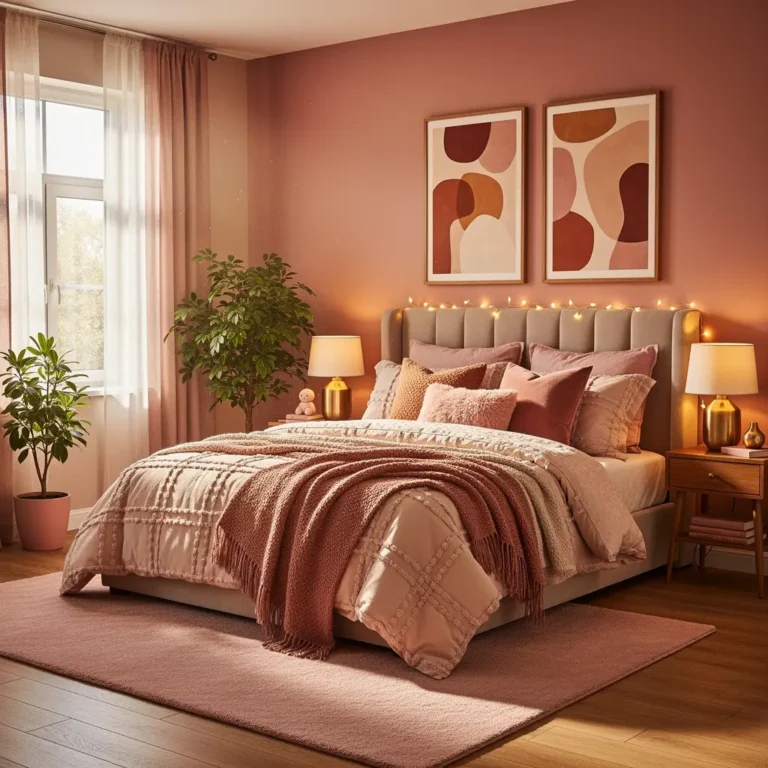
The bed is where cozy bedroom decor either succeeds or falls completely flat. And the single most effective technique I use on every single project is layering. Not just stacking blankets randomly but building intentional layers of different textures that work together visually and physically.
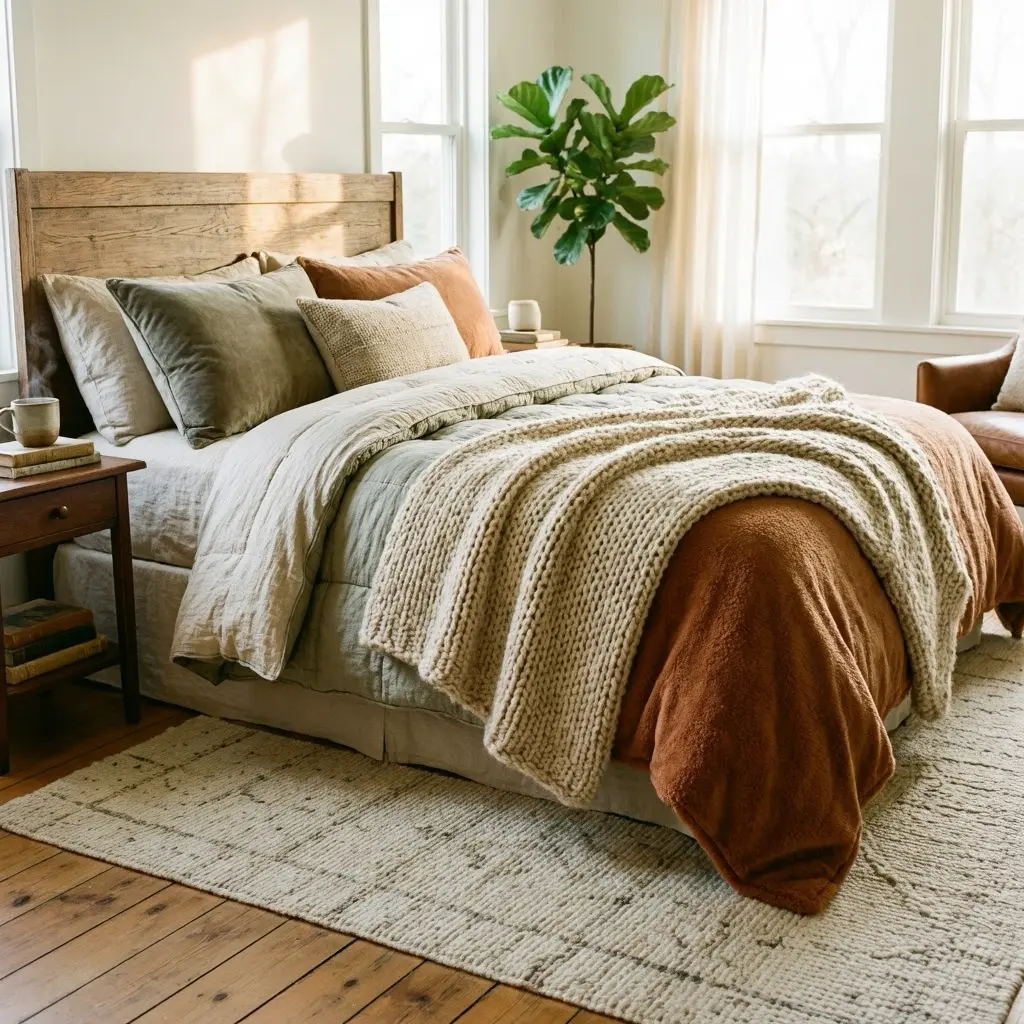
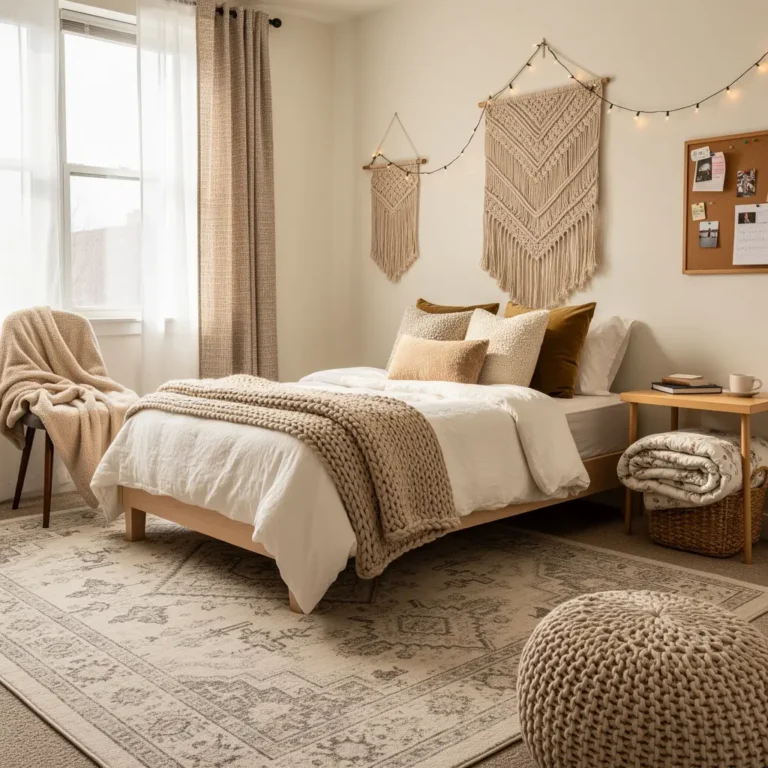
Start with a fitted sheet in a soft cotton or linen. Add a quilted comforter in a warm neutral — oatmeal, soft cream, or a dusty blush. Layer a waffle-weave blanket folded across the lower third of the bed. Then drape a chunky knit throw loosely over one corner, slightly off-center.
That combination of smooth, quilted, waffle, and chunky textures creates visual depth that reads as genuinely inviting rather than just decorated.
Color-wise, keep the layers tonal rather than contrasting. Cream on ivory on warm white works beautifully. So does a soft sage layered with warm tan and cream. Avoid mixing too many saturated colors — it creates visual noise rather than warmth.
Budget option: Target’s Threshold collection has genuinely good quality waffle blankets at very fair prices. Premium option: Parachute or Boll and Branch for long-lasting softness.
Mistake to avoid: making the bed too perfectly. Cozy beds look slightly lived in. Fold the top of the duvet down, let the throw sit casually, leave a slight indent in the pillows.
Pro Designer Tip: Use at minimum three different textile textures on the bed. Smooth, something with weave or pattern, and something chunky or nubby. That variation is what creates the layered look that stops people scrolling on Pinterest.
2. Soft Amber Bedside Lighting
Nothing kills the cozy atmosphere of a bedroom faster than harsh overhead lighting. I tell every single client the same thing: if your main bedroom light is a bare flush mount with a daylight bulb, you are actively working against the feeling you are trying to create.
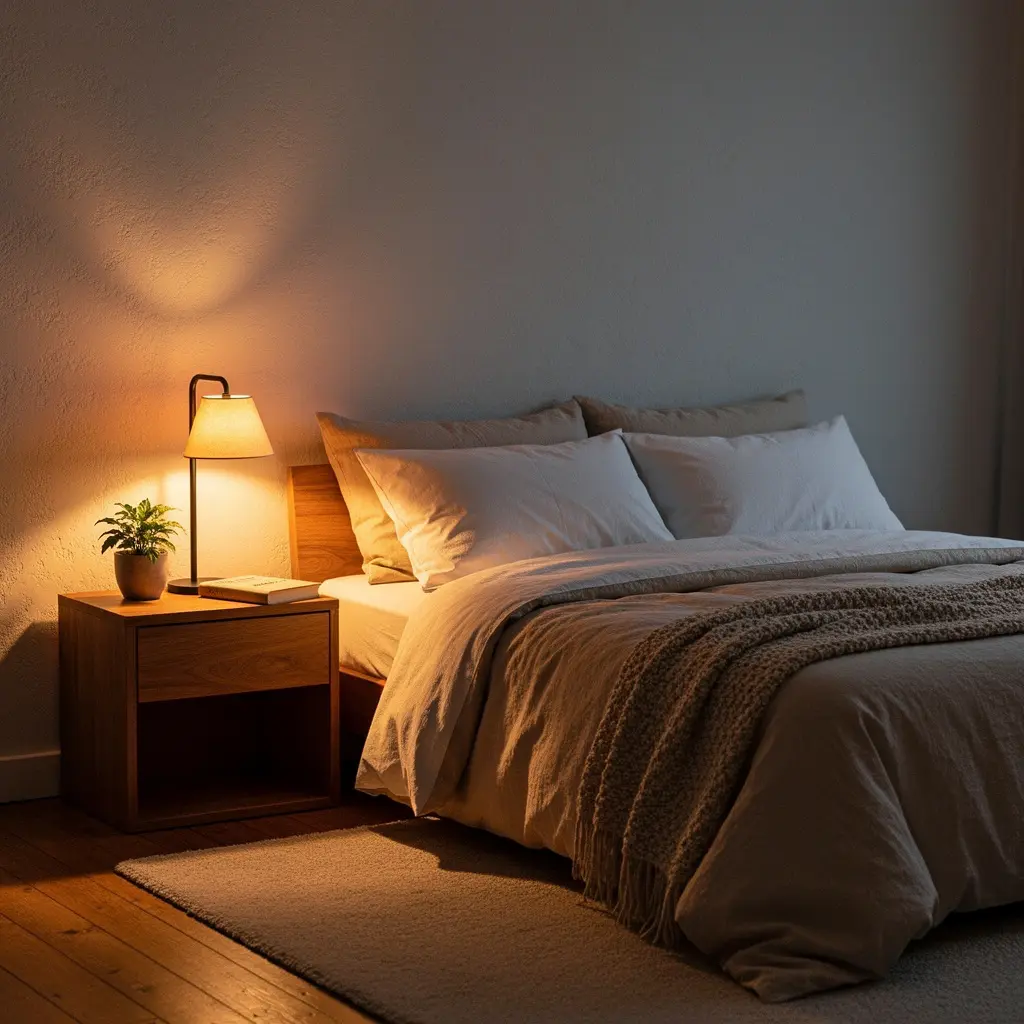
Bedside lighting in a cozy bedroom should feel like late evening sunlight. Warm, directional, and soft. Table lamps with fabric shades in cream or warm linen diffuse light beautifully without any glare. Wall-mounted swing-arm sconces in aged brass or matte black are excellent for smaller nightstands where surface space is valuable.
Bulb temperature matters enormously here. Look for bulbs in the 2200K to 2700K range. These produce that amber, almost golden quality of light that makes skin look warm and materials look rich. Anything above 3000K starts reading as cool and clinical.
A dimmer switch paired with bedside lamps is genuinely one of the best investments you can make in bedroom comfort. Being able to bring the light down to 20 percent at night changes the entire sensory experience of the room.
Budget option: basic linen shade table lamps from Amazon or Target work perfectly well with the right bulb. Premium option: Visual Comfort or Rejuvenation fixtures in quality finishes.
Mistake to avoid: mismatched lamp heights on either side of the bed. The shades should sit at approximately shoulder height when you are sitting up in bed.
Pro Designer Tip: Line the inside of a plain white lampshade with a warm blush or amber tissue paper. It subtly tints the light without replacing the shade and costs almost nothing.
3. Warm Neutral Wall Colors
Wall color sets the emotional temperature of a room before a single piece of furniture is placed. In a cozy bedroom, the wall color needs to feel warm even on a gray winter morning with no natural light coming in.
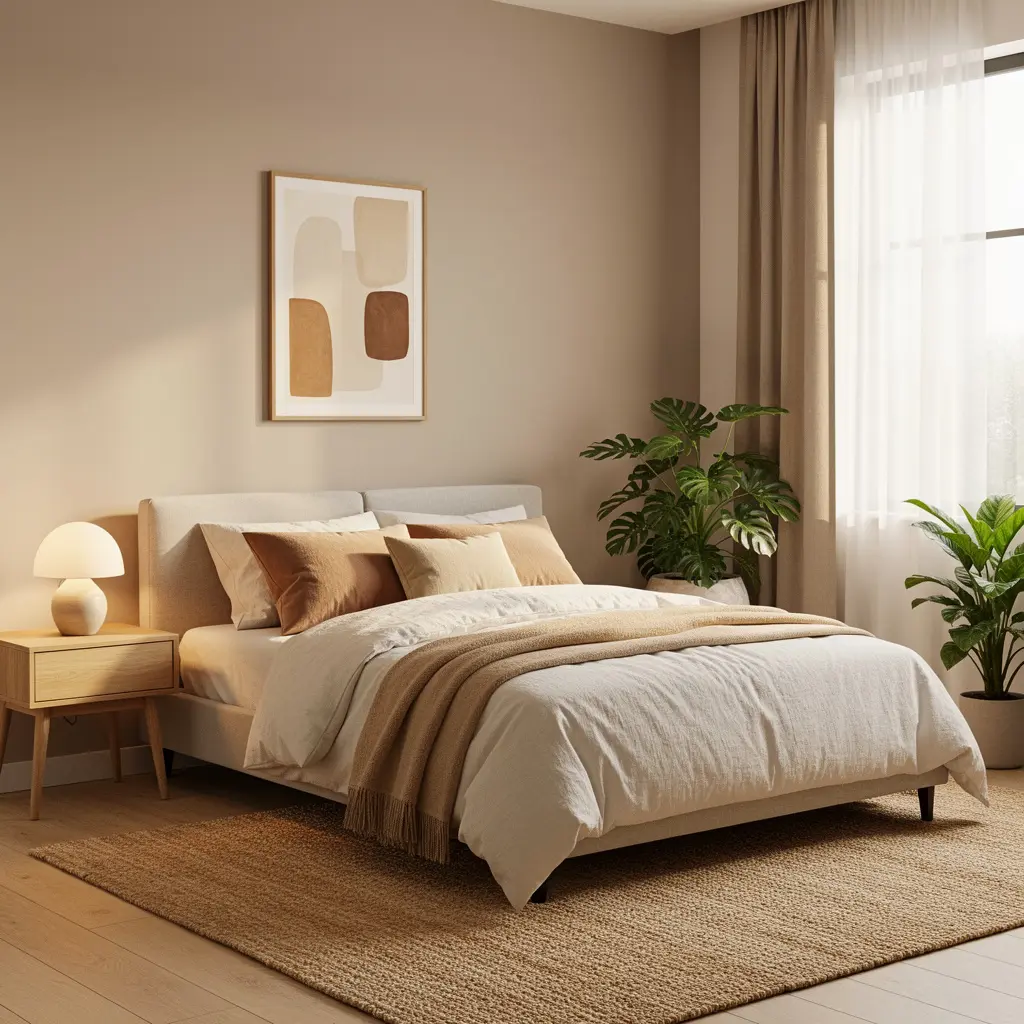
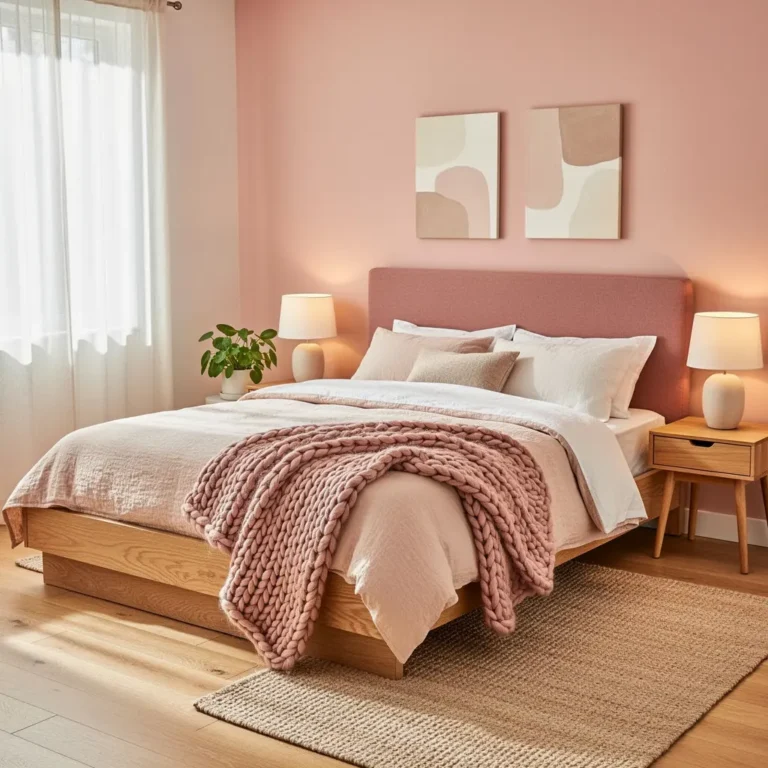
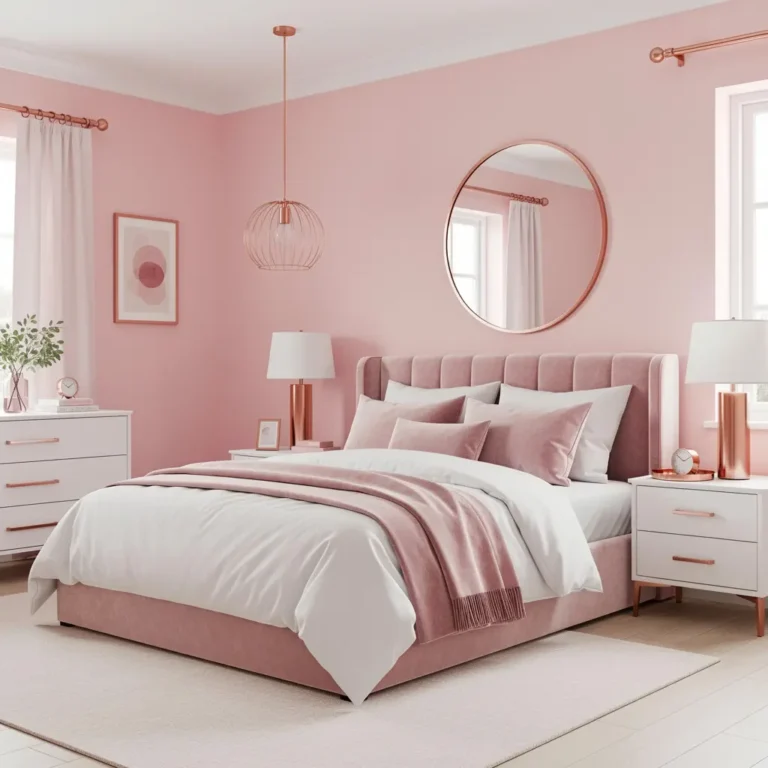
The colors I reach for most consistently are creamy whites, warm beiges, soft terracotta, dusty mauve, and muted sage. These tones all share one quality: they read as warm rather than cool regardless of lighting conditions.
Benjamin Moore Pale Oak is one of my absolute favorites for bedrooms. It shifts from warm beige to soft blush depending on the light and works with almost any textile palette. Sherwin-Williams Accessible Beige is similarly versatile. For something with more personality, Farrow and Ball Sulking Room Pink delivers a muted, sophisticated warmth that photographs beautifully.
Pair warm walls with white or cream trim rather than bright white. Bright white trim against a warm wall creates a jarring contrast that sharpens the room visually when you want it to feel soft.
Mistake to avoid: choosing wall color based on the paint chip alone. Always sample on a large swatch, at least 12 by 12 inches, and observe it throughout the day in different light conditions.
Pro Designer Tip: Paint the ceiling one shade lighter than the walls rather than pure white. It wraps the room in warmth and lowers the perceived ceiling height slightly, which actually makes bedrooms feel more intimate and cozy rather than cavernous.
4. Canopy Bed With Sheer Draping
A canopy bed frame with sheer fabric draped from the top is one of the most romantic and genuinely cozy bedroom ideas I have ever worked with. The visual effect is soft, ethereal, and immediately intimate.
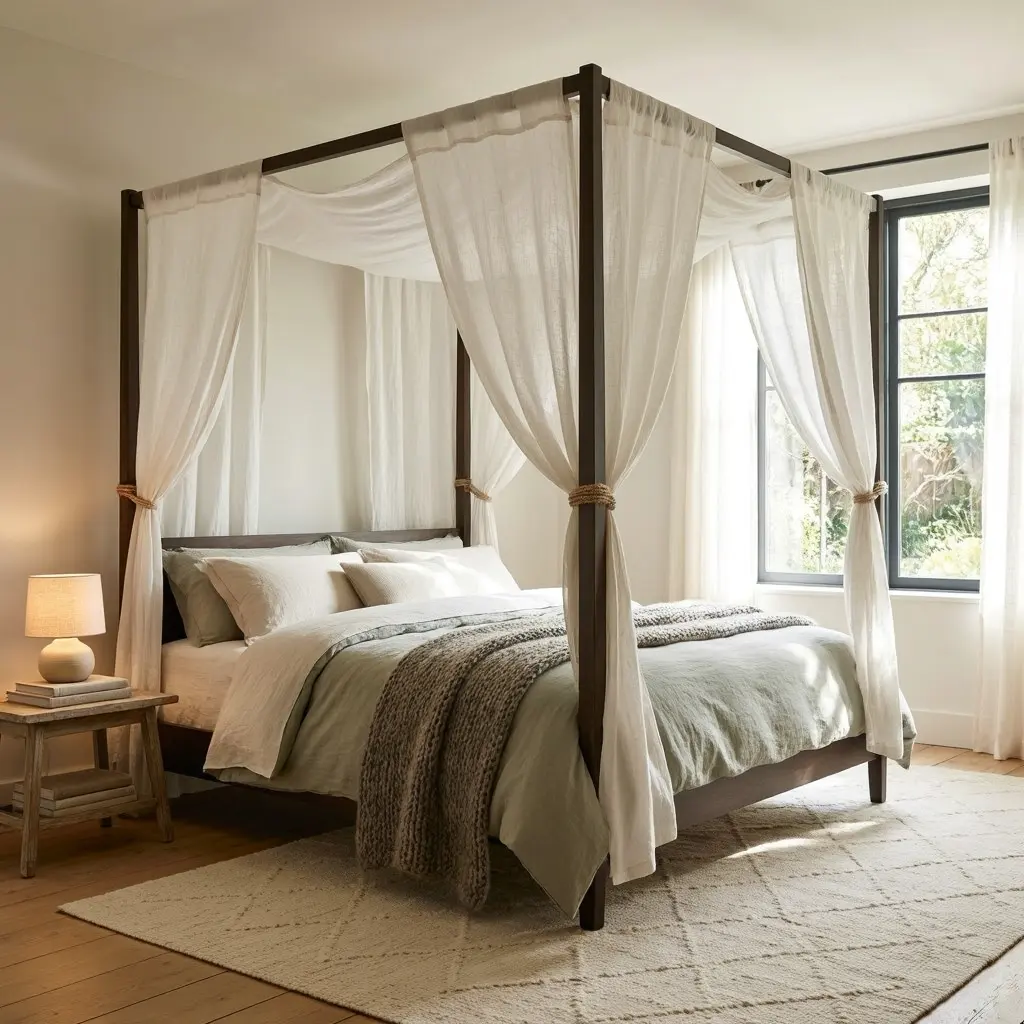
The sheer fabric panels filter both natural and artificial light before it reaches the bed, creating a slightly diffused, dreamy quality that solid curtains cannot replicate. Visually, the canopy frames the bed as its own enclosed space within the room, which is psychologically very comforting.
This works best in bedrooms with at least nine-foot ceilings. In lower-ceiling rooms, a simple ceiling-mounted curtain rod above the headboard with two sheer panels draped down either side achieves a similar effect without requiring a full canopy frame.
Choose sheers in warm ivory, soft blush, or cream rather than stark white. Stark white sheers read as cold and slightly clinical. Warm ivory sheers glow beautifully in amber light.
Budget option: IKEA LILL sheer curtain panels are inexpensive and can be used creatively as canopy draping. Premium option: a four-poster bed frame from McGee and Co or Pottery Barn paired with custom linen sheers.
Mistake to avoid: using too much fabric. Overcrowding the canopy with heavy layers defeats the airy, soft quality that makes this look so beautiful.
Pro Designer Tip: String a strand of warm white fairy lights along the inside top of the canopy frame before draping the sheers. The lights glow softly through the fabric at night and create an incredibly cozy, almost magical atmosphere.
5. Plush Upholstered Headboard
An upholstered headboard does two things simultaneously: it adds softness and warmth to the most visually dominant wall in the room, and it makes the bed physically more comfortable for reading and relaxing.
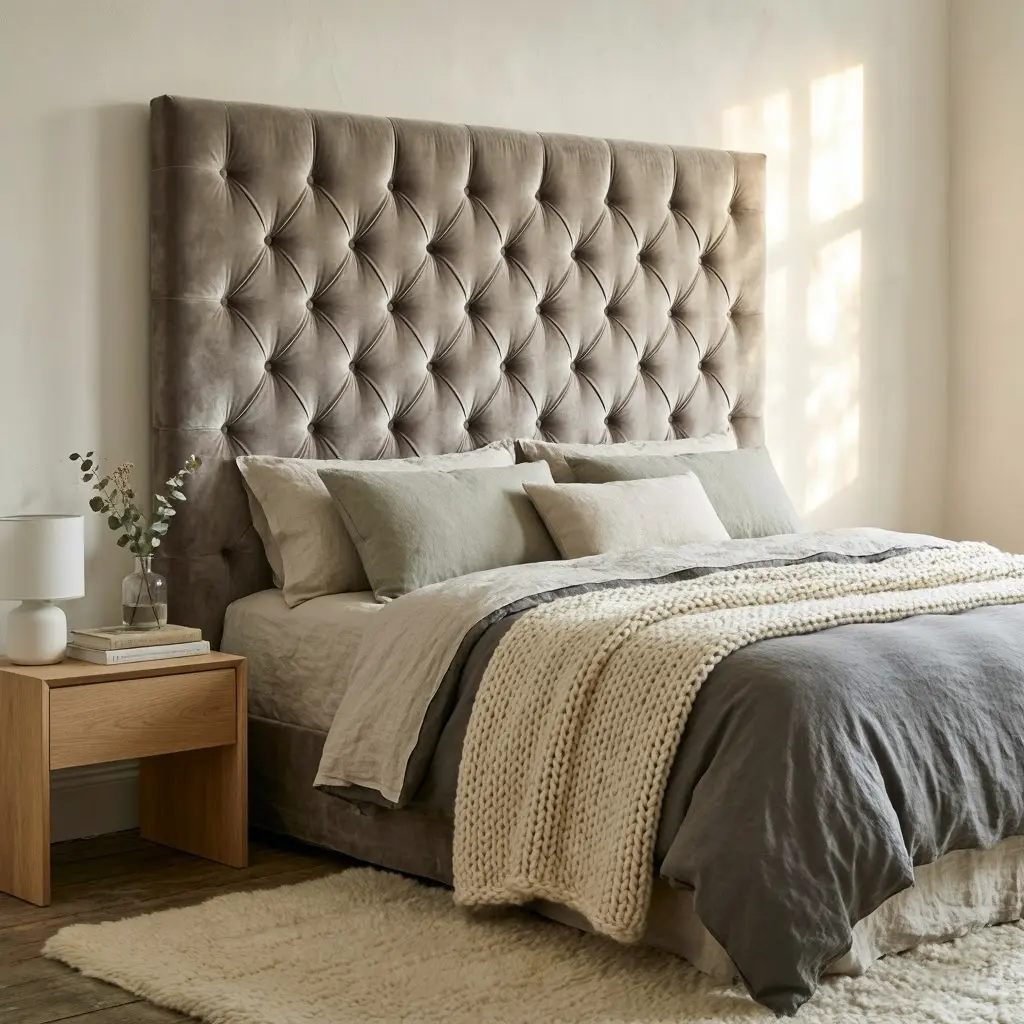
Visually, a large upholstered headboard in a warm fabric creates an anchor for the entire room. It draws the eye, establishes the color story, and makes the bed feel substantial and important rather than just functional.
Fabric choices matter significantly here. Warm linen, soft velvet, boucle, and performance fabric in warm neutrals all work beautifully. I particularly love a low-pile velvet in a dusty mauve or warm camel tone. It catches light differently from different angles and adds a richness that flat upholstery cannot.
Pair an upholstered headboard with simple wooden nightstands to balance soft and natural textures. Flank it with warm-toned sconces at matching heights for a cohesive, intentional look.
Budget option: DIY upholstered headboards using plywood, foam, and fabric are genuinely achievable and can look excellent. Premium option: custom upholstered headboards from Article or a local furniture maker.
Mistake to avoid: choosing a headboard that is too narrow for the bed frame. The headboard should be at minimum the same width as the mattress and ideally a few inches wider on each side.
Pro Designer Tip: Add a row of large decorative nailhead trim along the border of an upholstered headboard. It adds architectural detail without additional cost and elevates even a basic linen fabric dramatically.
Expert Note: The Warmth Formula
After 15 years of styling bedrooms, here is what I know for certain. Coziness is not about any single element. It is the combination of warm light, soft textiles, grounded colors, and intentional layering working together. If any one of these is missing, the room feels slightly off even when everything else is right. Nail all four and the room practically styles itself.
6. Cozy Window Seat With Cushions
A window seat turns an otherwise dead architectural space into the most coveted spot in the entire bedroom. Built-in or freestanding, the visual appeal is immediate — a cushioned bench in a deep window bay, surrounded by pillows, with natural light falling directly on it.
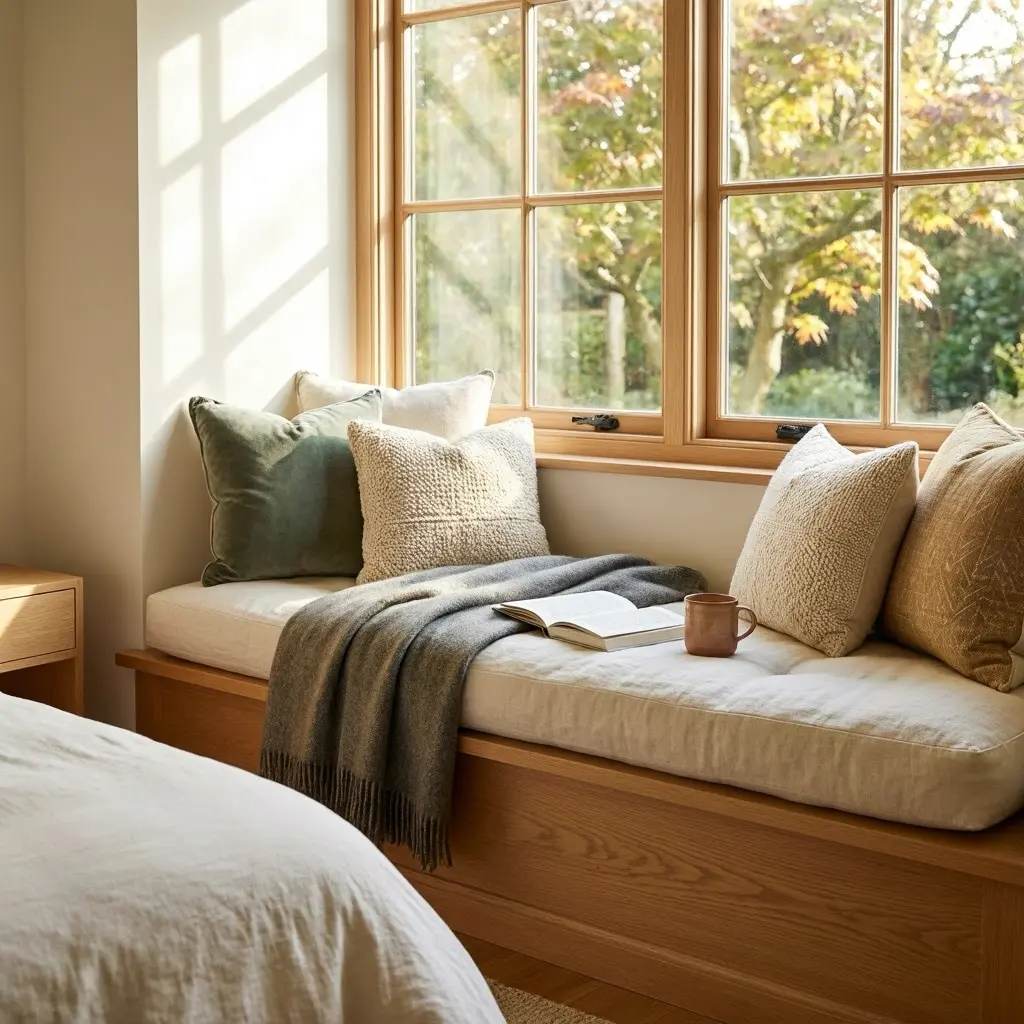
This works beautifully in bedrooms with bay windows, dormer windows, or any window with at least 18 inches of sill depth. Even a shallow window can be transformed with a narrow bench pushed directly beneath it.
Choose cushion fabric in a warm, durable material — a tightly woven linen, a performance velvet, or an indoor-outdoor fabric in a warm neutral or soft stripe. Pile on pillows in complementary textures: a woven pillow, an embroidered pillow, a simple solid lumbar.
Storage underneath the window seat is a practical bonus — lift-top or drawer storage hidden in the base keeps blankets, seasonal textiles, and extra pillows accessible but out of sight.
Budget option: a simple wooden bench with a custom cut foam cushion and fabric you choose yourself. Premium option: built-in window seat cabinetry by a local carpenter with upholstered cushion.
Mistake to avoid: under-cushioning the seat. Thin cushions look uninviting and are physically uncomfortable. Aim for at least three inches of foam density for genuine comfort.
Pro Designer Tip: Hang a curtain rod just above the window seat and add panels on either side that frame but do not cover the seat itself. It creates a room-within-a-room feeling that makes the nook feel genuinely special.
7. Warm Toned Bedroom Rug
A rug in a bedroom does something that flooring alone cannot — it creates a soft landing zone that makes the entire room feel more gathered and intentional. Stepping out of bed onto a soft rug rather than cold hardwood is also one of the most genuinely pleasant small experiences in daily life.
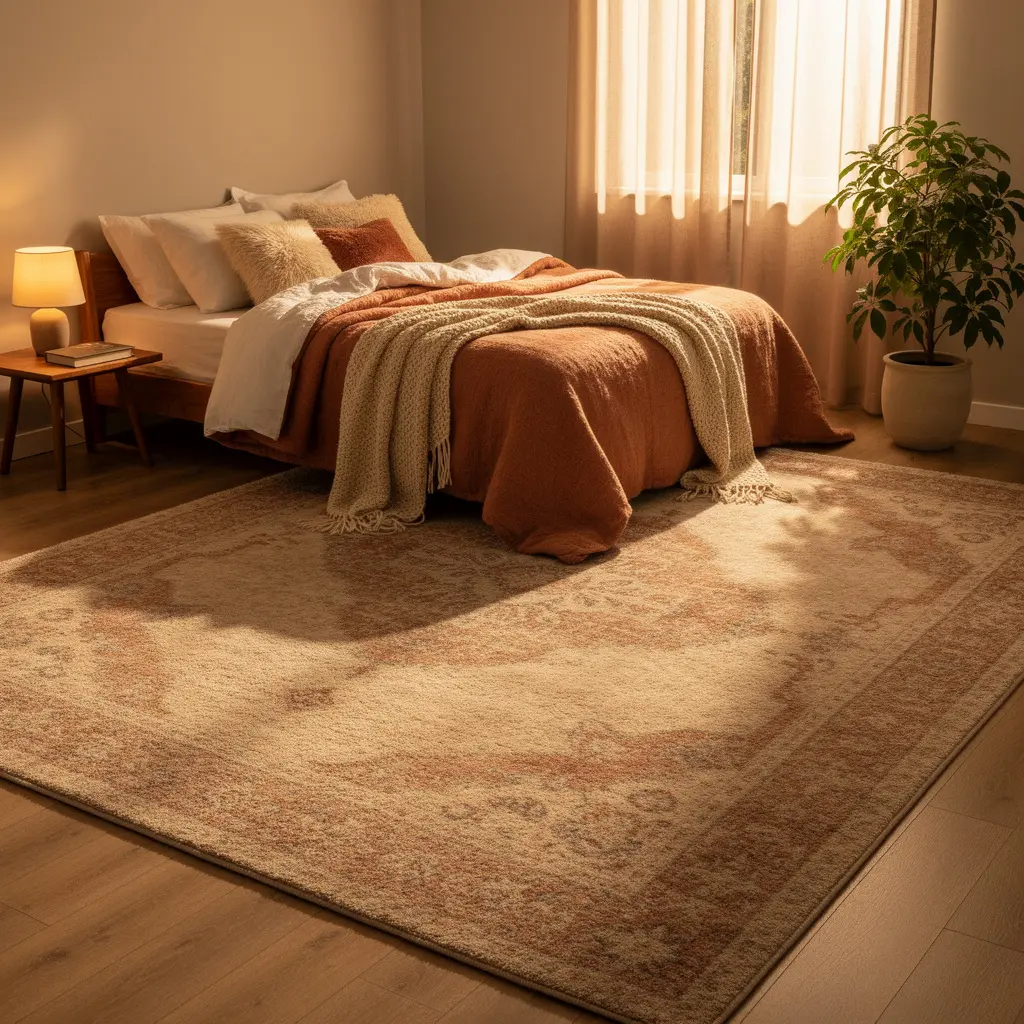
For a cozy bedroom, choose rugs in warm tones: ivory, cream, warm tan, soft blush, terracotta, or muted gold. Persian-style vintage rugs in faded warm tones are particularly beautiful in cozy bedrooms because they bring in color, pattern, and age simultaneously.
Size is non-negotiable. The rug must extend beyond the bed on both sides and across the foot. For a queen bed, an 8 by 10 rug is the minimum. For a king, 9 by 12. An undersized rug makes the entire room feel smaller and slightly unresolved.
Texture matters as much as color. A high-low pile rug catches light beautifully and adds visual interest even in a neutral palette. Flat-weave kilim rugs in warm earth tones are a great option for adding pattern without heaviness.
Budget option: Ruggable washable rugs in warm tones are practical and surprisingly attractive. Premium option: vintage Persian rugs from Etsy or eBay sellers, or Loloi’s designer collections.
Mistake to avoid: placing the rug completely under the bed with nothing extending beyond it. That defeats the purpose entirely.
Pro Designer Tip: Layer a smaller sheepskin or faux sheepskin rug on top of a larger jute or flatweave base rug on the bedside where feet land first thing in the morning. The textural contrast is beautiful and the softness underfoot is genuinely luxurious.
8. Gallery Wall With Warm Artwork
Artwork in a cozy bedroom should feel personal and warm rather than gallery-formal. A curated gallery wall in tones that complement the room’s palette brings color, personality, and visual interest to a space that might otherwise feel flat.

For cozy bedrooms, I gravitate toward artwork in warm earth tones: terracotta, amber, dusty pink, warm cream, muted sage, and soft brown. Abstract watercolors, botanical prints, vintage photography in warm sepia tones, and simple line drawings all work beautifully.
The gallery arrangement matters as much as the artwork itself. Mix frame sizes and shapes but keep the frame finishes consistent. Warm wood frames, aged gold, or matte black all work in warm bedroom palettes. Avoid mixing shiny silver and warm gold in the same arrangement.
For placement, the center of the arrangement should sit approximately 57 to 60 inches from the floor, which is the standard museum hanging height and reads naturally to the human eye.
Budget option: printable art from Etsy is extraordinary value. Print at a local shop, frame from thrift stores, and the result looks far more expensive than it cost. Premium option: original artwork from local artists or from platforms like Saatchi Art.
Mistake to avoid: hanging artwork too high. This is the most consistent mistake I see in bedroom gallery walls and it makes the ceiling feel disconnected from the rest of the room.
Pro Designer Tip: Before putting a single nail in the wall, lay the entire arrangement on the floor first. Photograph it from above and use that photo as your guide when transferring to the wall. It saves enormous time and prevents unnecessary holes.
9. Nightstand Styling With Candles and Books
A beautifully styled nightstand does more for the overall cozy atmosphere of a bedroom than most people realize. It is the last thing you see before closing your eyes at night and the first thing you see in the morning. Getting it right is worth the effort.
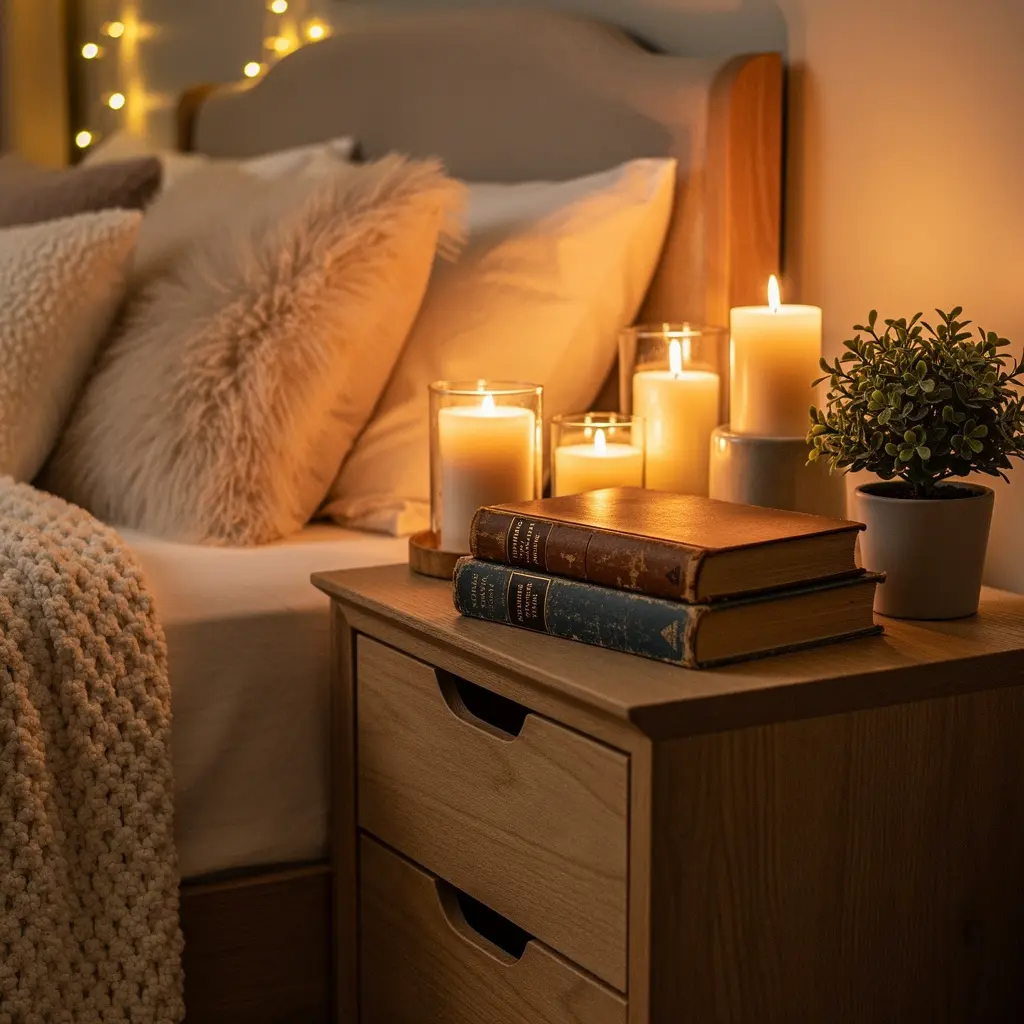
The formula I use consistently: one light source, one living or natural element, one personal item, and one functional item. A lamp, a small plant or bud vase with dried stems, a book or journal, and a candle or small tray.
Candles on a nightstand add warmth and scent simultaneously. A single ceramic candle in a woodsy or warm vanilla scent creates an immediate sensory shift in the room. Battery-operated candles with realistic flicker are a safe alternative for anyone concerned about open flames near bedding.
Keep the surface uncluttered. Two or three items maximum is the rule. More than that reads as messy rather than styled, regardless of how beautiful each individual piece is.
Budget option: a simple wooden crate or thrifted side table with a Target lamp and a small succulent. Premium option: a marble or solid oak nightstand with a designer lamp and quality ceramic accessories.
Mistake to avoid: using a nightstand that is the wrong height for the bed. The top surface should sit within two inches of the top of the mattress for comfortable access.
Pro Designer Tip: Place a small wooden tray on the nightstand surface and arrange everything within it. Trays create a contained, intentional vignette that looks curated rather than cluttered, even with the exact same objects.
10. Bedroom Reading Nook With Floor Lamp
A dedicated reading spot in the bedroom signals something important: this room is for more than just sleeping. It is for resting, recovering, and genuinely enjoying being in the space. That shift in intention changes how the whole room feels.
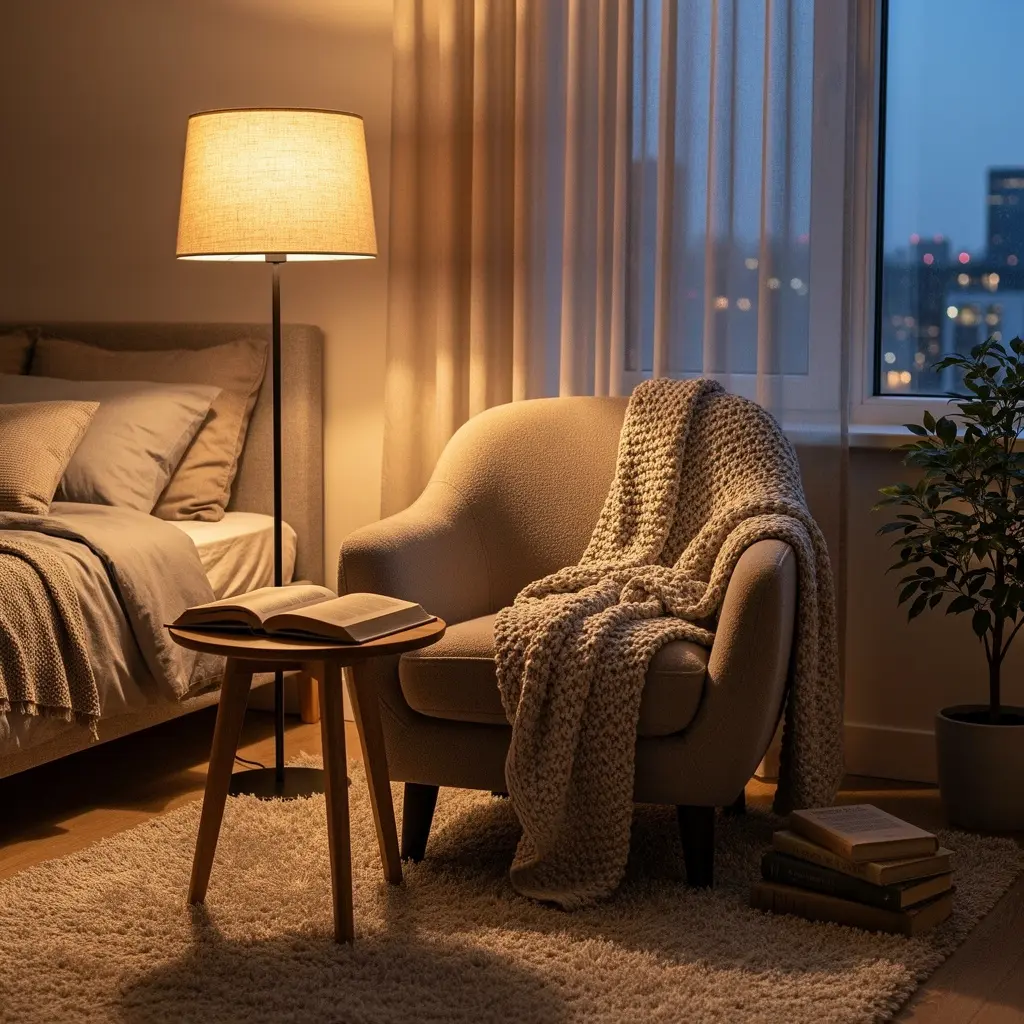
The components are simple. A comfortable upholstered chair or a large floor cushion. A floor lamp positioned behind and above at shoulder height for perfect task lighting. A small side table or wooden stool to hold a drink and a book. A throw blanket draped over the arm.
The floor lamp is critical. It should produce warm, directional light rather than diffused ambient light. An arc floor lamp in a warm metal finish with an opaque shade that directs light downward is my standard recommendation for reading nooks.
Position the nook near the window when the layout allows. Natural morning light is ideal for reading, and the window creates a natural visual backdrop that grounds the corner.
Budget option: a thrifted accent chair recovered in a simple neutral fabric, paired with an arc floor lamp from Amazon. Premium option: a Restoration Hardware or West Elm upholstered chair with a Rejuvenation arc lamp.
Mistake to avoid: choosing a chair that looks beautiful but is genuinely uncomfortable. Sit in it for at least 20 minutes before committing. A reading chair that hurts your back after 10 minutes will never be used.
Pro Designer Tip: Stack two or three hardcover books under the side table to add height variation and visual interest to the vignette. Choose books with spines in colors that complement the room palette.
Expert Note: Edit More Than You Add
The most common mistake people make when trying to create a cozy bedroom is adding too many things. More pillows, more candles, more artwork, more plants. Cozy does not mean crowded. The rooms that genuinely feel warm and restful have breathing room built into them. Every surface has a few carefully chosen items rather than being filled edge to edge. When you think you are done decorating, remove one thing from every surface. Nine times out of ten, the room improves immediately.
Frequently Asked Questions
What makes a bedroom feel cozy?
The combination of warm lighting, layered soft textiles, grounded wall colors, and a few personal accessories working together creates genuine coziness. No single element does the job alone. It is always the combination that makes the difference.
What is the best lighting for a cozy bedroom?
Warm amber bedside lamps with bulbs in the 2200K to 2700K range are the foundation. Add a dimmer switch so you can control intensity. Layer in candles or low accent lamps for evening atmosphere. Avoid overhead lighting as your primary source.
What colors make a bedroom feel warm and cozy?
Creamy whites, warm beige, soft terracotta, dusty blush, muted sage, and warm caramel all create warmth. The key is choosing tones with warm rather than cool undertones. Benjamin Moore Pale Oak, Sherwin-Williams Accessible Beige, and Farrow and Ball Elephant’s Breath are reliable starting points.
How do I layer blankets on a bed without it looking messy?
Use three distinct textures: smooth, woven, and chunky. Keep the color palette tonal rather than contrasting. Fold each layer intentionally and place the chunky throw slightly off-center at the foot of the bed. The key is deliberate placement rather than random stacking.
What size rug should I use under a queen bed?
An 8 by 10 rug is the minimum for a queen bed. It should extend at least 18 inches beyond both sides and the foot of the bed. An undersized rug is one of the most common bedroom decorating mistakes and makes the room feel visually smaller.
How do I make a small bedroom feel cozy rather than cramped?
Keep walls light and warm. Use a single large rug rather than multiple small ones. Layer lighting rather than relying on overhead fixtures. Choose a bed with a simple upholstered headboard rather than heavy wooden furniture. Edit accessories ruthlessly and leave intentional open space on surfaces.
What type of blanket is best for a cozy bedroom?
Natural fibers always outperform synthetic in both appearance and feel. Cotton waffle weaves, linen quilts, chunky wool knits, and cashmere throws are all excellent. Avoid polyester blankets, which look shiny under warm light and do not drape naturally.
How do I style a nightstand to look cozy?
Use the formula of lamp plus natural element plus personal item plus functional item. Keep the surface uncluttered with two or three pieces maximum. Place everything on a small wooden or ceramic tray to create a contained, intentional vignette.
Can I create a cozy bedroom without repainting the walls?
Absolutely. Swap your light bulbs to warm amber tones, layer your bedding with natural fiber textiles, add a warm-toned rug, style your nightstand intentionally, and bring in candles. These changes alone create significant warmth without touching the walls.
How do I make bedroom lighting feel softer?
Replace any overhead bulbs with warm amber alternatives immediately. Add bedside lamps with fabric shades in cream or warm linen. Install a dimmer switch if possible. Add candles to dresser and nightstand surfaces. The layering of multiple low-intensity warm sources is what creates that genuinely soft, atmospheric quality.
Final Thoughts
A cozy bedroom is not a style category. It is a feeling. And that feeling comes from making a series of deliberate, thoughtful choices that all point in the same direction: warmth, softness, and genuine comfort.
The nurse in Philadelphia did not need a magazine-worthy room. She needed a space that told her body it was safe to rest. And that is what every cozy bedroom should do for the person sleeping in it.
Start with one change if the whole list feels overwhelming. Swap the bulbs. Buy one good throw blanket. Style the nightstand with a candle and a book. Small shifts in the right direction compound quickly, and before long the room starts to feel like the retreat it was always supposed to be.