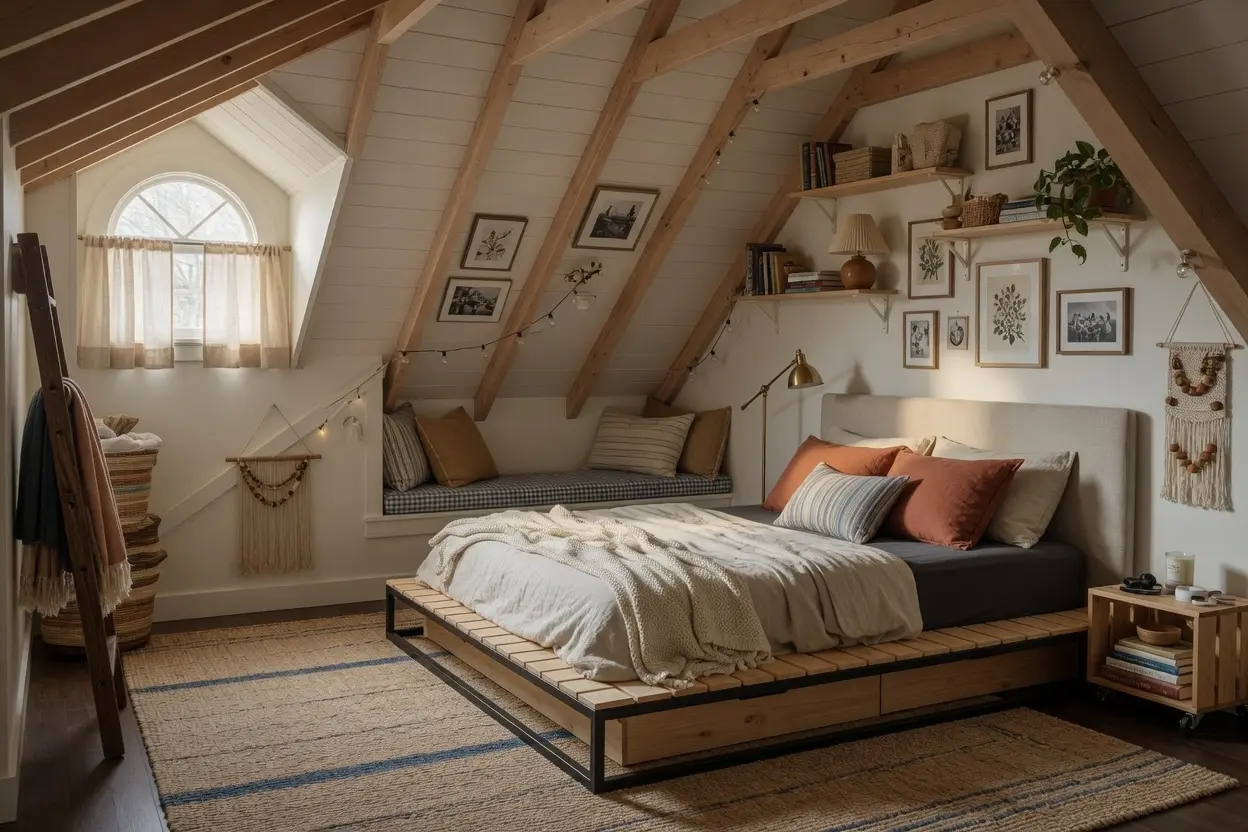
10 Attic Bedroom Decor Ideas to Create a Cozy Dream Space
Attic bedrooms get a bad reputation, and honestly, I get why. Sloped ceilings eat up usable space, natural light can be tricky depending on the window situation, and furniture that works fine in a normal square room suddenly looks awkward crammed under a slanted wall. I redid my sister’s attic bedroom two summers ago and spent the first hour just standing there thinking, okay, where does anything even go. But that’s exactly the thing about attic bedroom decor. Once you stop fighting the angles and start designing around them, an attic space can end up feeling cozier than almost any standard bedroom in the house. Here are ten ideas that actually work with sloped ceilings and odd corners instead of pretending they don’t exist.
1. Low Profile Platform Beds for Sloped Ceilings
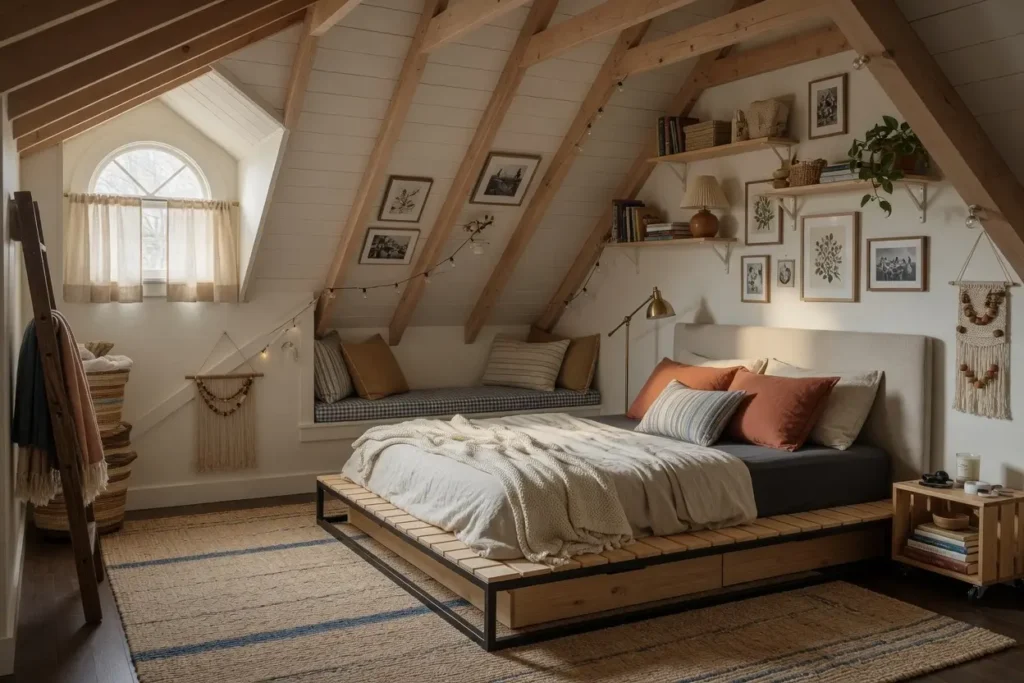
Tall headboards and bulky bed frames just don’t work well in most attic layouts. A low platform bed, sitting maybe 12 to 14 inches off the ground, avoids the problem entirely since you’re not trying to fit furniture into a space where the ceiling is already dropping down toward you. This also happens to look pretty modern and streamlined, which is a nice bonus.
Positioning the Bed Under the Tallest Point
Place the bed where the ceiling is highest, usually the center of the room in most attic layouts, so you’re not bumping your head every time you sit up. This sounds obvious, but I’ve seen it get overlooked more than you’d think. A friend of mine put her bed against the lowest wall just because it “fit,” and she banged her head for two years before finally moving it.
2. Built In Window Seats Under Dormer Windows
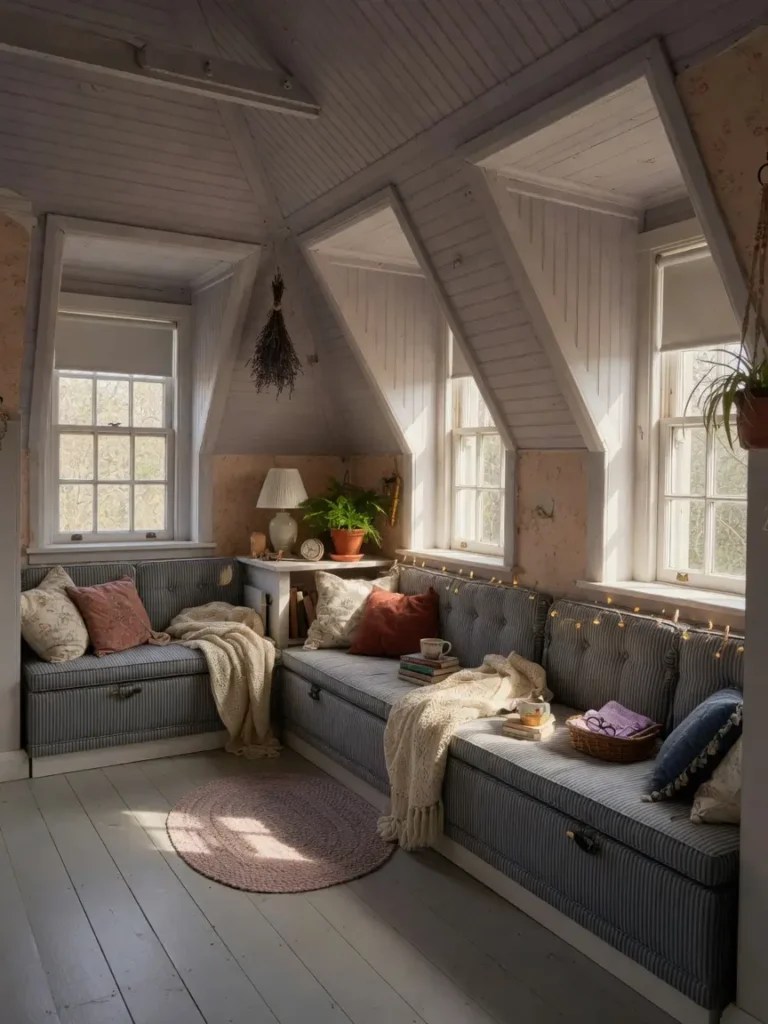
Dormer windows are one of the best features an attic bedroom can have, and a built in seat underneath makes use of a spot that would otherwise just sit empty. A simple bench, roughly 18 inches deep, topped with a cushion and a couple of throw pillows, turns dead space into an actual reading nook. Adding hinged storage underneath the seat is a smart move too, since attic bedrooms rarely have extra closet space to spare.
This is genuinely one of my favorite pieces of attic bedroom decor because it solves two problems at once. You get seating, and you get storage, without adding a single extra piece of furniture to the floor.
3. Exposed Wood Beams Left Natural or Whitewashed
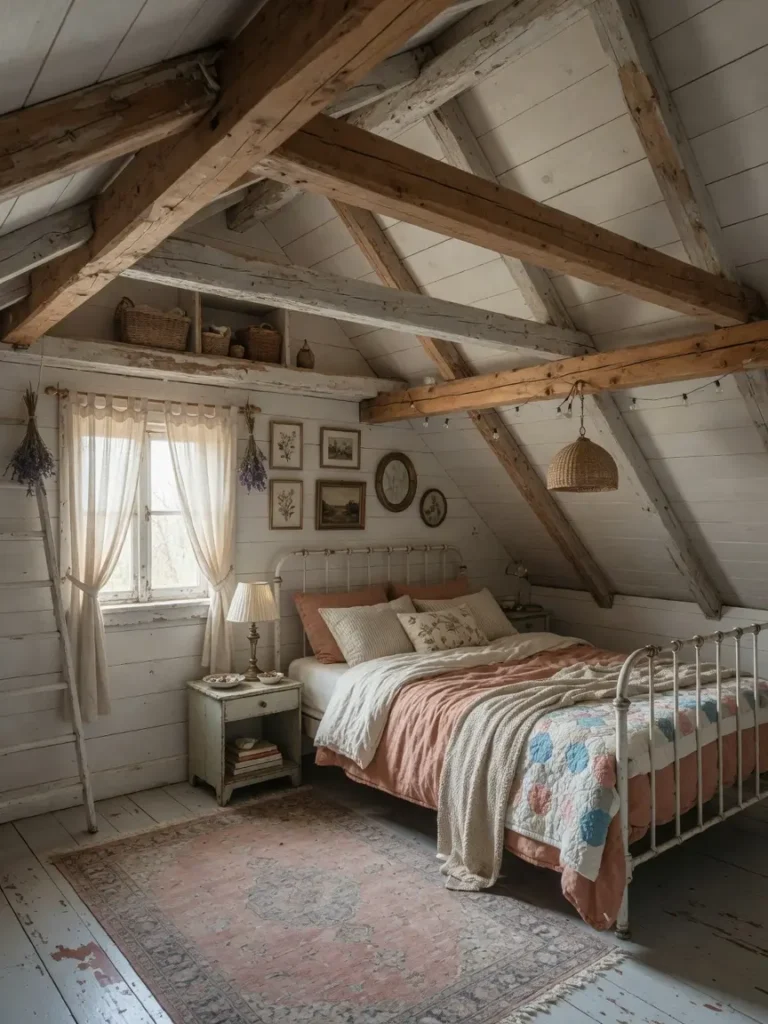
If your attic has exposed beams, don’t cover them up. Seriously. Leaving them natural, or whitewashing them with a thinned down paint mixture, adds architectural character that a lot of newer homes just don’t have anymore. It’s one of those details that makes an attic bedroom feel intentional rather than like leftover space nobody knew what to do with.
Whitewashing is simpler than it sounds. Mix white paint with water at about a 1 to 1 ratio, brush it on, then wipe off the excess with a rag before it dries completely. You get that soft, weathered look without hiding the wood grain entirely.
4. Skylight with Sheer Curtains for Soft Natural Light
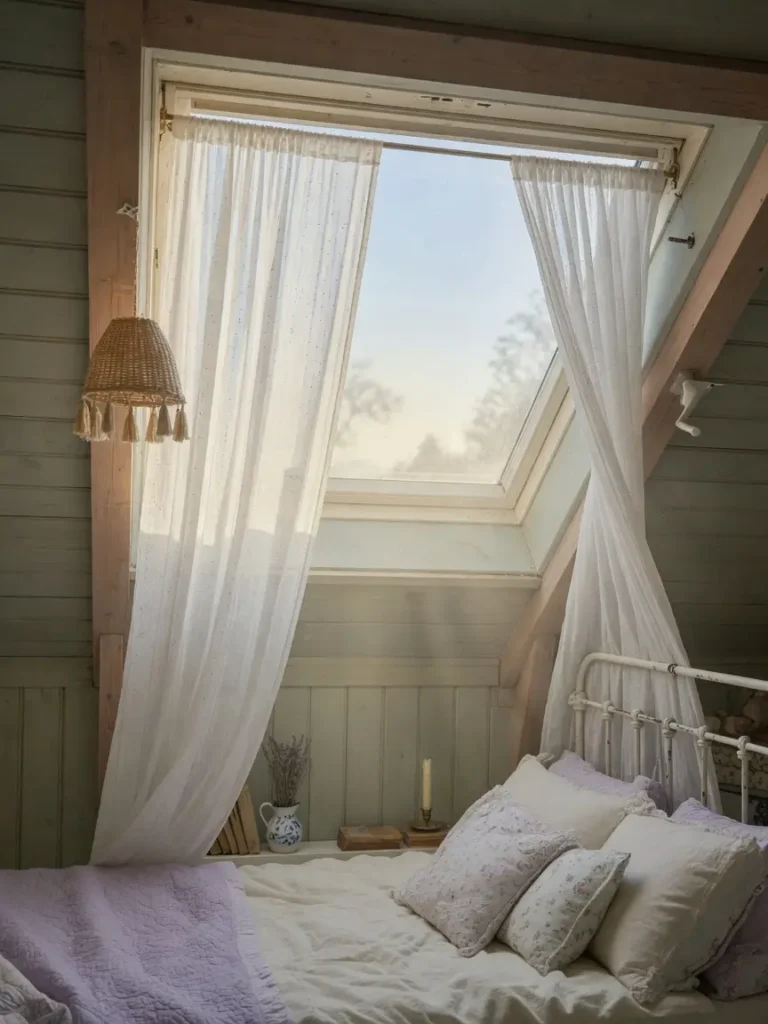
A skylight changes everything in an attic room, honestly. It brings in light that a small dormer window just can’t match, especially in rooms where wall space for windows is limited. Adding a sheer curtain or a simple pull down shade gives you control over glare during the day and privacy at night.
Choosing the Right Shade Type
Cellular shades designed specifically for skylights work best since they’re built to handle the angle and won’t sag over time the way a standard curtain rod setup might. They typically run somewhere between 60 and 150 dollars depending on size, but they’re worth it if you’re dealing with a lot of direct afternoon sun.
5. Soft Textured Rugs to Warm Up Wood Flooring
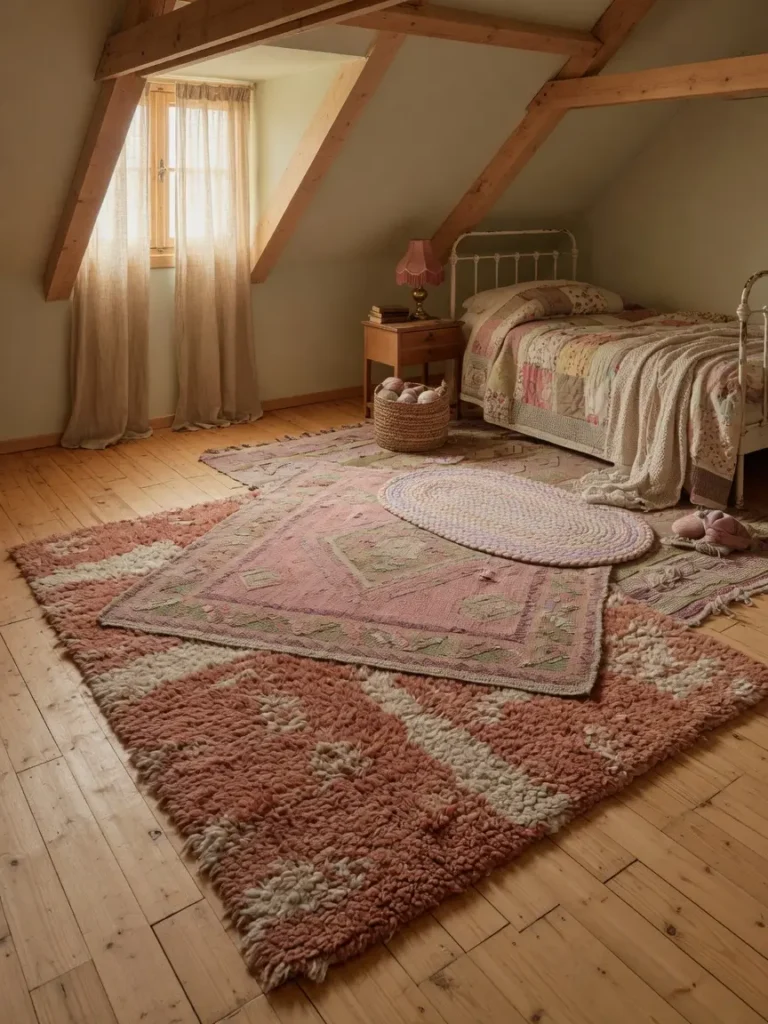
Attic floors tend to run cooler than the rest of the house, especially in older homes without much insulation up there. A thick rug, something with a decent pile height, adds warmth both visually and literally underfoot. Wool or wool blend rugs handle temperature regulation better than thin synthetic ones, if that matters to you.
I’d size the rug to extend a couple feet beyond the bed on each side. Anything smaller just looks like it’s floating in the middle of the room, which never reads as cozy no matter how nice the rug itself is.
6. Warm Toned Wall Colors to Counter Cool Attic Light
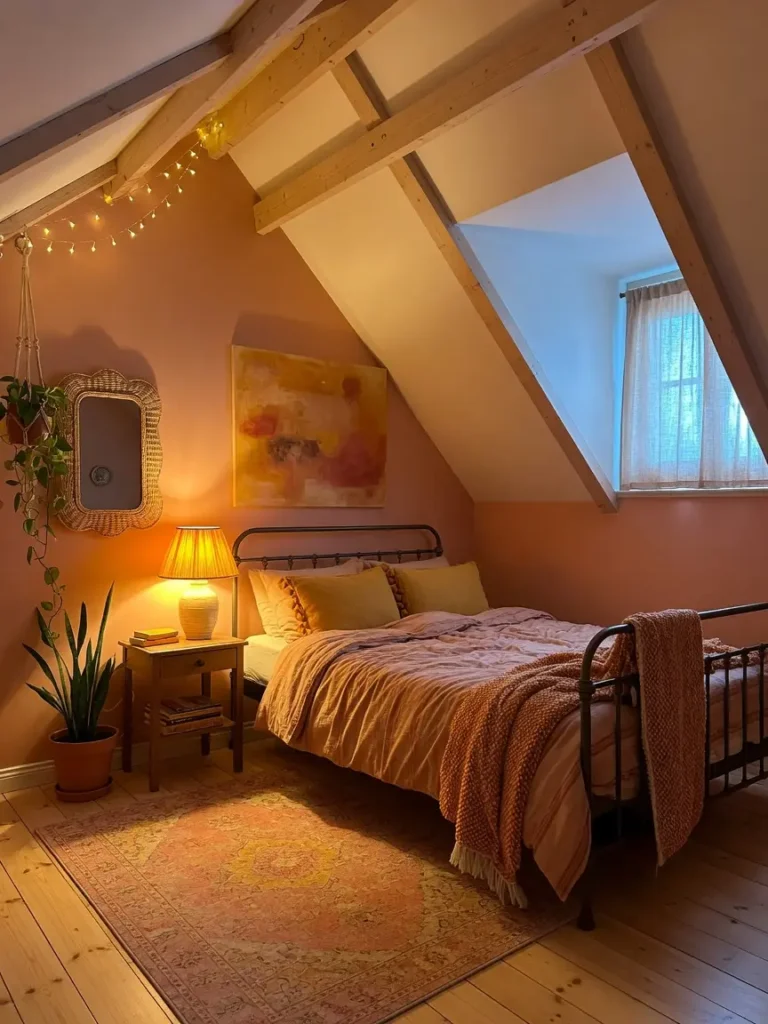
Attic rooms, especially ones with limited windows, often get a cooler, dimmer quality of light than the rest of the house. Painting the walls in a warm tone, like a soft terracotta, warm cream, or muted gold, counteracts that and makes the space feel inviting instead of a little gray and flat. This is one of the simplest, most affordable pieces of attic bedroom decor you can tackle in a single weekend.
And honestly, don’t default to white just because the ceilings are already low. A warm color on a sloped ceiling doesn’t make the room feel smaller, it actually makes the whole space feel more cohesive.
7. Custom Shelving Built Into Low Wall Sections
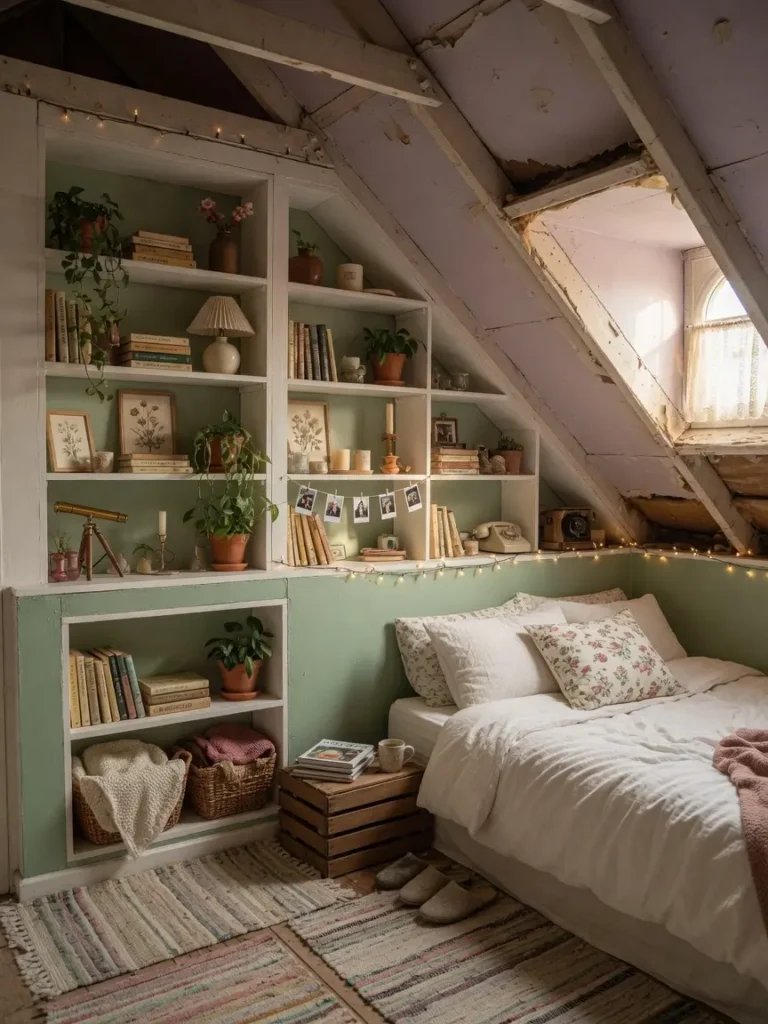
Those short knee walls where the ceiling meets the floor, usually under 3 feet tall, are almost always wasted space in attic rooms. Built in shelving units designed specifically for that height turn an awkward gap into genuinely useful storage. You can find pre made modular shelving units now that are designed for exactly this kind of low clearance space, which saves you from a full custom carpentry job.
This detail alone can add several feet of storage you didn’t have before. In my sister’s room, we fit an entire bookshelf’s worth of storage into a wall that used to just collect dust and forgotten boxes.
8. String Lights Along the Ceiling Beams
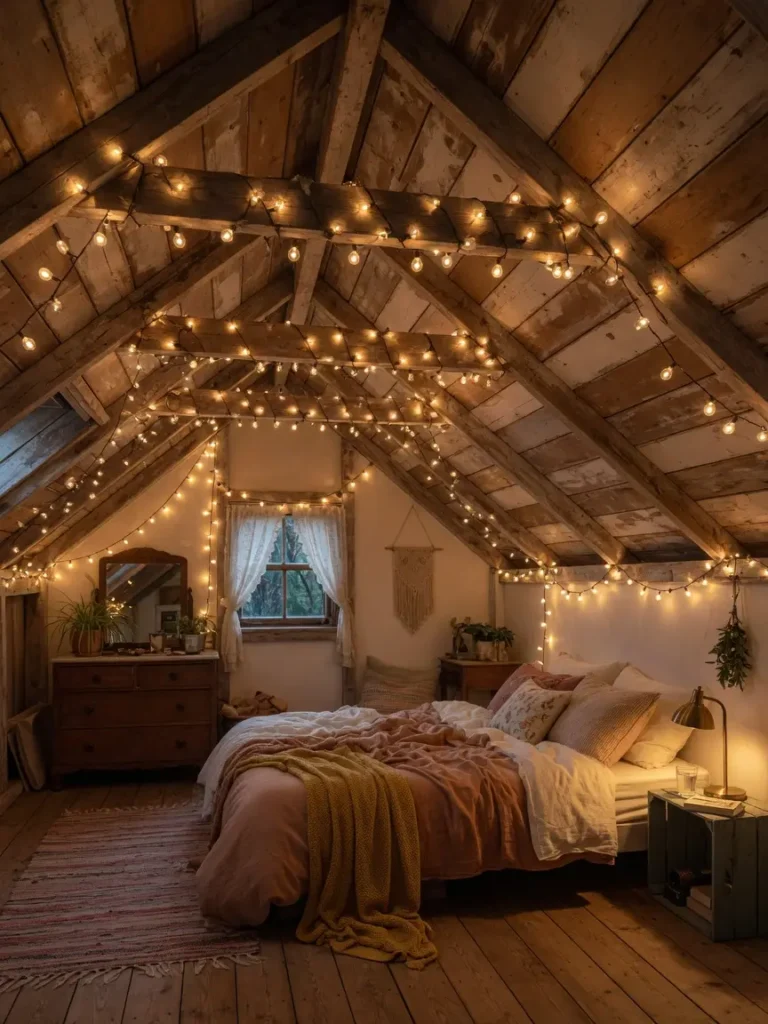
Warm white string lights woven along exposed beams or draped near a sloped ceiling add a soft glow that works especially well in a room where overhead lighting options are often limited. Attic bedrooms frequently lack a lot of ceiling space for a proper light fixture, so string lights fill that gap nicely, both functionally and aesthetically. Battery operated versions are handy here since running wiring through beam gaps isn’t always practical.
This is a small addition, but it’s the kind of detail that makes an attic bedroom feel finished rather than half done.
9. Vintage Trunk or Chest for Extra Storage
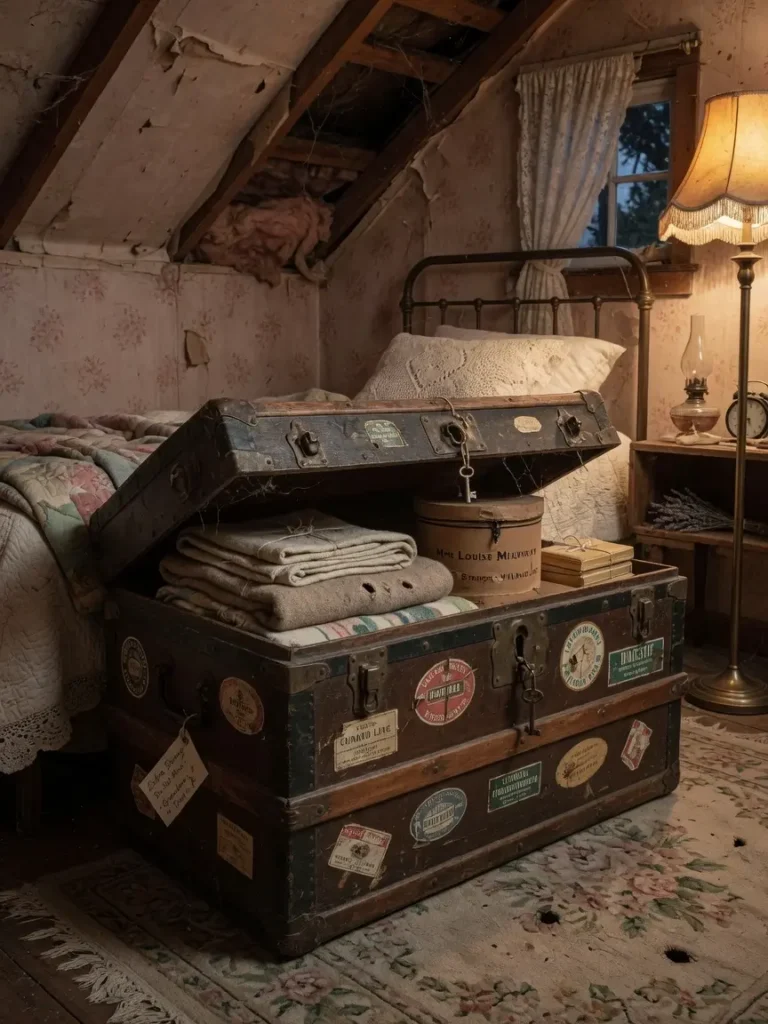
A vintage wooden trunk at the foot of the bed does double duty as both storage and a decor piece with real character. Attic bedrooms almost always need creative storage solutions since closet space tends to be limited by the sloped walls. Secondhand trunks show up often at thrift stores and estate sales, usually for somewhere between 20 and 60 dollars depending on condition and size.
I actually found mine at an estate sale for 15 dollars, sanded it down, and added new hardware. It’s held blankets in three different apartments since then.
10. Soft Layered Bedding in Muted, Cozy Tones
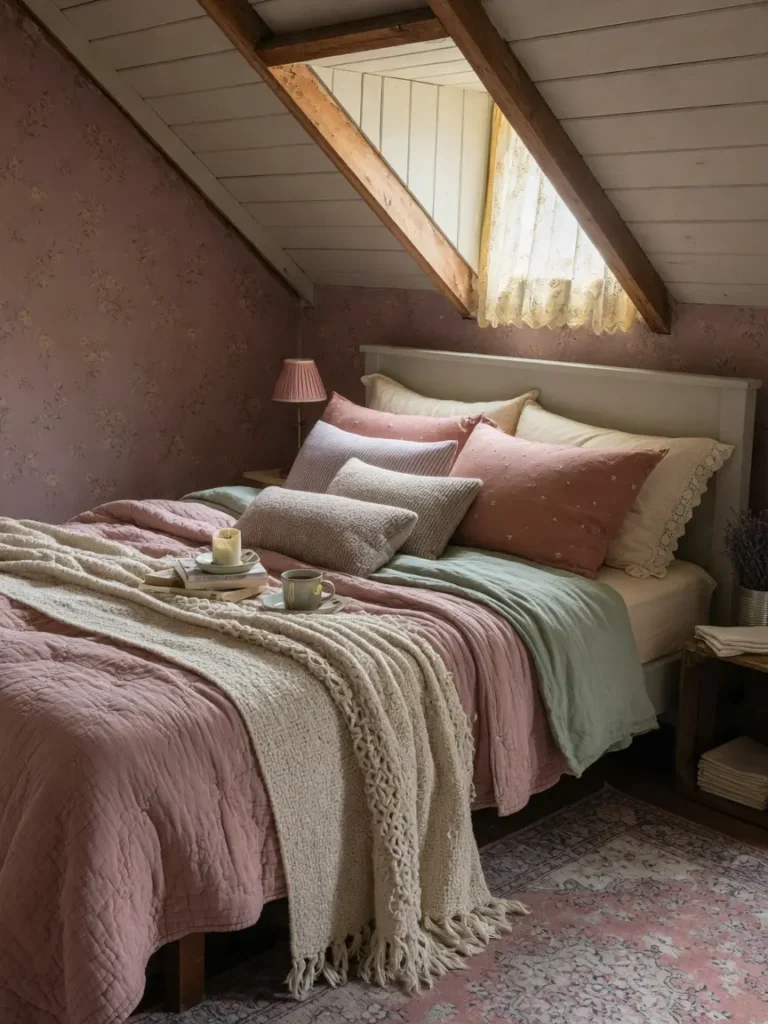
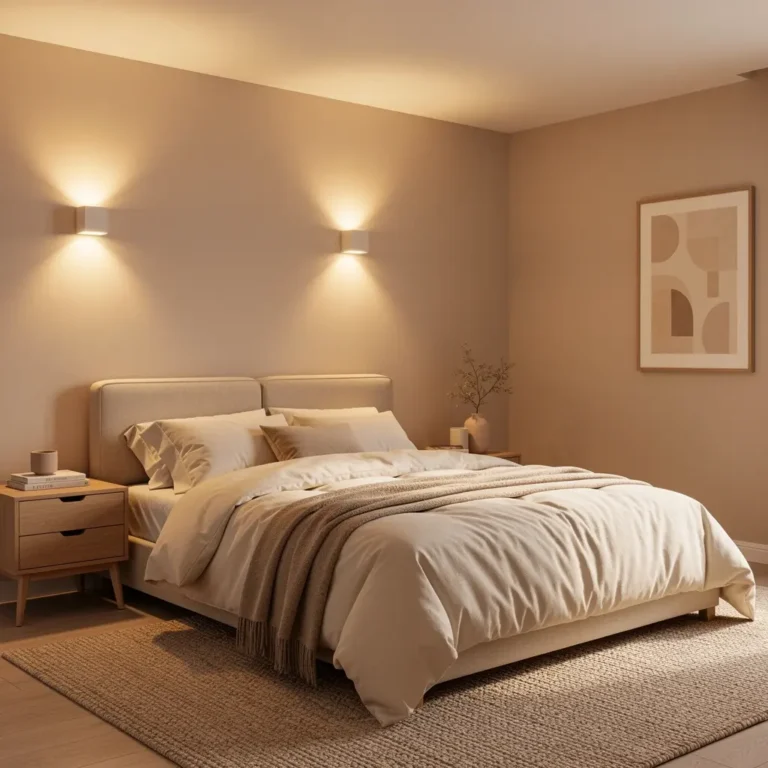
Since attic bedrooms already have so much visual interest built into the architecture, keeping the bedding simple and layered in muted tones, like oatmeal, sage, or soft gray, lets the room’s natural character take center stage. Adding two or three textures, a knit throw, a linen duvet, a velvet lumbar pillow, keeps things from looking flat without competing with the sloped ceilings and beams. This is really the finishing touch that pulls the whole attic bedroom decor scheme together once the bigger structural elements are in place.
Mistakes to Avoid
- Placing tall furniture against sloped walls where it doesn’t actually fit, wasting both space and usability
- Choosing overly bright, cool toned lighting that clashes with the warm, cozy feeling most attic rooms need
- Ignoring proper insulation checks before decorating, since attic rooms can run hot or cold depending on the season
- Skipping safety railings or barriers near low windows or stairwell openings, especially in homes with kids
- Covering up architectural details like exposed beams just because they seem unconventional at first glance
Frequently Asked Questions
What is the best bed height for an attic bedroom with sloped ceilings?
A low platform bed, generally under 14 inches off the ground, tends to work best since it keeps the sleeping area clear of the lowest ceiling points where standing or sitting upright isn’t comfortable.
How do I make an attic bedroom feel less cramped?
Warm wall colors, built in storage in the low knee wall areas, and keeping furniture minimal and low profile all help an attic bedroom feel more open despite the sloped ceiling constraints.
Are skylights worth adding to an attic bedroom?
Yes, in most cases, since they bring in natural light that dormer windows alone often can’t provide, though installation costs vary quite a bit depending on your roof structure and should be handled by a professional.
What kind of storage works best in an attic bedroom?
Built in shelving along the low knee walls, storage benches under dormer windows, and vintage trunks all make good use of awkward or limited space that standard closets can’t always accommodate.
Do attic bedrooms need special insulation considerations?
Generally yes, since attic spaces are more prone to temperature swings than the rest of the house, so it’s worth having insulation checked before investing heavily in decor, especially if the room feels notably hot or cold compared to other rooms.
Conclusion
An attic bedroom doesn’t have to feel like a compromise or an afterthought. Once you start designing around the sloped ceilings and odd angles instead of against them, the space actually has more personality than a lot of standard bedrooms ever will. Start with the bigger structural pieces, the bed placement and any built in storage, then layer in warmth through color, textiles, and lighting. Good attic bedroom decor really just comes down to working with what the room already wants to be, rather than forcing it into a shape it was never going to hold.