10 Small Bathroom Decor Ideas on a Budget That Actually Work
Your bathroom is the size of a large closet, the tile is from whoever lived there before you, and a full remodel isn’t happening this year. Small bathroom decor ideas on a budget don’t require ripping anything out. Most of what makes a tiny bathroom feel cramped comes down to a handful of fixable things: dark grout lines nobody’s cleaned in a while, a mirror that’s too small, lighting that’s either too dim or too harsh, and clutter piling up on every flat surface. Fix those, and the room changes more than you’d expect. Here’s what actually moves the needle, starting with the cheapest fixes first.
1. Paint Before You Touch Anything Else
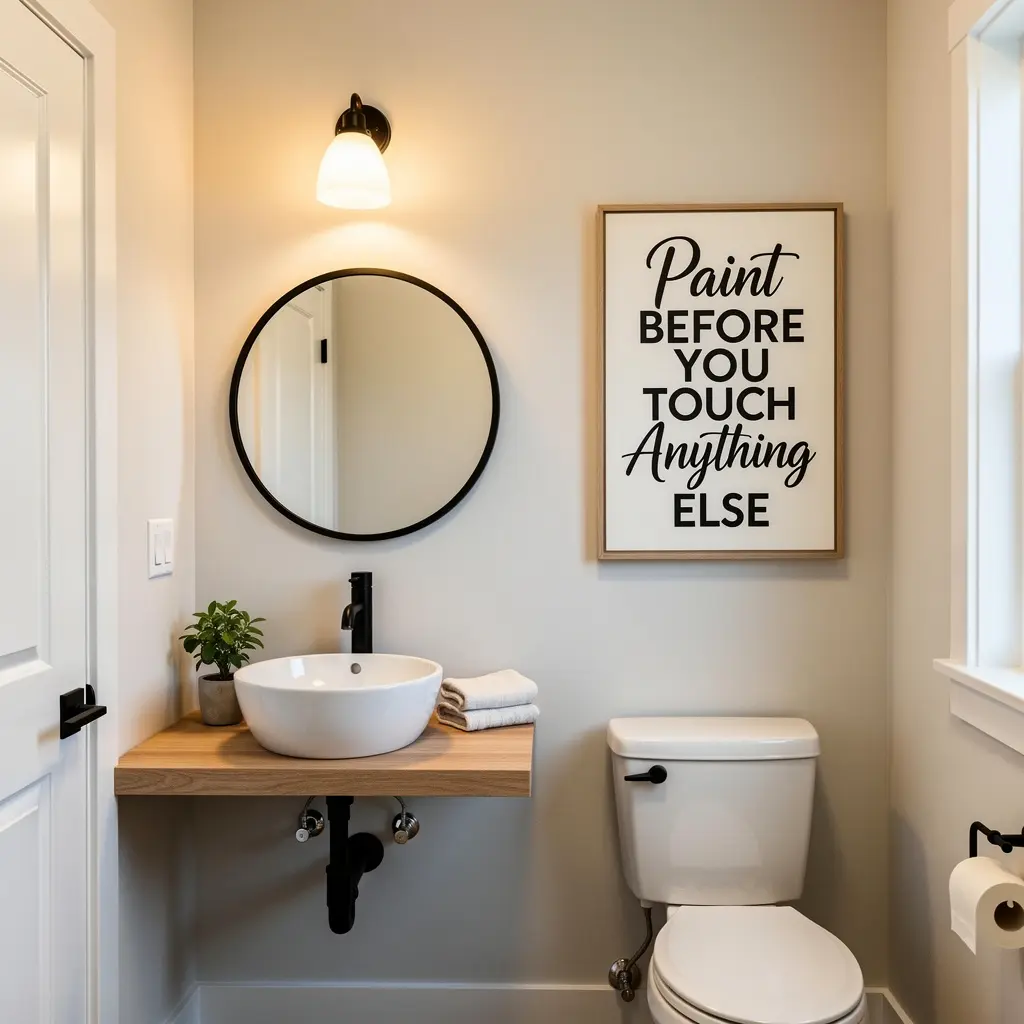
Paint is still the highest impact, lowest cost change you can make in a small bathroom. A gallon runs somewhere in the $30 to $60 range and covers most powder rooms twice over.
Skip stark white if the room doesn’t get much natural light. It tends to look gray and flat rather than bright. A soft warm white, a pale sage, or even a confident color like navy or forest green on all four walls can work better than you’d think in a tiny space, since there’s no large expanse of wall for a dark color to feel oppressive on. One designer testing this in a real small bathroom found that a muted green paired with bamboo shelving and simple linen towels made the room feel calmer, not smaller.
Don’t Forget the Ceiling
Painting the ceiling the same color as the walls, rather than leaving it flat white, removes the visual line where wall meets ceiling. That line is part of what makes a small room feel boxed in.
2. Swap the Mirror for Something Bigger
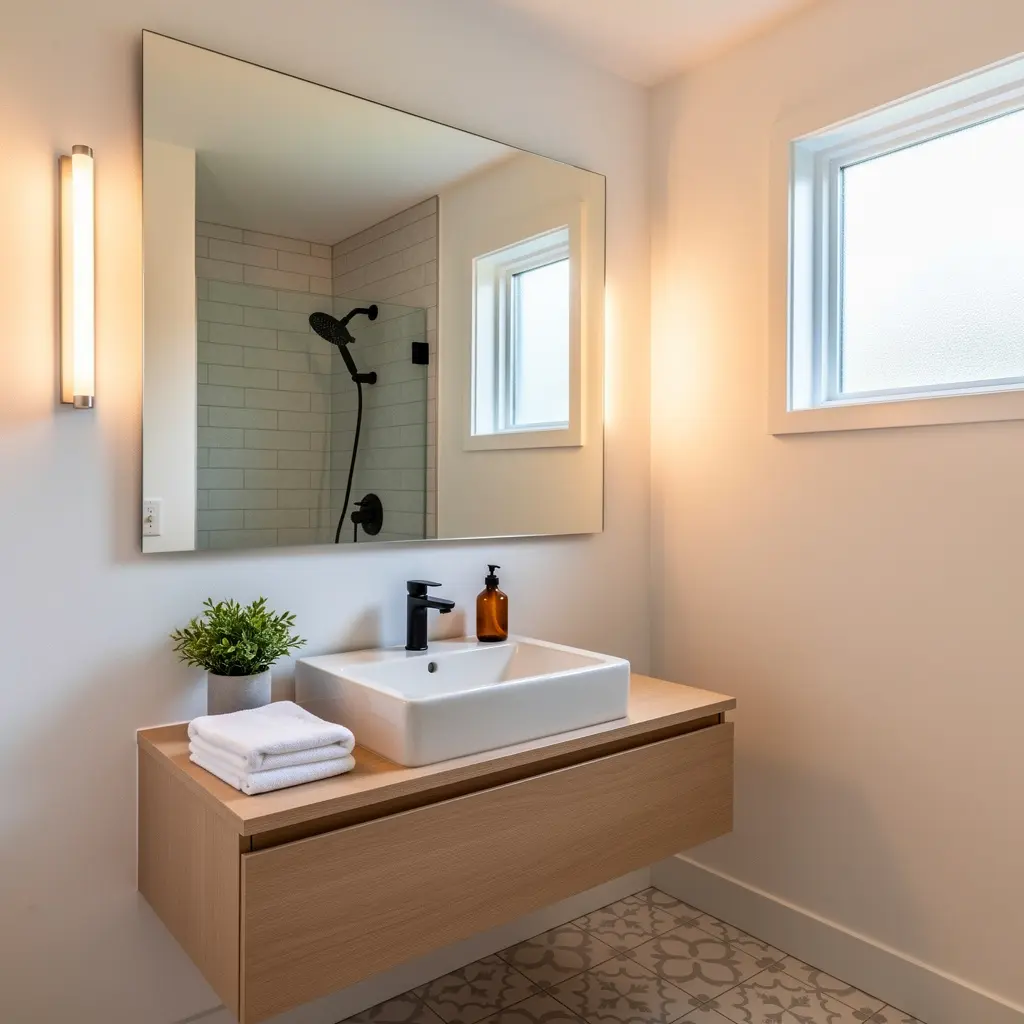
A small, framed mirror centered over the sink is doing you no favors. It’s probably the single most common mistake in budget bathroom decor.
A larger mirror, ideally one that spans close to the width of your vanity, bounces more light around the room and makes the far wall feel farther away than it is. You don’t need a custom piece. Big box stores and online retailers sell frameless and simply framed mirrors in a range of sizes for $50 to $150, and installation is usually just a couple of mounting clips or adhesive strips if you’re not drilling into tile.
3. Fix the Lighting Before Buying Any Decor
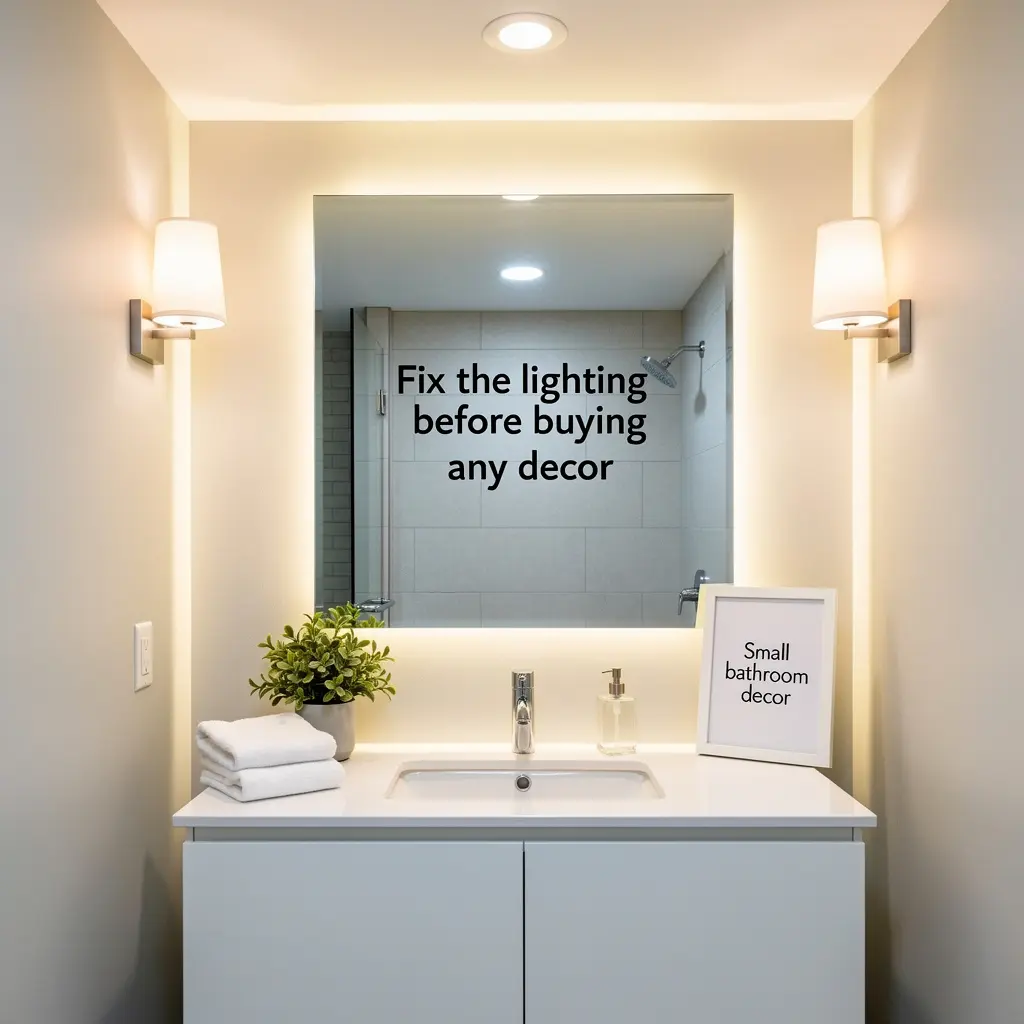
Bad lighting undoes good decor. It’s that simple, and it’s the thing people spend money around instead of on.
Most builder grade bathrooms have one dim overhead fixture that casts shadows under your eyes and makes every color in the room look slightly wrong. Swapping to warmer bulbs, generally in the 2700K to 3000K range, and adding a second light source, a wall sconce on either side of the mirror if your wiring allows it, or a plug-in sconce if it doesn’t, makes a bigger difference than any single decor purchase on this list.
A Cheaper Fix If Rewiring Isn’t an Option
If adding a hardwired fixture isn’t realistic in a rental, battery-powered LED sconces with adhesive mounts exist specifically for this problem. They’re not going to look quite as built-in, but they solve the actual lighting issue for under $30 a pair.
4. Use One Standout Tile Instead of Redoing the Whole Floor
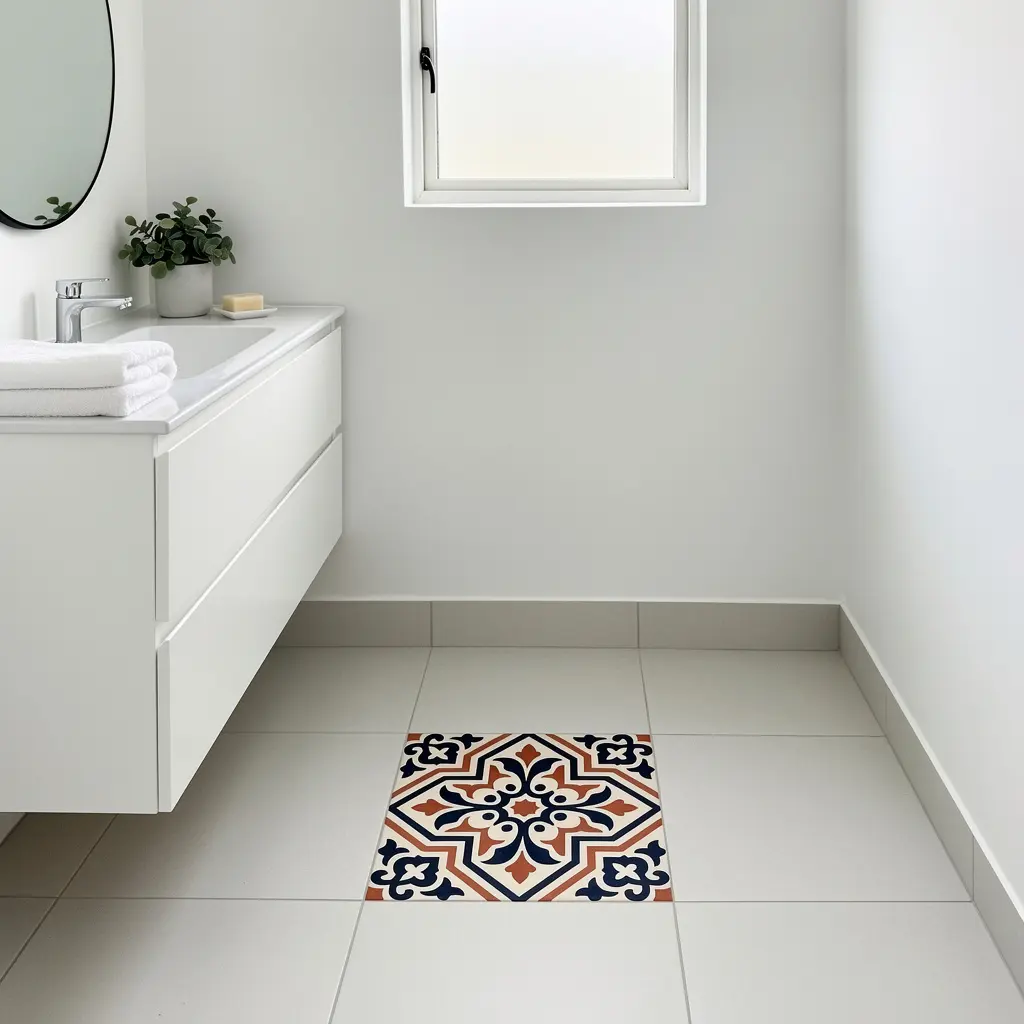
Full tile replacement is expensive. But you don’t need to replace the whole floor to get the visual benefit of nice tile.
Peel and stick vinyl tile has gotten considerably better looking in the past few years, and it’s genuinely renter-friendly, since it removes without damaging the floor underneath in most cases. If you own the space and have a slightly bigger budget, limiting a bolder patterned tile to a small area, a niche, a backsplash behind the sink, or a narrow accent strip, gets you the personality of a statement tile without the cost of covering an entire floor in it.
5. Get Everything Off the Counter That Doesn’t Need to Be There
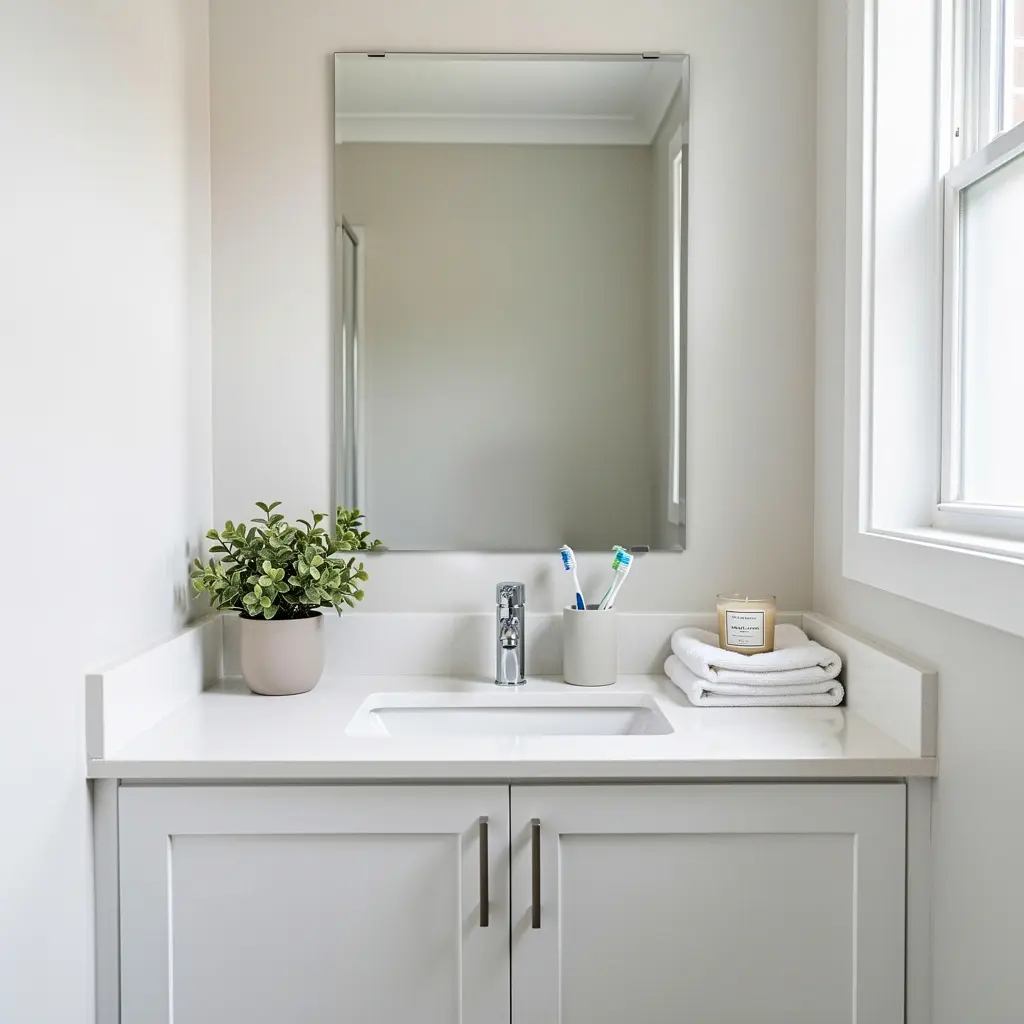
Visual clutter shrinks a small room faster than almost anything else, faster even than a bad paint color.
A wall mounted shelf, even a single 12 inch floating shelf above the toilet, gets toiletries up and off the counter. A shower caddy that hangs from the showerhead rather than sitting on the tub ledge does the same thing in the shower. The goal isn’t minimalism for its own sake. It’s giving the eye a place to rest instead of scanning across six different bottles and a hairdryer cord every time you walk in.
Baskets Work Better Than Bins
Woven baskets tucked under a pedestal sink or on an open shelf hide the actual mess while still looking intentional, which matters more in a small bathroom than a large one, since there’s less room for things to just disappear into a closet.
6. Add a Window Treatment That Lets Light Through
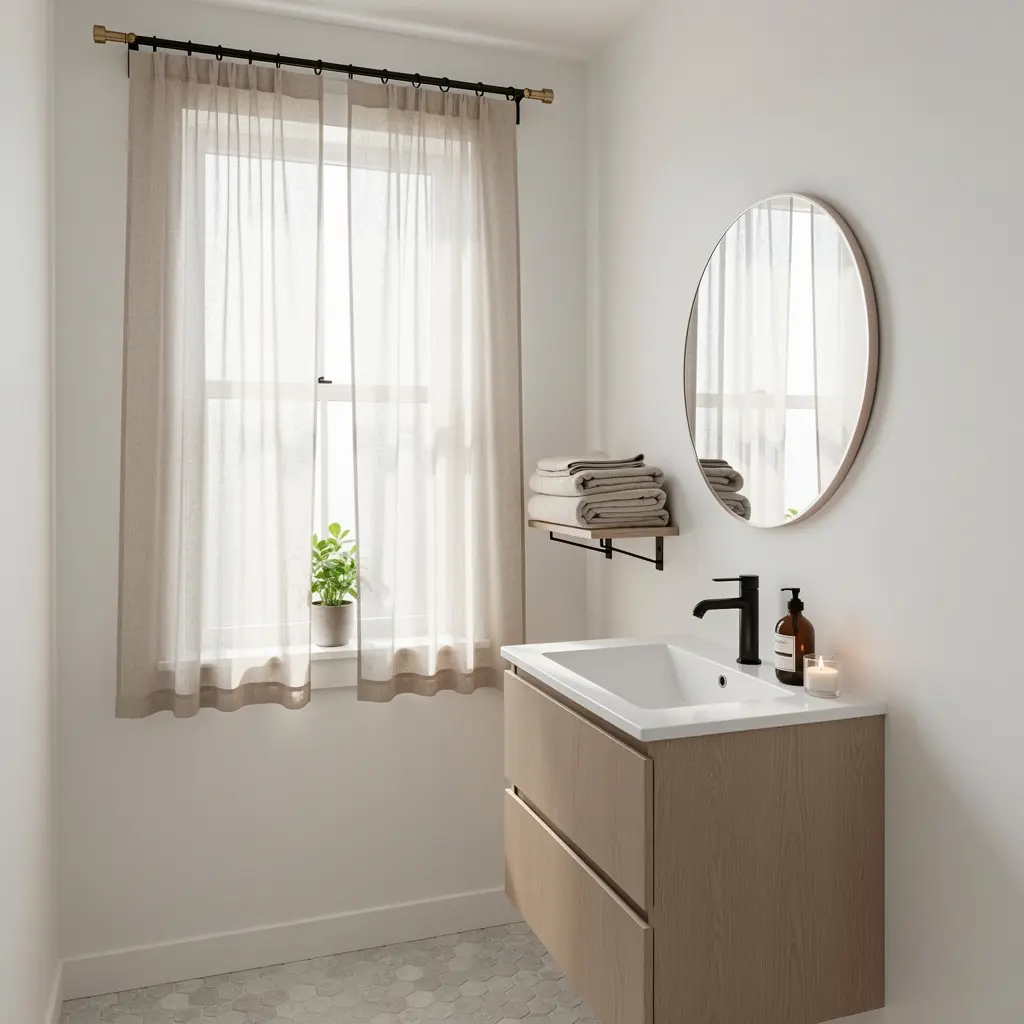
If your small bathroom has a window, and you’re covering it with a heavy curtain or opaque blind for privacy, you’re cutting off one of your only free light sources.
Frosted glass film, sold in rolls for $15 to $25, applies directly to the glass and provides privacy while still letting daylight pass through. A simple woven wood shade left partially open does something similar. Either option beats a solid blackout curtain in a room that’s already working with limited square footage and needs every bit of light it can get.
7. Bring In a Plant That Tolerates Bathroom Conditions
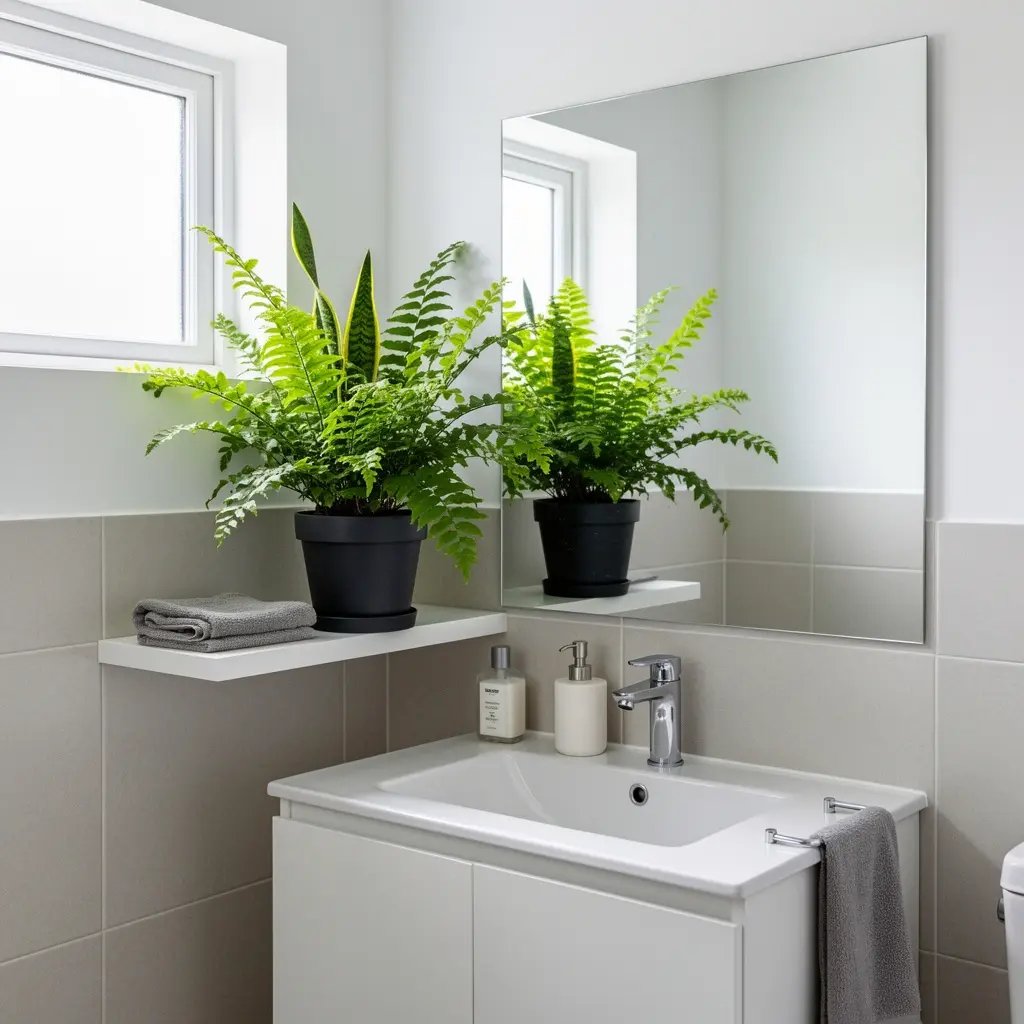
A plant does something paint and tile can’t. It adds a living, slightly imperfect element to a room that’s otherwise all hard surfaces, tile, porcelain, glass, metal.
Not every plant survives bathroom humidity and low light well, so this matters more than people expect. Pothos, snake plants, and ZZ plants are the reliable options here, tolerant of low light and inconsistent watering. A single plant on a windowsill or a small shelf does more for the room’s warmth than three or four smaller decor objects scattered around.
8. Choose Two or Three Materials and Stop There
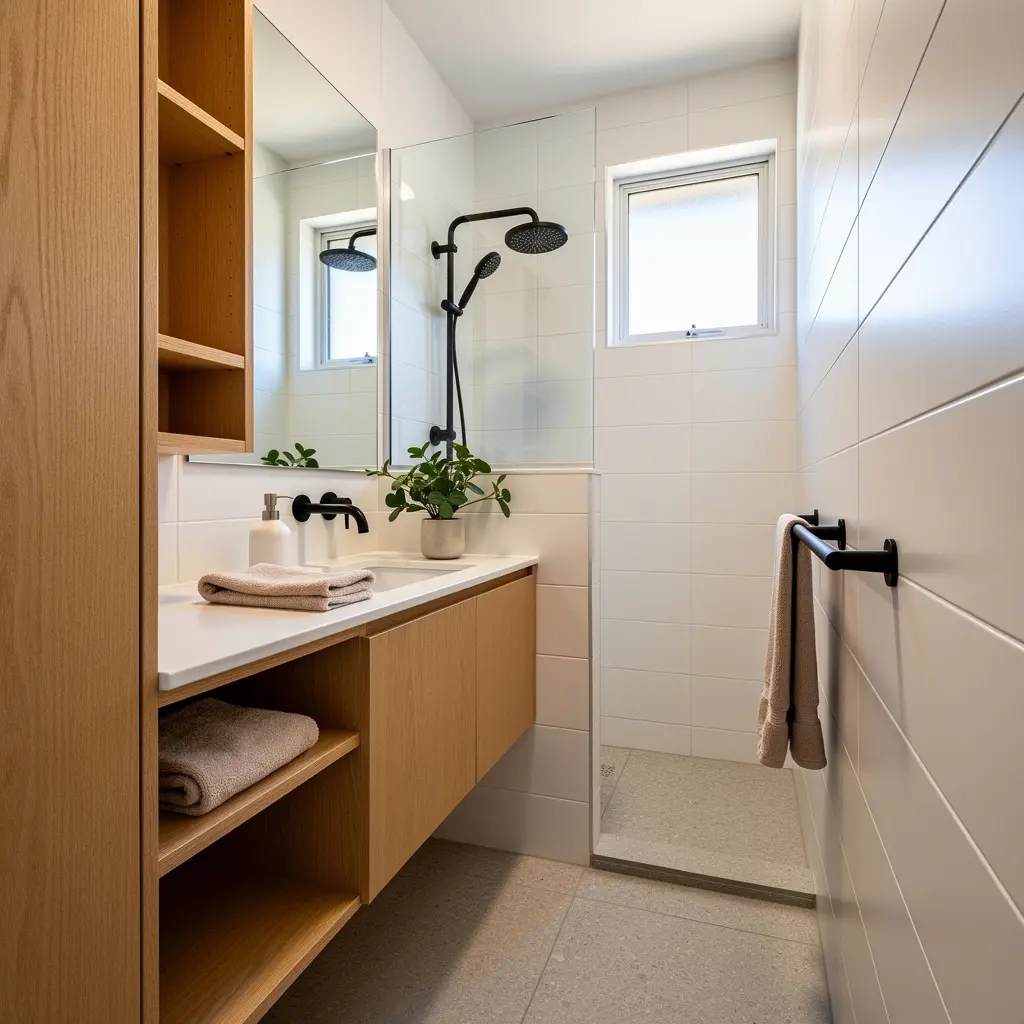
Small bathrooms get visually noisy fast when there are too many different finishes competing, chrome fixtures next to brass hardware next to a white plastic shower caddy next to wood accessories.
Picking one metal finish, say brushed brass or matte black, and one or two supporting materials, wood and white ceramic, for instance, and sticking to that combination throughout the room makes the space read as considerably more intentional. This costs nothing extra. It’s a matter of choosing what you buy going forward, and swapping out the cheapest, most visually jarring pieces first, usually a plastic soap dispenser or a mismatched towel bar.
9. Layer in Soft Textiles
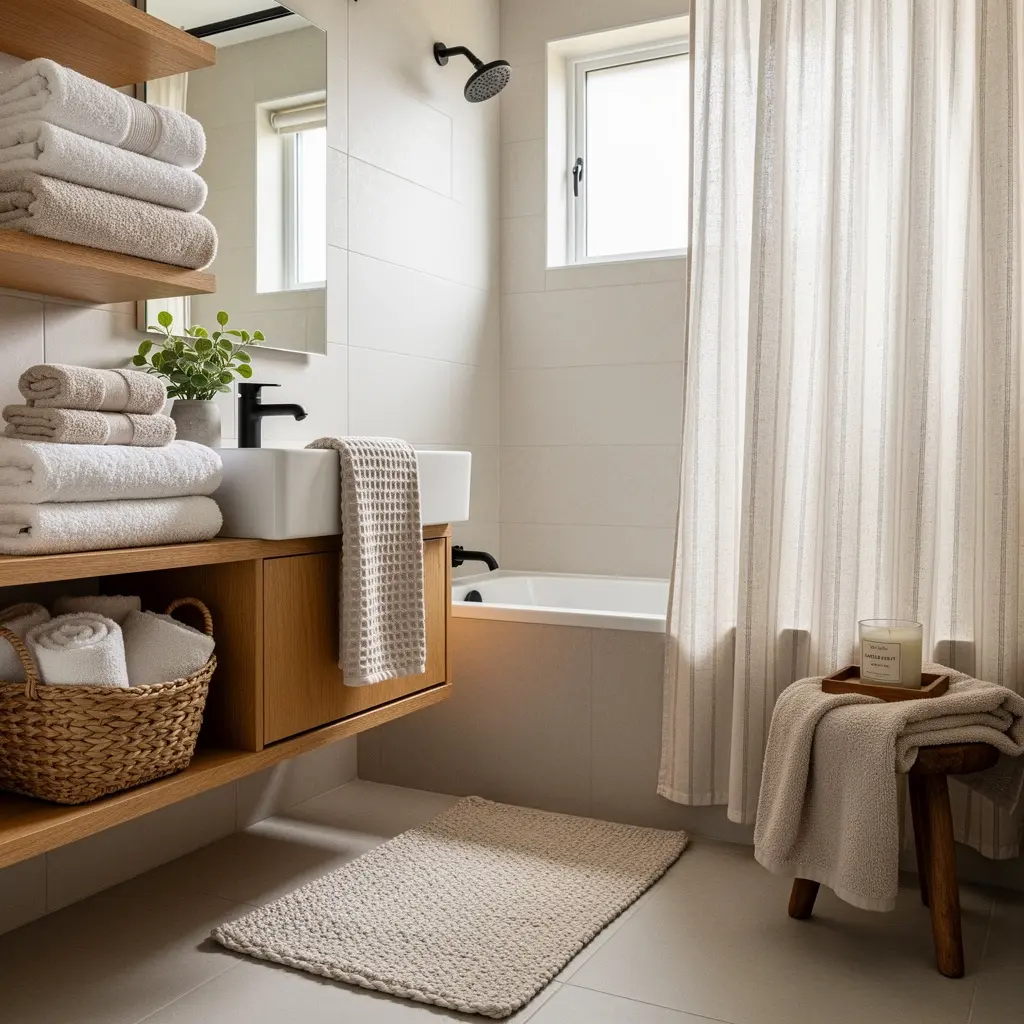
Hard surfaces are unavoidable in a bathroom. Soft ones are optional, and they’re what keep the room from feeling like a public restroom instead of part of your home.
A plush bath mat, in a color that actually coordinates with your towels rather than whatever was on sale, plus two or three towels folded and displayed rather than jammed on a single bar, add warmth for relatively little money. A towel ladder, if you have an extra few feet of wall space, does double duty as both storage and texture.
10. Upgrade the Hardware Last, Since It’s the Priciest Small Fix
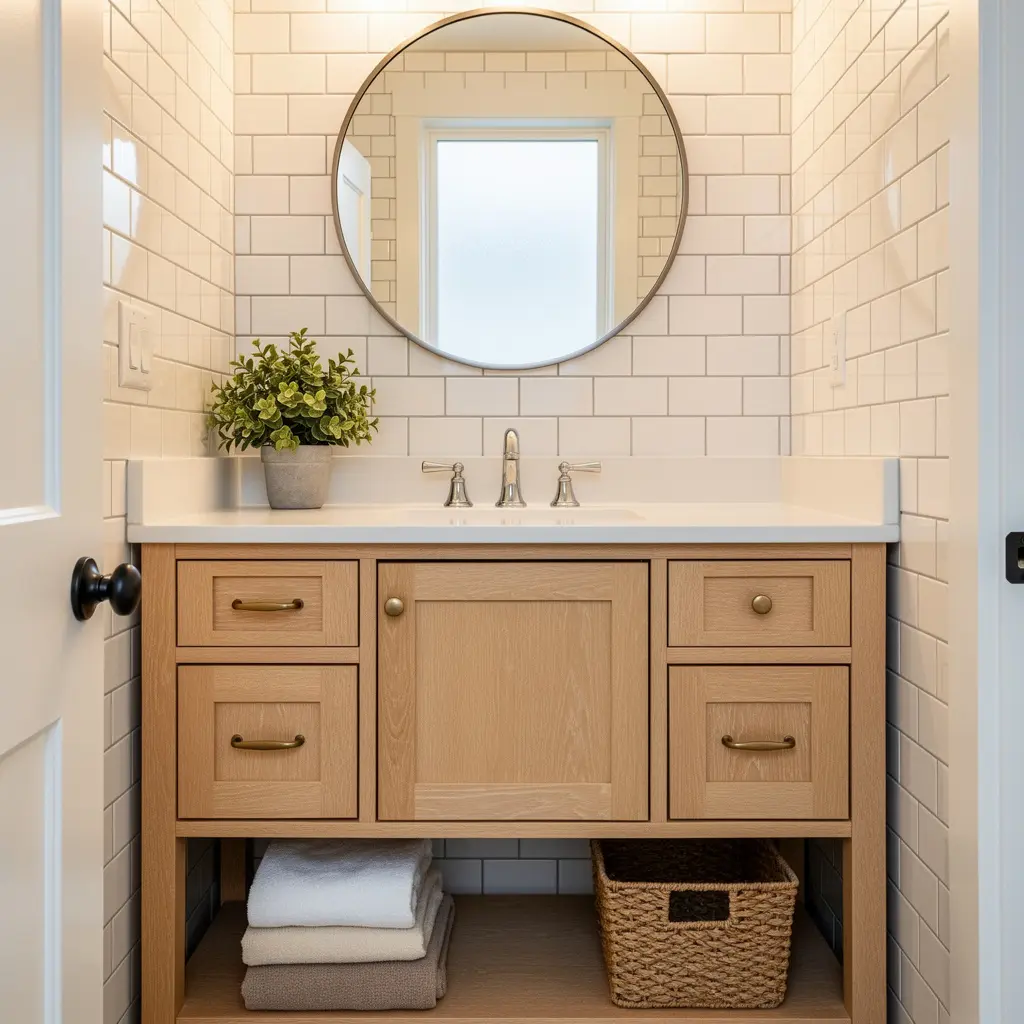
Faucet, cabinet pulls, towel bar, toilet paper holder. Swapping all of it in a cohesive finish is one of the more expensive items on this list, so it’s worth doing last, once you’ve already confirmed the rest of the room’s direction.
Budget for somewhere between $80 and $250 total depending on how many pieces you’re replacing and whether you go with a mid-range or higher end finish. This is also the easiest item to do gradually. Replace the towel bar this month, the faucet next month, rather than trying to buy everything at once.
Mistakes to Avoid
- Choosing stark white paint in a room with little natural light. It tends to read gray and flat instead of bright.
- Keeping the original small mirror. A larger mirror does more for the sense of space than almost anything else on this list.
- Covering every counter surface with toiletries. Wall shelves and hanging caddies free up visual space, not just physical space.
- Blocking a window with a heavy curtain for privacy. Frosted film or a partially open shade preserves both privacy and light.
- Mixing too many metal finishes. Two materials, consistently used, look more finished than five competing ones.
- Buying everything at once. Hardware, in particular, is easier and cheaper to replace gradually than all in one trip.
Frequently Asked Questions
What’s the single cheapest way to improve a small bathroom? Paint. A gallon costs $30 to $60 and changes the entire feel of a small room more than any other single purchase on a tight budget.
Does a dark paint color make a small bathroom feel smaller? Not necessarily. Because there’s so little wall space in a small bathroom to begin with, a confident color like navy or forest green can actually make the room feel cohesive rather than cramped, especially when the ceiling is painted the same color.
What plants survive in a small bathroom with low light? Pothos, snake plants, and ZZ plants are the most tolerant of both low light and the humidity swings that come with regular showers.
Is peel and stick tile actually a good long term option? For renters or anyone not ready to invest in a full tile job, yes. Quality has improved significantly, and it removes cleanly in most cases without damaging the floor underneath.
How much should a full budget bathroom refresh cost? Paint, a new mirror, updated lighting, and a few textile and storage changes can realistically run $200 to $500 total, depending on what you already own and how much of the work you do yourself.
The Real Takeaway
None of this requires a contractor or a weekend of demolition. Paint, a bigger mirror, and better lighting solve most of what actually makes a small bathroom feel small in the first place, and all three are things you can do yourself in a single weekend for under $200 combined. Everything past that, storage, textiles, hardware, is refinement you can add gradually as the budget allows, not a list you need to check off all at once.