10 Sage Green Bedroom Decor Ideas for a Calm, Layered Retreat
You walk into your bedroom after a long day and it just feels flat, beige walls, a mismatched throw pillow, nothing that actually feels restful. Sage green bedroom decor ideas solve this in a way few other color schemes do, because sage sits right between green and gray, which makes it calming without feeling cold or sterile. The trick is knowing which sage tones pair well together and which materials actually let the color read as intentional instead of accidental.
This guide walks through ten specific ways to bring sage green into a bedroom, from wall treatments to bedding to lighting, along with a few mistakes that make sage green look muddy instead of calm.
1. Choose the Right Sage Undertone for Your Room
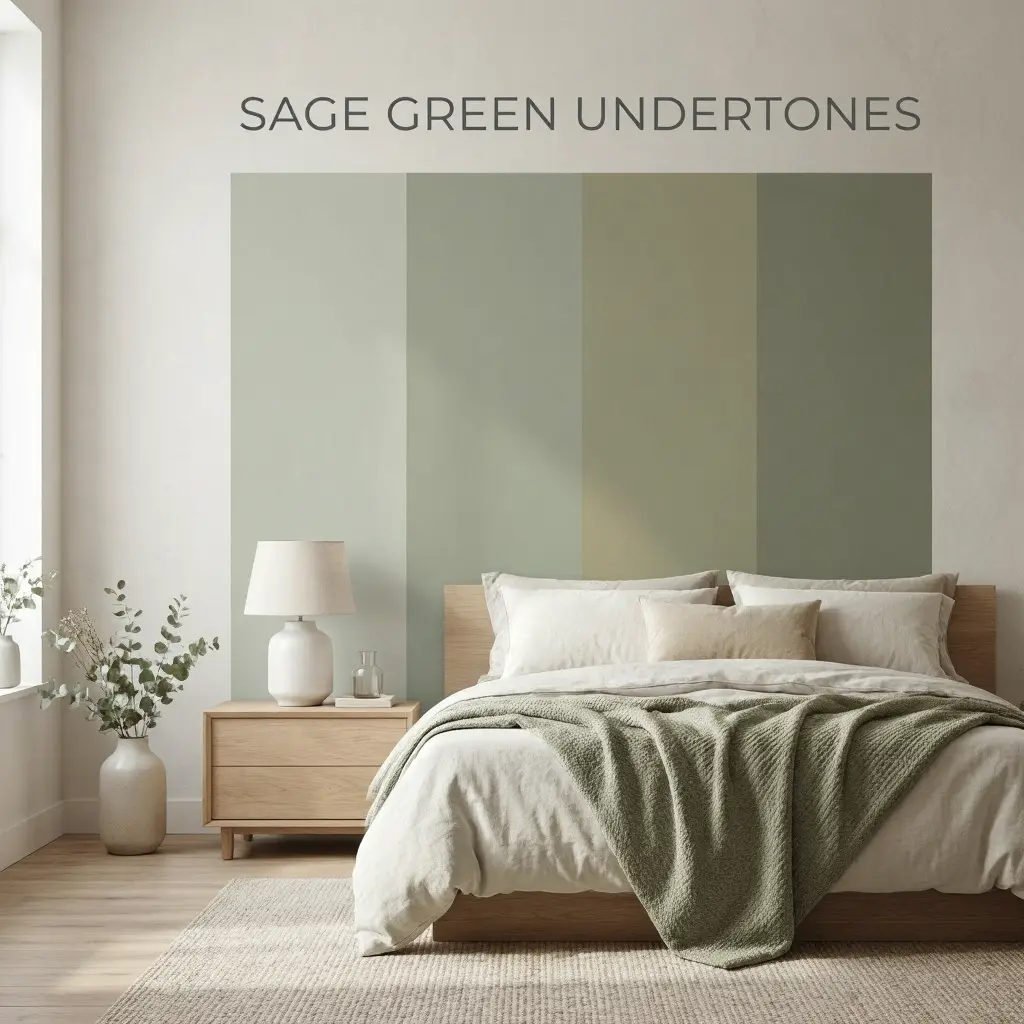
Not all sage greens are the same. Some lean more gray, some lean more yellow, and picking the wrong undertone for your room’s natural light can make the whole space look off. A north facing room with cooler light generally suits a sage with a slight gray undertone, while a south facing room with warmer light can handle a sage that leans a touch more yellow or olive without looking dull.
Testing Before You Commit
Paint a sample swatch on at least two different walls and check it in the morning, midday, and evening light before committing to a full room. Sage green shifts more dramatically under artificial light than most colors, so a shade that looks perfect at noon can look almost gray by lamplight.
2. Use Sage as an Accent Wall, Not the Whole Room
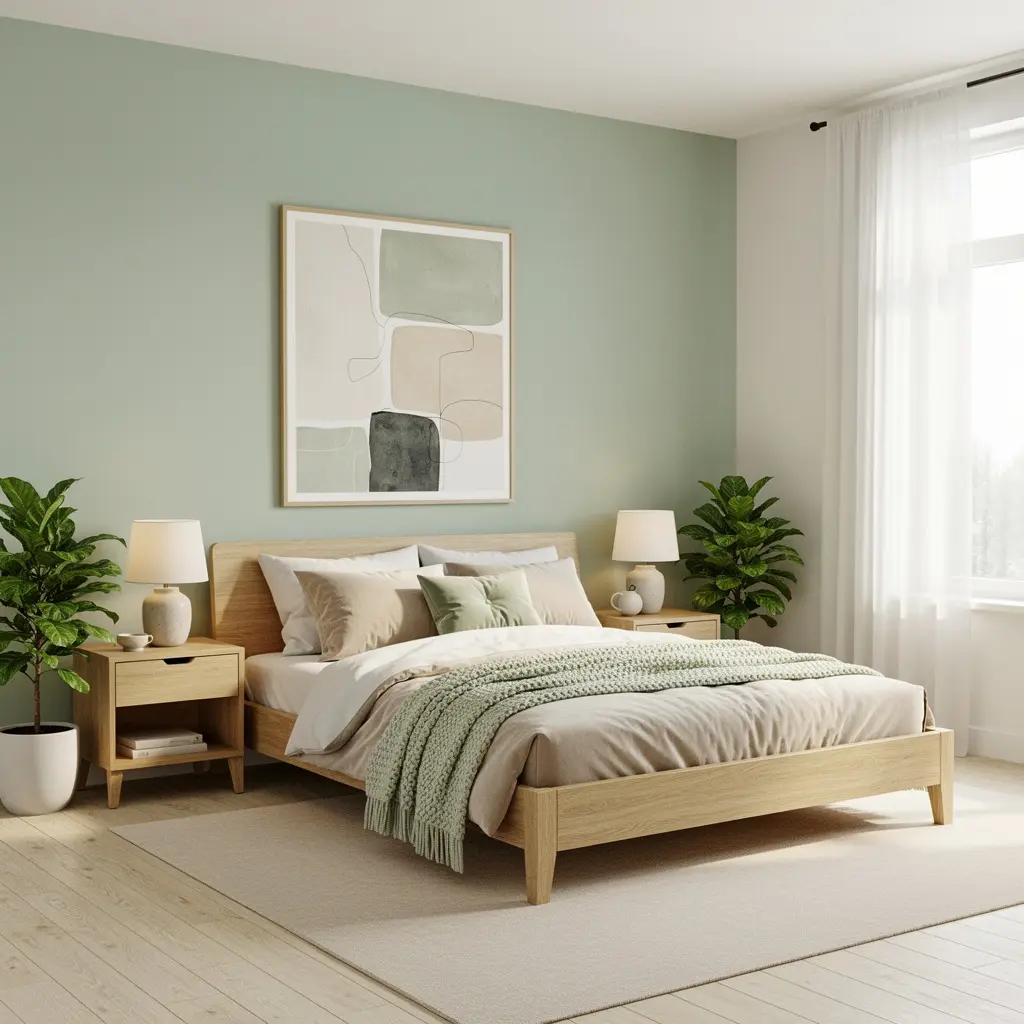
Painting all four walls in sage can feel heavy in a smaller bedroom, especially one without much natural light. A single accent wall, usually the one behind the headboard, gives you the calming effect of the color without making the room feel closed in. Keep the remaining walls in a soft white, cream, or light gray to let the sage do the visual work.
3. Layer Bedding in Multiple Sage Tones
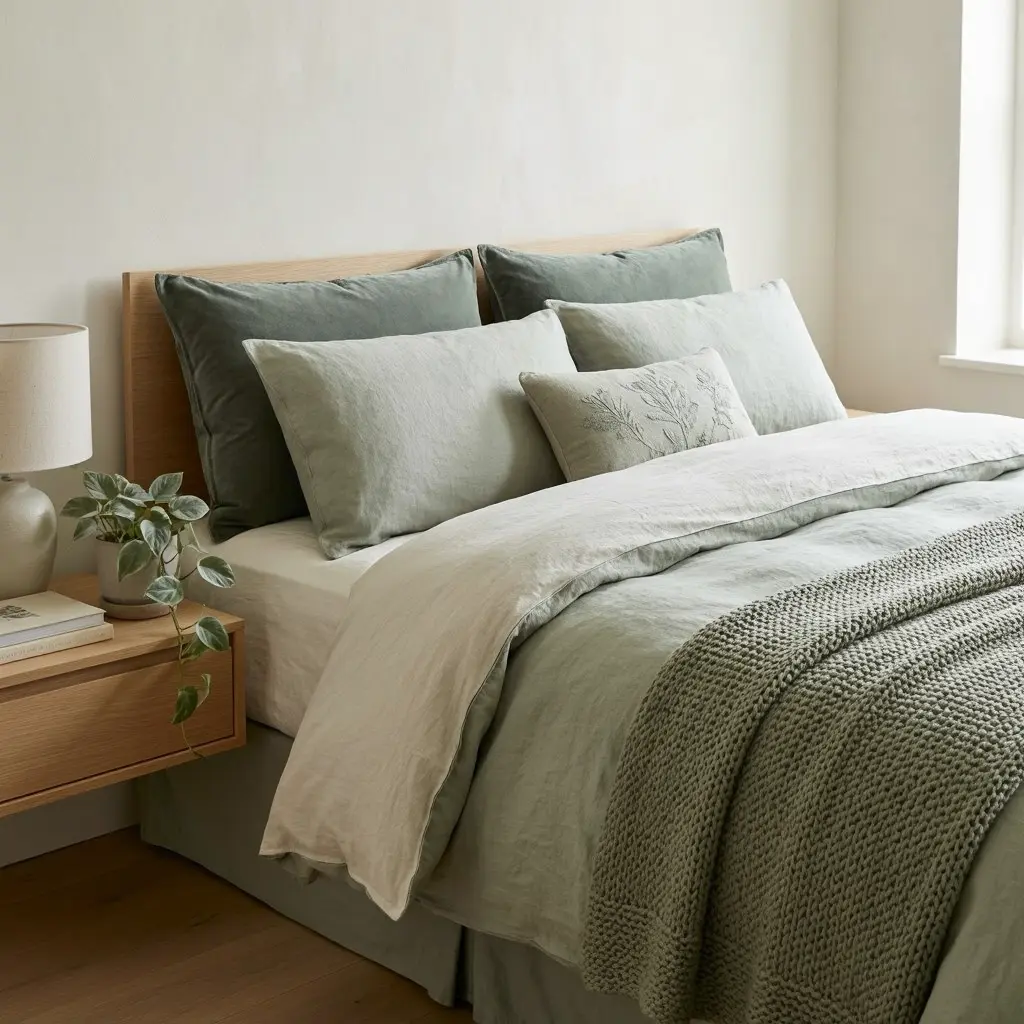
A single sage colored comforter can look flat on its own. Layering a lighter sage sheet set with a slightly deeper sage or olive throw blanket, plus a cream or ivory duvet cover as the base, creates the same depth effect that works in any layered color scheme. Adding one or two pillows in a contrasting cream or soft terracotta breaks up the green without fighting it.
Fabric Choices That Enhance the Color
Linen and cotton with a slight texture, rather than a flat, glossy finish, let sage green catch light in a softer, more natural way. A slubbed linen throw or a waffle weave blanket in sage reads as more relaxed and intentional than a smooth polyester blend in the same shade.
4. Bring in Natural Wood Tones
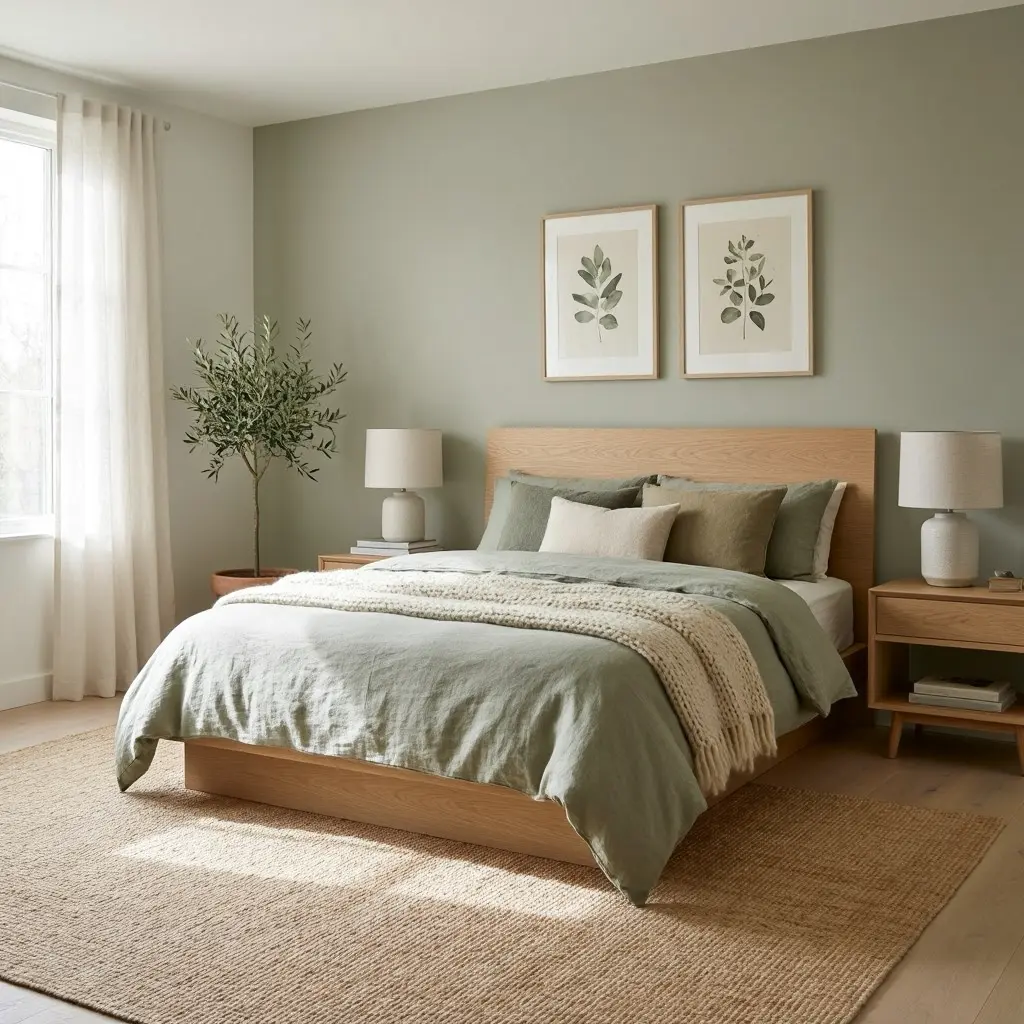
Sage green pairs especially well with warm, natural wood, since the slightly cool undertone of the green is balanced out by the warmth of the wood grain. A wood headboard, nightstands in a light oak or walnut finish, or even a simple wood framed mirror all help ground the room instead of letting it feel like a single flat color block.
5. Add Texture Through Woven Baskets and Rattan
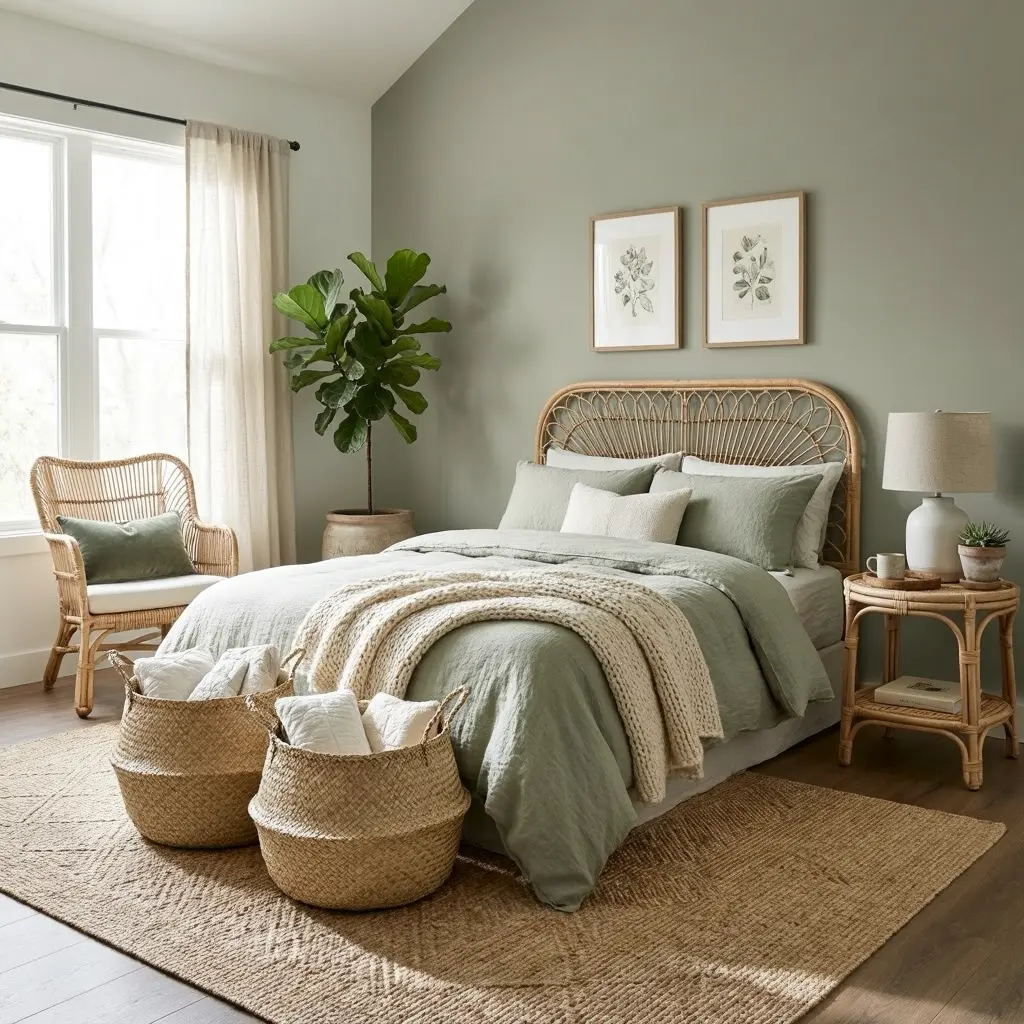
Rattan and woven natural fiber pieces, like a rattan pendant light or a woven storage basket at the foot of the bed, introduce texture that keeps a sage green room from feeling too smooth or one dimensional. These pieces also lean into the same earthy, calming feel that sage green is meant to evoke in the first place.
Where to Place These Pieces
A rattan mirror above a dresser or a woven bench at the foot of the bed works well since these are areas that benefit from a textural break without competing with the bedding or wall color.
6. Choose Warm Metallic Accents Over Cool Ones
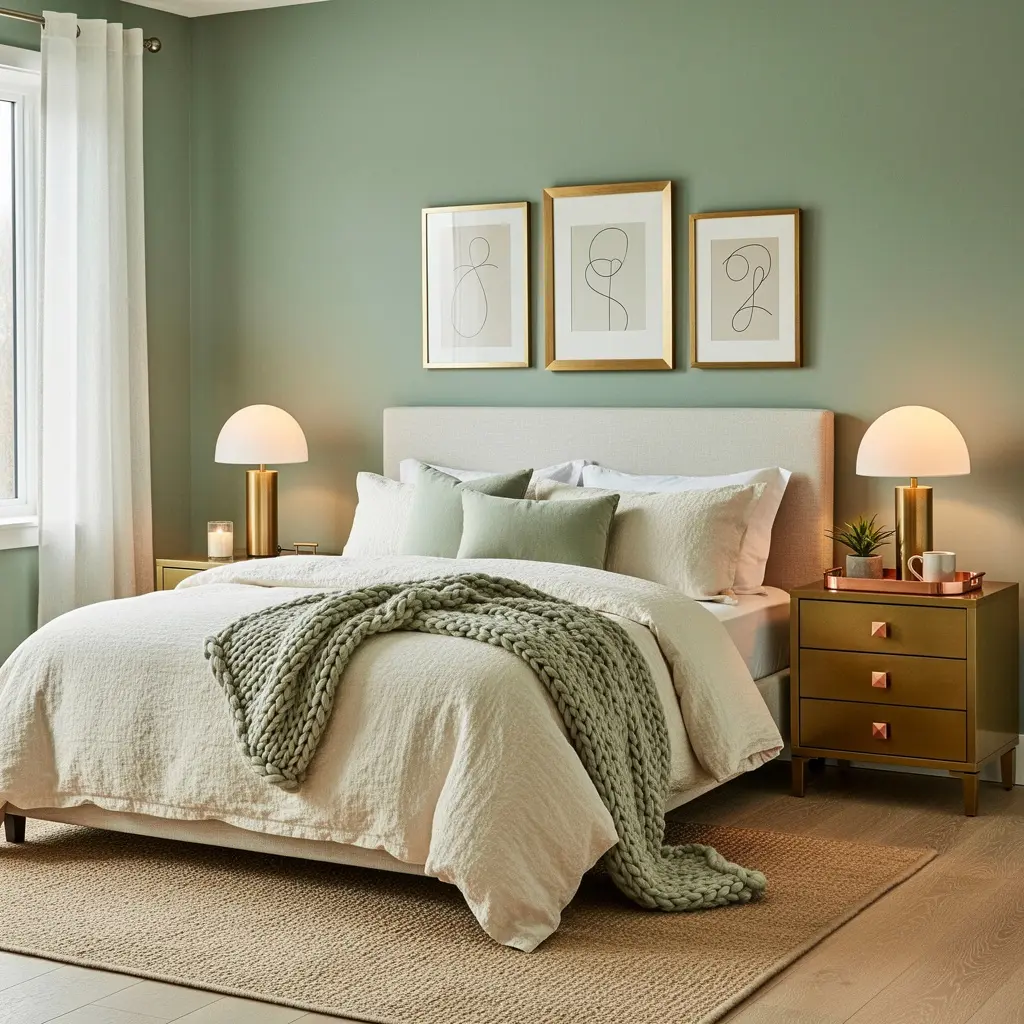
Brushed brass, warm gold, or aged bronze hardware and light fixtures tend to complement sage green better than cool toned chrome or stainless steel, since the warmth balances out sage’s slightly cool undertone. Swapping out cabinet pulls on a nightstand or dresser, or choosing a brass floor lamp, is a small change that makes a noticeable difference.
7. Add Greenery That Echoes the Wall Color
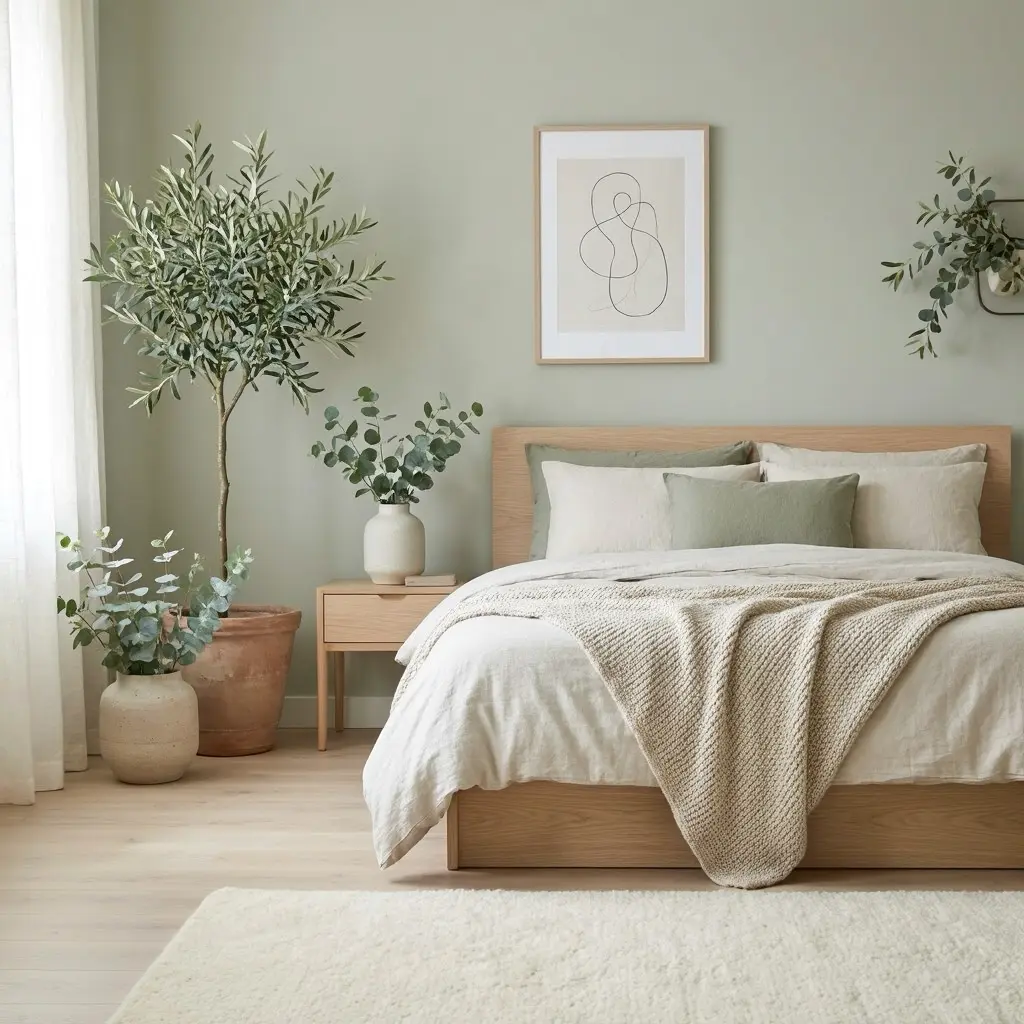
Real or faux plants in a bedroom naturally tie back into a sage green color scheme, since the living green tones echo the painted or textile sage without matching it exactly. A snake plant, a pothos on a shelf, or a small potted olive tree in the corner reinforces the calm, natural feeling the color is meant to create.
8. Use Soft, Warm Lighting Instead of Cool White Bulbs
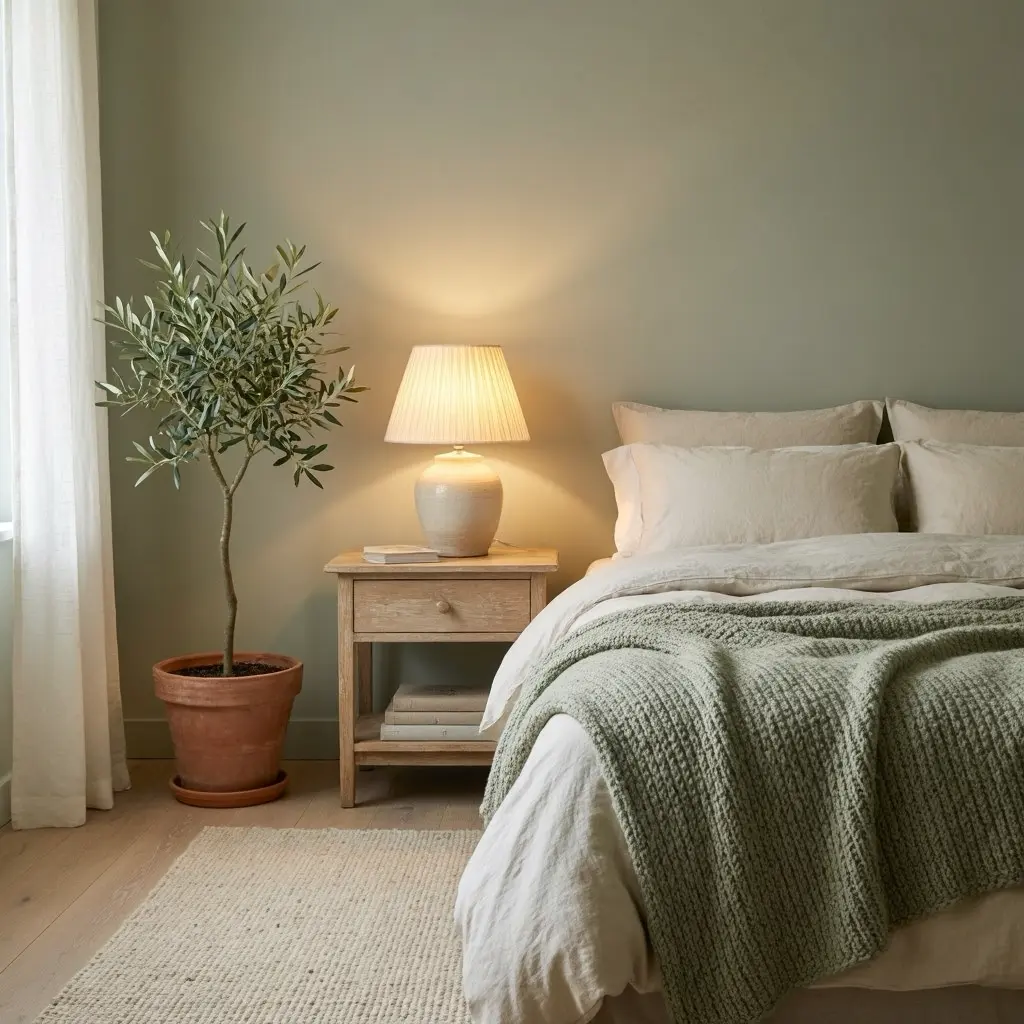
Cool white or daylight bulbs can make sage green look washed out and slightly gray rather than calm and warm. Swapping to warm white bulbs, generally in the 2700K to 3000K range, keeps the green looking rich rather than flat, especially in the evening when overhead lighting does most of the work.
Layering Light Sources
A single overhead fixture rarely does a bedroom justice. Adding a bedside lamp and a smaller accent light, like a plug in wall sconce, gives you more control over how warm or dim the room feels at different times of day.
9. Introduce a Terracotta or Warm Clay Accent
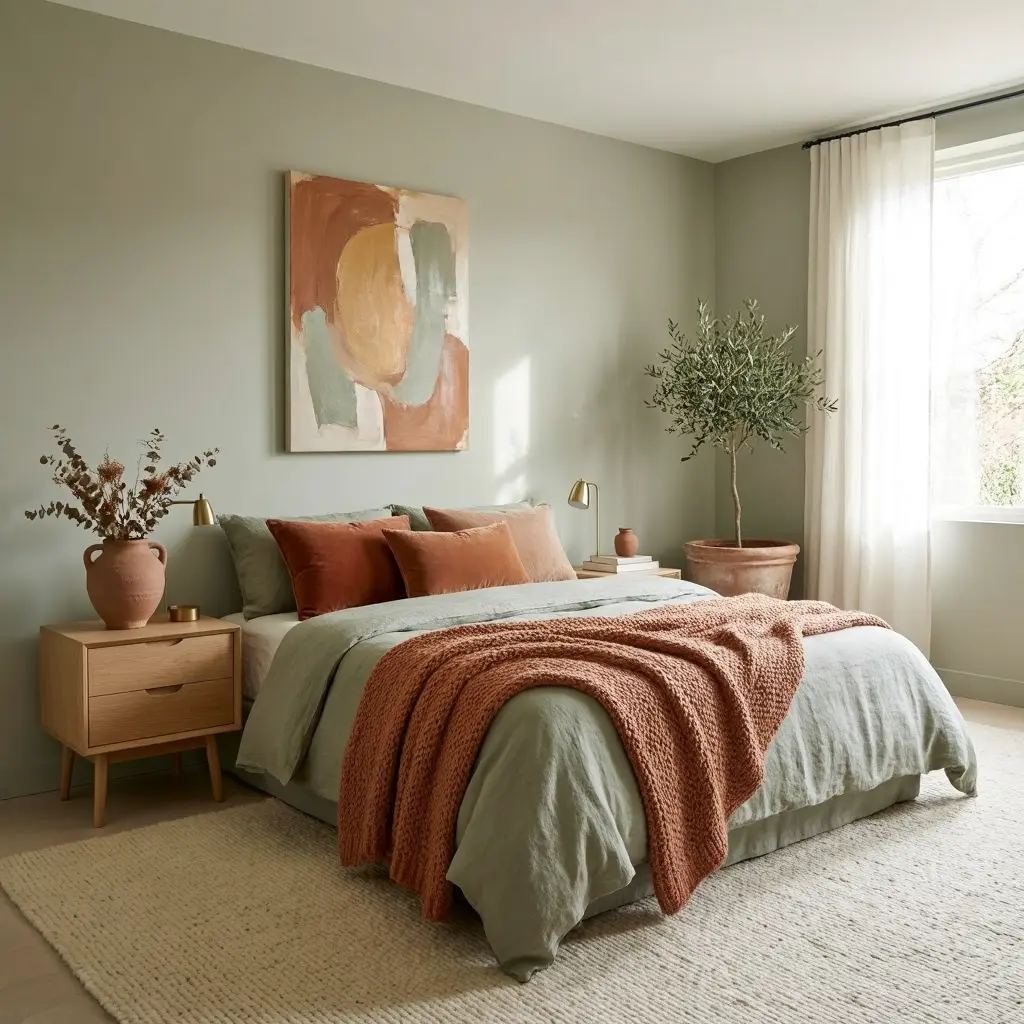
While sage green can stand entirely on its own, adding a small amount of warm terracotta or clay tone, through a single accent pillow, a ceramic vase, or even a piece of art, adds warmth that keeps an all green and neutral room from feeling too cool. This pairing works because terracotta’s warm undertone directly balances sage’s cooler, grayer base.
10. Keep Patterns Minimal and Let the Color Do the Work
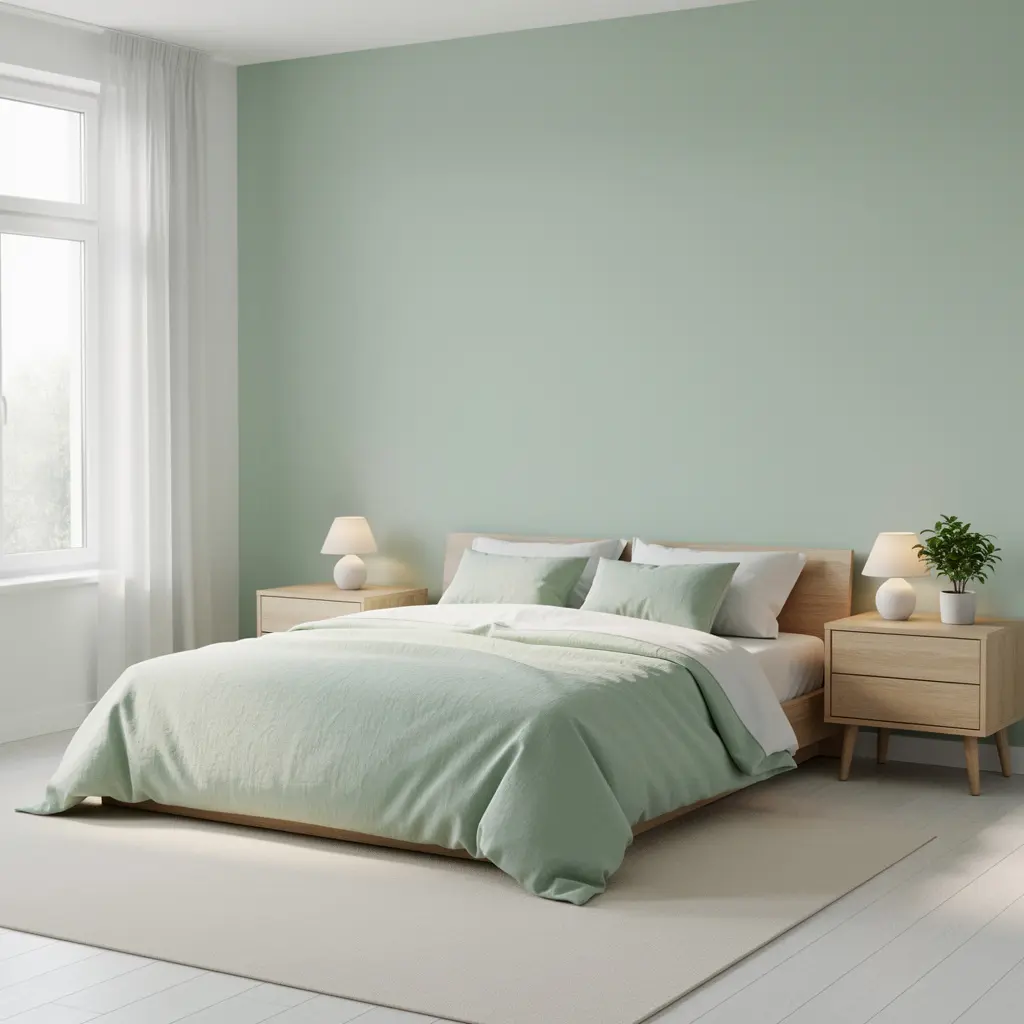
Sage green bedrooms tend to look their calmest when patterns are kept to a minimum, one subtly patterned throw pillow or a simple textured rug is usually enough. Busy florals or bold geometric patterns can compete with the color instead of complementing it, which works against the entire point of choosing a calming palette in the first place.
Mistakes to Avoid
- Painting all four walls in a bold sage without testing it in your room’s actual lighting first
- Choosing a single flat shade of sage everywhere instead of layering lighter and deeper tones
- Pairing sage with cool toned silver or chrome accents instead of warmer metals
- Using only cool white bulbs, which can make sage green look gray and flat
- Overloading the room with busy patterns that compete with the color scheme
- Skipping texture entirely and relying only on paint color to do all the visual work
Frequently Asked Questions
Does sage green work in a small bedroom? Yes, especially as an accent wall rather than covering the entire room. Pairing it with lighter neutral walls and warm wood tones keeps a small room from feeling closed in.
What colors pair best with sage green in a bedroom? Cream, warm white, natural wood tones, and a small amount of terracotta or clay all pair well with sage green, since they balance its cooler undertone with warmth.
Is sage green a good color for a bedroom meant for sleep? Sage green is generally considered a calming, restful color due to its muted, grayish green tone, which is part of why it’s a popular choice for bedrooms specifically over more energetic colors.
Can I do sage green decor without repainting my walls? Yes. Bedding, a throw blanket, an accent pillow, and a few smaller decor pieces like a vase or a piece of art can introduce sage green without any paint at all, which works well for renters.
How do I keep a sage green room from looking too cold? Balance the green with warm wood tones, warm metallic accents like brass, warm white lighting, and a small pop of terracotta or clay to keep the space from leaning too cool or sterile.
Conclusion
Sage green bedroom decor works best when it’s layered rather than flat, a mix of tones, natural textures, and warm accents does more than a single shade of paint ever could on its own. Start with a wall test in your actual lighting, choose warm wood and metal accents to balance the cooler green, and build the rest of the room from there.