
You’ve spent hours scrolling through bedroom inspiration, saving pin after pin, and somehow your own bedroom still looks nothing like any of it. That’s usually not a budget problem or a taste problem, it’s a commitment problem. Aesthetic bedroom ideas that actually translate into a real, lived in room come down to choosing a specific direction and building every decision, from the bedding to the lighting to the smallest shelf styling, around that one consistent idea instead of chasing a dozen different inspiration photos at once. Once that direction is set, the rest of the decisions get considerably easier, since you already know what belongs and what doesn’t.
1. Start With Your Bedding as the Anchor of the Room
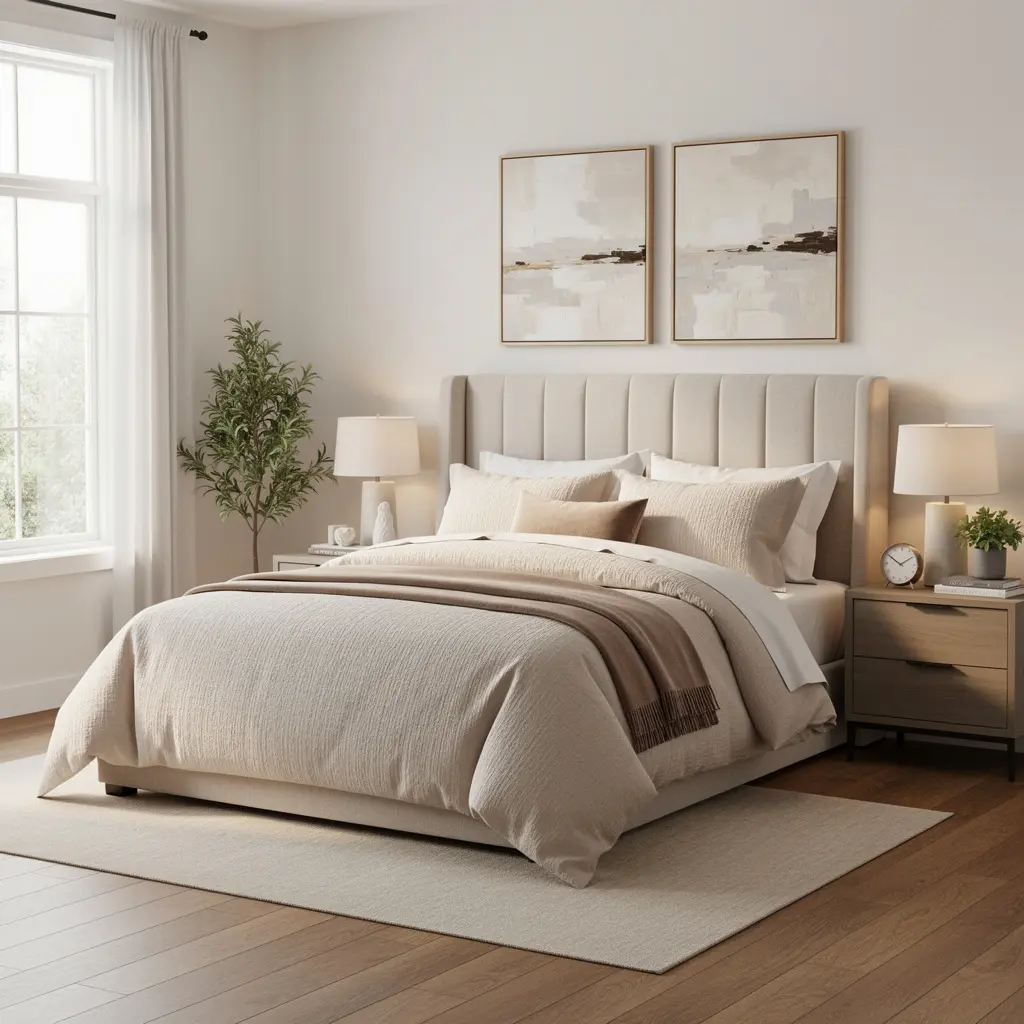
The bed takes up more visual space than anything else in a bedroom, so it makes sense to build the rest of the room’s palette around it rather than treating bedding as an afterthought. A duvet or comforter in your core colors, layered with a couple of complementary throw pillows and a textured blanket, sets the tone before you even get to the walls or the furniture, and it’s also usually the least expensive place to start compared to new furniture or paint.
Why Layering Matters More Than a Single Duvet Cover
A flat, single layer bed reads as unfinished no matter how nice the duvet cover itself is. Three or four layers, a fitted sheet, a duvet, a folded blanket at the foot, a couple of pillows in varying textures, creates the kind of depth that shows up in almost every well styled bedroom photo you’ve saved, even if it’s not always obvious at first glance exactly why those beds look so much more finished than a plain, single layer one.
2. Choose a Lighting Temperature That Matches the Mood
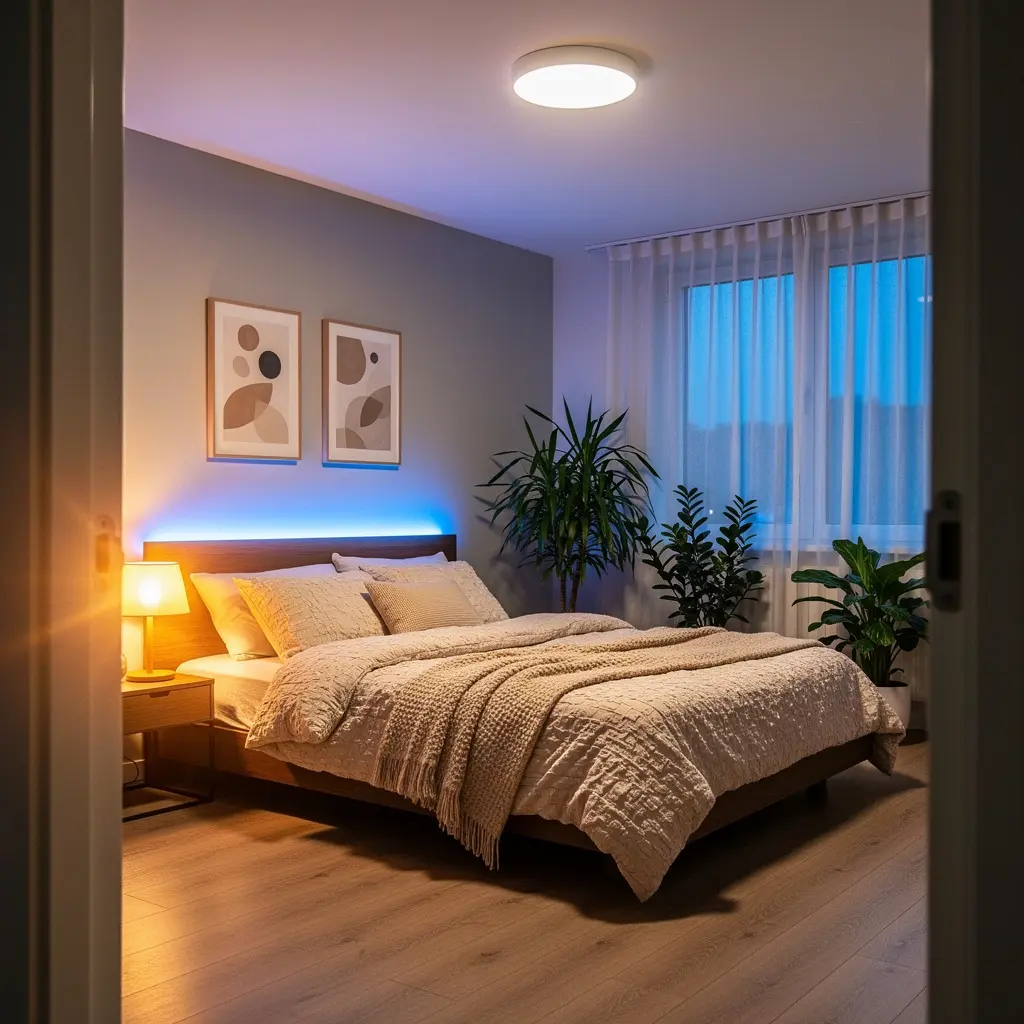
Warm white bulbs support almost every cozy or romantic aesthetic, while a slightly cooler, cleaner white works better for a minimalist or modern look. Getting this one detail wrong can undercut an otherwise well chosen color palette, since lighting temperature affects how every other color in the room actually reads once the sun goes down, and a mismatch here can make even a carefully chosen palette look slightly wrong without an obvious explanation.
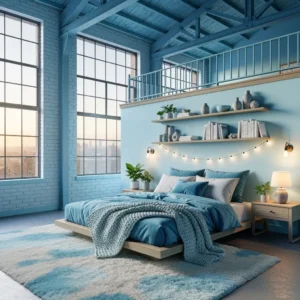
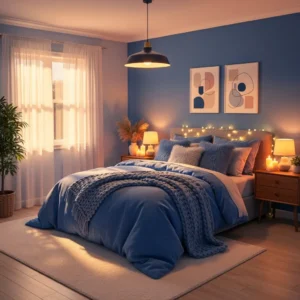
3. Add a String Light or Small Lamp for Layered Glow
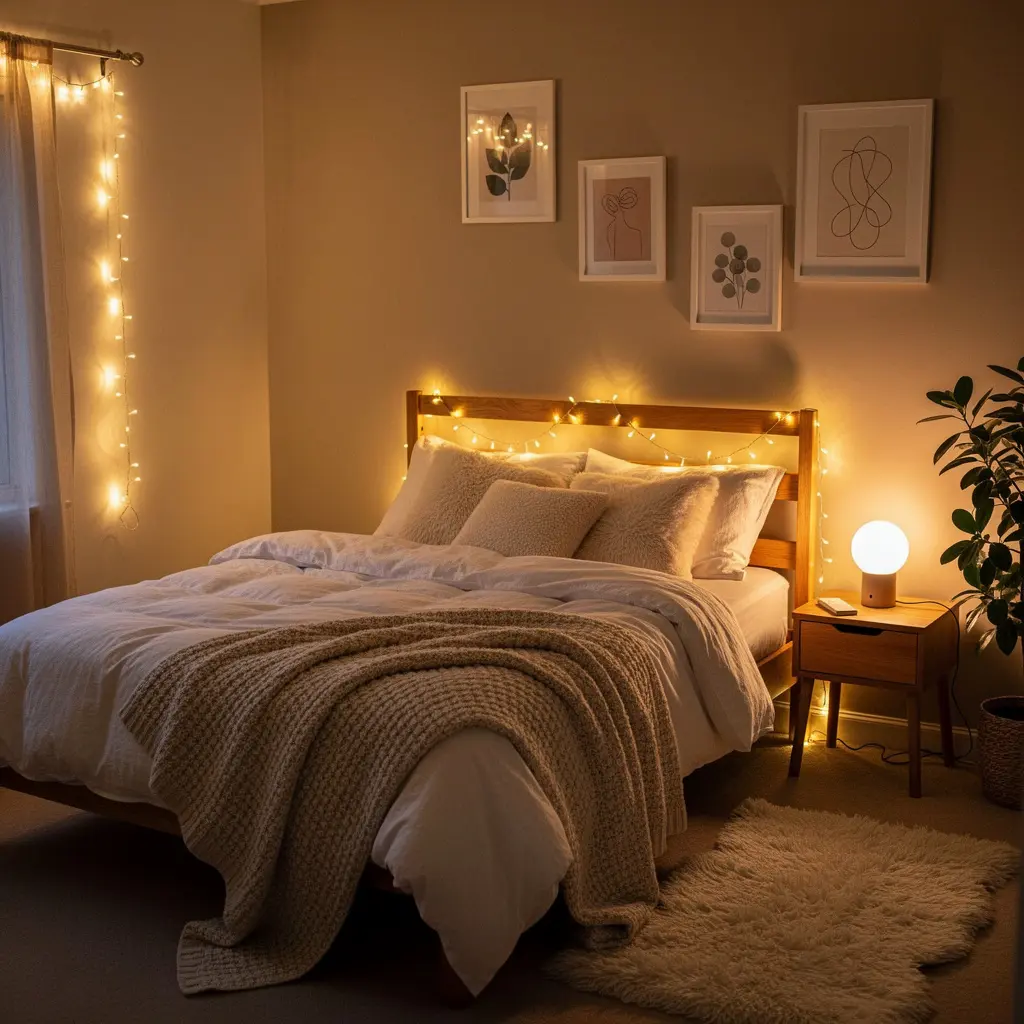
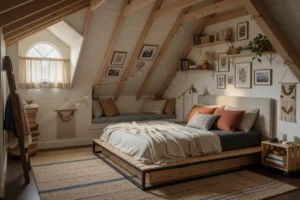
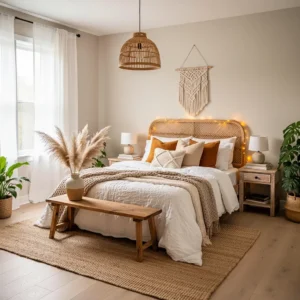
A single overhead bulb flattens a bedroom fast, especially at night when the room should feel more relaxed than a fully lit daytime space. A small lamp on the nightstand, or a strand of warm string lights along a headboard or shelf, adds a softer secondary light source that makes the whole room feel considerably more intentional after dark, which matters given how much time a bedroom actually gets used in the evening compared to during the day.
4. Choose a Focal Wall Instead of Decorating Every Surface
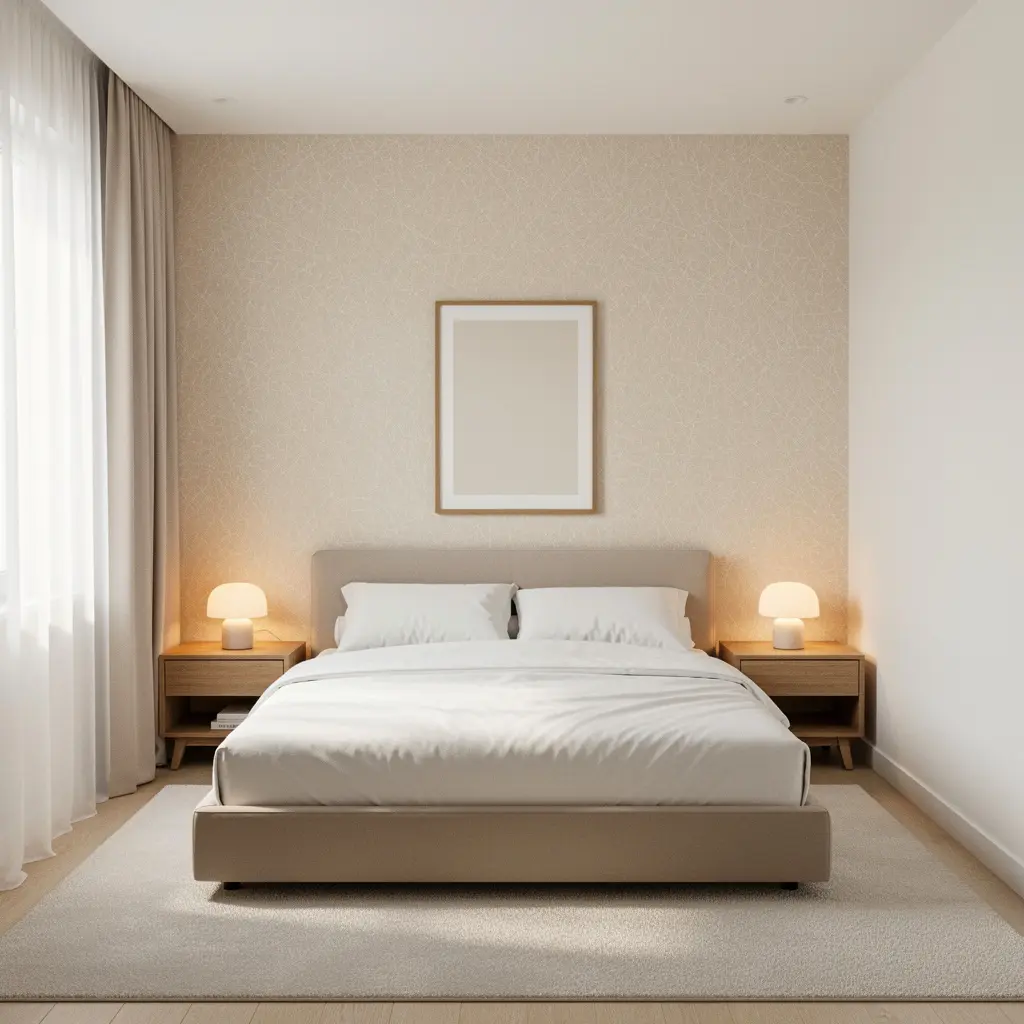
A single wall, whether it’s behind the headboard or opposite the door, works well as the room’s main visual statement, whether that’s a gallery wall, a bold paint color, or a textured wallpaper. Keeping the remaining walls simpler lets that one focal point actually stand out instead of competing with decor everywhere else in the room, which is often the single biggest difference between a bedroom that feels curated and one that just feels busy.
Placing the Focal Wall for Maximum Impact
The wall directly behind the headboard usually gets the most visual attention, since it’s what shows up in nearly every photo taken in the room and what you see most from the doorway, making it the highest value spot in the entire room for your boldest, most considered choice. This is generally the best spot to invest your boldest choice.
5. Repeat a Textile Story Across the Room
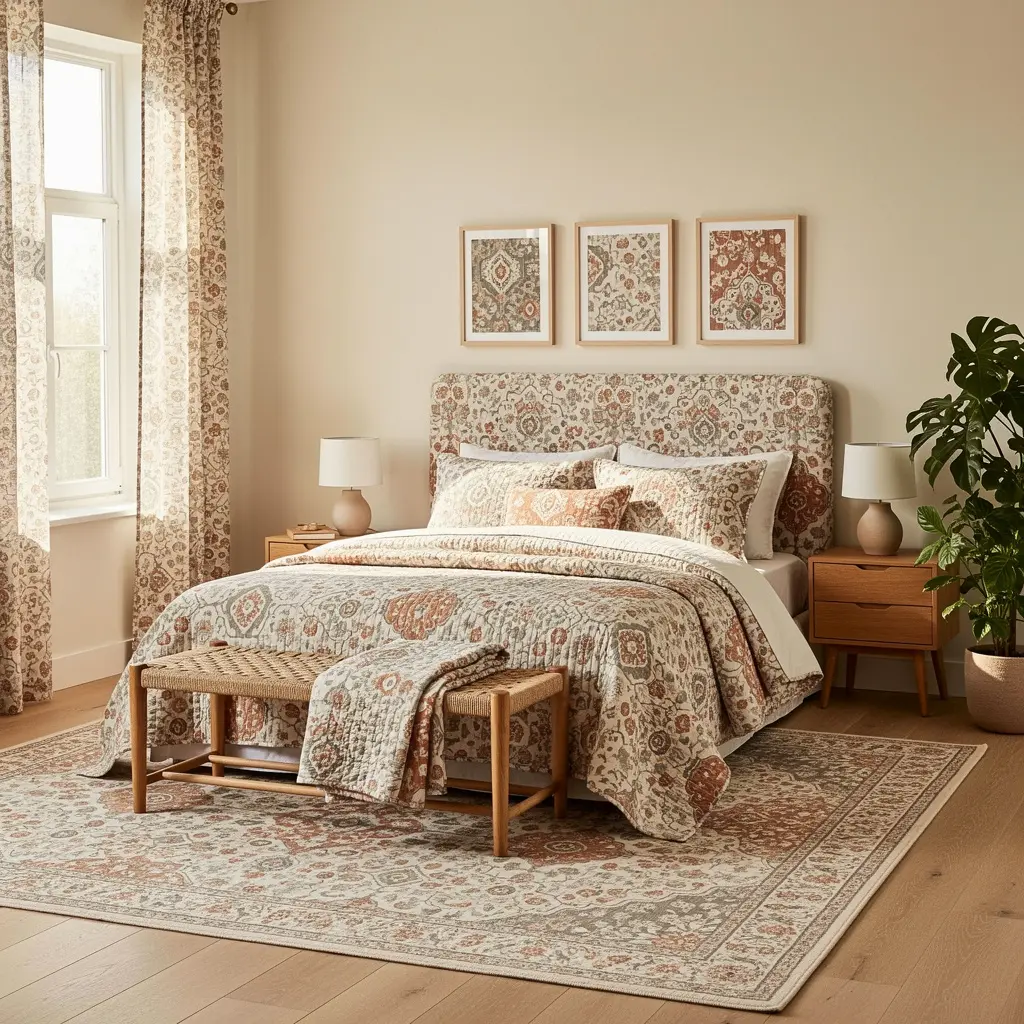
Whatever fabric texture defines your chosen look, boucle and velvet for something cozy, crisp linen for something more minimal, should appear more than once. A single textured pillow surrounded by completely different textures everywhere else in the room reads as random rather than intentional, no matter how nice that one pillow is.
6. Use a Rug to Ground the Space, Even Over Carpet
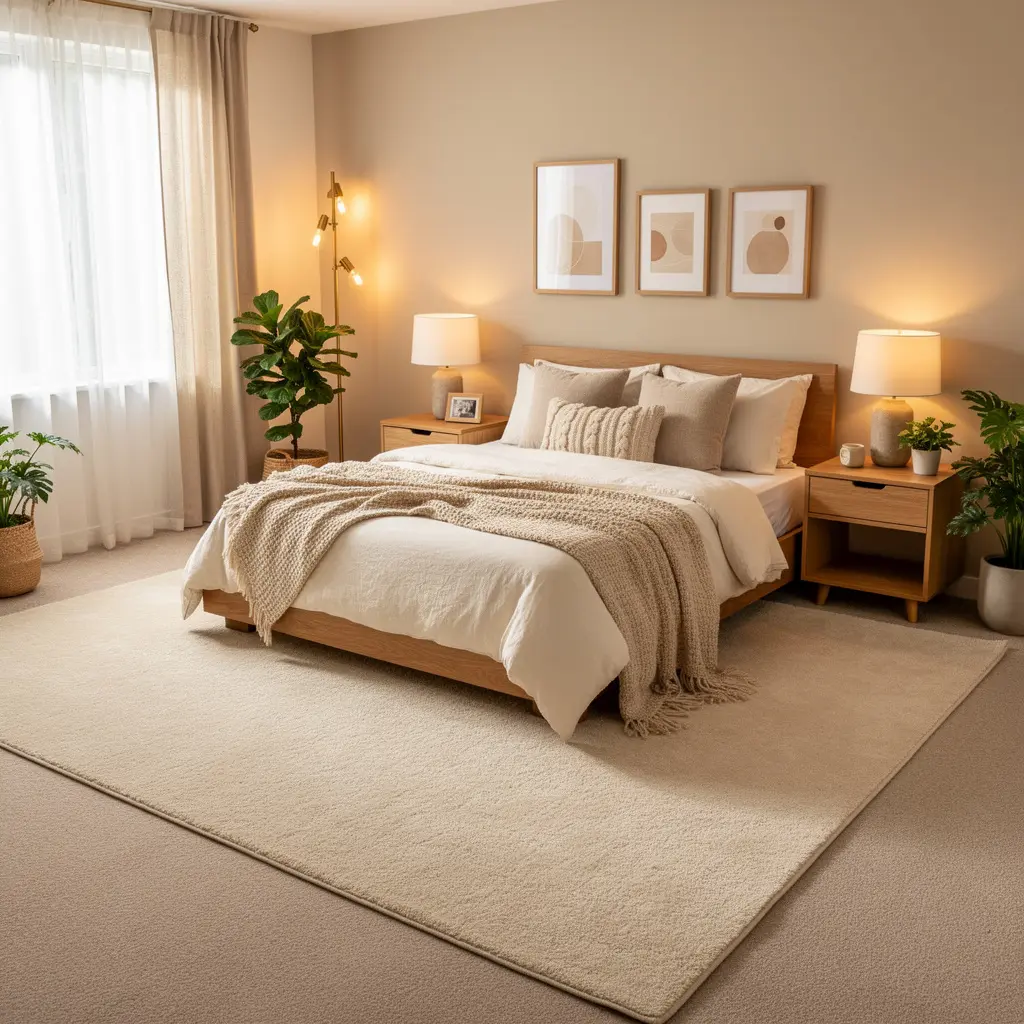
A rug placed beneath or beside the bed adds visual warmth and texture even in a carpeted room, and it defines a clear “zone” for the bed the way a rug does in a living room. This is a detail that’s easy to skip but makes a noticeable difference in how finished the whole room feels once it’s in place.
7. Bring in Plants or Greenery for a Living Element
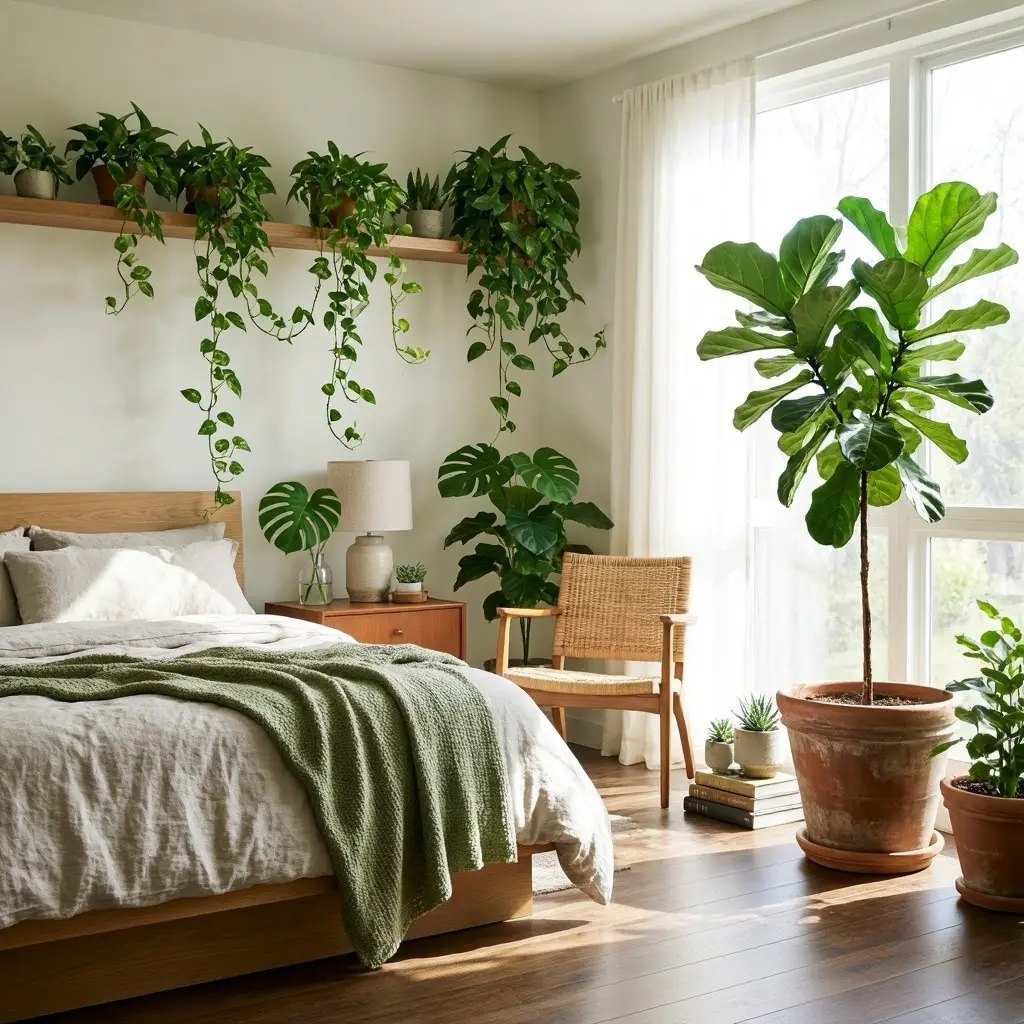
A small plant on a nightstand, a dresser, or a windowsill softens a bedroom that might otherwise feel entirely made up of hard surfaces and fabric. Even a single plant does real work here, breaking up the room’s other textures and adding a touch of color that doesn’t come from paint or textiles, and a low maintenance variety means this benefit doesn’t come with much ongoing effort.
8. Style Your Nightstand With Restraint
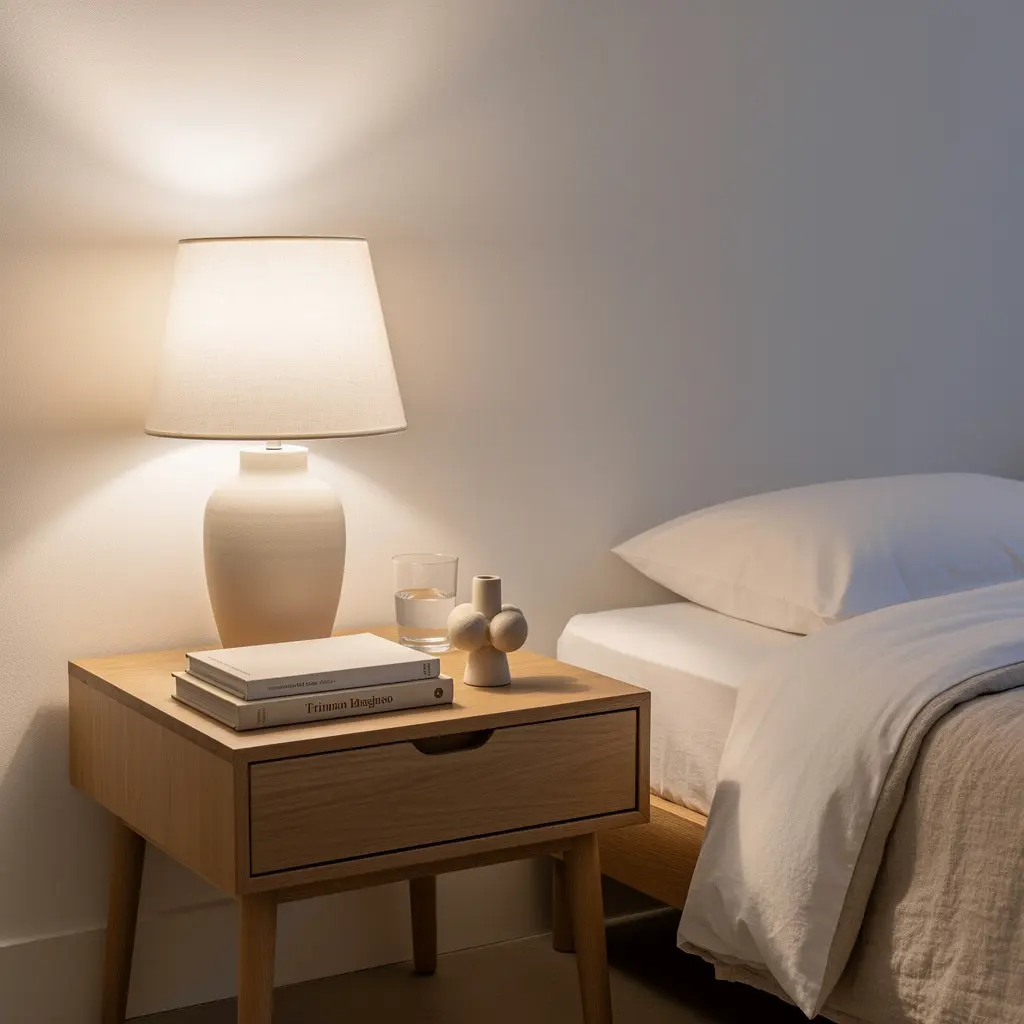
A cluttered nightstand covered in chargers, half empty water glasses, and loose items undercuts an otherwise well styled bedroom fast. Keeping it to three or four items, a lamp, a small stack of books, a candle, maybe one personal object, makes even a simple nightstand read as considerably more intentional, and it also happens to be a genuinely easier habit to maintain day to day than it looks in photos.
9. Choose Curtains or Window Treatments That Match the Overall Palette
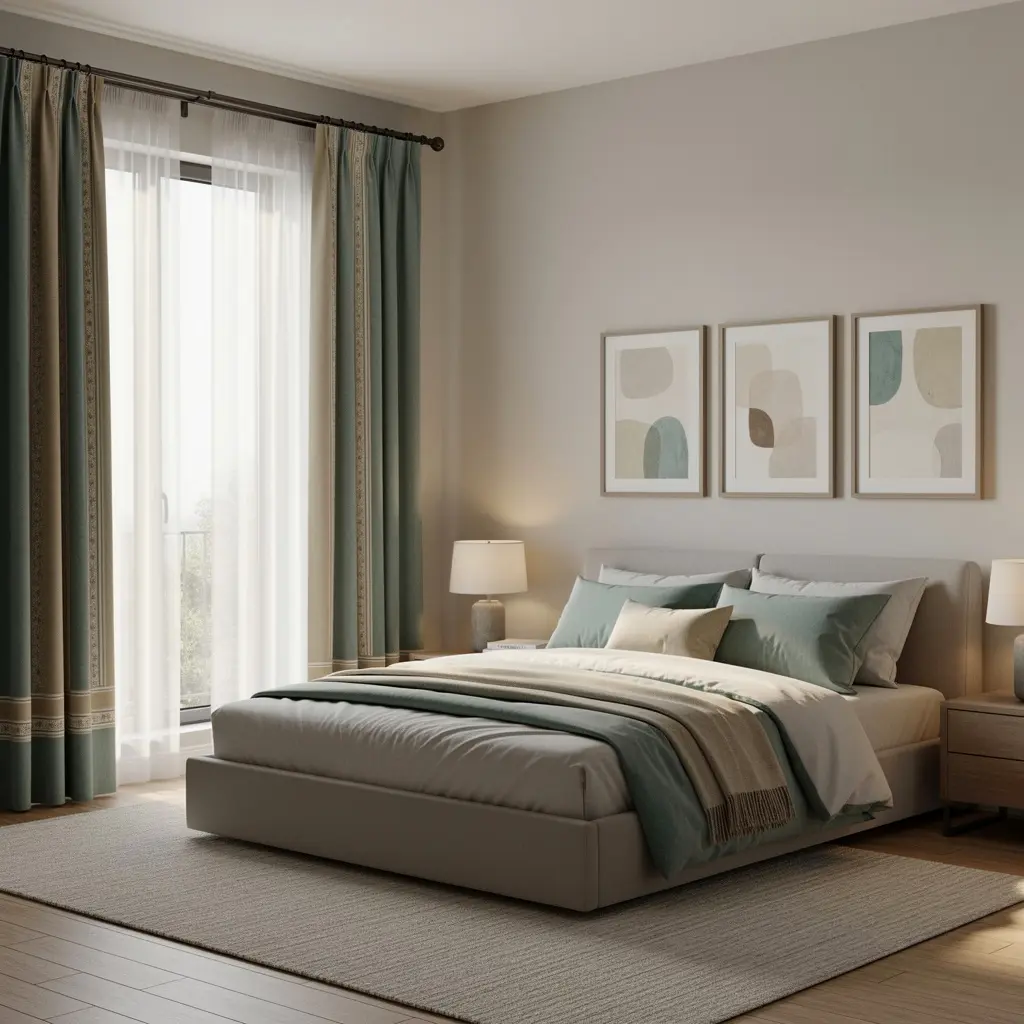
Curtains are one of the largest fabric elements in a bedroom, so leaving them mismatched or ignoring them entirely in favor of basic blinds undercuts a lot of the work you’ve put into the rest of the room. A curtain in a coordinating color or texture ties the window into the same story as the bedding and the rug, and it’s worth treating as part of the same decision rather than an afterthought picked out separately at the very end.
10. Personalize With One or Two Meaningful Objects
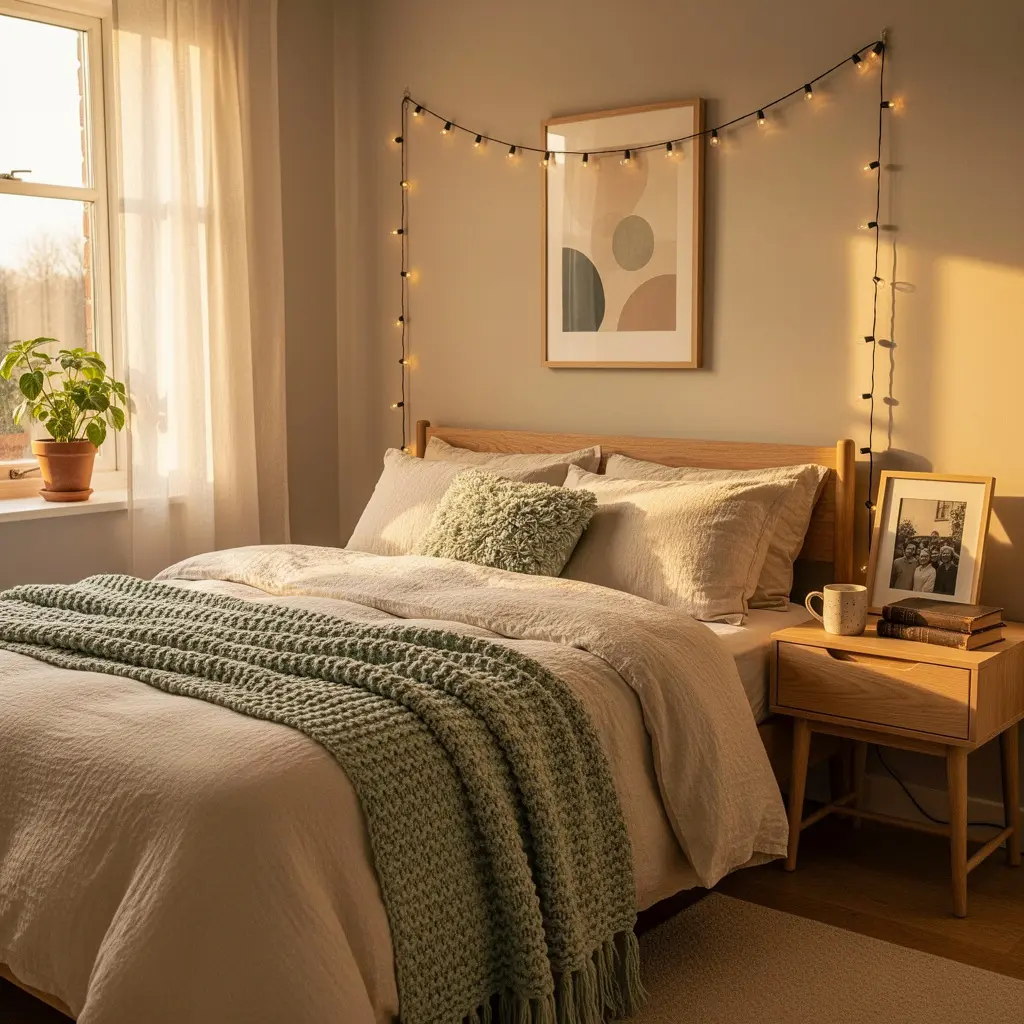
A bedroom built purely from Pinterest inspiration, with nothing genuinely personal in it, can feel more like a hotel room than an actual bedroom. A photo, a specific object with real history, or a small collection displayed thoughtfully within the room’s color palette keeps the space feeling like yours instead of a copy of someone else’s, and it’s usually these small, specific touches that people actually remember about a room long after the broader color scheme fades from memory.
Mistakes to Avoid
- Treating bedding as an afterthought instead of building the room’s palette around it first
- Choosing a lighting temperature that doesn’t actually match the mood you’re going for
- Relying only on overhead lighting instead of layering in a lamp or string lights for warmth
- Decorating every wall equally instead of choosing one clear focal point to invest in
- Skipping a rug entirely, even over carpet, which leaves the room feeling visually flat
- Leaving the room with no personal objects at all, which can make it feel more like a display than an actual bedroom
Frequently Asked Questions
What’s the most important element to get right in an aesthetic bedroom? The bedding, since it’s the largest visual surface in the room and sets the color and texture palette that everything else needs to follow.
Should I use warm or cool lighting in my bedroom? Warm white lighting supports most cozy or romantic aesthetics, while a slightly cooler tone works better for a clean, minimalist look. Match the temperature to the mood you’re actually going for.
Do I need a rug if my bedroom already has carpet? It’s not required, but a rug still adds texture and helps visually define the area around the bed, even over carpet, and it’s a detail that makes a noticeable difference in how finished the room feels.
How do I keep my bedroom from looking like a copy of someone else’s Pinterest board? Include one or two genuinely personal objects, a photo, a meaningful item, displayed thoughtfully within your chosen color palette rather than skipping personal touches entirely.
How many colors should my bedroom’s palette include? Three to five tones is a reasonable range for most aesthetic bedrooms, repeated consistently across the bedding, curtains, rug, and smaller decor pieces.
Conclusion
An aesthetic bedroom comes together when the bedding, lighting, and one clear focal wall all pull from the same consistent direction instead of being chosen piece by piece with no shared thread. Start with your bedding as the anchor, get the lighting temperature right for the mood you want, and let one true statement wall carry the boldest choice while everything else in the room supports it quietly, and treat the smaller details, the nightstand, the curtains, the plant, as an extension of that same decision rather than separate choices made along the way.

Leave a Reply